
Experts Matter. Find Yours.
Connect for media, speaking, professional opportunities & more.

Brexit, political rancor may cause long-term damage to British economy
Sandeep Mazumder, associate professor of economics and UK native, is available to comment by phone or email on the ongoing power struggle over control of Britain’s planned exit from the European Union. “Uncertainty abounds in the United Kingdom – both in Parliament, and with regards to Brexit. At this point, there are several outcomes that could result from Theresa May's proposed deal being voted down by the UK’s Members of Parliament," Mazumder says. "As it stands, the UK could be on course for a hard Brexit in March with no deals in place with the European Union. A lack of trade deals, in particular, will likely be very damaging to the British economy." "But, a hard Brexit is not a given either. Changes in the political set-up could open doors for other outcomes as the world waits to see what will happen,” says Mazumder. For now, the uncertainty surrounding Brexit is most likely to harm markets involving British firms, he adds. Mazumder is an expert in macroeconomics, monetary policy and international finance.


Americans Are Happier in States That Spend More on Libraries, Parks and Highways
Such ‘public goods’ also are less likely to spark political conflict, Baylor researcher says Americans are happier in states where governments spend more on public goods, such as libraries, parks, highways, natural resources and police protection, a Baylor University study has found. “Public goods are things you can’t exclude people from using — and one person using them doesn’t stop another from doing so,” said researcher Patrick Flavin, Ph.D., associate professor of political science in Baylor’s College of Arts & Sciences. “They’re typically not profitable to produce in the private market, so if the government doesn’t provide them, they will either be under-provided or not at all.” Public goods spending makes communities “more livable, with more amenities,” Flavin said. “If roads are completed and kept up, so that people aren’t stuck in traffic, they have more time to do things they enjoy doing. Large parks are social spaces — and one clear finding of happiness studies is that people who are more socially connected tend to be happier.” Another benefit of spending money on public goods is that such amenities generally boost home values — and “while higher property taxes generally accompany higher home values, it seems that the good outweighs the unfortunate part about having to pay higher taxes,” Flavin said. In his study, published in the journal Social Science Research, Flavin analyzed data on respondents’ self-reported levels of happiness for 1976-2006 from the General Social Survey, a representative sample of Americans that monitors social characteristics and attitudes of Americans and is a project of the independent research organization NORC at the University of Chicago. Flavin also analyzed detailed government spending data for states from the U.S. Census Bureau for 1976-2006. Revenues to fund state public goods are raised from a combination of state taxes and transfers from the federal government to states, averaging 22.5 percent of total state revenues for that 30-year period. “We can look at the city where people live, their neighborhoods, and see how public goods spending predicts happiness after taking other important factors, such as marital status, health, education and income, into account,” Flavin said. He also found that public goods spending has broad benefits across income, education, gender and race/ethnicity lines. “Compared to a lot of the other government spending, public goods tend to be less controversial between liberals and conservatives, Democrats and Republicans, compared to poverty assistance or unemployment benefits, where there is definite disagreement between political parties,” Flavin said. “I think there is less political conflict over public goods spending simply because if they government doesn’t provide them, they won’t be provided at all.” Flavin cautioned that there is not necessarily a cause-and-effect relationship between public goods and happiness. “It could be that happier citizens self-select by moving to states that spend comparatively more on public goods,” he said. “It also is possible that happier citizens support higher spending on public goods and elect state officials to deliver on that policy.” Because some spending for public goods comes from local government, Flavin hopes to do a study linking citizens to their local city instead of only to the state. And because living a happy and satisfying life is a nearly universal human goal, he predicts that better understanding of how policies concretely impact quality of life will receive increasing attention from researchers in the years to come. ABOUT BAYLOR UNIVERSITY Baylor University is a private Christian University and a nationally ranked research institution. The University provides a vibrant campus community for more than 17,000 students by blending interdisciplinary research with an international reputation for educational excellence and a faculty commitment to teaching and scholarship. Chartered in 1845 by the Republic of Texas through the efforts of Baptist pioneers, Baylor is the oldest continually operating University in Texas. Located in Waco, Baylor welcomes students from all 50 states and more than 80 countries to study a broad range of degrees among its 12 nationally recognized academic divisions. ABOUT BAYLOR COLLEGE OF ARTS & SCIENCES The College of Arts & Sciences is Baylor University’s oldest and largest academic division, consisting of 25 academic departments and seven academic centers and institutes. The more than 5,000 courses taught in the College span topics from art and theatre to religion, philosophy, sociology and the natural sciences. Faculty conduct research around the world, and research on the undergraduate and graduate level is prevalent throughout all disciplines.



Why voters prefer moderate leaders in the face of terrorism
From 1970 to 2016, 11,176 people in Europe died from terrorist attacks. These numbers do not include those that were wounded or missing. Terrorist attacks, especially deadly ones, are likely to affect the way people vote. But what is the exact impact of terrorism on voting patterns? Following terrorist attacks, in international elections people are more likely to vote for moderate or centrist political parties as opposed to right and leftist parties, according to a study published by Augusta University researchers Dr. Lance Hunter and Dr. Martha Ginn. The study, published in “Global Policy” on Jan. 3, 2019, analyzed the effect terrorist attacks had on voting patterns for left, right and moderate political parties in elections for more than 50 democracies worldwide. The findings have several implications for public policy. First, it is clear that terrorism affects the political behavior of voters. Therefore, Hunter and Ginn recommend that governments develop and communicate sensible counterterrorism policies in effort to maintain electoral stability. Second, counterterrorism policies that are viewed as overly aggressive in nature or passive are likely to be met with skepticism by voters. This is one possible reason why more moderate and centrist parties experience an increase in votes following terrorist attacks. The party in power loses electoral support during increased terrorist activity. A possible solution to this, Hunter and Ginn said, includes developing sensible, realistic counterterrorism policies that address security concerns while avoiding reactionary policies. Finally, rightist parties suffered the most electorally and lost support following both international and domestic attacks while leftist parties lost support following domestic attacks. Hunter and Ginn suggest that parties should tailor their counterterrorism proposals and messaging depending on the type of attack.


Election 2018: Wake Forest University experts
From state constitutional amendments to immigration, Wake Forest faculty experts can comment on a variety of 2018 midterm election-related topics. ___________________________________________________________________________________________ John Dinan, professor of political science and international affairs North Carolina Politics State Constitutional Amendments Congressional Redistricting Author of the book, “State Constitutional Politics: Governing by Amendment in the American States,” Dinan is available to comment on amendments appearing on the 2018 ballot in North Carolina and in 28 other states. From voter ID to judicial vacancies, he can place particular amendments in nationwide and historical perspective. Based on his research, he can also address the arguments and issues that routinely surface in campaigns supporting and opposing various amendments. Dinan closely follows North Carolina political races and teaches courses on campaigns and elections, state politics and Congress and policymaking. ___________________________________________________________________________________________ Allan Louden, professor of communication Political Campaigns and Advertising Political Debates Social Media and Politics From presidential debates to political advertising, Louden has provided expert commentary and analysis for a wide range of national and regional media outlets. He follows political advertising and candidates’ debates in presidential, Senate, gubernatorial and high-profile House races. Under Louden’s leadership, Wake Forest University’s debate team won the national debate tournament. He can comment on political advertising strategies and how social media, including viral videos, impacts races. ___________________________________________________________________________________________ John Llewellyn, associate professor of communication Political Speeches Political Scandals Public Apologies Llewellyn focuses on political speeches and rhetoric. He is a scholar of rhetoric whose work includes analyzing persuasive language from the nation’s most prominent politicians, coaches and civil rights leaders. A former speechwriter and public information officer, Llewellyn also specializes in crisis communication, having studied the intersection of politics and public relations for nearly 30 years. He can also comment on political scandals and public apologies. ___________________________________________________________________________________________ Betina Wilkinson, associate professor of political science and international affairs Latina/o/x Voters Wilkinson can offer insights and commentary on Latino voters for the midterm elections. She is an expert on Latino political behavior in the U.S., studies Latinos in U.S. politics, national and local immigration policy, and racial attitudes among Latinos and other ethnic groups. She can discuss the demographics and election-related priorities of Latinos. Wilkinson authored a chapter “North Carolina Latinos: And Emerging Influential Electorate in the South” in the book “The Pivotal Role of the Latino Electorate in the 2012 Election.” She is also the author of “Partners or Rivals? Power and Latino, Black and White Relations in the 21st Century.” ___________________________________________________________________________________________ Katy Harriger, professor of politics and international affairs Young Voters Federal Special Prosecutor/Robert Mueller U.S. Supreme Court A leading national expert on the federal special prosecutor, Harriger can address the influence the Mueller investigation may have on the 2018 elections. She is the author of The Special Prosecutor in American Politics and is regularly interviewed by national media outlets on the use of federal special prosecutors in American government. Harriger also studies political participation and voting among young people (including college students) and is the co-author of “Speaking of Politics: Preparing College Students for Democratic Citizenship through Deliberative Dialogue.” She can provide expert commentary on the latest Supreme Court developments and how they will likely impact midterm elections. She co-authored the book “American Constitutional Law” published in 2017. ___________________________________________________________________________________________ Michael Pisapia, assistant professor of politics and international affairs Gender and Politics Teacher Protests Political Parties and Education Reform Women Running for Congress Gender Equality and Constitutional Law Kavanaugh Hearings Pisapia studies American political development with a focus on women, gender and politics and can comment on tensions between liberal and conservative social groups and the unprecedented number of women who are engaged in political movements, and who are seeking elective office this year. He can also address partisan polarization around education policy, religious freedom and, sex and gender equality in constitutional law, including the significance of the Kavanaugh hearings in the context of the #metoo Movement. Pisapia is working on a book titled, “Educating a Nation: Women’s Empowerment and the Shape of American Federalism. He won the 2013 Carrie Chapman Catt Prize for scholarship on women and politics. He teaches courses on American politics and political thought. ___________________________________________________________________________________________ Hana Brown, associate professor of sociology and Gale Faculty Fellow Immigration Brown studies the effects of immigration and racial divisions on policy outcomes and the micro-level effects of state actions on the lives of racial minorities and immigrants. Her research also focuses on the political origins and political consequences of social inequalities. She teaches courses on political sociology, social inequality, and race and ethnicity in politics. ___________________________________________________________________________________________

How to Negotiate the Best Retail Price: Baylor Expert Shares 11 Tips
Confidence in retail negotiations can lead to confidence in salary talks as well, management expert says In today’s retail climate, where stores struggle to keep up with online competition and customers can compare prices with the ease of their smartphones, the price tag is just a starting point for negotiations, said a negotiation expert at Baylor University. “No longer do you need to pay sticker price for everything you buy. The customer is now empowered to have a say in pricing, and even hourly retail workers are often empowered to give price discounts when requested,” said Emily Hunter, Ph.D., associate professor of management in Baylor University’s Hankamer School of Business, and an expert in negotiation and conflict management. Hunter said negotiations – whether in a retail setting or in the workplace – require confidence. “Many people are hesitant to negotiate because they don’t know how or they are worried about the other person’s reaction (Will they think I’m greedy?),” she said. “But practice can increase your confidence in your ability to negotiate. Rejection is less common than you fear, and retail stores especially are often willing to work with you.” She offered the following tips to increase the chances of greater deals at the check-out counter. Be nice. First and foremost, always be kind and polite when asking for a discount in retail settings, Hunter said. You are much more likely to be successful if someone wants to help you out, as opposed to demanding a discount or raising your voice to puff up your sense of power. It’s not a power play. Instead, negotiating is a matter of give-and-take. Find defects. It is easier to negotiate an item if you can find something wrong with it. Most stores have a policy in place that allows cashiers and salespeople to offer a moderate discount (typically 10-15 percent), but when they offer it, be persistent and politely try to push them for more. “I’ve negotiated a rug because it was on the sales floor and had frayed edges, a metal cabinet with a dent in the back (Who will ever see that? It’s in the back!), and clothing with a slight stain,” Hunter said. “Point out the defect to the person you are negotiating with and ask for half off.” Look for mark-downs. If an item is marked down or “open-box,” then ask for further discounts, Hunter advised. Remember, the store already acknowledged that the item is worth less than original price and they are likely desperate to be rid of it quickly. “Borrow” a coupon during check-out. When making a purchase, Hunter said she is often asked the question: “Do you have a coupon?” Instead of saying no, she said it might save some money to consider another reply. “Whenever I’m asked this question at check-out, I reply, ‘No, do you have one I could use?’ This works more often than you might think and can result in sweet savings. No clipping required,” she said. Prepare yourself – quickly. When you see an item that could be a good opportunity to negotiate, Hunter said it’s best to prepare quickly with three steps. First, set a strong goal for yourself, usually in the form of a steep discount you will request. Second, set a “redline” price, the highest price you are willing to pay. Third, consider your best alternative – which might be purchasing the same item online for less – if negotiations fail. Find a BATNA. “In negotiation lingo, we call your best alternative your BATNA – Best Alternative to a Negotiated Agreement,” Hunter said. “In retail, it’s extremely important to shop around both at other stores and online to see if the same or a similar item is offered elsewhere for less. This can be your bargaining chip to ask for a discount.” She explained that most big-box stores now have a price-matching policy, but it’s worth trying to go beyond the price match and ask for an additional 10 percent discount, particularly if you agree to purchase at that moment. “Think about it from the store’s perspective,” she said. “They want to keep you from buying from major online retailers, so they might agree to a discount.” Ask for a higher discount than you’re seeking. Let’s say you’re seeking $200 off the price of a refrigerator. Hunter said it’s not wise to start your negotiation by asking for $200 off, because you are almost guaranteed to get less than that. “In negotiations, both sides expect some give-and-take, and the retailer is unlikely to accept your first offer,” she said. “Start by asking for $500 off the fridge and see what they say. Even better, back up your offer by pointing out a defect, a cheaper price online for the same product or evidence of a sale at the same store that just ended.” Pretend you own the business. Think from the seller’s perspective, Hunter advised. Consider what the seller wants from you, the customer. Besides the obvious answer of higher sales and profit, simply offering to write a review online could be very helpful, especially for small businesses. “I once got a great deal on a tool cabinet because I offered to write a positive review on the customer experience survey (you know, the one you get on your receipt that few people fill out?). The manager said that would be wonderful because his store performance is assessed partly based on those customer surveys and he really needed a good review that quarter,” Hunter said. Always negotiate furniture. Hunter said the markup on furniture is often extremely high, as much as 80 percent, and that makes furniture a target for negotiation. “I always negotiate when buying everything from mattresses to sofas to end tables,” she said. “Ask for big discounts at first, as you never know how desperate they are to rotate their stock. And try asking for steeper discounts if you buy multiple pieces, or buying a sofa set and getting the coffee table thrown in for free.” Choose your opponent wisely. When you choose to negotiate, make sure you’re dealing with the people who can make the decisions, Hunter said. Sometimes the clerks on the floor might not be the best option, so jump straight to the cashier or the manager to work with someone who has the authority to make a pricing decision. Remember the ultimate goal. Negotiation is not just about saving a few dollars, Hunter said. Instead, it’s about building negotiating skills. “Negotiating in retail settings can be a helpful practice to build your confidence to negotiate more important items such as salary and work projects,” she said. “While negotiating salary and other relationship-based issues at work differs quite a bit from the strategies described here, the first step is having the confidence to ask.” ABOUT EMILY HUNTER, PH.D. Emily Hunter, Ph.D., associate professor of management in Baylor University's Hankamer School of Business, teaches negotiation and conflict management. Her research on employee work-family issues, workday breaks and deviant behavior has appeared in academic journals such as Journal of Applied Psychology, Journal of Management and Journal of Organizational Behavior. She is also the co-author of "Organized Innovation: A Blueprint for Renewing America's Prosperity." ABOUT BAYLOR UNIVERSITY Baylor University is a private Christian University and a nationally ranked research institution. The University provides a vibrant campus community for more than 17,000 students by blending interdisciplinary research with an international reputation for educational excellence and a faculty commitment to teaching and scholarship. Chartered in 1845 by the Republic of Texas through the efforts of Baptist pioneers, Baylor is the oldest continually operating University in Texas. Located in Waco, Baylor welcomes students from all 50 states and more than 80 countries to study a broad range of degrees among its 12 nationally recognized academic divisions. ABOUT BAYLOR’S HANKAMER SCHOOL OF BUSINESS Baylor University’s Hankamer School of Business provides a rigorous academic experience, consisting of classroom and hands-on learning, guided by Christian commitment and a global perspective. Recognized nationally for several programs, including Entrepreneurship and Accounting, the school offers 24 undergraduate and 13 graduate areas of study. Visit www.baylor.edu/businessand follow on Twitter at twitter.com/Baylor_Business.


The next threat to election meddling? Brain Hacking
Almost 15 percent of Americans have reported changing their opinion on political or social issues because of a social media post, according to a recent Pew Research Center survey. “What if, immediately before spreading polarizing social media posts, our adversaries flashed subliminal images known to induce a type of anxiety called state anxiety? Evidence suggests people would perceive those posts in a more emotional way. Those images could, in turn, influence their voting behavior,” said Dr. Jay Heslen, an expert in intelligence and cybersecurity policy and assistant professor of political science with a joint appointment in the Katherine Reese Pamplin College of Arts, Humanities, and Social Sciences and the School of Computer and Cyber Sciences at Augusta University. “Successfully manipulating the cognition of a few thousand people in order to influence their perception of events could be enough to change the result of an election.” Heslen’s current research project focuses on whether exposure to certain visuals or sounds, including subliminal prompts, can induce a negative emotional arousal on people. He’s interested in learning whether that emotional state, called state anxiety, can then influence behavior in a specific, predefined way – a concept he calls neurocognitive hacking. Although research using subliminal prompts is not new and has had mixed results, Heslen’s approach is novel. He uses a specific kind of visuals previously shown to trigger people’s unconscious discriminatory behaviors toward outsiders. “Neurocognitive hacking could potentially be used as a weapon in cyberwarfare,” said Heslen, who worked as an intelligence officer with the Defense Intelligence Agency and the United States Air Force for more than 20 years, specializing in combatting terrorism, counterintelligence and strategic cyber intelligence. “We need to study these capabilities not only for our own understanding but to create sound policies and countermeasures to defend ourselves against others who may use them on us.” With 68 percent of Americans on Facebook and 73 percent on YouTube, according to another Pew Research Center survey, neurocognitive hacking could be a national security problem, Heslen said. “As we advance our understanding of the brain and its processes, including how to manipulate it, we will need to provide neurocognitive cybersecurity to people who use information and communication technologies,” Heslen said. “This will be especially true as we spend more time in virtual worlds.” Heslen is available to discuss: · How neurocognitive hacking can influence people’s behavior · Why neurocognitive hacking is a powerful weapon of cyberwar · What kinds of policies should the government create to protect itself and its citizens from neurocognitive hacking Heslen is a Lieutenant Colonel in the United States Air Force Reserve and has served in military operations on four continents to include humanitarian relief operations in Mozambique and South Africa as well as an operational tour in Afghanistan. In his capacity as a reservist, he is currently assigned to the National Intelligence University pursuing an advanced degree in strategic intelligence. Contact us to schedule an interview with Dr. Heslen or learn more about his expertise.


Guinness World Record Holder Jon Bruney To Speak at Biohacker Summit in Toronto
(Toronto) Renowned Strongman and Fitness Expert to speak at Spark Biohacker Summit at Metro Toronto Convention Center on October 15th, 2018 Jon Bruney, creator of the “Pressing the Limits” motivational strength program, will appear in Toronto at the Spark Biohacker Conference. A devoted researcher in the pursuit of finding the edge in performance, Jon will speak about his experience using transcranial and intranasal light therapy. Jon, one of a number of elite athletes, has been working with Technology developed by Dr. Lew Lim, NMD, MBA and Founder & CEO of Vielight in Toronto. Dr. Lim will be on hand to answer questions about the broad base of international research behind photobiomodulation and what we know so far about it's mechanism. "With photobiomodulation, you can tap into the secrets of the nervous system, helping your body to push farther, to push harder, to push longer than you ever believed you could." Jon Bruney using Vielight photobiomodulation device at his Performance Training Center in Indiana Jon Bruney and Dr. Lew Lim, Founder and CEO of Vielight, will be available for questions at the Vielight exhibition booth held alongside the Biohackers Summit. For one-to-one interviews, please contact Edward D'Mello on 647-865-2803. Session Details Monday Oct. 15, 2018 1230PM - 130PM Metro Toronto Convention Centre South Building (Hall G) 222 Bremner Boulevard Toronto, Ontario M5V 3L9 About John Bruney John's work with competitive athletes includes Olympians and NFL players. He has been featured in Ripley’s Believe it or Not, The Guinness Book of World Records, shown nationwide on NBC’s America’s Got Talent, The Today Show, ABC’s To Tell the Truth, and TruTv’s Guinness World Records unleashed. A true renaissance man in the realm of strength-development, Jon Bruney is a best-selling author, world-class trainer, coach and motivational speaker. He is the author of the best-seller Neuro-Mass: The Ultimate System for Spectacular Strength and The Neuro-Grip Challenge: A Radical Program For Building Strength and Power in Your Upper Body. He also writes a training series called “Foundations”, featured in MILO, widely considered the world’s most prestigious strength training journal. Jon has been responsible for the design of numerous pieces of cutting-edge training equipment now in use around the world. Jon is a veteran of multiple trainer certification courses and was the first to achieve the grueling Battling Ropes Level 2 Certified status. He is also the co-owner of Submit Strength equipment. About the The Biohacker Summit The Biohacker Summit is the largest biohacking event in the world that connects well-being companies with medical professionals, technology experts, investors, entrepreneurs, health and nutrition enthusiasts, and other pioneers. Biohacking - better living through science, technology and nature - is a fast growing international trend. The aim of the conference is to make the world healthier and happier place, prevent disease, and extend human capabilities and lifespan. Media Contact Edward D'Mello M: 647-865-2803 E: edward@vielight.com #photobiomodulation #light #therapy #Toronto #Canada #Ontario #wellness #health #mentalhealth #quantifiedself #biohack #biohacker #mental #brain #body #sport #performance


Women often don't label their sexual assaults as rape. Our experts can explain.
Many sexual violence survivors do not label their experiences as rape but instead use more benign labels, such as “bad sex” or “miscommunication.” Laura C. Wilson, an assistant professor of psychology at the University of Mary Washington, led a review of 28 academic studies to estimate how often women who’ve been sexually assaulted do not label their experience as rape. Across the studies, the researchers find that 60.4 percent of women, on average, did not recognize their experience as rape even though it fit the definition — an unwanted sexual experience obtained through force or the threat of force or a sexual experience they did not consent to because they were incapacitated. “This finding has important implications because it suggests that our awareness of the scope of the problem may underestimate its true occurrence rate, depending on the type of measurement,” the authors write. “This impacts policy reform, allocations of mental health services, survivors’ perceptions of their experiences, and society’s attitudes toward survivors.” For more information on this study, visit: http://journals.sagepub.com/doi/abs/10.1177/1524838015576391 Laura C. Wilson is available to speak with media regarding this topic and study. To contact her, simply click on her icon to arrange an interview.


Ivanka to the United Nations? Ask our experts if it is possible!
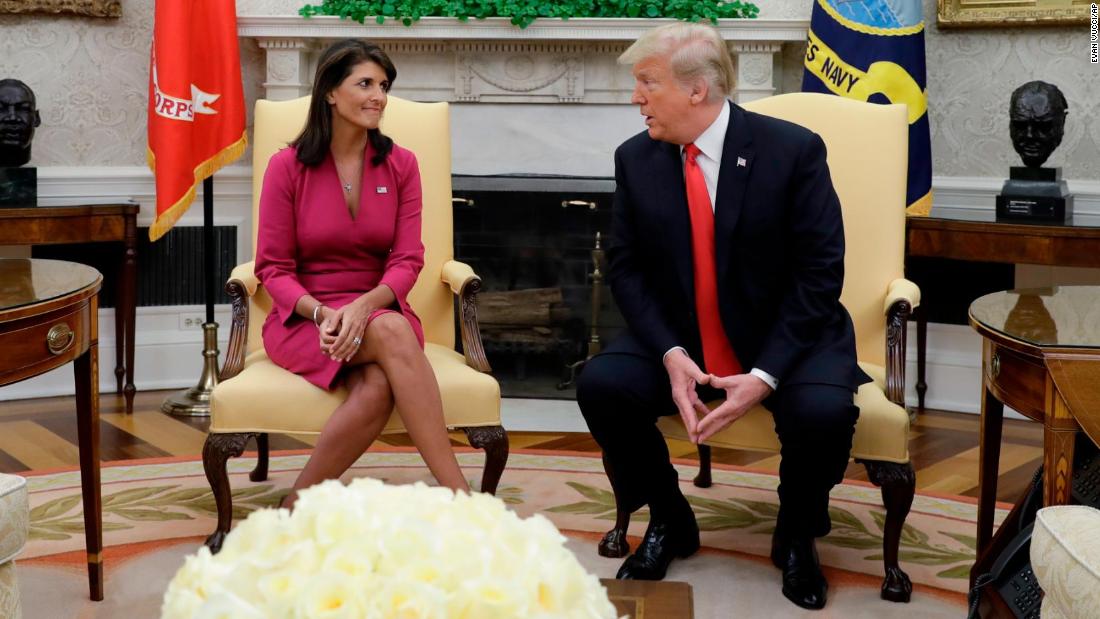
One of the few shining stars is fading from the Washington skyline – and Nikki Haley’s departure as America’s Ambassador to the United Nations has the beltway speculating on her replacement. President Trump had eyebrows raised and tongues wagging when he trial-ballooned his daughter Ivanka as a suitable replacement. There’s also talk of Dina Powell, the well respected former Deputy National Security Advisor for Strategy to President Donald Trump. But who else is on the list and how key of a role is this as America reshapes its foreign policy. There are a lot of questions and a lot of educated guessing going on right now and that’s where the experts from Cedarville University can help. Dr. Glen Duerr’s expertise and research interests include nationalism and secession, comparative politics and international relations theory. Dr. Duerr is available to speak to media regarding this topic – simply click on his icon to arrange an interview.


Cities value cybersecurity but budget prevents investment
Although city governments increasingly rely on software programs to provide services such as 911 calls, service delivery and online bill payment, they may not have the proper cybersecurity policies in place to protect their systems, according to a recent nationwide survey of cities by Augusta University researchers. “We’re concerned first with the human factor of all issues,” said Dr. William Hatcher, director of Augusta University’s Master of Public Administration program and one of the survey’s authors. “Having trained employees is necessary to stop attacks or even make sure organizations are not tricked through phishing type schemes.” Almost 30 percent of surveyed cities have no formal cybersecurity policy, which would include rules on password creation, guidelines for employee training on computer security and procedures for reviewing the list of employees with access to sensitive systems, according to the survey. Of the cities that have a formal policy, the survey found that: - 17 percent don’t require in-depth background checks when employees are granted access to sensitive systems. - 18 percent don’t teach employees to recognize breaches. - 37 percent don’t provide ongoing training to employees on new computer security procedures. - 47 percent don’t review the list of employees who have security access on a regular basis. - 54 percent don’t work with an outside auditor to review their policies on an annual basis. The survey looked into cities nationwide with more than 10,000 people and received responses from 193 local governments. Based on the results of the survey, Hatcher says most cities understand the importance of cybersecurity but are not investing in vulnerable areas due to financial constraints. “Providing effective cybersecurity protection is expensive, and many municipalities have financial issues paying for the service,” Hatcher said. Hatcher ‘s research focuses on the connection between public administration and the development of local communities. Through his research, he tries to understand why public administration scholars and practitioners often have different views about the efficacy of certain administrative practices. His research has appeared in journals such as American Journal of Public Health, Journal of Public Affairs Education, Public Administration Quarterly and The Review of Regional Studies. Contact us to schedule an interview with Dr. Hatcher or learn more about his expertise. Source:
