Experts Matter. Find Yours.
Connect for media, speaking, professional opportunities & more.

12 tips to help you build your networking skills in Canada
Your professional network will be one of your most valuable assets in the Canadian job market. Whether you’re trying to land your first job or are looking for a mentor, your network can play an important role in helping you achieve professional success in Canada. As a newcomer to Canada, you’ll have to work harder and refine your networking skills to build connections from scratch in your new country. This article will provide you with tips to help you build your networking skills, so you can start nurturing meaningful professional relationships. 1. Understand that communication is two-sided One of the many advantages of networking is that it’s as much about promoting your personal brand as it is about learning from the experience of others. When someone takes time to speak with you, give them a chance to talk. Active, attentive listening is an essential networking skill that ensures you absorb the information being shared with you. You can then ask intelligent, relevant questions and get insights that might be useful for your professional success in Canada. Keep distractions away and focus on the conversation. It is rude to interrupt when someone is talking, so save your questions until they’ve finished speaking. 2. Improve your public speaking skills Many newcomers avoid networking or public speaking as they lack confidence in their English language or interpersonal skills. However, practice is the best way to overcome the fear of speaking in public. Take the time to work on your language skills. There are many English as a Second Language (ESL) resources and community groups available across the country to help newcomers improve their speaking and listening skills. Practice speaking in front of a mirror or with your friends. Don’t feel insecure if you have an accent or have trouble understanding some words. Remember, Canada is a diverse, multicultural country, and most people are accepting of the fact that English may not be your first language. 3. Practice both verbal and non-verbal communication What you say is only half the image you present—non-verbal communication is just as important. Your body language conveys a lot about your personality and how engaged you are in a meeting. Avoid crossing your arms, closing your fists tightly, or hunching your shoulders, as this can make you seem unfriendly. Practice smiling and gesturing with your hands as you talk in front of a mirror. Be aware of your posture and make eye contact with the people you are talking to. While networking in-person, speak confidently. Respect people’s personal space and avoid standing too close to them. 4. Learn the art of small talk Small talk is culturally important in Canada. It serves as an icebreaker before you get to the actual topic of conversation. Since small talk is meant to create a safe, comfortable environment, be sure to choose non-controversial, light topics. Some common small talk topics include the weather, sports, arts, entertainment, hobbies, and current events. Stay away from topics like politics, personal or family matters, income, and religion. As a newcomer, you can build your small talk skills by staying up-to-date on the news, developing an interest in Canadian arts, culture, and, of course, sports. 5. Ask for constructive feedback An easy way to build your networking skills is to get an honest opinion on what you maybe doing wrong or need to improve. Before an important networking meeting, do a practice run with some friends and ask them for feedback on your small talk, elevator pitch, questions, and overall communication skills. You can also ask for constructive feedback towards the end of your networking meetings. Be open and humble when you ask for tips to help you build your networking skills. In most cases, people are willing to offer guidance and insights that you can leverage in future meetings. 6. Give before you get One mistake many newcomers make is to only think about what they can get out of a connection, without considering what they may be able to offer in return. Networking is not one-sided, so be sure to make a list of your unique skills and strengths before you start. Even if you are new to the Canadian job market, review the LinkedIn profile of the person you’re going to meet to understand their role and see where you can contribute. During your meeting, convey your willingness to help and ask if there’s anything you can support them with. By offering to give before you get, you can build meaningful connections and also prove your value to your network. Once they’ve seen your skills in action, they’ll be more likely to offer guidance, connect you to others, or refer you to job opportunities. 7. Attend networking events and workshops One way to build your networking skills is to jump right in and start networking. Look for both virtual and in-person networking events on industry association websites or on platforms like Eventbrite and Meetup, and attend as many as you can. In addition to making connections, this will also give you a chance to observe the way other people network. You’ll be able to pick up best practices related to small talk, ways to introduce yourself, verbal and non-verbal communication, and questions to ask. If you meet someone particularly impressive, don’t hesitate to follow up and ask if they would be willing to share some tips to help you network better. 8. Prepare, prepare, prepare When it comes to networking meetings, preparation can make all the difference. Put your research skills to good use and learn as much as you can about the background, role, and career path of the individual you’re going to meet. Know what you want to get from your networking meetings—further connections, guidance, or referrals. Prepare a list of questions accordingly, and customize your list based on each person’s industry, skills, and position. Finally, spend some time creating an engaging, authentic elevator pitch. Remember that an elevator pitch is not a sales pitch, but a chance to tell your story and highlight your skills in an impactful way. 9. Ask for recommendations and introductions In Canada, every professional you meet will likely have their own network. As a newcomer, it might not be easy to ask the people you meet to connect you with others. This is a networking skill that you’ll need to build as you start to grow and nurture your network. Before you meet someone for a coffee chat, go through their LinkedIn network and see if they know someone you’d like to be introduced to. If you’re looking for specific information or trying to build a particular skill, it is a good idea to ask your connections if they can recommend someone in their industry or organization who might be able to help. If you’ve cultivated a meaningful relationship, you might also be able to get an introduction to someone in their network. When you are introduced to a person by someone they know and trust, they are more likely to take out time to speak with you. 10. Keep track of your networking meetings For most newcomers, the first few months of networking can be overwhelming. Since you’re building your network from scratch in Canada, you might be meeting as many as four or five people each week. This makes it hard to keep track of who you’ve met and what you discussed. As a result, you might forget valuable insights or miss out on following up with some people. Keeping track of your meetings is an important networking skill. Create a list with names of people you meet, meeting dates, their designations and organization, discussion points, and follow-up actions. When you set up follow-up meetings, you’ll be able to refer to your list to review points that you had discussed with them earlier. This list can also help you identify connections who might be useful when you’re applying for a job. You’ll also be able to clearly see gaps in your network, such as industries you don’t have connections in, so you can focus on those in the future. 11. Follow up and follow through Building meaningful professional relationships takes time and in most cases, the first meeting is only an introduction. The value you can leverage from your connections often depends on how much time and effort you invest in maintaining them. You can start by sending a personalized thank you note within 24 hours of your meeting. If you’ve agreed upon any action items during your meetings, don’t forget to deliver on them. After your initial meeting, you can keep the conversation going by regularly sharing relevant developments and insights, engaging on their social media posts, or asking for their opinion on topics related to the ones you discussed. 12. Don’t give up Finally, patience is another skill you’ll need as you start building your network in Canada. It’s easy to become demotivated when your LinkedIn connection requests go unanswered or when the people you connect with online are unwilling to meet you. Even after the initial coffee chats, some of your connections may not be able or willing to offer you the advice, guidance, or contacts you need. It takes time to nurture relationships and identify how and where someone might be able to add value. You might also have to demonstrate your own willingness to help before someone agrees to support you. Even if some meetings don’t go as well as you had hoped, don’t give up. Each new meeting is a learning opportunity, so keep an open mind. Remember that it only takes one connection or referral to land your dream job in Canada. Networking plays a crucial role in the Canadian job market. However, networking may not come naturally to everyone. As a newcomer to Canada, improving your networking skills will help you build meaningful relationships with people who can bring you closer to achieving your career goals. Original article located here, published by Arrive. About Arrive Arrive is powered by RBC Ventures Inc, a subsidiary of Royal Bank of Canada. In collaboration with RBC, Arrive is dedicated to helping newcomers achieve their life, career, and financial goals in Canada. An important part of establishing your financial life in Canada is finding the right partner to invest in your financial success. RBC is the largest bank in Canada* and here to be your partner in all of your financial needs.

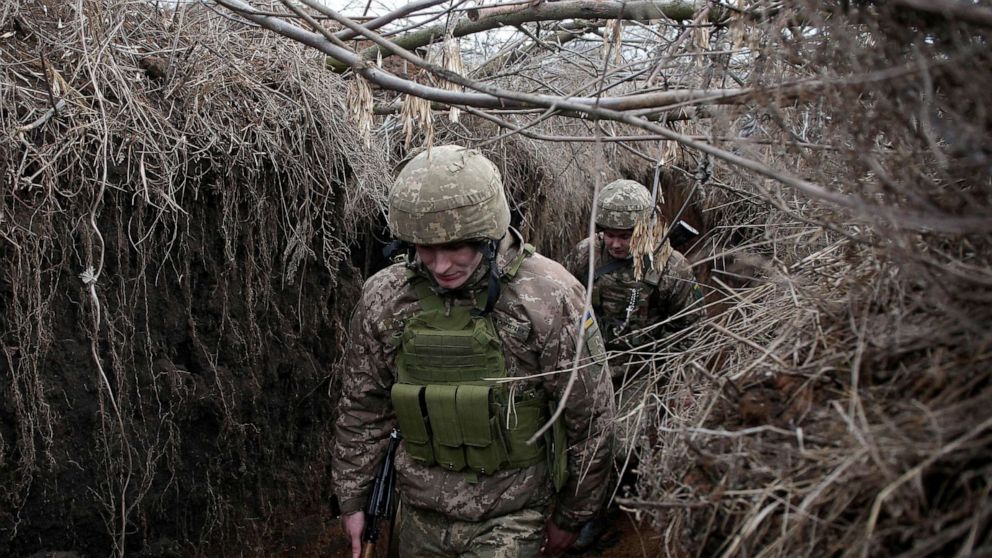
As the war rages in Ukraine, what's next? Augusta University expert answers key questions
For a month now, the world has watched the invasion of Ukraine by Russian forces. The war has dominated news coverage since before the invasion, with journalists asking why Russia would invade a sovereign country and whether this could expand to an all-out war in Europe for the first time since World War II? There are still many questions to be asked, which is why we’ve enlisted Dr. Craig Albert, from Augusta University. Albert has been speaking extensively with the media answering key questions about the invasion. Q: How has Russia ramped up their war efforts and are the latest attacks a signal that they are going "all in" in taking over Ukraine? “Right now, Russia is still not fighting the war they are prepared for. In other words, they have a massive war-machine but are still only using small parts of it in this war. There are several reasons for this: they may not want to expose their hands to great powers; they may want to bring Ukraine back to the fold, so annihilating them, vis-à-vis, Grozny, might not be the best play. As it is, Russia is still poised to take Kyiv within a few months unless Ukraine has alliance boots on the ground, which is not likely since it will raise the specter of WWIII." Q: What do you expect we will see next? "I think we will most likely see the rise in dirty war tactics and techniques, with more mercenaries, more artillery bombardment, and more foreign fighters joining on both sides, especially former NATO special operations forces moving into the Ukraine International Legion, and well-paid Syrians on the side of Russia. With this increase in contract soldiers, we can expect more human rights atrocities and atrocities committed against soldiers as well as a relaxation of Geneva rules for armed conflict amongst combatants." Q. Do you expect to see Russia direct more cyber warfare the U.S. way? "I expect a steady, prolonged consistent cyber-conflict campaign waged by Russia against Ukraine and its allies, including the US. I don’t expect an escalation on this front at least at it applies to NATO forces. Russia is saving its most savvy cyberweapons for a possible larger-scaled conflict against a major power." If you’re a journalist looking to know more about what lies ahead as the war between Ukraine and Russia continues and how it may impact the United States, then let us help with your questions and coverage. Dr. Craig Albert is director of the Master of Arts in Intelligence and Security Studies at Augusta University. He is a leading expert on war, terrorism, and American politics. This is an important national and international issue. Albert is available to speak with media – simply click on his name to arrange an interview today.



Journalism, Libel, and Political Messaging in America - UConn's Expert Weighs in
Former Alaska governor and vice presidential candidate Sarah Palin didn't cause the deadly 2011 shooting in Tuscon, Arizona, that injured Congresswoman Gabrielle Giffords, says former journalist and UConn expert Amanda Crawford in a new essay for Nieman Reports. Palin is asking for a new trial after a jury in February rejected her libel lawsuit against the New York Times. Palin sued the newspaper after it published a 2017 editorial that erroneously claimed she was responsible for the shooting. The Times quickly issued a correction. But Crawford says that, in her opinion, Palin has contributed to increased vitriol in American politics today, and that libel laws protecting freedom of the press need to be guarded: Palin, the 2008 Republican vice presidential nominee known for her gun-toting right-wing invective, is now asking for a new trial in the case that hinges on an error in a 2017 Times editorial, “America’s Lethal Politics.” The piece, which bemoaned the viciousness of political discourse and pondered links to acts of violence, was published after a man who had supported Sen. Bernie Sanders opened fire at congressional Republicans’ baseball practice, injuring House Majority Whip Steve Scalise. The Times editorial noted that Palin’s political action committee published a campaign map in 2010 that used a graphic resembling the crosshairs of a rifle’s scope to mark targeted districts. It incorrectly drew a link between the map and the shooting of Rep. Gabrielle Giffords, the Democratic incumbent in one of those districts, while she was at a constituent event in a grocery store parking lot in Tucson less than a year later. I was a political reporter in Arizona at the time, and I remember how Giffords herself had warned that the map could incite violence. “We’re on Sarah Palin’s targeted list,” she said in a 2010 interview, according to The Washington Post, “but the thing is that the way that she has it depicted has the crosshairs of a gun sight over our district, and when people do that, they’ve got to realize there are consequences to that action.” In the wake of the mass shooting in Tucson, some officials and members of the media suggested that political rhetoric, including Palin’s, may be to blame. In fact, no link between the campaign map and the shooting was ever established. As the judge said, the shooter’s own mental illness was to blame. That is where the Times blundered. An editor inserted language that said, “the link to political incitement was clear.” (The Times promptly issued a correction.) This was an egregious mistake and the product of sloppy journalism, but both the judge and the jury agreed that it was not done with actual malice or reckless disregard for the truth. That’s the standard that a public figure like Palin must meet because of the precedent set in the Sullivan case and subsequent decisions. Even if Palin is granted a new trial and loses again, she is likely to appeal. Her lawsuit is part of a concerted effort by critics of the “lamestream media,” including former President Donald Trump, to change the libel standard to make it easier for political figures to sue journalists and win judgments for unintentional mistakes. They want to inhibit free debate and make it harder for journalists to hold them accountable. -- Nieman Reports, March 14, 2022 If you are a reporter who is interested in covering this topic, or who would like to discuss the intersection between politics and media, let us help. Amanda Crawford is a veteran political reporter, literary journalist, and expert in journalism ethics, misinformation, conspiracy theories, and the First Amendment. Click on her icon now to arrange an interview today.


UCI expert sources for the Russia/Ukraine Conflict
On Friday, Feb. 25, 2022, UCI’s School of Social Sciences hosted a webinar titled, “Understanding the Russia-Ukraine Crisis.” Several of the experts below offered perspective on key issues surrounding the escalating conflict between Russia and Ukraine. You can watch or listen to the webinar here: https://www.socsci.uci.edu/newsevents/news/2022/2022-02-25-understanding-the-russia-ukraine-crisis.php UCI faculty members available to comment, and their areas of expertise, are found below. Matthew Beckmann, Associate Professor, Political Science. Professor Beckman studies the organizational structures and operational strategies presidents can use to pick their team, invest their time, focus their attention, channel their effort, discipline their thinking, coordinate their subordinates, and, most importantly, make decisions. Contact: beckmann@uci.edu Jeffrey Kopstein, Professor, Political Science. In his research, Professor Kopstein focuses on interethnic violence, voting patterns of minority groups, and anti-liberal tendencies in civil society, paying special attention to cases within European and Russian Jewish history. As pertains to the Russia/Ukraine conflict, he can speak to politics in Russia and Ukraine, Authoritarianism, NATO and the transatlantic alliance, and European Union policy. Contact: kopstein@uci.edu Erin Lockwood, Assistant Professor, Political Science. Professor Lockwood’s research areas include international political economy and global financial politics. She can speak to questions related to economic sanctions, financial sanctions/financial infrastructure and payments systems more generally (for example, the prospect of cutting off Russian access to the SWIFT financial communications system.) Contact: eklockwo@uci.edu David Meyer, Professor, Sociology, Political Science and Planning, Policy & Design. Professor Meyer’s research examines the relationships between social movements and the political contexts in which they emerge. Topics surrounding the Russia/Ukraine conflict that align with his expertise include sanction strategy; the resistance strategy that might emerge in Ukraine in the face of occupation; the history of the Cold War and its influence today; and the possibility of a powerful peace/isolationist movement emerging in the U.S. Contact: dmeyer@uci.edu Gustavo Oliveira, Assistant Professor, Global & International Studies. Professor Oliveira is a specialist in global political economy and critical geopolitics, focusing on the BRICS countries (Brazil, Russia, India, China, and South Africa) and international commodity markets, especially agricultural trade and natural resource governance. He can speak to the basis of the Russia/Ukraine conflict on natural resources, and the repercussions of the conflict for international commodity markets, inflation, and disruptions to global food supply chains. He can also speak about the anti-war movements in Russia, Europe, the United States, and broader political repercussions of the conflict in Brazil, Latin America, and the U.S. Contact: gustavo.oliveira@uci.edu Stergios Skaperdas, Professor, Economics and Director of the Center for Global Peace and Conflict Studies. His general area of research is political economy, the interaction of economics and politics. Among other issues, he has studied conflict and wars, the role of the modern state in economic development, and the interaction of globalization and geopolitics. Contact: sskaperd@uci.edu Etel Solingen, Distinguished Professor, Political Science and Thomas T. and Elizabeth C. Tierney Chair in Peace and Conflict Studies. Solingen studies the reciprocal influence between international political economy and international security, globalization and its discontents. She can discuss the crisis in terms of historical precedents (of international crises), the utility of sanctions, bargaining in crisis, Russia’s economic decline and how it bears on the current crisis. Contact: etel.solingen@uci.edu Media Contacts: • Tom Vasich, Communications Officer, UCI | 949-285-6455 | tmvasich@uci.edu • Heather Ashbach, Executive Director of Marketing and Communications, School of Social Sciences | 719-651-3224 | hashbach@uci.edu


Podcast: Germany’s caution over Russian aggression ‘disappointing’ NATO
Russia’s threat to Ukraine has highlighted differences between east and west Germans over handling of Russia, and the country’s cautious foreign policy Aston University academic explains why German soldiers shooting at Russian counterparts would be seen as a “tremendous failure” New Chancellor Olaf Scholz faces massive challenges including how to handle Covid-19, “crumbling” infrastructure, and climate change targets. Germany without its stalwart former leader Angela Merkel faces a number of huge challenges – not least the threat of Russia invading Ukraine. While Germany wants to provide leadership within the European Union, its diplomatic stance over Russia is at odds with many other countries within NATO. Those are the views of Dr Ed Turner, a reader in politics at Aston University, who was interviewed in the latest episode of the 'Society matters' podcast series, presented by journalist Steve Dyson. The episode, subtitled 'What Germany's new government means for the UK, Europe and Russia', follows a political shift following the departure of Chancellor Angela Merkel last year after 16 years in charge, after the defeat of her Christian Democratic Party. Dr Turner said the immediate priority for new Social Democrat Chancellor Olaf Scholz was “undoubtedly the crisis in Ukraine and the positioning of large numbers of Russian troops on Ukraine’s border, and the real worry that Russia will invade”. He said Germany wants the issue addressed, “but is doing so in a way that is really very cautious and is disappointing to many of Germany’s allies”. Dr Turner, who is also co-director of the Aston Centre for Europe, said Germany’s “very different approach” was reflective of its history with Russia. He explained: “There is a strong sense that Germany owes a significant debt, has a particular responsibility towards Russia for the losses incurred in World War One and, particularly, in World War Two. “The perception is that German troops once again firing at Russian soldiers would be a tremendous failure. Germany also places a strong emphasis on diplomacy as a way of engaging in foreign relations rather than hard military interventions.” There were also “economic angles”, he added, with Germany needing Russian energy at a time when it was committed to phasing out coal and nuclear power. Dr Turner, whose fascination with Germany began when he cycled through the country as a teenager, said a “carrot and stick” balance was dividing the country, with 68 per cent of west Germans but only 34 per cent of east Germans last year supporting EU sanctions against Russia. This reflected “really big disparities” more than 30 years after German reunification, with 60 per cent of east Germans feeling they are treated as second class citizens. Dr Turner said post-Merkel Germany faced big challenges including handling Covid-19, large parts of German infrastructure “really crumbling” with a big backlog of investment needed, and a pledge to move faster towards net zero emissions. But he added that UK-German relations in the wake of Brexit were not on the list of big things. “Good relations between the UK and Germany will depend on the nature of the UK’s relations with the European Union,” he said. “If the UK is at loggerheads with the European Union, in particular if there was a worsening of the situation in relation to the Northern Ireland protocol, then relations with Germany would get worse.” But Dr Turner said there was “huge affection” for the UK in Germany. “Germans are willing to disentangle the UK from Brexit and to say ‘we want to move on and don’t think badly of you’. I really want to see bridge-building between the two countries over the coming years.” Dr Turner said Germany remained “nervous” of the advance of the far right, especially if numbers of refugees coming to Germany were to grow. He said Angela Merkel would be remembered for Germany’s “humane response” to the 2015 refugee crisis, but others were “much more critical” over her policy. This, he added, led to German society becoming divided and the far right gaining ground. But Dr Turner acknowledged Mrs Merkel as a “remarkable leader who really broke the mould” as the first woman Chancellor and first from the east. In contrast, her successor is seen as a “steady hand on the tiller” as he heads a “traffic light coalition” of Social Democrats, Greens and Liberals. Episode 6 in series 2 of the ‘Society matters’ podcast and all previous episodes can be found HERE.


What the Basque Country tells us about 'levelling up' | Aston Angle
What the Basque Country tells us about using local governance to level up By Dr Caroline Gray Lecturer in Politics and International Relations School of Social Science and Humanities January 2022 In a recent interview on his vision of ‘levelling up’, Michael Gove, Secretary of State for Levelling Up, Housing and Communities, cited the Basque Country as one example of where ‘things have been done well’. The Basque Country, an industrial region of northern Spain with a population of just over two million, is widely admired for having undergone a remarkable, industry-focused economic transformation since it was hit by the decline of heavy industry in the 1980s. It is now one of the leading regions in Europe not only in terms of GDP per capita, but also in having a low percentage of population at risk of poverty or social exclusion. Within Spain itself, critics usually attribute this to the way the Basque fiscal autonomy model works, enabling the region to keep more of its own wealth to itself than other similarly prosperous regions in Spain – a form of internal ‘levelling up’ at the expense of other regions. This, however, is not the only contributing factor to the Basque Country’s economic transformation. Effective governance has also played a key role. What takeaways from the Basque experience might be relevant to levelling up in the UK and the devolution framework needed to facilitate it? Through my research on the Basque governance systems, I’ve discovered that some of the most valuable lessons relate to how multi-level governance works within the Basque region itself and how that contributes to economic and social transformation. Devolution does not stop with the powers devolved to regional governments or authorities; the relationship between different stakeholders and layers of governance within a region or locality is equally important. If the UK government wants to learn from what the Basque Country has done well, it should consider the following: 1. Devolution beyond metropolitan areas needs to be flexible and adaptable to place-based specifics In his July 2021 Levelling Up speech, Boris Johnson announced that levelling up would involve extending devolution beyond cities with new deals for the counties. The government must stick to the commitment it made then to shape new devolution deals with local input, avoiding one-size-fits-all approaches. The Basque Country provides valuable evidence for why it’s beneficial to shape governance approaches to the economic geography of an area. As one of Spain’s 17 regions called ‘autonomous communities’, the Basque Country is, in turn, divided into provinces (Araba-Álava, Bizkaia and Gipuzkoa) and municipalities. Counties, which don’t have an administrative body, but which do house county development agencies, make up an additional level between the provinces and municipalities. The economic activity of two of the provinces (Araba-Álava and Bizkaia) is typical of metropolitan areas in that it is centred heavily on their capital cities (Vitoria and Bilbao, respectively), where the provincial councils are based. However, in the third, Gipuzkoa, economic activity is more distributed across different hubs in the province. As a result, in Gipuzkoa, the county development agencies, created in the late 1980s, have acquired a particularly important role, as interviewees from the Basque Institute of Competitiveness explained to me. The counties map particularly well onto the different industrial areas in the province, thanks to the fact that they were designed with the bottom-up input of municipal leaders working together with the provincial council. The county development agencies have, in turn, become a key channel via which the provincial council in Gipuzkoa can reach SMEs more easily, as they are closer to the firms. Such local networks are particularly important in non-metropolitan areas where economic activity can be more dispersed. This is why the UK government must make sure any new devolution framework it designs is flexible enough to allow for local input and adaptations to place-based considerations. 2. Bottom-up, collaborative dynamics are essential to the design and implementation of placed-based strategies Basque economic development has undoubtedly benefitted from the fact that the regional government draws upon input from different levels of administration and a range of other public and private stakeholders in the region when designing its industrial policies. Experiments in collaborative governance have become increasingly innovative over the years, not only at regional but also provincial and local level, designed to reach beyond the largest firms and to engage wider society. The county development agencies in Gipuzkoa, for example, used to provide services to SMEs in an essentially one-way direction – for example, advising them on how to apply policy – but have since evolved more into facilitators of networks for cooperation and mutual learning among public and private actors at county level. This not only facilitates more efficient implementation of regional policies, but also channels local feedback upwards into the policy-making process, adding value. Collaboration among different tiers of governance and different areas, rather than competition, has been the goal of such approaches. Therefore, the UK government needs to reconsider the increasingly competitive dimension of current devolution arrangements. Having areas compete against one another for centrally controlled, often short-term pots of money doesn’t facilitate the formation of robust, collaborative partnerships that could ultimately add value and increase efficiency. Finally, institutional stability is important. From the Regional Development Agencies (RDAs) to the Local Enterprise Partnerships (LEPs), which are now under review, there has been frequent chopping and changing in the institutions and policies meant to tackle the UK’s place-based inequalities in recent decades. The Basque Country shows what can be achieved with a more stable, longer-term institutional and policy framework and vision. If it is to have a meaningful impact in tackling inequalities, the Levelling Up White Paper must provide the basis for a longer-term devolution framework that goes well beyond the current government term, with a clear allocation of resources and responsibility.


Troops are amassing along both sides of the border separating Russia and Ukraine. Diplomatic efforts from leaders from across Europe are in high gear as the concerns of an invasion and potentially all-out war between Russia and Ukraine could send the region into chaos. As the world watches and both sides gather allies for support, there are a lot of questions to ask, history to explore and explanations needed about what’s going on now and why. Dr. Craig Albert, associate professor of political science and director of the Master of Arts in Intelligence and Security Studies at program at Augusta University, sat down with ABC News to answer some of those lingering questions. Q: What is the reason for Russia’s interest in Ukraine? "If NATO allows Ukraine to become a member of NATO, which is what Putin is fearing here, he might think that they might want to go to Belarus next. Where else are they going to go? Georgia, the Republic of Georgia? Putin does not want NATO literally bordering the Russian federation. He thinks that’s a threat and would allow NATO to put missiles and missile defense in those countries, which as you know, is much more of a direct threat to Russia." Q: Maybe it comes down to the possibility of military threats. Why does the US care what’s happening way over there? "So, when you have any type of European possible land mass war, conventional war, that’s going to be a cataclysmic problem for the world. I think of the untold numbers of dead that would happen in some type of land conventional war, kinetic operations on Europe. The last time we had something like that was the wars in the former Republic of Yugoslavia in the early ’90s. That resulted in up to 300,000 to 400,000 dead in two or three years. So, we live in a globalized world, so if you have Eastern or Central Europe that gets confronted with a massive conventional war, that’s going to effect the security and the economy of the entire world including us." Q: So, is it just the US being world police again? "Each side is viewing the other as acting aggressively and I think both sides are just trying to sure up their defenses, just trying to make sure that they can handle the current situation. The United States is entering in what’s called a status quo power cycle, where the United States just wants the power of the international arena to stay where it is.” With news reports of an invasion potentially happening soon, there will be an enormous amount of coverage on this topic – and that’s where the experts from Augusta can help with your stories. Dr. Craig Albert is director of the Master of Arts in Intelligence and Security Studies at Augusta University. He is a leading expert on war, terrorism, and American politics. This is an important national and international issue. Albert is available to speak with media – simply click on his name to arrange an interview today.

10 tips for choosing the right Canadian study program as an international student
To start your journey as an international student in Canada, you’ll need to find a study program that fits your needs and academic goals. Each year, hundreds of thousands of international students get admission into a variety of study programs in Canadian universities and colleges. If you’re planning to move to Canada for your undergraduate or graduate studies, you’ll have many options to choose from, based on your areas of interest, career objectives, and budget. Choosing the right study program can introduce you to new areas of learning, uncover additional professional pathways, and set you up for a successful career. Here are some tips for choosing the right Canadian study program as an international student. 1. Choosing between university and college As an international student, the difference between university and college may be unclear to you. In many countries, the two terms are used interchangeably, but in Canada, they have different meanings. Both colleges and universities offer post-secondary education programs which students can enrol in after completing high school, but they differ in many ways. Canadian universities Canadian universities offer undergraduate (or bachelor) and graduate (or master’s or doctoral) programs in academic or professional fields. Once you have completed the program, you’ll be awarded a degree. Undergraduate programs typically require three years of study with a fourth “honours” year, if you want admission into a graduate program. Some undergraduate university programs, like Engineering, may require four years to complete. If you’re looking for admission into specialized professional programs such as Medicine, Law, and Dentistry, you may first need to complete two to four years of undergraduate study with relevant courses to qualify. Graduate (Master’s) programs are only offered by universities and you’ll require an undergraduate degree, and in some cases, prior work experience, to be eligible. In addition, many universities also offer doctoral or PhD programs across various fields. Colleges in Canada Canadian colleges offer programs of study that focus on job market readiness, such as technology, trades, or technical training. Typically, college courses lead to a diploma or certification, although some colleges also offer degree programs in applied areas of study. International students also find college programs useful for skill upgrading, continuing education, and language training. Many newcomers who come to Canada with an undergraduate or graduate degree from their home country find it valuable to add a Canadian certification or diploma to their resume to increase their employability in the Canadian job market. A diploma from a Canadian college may also be useful if you’re planning to switch career paths and move to a new industry or job function. Unlike universities, college programs are usually one or two years long. There’s a common misconception that colleges are less serious, but in reality, college programs can be as intensive as university courses, given that they are shorter and more technical in nature. Which is better for you – university or college? Whether you choose a university or college will depend on your career goals and your current educational credentials, the study programs offered, and what you want to achieve from your education. Here are some things to keep in mind while comparing your options: Academic versus technical training: Universities have a more academic approach, with a focus on research, lectures, and assignments. On the other hand, college programs are less theoretical and focus more on applied knowledge and work-related training. Program length and cost: University programs are typically longer and more expensive than colleges. Program flexibility: Many college courses offer the option of part-time study, while university programs are more likely to be rigorous and immersive. However, you may have fewer course options or elective subjects to choose from in a college. 2. Understand your interests and career goals Before choosing a study program, spend some time thinking about your areas of interest and long-term career goals. This will help you narrow down your options to programs that align with your interest. If you already have a target career in mind, you may also want to go through some job postings in that field to see what education requirements employers are looking for. If you’re unsure, don’t worry. You may still have room to change your mind later. If you’re applying to an undergraduate program or Bachelor’s in Canada, you generally don’t need to commit to a specialization at the time of admission. Instead, you have the freedom to pick a general subject and then opt for specific courses or electives that interest you as you progress in your studies. Universities may offer more flexibility compared to colleges, and you’ll have a wider range of subjects to choose from. 3. Identify top institutions in your field of interest Once you’ve identified the potential programs you might be interested in, the next step is to make a list of top institutions that offer those study programs in Canada. Canada has many prestigious universities and colleges and no matter what subjects you’re interested in, you’ll find some leading institutions that offer it. As an international student, it’s important that you don’t discount colleges while looking for options to study in Canada. College programs can help prepare you for the Canadian work environment faster, especially if you’re interested in technical or applied programs. 4. Review the eligibility criteria for study programs you’re interested in Like in many other countries, you’ll need to meet certain qualifying criteria to be eligible for admission to Canadian study programs. Depending on your chosen field of study or institution, you may require a certain score or GPA (grade point average) in your past academic record, proof that you’ve completed specific courses or credits, proof of language proficiency, or prior work experience. You may also need to sit for a qualifying exam and secure a minimum score to be eligible for some courses. For some competitive programs, you may also require a proven track record of extracurricular activities or volunteer work, a letter of intent or statement of purpose, and professional or academic references to support your application. Once you have a list of study programs you’re interested in, be sure to check the eligibility criteria for international students for the programs at the top universities on your list. This will help you shortlist programs where you’re more likely to qualify for admission. 5. Identify the province or city you want to live in While the quality of education may be your primary deciding factor, you may also want to shortlist programs or institutions based on the province or city they are in. While many international students choose to move to popular provinces like Ontario and British Columbia for their education, you may find the cost of living (and even program costs) to be lower in other provinces. Each province in Canada has something unique to offer, in terms of culture, quality of life, ease of immigration, or future job opportunities. Be sure to learn about the various provinces and territories in Canada and make a decision based on where you’d like to spend your academic years. 6. Make sure the institutions you’ve shortlisted are DLIs A Designated Learning Institution (DLI) is an educational institute that’s approved by the provincial or territorial government to accept international students. You will only be eligible for a study permit for Canada if you receive an acceptance letter from an authorized DLI. Before you apply, be sure to check that the post-secondary schools you’ve shortlisted are on the government’s designated learning institutions list. If you’re planning to start your study program in Canada during COVID-19, you’ll also need to make sure that your DLI has a COVID-19 Readiness Plan in place. 7. Evaluate admission and program costs The cost of studying in Canada as an international student can be high, even though the education cost is generally less expensive compared to countries like the United States or the United Kingdom. The tuition costs vary by program and institution, with the average cost of undergraduate programs being higher than that for graduate programs. If you’re assessing how much it’ll cost to study in Canada, be sure to factor in fees for university/college applications, study permit application, biometrics and medical tests, tuition fee, and living costs, including the funds you’ll need to put in a Guaranteed Investment Certificate (GIC) as part of your application. A full or partial scholarship can offset not only your tuition fee but also your cost of living in Canada during your study period. Be sure to check if your academic institution offers scholarship options for international students. If not, explore other ways in which you can fund your education, such as through student loans, lines of credit, education grants, bursaries, or by working part-time while studying. If you’re planning to apply for a student loan or line of credit, be sure to check your eligibility and the amount you may qualify for before applying for admission to the study program of your choice. 8. Understand future career opportunities after your study program The study program you choose should set the foundation for your future professional success. This means that not only should the program align with your career goals, it should also provide you with the support you’ll need to enter the Canadian job market in terms of skills, professional networking opportunities, workplace readiness, and career support or coaching. Do your research about whether the study program offers co-op or internship opportunities, and whether that work experience is considered to be Canadian experience by recruiters. To further narrow down the list of study programs that meet your requirements, you can check if the universities or colleges you’re targeting offer career resources for resume building, interview preparation, or placement support. At this stage, it’s also a good idea to research the alumni of each program to look at the job roles they are in and their career paths. This will give you a better idea of the types of career opportunities that’ll be available to you after you graduate and the companies that recruit students from different institutions. 9. Explore extra-curricular programs offered by the institution In addition to academic courses, many universities and colleges in Canada also offer extra-curricular programs that can help in your overall development. If you’re interested in sports and athletics, check if the institution has sports clubs or teams. You may also be able to find student clubs around other areas of interest, such as volunteer work, theatre, or politics, or student societies based on culture or religion. Joining student groups is a great way of making friends in your new country, building your professional network, and learning new skills. Some Canadian universities and colleges also offer English as a Second Language (ESL) programs for international students to help them improve their language skills. 10. Check if the program fits your lifestyle Not all Canadian study programs are structured in the same manner. As an international student, it's important to check if the program you’re applying to fits your overall lifestyle. For instance, if you plan to work while studying in order to support yourself financially, you may want to look for a program that has a flexible class schedule or a program that will qualify you for a student work permit. If your objective is to prepare yourself for the Canadian job market, you may be more interested in technical programs or programs that have internship or co-op terms, so you can get some valuable work experience while studying. Some international students also move to Canada with their families, and balancing their studies and family obligations becomes an important priority. In such cases, a hybrid model of course delivery that offers a mix of in-person and online classes might be more suitable than a completely on-campus program. The length of the study program can also be an important factor for many international students, both from a cost and ease of immigration perspective. Studying in Canada is a great way to prepare yourself for the global workforce. Canadian universities and colleges offer a wide range of study programs for international students to choose from. While choosing a program, you should make sure that it meets your needs based on your lifestyle, financial considerations, and your academic and career goals. Original article located here, published by Arrive. About Arrive Arrive is powered by RBC Ventures Inc, a subsidiary of Royal Bank of Canada. In collaboration with RBC, Arrive is dedicated to helping newcomers achieve their life, career, and financial goals in Canada. An important part of establishing your financial life in Canada is finding the right partner to invest in your financial success. RBC is the largest bank in Canada* and here to be your partner in all of your financial needs. RBC supports Arrive, and with a 150-year commitment to newcomer success in Canada, RBC goes the extra mile in support and funding to ensure that the Arrive newcomer platform is FREE to all. Working with RBC, Arrive can help you get your financial life in Canada started – right now.

All eyes on Virginia as parents and school systems sue over mask-optional orders
Virginia has become the center of attention for lawmakers as seven school boards are taking Gov. Glenn Youngkin to court over mask-optional orders for students. A group of parents are also suing the new governor, who campaigned on ending mask mandates in public schools, and made it one of his first executive orders. It’s a complicated and no doubt controversial stance – and to fully comprehend what’s going on and the political implications for both sides, media organizations like The Washington Post are contacting experts like UMW’s Stephen Farnsworth to help break it all down. Fairfax School Board Chair Stella Pekarsky said in an interview Sunday that the lawsuit boils down to an issue of local control: “Can we make policies for our school system, or does the governor get to come and do that for us?” Youngkin, Pekarsky added, “does not tell us what to do.” Stephen Farnsworth, a political science professor at the University of Mary Washington, said the twin lawsuits place significant pressure on Virginia’s court system to step in quickly to resolve the debate. “In situations like this, where there is no middle ground and where neither side has any interest in backing down, only judges can be the necessary umpires,” Farnsworth said. “The sooner they do so, the better for all concerned.” But nobody knows when that will happen. This is a hot button topic, and the result of the lawsuits may have national implications. Dr. Stephen Farnsworth is a sought-after political commentator on presidential politics. He has been widely featured in national media, including The Washington Post, Reuters, The Chicago Tribune and MSNBC. If you are a reporter covering the midterms and especially Virginia politics, simple click on his icon to arrange an interview today.



Ask an Expert - Are American Fan-Based Businesses at Risk for Decreased Revenue?
Modern fandom, according to Mike Lewis, is about having a passion for something—a sports team, entertainer, politician, fashion brand, a university—something. Lewis, professor of marketing and faculty director, Emory Marketing and Analytics Center (EmoryMAC) and host of the podcast, Fanalytics, considers fandom important because what people are fans of defines a modern culture. We can laugh at the sports fan with the painted face and the open shirt and the spikes on the sleeves, but the reality is, the traits that drive that level of enthusiasm and commitment are the traits that change the world outside of the arena. Mike Lewis, professor of marketing and director of EmoryMAC To better understand modern fandom and its effect on culture, Lewis, along with Yanwen Wang, Associate Professor of Marketing and Behavioral Science, and Canada Research Chair in Marketing Analytics, University of British Columbia, created EmoryMAC’s “Fandom Analytics Initiative.” The Fandom Analytics Initiative’s first report, Next Generation Fandom Survey, Generation Z: The Lost Generation of Male Sports Fans, published in September 2021, examines the results of a national survey the initiative commissioned. Nearly 1,400 people across four demographic groups—Generation Z, Millennials, Generation X and Baby Boomers—participated in the survey. Is Gen Z the Lost Generation of Male Sports Fans? The results reveal a somewhat troubling trend: Generation Z males (those born between 1990 and 2010) “seem to be increasingly indifferent and negative to traditional sports,” Lewis and Wang write in their report. “Generation Z’s relative lack of passion for sports and other categories is troubling for fandom-based businesses and a curiosity for those interested in the state of American society.” While only 23 percent of Generation Z defined themselves as “avid sports fans,” 42 percent of Millennials did, along with 33 percent of Gen Xers and 31 percent of Baby Boomers. Perhaps even more revealing is the percentage of respondents who considered themselves “anti-sports fans”—a startling 27 percent of Generation Z tagged themselves as “anti-sports” compared to 7 percent of Millennials, 5 percent of Gen X, and 6 percent of Baby Boomers. “That was unexpected,” says Lewis, who thought Generation Z would line up similar to Millennials, given that both groups are digital natives. “I’m still more and more surprised at how different Generation Z is than Millennials and, frankly, everyone else.” When Lewis and Wang took a look at the differences between male and female Generation Zers, things got even more interesting. In traditional sports categories (football, basketball, hockey, baseball, soccer), more Generation Z females defined themselves as “avid sports fans” than did their male counterparts. When it came to football, 20 percent of both Generation Z males and females described themselves as avid fans (the lowest percentage of all the demographic groups). But in every other traditional sport, Generation Z “avid sports fan” females outnumbered males by a discernable margin. Only when it came to eSports did Generation Z males outnumber Generation Z females. “I think there’s a very deep issue going on,” says Lewis. “Something fundamental has shifted.” The survey included questions about fandom-related psychological traits, specifically, community belonging and self-identity. On both, Generation Z males scored lower than Millennials. “The findings related to sports are particularly germane from a cultural perspective,” states the report. “Part of the lack of Generation Z fandom is due to younger individuals having less intense feelings of group belonging in general.” Beyond the Playing Field, How Does Loyalty Shine? While the report doesn’t take a deep dive into the psychology behind Generation Z’s fandom differences, it does note that Generation Z came of age during a time of “ubiquitous social media, dramatic demographic changes, and a hyper-partisan political environment,” they write. “These dramatic changes may fundamentally alter how members of Generation Z engage with cultural industries.” Overall, Millennials were shown to have the “highest preference across all sports,” according to the report. Millennials are not only willing to watch games, but they also enthusiastically wear team gear. Baby Boomers are up for watching games but are less interested in following teams on social media. As it turns out, note the authors, Generation Z isn’t totally disconnected. Across the entertainment categories, Generation Z is similar to other generations. “Sports fandom is the outlier,” they state. In addition to sports, Lewis and Wang looked at six other fandom segments: new and now celebrities, social justice culture, athletic excellence, old school personalities, brand fanatics, and Trump Fans. Lewis points to the fact that whatever one thinks of Donald Trump, he does generate fandom. “That passion for whatever it is—sports, politics, movies, music—that’s really what drives the world,” says Lewis. Because of its importance, fandom is, notes the study, “increasingly actively managed,” whether to garner viewers, money, or votes. Recent trends such as streaming across devices, the ubiquity of social media, an increase in demographic diversity (not to mention a once-in-a-lifetime pandemic), have affected mainstream sports and entertainment. As a result, Lewis believes it’s important to study how fans are changing across generations. Leagues, teams, networks, studios, celebrities, and others need to understand why there is less engagement to formulate strategies for acquiring the next generation of fans. Authors Mike Lewis and Yanwen Wang As sports leagues and teams see more growth opportunities with women and increasingly diverse fan bases, Lewis wonders if some sports teams may alienate their current fan bases by marketing to non-traditional groups. “If you’re a league or a team, you’ve got a real dilemma at this point,” he explains. “If the NFL wants positive press, it has to market to the non-traditional fan segments. If they do that, are the traditional fan segments going to be less interested? Perhaps.” EmoryMAC’s research on fandom in the modern age is ongoing. A study into how eSports’ fandom differs from traditional sports fandom is also in process—as is research on how younger demographic groups see colleges and universities as institutions worthy of fandom. EmoryMAC will continue to make data and insights available on its fandom analytics website. “Looking at the fandom and passion of young groups now will tell you a lot about what the world will look like in 20 years,” says Lewis. I suspect that the era of sports being a mass marketing product and also a cultural unifier is probably going to end. Mike Lewis While that strikes Lewis as sad, he and EmoryMAC are merely following the data. “It may be the reality of where this is going,” he adds. If you're a reporter looking to know more - then let us help. Professor Michael Lewis is an Associate Professor of Marketing at Emory University’s Goizueta Business School. In addition to exploring trends in the overall marketing landscape, Lewis is an expert in sports analytics and marketing. He is available for interview - simply click on his icon to arrange a discussion today.