
Experts Matter. Find Yours.
Connect for media, speaking, professional opportunities & more.

FAST nanotechnology unveiled at Rome Global Congress by AU scientist
Stephen Hsu, PhD, a professor at the Dental College of Georgia at Augusta University, unveiled his groundbreaking nanotechnology, known as FAST, during a keynote address at the 8th World Congress on Infectious Diseases in Rome, Italy. FAST, or Facilitated Self-Assembling Technology, offers a revolutionary way to convert compounds that are difficult to dissolve in water into stable nanoparticles. This innovation could transform drug development, viral infection prevention, hospital hygiene and more. “FAST takes a completely different approach from traditional nanotechnology,” Hsu explained. “Unlike methods that rely on polymers, metals, surfactants, fat-based carriers or complex engineering processes, FAST allows compounds to self-assemble into nanoparticles with minimal effort. This makes drugs that were once nearly impossible to formulate in water stable, effective and practical for medical and consumer use.” At the heart of this innovation is EC16, or EGCG-palmitate, a lipid-soluble compound derived from green tea. Known for its antioxidant, anticancer, anti-inflammatory and antimicrobial properties, green tea has long been studied but is challenging to use in clinical settings due to stability issues. FAST overcomes these limitations, transforming EC16 and other hydrophobic compounds into water-friendly nanoparticles. “You can’t even tell the particles are there,” said Hsu. “They look just like water. I made several different formulations in one afternoon in my lab. It’s that fast and simple.” A natural solution to global challenges Hsu’s work is the culmination of decades of research and a deeply personal journey. He credits green tea with helping him survive illness during his youth in a labor camp in China. Now, he’s turning its natural properties into cutting-edge therapies with the hope of helping more people. “I’ve been drinking green tea my entire life,” Hsu said. “Now, we’re turning its benefits into medical-grade treatments.” Supported by over $600,000 in NIH grants, Hsu’s team is developing applications like alcohol-free disinfectants and nasal sprays to prevent respiratory virus infections. One promising product is an EC16-based disinfectant that is natural, non-toxic and highly effective against tough pathogens, like norovirus and C. difficile, a bacterium that can cause severe diarrhea. “That’s a big deal for schools, hospitals and places like cruise ships, where these infections spread easily,” he said. Tackling long COVID and beyond Among FAST’s most promising applications is a nasal spray developed to prevent or treat long COVID and other respiratory illnesses. The spray, currently undergoing preclinical testing, targets viral entry points in the nasal mucosa, where infections often begin. “Our goal is to help immunocompromised patients and those with lingering symptoms like brain fog and loss of smell,” Hsu said. “We’ve already seen strong in vitro results against human coronavirus and norovirus.” In addition to nasal and topical treatments, Hsu’s team has developed oral formulations of EC16 that remain stable through the stomach’s acidic environment, critical for treating gastrointestinal viruses and potentially inflammatory bowel diseases like Crohn’s. “We found that even without direct contact with the virus, the EC16 nanoparticles taken by mouth can reduce infection,” Hsu explained. “That’s a major step forward in treatment of digestive tract viral infections.” A platform for the future of medicine FAST isn’t limited to green tea compounds. Hsu’s method can transform a wide range of hydrophobic compounds like cannabidiol, ivermectin, quercetin, procyanidin and retinoic acid, as well as hundreds of existing drugs, into nanoparticle suspensions that are stable and water-friendly. This has huge implications,” said Hsu. “Up to 90% of new drug candidates have poor water solubility and low bioavailability, which limits their effectiveness. With FAST, we can change that.” His lab is already exploring applications in Alzheimer’s research, cancer therapy, oral health and even anti-biofilm coatings to prevent hospital infections. These products, along with the nasal spray, are expected to hit the market this fall. Hsu is currently finalizing publications and preparing patent filings to protect and expand the reach of FAST. While optimistic, he remains cautious. “The results so far are phenomenal. FAST could be a new chapter in how we fight disease and deliver medicine,” Hsu said. Looking to know more about FAST nanotechnology and the research happening at Augusta University? To connect with Dr. Stephen Hsu - simply contact AU's External Communications Team mediarelations@augusta.edu to arrange an interview today.


Kyle Davis wins NSF CAREER Award for pioneering research on climate-resilient food systems
University of Delaware assistant professor Kyle Davis has received a National Science Foundation (NSF) CAREER Award—one of the most competitive and prestigious honors for early-career faculty—for his work advancing the climate resilience of global food systems. Davis, who holds joint appointments in the College of Earth, Ocean and Environment and the College of Agriculture and Natural Resources, leads cutting-edge research at the intersection of agriculture, sustainability and global environmental change. His focus? Making food production more efficient, climate-smart and socially equitable—especially in regions grappling with limited water resources. With a growing global population and increasing pressure on land and water, Davis’s research is helping to answer one of the most critical questions of our time: How can we feed the world without destroying the planet? His lab’s work recently led to the development of MIRCA-OS, a groundbreaking open-source dataset that offers high-resolution global data on irrigated and rain-fed croplands across 23 crop types. The tool, co-created with UD doctoral student Endalkachew Kebede and published in Nature Scientific Data, allows researchers, farmers and policymakers to assess how crop choices, rainfall and irrigation interact with water systems and food security. Some of the thirstiest crops are grown in the most water-stressed areas Davis said. Shifting crop mixes to crops that require less water but still ensure farmer profits is a promising way to reduce the amount of water needed to irrigate crops and to avoid conditions of water scarcity. Davis’s research spans continents, with active projects in the United States, India, China and Nigeria, where his team is exploring solutions to water scarcity, crop nutrition and agricultural sustainability. His work has appeared in Earth.com, Phys.org and major scientific journals. In 2023, he was recognized with the American Geophysical Union’s Global Environmental Change Early Career Award. In addition to research, Davis is a dedicated mentor, guiding graduate students from around the world. “So much of my research is the result of their passion, abilities, drive and creativity,” Davis said. Davis is available for interviews on topics including sustainable agriculture, water use, climate adaptation, food systems and the power of data science in global development. He can be contacted by clicking the "View Profile" button.


Augusta University named NIH Specialized Center of Research Excellence on Sex Differences
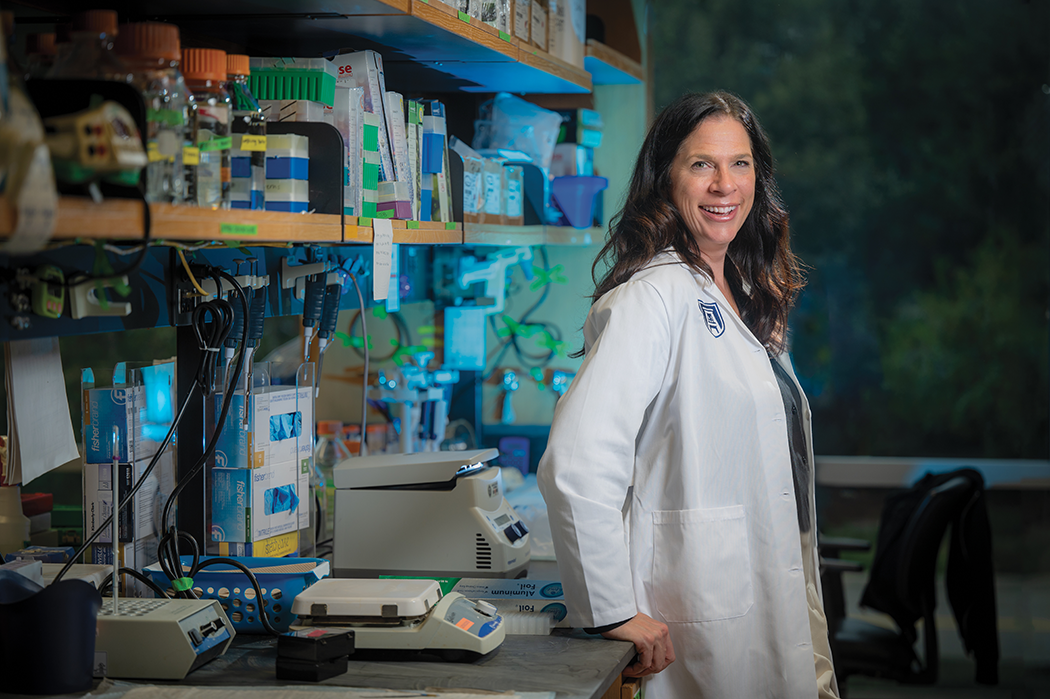
Jennifer C. Sullivan, PhD, dean of The Graduate School at Augusta University, has dedicated her research to better understand why blood pressure increases in hypertension and raising awareness to the dangers of not paying attention to heart health, particularly among women. Throughout her career, Sullivan has been continuously funded by the National Institutes of Health (NIH) and the American Heart Association since becoming a tenure-track faculty member in 2008, and now she has a chance to take her research further after securing a five-year, $7.5 million grant to have Augusta University designated as a Specialized Center of Research Excellence on Sex Differences (SCORE) by the NIH’s Office of Research on Women’s Health. It’s a distinction that places AU among 10 other leaders in research for the field, including Brigham and Women’s Hospital, Cedars-Sinai Medical Center, Emory University, Johns Hopkins University, Massachusetts General Hospital and Harvard Medical School, the Mayo Clinic, the Medical University of South Carolina, the University of Colorado and Yale University. The University of California, Los Angeles has two SCORE programs. “I’m so proud and excited for this opportunity because this has been what I have focused my research program on for my entire career, and to be able to advance it with a program like this, where we can actually build a unique program focused on an area that can make a difference, is just so much fun,” Sullivan said. “Just the fact that Augusta will be included on this list, attached to an organization of the caliber of NIH, will provide opportunities that we’ve never had before, especially for our students and younger researchers.” Sullivan’s SCORE project, “Improving awareness of women with hypertension: ROAR (Rural, Obese, At Risk),” focuses primarily on the fact that, while young women are considered “protected” from hypertension and the associated cardiovascular risk relative to age-matched men, the elimination of hypertension is projected to have a larger impact on cardiovascular disease (CVD) mortality in women. “The group of people with the highest risk of death from hypertension is in the rural South of the U.S., specifically Black women are particularly vulnerable to developing hypertension and CVD,” Sullivan said. According to Sullivan’s research and information available from the American Heart Association (AHA), approximately 19 million deaths were attributed to CVD globally in 2020, an increase of about 20% from 2010. Both Sullivan and the AHA state that cardiovascular disease remains the leading cause of death for both men and women in the United States, and that hypertension is a major modifiable risk factor for CVD. Sullivan said, “It has been suggested that eliminating hypertension would reduce CVD mortality by over 30% in men and 38% in women, but a critical barrier to limiting premature death from CVD is lack of awareness surrounding the risks of CVD. Our overall goal in this new funded project is to transform academic and community understanding of sex as a biological variable in the consideration of hypertension.” The three research projects include Sullivan’s lead project on high fat diets, a project on systemic lupus erythematosus (SLE) disproportionately affects young women led by Erin Taylor, PhD, at the University of Mississippi Medical Center, and another project looking at the role of inflammation and how immune cells are activated in SLE led by Michael Ryan, PhD, at the University of South Carlina’s School of Medicine. But there is more to SCORE than just conducting research. Each SCORE team is also responsible for a career enhancement core and a leadership administrative core. “What really sets these grants apart are the emphasis on the career enhancement and leadership administrative cores. The Career Enhancement Core is designed to be a bit open ended for each SCORE, but in talking to the NIH, what they were most excited about in our project is the community outreach piece we designed. “Our grant includes people across the entire campus, including Augusta University’s Medical College of Georgia, the College of Allied Health Sciences, the College of Education and Human Development and multiple campus partners including some of our sororities on campus and the Center for Writing Excellence,” Sullivan said. “More specifically, the COEHD is able to extend our outreach efforts to our local schools to begin educating children on the importance of screening, and our sororities are obviously connected with other chapters across the southeast which helps us spread our message, as well.” Sullivan notes that, through this portion of the project alone, there will be numerous opportunities to include students from Augusta University’s CAHS, College of Nursing, Department of Kinesiology, the Biomedical Sciences PhD program and the proposed School of Public Health. Marlo Vernon, PhD, associate professor at MCG and researcher for the Georgia Cancer Center, and Amanda Behr, chair of the Medical Illustration Program in CAHS, are also involved in various stages of the project. “The other thing the Career Enhancement Core will do is provide pilot grants to three research projects each year for early-stage investigators. We’ll also be able to fund sabbaticals for graduate students or postdocs to go someplace else and learn cutting edge techniques from other experts, so there is a lot built in that will help us support up-and-coming researchers,” Sullivan said. “We’re now part of this consortium, and they have a once-a-year, in-person meeting at the NIH offices, so we’ll go to that for the first time this year, and what’s neat about it is they’re really promoting young investigators. Each grant can bring up to eight people, the our hope is that we will have the investigators funded by the pilot projects attend next year, giving those folks the opportunity to present and talk to program officers with the NIH and develop a pipeline of investigators committed to studying women’s health and sex as a biological variable.” Sullivan is also looking to designate some of her summer graduate and undergraduate research positions to the project beginning next summer. “The Graduate School already has a summer program to support undergraduates that we will be able to piggyback off of. We have set aside five slots in that program for this that will go to students studying the sex as a biological variable, and the applications for that program, STAR, is already open,” Sullivan said. “We’re also planning a symposium in collaboration with the Physiology Department in April 2024. This is an annual event sponsored by the department, and this year they selected sex differences as the topic, so we are hoping to help increase exposure and attendance.” Looking to know more about the amazing research happening at Augusta? To connect with Jennifer Sullivan, simply click on her icon ow to arrange an interview today.


Dry eye disease is a common condition affecting one-third of the adult population and one-in-five children Professor James Wolffsohn researched the most effective blinking exercises to reduce discomfort, involving a close-squeeze-blink cycle He developed the MyDryEye app in collaboration with Alec Kingsnorth and Mark Nattriss to help sufferers An Aston University optometrist, Professor James Wolffsohn, has determined an optimum blinking exercise routine for people suffering with dry eye disease, and has developed a new app, MyDryEye, to help them complete the routine to ease their symptoms. Dry eye disease is a common condition which affects one-third of the adult population and one-in-five children, in which the eyes either do not make enough tears, or produce only poor-quality tears. It causes the eyes to become uncomfortable, with gritty- or itchy-feeling eyes, watery eyes and short-term blurred vision. It is more common in older adults and can be exacerbated by factors including dry air caused by air conditioning, dust, windy conditions, screen use and incomplete blinks, where the eye does not fully close. Professor Wolffsohn is head of Aston University’s School of Optometry and a specialist in dry eye disease. While it has long been known that blinking exercises can ease the symptoms of dry eye disease, the optimum technique, number of repetitions and necessary repeats per day are unclear. Professor Wolffsohn set out to determine the best exercises. His team found that the best technique for a dry eye blinking exercise is a close-squeeze-blink cycle, repeated 15 times, three times per day. Participants found that while they were doing their exercises symptom severity and frequency decreased, and the number of incomplete blinks decreased. Within two weeks of stopping the exercises, their symptoms returned to normal levels, showing the efficacy of the exercises. To carry out the work, Professor Wolffsohn’s team ran two studies. For the first, they recruited 98 participants, who were assessed for dry eye symptoms before and after the two weeks of blinking exercises. Participants were randomly allocated different blinking exercises to determine the most effective. A second study with 28 people measured the efficacy of the blinking exercise. Once the optimum blinking routine had been developed, Professor Wolffsohn worked withAlec Kingsnorth, an engineer and former Aston undergraduate and PhD student, and Mark Nattriss, business manager of his spin-out company, Wolffsohn Research Ltd, to develop the app, MyDryEye, which is freely available on Android and iOS operating systems. The app allows users to monitor their dry eye symptoms, assess their risk factors, add treatment reminders and monitor their compliance, complete the science-based blink exercises and find a specialist near them. Professor Wolffsohn says that the blinking exercises should be carried out as part of a treatment programme which could also include the use of lipid-based artificial tears, omega-3 supplements and warm compresses. Professor Wolffsohn said: “This research confirmed that blink exercises can be a way of overcoming the bad habit of only partially closing our eyes during a blink, that we develop when using digital devices. The research demonstrated that the most effective way to do the exercises is three times a day, 15 repeats of close, squeeze shut and reopen – just three minutes in total out of your busy lifestyle. To make it easier, we have made our MyDryEye app freely available on iOS and Android so you can choose when you want to be reminded to do the exercises and for this to map your progress and how it affects your symptoms.” Read the full paper, ‘Optimisation of Blinking Exercises for Dry Eye Disease’, in Contact Lens and Anterior Eye at https://doi.org/10.1016/j.clae.2025.102453.


Neutrons by the trillions: Using computational physics to understand nuclear reactors
Zeyun Wu, Ph.D., associate professor in the mechanical and nuclear engineering department at VCU Engineering, is reshaping the future of nuclear power. Nuclear reactors are among the most complex engineered systems on earth, with different physical processes interacting simultaneously across various scales. Even the world's most powerful computers cannot simulate every detail of an operating reactor at once. With a background in computational reactor physics, Wu’s research develops modeling and simulation techniques crucial to understanding next-generation nuclear reactors. By creating these advanced tools, his research eliminates the need for costly physical experimentation while ensuring the safety, efficiency and environmental sustainability of future nuclear power plants. Wu's research focuses on understanding reactor behavior through two aspects: multi-physics and multi-scale modeling. The multi-physics approach integrates various physical phenomena, such as nuclear physics reactions, fluid dynamics, heat transfer and structural mechanics, into a unified simulation framework. The multi-scale modeling technique addresses the vast range of physical scales involved, from subatomic neutron interactions to meter-sized reactor components. Wu’s research can simulate the complex phenomena within reactors at different scales. These models, developed using advanced numerical methods, help predict reactor behavior under various conditions. One of the models Wu uses tracks neutron behavior, a fundamental aspect to understand nuclear reactions. His simulations track trillions of neutrons as they move through various reactor materials, cause fission events and generate power. "What drives power is actually the neutron," explained Wu. "Once an atom splits, along with the nuclear energy release, lots of neutrons come out. We're talking about 1012 to 1013 neutrons per second. Our code tracks each neutron to understand where it comes from and where it goes." By understanding neutron distribution across space, time and energy domains, Wu's team can predict power distribution throughout the reactor core. This helps identify potential hotspots – areas of heightened thermal activity that could pose safety challenges. Beyond neutron behavior, Wu's research also explores how cooling fluids interact with neutrons and carry away thermal energy, a field known as thermal hydraulics, because how the reactor components are cooled significantly affects the neutron behavior as well. This also explains why the multi-physics modeling becomes essential for nuclear reactor simulations. Wu founded the Computational Applied Reactor Physics Laboratory (CARPL) to continue his research in nuclear reactor modeling and simulation. Undergraduate and master’s students learn to use established nuclear simulation codes to analyze reactor problems – skills highly valued in the industry and national labs. Ph.D. students build on theoretical foundations to deepen their understanding, enhance existing models, and develop new ones. “My area of research has been continually evolving for the past 60 years or so,” said Wu. “Most of the codes we use have been developed by national labs, like Oak Ridge National Lab, but these codes aren’t perfect. National labs hire Ph.D. level students with this niche to identify deficits in the code, correct errors and even add new functions and improve them.” Looking forward, Wu hopes his research will have a real-world impact on the upcoming shift in nuclear power in America. Over the next 20 to 30 years, the nation's approximately 90 light-water-cooled nuclear reactors reach the end of their operational lifetimes. Light water refers to ordinary water (H₂O), used in most existing reactors to both cool the system and slow down neutrons to sustain the nuclear reaction. To replace them, experts are looking toward advanced, non-light-water-cooled reactors, such as the Molten Uranium Breeder Reactor (MUBR) shown in the figure. Computational methods and tools like Wu’s research lab developed will be essential to their development and implementation. Non-light-water cooled reactors offer significant advantages over the older designs. Some can operate at higher temperatures while others produce substantially less nuclear waste, addressing one of the industry's persistent challenges. "Unlike traditional water reactors, where we have decades of operational experience and established analysis tools, these new designs present unique challenges," explained Wu. "Companies like Dominion employ large teams of analysts who use well-tested computational tools to maintain their existing reactors, but those same tools aren't calibrated for these next-generation reactors. Our research is developing the computational methods and simulations these advanced reactors will need. When these new reactors come online, the methodologies we're creating now can be quickly converted into production-level nuclear codes, providing immediate practical value to industry.”


J.S. Held Announces the First Global Consulting Company Chief Intellectual Property Officer
Global consulting firm J.S. Held proudly announces the appointment of intellectual property (IP) expert James E. Malackowski as the first Chief Intellectual Property Officer (CIPO) of a global consulting company. J.S. Held Chief Executive Officer Lee Spirer observes, “In today's knowledge-based economy, the role of CIPO serves an important strategic and operational role both internally and in support of clients.” Protecting J.S. Held Intellectual Property and Other Intangible Assets J.S. Held experts have developed methodologies, frameworks, proprietary tools, and research that support client work. The CIPO partners across the business to ensure that these intangible assets are identified, protected, and leveraged to benefit the business. “Having dedicated IP leadership will help the company move faster in developing and deploying new methodologies, while ensuring reasonable measures of protecting our innovations,” noted James E. Malackowski. Managing J.S. Held Intellectual Property and Other Intangible Assets J.S. Held maintains a robust portfolio of patents including a “System and Method for Financing an Insurance Transaction”, trademarks, data, trade secrets, and other proprietary technologies that support client work. “As CIPO, I intend to partner with company leadership and our professional experts across the globe to manage and monetize the many patent, trademark, data, and other proprietary assets that set J.S. Held apart among our competitors, benefitting clients and our investors,” added James E. Malackowski. Industry’s Most Comprehensive Global Intellectual Property Consulting Group Ocean Tomo, a part of J.S. Held, is rooted in an expansive understanding of intellectual property (IP) value and risk, providing a foundation of Expertise for the Innovation Economy™. Built upon more than three decades of experience assessing IP in the most rigorous of venues - state, federal, and international courts, Ocean Tomo clients benefit from continuous feedback between litigation economic damage outcomes, transaction pricing, capital market valuations, debt financing terms, equity assessments, and deep technical insight. The team possesses the most comprehensive and market-tested understanding of IP value. Financial, market, and technical experts uniquely understand the contributory value of patented inventions, know-how, brands, and copyrights that permeate every business, viewing IP not simply as an isolated asset, but as an integral component of enterprise value. Multidimensional Intellectual Property-Informed Experts Benefit J.S. Held Clients Intellectual property expertise permeates the global organization. Beyond the expertise within J.S. Held’s dedicated IP practice Ocean Tomo, a part of J.S. Held, multidisciplinary experts across J.S. Held combine intellectual property expertise to core specializations, including: • Artificial Intelligence (AI) • Business Intelligence • Construction Advisory • Enterprise Risk Management • Fraud Investigations • Forensic Accounting • Insurance Claims Consulting • Restructuring, Turnaround, Receivership, and Bankruptcy Tangible and Intangible Asset Value Understanding The depth and breadth of J.S. Held’s work in the property and casualty insurance market and Ocean Tomo’s work across all forms of intellectual property and other intangible assets uniquely combine to create a strong foundation in risk assessment, data analysis, global awareness, regulatory compliance, technological adaptability, and risk mitigation. Collectively, these skills better equip J.S. Held experts to assess business risk across diverse geographies, geopolitical landscapes, regulatory frameworks, and technological advancements for the benefit of our clients. Learn more about the new J.S. Held Chief Intellectual Property Officer, James E. Malackowski: Looking to know more or connect with James E. Malackowski? Simply click on the expert's icon now to arrange an interview today. For any other media inquiries - contact : Kristi L. Stathis, J.S. Held +1 786 833 4864 Kristi.Stathis@JSHeld.com


Study reveals how race-evasive coverage of student loans fuels policy failures
For years, news coverage of the student debt crisis has left out a crucial part of the story: race. A new study in Educational Evaluation and Policy Analysis analyzed 15 years of student loan reporting in eight major newspapers to reveal that most media outlets avoided mentioning race until just a few years ago (even though disparities existed for all 15 years of the study). While one might assume this shift came after the racial justice uprisings of 2020, the data shows that the turn toward more explicit racial language actually began around 2018. Dominique Baker, associate professor in the College of Education and Human Development’s School of Education and the Joseph R. Biden, Jr. School of Public Policy and Administration at the University of Delaware, was the lead researcher. “Even when newspapers did eventually address race, they focused primarily on documenting the size of disparities instead of talking about the structural reasons underlying them, like racism,” Baker said. “Other research has shown that when the news media solely focuses on the disparities and not the structural issues, readers are more likely to punish people of color instead of supporting solutions that could help them." Why does this information matter? Because how the media talks about policy shapes how the public—and policymakers—see the problem. If coverage ignores the racial disparities in student loan burdens, it makes race-neutral, one-size-fits-all solutions seem more logical—even if they fail to address real inequities. It’s not just about adding a few words. It’s about changing the lens entirely. Baker has appeared in dozens of national news outlets for her expertise. She is available for interviews on this paper and other topics surrounding higher education. Email mediarelations@udel.edu to contact her.

5 Reasons "Expertise Marketing" Programs Fail.
As a company dedicated to “Expertise Marketing” we work with some of the largest organizations from higher education and healthcare, to top global corporate brands. What these organizations have in common are smart, educated professionals…and a lot of them. The types of individuals that would be valuable ambassadors, true thought leaders, helping you deliver on your organization’s reputational and revenue goals. Instinctively marketing and communications teams recognize the intrinsic value of this human capital and have created a variety of “Thought Leadership” and “Expert Marketing and Directory” initiatives. The overriding objective is how to best connect their experts to audiences that matter. Seeking opportunities ranging from acting as media sources to event speakers to providing a valuable entry-point for research and business collaboration, even lead generation. To execute on this goal, one of the most effective approaches, and starting points for any expertise marketing program starts with better profiling their experts and related insights on their website. Building out and leveraging this expert content is at the core of most expertise marketing efforts. Despite the promises these web initiatives offer, most programs don’t deliver organizations the results they were hoping for. Success most often has nothing to do with how smart your people are. Some of the largest organizations with deep rosters of expertise fail where smaller organizations consistently punch above their weight. When creating an expertise presence on your website there are important areas to consider. The following represents the top 5 reasons many expertise marketing programs fail and how to maximize your success. Reason #1 You’re missing critical team members There is no “going it alone” when starting a program like this. Having the following individuals onboard at the start is crucial. Don't worry, these aren't all full-time resources by any means. As your program progresses, these individuals may come in and out in terms of importance, but having access to them over the lifetime of your program will positively impact your success. At the core, you need access to the following individuals. Program Champion - Having a senior leader as a champion is pretty much table stakes for any successful company-wide initiative such as this. Someone who can articulate to others, both up and down in the organization as to how this initiative fits into the broader long-term goals of the organization is imperative. Failure to establish this individual upfront puts your program's future at the whim of shifting priorities and budget cuts. Marketing/Communications - You need someone with ongoing responsibility for maintaining and promoting your roster of experts and their content. This ensures your most relevant experts are showcased at the right time to meet the changing demands of your audiences and the news cycle. Digital/Web - You need someone with the keys to the website/CMS. Ensure you have connections to people who control not only your small area of the website such as a newsroom or department level webpages but also those that have access to the layouts and navigation of the broader website. The latter is important as it helps prevent your expert content from combing isolated and disconnected from the rest of your website. IT - The level of involvement of IT is highly dependent on how you’re looking to implement your expert content on your website. By leveraging a variety of content implementation tools from simple "cut and paste" embeds to WordPress plugins you can severely limit the necessity to involve IT. However, depending on your budget and goals, IT can leverage a platform's API, accessing advanced layouts and functionality, including integrating with other systems your organization may already be using. Engaged Experts - Last but not least, having your experts on board is critical. By properly communicating upfront and ongoing with your experts around the goals of the program, you're helping ensure your content best represents the talents that lie within. We realize it is often difficult and sometimes cost-prohibitive to assemble such a team. It is important if you don’t have access to all these members in-house that you access them through an external partner's professional services offerings. This could include assisting with building out content such as profiles and posts or providing technical assistance in integrating this content into your website. Reason #2 You’re relying too much on IT for implementation or updating. To be successful long term, it is important that key owners of the expertise marketing program feel empowered to take control of their expert content. From creation to ongoing management, those with marketing communications roles and others closest to their organization’s expertise need the flexibility to update content in real-time to remain relevant and up-to-date. Being able to quickly log into an external platform that syncs content with your website is key. It eliminates the need for special access to your CMS or the possible requirement for IT to be in control of your updates. It also allows for a mix of individual expert and administrator access providing the highest level of flexibility. Often left out in IT-focused builds is how you will effectively handle inquiries. Simply showing emails and phone numbers is a recipe for missed opportunities (and SPAM) as these experts are some of the most time-constrained individuals in your organization. Ensuring you have access to a customizable workflow feature is essential in ensuring your organization doesn't miss potential time-sensitive inquiries. When working with IT to implement an Expertise Marketing Program on your website, you will often be presented with a “we’ll build it for you option” vs using a purpose-built platform. Understanding the tradeoffs of this approach is critical. One of the greatest benefits of using a SaaS platform, besides costs, is that you constantly have the most up-to-date software, with the latest features and functionality to best showcase your expertise. To learn more, download the “True Costs of DIY” to better understand the tradeoffs and functional requirements needed for success. Reason #3 Your expert content is siloed, one-dimensional, and rarely updated. This is by far one of the biggest reasons programs fail. Well, it's actually a number of reasons, but it all relates back to how your content will be perceived and ultimately drive connections with interested audiences. By addressing the following you'll present not only better but more easily discoverable expert content that drives inquiries. You have boring, not engaging profiles for your experts - Before people feel comfortable reaching out they need a good sense of the person. Profiles that lack media assets such as video, publications and even podcasts are one-dimensional. Furthermore, showcasing past media and event appearances provides an enhanced level of credibility. Focused solely on a directory & profiles - Your expertise is more than just showcased through a profile found in a directory. Adding long-form posts where experts can share their insights and even expert focussed Q&A (download report on "The Power of Q&A") provides audiences additional ways to connect with your experts. Ensuring all these additional assets connect back to your profiles provides more insight into the person behind the expertise. No main website navigation - Despite adding menu navigation on a specific web page, such as a newsroom or About Us page, most organizations neglect to add navigation to their main website’s menu structure. You can never assume visitors will know where this content resides. We recommend multiple links in both headers and footers to your expert content. Names such as “Find Experts”, “Media Sources” or “Research Experts” are some of the most common, accessible from overall menu items like “About Us”, “News” or “Research”. Expert content stuck to one small area of your website - If you restrict your expert content to just one area, you’re just making discovery that much harder and limiting exposing the breadth of expertise you have in-house. Highlight your experts and expertise on your homepage or in key sections of your website. Refine your experts and their insights found in posts or Q&A by tagging them based on specific topics and showcasing just those experts in various areas of your website. Using a dedicated SaaS platform means that when you update content it updates everywhere, making changes quick and easy. Expert content never gets updated - This is a big issue for organizations that build in-house or through their CMS. Visitors can quickly understand that the content isn’t fresh and it reflects poorly on the individual and the organization as a whole. The key to ensuring content is maintained is to provide multiple access capabilities where admins (internal or external) and the experts can maintain the content. Failure to respond in a timely manner to inquiries - Displaying content that exposes phone numbers and emails of your experts is not the best approach...both from a privacy and timely communications standpoint. Without an advanced inquiry workflow that alerts multiple members of your team, you risk missing out on time-sensitive requests such as those from journalists. Reason #4 You haven’t considered everything needed to win the SEO game. Building out content on the web without having a plan for how external and internal search engines will interact with your pages is a big mistake. Organic search can play a big role in discovery leading to valuable opportunities. Before you consider your new expert content pages ready, ensure you've taken into account the following. Proper Meta Data - Do your expert profile pages have dynamically created titles, descriptions and keywords that automatically adjust to changes in areas such as an individual's expertise? Schema Data - Do you have proper schema tags that indicate to Google and other search engines the type of content displayed as well as the credibility of both the individual and organization behind it. Sitemaps - Have you ensured all your pages have been added to your sitemap. Is it automatically updated when new experts or pieces of expert content are added? Google Search Console - Are you pushing pages directly to Google by requesting important new content is updated in the search index. For more info on better SEO read my Spotlight "Why Expertise Ranks Higher". Reason #5 You’re not doing enough to actively promote your expertise… a “they’ll just find us” approach usually fails. It's like owning a Porsche and leaving it in the garage…pretty to look at but you’re not realizing its full potential. Simply putting your expert content on a web page is only the start. Successful organizations actively distribute these assets, sharing links to profiles and other content elements like news posts or Q&A in a variety of ways. Social Media Channels - They start by promoting these assets on their social media channels, from their Twitter feeds to Facebook and LinkedIn posts. Media Distribution Software - Whether it is systems like Cision or Meltwater, including links to expert profiles and related content when reaching out to journalists adds a layer of depth to your pitches. Press Releases - Every time you reference your organization's expertise, include links to additional content and individual experts for more insights and pathways to connect with real people. It sounds like a lot, but with a bit of planning and some ongoing maintenance, a properly constructed expertise marketing program can deliver incredible results for many years. To be successful it's more than just firing up a few new web pages. However, with the advent of specialized platforms specifically designed for these programs, and a bit of guidance, it is easier than ever to create an expert content footprint on your website and deliver valuable connections for your organization.



Hidden in plain sight: UD researcher exposes gaps in college application process
In a groundbreaking study in the American Educational Research Journal, University of Delaware Associate Professor Dominique Baker and others has unveiled significant disparities in how students report extracurricular activities on college applications, highlighting inequities in the admissions process. Analyzing over 6 million Common App submissions using natural language processing, the researchers discovered that white, Asian, wealthier, and private-school students tend to list more activities, leadership roles, and unique accomplishments compared to their peers from underrepresented racial, ethnic, and socioeconomic backgrounds. However, when underrepresented minority students did report leadership roles, they did so at rates comparable to their white and Asian American counterparts. “All students do not have the ability to sign up for eight, 10 or 15 extracurricular activities,” Baker noted, emphasizing that many students must work to support their families, limiting their participation in extracurriculars. To address these disparities, the researchers recommend reducing the number of activities students can list on applications—suggesting a cap of four or five—to encourage a focus on the quality and intensity of involvement rather than quantity. This approach aims to level the playing field, ensuring that students with limited opportunities can still showcase their potential effectively. Baker and her colleagues draw attention to Lafayette College, which has recently reduced the number of extracurricular activities it reviews from 10 to six. While data on the impact of such changes is still forthcoming, the move aligns with the researchers’ recommendations and signals a shift toward more fair admissions practices. Other institutions are beginning to take note. If you wish to delve deeper into this research and explore its implications for college admissions, Baker is available for interviews and has been in a number of national outlets like The Wall Street Journal, ABC News, and Inside Higher Ed. Her insights could provide valuable perspectives on creating a more fair admissions landscape.

ChristianaCare Becomes First in Delaware to Offer CAR-T Therapy for Advanced Multiple Myeloma
ChristianaCare’s Helen F. Graham Cancer Center & Research Institute is the first in Delaware to offer a powerful new tool in the fight against multiple myeloma—a type of blood cancer that affects plasma cells in the bone marrow. That tool is a new chimeric antigen receptor (CAR) T-cell therapy, called CARVYKTI, which can improve treatment for adults with multiple myeloma that has returned or stopped responding to other treatments. “CAR-T cell therapy represents a paradigm shift in the treatment of multiple myeloma,” said Thomas Schwaab, M.D., Ph.D., Bank of America Endowed Medical Director of the Helen F. Graham Cancer Center & Research Institute." We are expanding access to this life-extending therapy right here in Delaware — close to home, close to hope. This is part of our ongoing commitment at the Graham Cancer Center to ensure our community has access to the most advanced cancer therapies.” Multiple myeloma is a relatively rare cancer, but it still affects a significant number of people each year. In the United States, it is estimated that around 36,110 new cases will be diagnosed in 2025, according to the American Cancer Society What is CAR-T Therapy? CAR-T cell therapy uses a patient’s own immune cells to fight cancer. Doctors first collect the patient’s T cells, which are a type of white blood cell that helps the body fight infections. In the lab, these T cells are reprogrammed by adding a special receptor called a chimeric antigen receptor (CAR). This receptor allows the T cells to recognize specific proteins on cancer cells, acting like a navigation system to help the T cells find and attack the cancer. After this genetic modification, the reprogrammed T cells are expanded in the lab to create a larger army of cancer-fighting cells. Then, they are infused back into the patient’s body, where they go on to find and destroy the cancer cells. This therapy is approved for adults who have already tried several standard treatments, like proteasome inhibitors, immunomodulators and anti-CD38 antibodies, without success. When those treatments stop working, CARVYKTI can offer a powerful new option. CAR T-cell therapy has given new hope to patients with multiple myeloma whose cancer has returned or stopped responding to other treatments. Many people see their cancer shrink or even disappear for a period of time, which can help them live longer and feel better. While the treatment can have short-term side effects, many patients report feeling stronger and having fewer symptoms once they recover. It’s not a cure, but for some, it can mean more time with loved ones and a better quality of life. “This therapy gives our patients a chance when other treatments have failed,” said Zhifu Xiang, M.D., medical oncologist at ChristianaCare Oncology Hematology. “It’s a deeply personalized approach that uses the patient’s own immune system to fight the cancer in a powerful new way. Being able to offer this locally means our patients don’t have to travel far for world-class care.” A Leader in Cell Therapy The Graham Cancer Center’s dedicated team of specialists have been offering CAR-T cell therapy for other cancer types, such as lymphoma and leukemia, since 2018. The center is also recognized by the Foundation for the Accreditation of Cellular Therapy (FACT) for meeting the highest standards in safety, quality and patient care. To learn more about CAR-T cell therapy or other cancer treatments at ChristianaCare, visit christianacare.org/cancer or call the Helen F. Graham Cancer Center & Research Institute at 302-733-HOPE (4673).

