Experts Matter. Find Yours.
Connect for media, speaking, professional opportunities & more.

Solving for X: Expert highlights importance of algebra in middle and high school
Math educators agree that Algebra is a critical course for middle and high schoolers, often serving as a gateway to more advanced math courses and influencing students’ academic trajectories in STEM pathways. Yet, many students struggle in this important course. Since May 2025, University of Delaware Associate Professor Erica Litke has partnered with the University of Pennsylvania Graduate School of Education and the School District of Philadelphia in a $5 million, three-year initiative to improve algebra teaching in the district. The project offers algebra teachers professional development through a year-long fellowship. With expertise in improving instructional quality in math and supporting algebra teaching, Litke leads the design and delivery of the professional development with Penn GSE experts. Close to 80 teachers participated in the first cohort of the fellowship, which includes a four-day summer institute. Litke’s research in math education has connected instructional quality to broader policy issues in education and focused on teacher knowledge and professional development. “The focus on algebra content and key features of algebra teaching that support students in learning algebra content helps teachers translate their learning from the fellowship directly into their teaching practice,” said Litke. “Being able to translate my research findings into usable knowledge for teachers and contribute to the design of this kind of comprehensive professional learning has been really exciting.” Litke can speak to her role in the Algebra Fellowship project, the importance of Algebra 1 in the trajectory of students’ STEM education and strategies for supporting teaching learning at the school and district levels. ABOUT ERICA LITKE Erica Litke is an associate professor specializing in mathematics education in the School of Education at the University of Delaware. Her research focuses on understanding and improving instructional quality in mathematics for students in the elementary and secondary grades. Her research has described and analyzed instructional practice in mathematics using observation instruments, connected instructional quality in mathematics to broader policy-related issues in education, and focused on teacher knowledge and professional development. She has appeared in The Philadelphia Inquirer, Daily Pennsylvanian and other publications. To speak with Litke or to learn more, email mediarelations@udel.edu.


National Academy of Inventors welcomes five VCU College of Engineering researchers
The National Academy of Inventors (NAI) recently inducted five Virginia Commonwealth University (VCU) College of Engineering researchers as senior members. Chosen for their innovative engineering contributions, the honorees are recognized as visionary inventors whose groundbreaking research and patented technologies are driving meaningful societal and economic advancements across the national innovation landscape. “Invention represents the practical application of knowledge and stands as one of the many ways engineers can make a positive impact on their communities and the world,” said Azim Eskandarian, D.Sc, the Alice T. and William H. Goodwin Jr. Dean of the VCU College of Engineering. “This year’s honorees exemplify the interdisciplinary nature of our field, leveraging advanced concepts from mechanical, biomedical, chemical and pharmaceutical engineering to address today’s most pressing challenges. We are immensely proud that our dedicated researchers have earned recognition as members of the esteemed National Academy of Inventors.” The VCU College of Engineering NAI inductees are: Jayasimha Atulasimha, Ph.D. Engineering Foundation Professor Department of Mechanical & Nuclear Engineering An internationally recognized pioneer of straintronics, an approach to electrically control magnetism for ultra-low-energy computing, Atulasimha has made significant research contributions to next-generation memory, neuromorphic hardware and emerging quantum computing technologies. He holds four U.S. patents spanning energy-efficient magnetic memory, nanoscale computing architectures and medical tools. Atulasimha’s commercially viable inventions are funded by organizations like the Virginia Innovation Partnership Corporation and he leads multi-institutional collaborations that drive innovation in computing hardware, AI and quantum technologies with more than $10 million in funded research. Casey Grey, Ph.D. Postdoctoral Research Associate Department of Mechanical & Nuclear Engineering Bridging engineering and medicine, Grey’s work spans life‑saving stroke technologies, breakthrough respiratory and neurological care, and sustainable packaging. As a lead R&D scientist at WestRock, he helped create and commercialize the CanCollar® portfolio, a recyclable paperboard replacement for plastic beverage rings now used on five continents, eliminating thousands of tons of single‑use plastic annually. In medical device innovation, Grey’s patent and development work on a novel cyclic aspiration thrombectomy platform, currently in clinical trials, is advancing stroke treatment by enhancing clot removal efficiency and reducing long‑term disability. At the VCU College of engineering, Grey built a research and commercialization pipeline around neurological and respiratory technologies, securing eight provisional patents and leading multidisciplinary teams in neurology, neurosurgery, surgery, pharmacology and toxicology, internal medicine, and respiratory medicine. His work includes developing dry powder inhaler strategies for delivering life‑saving drugs to patients with acute respiratory distress syndrome (ARDS), a pediatric bubble CPAP system designed to protect brain development in premature infants, and non‑invasive, non‑pharmacological 40 Hz neuromodulation therapies to treat neurodegeneration and conditions with significant central nervous system complications, like sickle cell disease. In collaborations with the VCU Children’s Hospital and VCU Critical Care Hospital, Grey is leading two clinical studies that are translating these innovations to improve patient care. Ravi Hadimani, Ph.D. Associate Professor and Director of Biomagnetics Laboratory Department of Mechanical & Nuclear Engineering Hadimani founded RAM Phantoms LLC, a VCU startup company, commercializing anatomically accurate, MRI-derived brain phantoms for neuromodulation and neuroimaging applications. These brain phantoms help test and tune transcranial magnetic and deep brain stimulation technologies, improving clinical safety and enabling personalized therapy for patients. RAM Phantoms is also developing a highly-skilled workforce for employment in Virginia’s growing biomedical device industry. Beyond commercialization, Hadimani maintains a productive research program with more than $4.5 million in funding resulting in 125 original peer-reviewed publications, 17 current and pending patents, a book, and several book chapters. His biomagnetics lab serves as a training ground for undergraduate, graduate and Ph.D. students to hone their skills in innovation management, intellectual property strategy and startup development. Several students from Hadimani’s lab have engaged in translational research, patent co-authorship and start-up formation, cultivating a new generation of engineer-entrepreneurs equipped to drive future technological advances. Before joining VCU, Hadimani led the development of hybrid piezoelectric–photovoltaic materials that established FiberLec Inc., which commercialized multifunctional energy-harvesting fibers capable of converting solar, wind and vibrational energy into usable electricity. Worth Longest, Ph.D. Alice T. and William H. Goodwin, Jr. Distinguished Chair Department of Mechanical & Nuclear Engineering Uniting aerosol science, biomedical engineering and computational modeling, Longest is revolutionizing inhaled drug delivery. Working with collaborators, his lab has developed novel devices, formulations and delivery platforms that precisely target medications to the lungs, addressing conditions like cystic fibrosis, pneumonia, acute respiratory distress syndrome and neonatal respiratory distress syndrome. These innovations have resulted in multiple patents. Some of them have been licensed through commercial partnerships like Quench Medical, an organization advancing inhaled therapies for applications like lung cancer. Collaborating with the Gates Foundation and the lab of Michael Hindle, Ph.D., from the VCU Department of Pharmaceutics, Longest’s team developed a low-cost, high-efficacy aerosol surfactant therapy for pre-term infants based entirely on technology developed at VCU. The invention eliminates intubation, reduces dosage by a factor of 10, and cuts treatment costs. Over 9 million infant lives are projected to be saved by this technology between 2030 and 2050. Through a long-term collaboration with the U.S. Food and Drug Administration, Longest’s in vitro and computational methods provide federal regulatory guidance for generic inhaled medications. The VCU mouth-throat airway models developed under his leadership are used globally across the pharmaceutical industry and in government laboratories. Hong Zhao, Ph.D. Associate Professor Department of Mechanical & Nuclear Engineering Zhao holds 40 patents with innovations spanning additive manufacturing, stretchable electronics, inkjet printing technologies and superoleophobic materials that repel oils, greases, and low-surface-tension liquids. Her research has applications across health care, sustainable energy and advanced manufacturing. Prior to joining the College of Engineering, Zhao served as a senior research scientist and project leader at the Xerox Research Center, where she developed high-performance materials and printing technologies for commercial deployment. Her industry experience makes Zhao’s lab a hub for innovation and mentorship, with students engaging in innovative research and co-authoring publications. Zhao is an invited reviewer for more than 50 premier journals and grant agencies. “Working with distinguished researchers and innovators like those inducted into the National Academy of Inventors is a great honor for me,” said Arvind Agarwal, Ph.D., chair of the Department of Mechanical & Nuclear Engineering and NAI fellow. “They are an inspiration and showcase the kind of impact engineers can make. Having all five of these innovators as part of our department amplifies the scientific richness of our college and its societal impact. They advance the college’s mission of Engineering for Humanity, with research that brings a positive change to our world.” The 2026 NAI class of senior members, composed of 231 emerging inventors from NAI’s member institutions, is the largest to date. Hailing from 82 NAI member institutions across the globe, they hold over 2,000 U.S. patents.






The science behind the blood moon: Understanding this lunar phenomenon ahead of march's event
March's celestial event – a blood moon – is just around the corner. This captivating lunar spectacle isn't just a cool sight to behold; it has some neat science backing it up. The blood moon phenomenon happens during a total lunar eclipse. "During a total lunar eclipse, the only light that reaches the surface of the moon is refracted through the Earth's atmosphere, which essentially acts like a lens. Light is a wave, and every color of the rainbow has a different wavelength – red the longest and violet the shortest," said Bennett Maruca, associate professor of physics and astronomy at the University of Delaware. What adds to the excitement is the rare nature of total lunar eclipses. While partial eclipses occur more frequently, a full blood moon isn't an everyday event. Depending on where you live, the blood moon may only grace the night skies a few times a decade. "One of my favorite things about total lunar eclipses is that it's hard to know ahead of time quite what it will look like. The moon can take on a color ranging from burnt orange to red to grayish brown," he said. "The closer the Moon passes to the center of Earth's shadow, the darker the color will be." Maruca is available to speak about the event, which takes place in the wee hours of March 3. He can discuss when to wake up to see the phenomenon and how to best capture it. "For photographing the moon, I would recommend a camera with some optical zoom – the moon is only about 0.5 degrees across. Because of the low lighting conditions, a tripod or other support would be helpful since a longer exposure time will be needed," he noted. He has appeared in a number of outlets including Mashable and The Philadelphia Inquirer. He can be contacted by clicking on his profile. ABOUT BENNET MARUCA Bennett Maruca serves as an associate professor in the University of Delaware's department of physics and astronomy. His research focuses on the sun, the solar wind and other space plasmas. He is a recipient of the Antarctic Service Medal and NASA's Silver Achievement Medal. He also serves as an associate director of the Delaware Space Grant Consortium and is currently mentoring over twenty undergraduate students developing experiments to fly into space to observe Earth's ionosphere.


Laura Mauldin's rule of thumb is that if you think you're caregiving, you probably are. The University of Connecticut professor and author has a new book that just been released In Sickness and in Health, where an urgent argument is made that America’s caregiving crisis is not a private family matter, but a structural and political failure. Mauldin isn't just a scholar in the field. She also speaks from personal experience about the impact of caregiving -- as well as how society views and values it -- on both caregivers and those that they care for. It may not have been the birthday present then 32-year-old Laura Mauldin wanted to buy herself, but purchasing long-term care insurance was something she knew she needed. Mauldin, an associate professor in UConn’s Department of Social and Critical Inquiry, had been caring for her sick partner the five years prior, watching as cancer destroyed the promise of a long life. “It’s not about being morbid, rather it’s about recognizing the inevitability of a completely typical, expectable part of life,” Mauldin says of her advanced planning. “Why not just go ahead and in a neutral way have a plan? Then it’s there, you don’t have to worry, and you can feel more prepared.” A detailed account of her caregiving experience is the launching point for her new book, “In Sickness and in Health,” released this month by HarperCollins’ Ecco Press, in which she tells the story of a handful of couples from around the country who she came to know over years of spending time with them, oftentimes days and nights. “I grew to love these people and to care about them,” she says. “Their stories tell us something bigger about our culture, about our society, and about our choices around care policy and care systems. Theirs are the hidden stories that are going on behind millions of closed doors.” In her quest to bring discussions about caregiving to the light of day, Mauldin sat with UConn Today recently to talk about the different forms that caregiving can take, the result of absent social safety nets, and how ableism permeates the culture. February 2026 - UConn Today Drawing from her new book, Mauldin blends her personal experience with sociological research to show how love, marriage, and devotion are routinely forced to compensate for weak public policy, limited Medicaid support, and a culture shaped by ableism. Her work reframes caregiving as essential labor, deeply gendered, largely invisible, and profoundly political, and challenges the notion that “love is enough” in a system that offers far too little support. It’s an old adage: when people get married, they promise to stick together “in sickness and in health.” But that’s easier said than done when you’re caregiving for a spouse or long-term partner, when systemic failures often lead to burnout. In her new book, In Sickness and in Health: Love Stories from the Front Lines of America’s Caregiving Crisis, University of Connecticut professor Laura Mauldin explores the relationships between caregivers and their disabled and sick spouses, and the underlying lack of structural support in the US that makes unpaid care an inescapable feature of most such relationships. The topic is personal for her: Maudlin’s partner’s leukemia came out of remission as they were getting closer in 2006. “Falling in love with J had called upon me to increasingly fill a role that required meeting nearly every one of her needs,” Mauldin writes in her introduction. “This was more than just providing emotional support when the person you love is suffering.” J passed away in 2010. I spoke to Mauldin about crafting this book based on her lived experiences, how systems fail both disabled people and their caregivers, and what is at stake with Medicaid cuts exacerbating the damage to an already broken system. February 2026 - Mother Jones Dr. Laura Mauldin, an associate professor in the Department of Social and Critical Inquiry at the University of Connecticut, blends rigorous scholarship with lived experience to challenge prevailing assumptions about caregiving, disability, and public policy. Her work exposes how cultural norms and policy gaps intersect to offload care onto private homes, obscuring the true costs of care and the human toll of under-resourced support systems. She is available to speak with media - simply click on her icon now to arrange an interview today.


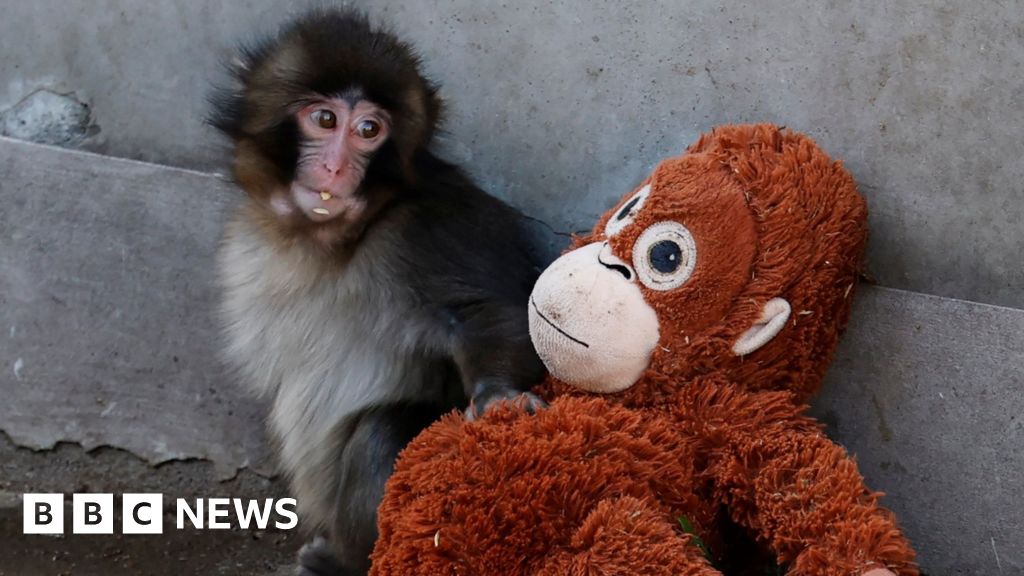
Expert Q and A: Understanding "Punch," The Baby Monkey That Captured The World's Heart
A tiny Japanese macaque named Punch has unexpectedly become one of the internet’s most talked-about animals. Born at a zoo in Japan and rejected by his mother shortly after birth, the young monkey was hand-raised by staff and given a stuffed toy for comfort—an image that quickly ricocheted across social media worldwide. Videos showing Punch tentatively approaching other macaques, sometimes being pushed away or corrected as he tried to socialize, struck an emotional chord. What began as a local zoo update rapidly turned into international headlines, with audiences from North America to Europe weighing in on what they saw as loneliness, resilience and the universal need for belonging. But experts say the story is more nuanced than a viral clip suggests. The interactions that many viewers interpreted as bullying are, in fact, typical components of macaque social development, part of how young primates learn boundaries, hierarchy and group norms. While Punch’s early maternal separation makes his integration more delicate, gradual acceptance into the troop is a positive sign. As internet users continue to share and comment, the moment has sparked broader conversations about animal emotion, anthropomorphism and the realities of wildlife behavior in managed care settings. Florida Tech's Catherine Talbot offered insight into the complexities of animal behavior. Catherine F. Talbot is an assistant professor in the School of Psychology at Florida Tech and co-director of the Animal Cognitive Research Center at Brevard Zoo. Her overarching research goal has been to study the ultimate (evolutionary) and proximate (behavioral, biological, and developmental) mechanisms underlying sociality. Q: Is it normal for mother macaques to abandon their babies, or is this an unusual occurrence? What circumstances can cause this to happen? It’s not necessarily normal, but also not that uncommon in primates, unfortunately. It’s more common in first time mothers that are inexperienced and sometimes lower ranking mothers. A number of factors can increase the likelihood of abandonment including stress on the mother and unfavorable conditions such as limited resources. Q: How does abandonment affect development in young macaques? Early maternal contact is critical for normal behavioral and emotional development. Infants rely on their mothers for nutrition, warmth, protection and learning how to navigate social dynamics. When infants do not have their mothers during critical developmental periods like infancy, in the short term, they tend to have elevated stress responses and difficulty with emotional regulation. In the long-term, it depends on whether the infant is able to form other types of attachment. In the worst-case scenario, they may have increased aggression, abnormal and/or self-injurious behavior, digestive issues and may lack social skills. But primates are resilient, and with social support and gradual integration into a troop, Punch can form new attachments, learn socially appropriate behavior and ultimately live a fairly normal monkey life. Q: Is it obvious to the rest of the troop when a young macaque has no mother? How does this affect integration? Japanese macaques have really complex social worlds, so they are really in tune with the relationships they have with one another and recognize the relationships between other individuals. That can certainly make it more difficult for Punch to be accepted back into the troop – he needs to find some friends and possibly even a surrogate parent. With social support, he should be able to recover from the absence of a mother. It’s really great to see that the care staff stepped in to support Punch as he begins to recovery from the stress of this experience. It’s even more important that Punch is around other monkeys of the same species so that he can continue to learn from them and respond appropriately to social communication cues. I’m thrilled to see that Punch is now making friends. Q: Punch is obviously attached to his stuffed orangutan. We can understand how this happens from our own human experience, but can you explain, on a biological level, how he bonded with this stuffed animal? Primates, including humans, are neurobiologically wired to form strong social bonds with a caregiver very early in life. In many primate species, infants are born highly dependent on their mother. Punch’s attachment to the stuffed orangutan reflects this need for attachment. That physical touch – warmth, softness, graspable limbs, a stable physical presence – can partially activate those same calming biological pathways, including the release of oxytocin which regulates stress and promotes feelings of safety. Without activation in those pathways, Punch would likely experience stronger feelings of separation or loneliness and ultimately social withdrawal. These biological pathways are crucial to proper social and emotional development of any primate species. Any way we can help mitigate those effects for Punch is crucial for successful integration back into his troop. Q: How does sociality among Japanese macaques compare to that of similar species? Japanese macaques live in large multi-male, multi-female social groups that can range from roughly 50 to 150 individuals. Like many macaques species, they form stable, female-bonded societies. Females remain in their natal group (or the group they were born into) for life, inherit their mother’s rank, and form strong kin- based alliances whereas males emigrate to a new group at adolescence. Their societies are organized around matrilines or extended female family lines in which rank is very important. They have strong dominance hierarchies and generally high levels of aggression, but levels of aggression and tolerance can vary a good amount from group to group. Entire matrilines can outrank others, which dictates access to food, grooming partners, and coalitions. Within a single troop, you often see multiple matrilines with long-standing dominance competitions. I sometimes compare it to a Romeo and Juliet-style Montague and Capulet dynamic, where beneath the surface of daily grooming and foraging is a complex political landscape structured by kinship and status. Q: What behaviors can Punch expect from the rest of the monkeys as he continues to integrate with the troop? What behaviors can the troop expect to see from him? As Punch continues to integrate into his troop, I would expect to see some social testing by other members of the group to see how Punch responds- they may use mild aggression like open mouth threats or direct stares (which arethreatening is macaques), brief chases, and displacement from resources like food/resting spots. These will help clarify Punch’s rank and help form and maintain a stable hierarchy. Therefore, I hope to see Punch make at least a few strong social bonds (friends), to help defend him against more intense aggression. As long as he makes a few friends, he should begin to receive more affiliative behavior. Integration is usually gradual as these bonds form and strengthen and these skills develop. I would expect to see more play and grooming with conspecifics and less reliance on his stuffed orangutan as real social bonds start to form. Grooming is especially important for forming and maintaining social bonds and there are already videos showing Punch receiving some grooming from older monkeys, which bodes well for him. He also needs to respond in socially appropriate ways, like grooming others and showing submission to higher ranking individuals. Essentially, he needs to understand and follow the rules of Japanese macaque society. Q: What message do you have as people continue to root for Punch? It's uplifting to see how much support Punch has gained across the world. And while Punch is clearly adorable and so vulnerable that you just want to love him and give him (or other monkeys like him) a home, it’s important to remember that more than anything else, he needs to live with other monkeys so that he can live a life that is true to his species and nature. Unfortunately, many people still have monkeys as pets. The illegal wildlife trade is a multi-billion-dollar industry, ranking as the fourth largest illegal trade after drugs, arms, and human trafficking. Within the United States, it is estimated that there are more than 15,000 nonhuman primates living in unsuitable conditions. Primates are intelligent, sentient beings that need complex communities and relationships to thrive. There currently is no federal legislation that protects primates from private ownership, but the Captive Primate Safety Act (H.R.3199/ S.1594) has been proposed to prohibit the private possession of nonhuman primates and the sale or transportation of nonhuman primates for the wild pet trade. If you're interested in connecting with Catherine and learning more about animal behavior, let us help. Contact Adam Lowenstein, Assistant Vice President for External Affairs at Florida Institute of Technology, at adam@fit.edu to arrange an interview today.

Pennsylvania Officials Highlight Snow Squall Safety
Research by Dr. Jase Bernhardt, Hofstra University associate professor of geology, environment, and sustainability, was recently highlighted during a press conference held by several state agencies in Pennsylvania on snow squall safety. The Pennsylvania Department of Transportation (PennDOT), Pennsylvania Turnpike Commission (PA Turnpike), Pennsylvania Emergency Management Agency (PEMA), Pennsylvania State Police (PSP), and the National Weather Service (NWS) highlighted investments by Governor Josh Shapiro’s administration that have led to an average of 7% fewer winter crashes and a 34% decrease in serious injuries and fatalities in those crashes. Media outlets that covered the press conference included the Times News Online.



Labubu success demonstrates the benefits of the ‘blind box’ business strategy
Labubu dolls have taken the world by storm. The viral collectable keychains that feature plush monster-like figurines, sold by the Chinese company Pop Mart, have been compared to other toys like Beanie Babies or the more recent Sonny Angels. Labubus come in a variety of colors and outfits, and they are sold in “blind boxes” — so customers never know which collectibles they will get when they buy them. The meteoric ascent of these toys raises the question: What exactly is the appeal of Labubus? According to Tianxin Zou, Ph.D., an assistant professor of marketing in the University of Florida Warrington College of Business, there are a few reasons behind Pop Mart’s success. “It’s a little bit like buying a lottery ticket,” Zou said about the blind box concept. “The uncertainty is giving another layer of enjoyment.” Zou compares the psychological experience of blind boxes to gambling, stating that some customers buy hundreds of boxes for the chance at winning big. Customers aren’t just buying the products; they’re buying the experience. Each Labubu release features 12 figurine designs, as well as a much rarer secret design, so customers are enticed by the possibility of getting that one rare doll. This can also come with monetary value, as Labubus have been resold for thousands of dollars on platforms like eBay. Recently, a first-generation Labubu toy sold for $150,000 in a Labubu-specific auction. The unboxing experience can also trigger social interaction. People often film themselves unboxing the products and posting the experiences online for millions to see, or they gather in person to open boxes with their friends. This brings people together, forming a sense of community and identity around Labubu ownership. “Unboxing the blind box together can become a joyful event,” Zou said. “It makes it so Labubu has a social value and can help form friendships.” The rarity of certain designs is also a key factor in the social aspect of Labubus. Within these communities, especially online, owning rare designs can become a form of social capital. This has contributed to the rise of “Lafufus,” or fake Labubu dolls sold by retailers separate from Pop Mart. The craze has become less about the item itself and more about what it represents socially. Even if a keychain is fake, it still shows that the owner is socially in the know. Pop Mart also aligns itself with well-known franchises, such as Star Wars and Marvel, for branded blind box designs. And celebrity interest has helped the popularity of Labubus skyrocket. The toy first gained momentum after it was seen on the bag of Lisa, a member of the K-pop group Blackpink. Since then, Labubus have been spotted on the bags and belt loops of public figures ranging from Rihanna to Tom Brady. Zou explains that this furthers the social impact of the toys, as people aim to replicate celebrities’ style. “This collaboration with celebrities gives Pop Mart synergy, which gives it this stronger social effect,” Zou said. While the success of Labubus may seem spontaneous, it is actually the result of highly strategic business strategies. However, other retailers are catching on, providing competition for Pop Mart as more companies enter the blind box game. The retailer also faces new challenges, with countries like China and Singapore creating regulations for the sale of blind boxes, especially to children. But for now, the monsters continue to dominate the market, giving the company time to formulate new strategies. And because the company’s strength lies in its research and planning, it likely will not be going into its next phase blind.



Beyond the field: New research highlights how NIL is reshaping college athlete identity
In an era of name, image and likeness, or NIL, many college athletes are thinking differently about who they are — seeing themselves not just as competitors or students, but also as influencers with distinct voices and causes, according to a new study from the University of Florida. Molly Harry, Ph.D., an assistant professor in the Department of Sport Management at the UF College of Health and Human Performance, surveyed 200 athletes from 21 Power Four universities to better understand how NIL, which refers to the rights of college athletes to earn money through endorsements, sponsorships, social media promotions and other commercial opportunities, has impacted the way athletes perceive their roles and identities. “Historically, we’ve viewed them (college athletes) through the lens of athletics or academics, but they’re daughters, brothers, role models, and increasingly, they’re now cultivating public personas and marketing skills.” —Molly Harry, Ph.D., an assistant professor in the Department of Sport Management The findings, published Friday in the Sociology of Sport Journal, reveal a growing recognition among athletes that they are more than the two-dimensional “student-athlete” model that is traditionally used in research and policy. “With the shift in NIL policies, athletes are starting to develop roles and identities related to that of the influencer,” Harry said. “Historically, we’ve viewed them through the lens of athletics or academics, but they’re daughters, brothers, role models, and increasingly, they’re now cultivating public personas and marketing skills.” Through survey responses across seven major sports — football, baseball, men’s and women’s basketball, gymnastics, volleyball and softball — Harry and UF doctoral student Hannah Kloetzer examined athletes' engagement with NIL opportunities, as well as the personal sacrifices they made to pursue them. They found that many athletes now view NIL as a platform to promote causes they care about, build connections with their communities and explore career pathways after college. One softball player described the value of NIL in a way that highlights the broader impact: “It’s been great to feel seen and have your hard work in a sport help in other parts of life. It’s really nice to use NIL on a resume as marketing experience.” Athletes surveyed said they found deals not just with big-name brands, but more often with local businesses like restaurants, boutiques and community partners. This entrepreneurial approach often required initiative and personal outreach, something many athletes had to learn on their own. “Some athletes told us they felt lost when trying to navigate NIL,” Harry said. “Others shared how they reached out to local businesses or organized their own camps.” One particularly striking finding, Harry said, was that some athletes were making athletic sacrifices — like spending less time training — to pursue NIL work, a shift that underscores the importance of these opportunities. Harry stressed that while no one reported skipping practices, athletes did acknowledge shifting their priorities to make room for NIL-related endeavors. “If you’re willing to give up something in your athletic routine, that speaks volumes about how central NIL — and influencer identities — could become for some athletes,” she said. Another key insight: football players of color from low socioeconomic backgrounds were most likely to self-identify as influencers. This emerging pattern stands in contrast to perceived broader trends in the social media world. “That was one of the most fascinating takeaways,” Harry said. “We have this unique subset of influencers — college football athletes — that are starting to enter this space.” Harry’s research builds on a growing conversation in the academic community about the evolving identity of college athletes. A few conceptual pieces have previously proposed the idea of a “student-athlete-influencer,” but Harry’s team is one of the first to gather empirical data to back it up. This new perspective has broad implications for how universities and organizations like the NCAA support college athletes, both during their playing years and as they prepare for life after sport. “As fans, we often see athletes as commodities on the field,” Harry said. “But they’re humans first, and they’re starting to recognize their own value and tap into their potential beyond the playing field.” In addition to academic and athletic support, Harry believes universities should invest in more targeted resources tailored to influencer pressures, like mentorship opportunities and training that goes beyond basic social media etiquette. “Athletes who take on influencer roles may deal with unique stressors, whether it’s comparing engagement numbers or coping with public scrutiny,” she said. “It would be valuable to provide opportunities where athlete-influencers can support each other, share strategies and protect their mental health.” A football player who participated in the study summed up the broader potential of NIL: “I’m very appreciative of NIL opportunities and the ability to continue to grow my camp and greater brand outside of my football program.” Looking ahead, Harry plans to explore this evolving identity through more qualitative research, with a focus on what it truly means to be an “influencer” in the context of college athletics. “Athletes are more than football players. They are more than swimmers,” she said. “They are people who we walk with on our college campuses, and they are people who bring value to our society in a host of ways.”


Exploring everyday finance, gender, and the future of pensions
Money in everyday life For Dr Hayley James, finance isn’t just numbers on a balance sheet - it’s woven into the realities of everyday life. From saving and borrowing to the challenge of long-term pension planning, her work at Aston University’s Centre for Personal Financial Wellbeing (CPFW) explores how financial decisions are shaped by family, gender, life stage, and stability of income. Her research stems from her PhD, which examined how people make decisions after being automatically enrolled into workplace pensions - a starting point that sparked her continuing focus on pensions and everyday financial behaviour. “Finance is often portrayed as objective, but in reality, our money decisions are tied up with all the other meaningful factors in our lives.” – Hayley James At CPFW, Dr. James and her colleagues have observed a shift in policy and industry thinking. Where once the focus was on pushing people to act in “rational” financial ways, attention is now turning to redesigning systems that reflect how people actually manage money. Gender and the pension gap A key focus of Dr. James’ research has been pensions, particularly how gender and life events shape saving habits. She has found that parenthood has very different impacts on men and women’s retirement planning: Motherhood often discourages pension saving - reducing both capacity and perceived importance. Fatherhood often encourages saving - reinforcing traditional financial roles. While many assume household specialisation balances out, reality shows otherwise: separation or divorce often leaves women financially disadvantaged. These insights underpin her book Pension Saving in a Gendered Lifecourse (2025), which argues for pension systems that move beyond gender neutral models to become gender friendly - systems that acknowledge the very different realities men and women face across their life course. Tracking real lives: the “Real Accounts” project Beyond pensions, Dr James has led research into how people actually manage day-to-day finances. In the Real Accounts project, she and colleagues followed UK households for 10 months, recording income and spending in real time. The findings reveal how income volatility — sudden drops, irregular hours, unexpected bills — creates stress and undermines financial stability. These insights are helping policymakers and providers rethink how products like pensions, credit, and debt advice are designed. Collaboration and impact Dr. James’ work bridges academia, policy, and practice. Partnerships include: Nest Insight – public-benefit research centre, co-leads on Real Accounts. Glasgow Caledonian University – joint research on household finances. Christians Against Poverty – literature review on measuring the impact of debt advice, aimed at improving frontline support for the most vulnerable. Through these collaborations, her findings are already shaping practical change in how organisations design support for households under financial strain. Looking ahead With her British Academy Innovation Fellowship concluding, Dr. James is turning to new questions: How do diverse households — across sexuality, ability, ethnicity, and household structure — navigate finance? How can financial systems evolve to reflect real lives, not abstract models? Her book sets out a roadmap for rethinking pensions through a gendered lens — offering policymakers, providers, and households a new way to understand and prepare for later life. Selected publications For readers who want to explore her research in more depth, here are a few recent publications: • James, H. (2022). Everyday finance and the politics of financial subjectivity. Review of International Political Economy. • James, H. (2022). Financial wellbeing and the lived experience of income volatility. New Political Economy. • James, H. (2023). Household finance and the gendered lifecourse: Reframing pensions research. In Handbook on Everyday Finance (Edward Elgar). Available via RePEc. ⸻ About Dr. Hayley James Dr. Hayley James is a Senior Research Fellow at Aston University’s Centre for Personal Financial Wellbeing. Her research spans pensions, household finance, and the social context of money. She has published widely and works closely with policy and community partners to translate research into action. To explore more of the Centre’s work and access project reports, visit the CPFW Projects page at Aston University. Connect with Hayley by clicking the profile icon below.


Discovery pinpoints potential Achilles’ Heel in HIV, opening new frontier in drug development
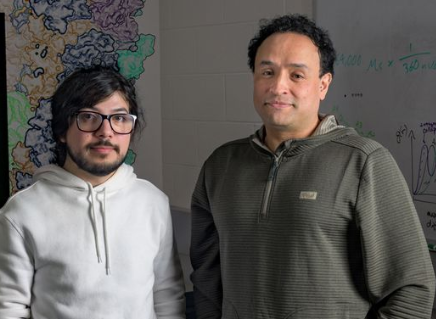
Scientists have long known that detecting HIV early is crucial in slowing and treating the virus. During the acute stage of infection, a single human cell can produce as many as 10,000 new HIV particles. A discovery led by the University of Delaware's Juan Perilla offers hope: A new drug target early in the virus's life cycle that could save millions of lives. In the surprising discovery, published Feb. 18 in Nature, Perilla and collaborators in the U.S. and the United Kingdom, have revealed a previously unknown role for the viral protein integrase. Scientists already knew that integrase helps HIV insert itself into human DNA. But this new study provides the first direct evidence that integrase plays a critical structural role earlier on in HIV’s life cycle — when the virus matures into an infectious force. Using high-resolution cryo-electron microscopy (cryo-EM), the research team – which also included UD doctoral student Juan S. Rey – found that integrase proteins form gluey filaments that line the inside of the capsid. Each segment of the filament slots neatly into the capsid’s hexagon-shaped tiles, while gripping tightly to HIV’s RNA genome. This zipper-like arrangement organizes and packs the virus, preparing it to hijack a cell and start making copies of itself. “Integrase plays a structural role inside the HIV capsid — nobody expected that,” Perilla said. “This protein forms filaments that anchor the RNA to the capsid. Without these filaments, the virus is non-infective.” Seeing inside HIV is no small feat. The capsid is only about 120 nanometers wide —roughly 1/800th the thickness of a human hair. It is incredibly small, fragile, densely packed and constantly changing, Perilla said. To reveal its hidden architecture, the researchers relied on deep collaboration and a combination of sophisticated microscopy, molecular modeling and experimentation. Read more about the science behind the study here. “The thing with HIV is that people are chronically living with it,” Perilla said. “Treatments are effective, but patients always need new therapeutics. We want to help develop the next generation of inhibitors and hope to have a significant contribution.” To reach Perilla directly and arrange an interview, visit his profile page. Interested reporters can also email MediaRelations@udel.edu.