
Experts Matter. Find Yours.
Connect for media, speaking, professional opportunities & more.

Goizueta Professors on Olympic Fandom, Viewership, Economics of the Games
As we countdown to the July 26 opening of the Olympic Games in Paris, we have two Goizueta Business School experts who can discuss the Olympics, including fandom, viewership, and the economics of the Paris Games. Professor Mike Lewis studies fandom and has spent many years tracking how sports can stay relevant and lucrative across generations. “While the Olympics is presented as a pure sports competition, it’s actually a unique sports entertainment event that leverages underpaid athletes and national identities to create one of the foremost sports-based advertising platforms.” His research on this year’s Olympics finds: Viewership skews to an older audience - with Baby Boomers showing the biggest fandom. The Games have an ongoing challenge to attract a younger audience. The Olympic broadcast will have to work hard to gain the attention of Gen Z and Millennials. Olympic fans are pretty even between genders, which is very different from typical sports fans that are more than 50% male. Check out his latest research: And his latest podcast on the Games: Professor Tom Smith studies the economics of sports. He can discuss: The economic impact of the Games for Paris during what is usually a high tourist season. The economics of decisions by city leaders to repurpose current facilities, landscape and architecture for the Paris games. What other cities can learn from the Paris games. Both Tom and Mike are available to speak with media about the upcoming Olympic Games - simply click on either expert's icon now to arrange an interview today.




It Has to Matter Who Wins: Futurecasting the MLB All-Star Game
Globe Life Field in Arlington, home of the 2023 World Series champion Texas Rangers, will play host to the 94th edition of the Major League Baseball All-Star Game on July 16, marking the second time in franchise history the Rangers will host the Midsummer Classic. MLB’s All-Star game – which matches up the best players from the American League and National League as selected by fans, managers and players – is considered one of best all-star contests among professional sports, said Kirk Wakefield, Ph.D., executive director of the Curb Center for Sales Strategy in Sports and Entertainment (S3E) program at Baylor University’s Hankamer School of Business. However, the game faces continued headwinds, Wakefield said, ranging from lagging viewership to fan voting to a game that is more an exhibition than a meaningful game. Wakefield Weighs In: Five Thoughts on MLB's All-Star Game Is the MLB All-Star game the best All-Star contest of all major leagues? Wakefield: Yes, it’s the only one where players seem to try their best. The NBA and NFL – who have practically given up – have declining viewership since 2011. Unfortunately, MLB All-Star game is on the same downhill skid. (According to Statista, viewership has declined from 22 million in 1993 to seven million in 2023.) The reason why is it doesn’t really matter who wins. If the players don’t care who wins, neither will fans. Further, fans aren’t particularly a fan of only one league so that it really matters if one league has bragging rights. That was less the case years ago before interleague play. How could viewership improve in any of the All-Star games? Wakefield: It has to matter who wins. MLB tried this with home field advantage for the World Series. They gave that up. The current approach in baseball is truly an exhibition because every player gets to play, so it’s like three players at every position playing three innings. That’s not how a manager would play it if trying to win. And it’s not like it used to be when the starters (who were more likely to be the best at their positions) played longer. One suggestion I’ve heard is to make the payoff big enough for the winners so that the players gave it their best. Get a sponsor to put up the money so the winners each make seven figures and could be the players and managers will play more like a team trying to win. Does Monday’s prelude, the hugely popular Homerun Derby, enhance Tuesday’s game? Wakefield: The Homerun Derby is popular because fans do follow individual players. It matters more who wins. That said, the HR derby’s viewership has still lagged. Bottom line: Fans are loyal to teams more than to leagues or individual players. Fan voting… Need we say more? Wakefield: Major market teams with huge fan bases will dominate, but what about the Kansas City Royals, who at one point in the season were on pace for the biggest year-over-year improvement in wins and losses? Given the way fan voting has become essentially a promotion game to get more fans to vote more often, it’s hardly representative of anything other than largest markets with the best promoters. The good news is that the MLB All-Star game will be quite the occasion in Arlington, Texas, with a bevy of game-related activities and events July 13-16. Wakefield: Arlington is an optimal location central to the U.S. with plenty of space to blow out the occasion. It’s like the Texas State Fair came to baseball, where all the rides and attractions are baseball-happy. ABOUT KIRK WAKEFIELD, PH.D. Kirk Wakefield, Ph.D., is The Edwin W. Streetman Professor of Retail Marketing at Baylor University, where he is the Executive Director of the Curb Center for Sales Strategy in Sports and Entertainment (S3E) program in the Hankamer School of Business at Baylor University. The author of Team Sports Marketing and founder of Wakefield Research Partners, Wakefield has conducted fan research on partnerships, pricing, promotions, sportscape, service, and anything else that explains why fans do what they do in nearly every venue in sports, including the NBA, NFL, MLB, MLS, NHL and NASCAR. His scholarly works appear in a breadth of journals: Journal of Marketing, Journal of Consumer Research, Journal of the Academy of Marketing Science, Journal of Service Research, Journal of Retailing, Journal of Advertising, Journal of Advertising Research and Journal of Sport Management, among others. Wakefield is a regular contributor to Sports Money on Forbes.com. ABOUT THE CURB CENTER FOR SALES STRATEGY IN SPORTS AND ENTERTAINMENT (S3E) The Center for Sales Strategy in Sports and Entertainment (S3E) at Baylor University is the only program in the U.S. focused on generating revenue for sports. S3E graduates have career opportunities in sales, digital marketing or business analytics for major league teams, university athletics, corporations and agencies. Baylor is the only university combining learning with practice in partnership with the Athletics Department to prepare graduates for careers in the business of sports. The S3E program is unique in vision, values, mission and culture to transform the business of sports and entertainment. Consistent with the Christian mission and purpose of Baylor University, we prepare passionate servant leaders to positively influence lives in places people go to play or watch others play.


Higher education, biotech and innovation - will the future be part of the 2024 campaign?
As the RNC brings national attention to Milwaukee, discussions are expected to cover pivotal topics such as biotechnology, innovation, and higher education. And as the Republican National Convention 2024 begins, journalists from across the nation and the world will converge on Milwaukee, not only to cover the political spectacle but also to dig deeper on the key issues that may decide the election. To help visiting journalists navigate and understand these issues and how and where the Republican policies are taking on these topics our MSOE experts are available to offer insights. Dr. Wujie Zhang, Dr. Jung Lee, Dr. Eric Baumgartner, Dr. Candela Marini, and Dr. John Walz are leading voices nationally on these important subjects and are ready to assist with any stories during the convention. Dr. John Walz President Expertise: Thought leadership on higher education, relevancy and value of higher ed View Profile “Engineering is not a very diverse field,” Walz said. “I want to continue to push those boundaries and make our programs open, to see more and more under-represented students come here and succeed here, and do well here.” MSOE president John Walz works to make 'hidden gem' not so hidden. Milwaukee Journal Sentinel May 17, 2023 Dr. Wujie Zhang Professor, Chemical and Biomolecular Engineering Expertise: Biomaterials; Regenerative Medicine and Tissue Engineering; Micro/Nano-technology; Drug Delivery; Stem Cell Research; Cancer Treatment; Cryobiology; Food Science and Engineering (Fluent in Chinese and English) View Profile “We accidentally noticed that we can make the hydrogel particle red blood cell shaped,” he explains. “We started then to make artificial red blood cells to mimic pretty much all aspects of red blood cells.” You're Somebody's Type MKE Lifestyle January 24, 2020 Dr. Jung Lee Professor, Chemical and Biomolecular Engineering Expertise: Bioinformatics, drug design and molecular modeling. View Profile Dr. Eric Baumgartner Executive Vice President of Academics Expertise: Thought leadership on higher education, relevancy and value of higher ed, role of A.I. in future degrees and workforce development. View Profile MSOE serves as an educational resource to Wisconsin companies is building an A.I.-ready workforce. In 2018 MSOE was the first in the nation to launch a B.S. in Computer Science with a sole focus on A.I. and machine learning. Wisconsin Governor’s Task Force on Workforce and Artificial Intelligence December, 2023 Dr. Candela Marini Assistant Professor Expertise: Latin American Studies and Visual Culture View Profile “Contrary to stereotypical images of Native Americans trying to stop ‘progress’ by fighting against mines and pipelines projects, the Menominees’ sustainable forestry stands out as a clear example of resource management that actually thinks about, and works for, the future,” said Marini. The MSOE Mindset visits the Menominee Indian Reservation MSOE Online April 11, 2019 . . . Media Relations Contact To schedule an interview or for more information, please contact: JoEllen Burdue Senior Director of Communications and Media Relations Phone: (414) 839-0906 Email: burdue@msoe.edu . . . About Milwaukee School of Engineering (MSOE) Milwaukee School of Engineering is the university of choice for those seeking an inclusive community of experiential learners driven to solve the complex challenges of today and tomorrow. The independent, non-profit university has about 2,800 students and was founded in 1903. MSOE offers bachelor's and master's degrees in engineering, business and nursing. Faculty are student-focused experts who bring real-world experience into the classroom. This approach to learning makes students ready now as well as prepared for the future. Longstanding partnerships with business and industry leaders enable students to learn alongside professional mentors, and challenge them to go beyond what's possible. MSOE graduates are leaders of character, responsible professionals, passionate learners and value creators.





Water, resources and infrastructure
Across America we're seeing flooding, drought, epic storms and reservoirs running dry. Water, how it is controlled and regulated is an emerging topic. And for the next four years, with the unknown impacts of climate change - water will be on a lot of people's minds. And as the Republican National Convention 2024 begins, journalists from across the nation and the world will converge on Milwaukee, not only to cover the political spectacle but also to dig deeper on the key issues that may decide the election. To help visiting journalists navigate and understand the depth of Milwaukee's heritage and modern vibrancy, our MSOE experts are available to offer insights. Professor William Gonwa has worked in the fields of wastewater collection, storm water management, and flood protection since 1984. His research focuses on the water resources area of civil engineering including collection systems and stormwater management. He received his doctorate from Marquette University, his masters from the University of Kentucky, and his bachelors from the University of Wisconsin-Madison, all in civil and environmental engineering. . . . Dr. William Gonwa Professor, Civil Engineering Expertise: Water Resources, Sewers, Storm Water, Civil Engineering education View Profile One may hear of news reports of large events and notice that they appear to occur more frequently than they might expect (i.e. a 100-year storm is reported in the news in the Detroit region more often than once every 100 years). A casual observer not well versed in what these rainfall statistics mean might be tempted to blame this on climate change, but the dynamic described here is not the result of just climate change. It is the result of the large size of the city of Detroit and the fact that rainfall frequencies are published for a point rainfall, not regions. This regional rainfall effect will occur in any metropolitan area with a large geographic extent. Why properly characterizing large storms is critical for stormwater professionals Stormwater Solutions June 07, 2024 . . . For further information and to arrange interviews with our experts, please contact: JoEllen Burdue Senior Director of Communications and Media Relations Phone: (414) 839-0906 Email: burdue@msoe.edu . . . About Milwaukee School of Engineering (MSOE) Milwaukee School of Engineering is the university of choice for those seeking an inclusive community of experiential learners driven to solve the complex challenges of today and tomorrow. The independent, non-profit university has about 2,800 students and was founded in 1903. MSOE offers bachelor's and master's degrees in engineering, business and nursing. Faculty are student-focused experts who bring real-world experience into the classroom. This approach to learning makes students ready now as well as prepared for the future. Longstanding partnerships with business and industry leaders enable students to learn alongside professional mentors, and challenge them to go beyond what's possible. MSOE graduates are leaders of character, responsible professionals, passionate learners and value creators.


Expert Q&A: Should We Permit AI to Determine Gender and Race from Resumes?
The banner ads on your browser, the route Google maps suggests for you, the song Spotify plays next: algorithms are inescapable in our daily lives. Some of us are already aware of the mechanisms behind a targeted ad or a dating profile that lights up our phone screen. However, few of us may actually stop to consider how this technology plays out in the hiring sector. As with any major technological advancement, it usually takes society (and legislation) a while to catch up and adjust for unintended consequences. Ultimately, algorithms are powerful tools. Like any tool, they have the potential for societal benefit or harm, depending on how they’re wielded. Here to weigh in on the matter is Assistant Professor of Information Systems & Operations Management Prasanna Parasurama, who recently joined Emory Goizueta Business School’s faculty in fall of 2023. This interview has been edited for clarity. Describe your research interests in six words. Six words…that’s difficult to do on the spot. How about “the impact of AI and other digital technologies on hiring.” Is that condensed enough? That works! What first interested you in the intersection of AI and hiring practices? Before I did my PhD, I was working as a data scientist in the HR analytics space at a start-up company. That is where my interest in the topic began. But this was a long time ago. People hadn’t started talking much about AI, or algorithmic hiring. The conversation around algorithmic bias and algorithmic fairness picked up steam in the second or third year of my PhD. That had a strong influence on my dissertation focus. And naturally, one of the contexts in which both these matters have large repercussions is in the hiring space. What demographics does your research focus on (gender identity, race/ethnicity, socioeconomic status, all of the above)? Do you focus on a particular job sector? My research mostly looks at gender and race for two main reasons. First, prior research has typically looked at race and gender, which gives us a better foundation to build on. Second, it’s much easier to measure gender and race based on the data that we have available—from resumes, from hiring data, like what we collect from the Equal Employment Opportunity Commission. They typically collect data on gender and race, and our research requires those really large data sets to draw patterns. They don’t ask for socioeconomic status or have an easy way to quantify that information. That’s not to say those are less important factors, or that no one is looking at them. One of the papers you’re working on examines resumes written by self-identified men and women. It looks at how their resumes differ, and how that influenced their likelihood of being contacted for an interview. So in this paper, we’re essentially looking at how men and women write their resumes differently and if that impacts hiring outcomes. Take resume screening algorithms, for example. One proposed way to reduce bias in these screening algorithms is to remove names from resumes to blind the applicant’s gender to the algorithm. But just removing names does very little, because there are so many other things that serve as proxies to someone’s gender. While our research is focused on people applying to jobs in the tech sector, this is true across occupations. "We find it’s easy to train an algorithm to accurately predict gender, even with names redacted." Prasanna Parasurama What are some of those gendered “tells” on a resume? People write down hobbies and extracurricular activities, and some of those are very gendered. Dancing and ballet tend to denote female applicants; you’re more likely to see something like wrestling for male applicants. Beyond hobbies, which is sort of obvious, is just how people write things, or the language they use. Female applicants tend to use a lot more affective words. Men, on the other hand, use more of what we call agentic words. Can you explain that a little more? In social psychology, social role theory argues that men are stereotyped to be more agentic, whereas women are stereotyped to be more communal, and that their communication styles reflect this. There’s essentially a list of agentic words that researchers have come up with that men use a lot more than women. And women are more likely to use affective words, like “warmly” or “closely,” which have to do with emotions or attitudes. These communication differences between men and women have been demonstrated in social sciences before, which has helped inform our work. But we’re not just relying on social science tools—our conclusions are driven by our own data. If a word is able to predict that an applicant’s resume belongs to a female versus male applicant, then we assign different weights, depending on how accurately it can predict that. So we’re not just operating on theories. Were there any gendered patterns that surprised you? If you were to assign masculinity and femininity to particular words, an algorithm would likely assign “married” to be a feminine term in most contexts. But in this particular case, it’s actually more associated with men. Men are much more likely to use it in resumes, because it signals something different to society than when women use it. "One of the most predictive terms for men was references to parenthood. It’s much easier for men to reference kids than for women to reveal information about their household status. Women face a penalty where men receive a boost." Prasanna Parasurama Studies show that people perceive fathers as being more responsible employees, whereas mothers are regarded as less reliable in the workplace. We haven’t studied this, but I would speculate that if you go on a platform like LinkedIn, men are more likely to disclose details about fatherhood, marriage, and kids than women are. There were some other tidbits that I didn’t see coming, like the fact that women are much less likely to put their addresses on their resume. Can AI predict race from a resume as easily as it can predict gender? There’s surprisingly very little we know on that front. From existing literature outside of algorithmic literature, we know differences exist in terms of race, not just on the employer side, where there might be bias, but we also on the worker side. People of different races search for jobs differently. The question is, how do we take this into account in the algorithm? From a technical standpoint, it should be feasible to do the same thing we do with gender, but it just becomes a little bit harder to predict race in practice. The cues are so variable. Gender is also more universal – no matter where you live, there are probably men and women and people who identify as in between or other. Whereas the concept of race can be very specific in different geographic regions. Racial identities in America are very different from racial identities in India, for instance. And in a place like India, religion matters a lot more than it does in the United States. So this conversation around algorithms and bias will look different across the globe. Beyond screening resumes, how does AI impact people’s access to job opportunities? A lot of hiring platforms and labor market intermediaries such as LinkedIn use AI. Their task is to match workers to these different jobs. There’s so many jobs and so many workers. No one can manually go through each one. So they have to train algorithms based on existing behavior and existing design decisions on the platform to recommend applicants to particular jobs and vice versa. When we talk about algorithmic hiring, it’s not just hiring per se, but spaces like these which dictate what opportunities you’re exposed to. It has a huge impact on who ends up with what job. What impact do you want your research to have in the real world? Do you think that we actually should use algorithms to figure out gender or race? Is it even possible to blind AI to gender or race? Algorithms are here to stay, for better or worse. We need them. When we think about algorithmic hiring, I think people picture an actual robot deciding who to hire. That’s not the case. Algorithms are typically only taking the space of the initial part of hiring. "I think overall, algorithms make our lives better. They can recommend a job to you based on more sophisticated factors than when the job was chronologically posted. There’s also no reason to believe that a human will be less biased than an algorithm." Prasanna Parasurama I think the consensus is that we can’t blind the algorithm to gender or other factors. Instead, we do have to take people’s demographics into account and monitor outcomes to correct for any sort of demonstrable bias. LinkedIn, for example, does a fairly good job publishing research on how they train their algorithms. It’s better to address the problem head on, to take demographic factors into account upfront and make sure that there aren’t drastic differences in outcomes between different demographics. What advice would you give to hopeful job candidates navigating these systems? Years of research have shown that going through a connection or a referral is by far the best way to increase your odds of getting an interview—by a factor of literally 200 to 300 percent. Hiring is still a very personal thing. People typically trust people they know. Prasanna Parasurama is an Assistant Professor of Information Systems & Operations Management at Emory University’s Goizueta Business School. Prasanna’s research areas include algorithmic hiring, algorithmic bias and fairness, and human-AI interaction. His research leverages a wide array of quantitative methods including econometrics, machine learning, and natural language processing. Prasanna is available to talk about this important and developing topic - simply click on his icon now to arrange an interview today.


On the T-Swift beat? Our expert can fill any of the blank spaces you might have in your coverage
She's everywhere - and this month Taylor Swift restarts her world tour meaning coverage of this American mega-star will be global. Recently TCU's Naomi Ekas was featured in USA Today and Time Magazine where her expert opinion and insight into Taylor Swift's impact on American psychology is helping to explain her place atop planetary pop-culture. Professor Naomi Ekas teaches a course about the connection between psychology and Swift's place in pop culture at Texas Christian University in Fort Worth, Texas. She believes there are universal themes listeners have experienced in Swift's lyrics but notes that the pop star's particular worldview may not translate to everyone. At the beginning of the spring semester, Ekas asked her students what labels they attached to Swift. Many of the responses reflected that were "these are white girl experiences, and this is white girl music and there isn't kind of that representation or that connection kind of outside of that particular racial group," she tells USA TODAY. "Everyone's dated the bad boy and they’ve had the friendship breakups and they’ve, you know, crashed and burned in relationships, revenge – these are pretty common themes across humankind, but then her particular life and how she's living them out might not connect to everybody," Ekas says. April 24 - USA Today Last year, when millions of people were trying to snag Eras Tour tickets, students at Texas Christian University were working just as hard to get into "Psychology (Taylor’s Version)," a new class offered by developmental psychologist Naomi Ekas. “We take different topics and themes from her music or her life and apply a developmental perspective to it,” she says. Classes have centered, for example, on infidelity, revenge, attraction, and breakups. During one recent class, Ekas played Marjorie, the devastating Evermore tune that pays tribute to Swift’s grandmother. (I should've asked you questions, I should've asked you how to be, she sings.) Many of the 120 students started crying and asked if they could have a few minutes to text their grandmother or their mom or their dad. “We were all like, ‘Do we continue with class today? Because we’re very sad,’” Ekas recalls. April 19 - Time Magazine There will be no shortage of Taylor Swift coverage in the coming months - and if you're a journalist looking to fill a blank space in your story and avoid a cruel summer with no expert sources - then let us help. Naomi Ekas's research program utilizes a developmental psychology approach to understanding children’s social and emotional development. She also teaches a course about the connection between psychology and Swift's place in pop culture. Naomi is available to speak with media - simply click on her icon now to arrange a time today.


Milwaukee-Based Experts Available During 2024 Republican National Convention
Journalists attending the Republican National Convention (RNC) are invited to engage with leading Milwaukee School of Engineering (MSOE) experts in a range of fields, including artificial intelligence (AI), machine learning, cybersecurity, urban studies, biotechnology, population health, water resources, and higher education. MSOE media relations are available to identify key experts and assist in setting up interviews (See contact details below). As the RNC brings national attention to Milwaukee, discussions are expected to cover pivotal topics such as national security, technological innovation, urban development, and higher education. MSOE's experts are well-positioned to provide research and insights, as well as local context for your coverage. Artificial Intelligence, Machine Learning, Cybersecurity Dr. Jeremy Kedziora Associate Professor, PieperPower Endowed Chair in Artificial Intelligence Expertise: AI, machine learning, ChatGPT, ethics of AI, global technology revolution, using these tools to solve business problems or advance business objectives, political science. View Profile Dr. Derek Riley Professor, B.S. in Computer Science Program Director Expertise: AI, machine learning, facial recognition, deep learning, high performance computing, mobile computing, artificial intelligence View Profile Dr. Walter Schilling Professor Expertise: Cybersecurity and the latest technological advancements in automobiles and home automation systems; how individuals can protect their business operations and personal networks. View Profile Milwaukee and Wisconsin: Culture, Architecture & Urban Planning, Design Dr. Michael Carriere Professor, Honors Program Director Expertise: an urban historian, with expertise in American history, urban studies and sustainability; growth of Milwaukee's neighborhoods, the challenges many of them are facing, and some of the solutions that are being implemented. Dr. Carriere is an expert in Milwaukee and Wisconsin history and politics, urban agriculture, creative placemaking, and the Milwaukee music scene. View Profile Kurt Zimmerman Assistant Professor Expertise: Architectural history of Milwaukee, architecture, urban planning and sustainable design. View Profile Biotechnology Dr. Wujie Zhang Professor, Chemical and Biomolecular Engineering Expertise: Biomaterials; Regenerative Medicine and Tissue Engineering; Micro/Nano-technology; Drug Delivery; Stem Cell Research; Cancer Treatment; Cryobiology; Food Science and Engineering (Fluent in Chinese and English) View Profile Dr. Jung Lee Professor, Chemical and Biomolecular Engineering Expertise: Bioinformatics, drug design and molecular modeling. View Profile Population Health Robin Gates Assistant Professor, Nursing Expertise: Population health expert: understanding and addressing the diverse factors that influence health outcomes across different populations. View Profile Water Resources Dr. William Gonwa Professor, Civil Engineering Expertise: Water Resources, Sewers, Storm Water, Civil Engineering education View Profile Higher Education Dr. Eric Baumgartner Executive Vice President of Academics Expertise: Thought leadership on higher education, relevancy and value of higher ed, role of A.I. in future degrees and workforce development. View Profile Dr. Candela Marini Assistant Professor Expertise: Latin American Studies and Visual Culture View Profile Dr. John Walz President Expertise: Thought leadership on higher education, relevancy and value of higher ed View Profile Media Relations Contact To schedule an interview or for more information, please contact: JoEllen Burdue Senior Director of Communications and Media Relations Phone: (414) 839-0906 Email: burdue@msoe.edu About Milwaukee School of Engineering (MSOE) Milwaukee School of Engineering is the university of choice for those seeking an inclusive community of experiential learners driven to solve the complex challenges of today and tomorrow. The independent, non-profit university has about 2,800 students and was founded in 1903. MSOE offers bachelor's and master's degrees in engineering, business and nursing. Faculty are student-focused experts who bring real-world experience into the classroom. This approach to learning makes students ready now as well as prepared for the future. Longstanding partnerships with business and industry leaders enable students to learn alongside professional mentors, and challenge them to go beyond what's possible. MSOE graduates are leaders of character, responsible professionals, passionate learners and value creators.

Small Changes Can Save Lives: How a Police Officer’s First Words Can Transform Communities
Britt Nestor knew something needed to change. Nestor is a police officer in North Carolina. Unlike many in her field, who recite interview-ready responses about wanting to be a police officer since childhood, Nestor admits that her arrival to the field of law enforcement was a serendipitous one. Told by teachers to start rehearsing the line “do you want fries with that?” while in high school, Nestor went to college to prove them wrong—and even graduated with a 3.9 GPA solely to prove those same people wrong—but she had absolutely no idea what to do next. When a local police department offered to put her through the police academy, her first thought was, “absolutely not.” “And here I am,” says Nestor, 12 years into her career, working in Special Victims Investigations as an Internet Crimes Against Children detective. A Calling to Serve Community Brittany Nestor, New Blue Co-Founder and President Though she’d initially joined on a whim, Nestor stuck around and endured many growing pains, tasting some of the problematic elements of police culture firsthand. As a woman, there was particular pressure to prove herself; she resisted calling for back-up on dangerous calls for fear of being regarded as weak, and tried out for and joined the SWAT team to demonstrate her mettle. "It took time to realize I didn’t need to make the most arrests or get the most drugs and guns to be a good cop. What was important was recognizing that I was uniquely positioned and given opportunities every single shift to make a difference in people’s lives—that is what I wanted to focus on." Britt Nestor Nestor found she took great pleasure in interacting with different kinds of people all day. She’s deeply fond of her community, where she is also a youth basketball coach. One of her greatest joys is being on call or working an event and hearing someone hail her from the crowd by yelling, “hey, coach!” When she landed in the Juvenile Investigations Unit, Nestor truly felt she’d found her calling. Still, what she’d witnessed in her profession and in the news weighed on her. And she’s not alone; while there is continued debate on the urgency and extent of changes needed, 89% percent of people are in favor of police reform, according to a CBS/YouGov poll. A few weeks after George Floyd’s murder in 2020, Nestor’s colleague Andy Saunders called her and told her they had to do something. It felt like the tipping point. “I knew he was right. I needed to stop wishing and hoping police would do better and start making it happen.” Andy Saunders, New Blue Co-Founder and CEO That conversation was the spark that grew into New Blue. Founded in 2020, New Blue strives to reform the U.S. Criminal Justice system by uniting reform-minded police officers and community allies. The organization focuses on incubating crowd-sourced solutions from officers themselves, encouraging those in the field to speak up about what they think could improve relations between officers and the communities they serve. “Over the years I’ve had so many ideas—often addressing problems brought to light by community members—that could have made us better. But my voice was lost. I didn’t have much support from the police force standing behind me. This is where New Blue makes the difference; it’s the network of fellows, alumni, partners, mentors, and instructors I’d needed in the past.” Nestor and Saunders had valuable pieces of the puzzle as experienced law enforcement professionals, yet they knew they needed additional tools. What are the ethical guidelines around experimenting with new policing tactics? What does success look like, and how could they measure it? The Research Lens Over 400 miles away, another spark found kindling; like Nestor, Assistant Professor of Organization & Management Andrea Dittmann’s passion for making the world a better place is palpable. Also, like Nestor, it was an avid conversation with a colleague—Kyle Dobson—that helped bring a profound interest in police reform into focus. Dittmann, whose academic career began in psychology and statistics, came to this field by way of a burgeoning interest in the need for research-informed policy. Much of her research explores the ways in which socioeconomic disparities play out in the work environment, and—more broadly—how discrepancies of power shape dynamics in organizations of all kinds. When people imagine research in the business sector, law enforcement is unlikely to crop up in their mind. Indeed, Dittmann cites the fields of criminal justice and social work as being the traditional patrons of police research, both of which are more likely to examine the police force from the top down. Andrea Dittmann Dittmann, however, is a micro-oriented researcher, which means she assesses organizations from the bottom up; she examines the small, lesser-studied everyday habits that come to represent an organization’s values. “We have a social psychology bent; we tend to focus on individual processes, or interpersonal interactions,” says Dittmann. She regards her work and that of her colleagues as a complementary perspective to help build upon the literature already available. Where Dittmann has eyes on the infantry level experience of the battleground, other researchers are observing from a bird’s eye view. Together, these angles can help complete the picture. And while the “office” of a police officer may look very different from what most of us see every day, the police force is—at the end of the day—an organization: “Like all organizations, they have a unique culture and specific goals or tasks that their employees need to engage in on a day-to-day basis to be effective at their jobs,” says Dittmann. Theory Meets Practice Kyle Dobson, Postdoctoral Researcher at The University of Texas at Austin What Dittmann and Dobson needed next was a police department willing to work with them, a feat easier said than done. Enter Britt Nestor and New Blue. "Kyle and I could instantly tell we had met people with the same goals and approach to reforming policing from within." Andrea Dittmann Dittmann was not surprised by the time it took to get permission to work with active officers. “Initially, many officers were distrustful of researchers. Often what they’re seeing in the news are researchers coming in, telling them all the problems that they have, and leaving. We had to reassure them that we weren’t going to leave them high and dry. If we find a problem, we’re going to tell you about it, and we’ll work on building a solution with you. And of course, we don’t assume that we have all the answers, which is why we emphasize developing research ideas through embedding ourselves in police organizations through ride-alongs and interviews.” After observing the same officers over years, they’re able to build rapport in ways that permit open conversations. Dittmann and Dobson now have research running in many pockets across the country, including Atlanta, Baltimore, Chicago, Washington, D.C. and parts of Texas. The Rise of Community-Oriented Policing For many police departments across the nation, there is a strong push to build closer and better relationships with the communities they serve. This often translates to police officers being encouraged to engage with citizens informally and outside the context of enforcing the law. If police spent more time chatting with people at a public park or at a café, they’d have a better chance to build rapport and foster a collective sense of community caretaking—or so the thinking goes. Such work is often assigned to a particular unit within the police force. This is the fundamental principle behind community-oriented policing: a cop is part of the community, not outside or above it. This approach is not without controversy, as many would argue that the public is better served by police officers interacting with citizens less, not more. In light of the many high-profile instances of police brutality leaving names like Breonna Taylor and George Floyd echoing in the public’s ears, their reticence to support increased police-to-citizen interaction is understandable. “Sometimes when I discuss this research, people say, ‘I just don’t think that officers should approach community members at all, because that’s how things escalate.’ Kyle and I acknowledge that’s a very important debate and has its merits.” As micro-oriented researchers, however, Dittmann and Dobson forgo advocating for or dismissing broad policy. They begin with the environment handed to them and work backward. “The present and immediate reality is that there are officers on the street, and they’re having these interactions every day. So what can we do now to make those interactions go more smoothly? What constitutes a positive interaction with a police officer, and what does it look like in the field?” Good Intentions Gone Awry To find out, they pulled data through a variety of experiments, including live interactions, video studies and online experiments, relying heavily on observation of such police-to-citizen interactions. "What we wanted to do is observe the heterogeneity of police interactions and see if there’s anything that officers are already doing that seems to be working out in the field, and if we can ‘bottle that up’ and turn that into a scalable finding." Andrea Dittmann Dittmann and her colleagues quickly discovered a significant discrepancy between some police officers’ perceived outcome of their interactions with citizens and what those citizens reported to researchers post-interaction. “An officer would come back to us and they’d say it went great. Like, ‘I did what I was supposed to do, I made that really positive connection.’ And then we’d go to the community members, and we’d hear a very different story: ‘Why the heck did that officer just come up to me, I’m just trying to have a picnic in the park with my family, did I do something wrong?’” Community members reported feeling confused, harassed, or—at the worst end of the spectrum—threatened. The vast majority—around 75% of citizens—reported being anxious from the very beginning of the interaction. It’s not hard to imagine how an officer approaching you apropos of nothing may stir anxious thoughts: have I done something wrong? Is there trouble in the area? The situation put the cognitive burden on the citizen to figure out why they were being approached. The Transformational Potential of the “Transparency Statement” And yet, they also observed officers (“super star” police officers, as Dittmann refers to them) who seemed to be especially gifted at cultivating better responses from community members. What made the difference? “They would explain themselves right from the start and say something like, ‘Hey, I’m officer so-and-so. The reason I’m out here today is because I’m part of this new community policing unit. We’re trying to get to know the community and to better understand the issues that you’re facing.’ And that was the lightbulb moment for me and Kyle: the difference here is that some of these officers are explaining themselves very clearly, making their benevolent intention for the interaction known right from the start of the conversation.” Dittmann and her colleagues have coined this phenomenon the “transparency statement.” Using a tool called the Linguistic Inquiry & Word Count software and natural language processing tools, the research team was able to analyze transcripts of the conversations and tease out subconscious cues about the civilians’ emotional state, in addition to collecting surveys from them after the encounter. Some results jumped out quickly, like the fact that those people whose conversation with an officer began with a transparency statement had significantly longer conversations with them. The team also employed ambulatory physiological sensors, or sensors worn on the wrist that measure skin conductivity and, by proxy, sympathetic nervous system arousal. From this data, a pattern quickly emerged: citizens’ skin conductance levels piqued early after a transparency statement (while this can be a sign of stress, in this context researchers determined it to reflect “active engagement” in the conversation) and then recovered to baseline levels faster than in the control group, a pattern indicative of positive social interaction. Timing, too, is of the essence: according to the study, “many patrol officers typically made transparency statements only after trust had been compromised.” Stated simply, the interest police officers showed in them was “perceived as harassment” if context wasn’t provided first. Overall, the effect was profound: citizens who were greeted with the transparency statement were “less than half as likely to report threatened emotions.” In fact, according to the study, “twice as many community members reported feeling inspired by the end of the interaction.” What’s more, they found that civilians of color and those from lower socioeconomic backgrounds —who may reasonably be expected to have a lower baseline level of trust of law enforcement—“may profit more from greater transparency.” Talk, it turns out, is not so cheap after all. Corporate Offices, Clinics, and Classrooms The implications of this research may also extend beyond the particulars of the police force. The sticky dynamics that form between power discrepancies are replicated in many environments: the classroom, between teachers and students; the office, between managers and employees; even the clinic, between medical doctors and patients. In any of these cases, a person with authority—perceived or enforceable—may try to build relationships and ask well-meaning questions that make people anxious if misunderstood. Is my boss checking in on me because she’s disappointed in my performance? Is the doctor being nice because they’re preparing me for bad news? “We believe that, with calibration to the specific dynamics of different work environments, transparency statements could have the potential to ease tense conversations across power disparities in contexts beyond policing,” says Dittmann. More Research, Action, and Optimism What could this mean for policing down the road? Imagine a future where most of the community has a positive relationship with law enforcement and there is mutual trust. "I often heard from family and friends that they’d trust the police more ‘if they were all like you.’ I can hear myself saying, ‘There are lots of police just like me!’ and I truly believe that. I believe that so many officers love people and want to serve their communities—and I believe a lot of them struggle with the same things I do. They want to see our profession do better!" Britt Nestor “When I get a new case and I meet the survivor, and they’re old enough to talk with me, I always explain to them, ‘I work for you. How cool is that?’ And I truly believe this: I work for these kids and their families.” The implications run deep; a citizen may be more likely to reach out to police officers about issues in their community before they become larger problems. An officer who is not on edge may be less likely to react with force. Dittmann is quick to acknowledge that while the results of the transparency statement are very promising, they are just one piece of a very large story with a long and loaded history. Too many communities are under supported and overpoliced; it would be denying the gravity and complexity of the issue to suggest that there is any silver bullet solution, especially one so simple. More must be done to prevent the dynamics that lead to police violence to begin with. “There’s a common narrative in the media these days that it’s too late, there’s nothing that officers can do,” says Dittmann. Yet Dittmann places value on continued research, action and optimism. When a simple act on the intervention side of affairs has such profound implications, and is not expensive or difficult to implement, one can’t help but see potential. “Our next step now is to develop training on transparency statements, potentially for entire agencies,” says Dittmann. “If all the officers in the agency are interacting with transparency statements, then we see this bottom-up approach, with strong potential to scale. If every interaction you have with an officer in your community starts out with that transparency statement, and then goes smoothly, now we’re kind of getting to a place where we can hopefully talk about better relations, more trust in the community, at a higher, more holistic, level.” While the road ahead is long and uncertain, Dittmann’s optimism is boosted by one aspect of her findings: those community members who reported feeling inspired after speaking with police officers who made their benevolent intentions clear. "That was really powerful for me and Kyle. That’s what gets me out of bed in the morning. It’s worth trying to move the needle, even just a little bit." Andrea Dittmann Looking to know more? Andrea Dittman is available to speak with media about this important research. Simply click on her icon now to arrange an interview today.

AI Art: What Should Fair Compensation Look Like?
New research from Goizueta’s David Schweidel looks at questions of compensation to human artists when images based on their work are generated via artificial intelligence. Artificial intelligence is making art. That is to say, compelling artistic creations based on thousands of years of art production may now be just a few text prompts away. And it’s all thanks to generative AI trained on internet images. You don’t need Picasso’s skillset to create something in his style. You just need an AI-powered image generator like DALL-E 3 (created by OpenAI), Midjourney, or Stable Diffusion. If you haven’t tried one of these programs yet, you really should (free or beta versions make this a low-risk proposal). For example, you might use your phone to snap a photo of your child’s latest masterpiece from school. Then, you might ask DALL-E to render it in the swirling style of Vincent Van Gogh. A color printout of that might jazz up your refrigerator door for the better. Intellectual Property in the Age of AI Now, what if you wanted to sell your AI-generated art on a t-shirt or poster? Or what if you wanted to create a surefire logo for your business? What are the intellectual property (IP) implications at work? Take the case of a 35-year-old Polish artist named Greg Rutkowski. Rutkowski has reportedly been included in more AI-image prompts than Pablo Picasso, Leonardo da Vinci, or Van Gogh. As a professional digital artist, Rutkowski makes his living creating striking images of dragons and battles in his signature fantasy style. That is, unless they are generated by AI, in which case he doesn’t. “They say imitation is the sincerest form of flattery. But what about the case of a working artist? What if someone is potentially not receiving payment because people can easily copy his style with generative AI?” That’s the question David Schweidel, Rebecca Cheney McGreevy Endowed Chair and professor of marketing at Goizueta Business School is asking. Flattery won’t pay the bills. “We realized early on that IP is a huge issue when it comes to all forms of generative AI,” Schweidel says. “We have to resolve such issues to unlock AI’s potential.” Schweidel’s latest working paper is titled “Generative AI and Artists: Consumer Preferences for Style and Fair Compensation.” It is coauthored with professors Jason Bell, Jeff Dotson, and Wen Wang (of University of Oxford, Brigham Young University, and University of Maryland, respectively). In this paper, the four researchers analyze a series of experiments with consumers’ prompts and preferences using Midjourney and Stable Diffusion. The results lead to some practical advice and insights that could benefit artists and AI’s business users alike. Real Compensation for AI Work? In their research, to see if compensating artists for AI creations was a viable option, the coauthors wanted to see if three basic conditions were met: – Are artists’ names frequently used in generative AI prompts? – Do consumers prefer the results of prompts that cite artists’ names? – Are consumers willing to pay more for an AI-generated product that was created citing some artists’ names? Crunching the data, they found the same answer to all three questions: yes. More specifically, the coauthors turned to a dataset that contains millions of “text-to-image” prompts from Stable Diffusion. In this large dataset, the researchers found that living and deceased artists were frequently mentioned by name. (For the curious, the top three mentioned in this database were: Rutkowski, artgerm [another contemporary artist, born in Hong Kong, residing in Singapore] and Alphonse Mucha [a popular Czech Art Nouveau artist who died in 1939].) Given that AI users are likely to use artists’ names in their text prompts, the team also conducted experiments to gauge how the results were perceived. Using deep learning models, they found that including an artist’s name in a prompt systematically improves the output’s aesthetic quality and likeability. The Impact of Artist Compensation on Perceived Worth Next, the researchers studied consumers’ willingness to pay in various circumstances. The researchers used Midjourney with the following dynamic prompt: “Create a picture of ⟨subject⟩ in the style of ⟨artist⟩”. The subjects chosen were the advertising creation known as the Most Interesting Man in the World, the fictional candy tycoon Willy Wonka, and the deceased TV painting instructor Bob Ross (Why not?). The artists cited were Ansel Adams, Frida Kahlo, Alphonse Mucha and Sinichiro Wantabe. The team repeated the experiment with and without artists in various configurations of subjects and styles to find statistically significant patterns. In some, consumers were asked to consider buying t-shirts or wall art. In short, the series of experiments revealed that consumers saw more value in an image when they understood that the artist associated with it would be compensated. Here’s a sample of imagery AI generated using three subjects names “in the style of Alphonse Mucha.” Source: Midjourney cited in http://dx.doi.org/10.2139/ssrn.4428509 “I was honestly a bit surprised that people were willing to pay more for a product if they knew the artist would get compensated,” Schweidel explains. “In short, the pay-per-use model really resonates with consumers.” In fact, consumers preferred pay-per-use over a model in which artists received a flat fee in return for being included in AI training data. That is to say, royalties seem like a fairer way to reward the most popular artists in AI. Of course, there’s still much more work to be done to figure out the right amount to pay in each possible case. What Can We Draw From This? We’re still in the early days of generative AI, and IP issues abound. Notably, the New York Times announced in December that it is suing OpenAI (the creator of ChatGPT) and Microsoft for copyright infringement. Millions of New York Times articles have been used to train generative AI to inform and improve it. “The lawsuit by the New York Times could feasibly result in a ruling that these models were built on tainted data. Where would that leave us?” asks Schweidel. "One thing is clear: we must work to resolve compensation and IP issues. Our research shows that consumers respond positively to fair compensation models. That’s a path for companies to legally leverage these technologies while benefiting creators." David Schweidel To adopt generative AI responsibly in the future, businesses should consider three things. First, they should communicate to consumers when artists’ styles are used. Second, they should compensate contributing artists. And third, they should convey these practices to consumers. “And our research indicates that consumers will feel better about that: it’s ethical.” AI is quickly becoming a topic of regulators, lawmakers and journalists and if you're looking to know more - let us help. David A. Schweidel, Professor of Marketing, Goizueta Business School at Emory University To connect with David to arrange an interview - simply click his icon now.

Aston University researcher takes on leadership role within biomedical engineering
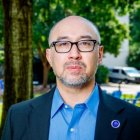
Dr Antonio Fratini is the new chair of the Institute of Mechanical Engineers Biomedical Engineering Division It is one of the largest group of professional biomedical engineers in the UK The specialism merges professional engineering with medical knowledge of the human body, such as artificial limbs and robotic surgery. An Aston University researcher has been given a leading role within the biomedical engineering sector. Dr Antonio Fratini CEng MIMechE has been elected as the new chair of the Biomedical Engineering Division (BmED) of the Institution of Mechanical Engineers (IMechE), one of the largest groups of professional biomedical engineers in the UK. The IMechE has around 115,000 members in 140 countries and has been active since 1847. Biomedical engineering, also known as medical engineering or bioengineering, is the integration of engineering with medical knowledge to help tackle clinical problems and improve healthcare outcomes. Dr Fratini previously served as chair of the Birmingham centre of the division for five years and as vice-chair of the division for one year. His research includes responsible use of AI, 3D segmentation and anatomical modelling to improve surgical training and planning, motor functions and balance rehabilitation. He leads Aston University’s Engineering for Health Research Centre within the College of Engineering and Physical Sciences and has vast experience in the design, development and testing of new medical devices. Currently he is the University’s principal investigator for the West Midlands Health Tech Innovation Accelerator and he has a growing reputation in the UK and internationally within the biomedical engineering profession. He said: “Biomedical engineering is continuously evolving and our graduates will create the future of health tech and med tech for more effective, sustainable, responsible and personalised healthcare. “I am very honoured of this appointment. This three-year post will be a great opportunity to further develop the biomedical engineering profession worldwide and to show Aston University’s commitment to an inclusive, entrepreneurial and transformational impact within the field.” Professor Helen Meese, outgoing chair of the division, said: “I am delighted to see Antonio take on the chair’s position. He has, over the years, contributed significantly to the growth of the Birmingham regional centre and has actively supported me throughout my tenure as chair. I know how passionate he is about our profession and will undoubtedly continue to drive the division forward over the next three years.” Dr Frattini was presented with his new title on 20 June at the IMECHE HQ at 1 Birdcage Walk, London during the Institution’s technology strategy board meeting. For media inquiries in relation to this release, contact Nicola Jones, Press and Communications Manager, on (+44) 7825 342091 or email: n.jones6@aston.ac.uk

