
Experts Matter. Find Yours.
Connect for media, speaking, professional opportunities & more.

The Christopher J Hewitt Prize for exceptional student citizenship in the College of Life and Health Sciences at Aston University has been awarded to Hanan Tahir a fourth year MPharm student, in recognition of his support in helping colleagues to develop and achieve their goals through mentoring and for his positive and supportive outlook, felt by all those around him. The prize is named after and in tribute of Professor Christopher J Hewitt FREng who was pro-vice chancellor and executive dean of the School of Life and Health Sciences and professor of biological engineering from November 2014 until July 2019. Chris sadly passed away on 25 July 2019 at the age of 50; an eminent scientist and truly devoted family man. To commemorate Chris’s life and to celebrate the values that he held dear, the Christopher J Hewitt Prize was established in 2021 to recognise exemplary citizenship through support of other students, contribution to the Aston University community or achievement in the face of adversity. The judging panel, which consisted of four research fellows and Chris’s widow Sandra Hewitt, felt that Hanan had achieved a lot through his work with Aston University student societies, where he is president of the Aston Pharmacy Society. Hanan also set up a mentoring scheme for first and second year students to help ease them into University life after the Covid-19 pandemic. The judges noted the substantial amount of charity work undertaken by Hanan including hiking up Snowden to raise £9000 for Syrian Refugees. They were also impressed by the nominations outlining the sense of fun and joy Hanan has helped to foster amongst his student peers. On receiving his award, Hanan said: "It's within our human nature to care for and support each other. We've grown to be so successful because we have always chosen to look out for others rather than isolate and try to go it alone. And I have always believed that an integral key to happiness is community. “I am honoured to have received this award. I am even more honoured that my efforts have been noticed and recognised. Aston University has always put inclusivity and community in everything it does and I hope that we all continue to emanate the values of this University as we progress through our lives." Sandra Hewitt, Chris’s widow, added: “It was an honour to once again be able to be part of the judging panel for the Christopher J. Hewitt Memorial Prize. Again, this year the candidates all exhibited the qualities and values of the prize, however we felt Hanan was a worthy winner for all the reasons mentioned above. Chris worked hard but he liked to party harder so the fact that Hanan’s nominations also mentioned his sense of joy and fun was especially relevant." Professor Anthony Hilton, executive dean of the College of Life and Health Sciences, said: “I am delighted Hanan is this year’s recipient of the Christopher J Hewitt Prize. It makes me exceptionally proud to see members of the College demonstrating the culture and values we hold dear and being held in such high regard by their peers.” The panel also highlighted the exceptional achievements of Negin Gholampoor for her work as the Aston Medical School representative to the British Medical Association and for striving to improve the systems around her and effect change for the benefit of her peers. A special mention was made for Erika Pond for her commendable display of citizenship when providing CPR to a stranger in need. For more information about the College of Health and Life Sciences please visit our website and for information about studying Pharmacy at Aston University go to our course pages.


Women in STEM Careers Face Bias
Women are excluded from promotions when firms look at potential, rather than proof, says Dr. Nishtha Langer, an associate professor in the Lally School of Management at Rensselaer Polytechnic Institute. Promotions are an accepted way for firms to attract and retain talent. In an ideal world, promotion for employees would be purely merit-oriented, and thus, performance – or potential for performance – would be a firm’s most important criteria for career advancement. But, according to Dr. Langer, we don’t live in this idyllic world – we live in a world where women are evaluated differently than men, and often endure biases in the work environment that men don’t face. Dr. Langer believes that several factors contribute to such deleterious workplace practices. Promotions rely less on absolute merit and more on relative merit. Thus, prejudiced ideas of potential capabilities, for instance, those relying on gender-role orientation – or the ability of a woman to do what may be perceived to be a masculine task – may prevent senior managers responsible for promotions from realizing the potential of their female colleagues. Women in STEM or technology often suffer from this bias. This prejudice may further bias how women are evaluated. Especially in those jobs where women are a minority, the in-group versus out-group biases would affect the visibility of women vis-à-vis men for promotions. Another factor that may inhibit women from being promoted on the basis of potential – or even indeed with proof – is what researchers term the compensatory stereotype. If men succeed, it is because of their abilities; if women succeed, it is because of factors other than their abilities. Unfortunately, the potential or abilities of women are misattributed to luck or team factors, inhibiting them from the starting line. Finally, promotions are a way for firms to ensure valuable talent does not leave. In that sense, managers may be less sensitive to women’s outside prospects and may thus ignore their potential and choose to not promote them. They do so at their peril and fail to take advantage of the multitude of abilities women bring to the table. Dr. Langer, an authority in the field of business and the societal value of IT and IT human capital, has long focused her research on women in technology careers. She is available to speak to this and other concerns about equality in the workplace.


Professor of biotechnology appointed as new executive editor of prestigious journal
A biotechnology professor in the College of Health and Life Sciences at Aston University has been appointed as the new executive editor of the journal, BBA Biomembranes. Professor Roslyn Bill is sharing the role with Professor Burkhard Bechinger of the University of Strasbourg and will be jointly responsible for the editorial direction of the journal, including overseeing the peer review process of submissions. Roslyn's own area of research focuses on membrane protein structure, function and regulation. She is particularly interested in the regulation of aquaporin water channels in the brain and their development as drug targets to prevent life-threatening brain swelling. BBA Biomembranes is part of a family of 10 Biochimica et Biophysica Acta (BBA) journals, which are celebrating their 75th year of continuous publication in 2022. They were the first international journals to cover the joint fields of biochemistry and biophysics. Commenting on her appointment, Roslyn said: “I am delighted and honoured to join BBA Biomembranes as Executive Editor in BBA’s 75th anniversary year. “The journal has an international reputation for publishing high-quality articles in all aspects of membrane biology and biophysics. I look forward to working with the BBAMEM team to drive the journal’s continuing success.” Areas of research covered by BBA Biomembranes include: membrane structure, function and biomolecular organization, membrane proteins, receptors, channels and anchors, fluidity and composition, model membranes and liposomes, membrane surface studies and ligand interactions, transport studies and membrane dynamics. For more information on Professor Bill’s research, visit the research pages. For more information about studying in the School of Biosciences at Aston University, please visit our website.

Podcast: The nine behavioural habits needed to become a trusted executive
Executive trust model designed by business author who researched Doctorate at Aston Business School Nine behaviours sit under the three pillars of trust: ability, integrity and benevolence Company bosses urged to follow example of former Unilever chief executive Successful business leaders need to rely on the power of trust, rather than just trusting in power. And helping them to make that step-change is a self-confessed “trust geek” who carried out his research at Aston Business School before setting up a not-for-profit organisation to help bosses become “trusted executives”. Dr John Blakey has published a book called The Trusted Executive: Nine Leadership Habits that Inspire Results, Relationships and Reputation, which was based on his Doctorate in Business Administration (DBA). He has since founded the Trusted Executive Foundation, based in Solihull but with clients all over the UK and overseas. He spoke about his experiences in the latest episode of the ‘Aston means business' podcast series, presented by journalist Steve Dyson. Dr Blakey said: “The global financial crisis of 2008-09 was clearly a sign that we were losing trust in business life, and that’s what sparked me to enrol on the DBA at Aston University. I wanted to go back into the classroom and do the research to get to grips with this word ‘trust’, and to help other leaders who are looking to build high-trust cultures.” He said it was important for businesses to know where their leaders stand, and “whether you stand for power or trust as the currency of your leadership”. He explained that every leader therefore needs to ask themselves a very important question: “Are they leaders who trust in power or leaders who rely on the power of trust?” Dr Blakey, who first began his own business in executive coaching with Olympic medal-winning rower Bill Barry over 20 years ago, admitted to being a “bit of a trust geek”. While existing research had discovered the three pillars of trust, namely ability, integrity and benevolence, he set out to build on that to find out the “behavioural habits” under each one. He added: “Each habit is important in terms of building and inspiring trustworthiness, whether in a leader, in a team, or in a brand.” Dr Blakey said the habits under the pillar of ability are deliver, coach, and be consistent. “As a business leader it’s important to be competent at what we do, to deliver on time, to budget, to quality,” he said. “Coaching is all about helping other people deliver ... through coaching I can tap into the potential in people and help them grow, and I have to do this delivery and this coaching consistently, day in, day out.” Dr Blakey said that as a researcher not a week goes by without a new case study around integrity, not least that of Boris Johnson and the leadership of the Conservative Party. “There are three habits under this pillar of integrity: be honest, be open, be humble. And when we talk about our political leaders, I think we are particularly talking about honesty, as we have been quizzing our prime minister around his honesty.” He said being open was about “sharing more of yourself” and went on: “I was brought up as a leader not to show weakness … but I think increasingly in the world of trust leaders are being encouraged to show a bit of vulnerability at the right time and place.” Being humble was the opposite of being arrogant, and Dr Blakey cited the recent case of P&O whose leaders, he claimed, showed a “degree of arrogance and dismissiveness about other people’s needs”. The final pillar of benevolence consists of evangelise, be brave, and be kind. He said: “It’s common human care, compassion, kindness, and if you want to be trusted, it’s equally important to be benevolent as it is to have that integrity.” Dr Blakey said a good example of his model is Paul Polman, former chief executive of Unilever, which was recognised for the way it takes care of its people, while also leading on sustainability and protecting the environment. “Paul demonstrates that you can pursue what I call the triple bottom line of profit, people and planet, and do these things in parallel. The single biggest factor in building a high-trust culture is the behaviour of the CEO and the senior leadership team leading by example.” Dr Blakey said he and his team at the Trust Executive Foundation are now helping leaders who want to stand for trust. He added: “The sweet spot for us is helping the leaders lead from the top.”

What happens when the human body gets too hot?
What happens when the human body gets too hot? And what can you do if someone gets too hot? Douglas Casa, professor of kinesiology and chief executive officer of UConn’s Korey Stringer Institute – a leading authority on research, advocacy, and education about exertional heat stroke – explains in this edition of UConn Science in Seconds. The Korey Stringer Institute at UConn was established in honor of the Minnesota Vikings offensive lineman Korey Stringer, who passed away from exertional heat stroke in 2001. Looking to know more? Then let us help with your questions and coverage! Douglas Casa is an expert on athletic training, heat illness, and hydration. Dr. Casa is available to speak with media about this topic. Simply click on his icon now to arrange an interview today.



School of Optometry ophthalmic equipment will furnish three polyclinics – presented by Canon Medical for the duration of the Birmingham 2022 Commonwealth Games Aston University clinical and academic staff volunteers are part of a team running the clinics The polyclinics presented by Canon Medical are due to open to athletes on 22 July. Aston University optometrists and dispensing opticians from its School of Optometry have been preparing various pieces of ophthalmic equipment needed to furnish three eye health polyclinics presented by Canon Medical at the Birmingham 2022 Commonwealth Games. The polyclinics presented by Canon Medical will be hosted at the Birmingham 2022 villages at the University of Warwick & University of Birmingham. The equipment, which is on loan from the School of Optometry, includes slit lamps, ophthalmoscopes, visual field screeners and tonometers. It was loaded up on Saturday 16July and Monday 18 July and was then transported to the three sites in preparation for the opening of the service on 22 July. Athletes and the wider Birmingham 2022 community will be able to access emergency eye care at the clinics. Athletes who need emergency access to glasses and contact lenses will also be able to get them from the polyclinics. The service is being run by volunteers who have had role-specific training provided by the Games medical team. Aston University’s volunteers are academic and clinical staff from the School of Optometry. Leon Davies, professor of optometry & physiological optics at Aston University, has led the clinic set up and is also a polyclinic volunteer. He said: “It is an honour to support the Birmingham 2022 Commonwealth Games through loaning our ophthalmic equipment, and I am proud of my colleagues who have volunteered to help run the clinics. “We are excited to provide athletes’ eye care whilst they are here in Birmingham. We appreciate some may have travelled long distances so on arrival might need to seek advice regarding a range of eye health issues. This could include anything from dry eye (due to a long flight), seasonal problems affecting eye health, or an issue with their spectacles or contact lenses.” The polyclinics presented by Canon Medical will be open every day from 7am – 11pm from 22 July to the end of the Games on 10 August. For more information about the School of Optometry including our research and courses, please visit our website.
Expert Sources for Federal Reserve interest rate increase: UCI faculty members available to comment
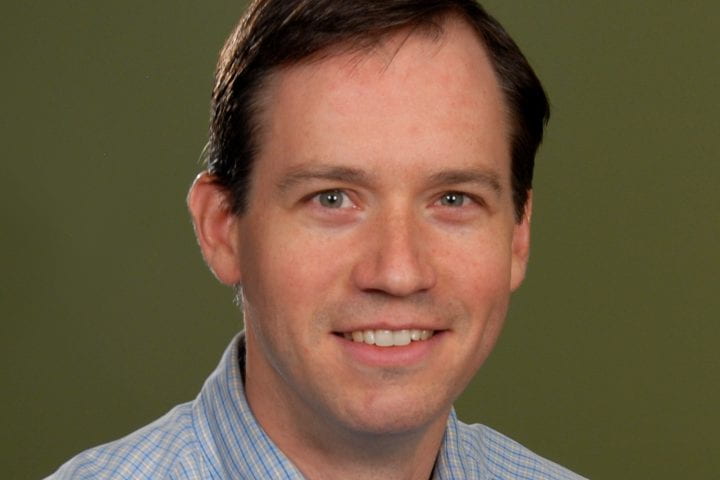
On June 15, the Federal Reserve announced its largest interest rate hike in 28 years to try to regain control over elevated consumer prices. The Fed raised its benchmark interest rate by three-quarters of a percentage point – the biggest increase since 1994 – following a quarter-point jump in March and a half-point increase in May. “We’re strongly committed to bringing inflation back down and we’re moving expeditiously to do so,” said Federal Reserve Chairman Jerome Powell. Eric Swanson – professor of economics. Swanson’s research focuses on monetary policy, interest rates and the effects on economy, including output, unemployment and inflation. Swanson previously worked at the Federal Reserve Board and Federal Reserve Bank of San Francisco from 1998-2014 as an economist and research advisor. Email: eric.swanson@uci.edu Aaron James – professor of philosophy. James co-authored the book Money from Nothing: Or, Why We Should Stop Worrying About Debt and Learn to Love the Federal Reserve, which explains the nature of money and a number of alternatives the Federal Reserve can legally employ to curb inflation other than increasing interest rates. Email: aaron.james@uci.edu Jack Liebersohn – assistant professor of economics. Liebersohn’s research focuses on banking, banking risk taking, mortgages and the housing market and he can speak to how increasing the Federal Reserve interest rate affects any of those elements of the economy. Email: cjlieber@uci.edu Christopher Schwarz – associate professor of finance and faculty director of the Center for Investment and Wealth Management. Schwarz can discuss how far the Federal Reserve will have to go and its impact on the economy and financial markets moving forward. Email: cschwarz@uci.edu Media Contact: Cara Capuano, Communications Officer, UCI | 949-501-9192 | ccapuano@uci.edu


Are You an Expert? Here’s How to Tell
Have you ever wondered whether or not you are an expert? When asked this question about what defines expertise, you will hear a variety of answers. Many will reference key requirements such as an expert must have extensive knowledge in their field. Others will see education, published work, or years of experience as key qualifiers. Yet there are so many other dimensions of expertise that contribute to how visible, influential and authoritative they are within their community of practice or with the general public. Who Qualifies as an Expert? I started looking closer at this topic for two reasons. The first is my personal work with experts. Having worked with thousands of them across a variety of sectors I've observed that many are driven to develop themselves professionally as an expert to meet a variety of objectives. Often these are focused on raising one's profile and reputation among peers or with the broader market to inform the public. Some see media coverage being an essential part of their strategy while others are more interested in developing a larger audience for their research or client work, by speaking at conferences or on podcasts. Others have a focus on improving their PageRank on search engines. All these activities can enable important objectives such as attracting new clients, research funding or talent. The second reason for this deeper dive into expertise is a need to better organize how we look at experts within organizations. My work with communications departments in knowledge-based sectors reveals that they are keen to learn more about how they can better engage their experts to build reputation, relationships and revenue. However, better engagement starts with a better understanding of what qualifies someone as an expert - what attributes can we objectively look at that define expertise? With that knowledge, we can first better appreciate the amount of work experts have put into establishing themselves in their field. Then organizations can nurture this expertise in a more collaborative way to accomplish shared goals. My observation is that with a little more insight, empathy, and alignment, both experts and their organizations can accomplish incredible things together. And there has never been a more important time for experts to "show their smarts." By definition, an expert is someone with comprehensive or authoritative knowledge in a particular area of study. While formal education and certifications are a starting point for expertise, many disciplines don’t have a set list of criteria to measure expertise against. It’s also important to recognize other dimensions of expertise that relate not just to the working proficiency in a field but also to the degree of influence and authority they have earned within their profession or community of practice. Because of this, expertise is often looked at as a person’s cumulative training, skills, research and experience. What are the Key Attributes of Expertise? In evaluating your accomplishments and the various ways you can contribute as an expert to both your community of practice and the public, here are some key questions that can help you assess how you are developing your expertise: Have you completed any formal education or gained relevant experience to achieve proficiency in your chosen field? Are you actively building knowledge in a specific discipline or practice area by providing your services as an expert? Are you generating unique insights through your research or fieldwork? Are you publishing your work to establish your reputation and reach a broader audience such as publications or books? Are you teaching in the classroom or educating and inspiring audiences through speaking at conferences? Do you demonstrate a commitment to impact your community of practice and help advance your field and generate an impact on society by informing the public? Have you established a reputation as a go-to source for well-informed, unique perspectives? Some Additional Tips to Help you Develop Your Expertise To further the discussion, I’ve also shared further thoughts about the meaning of “expertise”. As you think about developing your own personal skills, or if you are a communicator who is responsible for engaging with your organizations experts, here are a few additional principles to keep in mind. Experts Aren't Focused on Some“Magic Number” Related to Hours of Experience Malcolm Gladwell’s book “Outliers” (2008), outlined the now famous “10,000-hour rule” as the magic number of greatness for the time it takes to master a given field. As the rule goes, you could become a genuine expert in a field with approximately 10,000 hours of practice — roughly 3 hours a day, every day for a consecutive decade. But is that what it really takes to become an expert? But is that what it really takes to become an expert? Or did Gladwell oversimplify the concept of expertise? Some of his assumptions for “Outliers” (which became a major bestseller) relied on research from Dr. Anders Ericsson at Florida State University who made expertise the focus of his research career. Contrary to how Gladwell outlined it, Ericsson argued that the way a person practised mattered just as much, if not more, than the amount of time they committed to their discipline. It also depends on the field of research or practice one is involved in. Some disciplines take decades to achieve expertise and many experts will admit they are just scratching the surface of what they are studying, well after they have passed the 10,000-hour mark. That might be just the first stage of proficiency for some disciplines. Experts are Continuously Learning It’s difficult to claim proficiency as an expert if you are not staying current in your field. The best experts are constantly scouring new research and best practices. Dr. Anders Ericsson observed in his work that "deliberate practice" is an essential element of expertise. His reasoning was that one simply won’t progress as an expert unless they push their limits. Many experts aren’t satisfied unless they are going beyond their comfort zone, opening up new pathways of research, focusing on their weaknesses, and broadening their knowledge and skills through avenues such as peer review, speaking, and teaching. The deliberate practice occurred “at the edge of one’s comfort zone” and involved setting specific goals, focusing on technique, and obtaining immediate feedback from a teacher or mentor. Experts Apply their Knowledge to Share Unique Perspectives While many experts conduct research, simply reciting facts isn't enough. Those who can provide evidence-based perspectives, that objectively accommodate and adapt to new information will have more impact. Expertise is also about developing unique, informed perspectives that challenge the status quo, which can at times be controversial. Experts know that things change. But they don’t get caught up in every small detail in ways that prevent them from seeing the whole picture. They don't immediately rush toward new ideas. They consider historical perspectives and patterns learned from their research that provide more context for what's happening today. And these experts have the patience and wisdom to validate their perspectives with real evidence. That's why expert sources are so valuable for journalists when they research stories. The perspectives they offer are critical to countering the misinformation and uninformed opinions found on social media. Experts Connect with a Broader Audience Many experts are pushing past traditional communication formats, using more creative and visual ways to translate their research into a wider audience. We conducted research with academics in North America and in Europe who are trying to balance their research (seen in traditional peer-reviewed journals) with other work such as blogs, social media, podcasts and conferences such as TEDx - all with the goal to bring their work to a wider audience. While that's an essential part of public service, it pays dividends for the expert and the organization they represent. Experts Are Transparent More than ever, credible experts are in demand. The reason for this is simple. They inspire trust. And the overnight success some have seemingly achieved has come from decades of work in the trenches. They have a proven record that is on display and they make it easy to understand how they got there. They don't mask their credentials or their affiliations as they didn't take shortcuts. They understand that transparency is a critical part of being seen as credible. Experts Don’t Take “Fake It Till You Make It” Shortcuts The phrase “fake it till you make it,” is a personal development mantra that speaks to how one can imitate confidence, competence, and an optimistic mindset, and realize those qualities in real life. While this pop psychology construct can be helpful for inspiring personal development, it gets problematic when it becomes a strategy for garnering trust with a broader audience to establish some degree of authority - especially when this inexperience causes harm to others who may be influenced by what they see. When self-appointed experts take shortcuts, promoting themselves as authorities on social media without the requisite research or experience, this blurs the lines of expertise and erodes the public trust. Experts Are Generous The best experts are excited about the future of their field, and that translates to helping others become experts too. That's why many openly share their valuable time, through speaking, teaching and mentorship. In the end, they understand that these activities are essential to developing the scale and momentum necessary to tackle the important issues of the day. How Do You Show your Smarts? How do you personally score on this framework? Or if you are in a corporate communications or academic affairs role in an institution how does this help you better understand your experts so you can better develop your internal talent and build your organization’s reputation? As always we welcome your comments as we further refine this and other models related to expertise. Let us know what you think. Helpful Resources Download our Academic Experts and the Media (PDF) This report, based on detailed interviews with some of the most media-experienced academics across the UK and United States draws on their experiences to identify lessons they can share in encouraging other academics to follow in their path. Download the UK Report Here Download the US Report Here The Complete Guide to Expertise Marketing for Higher Education (PDF) Expertise Marketing is the next evolution of content marketing. Build value by mobilizing the hidden people, knowledge and content you already have at your fingertips. This win-win solution not only gives audiences better quality content, but it also lets higher ed organizations show off their smarts. Download Your Copy



Well before the uncertainty of the pandemic, Orion Travel Insurance, a CAA company, decided to change the way travellers access travel insurance online. Working with a team of anthropologists, the goal of the redesign was to better understand how humans think about travel and safety. Researchers scoured opinions online, analyzed media and sat down with travellers to document their feelings around travel. “The traditional way of building an online quoting system just wasn’t sufficient,” says Kellee Irwin, VP, Orion Travel Insurance Company. “We didn’t feel that the online experience was putting the needs of the traveller first, so we turned it on its head and approached things differently. We are confident that this new approach to accessing travel insurance and information about travel insurance online is going to be an industry game-changer.” Traditionally, online quoting systems for travel insurance have been designed with business needs at the forefront, rather than designed to reflect what customers need to confidently purchase the appropriate protection. “As a company founded to deliver the protection that our members deserve, this antiquated way of doing things wasn’t good enough. Our mission was to create an online buying experience that was inspired by what it’s like when a traveller engages with a CAA Associate at a store,” adds Irwin. The end result of this in-depth work is the launch of a reinvented online travel quote and purchase system that makes learning about and buying travel insurance an easy and seamless experience for travellers. "Our research told us that travellers want to feel like 'their own best expert'. This new online experience enables travellers to explore and learn about the different types of travel insurance and compare the cost of various levels of protection all at their fingertips," says Irwin. The new system helps customers clearly understand the protection they are viewing and why qualifying questions are being asked. No longer will customers be forced to click through a series of prompts, only to discover that their selections do not reflect their needs and they must start all over again. As they explore coverage and learn more about what protection is right for them, travellers can get to a price in just seven clicks. Plus, they can alter their choices and the system will give updated quotes in real time. It also allows customers to use our SMART FAQ search engine in which the customer enters a question and immediately receives a matched answer. The new online buy flow is now in effect, click here to experience Orion’s reimagined online travel insurance system.



The University of Florida aims to bring a scientist to every Florida school
By Emma Richards It was the encouraging support of his 10th grade earth science teacher that led Bruce MacFadden to pursue his dream of becoming a scientist. Now an accomplished paleontologist, MacFadden is paying it forward as director of the UF Thompson Earth Systems Institute and its “Scientist in Every Florida School” program. The program connects more than 700 scientists to K-12 classrooms in 42 counties throughout the state, providing students and teachers alike with up-to-date science lessons that both inform and, hopefully, inspire future scientists. Teachers use the program’s online application portal to request a visit by a scientist to teach a specific concept. Teachers are then matched with a scientist with that expertise, who delivers the requested lesson in person or virtually. Participating scientists are vetted to ensure they can communicate clearly with audiences of varying education levels. The program benefits students, teachers and scientists, MacFadden said. Students get to see the amazing things scientists do. Teachers receive timely knowledge and professional development. And scientists get to give back to society and gain confidence in their ability to share research, even with the youngest students. “We want to let young people know that if they want to be a scientist and apply themselves, they can also be a scientist,” MacFadden said. “It’s a synergy between the scientists and the teacher,” he said in an interview on the From Florida podcast. “We do not have prescribed, off-the-shelf lesson plans, but instead we typically talk with the teacher and say, ‘What would you like to do?’” It is the only program that currently works throughout the state to deliver high-quality STEM instruction to teachers and students, particularly in public Title 1 schools. “We want to make sure that there’s a level playing field with the understanding and teaching about STEM in a larger context,” he said. “But for me, it’s more about earth system science so that all teachers and students can benefit from what we know about current research in this field.” Outreach conducted through the Thompson Earth Systems Institute focuses on those systems — the interaction of air, water, land and life, and human impacts. Another important aspect of the “Scientist in Every Florida School” program is showcasing what a 21-st century career in science can look like for people from a variety of different backgrounds and interests. MacFadden said graduate students serve as role models in their visits to schools. “We want to let young people know that if they want to be a scientist and apply themselves, they can also be a scientist,” MacFadden said. The program aims to get a scientist into every public school in Florida at least once. With more than 4,000 public schools in the state, the scientists have a lot of stops to make — though virtual visits have helped them reach distantly located schools. MacFadden said once the team accomplishes that feat, they’ll focus on expanding outreach to other states. “Right now, I’m totally focused on making a difference in Florida’s public education,” he said. To learn more about the Scientist in Every Florida School program, listen to the full episode on From Florida at this link. Listen to other episodes of the From Florida podcast here. To learn more about the Thompson Earth Systems Institute, visit this link.
