
Experts Matter. Find Yours.
Connect for media, speaking, professional opportunities & more.

EURO 2020: The Business and Science of Football will see academics from across the University’s three colleges speaking on a variety of topics, including economic recoveries, the sustainability of huge sporting events and the psychology of penalties. It is great to use my research experience to provide a different perspective to a general audience with a project like this. Sporting mega events like Euro 2020 are always topical and it's been really interesting to discover the impact they have on the economy

Juneteenth is this Saturday? Our experts can help with your coverage and questions
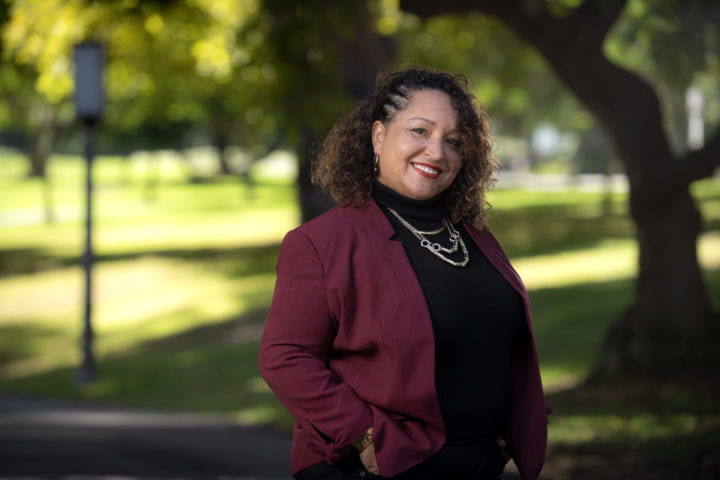
June 19 — Juneteenth — marks the day in 1865 that the Union Army announced in Texas that the African American slaves were free. Black Americans since then have honored the day, even as it has gone unnoticed by many others. In 2020, Jessica Millward, an associate professor of history at UCI, appeared on the UCI Podcast to discuss the history behind Juneteenth, the decades upon decades of continued struggle, and the hope she feels in this moment. And if you’re a reporter covering this important date in American history – then let our experts help with your stories. Dr. Jessica Millward is an Associate professor in the Department of History at the University of California, Irvine. Her research focuses on comparative slavery and emancipation, African American history, gender and the law. Dr. Millward is available to speak with media about Juneteenth – simply click on her icon now to arrange an interview today.


Tennis Pro Naomi Osaka Elevates the Conversation on Athletes and Mental Health
Though Naomi Osaka's announcement of her dropping out of the French Open and German Open tournaments came as a surprise to many of her followers, there has been plenty of support from fans and corporations for the 23-year-old tennis pro who chose to take time off because of mental health concerns. One company, the Calm App, offered to pay fines for tennis players skipping press briefings. And Formula 1 champion Lewis Hamilton—who, when he was 22 years old, found it difficult to deal with media commitments—offered encouragement to Osaka. "When you’re young and you're thrown into the limelight, it weighs heavily, and most of us are not prepared," Hamilton told The New York Times. Guy Weissinger, PhD, an assistant professor in Villanova's M. Louise Fitzpatrick College of Nursing whose research focuses on mental health, says, "Elite athletes are people. They have mental health struggles—good days and bad days—and it's important that we recognize that mental health is complicated, not just 'doing well' or 'not doing well.' One may be capable of doing one thing (i.e., playing tennis) but not other things (i.e., being peppered by reporters with questions). It saddens me that she needed to withdraw from the tournament rather than the tournament organizers reaching out to find ways to accommodate her mental health needs." He noted that the 23-year-old Osaka is an amazing athlete who rose to global prominence beating Serena Williams in a match that got a lot of negative attention. "While no one was saying that she did not deserve her victory, the conversation was mostly focused on Serena, and Osaka was a teenager caught in a media firestorm. I could see how that would create a high level of baseline anxiety around the Opens and media interactions for her, in addition to the already stressful situation of participating at that elite level of sports. Combine that with the high level of stress that everyone has been experiencing over the last year and a half, with COVID, I'm surprised that she isn't the only person who has said that they would be unable to do media appearances." He says this is a great opportunity for discussion of mental health and how it's a concern for everybody. "Too often, we think of people that are successful as being immune to mental health struggles, but we have to acknowledge that people can be both successful and struggling. Sometimes they will be able to manage (as Naomi has in many circumstances), but sometimes even their best coping mechanisms are not enough." Weissinger hopes that we can find ways for people to 'tap out' of the things that overwhelm their ability to cope. "It's not fair or ethical to only wait until people are not just struggling but completely drowning before trying to support or accommodate them. Like with physical health, prevention before things get bad is better for everyone than trying to fix things when they get really bad."


The sand dunes of Tybee Island have taken a beating in recent hurricane seasons. Georgia Southern University biology graduate student Shannon Matzke is researching ways to combat the destruction of the dunes for her restoration project by collecting data on the effects of various planting techniques to see which technique best increases the longevity of the dunes. As a part of the project, Matzke collects monthly data on the growth and survival of plants, as well as on the sand accumulation associated with different planting densities and groups of species. She also spends time analyzing data, exploring new techniques and tools to use in the field, researching dunes and vegetation, and conducting outreach for the project. “Working on the beach has been such a fun experience,” Matzke said. “It has also been rewarding to learn new techniques and how to use new equipment to answer more questions about the success of the restoration project. Perhaps my favorite part though has been the outreach associated with my project. The overall dune construction and beach nourishment is so important to island locals, and I’ve enjoyed being able to explain how my work fits in with the larger project.” Of the plants surveyed, 95% survived the first growing season. On average, plants doubled in height and canopy cover when compared to their size when initially planted. Matzke is also collecting data in areas of the constructed dune that were left bare to compare against the vegetated sites. Unlike the vegetated dunes, bare sites are experiencing erosion, which further relates the importance of adding native vegetation to any new dune construction. Matzke said she was drawn to Georgia Southern and the biology department because of proximity to the coast. She also appreciated her advisor Lissa Leege, Ph.D., who has worked with native and endangered plant species. “I am so glad that I chose to earn my master’s at Georgia Southern because I have been able to make connections with researchers inside and outside of my department, as well as with industry and government professionals,” she said. “I have also enjoyed being able to work on Tybee and the convenience of having the Armstrong campus close to where I live in Savannah.” Matze, who will graduate in fall 2021, hopes to continue her work with native plant ecology. “After I graduate from Georgia Southern, I’d like to work for a state or local agency continuing in the natural resources management field,” Matzke said. “I am interested in continuing working on invasive species research, endangered plant conservation and habitat restoration using native species. My research at Georgia Southern is the perfect introductory experience to the type of work that I would like to continue doing.” If you're a journalist looking to learn more about this exciting research — simply reach out to Georgia Southern Director of Communications Jennifer Wise at jwise@georgiasouthern.edu.


Augusta University experts looking for clues to predict future cyber attacks
The threat of cyber attacks is a reality for every industry. Cybersecurity is top of mind after recent highly skilled and calculated attacks targeting the Colonial Pipeline in May and shutting down the world’s largest meat supplier earlier this month. With America’s energy and food supply chains making vulnerable targets, everyone from executives, lawmakers, security officials and the media are looking for answers. Augusta University’s Dr. Craig Albert and Dr. Lance Hunter explore the questions surrounding cybersecurity in a recently published study in The Cyber Defense Review. This project examines the political, economic and military factors associated with cyber attacks in an effort to understand which countries or groups are most likely to attack. Here’s an abstract of their piece: Factors that Motivate State-Sponsored Cyberattacks The study of the factors involved in the initiation of violent interstate conflicts has been well documented within international relations. However, scholars have yet to analyze the factors associated with the initiation of international state-sponsored cyberattacks due to the lack of available data. This study is a first attempt to address this limitation. This project examines the political, economic, and military factors associated with the initiation of state-sponsored cyberattacks from 2005–2012, using a unique dataset that incorporates author-collected political, economic, and military data, along with cyber data on known state-sponsored cyberattacks extracted from the Council on Foreign Relations (CFR) Cyber Operations Tracker Dataset. With this unique dataset, we seek to better understand those states most likely to cyberattack other states. The Cyber Defense Review, Spring 2021 The study was also referenced in Voice of America in a piece covering President Biden’s trip to the G-7 Summit in Britain. If you are a journalist looking to cover any aspect of cybersecurity and cyber attacks, Augusta University’s experts are world-renowned on the topic. Dr. Craig Albert is director of the Master of Arts in Intelligence and Security Studies at Augusta University. He is a leading expert on war, terrorism and American politics, and he testified before U.S. Congress regarding the threat from Chechnya following the deadly Boston Marathon bombing. Dr. Lance Hunter is an assistant professor of political science with a background in international relations. His research focuses on how terrorist attacks influence politics in democratic countries and how political decisions within countries affect conflicts worldwide. Both experts are available to speak with media about cyber attacks. Simply click on either expert’s icon to arrange an interview today.


A leading London based architectural metalwork company, specialising in the design, fabrication and installation of bespoke metal products has entered into a Knowledge Transfer Partnership (KTP) with Aston University, with the aim of developing antimicrobial coatings as a way to reduce infection in high risk environments. The Aston University research team will work with John Desmond Limited to develop high end metallic products that can be used where there is a high risk of the spread of bacteria. The antimicrobial coating will be developed for use in communal areas on products such as handrails, balustrades, push plates, door handles and faceplates, – all of which are common in high traffic areas such as hospitals, doctors surgeries, dental practices, schools and transportation hubs. A Knowledge Transfer Partnership (KTP) is a three-way partnership between a business, an academic partner and a graduate, called a KTP Associate. The UK-wide programme helps businesses to improve their competitiveness and productivity through the better use of knowledge, technology and skills. Aston University is the leading KTP provider within the Midlands. Microbiologists from Aston University’s College of Health and Life Sciences and materials scientists from its College of Engineering and Physical Science will establish the effectiveness of the antimicrobial coatings against a panel of bacteria under a range of conditions to further optimise the surface performance. The team will support John Desmond Ltd to establish an in-house microbiology laboratory to enable extensive testing of the developed coatings which will be carried out under lab conditions. Information from the lab tests will provide supporting evidence to prospective clients of the antimicrobial coating’s efficacy, expected lifespan and performance under varying conditions. Ian Desmond, owner of John Desmond Ltd, said: “We are very excited to be working with Aston University on this ground-breaking project to develop industrial coatings capable of reducing the spread of infection within public spaces. “We are confident that with the expert knowledge and experience that the Aston University team brings to this collaboration, we will succeed in formulating a potent cost-effective means to protect all of us from the threat of micro-organisms, and their impact on the environment in which we live and work.” The Aston University academic team consists of Dr Tony Worthington, associate professor in clinical microbiology and infectious disease; Professor Anthony Hilton, and executive dean of the College of Health and Life Sciences, and Dr Richard Martin from the Aston Institute of Materials Research in the College of Engineering and Physical Science. Professor Anthony Hilton said: “I’m delighted to be able to work on this exciting project with John Desmond Ltd, bringing together a multi-disciplinary team of scientists and engineers from across Aston University to work with an industry partner. “Knowledge exchange between academia and industry is a core element of Aston University’s strategy and it is exciting to be part of a team developing a product which has the potential to have real impact in preventing and controlling infection.” Dr Richard Martin, Aston Institute of Materials Research, said: “Over the past year, we have all become aware of just how important it is to limit the spread of microorganisms. This project is an exciting opportunity to develop new antimicrobial coatings that will significantly reduce the transmission of microorganisms from touchpoint surfaces such as door handles and handrails." The research team have found that claims for the effectiveness of the anti-microbial properties of products already on the market are not always backed with scientifically rigorous evidence. As a result of this, these products have not been able to penetrate markets such as healthcare, where generic claims are not sufficient for buyers to change suppliers. This KTP will establish a body of testing and efficacy data which will support the application and use of antimicrobial coatings in a range of settings where control of bacteria on environmental surfaces is critical for infection prevention and control. You can visit our website for more information about The College of Health and Life Sciences and The College of Engineering and Physical Science at Aston University.


Experts available to comment on G7 summit discussions
A range of experts from the University of Bristol are available to comment on the upcoming G7 summit taking place in Cornwall, UK. Professor Simon Tormey, Professor of Politics and Dean of Social Sciences and Law at the University of Bristol can speak about what G7 means for UK, reboot of US-China relations, climate change, and taxes on large corporations. Simon can also do interviews in French. Dr David Matthews, Reader in Virology in the School of Cellular and Molecular Medicine at the University of Bristol and a member of the 'G2P-UK' National Virology Consortium, can discuss vaccines and global health security. Dr Kate Hendry, Associate Professor of Geochemistry at the University of Bristol can discuss ocean action including net zero oceanographic capability. Dr Tommaso Jucker, Research Fellow at the University of Bristol’s Cabot Institute for the Environment, can cover: supporting the transition to a low carbon economy – the role of forest conservation and reforestation in mitigating climate change, and action to halt and reverse biodiversity loss – ecosystem restoration. Dr Kristen Reyher, Reader in Veterinary Epidemiology and Population Health at the University of Bristol, is able to discuss antimicrobial resistance, antimicrobial stewardship, antimicrobial use, and epidemiology. And Professor Awais Rashid, Professor of Cyber Security at the University of Bristol, is available for the following topics: Internet safety including protecting children and online fraud, darknet markets, privacy issues and data exploitation.


Quarterly Tech Brief - Your Canadian digital resiliency guide for the post-pandemic era
June 2021 Editor's Comments There's cautious optimism brewing in Canada as we enter the Summer months. Life-saving vaccines are finally getting into the arms of millions of Canadians and the COVID-19 case counts are starting to decline. We can see a path to the national and provincial economies opening again very soon. What does all of this mean for Canadian businesses and organizations? Hopefully, you've weathered the worst of the pandemic storm, and are coming out of it stronger and more prepared for the digital era that lies ahead. Although the pandemic forced many Canadian organizations further along their digital transformation journey than they had planned out of necessity, it appears that those digital preferences will continue over the foreseeable future. In this edition of IDC Canada's Quarterly Tech Brief, we explore more real-life best practice digital transformation stories from Canadian CIOs and technology leaders through our recent and upcoming events. We also reveal the most up-to-date Canadian survey results, market forecasts and market trends through our new research reports, blogs and IDC Directions Canada event. Finally, we explore IDC's new Digital Resiliency Framework to help organizations evaluate their readiness, risks and prioritize technology projects. Find out why so many organizations trust IDC to be their technology research advisor through this sampling of our research. FEATURED: Looking for ideas on how to simplify your own company's digital transformation journey or those of your customers? Join us on June 16! Hear from industry-leading tech executives in the June session of our IDC CIO Panel Series, Accelerate & Simplify Your Canadian Digital Transformation Journey. This CIO Panel Series is designed to help you better enhance your digital strategy programs and understand your customers to deliver more impactful experiences. In this 90-minute live webinar, you’ll learn about the impact of the pandemic in major industry sectors in Canada, digital resiliency trends, and new customer expectations. You’ll also hear best practices from Canadian IT leaders as they unpack how 2020 accelerated their digital transformation journey, and what we should be prioritizing in 2021. Check out the stellar CIO panelist lineup and save your virtual seat for June 16. It's going to be a fabulous event - register now to save your spot. Stay tuned for information on our next CIO Panel Session in September. Your Canadian Research Checklist Here are some of our most popular Canadian reports of the quarter to help you understand changing market conditions and succeed in 2021. ✓ Canadian Tech Market Update: 2021 Outlook ✓ IDC Survey: Canadian Organizations on the Road to Recovery Revisited ✓ Brand Perceptions of Managed Security Service Providers in Canada, 2021 ✓ East Meets West: Canada's Rogers Communications Agrees to Buy Shaw Communications ✓ Canadian Communication Services Market Shares, 2020: Who's Who in the Zoo 20 IDC THOUGHT LEADERSHIP: NEW FRAMEWORKS Explore IDC's new Digital Resiliency Framework IDC’s digital resiliency framework shows CEOs, CIOs, and other business leaders how technology can support the entire organization through the different stages of any business crisis. Understanding the Digital Resiliency Framework is critical not just for organizations working to improve their resiliency, but for their technology partners as well. IDC recognizes the challenges organizations are looking to solve and can help demonstrate how technology solutions can help overcome these obstacles in our new eBook: IDC THOUGHT LEADERSHIP: BLOG HIGHLIGHTS Enabling Digitally Resilient Organizations in Canada: A New Approach - Learn how to leverage IDC's new framework to help your customers thrive in the next normal with IDC Canada's George Bulat. Read More → Cloud Adoption and Usage is Growing in Canada, But Cloud Maturity is Not -Explore how cloud adoption and maturity have changed in Canada during the pandemic with IDC Canada’s Jason Bremner. Read More → Growing at the Edge - In 2024, the Canadian edge computing market will reach C$7.5 Billion. Explore what’s driving growth in edge computing and the opportunities it offers to end-users and tech suppliers with IDC Canada’s Tarun Bhasin. Read More → Consumer Device Refresh Rates – Why Demographics & Psychographics Matter PC & tablet refresh rates were lower in 2021 than in past years. See how consumer demographics and psychographics contextualize refresh rates with IDC’s David Myhrer. Read More → ICYMI: IDC DIRECTIONS 2021 CANADA Didn't get a chance to attend our IDC Directions Canada 2021 virtual event live back in April? Now's your chance to catch up on our uniquely Canadian perspectives. On the afternoon of April 22, IDC's thought leaders, Rick Villars, Tony Olvet, Megha Kumar, Nigel Wallis, and Jason Bremner presented their expert insights, intelligence, and guidance for finding success in the next normal. Learn about the future enterprise, digital resiliency, digital innovation, and the future of digital infrastructure in this session. Watch Now On-Demand → ICYMI: IDC FIRESIDE CHAT: CREATING SEAMLESS CONTENT EXPERIENCES Did you miss this insightful webinar on streamlining your content experiences a few weeks ago? Now’s your chance to catch up! The live IDC Fireside Chat webinar may be over, but you can still watch this enlightening event on-demand. Hear Barry Hensch, SVP & Head of Technology Enablement at ATB Financial, share his content management successes and challenges and why they're critical to senior IT leaders in Canada. While Barry’s experiences and tips steal the show, you can also hear insights from IDC Canada’s cloud and collaboration expert, Megha Kumar and seasoned content management leader, Varun Parmar as they share insights to help you move forward on your path to seamless digital experiences in the post-pandemic era. Watch Now On-Demand → Thanks for reading this IDC Quarterly Tech Brief Newsletter. Don’t forget to subscribe to be notified quarterly when the next issue comes out.


Climate Change-Related Natural Disasters Impact Short-Lived Assets and Interest Rates
For decades, scientists across the globe have warned about the effects of climate change. Given that these changes—global warming, rising sea levels—happen over time and that their disastrous results may not be obvious for decades, studying the effects of climate change on financial markets has posed a problem. According to Christoph Herpfer, assistant professor of finance, Goizueta Business School, most of the existing literature that deals with the effect of climate change on financial markets considers “indefinitely lived assets,” such as owning stock or owning a home—assets that “don’t have an expiration date,” explained Herpfer. To evaluate the effect of climate change in the long run on these assets then requires discount models—ways to value something today based on what it could be worth decades from now. Herpfer, a banking and corporate finance specialist, studies short-lived assets that, on average, expire after 4.5 years. Herpfer wondered if there could be “an alternative channel in which climate change already impacts companies today,” he explained. One that didn’t have to deal with all the “challenges associated with long run discount rates,” he added. In “The rising tide lifts some interest rates: climate change, natural disasters, and loan pricing,” Herpfer and his colleagues—Ricardo Correa, deputy associate director, Board of Governors of the Federal Reserve System, Ai He, assistant professor of finance, University of South Carolina, and Ugur Lel, associate professor, Nalley Distinguished Chair in Finance, University of Georgia, Terry College of Business—consider this question by studying corporate borrowing costs. In 2020, the paper received the best paper award at the Boca Corporate Finance and Governance Conference. The foursome had a novel idea: In recent years, there has been scientific consensus that climate change fuels natural disasters. So Herpfer and his fellow authors wondered if financial institutions took climate change-amplified natural disasters into account when pricing short-term loans. Their answer was, unequivocally, “yes.” Their work and research is captured in a recent article in Emory Business - it's attached and well worth the read. If you're a journalist looking to know more - then let us help. Christoph Herpfer is an assistant professor of finance at Goizueta Business School. He is also a financial economist working at the intersection of banking, law, and accounting. Christoph is available to speak with media about this research - simply click on his icon now to arrange an interview today.


Weight stigma is a burden around the world – and has negative consequences everywhere
Rebecca Puhl, Professor of Human Development and Family Sciences and Deputy Director, UConn Rudd Center for Food Policy and Obesity, University of Connecticut was recently featured in The Conversation discussing this very important topic. An excerpt of her article is included with the full piece attached. It's an excellent article and well worth the read. Lazy. Unmotivated. No self-discipline. No willpower. These are just a few of the widespread stereotypes ingrained in American society about people who have a higher body weight or larger body size. Known as weight stigma, these attitudes result in many Americans being blamed, teased, bullied, mistreated and discriminated against. There is nowhere to hide from societal weight stigma. Decades of research confirm the presence of weight stigma in workplaces, schools, health care settings, public accommodations and the mass media, as well as in close interpersonal relationships with friends and families. It’s everywhere. I’m a psychologist and researcher at the Rudd Center for Food Policy & Obesity at the University of Connecticut. For 20 years my team has studied weight stigma. We’ve examined the origins and prevalence of weight stigma, its presence across different societal settings, the harm it causes for people’s health and strategies to tackle this problem. We conducted a recent international study that clearly shows that weight stigma is widespread, damaging and difficult to eradicate. This societal devaluation is a real and legitimate experience for people across different countries, languages and cultures. June 01 – The Conversation The issue of weight stigma and shaming is having a devastating impact on all facets of American society – and if you are a reporting looking to cover this topic or to learn more, then let us help. Dr. Rebecca Puhl is Deputy Director for the Rudd Center for Food Policy & Obesity and Professor in the Department of Human Development and Family Sciences at UConn. She is responsible for identifying and coordinating research and policy efforts aimed at reducing weight bias. Dr. Puhl is available to speak with media regarding this important subject – simply click on her icon now to arrange an interview today.

