
Experts Matter. Find Yours.
Connect for media, speaking, professional opportunities & more.

Image shows how tiny water channels control how water enters and exits cells through their membranes The Aston Institute for Membrane Excellence (AIME) will be set up with a £10m grant from Research England AIME will be led by Professor Roslyn Bill from Biosciences and Professor Paul Topham from Chemical Engineering and Applied Chemistry The globally unique institute will use biomimetic polymer membranes for applications such as water purification and drug development Aston University will establish the Aston Institute for Membrane Excellence (AIME), a globally unique, cross-disciplinary institute to develop novel biomimetic membranes, after receiving a major grant of £10m from Research England. AIME will be led by Professor Roslyn Bill, from the School of Biosciences, with co-lead Professor Paul Topham from the department of Chemical Engineering and Applied Chemistry (CEAC). Membranes, both biological and synthetic, are hugely important in many sectors. For example, the world’s top ten selling human medicines all target proteins in biological membranes, while synthetic polymer membranes are used in the US$100bn/year water purification industry. The team behind AIME believes that the full potential of membranes will only be realised by an interdisciplinary group spanning biology, physics and chemistry that can investigate membranes holistically. Professor Bill, a European Research Council (ERC) Advanced grantee leads Aston Membrane Proteins and Lipids (AMPL) research centre of excellence that studies the structure and function of membrane proteins and associated lipids. Professor Topham leads Aston Polymer Research Group (APRG), which investigates the nanoscale behaviour of block copolymers (a type of polymer with a structure made of more than one type of polymer molecule) and polymer technologies for membranes. AMPL and APRG have already begun collaborative research and AIME will bring together the complementary expertise of both research clusters into one institute. AIME will initially comprise the eight researchers from AMPL and APRG. Alongside the co-leads Professor Bill and Professor Topham, will be Dr Alan Goddard, Professor Andrew Devitt, Professor Corinne Spickett, Dr Alice Rothnie, Dr Matt Derry and Dr Alfred Fernandez. It plans to recruit three further academics, six tenure-track research fellows, three postdoctoral research assistants (PDRAs), six PhD students, a research technician and a business development manager. Importantly, AIME will work with many existing Aston University colleagues to build a comprehensive research community focused on all aspects of membrane science. The new AIME team will focus on the development of bioinspired, highly selective polymer structures for applications in water purification and waste remediation, nanoparticles loaded with therapeutic molecules to treat disorders ranging from chronic wounds to neurological injuries, and the purification of individual membrane proteins with polymers to study them as drug targets. The vision is for AIME to become a ‘one-stop shop’ for interdisciplinary, translational membrane research through its facilities access and expertise, ideally located in the heart of the country. Professor Bill said: “The creation of AIME is ground-breaking. Together with Aston’s investment, E3 funding will deliver a step-change in scale and the rate at which we can grow capacity. We will address intractable scientific challenges in health, disease, and biotechnology, combining our world-class expertise in polymer chemistry and membrane biology to study membranes holistically. The excellence of our science, alongside recent growth in collaborative successes means we have a unique opportunity to deliver AIME’s ambitious and inclusive vision.” Professor Topham said: “We are really excited by this fantastic opportunity to work more closely with our expert colleagues in Biosciences to create advanced technology to address real world problems. From our side, we are interested in molecular engineering, where we control the molecular structure of new materials to manipulate their properties to do the things that we want! Moreover, we are passionate about a fully sustainable future for our planet, and this investment will enable us to develop technological solutions in a sustainable or ‘green’ way.” Professor Aleks Subic, Vice-Chancellor and Chief Executive of Aston University, says: “Our new Aston Institute for Membrane Excellence (AIME) will be a regional, national, and international research leader in membrane science, driving game-changing research and innovation that will produce a pipeline of high-quality research outcomes leading to socioeconomic impact, develop future global research leaders, create advanced tech spinout companies and high value-added jobs for Birmingham and the West Midlands region. Its establishment aligns perfectly with our 2030 strategy that positions Aston University as a leading university of science, technology and enterprise.” Steven Heales, Policy Manager (Innovation) at the West Midlands Combined Authority, said: “WMCA is delighted to see Research England back the Aston Institute for Membrane Excellence. This will enable Aston University’s excellent academics and research community to work closely with businesses to make advances in membrane technology and applications. “In 2023 the West Midlands Combined Authority agreed a Deeper Devolution Trailblazer Deal with Government, which included a new strategic innovation partnership with Government. Projects like AIME are exactly the kind of impact we expect this new partnership to generate, so watch this space.” Lisa Smith, chief executive of Midlands Mindforge, the patient capital investment company formed by eight Midlands research-intensive universities including Aston University, said: “This grant is an important vote of confidence in the Midlands scientific R&D ecosystem. AIME will play an important role in the future research of pioneering breakthroughs in membrane science and enable the world-leading research team at Aston University to develop solutions to real world problems. We look forward to closely working with the Institute and nurturing best-in-field research being undertaken at Aston out of the lab and into the wider society so it can make a positive impact”. Rob Valentine, regional director of Bruntwood SciTech, the UK’s leading developer of city-wide innovation ecosystems and specialist environments and a strategic partner in Birmingham Innovation Quarter, said: "As a proud supporter of the Aston Institute for Membrane Excellence (AIME), I am thrilled at the launch of this groundbreaking initiative. AIME exemplifies Aston University's commitment to advancing cutting-edge interdisciplinary research and further raises the profile of the region’s exemplary research capabilities and sector specialisms. AIME's vision of becoming a 'one-stop shop' for translational membrane research, strategically located at the heart of the country, aligns perfectly with our strategy at Bruntwood SciTech. We are committed to working with partners, including Aston University, to develop a globally significant innovation district at the heart of the UK where the brightest minds and most inspiring spaces will foster tomorrow’s innovation.” Membrane research at Aston University has also recently received two other grants. In November 2023, Professor Bill received £196,648 from the Biotechnology and Biological Sciences Research Council’s Pioneer Awards Scheme to understand how tiny membrane water channels in brain cells keep brains healthy. In December 2023, a team led by AIME team-member Dr Derry received £165,999 from the Engineering and Physical Sciences Research Council to develop biomimetic membranes for water purification. For more information about AIME, visit the webpage.



• Contaminated water is responsible for around 500,000 deaths a year • New transmembrane proteins will allow selective removal of single contaminant from water • Will use tiny transport channels around one million times smaller than an ant. Aston University scientists are to explore a more sustainable method of separating contaminants from water. The method will use exquisite molecular selectivity, which means that just a single chemical or molecular species will be able to pass through the membrane, allowing scientists to selectively remove a single contaminant from water. The World Health Organization estimates that microbiologically contaminated water is responsible for almost 500,000 deaths a year and current filtration technologies aren’t effective enough. The University has received a grant of £165,999 from the Engineering and Physical Sciences Research Council to research the use of bioinspired membranes to selectively remove contaminants from water, while using minimal energy. The membranes will be made from plastic but will have transmembrane proteins embedded within them, made possible thanks to new polymers developed by the University. The transmembrane proteins enable the selective removal of specific contaminants using transport channels measuring approximately 4-10 nanometres - around one million times smaller than an ant. The Aston University team led by Dr Matt Derry, lecturer in chemistry, will be developing bio-inspired membranes which selectively remove contaminants with minimal energy. Working with Dr Alan Goddard, reader in biochemistry at Aston University, the team’s design is based on solutions found in biological evolution and refinement which has occurred over millions of years. Dr Derry, who is based in the University’s College of Engineering and Physical Sciences. said: “Polluted water is a complex global socioeconomic issue that affects human and animal health, and greatly impacts industries such as agriculture and fishing, recreational activities and transport. “Current filtration technologies are ineffective and their manufacture often requires complex and expensive multi-step processes with high associated energy costs. “We are going to use advanced polymer synthesis to develop new bespoke polymers which will both extract transmembrane proteins and immobilise them within artificial separation membranes. “This will create water purification membranes which remove impurities with greater selectivity and specificity.” The new membrane technology developed in this project will advance and evolve membrane science. The platform materials and approaches used can be applied to other membrane filtration and water purification applications such as selective phosphate removal from agricultural wastewater. Dr Derry added: “We are hoping that the new membranes will lead to high-performance devices that can contribute to a circular economy. “The need for such new systems is recognised by the UN with Sustainable Development Goal six on clean water and sanitation.” The research will begin in April 2024 and will end in May 2026.

CorpusCast with Dr Robbie Love: Professor Laurence Anthony on AntConc
CorpusCast is the podcast about corpus linguistics and what it can do for society. Join Dr Robbie Love as he speaks with top researchers in the field to find out more about how corpus linguistics – the study of linguistic patterns in large samples of language – is applied to a diverse range of areas including health, social justice and education. To mark the 25th episode and second anniversary in 2024, this episode reflects on the incredible two-year journey, expressing gratitude to exceptional guests and listeners spanning over 30 countries. In this milestone episode, the spotlight is on Professor Lawrence Anthony, the brilliant mind behind AntConc, a widely used and freely available corpus tool. Listeners are invited to join a profound exploration into AntConc's story, development, and its impact on corpus linguistics. Professor Lawrence Anthony, based at Waseda University in Japan, directs the Center for English Language Education in Science and Engineering. With over two decades of expertise in educational technology, natural language processing, and genre analysis, he has been a pioneer in developing educational software for corpus linguistics enthusiasts. Listeners can anticipate a captivating conversation as CorpusCast delves into the world of AntConc, gaining insights into its significance in the field. The third season kicks off with Professor Lawrence Anthony, promising a knowledge-packed episode. A heartfelt thank you goes out to all CorpusCast listeners for their continuous support. Here's to more discoveries, learning, and growth in 2024! Happy New Year, and welcome to another exciting episode of CorpusCast! Dr Robbie Love ? https://bit.ly/3Zcgo36 Professor Laurence Anthony ? https://www.laurenceanthony.net/ Aston Centre for Applied Linguistics ? https://bit.ly/3QKHcSF School of Social Sciences and Humanities ? https://bit.ly/3JCRAd1 Find out more about courses related to this show ? https://bit.ly/3pR705k #corpuslinguistics #BusinessCommunication #AstonUniversity #RobbieLove #MatteoFuoli #SocietalImpact #corpuslinguistics #AntConc #PodcastAnniversary #EducationTechnology


Aston University invests £18 million to support doctoral research
Funding to recruit and nurture tomorrow’s researchers Investment will support University’s vision to be a leading university of science, technology and enterprise Investment in research at the interfaces of science, health and technology. Aston University is announcing investment of £18 million in doctoral research funding to recruit and nurture the research leaders of tomorrow. The investment supports the University’s vision to be a leading university of science, technology and enterprise. It will fund research at the interfaces of science, health, technology and enterprise, socio-economic transformations driven by digitalisation, and pressing economic, social and other challenges addressed by researchers in Aston University’s colleges and research institutes. Successful candidates will be recruited for the studentships on the basis of excellence and provided with the support they need to excel as doctoral researchers. They will drive forward their own research projects and make significant contributions to existing innovative research projects and teams. A range of support will be available, including full studentships covering the cost of UK fees and student stipend paid at rates equivalent to UKRI-funded studentships, as well as a fund for research expenses. Professor Phil Mizen, Associate Pro-Vice-Chancellor Researcher Development at Aston University, said: “This investment represents the University’s strategic commitment to supporting inclusive, entrepreneurial and translational research with a clear transformational impact so that the people, businesses and communities it serves can thrive economically, socially and culturally. “I am delighted that, through these studentships, we are able to provide more opportunities for doctoral researchers to gain essential skills and to foster excellence in research and innovation.”

Big shift coming to the EV industry
Already a pioneer in the industry, the University of Delaware has once again played a key role in taking electric vehicles to the next level. Researchers there helped bring about new automotive standards that will drive lower-cost charging and vehicle-to-grid (V2G) integration and standardize Tesla’s connector so that future U.S.-made EVs will have this technology on it. The two newest standards for electric cars, both approved this month by standards committees of SAE International (formerly the Society of Automotive Engineers), should bring EV drivers great joy, according to Willett Kempton, professor at the University of Delaware’s Center for Transportation Electrification on UD’s Science, Technology and Advanced Research (STAR) Campus. Center director Rodney McGee was chairman of the two SAE committees, while postdoctoral researcher Garrett Ejzak, Kempton and administrative assistant Becky Cox played key roles in the engineering, research and policy work undergirding the new EV standards. “These developments mark a big shift for the EV industry,” said Kempton, who is affiliated with research centers in both the College of Earth, Ocean and Environment and the College of Engineering at UD. “Drivers will gain access to more charging stations and lower-cost charging. They will have new options for using their EV to help fight climate change and even make money when plugged in. These changes are likely to spur even greater adoption of EVs for clean, affordable transportation.” The so-called “V2G standard” (SAE J3068) provides the missing link for widespread use of vehicle-to-grid (V2G) technology, which Kempton and his colleagues invented at UD more than two decades ago. “We’ve been doing V2G for 20 years here at the University of Delaware, wondering when the rest of the world would catch on,” Kempton said. “One key missing piece has been a complete standard for controlling and managing V2G, which now exists within SAE J3068.” V2G allows you to plug your EV into an electrical outlet and send power from the car battery back to your local energy utility, making a little income while helping the nation’s power grid. This is becoming increasingly more important as more renewable sources of energy come online. When the sun isn’t shining or the wind isn’t blowing, EV owners can plug in and “perform important energy-balancing services,” according to Kempton. The savings from V2G can add up. “Our V2G demonstrations show an EV can earn between $100 a year and $1,500 a year. The wide variation is due to different markets and to regulations in different utilities. It also depends on the EV’s capabilities,” Kempton explained. Current EVs need a substantial update or retrofit to be able to do V2G, while new EVs equipped with the signaling technology are expected to be available by 2025. This standard also will make it possible to use your EV as backup power for your house. As extreme weather increases with climate change, that’s a good energy reserve to have when the lights go out. It takes one-and-a-half kilowatts to power the average house, Kempton said. Your electric car can produce 80 kilowatts of power, enough to run a whole house and more. “So, your EV can both help fight climate change and keep your house going when extreme storms happen,” Kempton said. With SAE J3400 now approved, the connector system Tesla developed for EV charging will now be standardized and can be included on future EVs of any brand. The first non-Tesla cars with this technology, also known as the North American Standard Connector, are expected to hit the market in 2025. “This will eliminate Tesla’s monopoly on their charging stations, making them available for use by any new EV,” Kempton said. According to Statista, the U.S. had more than 53,000 public EV charging stations and over 138,000 public charging outlets in May 2023. Visit Kempton's profile and click on the contact button to arrange an interview.


Below is a statement from Eric Kmiec, Ph.D., founder and executive director, ChristinaCare Gene Editing Institute, regarding the expected approval by the Food and Drug Administration of exa-cel (Casgevy), the CRISPR-driven treatment for sickle cell disease and betta thalassemia. If you wish to interview Dr. Kmiec, please contact Mak Sisson, Makenzie.sisson@christinacare.org,302-623-5306 or Anna Chen, achen@burness.com, 215-262-7670. “As scientists, the fact that we have arrived at a potential curative treatment for sickle cell disease in a relatively brief period is a testament to the power of resolute researchers in this field who have never stopped. And the FDA’s expected approval comes with many firsts. For the first time we have what appears to be a safe and curative treatment for one of the most painful diseases that cuts life short. And it is remarkable that finally we are focusing on the Black population first, who are most affected by this disease. This priority is long, long overdue. The challenge, however, is the very people we want to help may not be able to get access to or afford the million-dollar treatment and the length of time it will take to be treated — weeks and weeks in the hospital. The numbers of people who can be treated are limited. We must work with the health care industry and pharmaceutical companies who will market produce and deliver the treatments to make sure that all people can get access. What can they do to make treatments more affordable and more available? What can they do to support continued research to assess the long-term effects this treatment may have? And how can we make this easier to deliver? As important as it is to have developed this new treatment, right now we must do our best to communicate well to the public what new findings like this mean. Take the time to explain it all. It cannot be oversold. We must make the communication about this first CRISPR-driven treatment as important as the science itself.” Eric B. Kmiec, Ph.D., is the founder and executive director of the Gene Editing Institute at ChristianaCare. He is also co-founder and chief scientific officer of CorriXR Therapeutics. Widely recognized for his pioneering work in the fields of molecular medicine and gene editing, Dr. Kmiec has developed CRISPR based genetic therapies for Sickle Cell Disease and Non-Small Cell Lung Cancer. He is Editor-in-Chief of the journal, Gene and Genome Editing.



Unveiling the Emotional and Psychological Rewards of Gift-Giving
During the holiday season, the spirit of giving resonates with joy and warmth, extending beyond mere material exchange. Philip Gable, a professor of psychological and brain sciences at the University of Delaware, asserts that there's a science behind gift-giving, encompassing emotional nuances applicable to charitable work. Gable emphasizes that the significance of a gift contributes to the happiness derived from giving, taking various forms, from a personal investment of time to a budget-conscious monetary contribution. It transcends mere obligation, aiming to create a resonant impact. The professor has expertise in emotion and motivational science and can discuss this nuance, especially as we enter the winter holiday season. He can be reached by clicking his "View Profile" button.

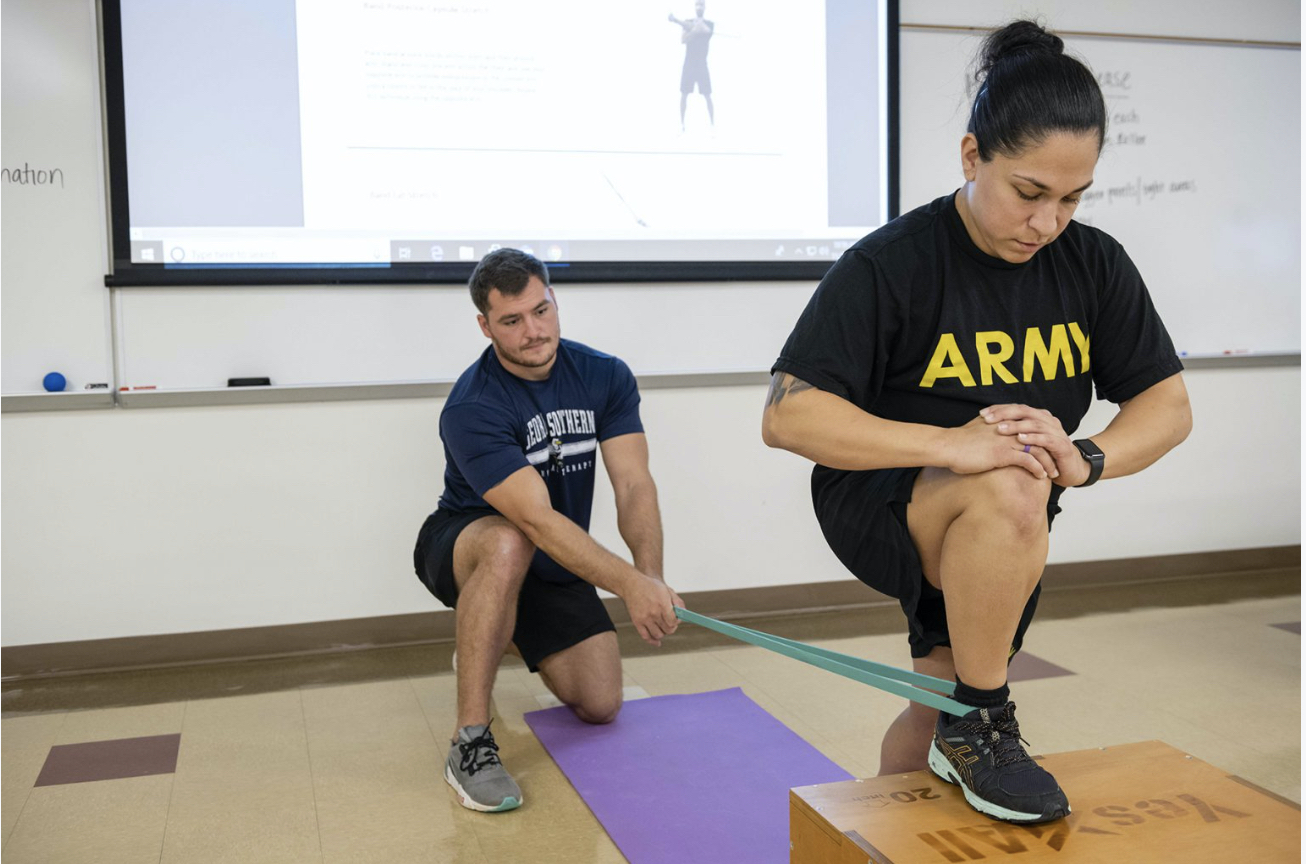
The Georgia Southern University Soldier Performance and Readiness (SPAR) program received a $1.5 million, two-year grant from the Department of Defense’s U.S. Army Medical Research and Development Command (USAMRDC). The grant will expand Georgia’s Southern research and programming capacity in injury prevention techniques that ensure force readiness for the Army. “Through this large-scale research study, Georgia Southern doctoral students have opportunities to be involved in the research process and work directly with soldiers,” said Nancy Henderson, Ph.D., assistant professor in the Doctor of Physical Therapy (DPT) program. “Additionally, the grant will fund graduate assistant positions in the Doctor of Physical Therapy program.” USAMRDC’s mission is to provide solutions to medical problems for American service members at home and abroad, as well as to the public at large. The scope of this effort and the priorities attached to specific projects are influenced by changes in military and civilian medical science and technology, operational requirements, military threat assessments and national defense strategies. Extramural research and development programs play a vital role in the fulfillment of the objectives established by the organization. Research and development funded through this are intended to benefit both military and civilian medical practices. “The grant investigates different physical training programs to identify those practices that best prevent non-combat injuries,” said Henderson. “Faculty on the research team will seek to advance the body of literature by determining the best educational models to educate soldiers on injury-prevention topics.” This is the first time that Georgia Southern will act as lead investigator on a collaborative research project with an Army research institute. However, SPAR has long been involved in multiple branches of research with community impact. “Georgia Southern has several initiatives underway to help improve the health, fitness and performance of military service members, law enforcement personnel and firefighting and rescue personnel,” said Joseph Kardouni, Ph.D., director of the Tactical Performance Group. “The Tactical Athlete Certificate (TAC) program is one of these initiatives that teaches service members exercise fundamentals to help mitigate training-related injuries. The funding coming through Medical Research and Development Command will improve evidence-based teaching methods and inform similar efforts to teach service members within this field. Leaders from health and human performance programs within the Army understand the importance of leveraging partnerships with academic institutions to work toward improving the quality of life, health and occupational performance of soldiers.” Faculty and students in the DPT program have educated soldiers on injury prevention topics since 2016 and this grant further provides students with the opportunity to assess effectiveness while learning how to improve educational methods with military service members. “This research is an important next step in delivering on the promise of the SPAR program and Georgia Southern’s close working relationship with Army research partners,” said Interim Vice President for Research and Economic Development Christopher Curtis, Ph.D. Curtis also noted that funding was made possible by the advocacy of U.S. Rep. Buddy Carter and the strong support of Georgia’s legislative delegation in Washington D.C. Interested in learning more or looking to talk with Nancy Henderson? Simply click on her icon now or Contact Georgia Southern's Director of Communications Jennifer Wise at jwise@georgiasouthern.edu to arrange an interview today.


University of Delaware researcher one of 500 contributors to Fifth National Climate Assessment
A.R. Siders, core faculty with the University of Delaware's Disaster Research Center, is one of 500-plus experts who developed the Fifth National Climate Assessment (NCA5), the preeminent source of authoritative information on the risks, impacts and responses to climate change in the United States. Leaders and practitioners highlighted the findings and raised awareness of climate impacts and solutions at a release event on Nov. 14. White House and climate leaders from across the country elevated the key themes of NCA5 and further highlight the Biden Administration’s whole-of-government approach to mitigating and adapting to climate change. Siders focuses on managed retreat, which is the purposeful movement of people, buildings and other assets from areas vulnerable to hazards. She also specializes in climate change adaptation decision-making and evaluation in general: how and why communities decide when, where, and how to adapt to the effects of climate change and how these decisions affect risk reduction and equity outcomes. Joining Siders on the NCA5 were Jing Gao, Assistant Professor of Geospatial Data Science, and Kimberly Oremus, assistant professor of marine science and policy. Siders is available for interviews. Click on her profile to connect.


How Diverse Crop Mixes Can Help Solve the Water Scarcity Crisis
How exactly can alternative crop mixes come to our rescue in this water scarcity crisis? Different crops have different water needs in order to grow without stress. And it is often the case that the thirstiest crops are grown in places where little water is available. Shifting crop mixes to crops that require less water but still ensure farmer profits is a promising way to reduce the amount of water needed to irrigate crops and to avoid conditions of water scarcity. Kyle Davis, assistant professor in Geography and Spatial Sciences at the University of Delaware, can offer commentary on this. He is an expert in food systems, sustainability, global environmental change and geospatial data science among other things. Diverse crop mixes can save water, maintain economic output, and provide for the needs of aquatic ecosystems. Davis and others recently released a study that looks at issue. "These findings demonstrate strong opportunities for economic, food security and environmental co-benefits in irrigated agriculture and provide both hope and direction to regions struggling with water scarcity around the world," the study notes. Davis has been featured in publications such as Earth.com and Phys.org and was recently awarded an Early Career Award for pioneering global research in sustainable agricultural food systems. He can be contacted by clicking the "View Profile" button.
