
Experts Matter. Find Yours.
Connect for media, speaking, professional opportunities & more.

Georgia Southern University expert available to provide geopolitical analysis on the Iran war
The Middle East has entered an active state of war marked by a cycle of retaliatory strikes across Iran and the Persian Gulf. Three major uncertainties now dominate the global outlook: the long-term survival of the Iranian government, the fate of Iran’s nuclear infrastructure, and the security of critical oil transit routes. Georgia Southern University Professor of Political Science and International Studies Jacek Lubecki, Ph.D., is available to speak about the military operation in Iran and its implications for regional stability and global security. Lubecki is an expert in comparative politics and military security studies, with a focus on the Middle East and Eastern Europe, particularly Poland. His research examines terrorism, counterinsurgency and military strategy. His work has been published in journals including Europe-Asia Studies, East European Politics and Societies, The Polish Review, The New Ukraine and The Armchair General. He has co-authored several books, including Globalization, Nationalism, and Imperialism: A New History of Eastern Europe (2023), which examines domestic and global security challenges, and Defending Eastern Europe: The Defense Policies of New NATO and EU Member States (2021). Lubecki speaks Polish, English, French, Russian, Spanish, Italian, German and Arabic with varying levels of fluency. Lubecki is available for interviews in person at Georgia Southern’s Statesboro Campus or virtually.



On February 8, 2026, 120 million-plus viewers worldwide are expected to tune into Super Bowl LX. However, the battle on the gridiron will be a secondary attraction for many, especially those from Puerto Rico and of Puerto Rican descent (colloquially known as "Boricuas"). Their attention will be focused on this year's halftime show, headlined by Bayamón-born rapper and producer Bad Bunny. Renowned for songs like "Yo Perreo Sola," "La Canción" and "Me Porto Bonito," the pop sensation is expected to bring a distinctive Latin American flair to his set, representing Puerto Rican culture and creativity to an audience unlike any other. Héctor Varela Rios, PhD, the Raquel and Alfonso Martínez-Fonts Endowed Assistant Professor in Latin American Studies at Villanova University, specializes in popular culture and writes extensively on the Boricua community, to which he himself belongs. From his perspective, Bad Bunny's upcoming performance in the Super Bowl halftime show marks "a high point for Puerto Rican pride," both within the U.S. territory and across the globe. "He is not the first Super Bowl performer to claim Puerto Rican ancestry—Jennifer Lopez performed alongside Colombia-born Shakira in 2020—but he is the first island-born Puerto Rican to perform," says Dr. Varela Rios. "At this moment, he is our brightest superstar and absolutely adored throughout Latin America and the world." To the professor's point, Bad Bunny is among the most successful musical acts touring today, having notched more than 7 million records sold, four diamond plaques and 11 platinums all before the age of 32. His popularity has not come at the expense of his art, either, with the rapper having won six Grammy Awards over the course of his career—including three for his latest album, "Debí Tirar Más Fotos." According to Dr. Varela Rios, Bad Bunny's widespread appeal and critical acclaim can be traced to his authenticity, courage and swagger. Singing in Spanish, making deep-cut cultural references and broaching sensitive, seemingly taboo topics, the Latin American pop star has effectively built a following by unabashedly embracing his own identity. (Perhaps tellingly, he titled his second album "Yo Hago Lo Que Me Da La," or "I Do Whatever I Want.") "Bad Bunny is proud of his Caribbean roots and keenly aware of the history of Puerto Rico, which influences his work," says Dr. Varela Rios. "In addition, he is very unapologetic about the content of his lyrics and performing style. It goes beyond mere shock with him; he relishes challenging assumptions of what being an artist should be, or needs to be in order to 'sell records.'" While this daring approach has netted Bad Bunny a number of accolades and a devoted legion of fans, it has not been without its share of detractors. Still, on the biggest stages and under the brightest lights, the celebrated artist has shown no inclination to alter or tone down his act. Dr. Varela Rios predicts the pop star's Super Bowl appearance will be no different. "Bad Bunny is a businessman, and one of the best I've ever seen," he adds. "This is an artist who knows what to do and how to do it, and when the Super Bowl halftime show's lights go down, his performance will certainly be remembered."



On Sunday, October 19, at 9:34 a.m., four masked individuals surged into the Louvre’s Galerie d’Apollon from a severed, second-floor window. Hurriedly, they smashed open two display cases, seized eight pieces of jewelry, then shimmied down a ladder and sped off on motorbikes toward Lyons. In seven minutes’ time, in broad daylight, they absconded with an estimated $102 million in valuables from the world’s most famous museum. This past Saturday, October 25, French authorities announced the first arrests in connection with the daring heist. However, despite the police’s progress, the country continues to litigate the matter—embroiled in discussions of heritage, history and national identity. Recently, Roderick Cooke, PhD, director of French and Francophone Studies at Villanova University, shared his perspective on the situation as well as the artifacts lost. Q: The Louvre heist has been described as “brazen,” “shocking” and a “terrible failure” on security’s part. Is there any sort of precedent for this event in the museum’s history? Dr. Cooke: Nothing on this scale has ever happened to the Louvre since its founding as a museum during the Revolution. The closest equivalent is the 1911 theft of the Mona Lisa by a former employee who claimed it should be returned to Italy. However, that was one painting, the heist was not committed by organized crime, and the Mona Lisa did not have the renown it enjoys today. The impact of the theft was thus lower, although it did cause major outrage and a sweeping law-enforcement response at the time. Ironically, that theft is often credited with making da Vinci’s painting the global icon it continues to be. Q: What has the reaction to this event been among the French people? DC: It’s harder to get a sense of reactions across French society, because so much of the aftermath has focused on the intellectual milieux’s opinions. And in those realms, it has immediately become a political football. Individuals positioning themselves as anti-elite or anti-status quo, such as Jordan Bardella of the National Rally party, have called the theft a “humiliation,” immediately tying it to French national prestige. Former President François Hollande has conversely and vainly called for the event to be de-polemicized, citing national solidarity. This is happening because the Louvre is one of the most visible manifestations of French soft power—the most-visited museum anywhere on Earth. As such, anything attacking its integrity becomes an attack on the nation, and how individual French citizens feel about the theft is closely tied to their broader view of the nation. Q: Several of the items stolen from the Louvre once belonged to Empress Eugénie. Could you share a bit of information on her story? DC: Eugénie de Montijo was a Spanish aristocrat who married the Emperor of the French, who ruled as Napoleon III between 1852 and 1870. It was a time of authoritarian repression and sham democracy—Napoleon III installed the Empire through a coup. Its clearest legacy is that Paris looks the way it does today largely because of the thorough modernizations overseen by Napoleon III’s appointee Baron Haussmann. So, Eugénie and her now-lost jewels represent a complex point in French history, when culture and the economy developed quickly, but did so in a climate of fear for any French person who opposed the regime too loudly (like Victor Hugo, who went into exile on the Channel Islands and wrote poems savaging Napoleon III and his deeds). Some accused the Empress of being responsible for the more hardline and conservative stances taken by her husband’s government. On a different note, she was a diligent patron of the arts and arguably the most significant figure in the contemporary fashion world, famous for setting trends such as the bustle that radiated across Europe. This explains the mix of anger and admiration that followed her depending on the sphere she was operating in. A new English-language biography argues that far from being a traditionalist, she was a pioneering feminist by the standards of the time. It looks like her historical importance will continue to be debated. Q: Interior Minister Laurent Nuñez described the stolen items as “of immeasurable heritage value.” How significant of a cultural loss do you consider this theft? DC: These jewels are referred to in French as “les Joyaux de la Couronne” (the Crown Jewels), but of course that phrase lands very differently in republican France than it does across the water in the United Kingdom. The items actually represent several different dynasties of French rulers, some of whom came to power through direct conflict with others. The now-ransacked display at the Louvre smoothed over these historical divisions, for which many French people died over the centuries. President Macron referred to the stolen items as embodying “our history,” which is emblematic of the French state’s work to create a conceptual present-day unity out of the clashes of the past. At a time when France is arguably more divided than at any point since World War II, any unitary symbol of identity takes on greater significance. Q: Do you have any closing thoughts on the artifacts taken and what they represent? DC: I’d reemphasize the previous point about the smoothing effect of the museum display on the violent history that made it possible. Much of the reporting on the stolen jewels lists off the different queens and empresses who owned them, without giving readers a sense of the complicated succession of regime changes and ideologies that put those women in power in the first place. The relative stability of the last 60-odd years is an anomaly in modern French history. This set of jewels and the names of their original owners may seem far removed from the concerns of an ordinary French citizen today, but just beneath their surface is a legacy of changing governments and tensions between social classes that survives in new forms in 2025.
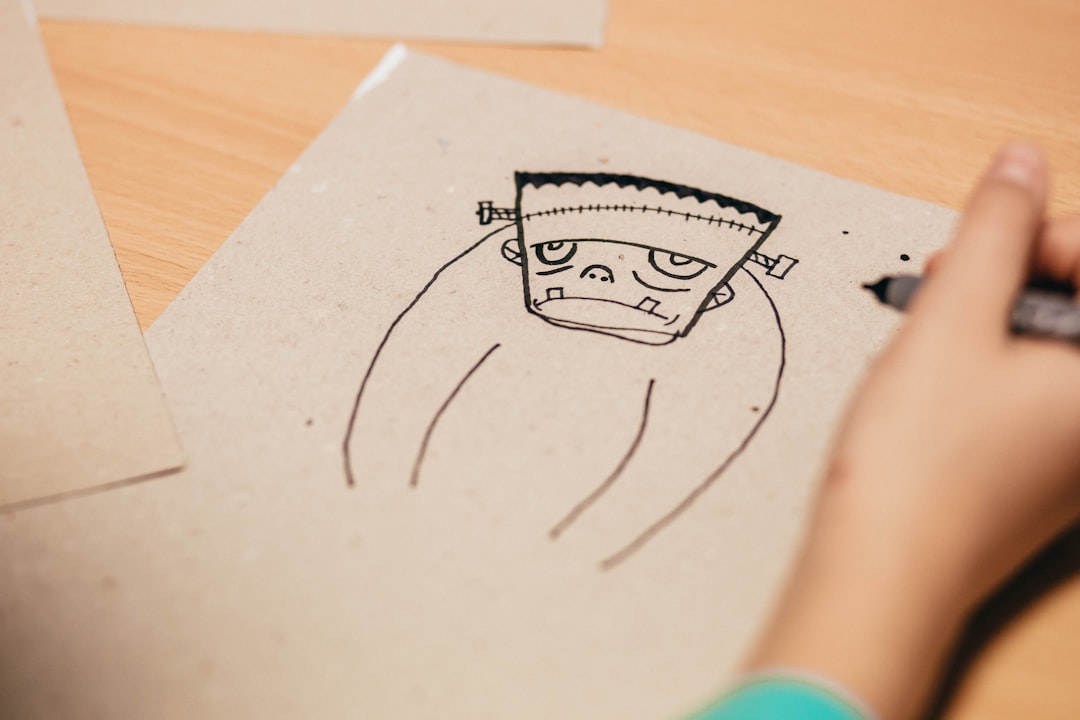
Have you ever wondered why we just can't get enough of the creatures hiding beneath our beds and lurking in the shadows? Whether it's watching a spine-tingling horror movie or telling ghost stories around the campfire, Americans have a long-standing love affair with all things spooky and scary. But what's driving this fascination? Persephone Braham is a Professor of Spanish & Latin American Studies at the University of Delaware and has those answers. She can talk about monsters in a variety of ways including the following: Monsters are therapeutic. They act out our fears – and our fantasies. We love to hate monsters. They channel our anxieties and expose our desires. Monsters sneak into our dreams, stalk us in the dark and make us scream. Why do we love them? Have you hugged a monster today? Why do we need monsters? They keep us from crossing the line. Who believes in monsters? Anyone who considers themselves human. What are monsters, and why do we need them? From ghosts to vampires, every culture has its favorite monsters. Halloween scream: Why we like to play vampires. Who decides what a monster is? You do! Why do zombies want your brains? Monsters and eerie tales serve as representations of our internal anxieties and societal fears. They act as metaphors for the complex emotions and situations we encounter. Braham can give this context and more. She can be contacted by emailing mediarelations@udel.edu.

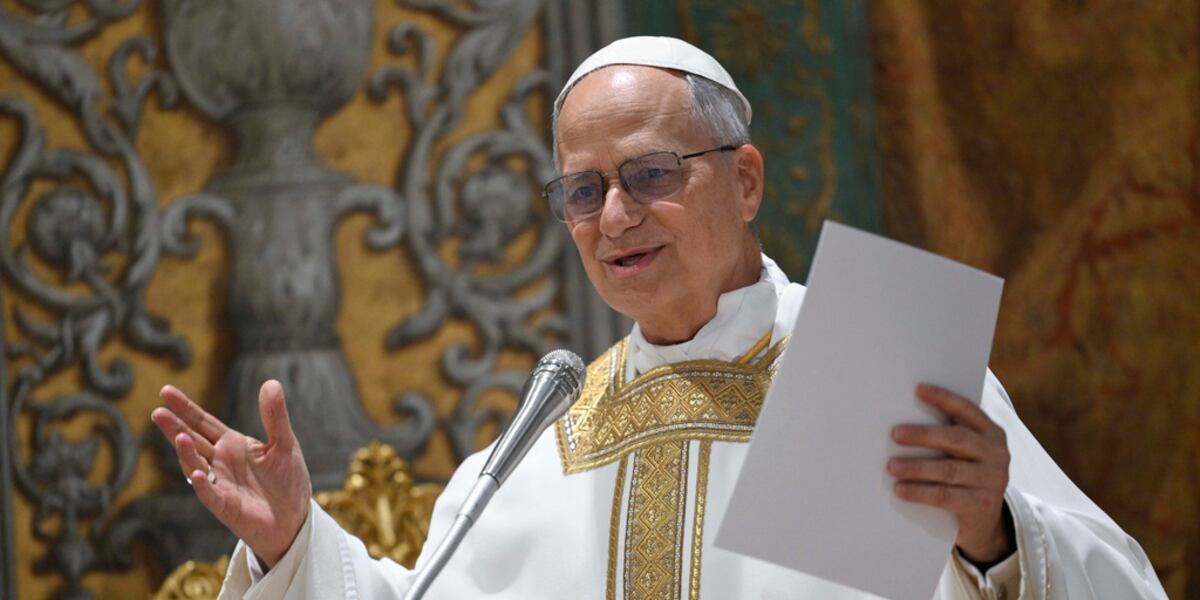
Expert Q& A: ‘The Pope is also a monarch’
Kathleen Comerford, Ph.D., professor of history at Georgia Southern University, specializes in Catholic history in the 16th and 17th centuries. She is also an associate editor for the Journal of Jesuit Studies, which focuses on the work of the Society of Jesus (Jesuits), a religious order within the Catholic Church. Pope Francis was the church’s first Jesuit pope. With the global significance and rarity of the conclave, Comerford answered frequently asked questions about how the conclave works, how the conclave process has evolved over time, and what the passing of a pope means for the Catholic Church and the world. Question: What does the passing of a pope mean for the world? Comerford: Multiple things! First of all, there are 1.4 billion Catholics in the world scattered in many different countries. The pope is a unifying figure for all of the Catholics. He represents something immediate in the sense that he’s the head of the church and is a recognizable figure. The pope is also a monarch. I was just talking with my classes about this. He is the head of the government of the Vatican City State, which is the smallest independent state in the world. It has a very long history itself. Pretty much everybody who lives in Vatican City works for the Vatican. The pope is one of the few elected monarchs in history. He is responsible for financial and political decisions, and he has ambassadors around the world as a result of his role in global policy. Question: How is a new pope selected? Comerford: The College of Cardinals will meet for an election called a conclave, and they actually stay in a dormitory-like place in Vatican City for it. They are sequestered from the public, and they take some time to meet, pray and vote. The cardinals aren’t supposed to be sitting around talking about who would be a really good pope, but we don’t know whether they do because they’re sequestered and nobody is supposed to talk about it. They will likely take a vote on the first day, but that’s not required. Every subsequent day, they can take a maximum of four votes; two in the morning and two in the afternoon until a candidate gets a two-thirds majority. Question: What does the voting look like? Comerford: There are ballots, and the cardinals write their preferred candidate on the ballot, and then they put their vote in a chalice. To count the votes, there’s a group of three people who are in charge of counting and then announcing the results to the fellow cardinals. There are 252 cardinals, but only 135 of them are eligible to vote because anyone over the age of 80 is ineligible. The procedure where only cardinals can elect the pope dates from 1059. The secret ballot and the two-thirds majority requirement is from 1621. The sequestration for the process dates from 1271 because they argued about who the new pope would be for two years and nine months; a total of 33 months. And so, they decided that the only way to make sure that this didn’t happen again would be to create this scenario with the cardinals locked in a room with a key. Question: When one of the candidates receives a two-thirds majority and becomes the next pope, how will it be announced? Comerford: Well, this is kind of fun, because they have four votes every day until one of the candidates receives a two-thirds majority. After they take the votes, the papers used to vote are burned. How the news is shared to the crowds outside is based on the color of smoke. If the smoke is black, that means no one received the majority and there’s no new pope yet. If there’s white smoke, it means there’s a new pope. This practice really only dates to the early 19th century. At first, it was just if there was smoke, there was no pope; if there was no smoke, then there was a pope. In 1914, they changed this aspect of the election so that black smoke means “no pope” and white smoke means “new pope.” Question: It’s expected that the next pope will be one of the cardinals in the room when they vote, yes? Comerford: Yes, but it doesn’t have to be. There have been a lot of popes, but in the last 200-300 years, there hasn’t been somebody who wasn’t in the conclave that was elected. Theoretically, they could nominate somebody who’s not a cardinal and the whole room could say, “yes, that’s the person we want as pope.” However, they don’t vote by acclamation anymore. They stopped doing that in the 19th century. Question: Pope Francis appointed 108 of the cardinals, so that’s a total of 80% of those eligible to vote for the next pope. How likely is it that we see a pope similar to the late Francis, considering he provided the electorate for his successor? Comerford: First of all, he deliberately went out and created cardinals in places where there had never been cardinals before. And he didn’t do that by saying, “I’m going to find somebody who’s like-minded to me.” He just said, “There are a lot of Catholics in Myanmar and they’ve never had a cardinal. So I’m going to make sure that there’s a cardinal now.” Most of these new cardinals are in places like Rwanda, Cape Verde, Tonga, Myanmar, Mongolia and so on. So these are non-European cardinals. Now, less than 40% of the voting cardinals are European. So to speculate on how similar they are to Francis, you have to break down what Francis was. There has been his entire pontificate about how he’s the first American pope, but his parents were born in Italy. He didn’t grow up speaking Italian, but it was a dialect of Italian as well as Spanish, because he grew up in Argentina. He was the most European you can get and still be an American. Another part of the question is, will the new pope be somebody who is of a similar mind to Francis in terms of his governance, which was very devolved. He introduced this idea of “synodality,” which is about fairly consistent communication with groups of people. Pope Francis was not particularly monarchical or hierarchical. There is also the aspect of his thinking that leans more to the left than the right on a number of social issues like immigration, women’s rights, the rights of minorities and immigration. He opened a lot of conversations, which the very right leaning portions of the church have been very uncomfortable with. If you're interested in learning more about this topic and want to book time to talk or interview with Kathleen Comerford then let us help - simply contact Georgia Southern's Director of Communications Jennifer Wise at jwise@georgiasouthern.edu to arrange an interview today.

Virtual reality training tool helps nurses learn patient-centered care
University of Delaware computer science students have developed a digital interface as a two-way system that can help nurse trainees build their communication skills and learn to provide patient-centered care across a variety of situations. This virtual reality training tool would enable users to rehearse their bedside manner with expectant mothers before ever encountering a pregnant patient in person. The digital platform was created by students in Assistant Professor Leila Barmaki’s Human-Computer Interaction Laboratory, including senior Rana Tuncer, a computer science major, and sophomore Gael Lucero-Palacios. Lucero-Palacios said the training helps aspiring nurses practice more difficult and sensitive conversations they might have with patients. "Our tool is targeted to midwifery patients,” Lucero-Palacios said. “Learners can practice these conversations in a safe environment. It’s multilingual, too. We currently offer English or Turkish, and we’re working on a Spanish demo.” This type of judgement-free rehearsal environment has the potential to remove language barriers to care, with the ability to change the language capabilities of an avatar. For instance, the idea is that on one interface the “practitioner” could speak in one language, but it would be heard on the other interface in the patient’s native language. The patient avatar also can be customized to resemble different health stages and populations to provide learners a varied experience. Last December, Tuncer took the project on the road, piloting the virtual reality training program for faculty members in the Department of Midwifery at Ankara University in Ankara, Turkey. With technical support provided by Lucero-Palacios back in the United States, she was able to run a demo with the Ankara team, showcasing the UD-developed system’s interactive rehearsal environment’s capabilities. Last winter, University of Delaware senior Rana Tuncer (left), a computer science major, piloted the virtual reality training program for Neslihan Yilmaz Sezer (right), associate professor in the Department of Midwifery, Ankara University in Ankara, Turkey. Meanwhile, for Tuncer, Lucero-Palacios and the other students involved in the Human-Computer Interaction Laboratory, developing the VR training tool offered the opportunity to enhance their computer science, data science and artificial intelligence skills outside the classroom. “There were lots of interesting hurdles to overcome, like figuring out a lip-sync tool to match the words to the avatar’s mouth movements and figuring out server connections and how to get the languages to switch and translate properly,” Tuncer said. Lucero-Palacios was fascinated with developing text-to-speech capabilities and the ability to use technology to impact patient care. “If a nurse is well-equipped to answer difficult questions, then that helps the patient,” said Lucero-Palacios. The project is an ongoing research effort in the Barmaki lab that has involved many students. Significant developments occurred during the summer of 2024 when undergraduate researchers Tuncer and Lucero-Palacios contributed to the project through funding support from the National Science Foundation (NSF). However, work began before and continued well beyond that summer, involving many students over time. UD senior Gavin Caulfield provided foundational support to developing the program’s virtual environment and contributed to development of the text-to-speech/speech-to-text capabilities. CIS doctoral students Fahim Abrar and Behdokht Kiafar, along with Pinar Kullu, a postdoctoral fellow in the lab, used multimodal data collection and analytics to quantify the participant experience. “Interestingly, we found that participants showed more positive emotions in response to patient vulnerabilities and concerns,” said Kiafar. The work builds on previous research Barmaki, an assistant professor of computer and information sciences and resident faculty member in the Data Science Institute, completed with colleagues at New Jersey Institute of Technology and University of Central Florida in an NSF-funded project focused on empathy training for healthcare professionals using a virtual elderly patient. In the project, Barmaki employed machine learning tools to analyze a nursing trainee’s body language, gaze, verbal and nonverbal interactions to capture micro-expressions (facial expressions), and the presence or absence of empathy. “There is a huge gap in communication when it comes to caregivers working in geriatric care and maternal fetal medicine,” said Barmaki. “Both disciplines have high turnover and challenges with lack of caregiver attention to delicate situations.” UD senior Rana Tuncer (center) met with faculty members Neslihan Yilmaz Sezer (left) and Menekse Nazli Aker (right) of Ankara University in Ankara, Turkey, to educate them about the virtual reality training tool she and her student colleagues have developed to enhance patient-centered care skills for health care professionals. When these human-human interactions go wrong, for whatever reason, it can extend beyond a single patient visit. For instance, a pregnant woman who has a negative health care experience might decide not to continue routine pregnancy care. Beyond the project’s potential to improve health care professional field readiness, Barmaki was keen to note the benefits of real-world workforce development for her students. “Perceptions still exist that computer scientists work in isolation with their computers and rarely interact, but this is not true,” Barmaki said, pointing to the multi-faceted team members involved in this project. “Teamwork is very important. We have a nice culture in our lab where people feel comfortable asking their peers or more established students for help.” Barmaki also pointed to the potential application of these types of training environments, enabled by virtual reality, artificial intelligence and natural language processing, beyond health care. With the framework in place, she said, the idea could be adapted for other types of training involving human-human interaction, say in education, cybersecurity, even in emerging technology such as artificial intelligence (AI). Keeping people at the center of any design or application of this work is critical, particularly as uses for AI continue to expand. “As data scientists, we see things as spreadsheets and numbers in our work, but it’s important to remember that the data is coming from humans,” Barmaki said. While this project leverages computer vision and AI as a teaching tool for nursing assistants, Barmaki explained this type of system can also be used to train AI and to enable more responsible technologies down the road. She gave the example of using AI to study empathic interactions between humans and to recognize empathy. “This is the most important area where I’m trying to close the loop, in terms of responsible AI or more empathy-enabled AI,” Barmaki said. “There is a whole area of research exploring ways to make AI more natural, but we can’t work in a vacuum; we must consider the human interactions to design a good AI system.” Asked whether she has concerns about the future of artificial intelligence, Barmaki was positive. “I believe AI holds great promise for the future, and, right now, its benefits outweigh the risks,” she said.

How authorship language helped catch a domestic terrorist – new podcast
In the latest episode of Writing Wrongs, hosts Professor Tim Grant and Dr Nicci MacLeod interview Dr Isobelle Clarke to unravel a case where forensic linguistics helped track down and convict a dangerous individual. Episode three, Imposters Tending to the Wild with Dr Isobelle Clarke, dives into the chilling case of Nikolaos Karvounakis, a self-proclaimed anarchist who planted a viable explosive device in Princes Street Gardens, Edinburgh, in 2018. Karvounakis, a Greek national, evaded capture for years, hiding behind online anonymity and extremist rhetoric. However, forensic linguists stepped in to analyse his anonymous blog posts, revealing patterns in his language that ultimately helped Police Scotland link him to the crime. The case not only demonstrates how linguistic evidence can be a powerful forensic tool but also raises crucial questions about the role of language analysis in modern terrorism investigations. On 11 January 2018, a suspicious cardboard box was discovered in a public seating area in Edinburgh’s Princes Street Gardens. After a controlled explosion, investigators determined the device could have caused serious harm had it detonated. With no immediate leads, the investigation stalled - until an anonymous blog post surfaced, claiming responsibility for the attack. The post, written in both English and Spanish, was linked to an eco-anarchist group called Individualists Tending to the Wild, a Mexican-based extremist organisation advocating violent action against technological progress. Crucially, the post included an image of the bomb’s interior, a detail only the perpetrator or law enforcement could have known. Police Scotland sought the expertise of Professor Tim Grant, who analysed the text, producing a linguistic profile that suggested the writer was neither a native English nor Spanish speaker - but rather someone influenced by another language entirely. Two years later, police identified Nikolaos Karvounakis as a suspect. Using comparative authorship analysis, Professor Tim Grant compared his online writings - including song lyrics from his rock band - to the manifesto. By dissecting word patterns, grammatical structures and stylistic quirks, he established that Karvounakis was the likely author. This evidence -alongside forensic meteorology, which linked photos of clouds in Karvounakis’ blog posts to the same weather conditions on the day of the crime - was used to secure a warrant and seize computers containing known writings by Karvounakis. To eliminate inevitable bias that would result from having worked the case for more than two years, Professor Grant invited Dr Isabelle Clarke onto the case as an independent forensic linguist. Using a version of the General Imposters Method, a technique similar to a police lineup but for language, Dr Clarke confirmed that the writing style in the blog post was the closest to Karvounakis’ known writings. Police Scotland put the evidence in the case, including the linguistic evidence, to Karvounakis, and secured a guilty plea. In February 2022, Nikolaos Karvounakis was sentenced to over eight years in prison under the UK’s Terrorism Act. Tim Grant, professor of forensic linguistics at Aston University, said: “The case highlights the growing importance of forensic linguistics in solving crimes, particularly in an age where digital anonymity combines with extremist ideologies. “It also highlights the how different types of language analysis can assist as a case moves through different stages of investigation.” Dr Nicci MacLeod, deputy director of the Aston Institute for Forensic Linguistics, said: “This episode offers listeners a behind-the-scenes look at the forensic methods that expose deception, identify threats and ultimately bring criminals to justice.” Dr Isobelle Clarke, a lecturer in security and protection science at Lancaster University and one of the first graduates from the campus-based MA Forensic Linguistics programme at Aston University, said: “It was great to be back at Aston University talking about the Karvounakis case for the Writing Wrongs podcast. “It’s an interesting case to highlight, as it shows how different types of language analysis can help with police investigations.” Writing Wrongs is available on Spotify, Apple Podcasts and all major streaming platforms. Listeners are encouraged to subscribe, share and engage with the hosts by submitting their forensic linguistics questions. Whether it’s about this case or broader forensic linguistic techniques, Professor Grant and Dr MacLeod welcome inquiries from listeners.


The History and Significance of Taiwan
Taiwan’s history is a rich and complex tapestry of indigenous cultures, colonial influences, and evolving sovereignty, making it a critical subject for understanding regional and global geopolitics. From its indigenous roots to its modern status as a thriving democracy and global tech leader, Taiwan plays a pivotal role in shaping international conversations about identity, governance, and economic innovation. This topic matters to the public because of Taiwan's strategic importance in global trade, its cultural vibrancy, and its position in ongoing geopolitical tensions. Key story angles that may interest a broad audience include: The indigenous heritage of Taiwan: Exploring the rich traditions, languages, and contributions of Taiwan’s indigenous communities. Colonial and post-colonial history: Examining Taiwan’s transformation under Dutch, Spanish, Chinese, and Japanese rule and its modern implications. Taiwan’s role in global technology: Highlighting its leadership in semiconductor manufacturing and contributions to the global tech supply chain. Geopolitical significance: Analyzing Taiwan’s relationship with China, the United States, and the international community in the context of cross-strait relations. Taiwan as a democratic model in Asia: Discussing its political evolution, vibrant civil society, and significance in promoting human rights. Cultural preservation and innovation: Showcasing how Taiwan balances its traditional arts, cuisine, and festivals with contemporary innovation and creativity. Connect with an expert about Taiwan: To search our full list of experts visit www.expertfile.com


VR Simulation to Demonstrate the Danger of Snow Squalls
Since 2017, Dr. Jase Bernhardt, Hofstra associate professor of geology, environment, and sustainability, has been using virtual reality technology to teach the public about the dangers of rip currents, hurricanes, and flash flooding. His most recent award, a $100,000 Road to Zero Community Traffic Safety Grant from the National Safety Council, is enabling him to tackle another seasonal weather worry: driving in snow squalls. The National Safety Council received funding for this grant from the National Highway Traffic Safety Administration. Bernhardt’s project aims to share information about the onset of snow squalls, the importance of heeding emergency weather advisories, and what drivers should do if they are on the road when a snow squall occurs. Although squalls are infrequent, they are extreme and frightening winter weather events that can result in a rapid onset of heavy snow, low visibility, icy roadways, and frigid temperatures. “Snow squalls are a very specific type of weather phenomenon. They often occur on a clear, calm day, with no warning of precipitation,” Bernhardt said. “Seemingly out of nowhere, you’ll see clouds, followed by a quick burst of very heavy snow. For a short time, perhaps only 10, 15 minutes, there are whiteout conditions where drivers can barely see the road ahead of them.” According to the U.S. Department of Transportation website, 24% of weather-related vehicle crashes occur on snowy, slushy, or icy pavement, and 15% happen during snowfall or sleet. More than 1,300 people are killed and nearly 117,000 people are injured in vehicle crashes on snowy, slushy, or icy pavement annually. Because winters in the New York metropolitan area have been mild for the last few years, Bernhardt worries that people have been lulled into a false sense of security about driving during winter storms or squalls. “We’re not used to being in that kind of severe weather anymore,” he said. “Snow squalls can be deadly in terms of massive collisions and multi-vehicle chain collisions. The key thing to remember is that they come in rapidly, catching people by surprise.” Bernhardt is collaborating on the software for the snow squall VR simulation with Frank Martin ’22, ’23, who earned both a BS and an MS in Computer Science from Hofstra University. Users will wear a headset and hold a device – like a video game controller – in each hand to replicate the movements of a steering wheel. In this way, users will experience what it is like to drive from clear, pleasant conditions into a brutal wall of snow. Bernhardt said that if a warning for a snow squall is issued via emergency broadcast, he hopes people who have used the simulation will understand the urgency of getting off the road or pulling onto the shoulder and remaining in their vehicle. “We want people to have an experience that is as close to reality as possible. The idea is to simulate how sudden and terrifying snow squalls can be and give people an opportunity to learn what they should and should not do if they are caught in one,” Bernhardt said. In conjunction with the VR simulation, Bernhardt is developing a survey to determine people’s reactions to emergency messaging and how effective it is. He will work with the National Weather Service to have the simulation and surveys available by fall 2025 for use at training and outreach events throughout the Northeast. Like Bernhardt’s rip current project, there are plans to have a version of the snow squall simulation and corresponding literature available in Spanish. Dr. Sasha Pesci, Hofstra assistant professor of geology, environment, and sustainability, is co-principal investigator on the grant and is helping with the translation of materials. “More and more, the National Weather Service, state and federal governments, and other agencies recognize the importance of having this information available in other languages,” Bernhardt said. “There are a lot of drivers whose primary language is Spanish, and they include cab and Uber drivers, and truckers.” Jase Bernhardt is available to speak with media about this topic - simply click on his icon now to arrange an interview today.


Jacqueline Ortiz Honored for Increasing Patient Access to Interpreter Services
Fifty-eight years ago, a young man from Argentina wound up in surgery at a California hospital after stomach pains turned out to be peritonitis, a potentially life-threatening inflammation of the membrane lining the abdominal wall. He was discharged to his wife’s care, with one problem — neither the man nor his wife had any idea how to care for the open wound in his abdomen. Jacqueline Ortiz The couple did not understand the lengthy instructions delivered in English, and there was no interpreter to explain to them in their native Spanish what to expect. So, when the man tried to take a bath and discovered the gauze was stuck to his wound, he didn’t know what to do. Fear and uncertainty compounded an already stressful time. Jacqueline Ortiz wasn’t yet born when her father’s health care emergency took place, but growing up she heard the story over and over. It was more than family lore for Ortiz — it was a lesson. Ortiz said she wanted her mother, pictured with her at the DVTA event, to see the growing number of people working as interpreters to ensure people get the information they need in the language they understand. Ortiz, now the vice president for Health Equity and Cultural Competence at ChristianaCare, saw firsthand how the experience left her parents terrified of the medical environment. Removing barriers to good health Years later, Ortiz is a leader in advocating for patients to have access to qualified, culturally responsive medical interpreting services to remove communication barriers with providers and ensure the best possible care and outcomes. “Language access is what fills my heart and soul,” Ortiz said. Her pioneering efforts and enthusiasm for promoting the use of trained interpreters in health care earned Ortiz the inaugural Making an Impact Award from the Delaware Valley Translators Association (DVTA) during an event Sept. 9 at Widener University. In her role at ChristianaCare, she builds the organization’s capacity to reduce the incidence of disease and improve health outcomes, advance equitable health care services, and reduce health disparities for identified conditions and target populations through culturally competent care, including providing health care in patients’ native languages. She has over 20 years of experience researching, teaching and working in cultural competence and health equity, social networks, and economic sociology. “Language access is what fills my heart and soul,” Ortiz said. A vision for serving everyone Eliane Sfeir-Markus, CHI, president of the DVTA, said the award recognizes the efforts of those working to make interpreting and translation more available to people with limited English proficiency, and those who are deaf or hard of hearing. Ortiz’s pioneering work to expand language services for patients and implement comprehensive cultural competence training at ChristianaCare have set a standard for caring for patients in their native languages. “Jaki’s vision for a health care system that truly serves everyone, regardless of their cultural or linguistic background, is inspiring,” Sfeir-Markus said. “We as patients deserve someone who knows our culture to take care of us.” ChristianaCare has more than 20 health care interpreters and over 100 caregivers who have undergone additional training to provide interpreting services when needed. ChristianaCare has more than 20 health care interpreters — who wear eggplant-colored uniforms — and over 100 bilingual caregivers who have undergone special training to serve as interpreters in some settings. “Jaki is a well-known name in the field of interpreting and translation because she has advocated for education and professionalization of interpreters in health care,” said Claudia Reyes-Hull, MArch, CMI, CHI, manager of Cultural and Linguistic Programs at ChristianaCare. “Thanks to her advocacy, more health care systems are recognizing the need to have trained interpreters for their patients.” In accepting the award, Ortiz said interpreters play a critical role in health care by making it possible for patients — and their families — to take an active role in their own care and decrease the anxiety over visiting a health care provider. She credited the success of ChristianaCare’s interpreting and translations services and its continued growth to the collaborative spirit and camaraderie among its team of caregivers, particularly Reyes-Hull. Ortiz said her family’s personal experience with a lack of interpreting services during a hospital stay made them anxious about health care for years. “Probably all of us in this room have walked into a courtroom or a lawyer’s office or a hospital room or a clinic and introduced ourselves and seen that immediate response and relaxation in the person we were speaking with,” Ortiz said to the translators at the DVTA event. “You make those interactions within our legal, educational and health care systems so much better.”

