
Experts Matter. Find Yours.
Connect for media, speaking, professional opportunities & more.

It Has to Matter Who Wins: Futurecasting the MLB All-Star Game
Globe Life Field in Arlington, home of the 2023 World Series champion Texas Rangers, will play host to the 94th edition of the Major League Baseball All-Star Game on July 16, marking the second time in franchise history the Rangers will host the Midsummer Classic. MLB’s All-Star game – which matches up the best players from the American League and National League as selected by fans, managers and players – is considered one of best all-star contests among professional sports, said Kirk Wakefield, Ph.D., executive director of the Curb Center for Sales Strategy in Sports and Entertainment (S3E) program at Baylor University’s Hankamer School of Business. However, the game faces continued headwinds, Wakefield said, ranging from lagging viewership to fan voting to a game that is more an exhibition than a meaningful game. Wakefield Weighs In: Five Thoughts on MLB's All-Star Game Is the MLB All-Star game the best All-Star contest of all major leagues? Wakefield: Yes, it’s the only one where players seem to try their best. The NBA and NFL – who have practically given up – have declining viewership since 2011. Unfortunately, MLB All-Star game is on the same downhill skid. (According to Statista, viewership has declined from 22 million in 1993 to seven million in 2023.) The reason why is it doesn’t really matter who wins. If the players don’t care who wins, neither will fans. Further, fans aren’t particularly a fan of only one league so that it really matters if one league has bragging rights. That was less the case years ago before interleague play. How could viewership improve in any of the All-Star games? Wakefield: It has to matter who wins. MLB tried this with home field advantage for the World Series. They gave that up. The current approach in baseball is truly an exhibition because every player gets to play, so it’s like three players at every position playing three innings. That’s not how a manager would play it if trying to win. And it’s not like it used to be when the starters (who were more likely to be the best at their positions) played longer. One suggestion I’ve heard is to make the payoff big enough for the winners so that the players gave it their best. Get a sponsor to put up the money so the winners each make seven figures and could be the players and managers will play more like a team trying to win. Does Monday’s prelude, the hugely popular Homerun Derby, enhance Tuesday’s game? Wakefield: The Homerun Derby is popular because fans do follow individual players. It matters more who wins. That said, the HR derby’s viewership has still lagged. Bottom line: Fans are loyal to teams more than to leagues or individual players. Fan voting… Need we say more? Wakefield: Major market teams with huge fan bases will dominate, but what about the Kansas City Royals, who at one point in the season were on pace for the biggest year-over-year improvement in wins and losses? Given the way fan voting has become essentially a promotion game to get more fans to vote more often, it’s hardly representative of anything other than largest markets with the best promoters. The good news is that the MLB All-Star game will be quite the occasion in Arlington, Texas, with a bevy of game-related activities and events July 13-16. Wakefield: Arlington is an optimal location central to the U.S. with plenty of space to blow out the occasion. It’s like the Texas State Fair came to baseball, where all the rides and attractions are baseball-happy. ABOUT KIRK WAKEFIELD, PH.D. Kirk Wakefield, Ph.D., is The Edwin W. Streetman Professor of Retail Marketing at Baylor University, where he is the Executive Director of the Curb Center for Sales Strategy in Sports and Entertainment (S3E) program in the Hankamer School of Business at Baylor University. The author of Team Sports Marketing and founder of Wakefield Research Partners, Wakefield has conducted fan research on partnerships, pricing, promotions, sportscape, service, and anything else that explains why fans do what they do in nearly every venue in sports, including the NBA, NFL, MLB, MLS, NHL and NASCAR. His scholarly works appear in a breadth of journals: Journal of Marketing, Journal of Consumer Research, Journal of the Academy of Marketing Science, Journal of Service Research, Journal of Retailing, Journal of Advertising, Journal of Advertising Research and Journal of Sport Management, among others. Wakefield is a regular contributor to Sports Money on Forbes.com. ABOUT THE CURB CENTER FOR SALES STRATEGY IN SPORTS AND ENTERTAINMENT (S3E) The Center for Sales Strategy in Sports and Entertainment (S3E) at Baylor University is the only program in the U.S. focused on generating revenue for sports. S3E graduates have career opportunities in sales, digital marketing or business analytics for major league teams, university athletics, corporations and agencies. Baylor is the only university combining learning with practice in partnership with the Athletics Department to prepare graduates for careers in the business of sports. The S3E program is unique in vision, values, mission and culture to transform the business of sports and entertainment. Consistent with the Christian mission and purpose of Baylor University, we prepare passionate servant leaders to positively influence lives in places people go to play or watch others play.


Clary Collicutt and Professor Rachel Shaw join the latest episode of Aston Originals Health Matters series Clary’s PhD research investigates the mental health benefits of urban walking The theme of Mental Health Awareness Week 2024, from 13 to 19 May, is ‘moving more for our mental health’. Two researchers from Aston University’s School of Psychology discuss the mental health benefits of urban walking in the latest Aston Originals Health Matters podcast, recorded for Mental Health Awareness Week 2024. Clary Collicutt is a PhD researcher, with her project specifically looking at urban walking. While there is much in the literature about the benefits of walking in nature and the countryside, very little exists about urban walking. Professor Rachel Shaw is director of the Applied Health Research Group and wellbeing lead for the College of Health and Life Sciences at Aston University, and Clary’s PhD supervisor. The theme of Mental Health Awareness Week 2024 is ‘moving more for our mental health’. Movement, whether that’s going for a walk, dancing in the kitchen or playing a sport, has been shown to increase energy levels, reduce stress and anxiety, and boost self-esteem, and the Mental Health Foundation is seeking to encourage more people to find ‘moments for movement’. One of the easiest ways to get moving is simply to go for a walk, and with many more people living in towns and cities, this is most likely to be around urban streets and roads. Clary’s PhD research is an extension of her MSc studies and is a qualitative look at how urban walking can help mental health. While a quantitative study would look at numbers and statistics, the qualitative research will allow Clary to connect with people’s stories and personal experiences. As part of her research, Clary is interviewing people about walking and what they feel it does for them. One interviewee told Clary that she views her urban walking like a “prescription”, something she needs to do every day, while another plays Pokémon Go, which he finds an incentive to walk further. Meanwhile, Professor Shaw has been researching wellbeing in paediatric critical care (PCC) staff, who face hugely stressful working conditions. One fact that has come out time and again is how important walking is, even if only a wander round the block in a break. Clary said: “Talking about urban walking, one of the main advantages is the complete accessibility of it, I think. “I personally find walking a magic tonic. You can feel really stressed and then you can have a walk and I feel that really helps me. Or I can feel really good and have a walk and it will still help me. So, wherever the mood spectrum is, I think walking can benefit.” The full podcast can be accessed on YouTube.


Batter Up! Major League Baseball Season Begins Tomorrow! | Media Advisory
The start of the Major League Baseball season is more than just America's favorite pastime returning; it's a cultural event that ties into themes of community, nostalgia, and the ever-evolving narrative of sports in society. Like every big league, the start of the season speaks to the unity and division that sports can create, the economics of professional leagues, and the role of athletes in social movements. Possible story angles include: The economic impact of MLB on local communities Innovations in sports technology and data analytics The role of sports in bridging cultural divides MLB's response to social justice issues Health and safety protocols in professional sports Gambling, is it a growing problem for athletes? Connect with an Expert about Major League Baseball For journalists seeking research or insights for their coverage about the MLB and the economics behind professional baseball, here is a select list of experts from our database. To search our full list of experts visit www.expertfile.com Curt Smith Senior Lecturer – University of Rochester Christina Gipson Assistant Professor of Sport Management – Georgia Southern University Greg Stewart, MD W. Kennon McWilliams Professor of Sports Medicine – Tulane University Photo Credit: Michael Lewis Professor of Marketing; Faculty Director, Emory Marketing Analytics Center · Emory University, Goizueta Business School Lisa Pike Masteralexis Senior Associate Dean and Professor of Sport Management – University of Massachusetts Amherst Photo Credit: Joshua Peacock


#Expert Q&A: NJIT’s Donghee Yvette Wohn Weighs the Pros and Cons of Kids Playing Esports
Donghee Yvette Wohn, an associate professor at New Jersey Institute of Technology and director of its Social Interaction Lab, focuses on human computer interaction, where she studies the characteristics and consequences of social interactions in online environments such as social media, live streaming, virtual worlds (metaverse) and esports. Here she explains the appeal of esports among children in particular and how their parents can assess what’s appropriate for them. How would you describe the current landscape of esports? Esports is an umbrella term that is used for competitive computer gaming that usually, but not always, happens in teams. However, similar to books or movies, the content of the games vastly differs. Some games are very violent, some are not. Some have very realistic graphics, some are very fantasy-like and playful. It is thus hard, especially as a parent, to make blanket decisions when it comes to esports, you may have to take things case by case. So, then how can parents assess what’s appropriate for their children? A quick online search into the nature of the game to see its description or even watching ten minutes of what the gameplay looks like on YouTube or Twitch — where many people upload videos of gameplay — will give parents a better idea of what the game is like without having to play it themselves. What about in terms of the other players? It may be useful to use physical sports or any other extracurricular activity as a mental reference when thinking of how to deal with certain issues. For example, soccer is a sport that is great for socializing and team building, but if one is placing a 10-year-old in a game with other adults, there would be a lot of extra things one would want to consider. Like any social activity, one would want to be mindful of who the child is playing with, how much they are playing and how they are playing. For example, are they being respectful? And what kind of language is being used during the game? What skills could esports and similar gaming help children develop? Based on research, the collaboration and communication skills required to play successfully are extremely high. Even though people do not associate computer games as being a physical skill, the dexterity and hand-eye coordination required to play well require a very high level of intellect and physical ability. Of course, not everyone plays that well, but it does indicate that esports is a little different than some games that are more “mindless” or “relaxing” in nature. What about social skills? It strengthens existing friendships and can also open up one’s world by conversing with strangers. My colleagues and I did a research study where we found a student living in a rural area where most people did not go to college who wanted to go college because he was inspired by the older college students he was playing with. Playing the game in supportive environments can be mentally and socially beneficial. What are the downsides? Like any social situation, there is always the possibility of people misbehaving. The types of harassment documented in gaming environments is so horrible, but the reality is that children are exposed to all types of horrible situations — both online and offline — and helping them navigate difficult situations can help build resilience for the future. What’s a common misconception among parents? The most important thing is to understand that whatever happens in esports is not to be dismissed as something that is “only online” or “not real.” The emotions that children experience in the virtual world are very much real. How much parental supervision is needed? Younger children’s brains have not yet developed self-constraint, so the parent should decide how much time should be spent playing games, what games are played and who they are played with. Older children — once they start understanding logic — should be encouraged to plan these things for themselves. Looking to know more? We can help. Yvette Wohn is available to discuss esports and kids with media. Simply click on her icon to arrange an interview.


Baylor Expert: Don't Lose Focus on Spiritual and Mental Well-being
Baylor Social Work professor shares tips and resources during stressful half-way mark of semester Holly Oxhandler, Ph.D., LMSW., associate dean for research and faculty development and associate professor in the Diana R. Garland School of Social Work. October marks the halfway point to the fall semester and can carry all the excitement, stress and anxiety of another academic term winding to a close. The month also typically marks one of the busiest times of the year for university counseling centers across the nation. With unique challenges in 2020 related to COVID-19, the University has acknowledged those hardships for all in the Baylor Family by taking the initiative to focus on mental health throughout October. Baylor University’s Holly Oxhandler, Ph.D., LMSW, associate dean for research and faculty development and associate professor in the Diana R. Garland School of Social Work, is an expert on mental health, primarily anxiety and depression, as well as religion and spirituality in clinical practice. In this Q&A, she shares tips and resources to students, faculty and staff who are facing all of the typical challenges of another mid-term while also navigating a global health crisis. Q: The 2020 fall semester provided challenges and obstacles never seen before in higher education. Why has COVID-19 been a uniquely stressful influence on the mental and spiritual well-being of students, faculty and staff? There are a number of reasons COVID-19 has been a uniquely stressful influence on the mental and spiritual well-being of those in higher education. First, there are the unanticipated layers and learning curves of new considerations and adjustments to course delivery, safety protocols, dining, campus activities and communication, to name a few, on top of the typical adjustments and emotions we all navigate at the beginning of each fall semester. Second, those in higher education entered fall 2020 without the “typical” summer that’s needed to reset, make adjustments and plan for the upcoming year’s activities. For example, many administrators, faculty and staff spent the summer not only planning for the usual upcoming academic year but also reconfiguring classes to be hybrid or online or simultaneously include both in-person and online students, in addition to modifying student activities and faculty research project timelines and plans. For degree programs that include internships, like social work, there have also been additional layers of consideration in order to comply with our professional accreditation standards. Third, we recognize that many students, their family members, as well as Baylor faculty and staff members’ loved ones, have been affected by the economic impact of COVID-19, adding a layer of financial stress. Fourth, many within the Baylor community – staff, faculty and students – have needed to juggle childcare and homeschooling their children as they continue to engage in their own work and/or educational expectations. Finally, the fear of contracting COVID-19, especially among the most vulnerable and high-risk populations, has been constantly present. Not only are we adjusting to this academic year with new ways of being and new protocols that keep us and one another safe, we’re also facing unexpected waves of fear and layers of grief for the missed events, opportunities and connections we had hoped to experience. As resilient as our community is, I think it’s important to remember we cannot “operate as usual” because things aren’t usual. Instead, we must allow ourselves and one another the time, margin, flexibility and grace needed to sit with and move through the rising emotions, grief, stress, loneliness, fear and uncertainty as they come. We cannot skip or bypass these emotions, but instead, must move through them, often with the support of loved ones and/or a trained mental health care provider. Q: Mental and spiritual health are challenging during even a typical semester experience. What are some of the effects and reactions you’ve witnessed to these circumstances among students, faculty and staff compared to a non-COVID-19 semester? As human beings navigating a global pandemic to the best of our ability, our mental and spiritual health have all been impacted to some degree this semester as we have individually and collectively faced a number of unexpected difficulties. I have also seen a beautiful response to the reality of this collective struggle in my interactions with Baylor faculty, staff and students that includes deep empathy for one another and an increase in valuing authenticity as we engage in the high-quality, meaningful work we each do. It has been a gift to witness Baylor community members holding space for colleagues’ and students’ vulnerability as we admit this is hard for various reasons and recognize that we cannot just push our way through this season. When we admit this isn’t easy and that we are all juggling so much to the best of our ability through thick layers of uncertainty, it gives those around us permission to admit their experiences, too. In fact, I think when we create space for that shared vulnerability and empathy in our interactions with others, we can better assess the current situation, remain present to one another and discern what steps are needed to move forward together, particularly because we’re not carrying an additional layer of effort pretending that everything is fine. That said, the Garland School of Social Work conducted a couple of well-being surveys since this summer to internally check in on how our faculty and staff are coping with this season and identify the biggest stressors they’re facing and sources of support. Our faculty and staff have also been continually checking in on our students through this season. Not only do we see many noting the same stressors that we’re all facing these days, normalizing how difficult this is for each of us, but the act of nonjudgmentally holding that space for ourselves and one another has been a tangible step of offering the care we know is uniquely woven into the Baylor experience. Q: How can individuals within the campus community tend to their spiritual health to close out the semester? I would invite readers to take a moment to pause and identify a few spiritual practices that uniquely support them well, even if that means thinking back to less stressful seasons. The key to note here is that these are practices which require regular engagement, similar to if we were to practice a new instrument or sport. Spiritual practices can vary based on our faith tradition and may include praying; meditating; centering prayer; reading our religious text; walking a labyrinth; journaling; practicing gratitude; listening to a sermon or faith-based podcast; praying over and contemplating scripture; engaging in creativity; practicing daily examen; or listening to spiritual music. Some practices may involve other individuals that can be done safely, including seeking spiritual direction, participating in a Bible or faith-based book study with others or engaging in worship (even virtually!). These practices can offer a sense of groundedness and a reminder that God is with us, including through this season. As we continue to navigate this season of uncertainty, it is critical that we intentionally weave in spiritual practices that offer rhythms, routines and a grounded faith that can support us well through the waves of difficulty. Especially on campus, I would encourage Baylor community members to follow along with Spiritual Life’s resources and events, or check out Better Together BU, a partnership supported by both Spiritual Life and Multicultural Affairs. Q: How can individuals within the campus community tend to their mental health to close out the semester? Tending to our mental health in this last stretch of the semester will be so important as we move into the stress of finals, the complex emotions tied to the holidays, grief with upcoming celebrations looking different this year (including how we celebrate holidays, who we celebrate with and the reality of many having lost loved ones to COVID-19) and the reality of seasonal affective disorder on the horizon. In fact, in a typical year, about 5% of U.S. adults have seasonal affective disorder (SAD), with another 10-20% having mild forms of it. In light of all of the added transition, uncertainty, complexity of caregiving and homeschooling while working/studying at home, layers of loneliness and grief, I do hope our Baylor students, staff and faculty will actively prioritize taking good care of their mental health and supporting others’ mental health care, too. One way I highlight this with my social work students is by recommending creating a self-care plan that pays attention to our physical health, mental health, social support and spiritual health. If we can identify some strategies to holistically care for ourselves well and be mindful of potential barriers to navigate, we may have more resilience and practices to draw from to cope with challenges and stressors that arise. Finally, although NAMI highlights that 1 in 5 of us are currently facing a mental health struggle, some studies have shown that over 80% of us will meet criteria for a mental illness by young adulthood or middle-age. Therefore, I highly recommend that anyone who is noticing any changes in their mood, diet, sleep habits, behaviors or overall well-being immediately reach out for help. Students are encouraged to reach out to Baylor’s Counseling Center, CARE team or the BARC. Faculty and staff also have resources available through Baylor’s employee assistance program. Other resources for finding a mental health provider include HelpPRO, Psychology Today, Low Cost Help or these additional resources. For those who are deeply struggling, please reach out to the Suicide Prevention Lifeline at 1-800-273-8255 or text ‘HOME’ to 741-741 for the Crisis Text Line. As part of my faith and my social work values, I believe that each of us are worth caring for ourselves, including caring for our mental health alongside our spiritual and physical health. Q: What successes or bright spots have you seen within your campus experience that offer encouragement to how the Baylor Family has handled the crisis throughout the semester? I am regularly amazed by the Baylor students, faculty and staff, the ways we have navigated the crisis together this semester, and I am especially grateful for President Livingstone’s and Provost Brickhouse’s leadership since March. This semester, some bright spots have included Dr. Deborah Birx’s reflections on Baylor’s efforts to keep everyone safe from COVID-19, the Fall Faculty meeting and Dr. Peter Hotez’s appreciation of how Baylor leaders have kept the Baylor and Waco community safe and following along when Baylor students take over Baylor’s Instagram account (like Brandon Nottingham’s takeover on World Mental Health Day!). As the Garland School of Social Work’s associate dean for research and faculty development, I have also loved learning about the ways so many Baylor faculty are offering their unique research expertise and wisdom to serve others through this difficult time, such as Dr. Emily Smith’s “Friendly Neighbor Epidemiologist” Facebook page to explain COVID-19 information. I’ve also been reminded of what a gift it is to be a part of the Garland School of Social Work (GSSW) and this community of faculty, staff and students. The resilience, creativity, love for serving others, dedication to the social work profession and care for our students is so apparent within the GSSW. I have especially seen how my faculty and staff colleagues have adapted courses and assignments, creatively considered students’ needs and juggled their research responsibilities while extending grace to themselves and one another as we navigate this season together as a school to the best of our ability. Similarly, seeing our students’ resilience, flexibility, support of one another, commitment to the profession and heart for the clients and communities they serve is truly inspiring. Finally, Dean Jon Singletary’s servant-leader heart for the GSSW and the ways he has supported our school through so much transition over the last five years has been a gift. One example of this includes the two hours of weekly well-being time he extends for all GSSW staff and faculty to use in support of our spiritual and mental health care. Q: What gives you hope for the spring semester and beyond as students continue through their academic endeavors? Truthfully, our students’ presence and their enthusiasm over the fields of study they are dedicating their lives to gives me hope. As a professor, there is nothing like watching a student become fully alive in the work they are passionate about and feel as though they were made to do. Our students’ willingness to fully participate in the transformational education that Baylor offers, especially in this difficult season of COVID-19, is an honor to witness as a professor and certainly gives me hope. Further, seeing the ways our students are empathically caring for their neighbor by following Baylor’s safety guidelines, growing in their faith, checking in on one another, understanding faculty and staff are doing their very best and continuing to demonstrate their determination to learn and grow is an inspiration. My hope and prayer for our students as well as our staff and faculty colleagues as we move through the remainder of the fall semester and into the spring is that they rest as they need to and prioritize taking good care of their mental and spiritual health. I also pray that we recognize as a community that by caring for our spiritual and mental health, by taking this season one day at a time, by trusting we are doing our best and by reaching out for help when needed, we give others permission to do the same.


It's as if it has been the biggest love story since Grace Kelley married Prince Rainer or when Harry met Meghan for that matter. But as much as fans, media and even the play-by-play callers are giving an enormous amount of attention to Taylor Swift every time she shows up and cheers on her new beau Travis Kelce, experts wonder...will it have a lasting impact on attracting new fans to the NFL? Recently, Bloomberg News explored if an entertainment powerhouse like Taylor Swift can move the yard-stick of a generation that is seeing a shrinking fanbase and serious decline in viewership. For expert insight, Bloomberg contacted Goizueta Business School's Mike Lewis to offer his opinion and perspective on the situation. Historically, leagues didn’t worry much about the transmission of passion for a sport and team. Homes typically had one screen — the family television — and if a parent was watching the Chiefs game, so were the kids. Fandom at home drove fandom outside of it. Kids wore NFL merchandise to school and bonded with their classmates. Youth sports participation, partly inspired by what was on TV, amplified the community solidarity and enthusiasm for all levels of a given sport. Those traditional forms of fan development are breaking down. "We've evolved to this situation where kids are getting their content via the smartphone and everyone going off to their corner," explains Michael Lewis, director of the marketing analytics center at Emory University. The consequences are striking. In 2021, Lewis published data on sports fandom among different generations. Millennials overwhelmingly identified themselves as the most avid fans (42%), followed by Gen X and Baby Boomers. Gen Z was a striking outlier. Though 23% identified themselves as passionate spectators, 27% identified themselves as "anti-sports." No other generation came close to that level of sports antipathy. However, Gen Z isn’t uninterested in competition. Rather, its media consumption habits are pushing it to different outlets. Survey data that Lewis published in August reveals that esports (competitive video gaming) is now more popular than traditional sports. Professional sports is a multi-billion dollar business and appealing to multi-generational audiences is no easy task. If you're covering or interested in learning more - we can help. Mike Lewis’s work focuses on the intersection of sports analytics and sports marketing. He studies issues ranging from player performance analytics to brand equity in sports. This approach makes Professor Lewis a unique expert on fandom as his work addresses the complete process from success on the field to success at the box office. Michael is available to speak with media - simply click on his icon now to arrange an interview today.


Frequent tanning can signal excessive concern over image and vulnerability to taking health risks, researcher says Getty Images People who often sunbathe or use tanning beds are more likely to try risky weight-loss methods and have cosmetic surgery, as well as get tattoos and piercings. But while people who seldom tan also may try unsafe diets and cosmetic surgery, they rarely opt for tattoos or piercings, according to a Baylor University study. "When compared to infrequent tanners, frequent body-tanners — regardless of whether they are tanned by ultraviolet light from the sun, ultraviolet light from a tanning bed or methods such as tanning sprays that do not involve UV light — showed significantly higher behavioral intentions to engage in risky appearance-related behaviors overall," said Jay Yoo, Ph.D., associate professor of family and consumer sciences in Baylor's Robbins College of Health and Human Sciences. "Safer tanners, on the other hand, are more concerned about modifying their bodies in ways such as tattoos and piercing that may carry a stigma," Yoo said. Most skin cancer prevention campaigns have emphasized avoidance of getting sunburned, reducing UV exposure and applying sunscreen, but they have neglected the individual's experience with social and appearance concerns, he said. But "Excessive tanning can serve as a possible sign of overt concern over body image, with vulnerability to greater health risks," Yoo said. His research article — "A Study of the Relationships between Tanning Methods and the Intention to Engage in Risky Appearance-Related Behaviors" — is published in Family and Consumer Sciences Research Journal. Data for the study was collected from an online survey of 395 female college students in the southern United States. The major contributor to skin cancer is frequent exposure to ultraviolet rays, with skin cancer the most common — and one of the most preventable — types of cancer, according to the American Cancer Society. Ironically, previous research has found that many people choose to tan because they believe a tan makes them look thinner and more fit, Yoo said. Tanning has gone in and out of fashion, Yoo noted. Tans at one time were associated with lower classes who worked outdoors — in contrast with the Southern belles of more than a century ago, who used parasols to protect their skin and to look pale and refined. In the 1920s, fashion designer Coco Chanel started a fad after accidentally getting sunburned while visiting the French Riviera, Yoo said. Tanning remained popular, with high-fashion models often sporting tans, whether from UV exposure or sprays and bronzers. And these days, some people sport tattoos along with their tans, he said. The study found that: Frequent tanners who expose themselves to UV rays through sunbathing or tanning beds have the strongest intentions to engage in a wider range of risky appearance-related behaviors when compared to infrequent tanners or spray tanners. Such behaviors include extreme weight control methods, such as diet pills, self-induced vomiting, laxatives and diuretics; cosmetic surgery and Botox injections; spa treatments, such as hair removal by waxing (which has been associated with rashes and infections) and gel nail polish (done with UV curing and associated with DNA damage to the skin that can result in premature aging and possibly cancer; and tattoos or piercings. Infrequent tanners, as well as "safe" tanners who seek to achieve an ideal tan without ultraviolet methods (sprays, lotions or bronzers) are much less likely to engage in behaviors that may convey certain stereotypes, such as tattoos or piercings with visual symbols or messages. But they are willing to try other risky appearance-related behaviors. Yoo suggested that intervention strategies adapted for healthcare providers to reduce UV exposure and skin cancer could use stigmatization — perhaps through images of tattooed or pierced individuals who also are tanned. "A negative stigma attached to UV exposure can create ambivalence in our society about achieving a tanned appearance," Yoo said. "This could decrease the popularity of tanning in much the same way the negative stereotyping of smoking and education about its health risks have reduced the number of people who smoke." He noted that in the 1940s and 1950s, smoking was idealized, especially in Hollywood movies, but "there has been a cultural shift," he said. "One way to change the appeal of tanning would be to make it un-cool," Yoo said. "If I tan and people look at me funny, I'm not going to tan anymore." While another way to stigmatize tanning would be to stress the health consequences, "for young people it may be more effective to emphasize the appearance," Yoo said. "The tanning that makes me attractive now may be counteracted for the long haul because at 50 or 60, I may have leathery skin. "Given that tanning emerged as a fashion trend, gradual attitudes toward dangerous tanning can be made possible in a similar fashion," he said.

UConn Expert: An athletic trainer saved my life as a teen. Student athletes don't have to die
Dr. Douglas Casa was a 16-year-old student athlete when he collapsed during a 10K race -- in the midst of a life-threatening exertional heat stroke, or EHS, the quick action of an athletic trainer saved him. Now a professor of kinesiology a UConn and CEO of the Korey Stringer Institute, Casa is a leading voice on heat-related illnesses and preventing sudden death in sport -- and he has lifesaving advice for parents and policymakers as the summer sports season begins, published recently in the Courier-Journal: Change happens when a few key leaders come together to find a path to advocate for these life-saving policies. The key factor that determines if a high school athlete will live or die is the actions in the first 10 minutes after a condition presents itself. EHS has a 100% survival rate if cooling is done correctly, and proper prevention strategies can prevent nearly all EHS cases. Cardiac conditions survival rates can be as high as 90% when an AED is applied within 3 minutes of onset. When the moment comes and your child’s life lies in the balance, you want to be sure these life-saving policies are in place and that the appropriately trained licensed medical professional (i.e. AT) is on-site. So much hinges on those first few minutes. Most of all, your life will never return to normal if your child dies from a condition that is nearly always survivable when cared for properly. Do whatever you can before they die. Dr. Douglas Casa is available to speak with the media today - simply click on his icon now to arrange an interview.



UF researcher proves underrepresented groups experience more workplace bias
By Halle Burton George Cunningham, a UF professor and researcher, conducted a study on workplace bias, finding managers are more likely to display an implicit bias towards minorities and underrepresented groups. Cunningham is chair of the UF Department of Sport Management, and his study was published in Frontiers in Psychology in November 2022. Working with his co-author, Cunningham analyzed self-identified managers and people in 22 other occupational designations to compare their implicit and explicit biases towards race, gender, disability and sexual orientation. “Once we saw that race, gender, disability and sexual orientation-based forms of mistreatment are all prevalent in the U.S. workforce, we determined this warranted examination of managers’ biases in these areas,” Cunningham said. The researchers found that managers held a moderate preference for majority groups. Additionally, the study shows these managers also expressed more bias than jobs working to better societal standards and environmental issues like educators and social scientists. Cunningham’s original question asked if managers convey biases that vary from other occupational codes and if this impacts the claims employees make. Not only did his study answer this with a resounding yes, but it further divides the focus of the bias on sectors of implicit and explicit attitudes. Cunningham said their study also showed a disconnect between managers’ explicit and implicit biases, especially with disabilities. Their responses indicated they explicitly didn’t believe they held biases against disabilities, but their implicit bias regarding disabled groups was the highest of all. “The more we’re aware of it, the more likely we are to take steps to help lessen the impact,” he said. “The bigger issue, though, is to change the way our society operates.”

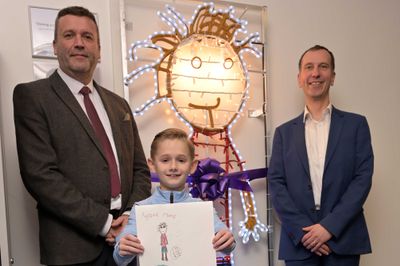
‘Shining a light on Colour Blindness’ competition winner unveils light sculpture at Aston University Winner 10-year-old Leo Evans helped unveil the feature of footballer Tyrone Mings The competition helped highlight the challenges of colour blindness - particularly in sport. A light sculpture named after the Aston Villa footballer Tyrone Mings has been unveiled at Aston University as part of a campaign to help raise awareness of colour blindness. In the UK there are approximately 3 million colour blind people (about 4.5% of the entire population), most of whom are male. Worldwide, there are estimated to be about 300 million people with colour blindness. The competition, ‘Shining a Light on Colour Blindness’, was launched by non-profit organisation Colour Blind Awareness and supported by various football club charities - including the Aston Villa Foundation. Young supporters were asked to take part by drawing a colourful picture of their favourite footballer. The winning entry was then made into a light feature. The winning artwork, which came from the Aston Villa Foundation, was transformed into a light feature and was selected to go on display inside the Aston University Vision Sciences building in the paediatrics bay, as part of the ongoing partnership between the Aston Villa Foundation and Aston University. Colour Blind Awareness is a non-profit organisation designed to highlight the relevance and impact of colour vision deficiency amongst those that live with it - including the challenges in sport. The organisation is part of an EU-funded project, Tackling Colour Blindness in Sport. Competition winner, 10-year-old Leo Evans from Erdington, helped unveil the light sculpture alongside Professor Anthony Hilton, pro-vice-chancellor & executive dean of the College of Health and Life Sciences. Professor Hilton said: “We are delighted for Leo, his winning drawing of Tyrone Mings looks fantastic as a light sculpture and we are proud to host it in our Vision Sciences building for our students, staff and visitors to enjoy, whilst raising awareness about colour blindness.” Commenting on his winning drawing, Leo said: “I am very proud that my picture won the competition and that Tyrone Mings liked it. I now better understand what being colour blind means and I hope my picture has helped someone else.” Cheryl Evans, Leo's Mum, said: “I couldn't be prouder of Leo and the fact that his drawing is of his favourite player Tyrone Mings makes it even more special. This competition has meant that as a family we have had many conversations about colour blindness and it has educated us all more on this topic. Well done Leo!” Kathryn Albany-Ward, CEO at Colour Blind Awareness CIC, said: “Aston Villa Foundation’s entry from Leo charmed the judges and who were delighted to award it first prize. We’re very grateful to Aston University for hosting the light feature and can’t wait to see it displayed. We hope its location in the Vision Sciences Department will help raise more awareness of a condition which affects 8% of boys and 0.5% of girls worldwide, impacting on their education and ability to perform to their best in sport if left unsupported.” Leo was met and congratulated by the head of the Aston Villa Foundation, Guy Rippon, and foundation manager, Ross Alexander. Ross said: “The Aston Villa Foundation would like to say a big congratulations to Leo for his amazing achievement! This is a really proud moment for Leo and we are thrilled that he was inspired by his favourite Aston Villa player. “It has also been a pleasure to have supported Colour Blind Awareness, who have done some great work in highlighting such an important and relevant topic during our coaching team’s workforce development. The support has culminated in a competition that was won by Leo, a participant in one of our Football in the Community holiday sessions. “The stunning light feature of Tyrone Mings will now be housed at Aston University for all to see and we are grateful for the University’s ongoing support with the Club.”
