Experts Matter. Find Yours.
Connect for media, speaking, professional opportunities & more.

In this Era of Fake News and Alternate FactsExperts are King
There’s nothing new about fake news. Satirical media outlets such as The Onion have been around for a decade giving us a good laugh. But somewhere in the past 12 months, something changed for the worse. The wool that was being pulled over people’s eyes wasn’t so obvious anymore. Satire and bad humour were replaced by visceral accusations, conspiracies, and smear campaigns. How did we get to this point, and what can be done to stem the tide? A sure sign that we had a problem was a development that was apparent in the last presidential election. New voices were on the national scene branding our traditional media outlets as biased, and elitist. We saw the phrase “mainstream media” become a bigger part of the conversation. Now we have to contend with “fake news.” Unlike traditional journalism fake news outlets deliberately spew wrong information. In an effort to get a story out, mistakes will happen. But in the world of fake news there is no retraction or correction of these mistakes — even when they are exposed as blatantly untrue. Further damage ensues when social media then acts as an enabler as fake news articles get amplified to millions of people, who are clicking away, feeding advertising revenues to these publishers. No matter what your political stripe or where you stood regarding the recent US election, fake news was rampant on both sides spreading false information, invoking anger, and deceiving the public. More recently, a fresher version of fake news has emerged as “Alternate Facts.” A term made famous by Trump adviser Kellyanne Conway as she defended the statements made by Press Secretary Sean Spicer who lectured and insisted that the crowd present for President Trump’s swearing-in was “the largest audience ever to It seems that the whole nature of the game has changed almost overnight. Even the White House press gallery isn’t immune to these developments. This week’s Saturday Night Live sketch brilliantly sums up the aversive relationship that we’re seeing develop between the media and the new administration. (Note: For the record, the photo at the bottom is NOT a C-SPAN broadcast. It’s a comedy sketch. It did not really happen. This is NOT Sean Spicer in the photo below — it’s an actor portrayal). Perhaps most ironic for me is how believable fake news can appear to be. A friend of mine, a former investigative journalist commented that “given the outright absurdity of the actual “real” news cycle,” it’s getting hard for people to sort fact from fiction.” Perhaps this says as much about society as it does about media. So Where Does All This Leave Us? Some say the solution is as simple as removing the bias from our news media. The problem is, I know quite a few (real) journalists and they are serious about reporting facts. They work in newsrooms and report the news, they tell stories, but gathering and checking facts are what define them. As they work to a set of professional standards and deliver real information. However, we’re witnessing a massive change in the way that ideas are shaped and communicated to the public. Sadly, the traditional avenues of information flow and the mutual respect that even democratic nation states have had with the media appears to be eroding. There is also a disturbing undercurrent of thought that traditional news organizations are biased, and every outlet is always serving a hidden agenda. Recent events have prompted the need for news organizations to brief their journalists on how to govern themselves in these very “interesting times.” John Daniszewski, Vice President for Standards for Associated Press in a recent blog post called for clarity regarding the definition of the so-called “alt-right.” “We should not limit ourselves to letting such groups define themselves, and instead should report their actions, associations, history and positions to reveal their actual beliefs and philosophy, as well as how others see them,” writes Daniszewski. Other news organizations are looking at recent events and taking the opportunity to internally brief their journalists. In a recent message to staff, Reuters Editor-in-Chief Steve Adler wrote about covering President Trump the Reuters way: “The first 12 days of the Trump presidency (yes, that’s all it’s been!) have been memorable for all — and especially challenging for us in the news business. It’s not every day that a U.S. president calls journalists “among the most dishonest human beings on earth” or that his chief strategist dubs the media “the opposition party.” It’s hardly surprising that the air is thick with questions and theories about how to cover the new Administration. So what is the Reuters answer? To oppose the administration? To appease it? To boycott its briefings? To use our platform to rally support for the media? All these ideas are out there, and they may be right for some news operations, but they don’t make sense for Reuters. We already know what to do because we do it every day, and we do it all over the world. To state the obvious, Reuters is a global news organization that reports independently and fairly in more than 100 countries, including many in which the media is unwelcome and frequently under attack. We don’t know yet how sharp the Trump administration’s attacks will be over time or to what extent those attacks will be accompanied by legal restrictions on our news-gathering. But we do know that we must follow the same rules that govern our work anywhere.” Adler goes on to provide a set of rules for the Reuters team that I think are very wise, especially given the current environment. Do’s: Cover what matters in people’s lives and provide them the facts they need to make better decisions. Become ever-more resourceful: If one door to information closes, open another one. Give up on hand-outs and worry less about official access. They were never all that valuable anyway. Our coverage of Iran has been outstanding, and we have virtually no official access. What we have are sources. Get out into the country and learn more about how people live, what they think, what helps and hurts them, and how the government and its actions appear to them, not to us. Keep the Thomson Reuters Trust Principles close at hand, remembering that “the integrity, independence and freedom from bias of Reuters shall at all times be fully preserved.” Don’ts: Never be intimidated, but: Don’t pick unnecessary fights or make the story about us. We may care about the inside baseball but the public generally doesn’t and might not be on our side even if it did. Don’t vent publicly about what might be understandable day-to-day frustration. In countless other countries, we keep our own counsel so we can do our reporting without being suspected of personal animus. We need to do that in the U.S., too. Don’t take too dark a view of the reporting environment: It’s an opportunity for us to practice the skills we’ve learned in much tougher places around the world and to lead by example — and therefore to provide the freshest, most useful, and most illuminating information and insight of any news organization anywhere. Winning back the public trust — Why Experts Matter Perhaps a way to help reverse this trend is to ask more of our experts within our organizations, and get them to contribute more to these important conversations. It’s about getting our academics, physicians, professionals, and leaders in their respective fields to contribute more to help the media present a more balanced set of perspectives in ways that engage the public. In this new era, it appears that many experts are invisible to the media on a range of big issues such as climate change, economic data, security, crime and healthcare policy. Opinions — not always informed opinions — are taken as fact. People without qualifications are being asked to speak on topics that require years of study, research, and experience. This is why, now more than ever, we need to see a return of intelligence and knowledge to present true facts. Credible Experts Matter Credible sources are vital in helping ensure the proper degree of research has been done. Published work, peer-reviewed studies, as well as policy that has been developed and practised all play key roles in determining an actual expert. Proven credibility cuts through rhetoric. It promotes the delivery and flow of facts as opposed to feeding only one side of a debate. Being Approachable Matters We have to agree that the current sentiment that many have toward traditional institutions and their experts is that they are not providing enough practical information of benefit to the public. The term “ivory tower” comes up frequently to describe environments such as universities and think tanks. While we need these environments of intellectual pursuit they cannot be seen as disconnected from the practical concerns of everyday life. Transparency Matters Do you know where your information is actually coming from? The flow of money into the development of fake news and so-called “experts” who are pushing agendas is tremendous. We’ve seen it recently with the sugar industry — much like the tobacco industry who literally wrote the book on manipulating and re-wrapping expertise and research in the middle of the last century — setting ideas on nutrition back decades. The market is crying out for a more consistent way to discover and evaluate the credibility of experts. We need a quick and trusted way to review their education, background, publications as well as their affiliations. We need to be able to conduct a front-line background check before we give them the platform to share their perspectives on television, radio, or in print. We need to vet the expert before they reach an audience that relies on the information being communicated to form opinions and make critical decisions that affect their lives. Local News Matters Local media is shrinking. Newsrooms are currently being threatened by constant shifts in both consumption and business models. If we are to promote accurate information and win the war on actual facts, we must make it easier for local journalists to do their jobs. Mainstream media still carries a lot of weight, especially online and television where the nightly news reaches a massive audience. Though the ratings are large, the subject matter doesn’t always resonate with viewers at home. We need to do a much better job helping local media get better access to the experts in our organisations so they can localise issues and tell stories, and do it in ways that everyone can understand. For example, a story on national unemployment numbers has a different context in San Francisco than it does in Flint, Michigan. Climate change is impacting Miami a lot differently than it is in the Great Lake states. In the end, all news is local. Speed Matters News is increasingly a speed game. With social media, a 24-hour news cycle, and the race to be first, time is of the essence. But in this game, haste may not only make waste, the truth may be a casualty as well. Most recently Fox News reported on a violent shooting at a mosque in Quebec City, Canada. Six people were killed by a lone gunman. Fox News reported that the suspect was of Moroccan origin — that was false. The shooter was in fact of Canadian origin. It wasn’t until the Canadian Prime Minister’s office requested a retraction that Fox walked the story back…but it took almost two full days. In true Canadian fashion, Kate Purchase, Communications Director for Prime Minister Trudeau thanked Fox News. In the meantime, wrong information was shared across multiple platforms and seen by millions of people. This is when having your experts prepared, media-trained, and trusted internally to speak with media is key. In times of emergency and chaos, it may be the words, advice and perspective of a high-level expert that can calm a nervous public, or at the very least, clearly explain a situation and its outcomes with accuracy and trust. So Why Should This Matter to You? If you are focused on building your market visibility and brand reputation, making your organization’s experts more discoverable and responsive to media is as much a function of good public relations as it is a public service. In these days of fake news, alternate facts, and unclear agendas, an unbiased and objective point of view presented by a credible expert may be one of the few remaining pillars of integrity we have left. Experts bring credibility, reliability, and an elevated level of perspective and advice that the public can trust. It’s up to all of us to ensure our thought leaders rise above the fray and help rebuild the trust that is essential to building a civil society. How is your organization working with its experts to respond to these challenges? I’m particularly interested in speaking with communications and media relations professionals in higher education, healthcare and professional services as our team conducts more research in this area. Let us know what you think by sharing below. I read every comment.



Fighting Red Tape To Win The Media Relations Speed Game
It’s a situation that happens every day in the media relations world. A reporter calls and they need someone for an interview fast. This is how the scenario should play out: Step 1 - The media calls a communications officer with a simple request for information and an interview on a recently announced program. Step 2 – The communication officer identifies a suitable spokesperson. Step 3 – The reporter and spokesperson talk, arrange an interview -- and there is some excellent earned media and exposure for your institution. It sounds simple enough. But, not so fast. In reality, things often fall apart on step 3 and the process turns into something that borderlines on a Monty Python skit. Based on my experience and others I’ve consulted with – it often plays out something like this: The communications officer contacts the suitable spokesperson’s Manager to ensure it is okay they can speak to the expertise and subject matter they specialize in. Then, they have to loop in that manager with a Director and CEO to inform them of the media request and the plan. And then if the Director agrees, the CEO gets on board. Or perhaps the Director agrees only after checking with the CEO and agreeing to the spokesperson. Once that’s nailed down somehow…the CEO wonders if speaking points are required and will only proceed once the Manager and Director have signed off on them. After the speaking points are finally approved, speaking points and the media request are sent to the identified spokesperson. Then the communications officer (remember him or her?) responds to the media that they have found an expert and will arrange a time for interview. The communications officer has the Manager, Director, CEO and spokesperson each sign off on paper-generated Media Request Form for filing and safe records keeping. And, then…..finally……if the media hasn’t already gone elsewhere, the reporter and the spokesperson finally speak – about 18 steps later. It’s actually more steps than it takes to assemble my daughter’s bike or the average IKEA nightstand. It’s cumbersome, ineffective and costs the organization a lot of time in person power for something that doesn’t need to be this difficult. And the reality is … this spokesperson is a paid professional with a Master’s degree who was hired for the subject matter they specialize in. The media request was related to a media release issued by the organization. With a simple approval process and a pro-active approach to media, this could have been easier for everybody with an immediate turnaround and a positive outcome. Think this is a joke? It’s not. In fact, there’s a Communications Officer’s support group that meets every Thursday to share similar situations (I’m being cheeky). Media will appreciate that sensitive issues take time to respond to. In fact, a lot of media relish the thought the there are people scrambling to answer the tough questions. What drives media crazy is having to wait hours for what should be a simple, safe and low-risk reply. They likely already know the answer, they just need the expertise to lend it credibility and verification. (Photo courtesy: CBS Television Studios) So does your Communications Process need an institutional intervention? When you make it hard for media to get easy answers, they might start looking elsewhere. Odds are they will. Consider this: Do you have a grading system for media requests? Low-risk asks can be seen coming and responses pre-approved or left in the hands of your very competent staff. High risk asks mean approval and oversight. People will get that. As well, it will lend a tone of seriousness to the situation. Do you know the reporter or media outlet? A strong relationship needs faith on both sides. Known reporters and news outlets survive on reputation. Expect them to be professional and trust that they’ll get it right. Trust your Communications Team – Don’t Micro Manage Media relations isn’t a science – it’s an art where experience matters most. Communications Officers likely know the media and most come from a media background. They’ll know the angles, they scan the media and can likely predict the questions. Empower them to save you time and rely on their instincts. Too many Communications Officers ask “Why did you hire me?” when they aren’t trusted on the simplest of things. Most institutions have a rigorous vetting process – so why the worry? Didn’t you hire these people – rely on your staff and let them be accountable. Fewer steps saves time, reduces confusion and meets the need of a low-risk ask. Less micromanaging = more trust. Morale is a big deal in any workplace. So when the media calls, here’s my advice. Take a deep breath. Assess the risk. And arrange the interview as soon as possible and with as little maintenance and anxiety as possible. The media get the information they want, your institution gets the earned media and free exposure it wants and your Communications Team maintains a reputation as a group that can deliver content on deadline and ‘gets’ the information game. Remember – in today’s media – it’s all about speed. The easier you make it for media, the more the phone will ring.

Earned Media: The Secret Weapon of Brand Building
I was reading the newspaper recently and saw an article about tax filing season. The article outlined some of the challenges facing people during tax season but it also highlighted some of the opportunities and useful tips. It wasn’t the reporter outlining this information — it was a tax expert the reporter had interviewed and used as a source in their story. The information was incredibly helpful. The expert being interviewed humanized the issue by telling stories about people she had helped. I was engaged. And, because I was engaged, I read the story very carefully. I even remember the name of the expert and the name of her firm. It stuck. I happen to have an excellent accountant — but if I didn’t — I can guarantee I would have called this expert in the story. In fact, I have no doubt she got calls after the article was published. And, from her standpoint and the standpoint of her firm — they paid nothing to be in that article. Not only did they get valuable space in a news story as an expert without paying for the exposure — the reporter likely even thanked her for helping. Advertising executives, marketing agencies and social media “gurus” typically don’t like people like me — news media strategists. We tell clients that the best bang for their buck is “earned media” which means exactly what it says — media that you have earned (and not purchased) whether it be through relationships or by being in an expert database. We help them tell their organic stories by positioning them as experts in their field, which is not easy today given everyone has a LinkedIn account or website calling themselves an “expert” or a “guru”. It’s one thing to proclaim yourself an expert — it’s something completely different to be recognized as one by the news media. You see, despite what some will say, traditional news media is far from dead. Is it facing challenges and reinvention? Absolutely. But, dead? Absolutely not and it’s still the medium by which earned media legends are made. I want to be clear in saying there can be, indeed, a time and place for paid media. The issue is that for too many organizations, it’s the only tangible tool in their toolbox. And it is, by far, the most expensive tool with, questionably, the lowest return on investment. In my opinion, unless you’re spending Coke and Samsung levels of dollars on advertising (multi millions), there’s a good chance your ads are being washed away in the information tsunami — the white noise that is our over-saturated information ecosystem. In many cases, advertising as a stand-alone marketing strategy CAN BE a colossal waste of your money. Even social media marketing and advertising is fast becoming the most cluttered and noisy space for paid and promoted messaging. Due to its lower cost, people are flooding to it making it increasingly more difficult to be heard in the sea of white noise. The fact is that a well-balanced marketing and communication strategy is one that reaches your target audience on a number of levels — some of them could be paid — some of them organically through social media — and the one many people neglect is to serve as experts to drive earned media. It is often neglected because it’s the one marketing tool that requires working with someone who truly understands journalism and journalists — and what their daily and hourly needs are in terms of getting their jobs done. So – yes – it’s hard work and it’s very specialized work. But there are companies, people and tools out there that can help. And, it’s worth the hard work. Being quoted as an expert in a legitimate news story or feature interview can move mountains in terms of building your brand. First of all, being in a news story gives you an instant status AND credibility. In paid advertising, it’s you saying how great you are — it’s self-declared. People are skeptical — they know you’ve paid to say that about yourself; you are blasting out a one way message. However, the traditional media interviewing you is a two way conversation the public is watching in an engaged way. It’s akin to a third party testimonial. In other words, the viewing/reading/listening audience sees a trusted journalist they feel they know who is putting this expert source in their story — this is someone the journalists trusts as an expert source so inherently the message is that the public should trust them as well. In this case, the medium (traditional news media) truly is a big part of the message. You can’t buy that. Legitimacy. Credibility. The foundation of any successful brand. It is earned. I have a college client that I work with. They decided to focus more on earned media, admittedly, with some hesitation. We media coached a number of their professors and Deans. We put a plan into place to develop some tangible relationships with journalists. It started small with one short interview. Then it was two. Then it was a regular spot. And within one year, the amount of earned media they have received has arguably far outpaced the value of all their paid advertising. Some of their people have become go-to experts for the media where they were non existent just a year ago. Prospective students and parents see this college’s experts in the media and immediately associate true tangible value to the institution in considering where to enrol. We built capacity with this College and now they are rolling on their own. They have momentum. This is what you need to reach for. And earned media is the gift that keeps on giving. That newspaper story, radio interview or television panel you were featured in will be shared by the media outlets to their huge social media audiences. Other interested people will then share it further to their networks. This is increases your third party credibility — in some cases reaching more people than the original news story. This rarely happens with ads or paid media and is the secret weapon of earned media. And if you weren’t already convinced, then consider this: earned media creates huge online traffic and can have an extremely positive impact on organic SEO for your website or brand — something paid media can’t do. So, if you’re a hospital, a university or research centre, one of the core issues you’re facing today is recruiting top talent. Recruiting is competitive and complex — yet most potential recruits will begin their research on Google. They will search your institution and see what’s being said about you. If you are getting a lot of positive earned media, that will quickly show up high on your Google search results. The potential recruit reads those news stories and sees your institution is out there with its experts. Even doctors and professors will associate traditional earned media coverage as a measurement in credibility. So, how do you go about increasing your earned media reach? How do you become known as an expert in your field with the media? Admittedly, it’s not as easy as buying a full page ad in a newspapers or boosting a post on Facebook. Earned media is both an art and a science and it requires an intuitive, expert knowledge of the media. Making sure you are listed in searchable online networks that journalists use is a very good start. But there is a caution. You only have one or two chances to prove yourself as a reliable and value added source for journalists. If you become known as a lame or boring guest, you’ll be blacklisted and that opportunity will disappear. So before you go running into the streets declaring yourself an expert ready for national media exposure. Make sure you’re ready to be interviewed by the media because they won’t give you a free ride. They are journalists and not stenographers. You will be asked tough, challenging questions. The key is to be prepared for the opportunity. How do you do that? Well that’s my next column. Stay tuned.

Part 1: Collaborating with Faculty Experts: A How-To Guide for Marketing Departments & Deans
“I don’t have time to do this.” “I don’t think I’m the right expert.” “My subject area is too specific.” Have you ever approached a faculty member with an opportunity to speak to the media or perhaps speak at an event, only to hear responses like these? Asking certain faculty members to help serve as experts can be challenging. While it’s becoming more widely accepted by faculty that responding to such requests is a great way to build their personal reputation – as well as the institution’s – there is still work to be done in this area. With my experiences I wanted to share some useful tips to help you better collaborate with your faculty and get more results: 1. Walk the Halls: Stay Connected to Important Faculty Research & Publications Faculty play a key role in helping you tell compelling stories to a variety of audiences such as media, prospective donors and students. Yet it’s amazing how many communications people are disconnected from important discoveries their experts are working on. They get caught up in day-to-day events and struggle to find time to walk the campus. The first step in collaborating with your faculty is showing them you care. Make yourself approachable as a resource to help them communicate their stories and you’ll see dramatic results. While it may be tough, it is worth the time investment. 2. Take Inventory: Assess Which Experts Can Be Most Valuable in Helping You Engage Various Audiences With so many faculty members across the campus involved in a wide range of activities, it’s important to develop a framework that identifies who you should be working with. While faculty have deep subject-matter expertise, not all are suited to helping with certain engagements such as broadcast media interviews. To better assess your faculty look at these key factors: Credibility Does the expert have a deep understanding of their focus area? How respected are they among their peers? Have they conducted research in this area? Have they been published? Have they spoken at conferences or received awards for their work? Relevance Is their field of research relevant to various audiences such as Media, Prospective Students, Donors and Partners? Engagement How are their writing skills? Do they have experience with public speaking to various audiences? Can they conduct an interview with a reporter? Are they willing to participate or get media training? Responsiveness Do they understand the significant value they can contribute in helping you build your institution’s reputation? Are they comfortable with being in the spotlight? Can they be available on short notice (within hours) for media interviews? Are they interested in building their own personal brand? 3. Get Alignment: Get Senior Leadership on the Bus Consulting with Faculty Deans and other leaders on the campus will help you gain important support for your efforts to work more with faculty. Identifying their objectives at a program level will help you ensure that your work isn’t viewed as another “make work” exercise for faculty. Show them how your work with faculty experts will have potential to impact the following: Brand reputation in the community and among peers Media coverage Increased student enrolment Better Alumni engagement Increased donations to the school Government and research funding Corporate partnerships 4. Tap into Peer-to-Peer Power: Focus on Faculty Evangelists We all know who our “go-to” faculty are. The people who will enthusiastically help you try out some new approaches. These are the faculty who are doing great research but also can tell a great story and are respected among their colleagues. Identify a manageable group (a range of 3-6 experts is a good number to start). Assess them using the criteria we discuss in point #2. Then get these select experts to invest a little time with you to work on topic strategies and content development. Explain to them what you are trying to achieve and listen to their feedback. Getting their support, and helping them develop their content and stories is the key to success. As evangelists, they can be vital to getting buy-in across the campus. 5. “Opt-In” your Experts: Look for Different Types of Contribution While media coverage is a big focus for many organizations it often tends to dominate the discussion about experts. Think about the ways your experts can contribute and help you tell your story to a variety of audiences beyond media (see point #3). Faculty can be engaged in a broad spectrum of activities such as: Television Radio Print Research on specific topics Blog posts Podcasts Speaking at conferences Speaking at student recruiting events Attending or speaking at alumni events Attending or speaking at donor events Build a “Contributions List” that outlines activities where you may need support and get faculty to opt-in. Getting this agreement in advance allows you to better assess where you have “bench strength” to plan for specific projects. At the end of the day, you won’t get 100% of the faculty to jump on board, but we have seen that a good plan and collaborative communication raises engagement and participation. READ PART II of Collaborating with Faculty Experts: A How-To Guide for Organizations.

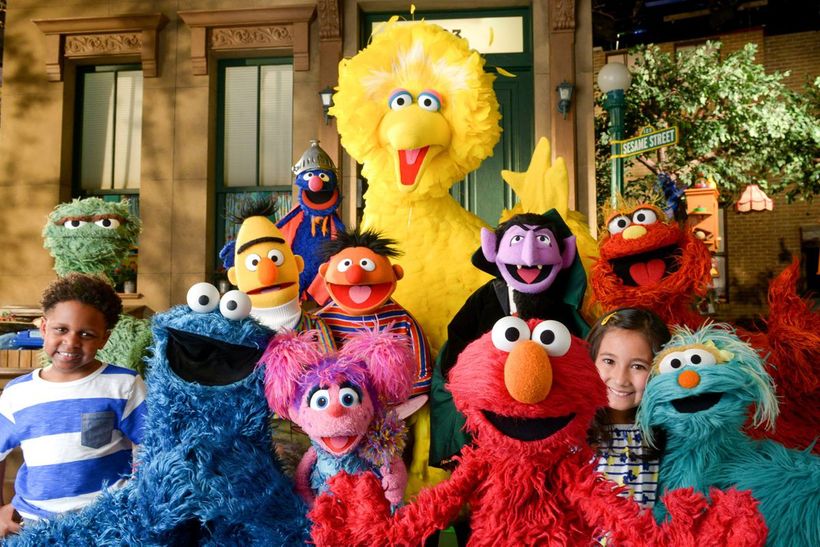
Sesame Street Celebrates 50 Years
Sesame Street, the longest-running children's show in American history, recently celebrated its 50th anniversary. Villanova's Emory Woodard, PhD, Dean of Graduate Studies in the College of Liberal Arts and Sciences, spent time working at Children's Television Workshop (now Sesame Workshop), the nonprofit organization that puts on Sesame Street. He reflects back on its legacy, its important focus on diversity and what lies ahead. Concerning the Program's Legacy "Sesame Street transformed the landscape for educational television at a time when very few content producers were paying attention to quality content for children. The show has effectively reduced the school readiness gap and prepared millions for scholastic success." On Special Memories "My parents could not afford to send me to preschool but used Sesame Street to reinforce the literacy and numeracy skills they taught me. I have fond memories of learning to count with Count von Count, learning the alphabet with Cookie Monster and even getting phonetics lessons with Big Bird. I cannot tell you how much of a delight it was to have Big Bird speak at one of our Commencement Ceremonies... "Perhaps more than the literacy and numeracy skills that I learned from Sesame Street, I remember the prosocial lessons of the show. At such a formative stage, I remember learning about sharing, cooperation and appreciating the differences between people." On Sesame Street and Diversity "Sesame Street has been keenly aware of the dual audiences it engages: children and their parents. At the preschool age, parents tend to be very involved in the media diet of their children. Sesame Street has taught a generation of parents to be more sensitive to issues of diversity." On the Program's Future "I think the future is bright. With the advent of increasingly diverse content distribution platforms (e.g., Netflix, Sling, Roku, Apple TV, etc.), the demand for quality content will remain strong. The makers of Sesame Street may have to be creative in figuring out how to support the production of their high-quality content while still serving their primary mission. Nonetheless, their longevity is a testament to the good thinkers they have charting the course to ongoing success. "The partnership with HBO is an industry reality. The funding for public television remains under threat and the choice is to either fold or be financially creative. I am delighted that the makers of Sesame Street have chosen to be financially creative. Moreover, they chose to partner with an outlet that has demonstrated itself to be a purveyor of high-quality content. As long as that content is shared with platforms that are more accessible to the economically disadvantaged, I do not see this much differently than the decision to use television as a distribution platform that was not universally accessible back in the late 1960s. "Sesame Street will remain relevant as long as they remain true to their original mission of bringing literacy and numeracy skills to disadvantaged populations through high-quality content. No one is and perhaps will ever be better at it than the makers of Sesame Street."


Baylor Expert Shares Six Lessons We Can Learn From Mr. Rogers About Being a Good Neighbor
WACO, Texas (Nov. 14, 2019) – In this polarized time, when it requires little effort to tear a stranger apart on social media or lash out at a family member because of a difference of opinion, the gentle cadence of Fred Rogers singing a simple song about neighbors loving and helping each other is a welcome respite. The much-anticipated movie, “A Beautiful Day in the Neighborhood,” starring Academy Award-winner Tom Hanks as Rogers – known to generations simply as “Mr. Rogers,” the host of “Mister Rogers’ Neighborhood” – will be released in theaters on Nov. 22. The official movie trailer posted on YouTube has drawn nearly 12 million views. Civics education expert Brooke Blevins, Ph.D., associate professor of social studies education and chair of Baylor University’s department of curriculum and instruction, said the renewed focus on the beloved and soft-spoken TV personality, who died in 2003, might be coming at just the right time. “When you watch Mr. Rogers, time slows down, and you are able to take a deep breath as complicated issues become more understandable and the beauty of relationships is reinforced,” Blevins said. “Imagine if we all walked into the world with the belief that each person was inherently worthy. Imagine if our goal was to help each other recognize that we are worthy of being loved. Imagine if we sought to listen more than we spoke,” she said. “I imagine if this was the case, that our conversation would change, our understanding of those around us would shift, and our national conversations would be more civil.” Below, Blevins shares six lessons we can learn from Mr. Rogers about being better citizens. Each person is worthy to be loved and heard. Like Mr. Rogers, we must recognize that each person we interact with is worthy to be loved and listened to. We must recognize that each person has unique experiences, fears, losses and triumphs that shape the way they understand what’s happening around them. We need to do much more listening and far less talking. We should work together to tackle tough issues in reasoned and evidenced-based ways with civility and a genuine desire to understand those around us. Use your platform for good. Mr. Rogers was deeply committed to creating a better world. Mr. Rogers did not take his role on TV lightly. He saw it as an opportunity to help young people make sense of the world around them and to become more knowledgeable and engaged citizens. He saw television as an opportunity to create community and a shared sense of purpose. As he once noted, “The space between the television screen and whoever happens to be receiving it, I consider that holy ground. A lot happens there.” Lessons we often think are for children are for adults as well. Mr. Rogers was a teacher, a pastor and a friend. His lessons were drawn from the everyday experiences of children’s lives, from current political events to personal and emotional trials children experience. Not only were these lessons for children, but for their parents who were also watching. His lessons focused on cultivating civic discourse, reasoned judgment and evidence-based decision-making, but most importantly, his lessons cultivated understanding and empathy for one’s neighbor. In his conversations and examples, he drew on our shared humanity to help young people make sense of an ever-changing world. Slow down. In a time of fast-paced and often silly cartoons that were designed to move quickly from scene to scene, Mr. Rogers maintained a much slower and thoughtful pace. A pace that was compelling to both young and old alike. He explored issues slowly and with depth, without the silly antics that are so often used to keep children and adults’ attention. He used his time with viewers to develop a relationship that valued their experience and honored their emotional complexity. He sent the message that all people are inherently valuable and are capable of loving and being loved. It’s OK to discuss tough issues – even with children. But be civil and understanding when you do it. As an ordained minister and gifted musician, Mr. Rogers utilized his vocational skills to create a safe space in which difficult conversations could occur. He never shied away from the tough conversations. From issues such as divorce, death, assassination and even 9-11, Mr. Rogers’ helped young people navigate emotionally traumatic events with both knowledge and compassion. Mr. Rogers knew that by talking about our fears, losses and misunderstandings, we could work together to build a better future. As he wrestled with these issues, he asked questions, he inquired, he listened, and he had children do the same. He had a deep-rooted commitment to helping children navigate their world. Be a good neighbor. Being a good neighbor is caring about those around you. It’s not just about tolerance, but truly seeking to understand those in your community. Being a good neighbor means helping those around you recognize that they play an important part in making the world a better and more just place. It means working together to solve complex issues and cultivate a world in which all people can fulfill their true purpose. ABOUT DR. BROOKE BLEVINS Brooke Blevins, Ph.D., teaches both undergraduate and graduate courses in secondary education, social studies education and multicultural education. As a former secondary teacher, she has a passion for equipping teachers with the resources needed to engage in humanizing social studies education. Dr. Blevins also serves as the co-director for the iEngage Summer Civics Institute, for which she and co-founder Dr. Karon LeCompte have raised more than $250,000 in grant funding. Dr. Blevins’ research focuses on social studies education as a means to prepare active and engaged citizens. In her work, Dr. Blevins examines how to prepare teachers to develop both political clarity and pedagogical content knowledge that encourages them to engage in transformational based and humanizing social studies education. In addition, Dr. Blevins also is interested in how to educate and empower young people to become active civic participants through participation in action civics and digital technologies. ABOUT BAYLOR UNIVERSITY Baylor University is a private Christian University and a nationally ranked research institution. The University provides a vibrant campus community for more than 17,000 students by blending interdisciplinary research with an international reputation for educational excellence and a faculty commitment to teaching and scholarship. Chartered in 1845 by the Republic of Texas through the efforts of Baptist pioneers, Baylor is the oldest continually operating University in Texas. Located in Waco, Baylor welcomes students from all 50 states and more than 90 countries to study a broad range of degrees among its 12 nationally recognized academic divisions. ABOUT BAYLOR SCHOOL OF EDUCATION Founded in 1919, Baylor School of Education ranks among the nation’s top 20 education schools located at private universities. The School’s research portfolio complements its long-standing commitment to excellence in teaching and student mentoring. Baylor’s undergraduate program in teacher education has earned national distinction for innovative partnerships with local schools that provide future teachers deep clinical preparation, while graduate programs culminating in both the Ed.D. and Ph.D. prepare outstanding leaders, teachers and clinicians through an intentional blend of theory and practice. Visit www.baylor.edu/soe to learn more.


Multicultural Millennials Respond Positively to Health ‘Edutainment,’ Baylor Marketing Research Says
One-on-one interviews reveal which health issues concern millennials and their longing for optimal health Storytelling that educates and entertains – aka “edutainment” – is a powerful communications tool that can lead to positive health-related changes among multicultural millennials, according to a new marketing study from Baylor University. Tyrha Lindsey-Warren, Ph.D., clinical assistant professor of marketing in Baylor University’s Hankamer School of Business, led the study, “Making multicultural millennials healthy: The influence of health ‘edutainment’ and other drivers on health-oriented diet change,” which is published in the Journal of Cultural Marketing Strategy. Charlene A. Dadzie, Ph.D., assistant professor of marketing at the University of South Alabama, coauthored the research. The research sought to determine which health issues most concerned multicultural millennials and to gauge how effective media can be as a tool to address those issues and drive change. “This study finds that by bolstering self-identity and employing health ‘edutainment,’ it is possible to have a positive impact on the health intentions and behaviors of the millennial generation,” the researchers wrote. There are more than 92 million millennials (ages 20-34) in the United States today, the researchers observed. More than 9 million of those are identified as being overweight, and much of that can be attributed to a sedentary lifestyle and media consumption. White Americans watch an average of 140 hours of television per month (35 hours per week); African Americans watch 213 hours of television per month; and Latino Americans watch 33 hours of television per week and stream more than six hours of video per month. “Millennials are tech-savvy, they love social media, they’re actually more health conscious than previous generations, and they have significant economic power,” Lindsey-Warren said. “With so many millennials – in the scope of this study, multicultural millennials – watching so many screens, there is great opportunity to generate information and increase products and services geared towards health-oriented behavior.” But to take advantage of this opportunity, public and private organizations need to understand what drives millennials’ health choices and communicate accordingly, the researchers wrote. A total of 265 people participated in two components of the study – a health survey of 245 undergraduate students and one-on-one, in-depth interviews of 20 multicultural millennials. ‘I’m old-young and it’s getting real.’ For the second part of the study, the researchers interviewed 20 people – 10 women and 10 men – from two organizations, a large northeastern U.S. university and a mid-sized nonprofit organization in Harlem, New York. The subjects represented cultural, socioeconomic and educational diversity. The interviews were used to better understand the health status of these millennials as well as their relation to storytelling in the media, the researchers said. Participants answered health and wellness questions regarding their own health and personal network (example: “What is your ideal health?”) and questions about their personal media usage (example: “What are the top five health and wellness issues you see regularly portrayed in the media?”). One of the strongest themes to emerge from those interviews was that multicultural millennials “long to be healthy in mind, body and spirit” and are open to “seeing authentic and relevant storytelling regarding health issues in the media that is meaningful.” “They would definitely respond to health messages when they truly see themselves in storytelling that meets them where they are in life,” the researchers wrote. Some of the health-related topics addressed by those being interviewed included healthy eating, asthma, sexual health, mental health and fitness. One interviewee, a 21-year-old woman said she gets “out of breath” when she runs up the stairs and her knees “crack and hurt.” “I would love to have ideal health again. I really would. I would love it. I’m old-young, and it’s getting real,” she said. ‘More involved in the narrative’ In addition to the one-on-one interviews, each of the 20 interviewees watched media clips from two television programs – ABC’s “Private Practice” and the nationally syndicated health show, “The Doctors.” Each show highlighted the accurate health information concerning attention deficit hyperactivity disorder (ADHD). “Private Practice” told its story via fictional characters in an episodic dramatic storytelling format. In this format, health issues were not directly promoted and there was no direct-to-camera discussion of those issues. “The Doctors,” on the other hand, utilized the format of real doctors conveying accurate health information in real-life situations, directly to the camera and in front of a studio audience. “From the interviews, it was apparent that the storytelling in the health edutainment stimuli worked because the participants enjoyed and were more involved in the narrative conveyed in ‘Private Practice’ versus ‘The Doctors,’” the researchers wrote. “For example, the ‘Private Practice’ segment told the story of a young boy and his parents who desperately asked their doctor to give them a prescription for ADHD medicine for their son, even though the son did not want the medicine and the doctor felt that the prescription might not have been needed.” The “Private Practice” story resonated better with those watching and scored high across genders, according to the study. One 21-year-old male university student said he was diagnosed with ADHD as a child and saw himself and his parents in the “Private Practice” clip. He said he took ADHD medicine for a while. “I didn’t like it and I stopped taking it, and that was it. My parents were, ‘OK – if you don’t like it, that’s the way it is – you’re going to study harder, though. And, that was it,” he told the interviewers. A 28-year-old female from the nonprofit program said she saw the “Private Practice” clip and could relate to the situation as a parent. “I felt I could relate because I felt that my son had ADHD, and I really, I kind of diagnosed him myself, and said that, so I was really interested in this topic,” she told the researchers. Marketing and advertising implications Given the constant barrage of media in the lives of millennials, it is only reasonable to question the effect of this environment on their health and well-being, Lindsey-Warren said. The findings of the study are useful for practitioners in marketing, advertising, public relations, digital and branded entertainment. “Ultimately, the key to making a difference in the lives of multicultural millennials and their health, both now and into the future, may be achieving the right balance of educating and entertaining them,” the researchers wrote. “For millennials, Gen Z and alpha – the newest generation – ‘edutainment’ is and will continue to be a primary way to educate them,” Lindsey-Warren said. “It’s through the stories we tell on digital, on streaming, on gaming – that’s the way those generations are learning.” ABOUT BAYLOR UNIVERSITY Baylor University is a private Christian University and a nationally ranked research institution. The University provides a vibrant campus community for more than 17,000 students by blending interdisciplinary research with an international reputation for educational excellence and a faculty commitment to teaching and scholarship. Chartered in 1845 by the Republic of Texas through the efforts of Baptist pioneers, Baylor is the oldest continually operating University in Texas. Located in Waco, Baylor welcomes students from all 50 states and more than 90 countries to study a broad range of degrees among its 12 nationally recognized academic divisions. ABOUT HANKAMER SCHOOL OF BUSINESS AT BAYLOR UNIVERSITY At Baylor University’s Hankamer School of Business, integrity stands shoulder-to-shoulder with analytic and strategic strengths. The School’s top-ranked programs combine rigorous classroom learning, hands-on experience in the real world, a solid foundation in Christian values and a global outlook. Making up approximately 25 percent of the University’s total enrollment, undergraduate students choose from 16 major areas of study. Graduate students choose from full-time, executive or online MBA or other specialized master’s programs, and Ph.D. programs in Information Systems, Entrepreneurship or Health Services Research. The Business School also has campuses located in Austin and Dallas, Texas. Visit www.baylor.edu/business and follow on Twitter at twitter.com/Baylor_Business.


It was 400 years ago this August that the first enslaved people arrived on the shores of North America, changing forever the direction of history. “These men and women had been stolen from their homes in Africa, forced to board a ship, and sailed for months into the unknown. The first Africans in an English colony, their arrival is considered by many historians to be the beginning of a 400-year story filled with tragedy, endurance, survival, and a legacy of resilience, inequality, and oppression.” National Geographic, Aug. 13 The history of slavery and the journey from chains to freedom to equality has been a long one and there is still so much to learn and tell. Even today, how are African American communities negatively affected by this event? Is the topic taught and covered in U.S. children’s education? What role did the enslaved play in the building of our country and is that role recognized? What would America look like today without the slave trade? Do reparations work and how would they be decided? This is an important and sensitive topic – and if you are a journalist covering the history of slavery, that’s where our experts can help. Professor Seretha Williams is an expert in Africa and African diaspora, digital humanities, and digital publication. Williams is also the co-editor of Afterimages of Slavery, Essays on Appearances in Recent American Films, Literature, Television, and Other Media. She is available to speak with media regarding this historic moment – simply click on her icon to arrange an interview.


How to talk to your family about fake news
A recent segment hosted by ABC’s “The Debrief” examined fake news and how older generations are influenced by its use, with Professor of Cinema and Television Arts Naeemah Clark offering her insights. During the Aug. 2 show, Clark joined host Kimberly Brooks by video to discuss how to talk to your family about understanding what is and is not fake news. Specifically, the segment addressed why old generations more frequently share inaccurate news than other demographics. According to Clark, this trend is the result of the exponential growth in news media since the mid- to late-20th century. “In previous generations, the news … was trusted and it was believed because that is what they had,” Clark said during the interview. “There were three channels … and the 6 o’clock news was what you trusted, what you were dependent on. Now that there are so many more sources, it is more difficult" … to identify what is truthful. Watch the entire segment here. If Dr. Clark can assist with your reporting about these complex immigration issues, please reach out to Owen Covington, director of the Elon University News Bureau, at ocovington@elon.edu or (336) 278-7413. Dr. Clark is available for phone, email and broadcast interviews.


Billion reasons why Netflix loves binge-watching
The numbers are out, and the there’s no doubt about it, Netflix despite weaker Q2 figures released this week, streaming is now an industry mainstay. Netflix has transformed the industry and now viewers are no longer willing to wait for that one time a week a show usually airs. In fact, streaming options are now a must have for networks hoping to compete with Netflix and other services. And with Disney and Apple are now spending billions to catch up – audiences are in store for a lot more content. But, as bingeing television becomes the norm, there are also concerns? On the human side, what dangers are posed to people consuming enormous amounts of screen time. And on the industry side – how can show business keep up? And should it? Are you a reporter covering streaming services, binge-watching and the other habits of audiences? Then let our experts help. David A. Schweidel is Professor of Marketing at Emory University’s Goizueta Business School. He is an expert in the areas of customer relationship management and social media analytics as well, his research also includes binge watching. David is available to speak with media – simply click on his icon to arrange an interview.