
Experts Matter. Find Yours.
Connect for media, speaking, professional opportunities & more.

It was 400 years ago this August that the first enslaved people arrived on the shores of North America, changing forever the direction of history. “These men and women had been stolen from their homes in Africa, forced to board a ship, and sailed for months into the unknown. The first Africans in an English colony, their arrival is considered by many historians to be the beginning of a 400-year story filled with tragedy, endurance, survival, and a legacy of resilience, inequality, and oppression.” National Geographic, Aug. 13 The history of slavery and the journey from chains to freedom to equality has been a long one and there is still so much to learn and tell. Even today, how are African American communities negatively affected by this event? Is the topic taught and covered in U.S. children’s education? What role did the enslaved play in the building of our country and is that role recognized? What would America look like today without the slave trade? Do reparations work and how would they be decided? This is an important and sensitive topic – and if you are a journalist covering the history of slavery, that’s where our experts can help. Professor Seretha Williams is an expert in Africa and African diaspora, digital humanities, and digital publication. Williams is also the co-editor of Afterimages of Slavery, Essays on Appearances in Recent American Films, Literature, Television, and Other Media. She is available to speak with media regarding this historic moment – simply click on her icon to arrange an interview.


Are Germany’s economic walls crumbling? Let our experts explain the potential consequences.
As the saying goes … where there’s smoke, there is usually fire. And as trade wars, Brexit and overall global uncertainty crash like waves across the planet – there might be another sure sign we are headed for a global economic slowdown. Germany, the engine that runs Europe, may very well be in recession. “A technical recession is defined as two consecutive quarters of negative growth, and Germany saw a 0.1% drop in the April-to-June period. In its monthly report, the Bundesbank said that with falling industrial production and orders, it appears the slump is continuing during the July-to-September quarter. “The overall economic performance could decline slightly once again,” it said. “Central to this is the ongoing downturn in industry.” Deutsche Bank went further Monday, saying “we see Germany in a technical recession” and predicting a 0.25% drop in economic output this quarter.” August 20 – Associated Press So, what will this mean for the EU, and economies far and wide? Do Americans need to be concerned? Is this just a stumble or is the world about to fall into another economic collapse? If you are a reporter covering the economy and need an expert for your stories – let us help. Jeff Haymond, Ph.D. is Dean, School of Business Administration and a Professor of Economics at Cedarville and is an expert in finance and trade. Dr. Haymond is available to speak with media regarding this topic – simply click on his icon to arrange an interview.


Is Bipartisan Federal Budget Agreement a Good Deal?
In a rare display of bipartisan unity, the U.S. Congress and President Donald Trump have found common ground in hammering out a two-year budget agreement that suspends the debt ceiling until July 2021 while eliminating budget caps enacted in 2021. Villanova University economist David Fiorenza has serious concerns about the effect of the proposed agreement on the country’s exploding debt and Congress’ refusal to slow the rate of growth of expenses. “There is no fiscal austerity in this budget, as the budget will be presented to the president with an approximate increase of $320 billion in spending. Most economists are not as concerned about the debt as I am because they believe our country can make good on any debt that needs to be paid back,” Fiorenza said. “I believe the debt will hinder growth for the younger citizens of our country. We cannot continue to increase the debt. It is not prudent,” he added. A true budget, according to Fiorenza, should be presented that, at the very least, reduces the rate of growth of expenses. The additional spending in the proposed budget satisfies both sides of the aisle, giving Republicans increases for national defense and discretionary spending for the Democrats. And, even though the federal government is collecting more in tariff revenue and decreasing our trade deficit with China, it does not compare to the increase in debt of this new budget, Fiorenza pointed out. Particularly worrisome, he said, is that U.S. debt is exceeding our gross domestic product (GDP) by approximately six per cent. “In theory, GDP should be exceeding a country's debt, which has not been seen since the Clinton administration, he concluded.”


Trained and happy - are you investing in your staff?
A new report released this June overwhelmingly shows that Canadian companies need to invest in their employees if they want to grow. The Navigator: Made for the Future Report surveyed 2,500 businesses in 14 countries and territories - 200 of them in Canada. The survey found that in Canada: Nearly half of those surveyed plan to boost spending on skills training for their staff in the next two years. 47% said their companies planned to spend more on training employees. 42% said they'd spend more on employee satisfaction and well-being. While 54% of the surveyed Canadian business leaders said their companies would make investments that fall under the category of research, innovation and technology, Dan Leslie, deputy head of commercial banking for HSBC Bank Canada, said the results show that technology is only half the story. "Tech adoption brings improvements but also creates the need for new skills," Dan said. "The priorities have shifted since some of our last surveys away from trade or capital investment and more toward investment around the well-being of their workforce." "Given labour market experts predict that many of the jobs people will hold in the future haven't even been invented yet, investing in adaptable employees is good business sense", Dan said. CBC June 26 How much should businesses be investing? What's the cost of programs and training? Is there a tax benefit or assistance small companies can access to assist with costs? Does location play a factor? There are many questions to be answered, and that's where our experts can help. Andrea Bruley, Senior Manager at Freelandt Caldwell Reilly LLP, is an expert in the areas of owner managed business, mentorship, accounting and not-for-profit accounting. You can contact Andrea regarding this topic by clicking the contact button below. Sources:

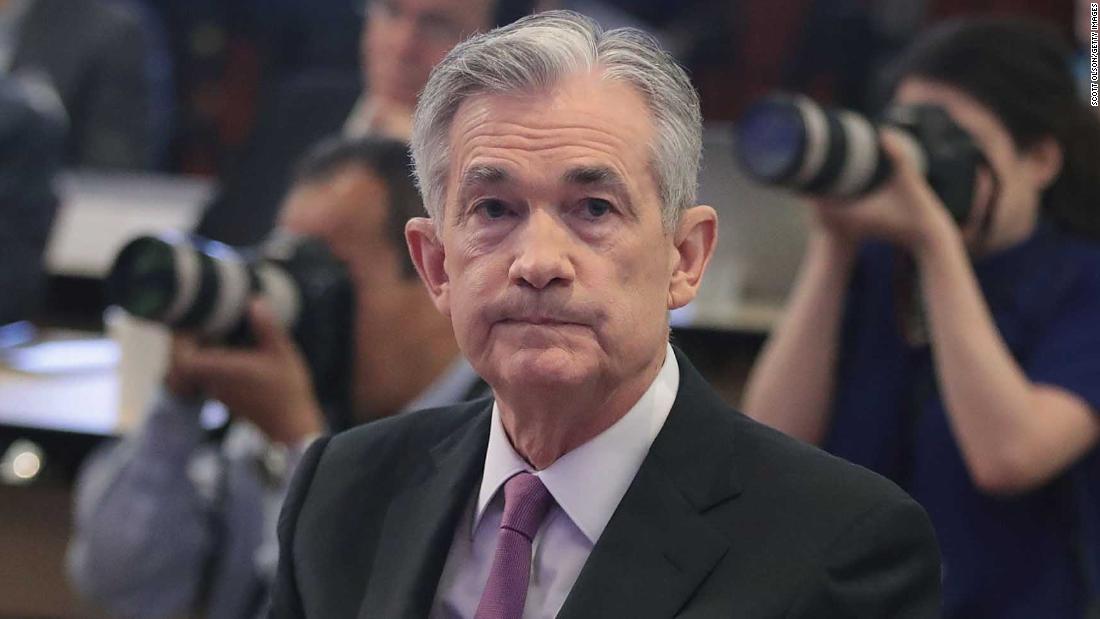
Not this time, but expect interest rates to get cut soon – our expert can explain why
It was all eyes on the Fed this week, but when it came to decide, Federal Reserve Chairman Jerome Powell held U.S. Interest rates steady and unchanged. The pressure was on to lower the rates amid serious concerns that the current trade wars and tariff action could start impacting America’s economy and slow it down. Narayana Kocherlakota, the Lionel W. McKenzie Professor of Economics at the University of Rochester wasn’t surprised by the June decision to remain steady. And with serving six years as president of the Federal Reserve Bank of Minneapolis, his expertise and perspective indicates lower rates will come at the next meeting. “I am not expecting a change in policy, which means the interest rates should remain the same. What I am expecting is a lot of discussion, which takes place in secret, about cutting interest rates by a quarter percentage point at their next meeting in July. Why would they do that? The Federal Reserve is tasked with trying to keep inflation at 2 percent and keep unemployment low. Right now unemployment is about as low as it’s been in the past half-century, which is very good. Inflation remains lower than the Federal Reserve would like—it’s been below 2 percent for most of the last seven years. I think they’re mainly worried about risks. There are signs of risk around the world partly due to big variations in trade policy emerging from the White House. So, the Fed is thinking about cutting rates now in order to keep the economy as healthy as possible, if there’s any danger of a recession.” University of Rochester Newscenter. Will lower rates really keep America’s economy humming? Won’t lower rates impact the strong US dollar? And if we are headed toward recession, what else can de done to turn the economy around? There are a lot of questions – and that’s where our experts can help. Dr. Narayana Kocherlakota was the President and CEO of the Federal Reserve Bank of Minneapolis from 2009-2015. As part of his responsibilities in that position, he served on the Federal Open Market Committee (FOMC), the monetary policymaking arm of the Federal Reserve System. He is currently a Lionel W. McKenzie Professor of Economics and is an expert in financial economics, interest rates and monetary policy. Narayana is available to speak with media regarding the economic effects of the shutdown – simply click on his icon to arrange an interview.



Up, Down or Steady – What do Interest Rates Really Mean for Our Economy?
The heat was on Federal Reserve Chairman Jerome Powell this week to lower interest rates coming out of the June meetings of the Fed. He was under scrutiny from President Trump and others who share a growing worry that America’s economy could be slowing down and potentially turning toward recession. An option that is neither appetizing for investors, the business community or politicians looking for positive messaging as an election looms in 2020. Powell held the rates steady but there is massive speculation this will be for the last time and that rates will begin to be cut as of the next meeting of the Federal Reserve. There are a lot of questions about interest rates and the economy: How do rates encourage or dissuade investment and business? How much of a rate cut will it take to impact the economy? Do interest rates and the dollar go up and down in tandem? And how independent is the Fed and who influences these decisions? If you are covering, we can help. Jeff Haymond, Ph.D. is Dean, School of Business Administration at Cedarville and is an expert in finance and trade. Bert Wheeler, Ph.D. specializes in macroeconomics, international trade, economic development, and econometrics. Jeff and Bert are both available to speak to media regarding the current trade war with China – simply click on either expert’s icon to arrange an interview.

New book reveals how to successfully navigate the uncertainties that sink most startups
INDIANAPOLIS – Research shows that the majority of startups fail. Even more never get off the ground. So how do you avoid the pitfalls that come with navigating the uncertainties of a startup? A new book entitled The Titanic Effect: Successfully Navigating the Uncertainties that Sink Most Startups, guides early-stage startups and their supporters through the challenges they will encounter as they begin building their venture. Startups are inherently uncertain. Decisions have to be made with incomplete information. These decisions result in unanticipated consequences –- problems that lurk beneath the surface. The book draws on lessons learned from the Titanic, which sunk in 1912 not only because it hit an iceberg, but because of a number of decisions that interacted to create one of the largest maritime disasters. A series of trade-offs and choices in the design, building and operating of the Titanic magnified the catastrophic consequences. Co-authors M. Kim Saxton, clinical professor of marketing at the IU Kelley School of Business, Todd Saxton, associate professor of entrepreneurship and strategy at the IU Kelley School of Business, along with serial entrepreneur Michael Cloran, who has founded multiple startups, leverage decades of startup experience to reveal the often-overlooked human, marketing and technical “hidden debts” that sink startups, while drawing parallels to little known parts of the original Titanic story. “The idea for this book came from a conversation about ‘technical debt,’ often used in a software development context, in which shortcuts taken early in a startup’s life limit potential later,” said Todd Saxton. “But this challenge isn’t unique to product development; it applies to other domains as well. That led us to broaden the idea to a more holistic one—That we call in our book ‘hidden debt,’ or debts that are beneath the surface but can limit growth or sink even the most promising startup.” “Most books about entrepreneurship and startups are ‘how-to’s,’ detailing all the things you have to do to succeed when creating your own venture. Our book tells you what not to do, and it shows you how to identify the potential issues that could keep you from being successful,” said Michael Cloran. The Titanic Effect explains that taking on these hidden debts is inevitable, but startups must be careful to recognize that debt and take steps to mitigate the risks. “Over our more than 20 years of working with student, alumni and venture community startups—and helping launch and investing in them as well--we have seen the same patterns of mistakes repeated over and over again,” explained Kim Saxton. “We made a list of the most common startup mistakes, and that’s the main focus of this book. Our goal is to bring these so-called ‘icebergs’—or ‘debt-bergs,’ as we call them—out of hiding. Debt is not necessarily bad as long as you recognize, measure and manage it.” “Entrepreneurs make a lot of decisions under uncertainty, and often, they don’t fully understand the consequences of those decisions,” Saxton added. “Each decision has the potential to either enable – or hamper – future potential. At best, the wrong decision could limit how the startup can grow. At worst, it could cause ventures to sink.” The Titanic Effect is available as an e-book and will be available June 2019 in print. For more information, head to the book’s website here.


What will the “new” NAFTA mean for business in Canada?
The "new" NAFTA - officially renamed as the Canada-United States-Mexico Agreement (CUSMA) in Canada, but is referred to as the United States-Mexico-Canada Agreement (USMCA) in the media - could be a benefit for businesses. While tariffs are being lifted and reduced trade talks thaw – it appears that the USMCA is a win/win/win for businesses on every side of the border. The new trade accord has free-trade when it comes to manufacturing, importing, exporting and resourcing. The USMCA sounds great, but will those rays reach areas like Northeastern Ontario? Will our resource and mining industries benefit? Also, what about our emerging technology sector? There is a lot to be figured out as this new trade deal goes through the approval process in Canada and America. Luckily, we have experts who can help! Marc Boivin, Manager at Freelandt Caldwell Reilly LLP, is an expert in the areas of organizational finance, assets acquisition, business valuation and transactions. Contact Marc to arrange an appointment regarding this topic by clicking the contact button below. Sources:

Expert perspective on a trade war with China and how it could impact a Trump presidency
Trade negotiations between the United States and China have continued to deteriorate over the last few weeks. In efforts to pressure the Chinese to make reforms to trade-related issues such as forced technology transfer and intellectual property rights, the United States has raised tariffs on nearly all Chinese exports. While there is a consensus among experts that these trade issues harm U.S. producers and must be dealt with, there is not universal agreement that a trade war is the best way to make it happen. Who will feel the effects? It is apparent that both consumers and producers in the U.S. will feel the effects of the trade war. Producers will not be able to absorb the increased costs from the raising tariffs and will need to pass them along to consumers. Consumers will begin to see the prices increase on a host of retail goods, such as clothing and apparel, toys, and home goods. Partners replaced? In addition, as the Chinese retaliate with increased tariffs on U.S. exports, such as agricultural goods, producers from other countries with lower tariffs are stepping in to take the place of the U.S. exporters. For example, Brazilian soybean producers are more than happy to sell their product to China at a lower cost. Once lost, it may be difficult for U.S. farmers to regain these important Chinese markets. A political price to pay? It appears that the effects of the trade war may hit the Trump administrations base, in agricultural and manufacturing regions, disproportionately. However, the administration may see the trade war as beneficial to Trump’s 2020 reelection campaign, as Trump is being perceived as being tough with the Chinese and holding them accountable to unfair trade practices. That appears to resonate with his base. However, it remains to be seen how long his base will continue to support this approach as both producers and consumers continue to feel the economic pinch of the growing trade war with China. There’s a lot to know about the short and long-term impacts of a trade war with China and that’s where or experts can help. Matt has taught business and marketing courses at Saint Mary’s University of Minnesota since 2008. Prior to Saint Mary’s, he worked in both the banking and the non-profit sectors, most recently with a non-governmental organization (NGO) with operations in more than a dozen countries. Matt is an expert in political and economic development and is available to speak with media. Simply click on his icon to arrange an interview.


Trump, tariffs and the long game
He said he’d get tough on China and make sure America was getting the better end of any trade deal – and President Trump seems bound and determined, despite the critics and advice from his own cabinet, that massive tariffs and a trade war with China is a good thing for America. Last week Trump more than doubled tariffs on $200 billion in Chinese goods. China reacted with tariffs on American agricultural and other products. The response, Trump is now looking at approximately $300 billion in import levies on more Chinese goods. As far as trade wars go, this one could be epic in its scale and economic proportions. But who will blink first, who will win and ultimately – who is paying the costs and taking on the burden of all the financial collateral damage at the end of the day? Is this a matter of short-term pain for long-term gain for America’s economy? Or is this political posturing that will at the end of the day hurt the country’s bottom line? There are a lot of questions to be asked and that’s where two of the experts from Cedarville can help. Dr. Glen Deurr's research interests include nationalism and secessionism, comparative politics, and international relations theory. Jeff Haymond, Ph.D. is Dean, School of Business Administration at Cedarville ad is an expert in finance and trade. Glen and are both available to speak to media regarding the current trade war with China – simply click on either expert’s icon to arrange an interview.
