
Experts Matter. Find Yours.
Connect for media, speaking, professional opportunities & more.

The election is on. In fact, it’s as if the campaign of the 2016 election has never come to a finish. U.S. President Donald Trump’s strategy of constant rallies, speeches and campaign stops has essentially meant the Republican incumbent has been on the stump for the better part of almost five years now. On the other side, at one time last year, there were more than two dozen contenders vying for the right to represent the Democrats. That field has been whittled down to about half of that, and it is expected to continue shrinking now that primaries are in play and the financial costs of keeping up will become a reality. So, if there were to be an actual starting point for the November election – this week could be it. On Monday, the Iowa Caucus kicks off what could be months of rigorous and aggressive campaigning for Democrats. The winner Monday will have a huge boost, but after that it’ll be all eyes on New Hampshire, Nevada, South Carolina and then Super Tuesday. Also, this week, the President will deliver the State of the Union. The timing of this speech could be the change of channel the President needs as the clouds of impeachment linger. As well, the speech and the huge audience it gathers could set the tone of what's to come on the campaign trail. For political junkies and journalists – it is going to be a busy nine months. And if you are a reporter covering the primaries, politics and the presidential election – then let our experts help. The team from FAU can help with a variety of topics that will inevitably be part of or influence the policies and platforms of each party and candidate. Kevin Wagner's research and teaching interests include presidential and judicial politics, political behavior and legislative behavior. He is also a research fellow of the FAU Business and Economics Polling Initiative (BEPI). Robert Rabil is an expert in political Islam, terrorism, U.S. foreign policy, and U.S.-Arab relations. Kelly Shannon specializes in the history of U.S. foreign relations, with particular attention to the Middle East and the 20th century. Colin Polsky is trained as a geographer, specializing in the human dimensions of global environmental change. He also oversees FAU's quarterly environmental poll. All of these experts from Florida Atlantic University are available to help with any of your questions or coverage – simply click on an expert’s icon to arrange an interview today.


With Brexit looming, more is unknown than known with British economy, trade agreements
Although it has been in the works since June 2016, the transition phase of Great Britain’s decision to leave the European Union (EU) — more commonly known as “Brexit” — is set to take place on Jan. 31. It is a date that will most likely leave a ripple of economic uncertainty in the United Kingdom in its wake as the British prepare for total independence at the end of the year. “Brexit has created so many new unknown variables. It can be profoundly disruptive to England as we know it today,” says Ralf “Don” Keysser, D.B.A., an associate professor in the MBA program at Saint Mary’s University of Minnesota. Keysser predicts a negative short-term impact to the British economy, whereas the long-term perspective is still hard to predict until new free trade agreements with Europe and the rest of the world are established. Keysser does not see a clear-cut benefit to the U.S. establishing a free trade agreement with the U.K., simply based on the lack of British imports in the American market, other than maintaining political closeness. “It’s going to be a shock to the system. England will not be the England that it has been. There’s a lot of speculation, because we’ve never had a country pull out of the EU before, so it’s kind of an unknown. And it’s so highly politicized that it’s hard to get an objective analysis of what it’s going to look like.” Keysser points to a Toyota plant in South Derbyshire that supplies most of its output to countries in the EU through a tariff-free treatment. With Brexit going into effect, the factory may have to vastly reduce its output. Still, the workers in that community overwhelmingly voted to leave the EU. “This is a good example of how people will vote against their economic self-interests for ideological reasons,” Keysser says. “There’s a lot of ideology behind the Brexit vote: anti-immigrant, anti-Europe, pro-nationalist views that very much echoed President Trump’s appeal.” There are a few reasonably good projections, Keysser says, to make about the impact on inflation, unemployment, and economic trends — and none of them look good for Britain. One just has to look at the British pound, which has steadily been losing value to the dollar and euro over the years. In addition, several banks decided to either move from London or expand into other markets within the EU as soon as the Brexit results were announced, which could cost the British capital its status as of the world’s premier financial centers. “I see a gradual diminution of the financial business that’s been a mainstay of London,” Dr. Keysser says. On top of that, there is a real fear of Scotland and Northern Ireland wanting to leave the U.K. in favor of establishing their own independence and returning to the EU. The last time Scotland voted to leave the U.K. in 2004 it only passed 55% to 45%. “That could be the beginning of the end of the United Kingdom as we have known it,” Keysser says. The news might not be entirely bad out of Brexit. For international tourists, especially those from the U.S may be able to take advantage of the dollar’s exchange rate with the declining pound. Do you want to know more about the possible economic ramifications of Brexit? Are you a journalist covering this topic and interested in an interview? That's where we can help. Ralf Keysser, D.B.A., has been an active investment banker and business finance consultant for 35 years. He also serves an associate professor for the MBA program at Saint Mary’s University of Minnesota. To book an interview with him, simply click on his icon above to access his contact information.


In the latest round of legal decisions on the enforcement of international privacy laws between the EU and the U.S., Peter Swire, professor of Law and Ethics at the Georgia Tech Scheller College of Business, and associate director for Policy of the Georgia Tech Institute for Information Security and Privacy looks at how the EU may examine foreign intelligence surveillance in his article “Foreign Intelligence and Other Issues in the Initial Opinion in Schrems II” in Lawfare. The Schrems II case is the subject of the recent opinion from Advocate General (AG) Henrik Saugmandsgaard Øe before the Court of Justice of the European Union (CJEU). In the case, Austrian lawyer Max Schrems challenged Facebook’s ability to transfer personal data from the EU to the United States using the standard contractual clauses, which exist where a company such as Facebook follows EU-level privacy standards when private data is transferred outside of Europe. Schrems’s specific claim is that he cannot access any files that the National Security Agency (NSA) may have collected about him and lacks legal redress for any violation of his rights under EU law. Swire writes that the case examines the transfer of an individual’s personal data from the European Union to the United States using the standard contractual clauses and the Privacy Shield, which was negotiated in 2016 by the U.S. and the EU for privacy data transfers to the United States specifically. Facebook’s headquarters are in Ireland, and the Irish High Court ruled in favor of Schrems and certified 11 broad questions to the CJEU. The AG opinion published this week concerns this appeal in Schrems II from the Irish High Court. If Schrems wins this appeal, then many flows of personal data from the EU to the U.S. may become illegal. Swire’s expertise in U.S. privacy laws is extensive. He is a sought after privacy expert and he has been highlighted in Bloomberg Law, Le Monde, LawFare and numerous scholarly publications. He has appointments by courtesy with the College of Computing and School of Public Policy and is Senior Counsel with Alston & Bird, LLP. If you are a reporter covering this topic and would like to speak with Professor Swire – simply click on his icon to arrange an interview or email media@scheller.gatech.edu.

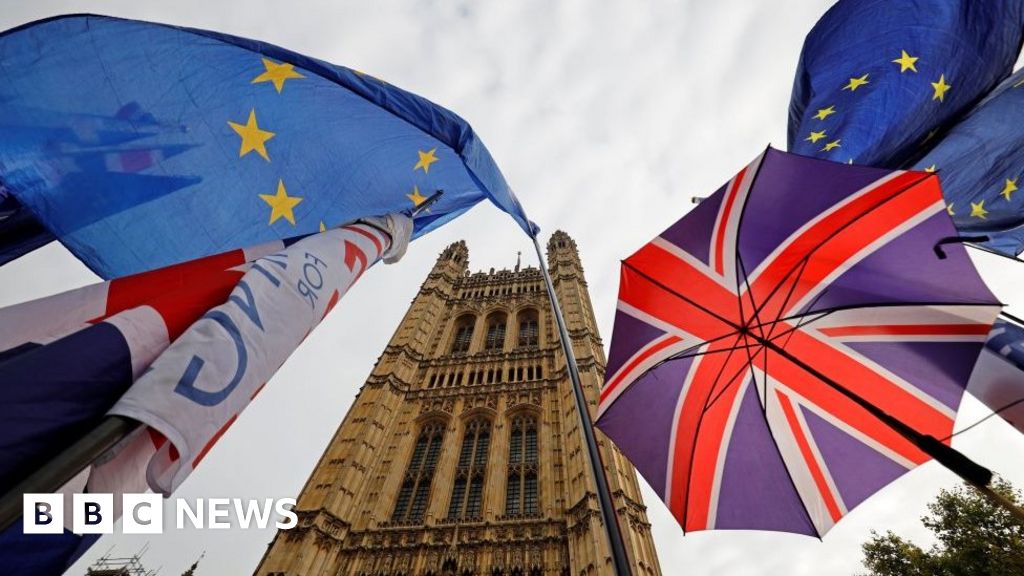
Boris, Brexit and What’s Next for Britain in 2020?
A few short months ago, it looked as if Boris Johnson had accepted a fool’s role in becoming the third Prime Minister in four years. He went all in, campaigned hard and wound up with a solid majority and a mandate to remove Britain from the European Union by the end of January 2020. It’s been an astounding turn of events for a country that was left politically hamstrung and a Tory party seemingly lost at sea. But what’s next for Britain and beyond? What are the actual consequences to leaving the EU? Has Britain just opened the door to other unhappy members who may be contemplating an exit? And did Johnson’s opponents, the media and the public underestimate his political strength – and what lessons can be learned from it? There are a lot of questions out there – and if you are covering, let our experts help with your stories. Dr. Glen Duerr's research interests include comparative politics and international relations theory. Glen is available to speak to media regarding this topic– simply click on his icon to arrange an interview.


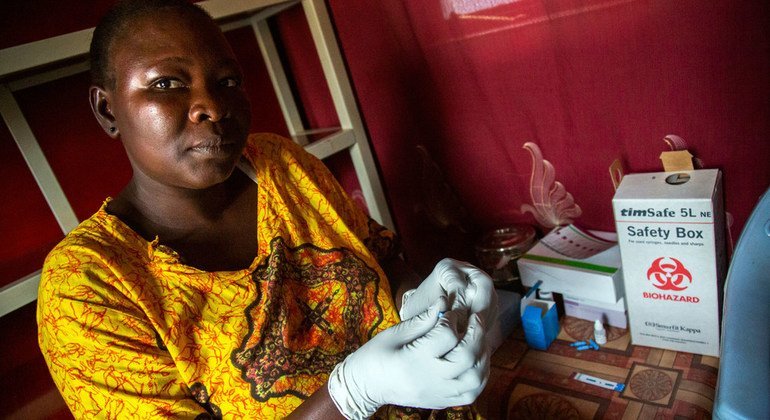
It’s all eyes on Africa as the UN looks to find ways to ensure universal health care for all
It was a historic moment earlier this month as the United Nations and African Union pledged to pursue bolds goals that will strengthen global health and provide health care to all across Africa. “The Memorandum of Understanding we have signed today is an important step towards formalizing the cooperation between WHO and the African Union and to implementing the Addis Ababa Call to Action,” said the WHO chief. “The Addis Ababa Call to Action is a powerful commitment from African Union leaders to increase domestic financing for health, and to hold themselves accountable for that commitment”, he added. Following a political declaration on universal health coverage, which was approved in September by all UN Member States, the General Assembly adopted a global resolution to translate that commitment into reality by legislators in 140 countries. November 18 - UN News It’s indeed a bold declaration and one that will require prevention, infection control and affordable delivery of care. Key UN-AU collaboration specifics Provide technical expertise to the African Medicines Agency and create an environment to foster local production of medicines. Strengthen collaboration between WHO and the Africa Centers for Disease Control and Prevention – with a particular focus on emergency preparedness, to build defenses against epidemics and other health emergencies. Support the implementation of the Addis Ababa Call to Action on universal health coverage and the AU Declaration on Domestic Financing. The prospects are positive, but delivery will be a challenge, and if you are a journalist covering this topic and need an expert source for insight and perspective – let us help. Dr. Saad Bhamla is an Assistant Professor of Chemical & Biomolecular Engineering at the Georgia Tech College of Engineering where he also runs the Bhamla Lab that develops low cost tools for science education and global health. Saad is available to speak to media regarding this topic, simply click on his icon to arrange an interview.



U.S. economy continues to expand, but at a slower pace, reaching about 2 percent growth in 2020
INDIANAPOLIS -- The U.S. economy will continue to expand for a 12th consecutive year in 2020, but by only about 2 percent and struggling to remain at that level by year's end. Indiana's economic output will be more anemic, growing at a rate of about 1.25 percent, according to a forecast released today by the Indiana University Kelley School of Business. Over the past year, political dysfunction and international trade friction have disrupted supply chains and eroded both consumer and business confidence. U.S. employment has grown during 2019 but will decelerate throughout 2020, well short of 150,000 jobs per month and possibly to about 100,000 by year's end. A tight labor market will continue to be an issue for many companies. "The total number of job openings in the economy peaked in late 2018," said Bill Witte, associate professor emeritus of economics at IU. "Average hours worked have been flat over the past year, and auto sales have been flat for nearly two years. Given the reliance of the U.S. economy on consumer spending, these are disturbing signs. But they are vague signs, and not enough to convince us that the end of the expansion is in sight. "We expect that growth will be weaker than in the past two years, and this outlook is likely a best-case outcome," he added. "There is massive uncertainty in the current situation." The Kelley School presented its forecast this morning to Indianapolis community and business leaders at IUPUI. The Business Outlook Tour panel also will present national, state and local economic forecasts in seven other cities across the state through Nov. 20. Indiana's more meager economic growth expected in 2020 can largely be attributed to the outsized presence of manufacturing and particularly tight labor markets, said Ryan Brewer, associate professor of finance at Indiana University-Purdue University Columbus and author of the panel's Indiana forecast. Manufacturing contracts more rapidly versus other areas of the economy, and tight labor markets limit employers' capacity to grow, he said. Expectations about business investment have fallen short, and corporations have been buying back stock instead of making capital investments. The trade war with China and slowing global expansion have also affected state manufacturers. The world is about to record its slowest economic growth since the financial crisis of 2009. Next year, global growth is projected at 3.4 percent, with downside risks continuing to build. China and the European Union each face structural issues amid tariffs imposed by the United States. Brexit remains unresolved. Recent data from the Institute for Supply Management showed that manufacturing activity has slowed to its lowest rate since the beginning of the Great Recession. Indiana has sought to diversify its economy in recent decades, but manufacturing output represents nearly 28 percent of gross state product. Indiana continues to lead the nation in manufacturing employment, with more than 17 percent of its jobs in that sector. "Constrained by a historically tight labor market, Indiana is expected to experience slow growth in jobs and gross output, along with the possibility for continued rising wages," Brewer said. "With fewer and fewer available people to hire, tightness of the Indiana labor markets will serve as a drag to output and employment growth." The outlook for the Indianapolis-Carmel-Anderson metropolitan statistical area is slightly better, with expected growth between 1.5 and 2 percent. "Indianapolis continues to draw in talent and investment that should help it exceed the overall state level of growth," said Kyle Anderson, clinical assistant professor of business economics. "However, there is risk that weakness in the broader economy, and especially weakness in manufacturing, could make this forecast too optimistic." Other highlights from the forecast: The national and state unemployment rates will hold steady. The nation's rate could be below 4 percent by year's end, and the state will stay at or below full employment through 2020. Inflation will rise and end 2020 close to the Federal Reserve's 2 percent target. The stock market will struggle to get average returns with headwinds from trade, supply chain disruption and policy uncertainty. Earnings continue to exceed expectations, yet lack of definitive trade consensus continues to drive headwinds. Interest rates will remain low. The 10-year Treasury rate should stay below 2 percent and mortgages below 4 percent. Speculative grade bond yields have been rising, indicating increased risk of insolvency for marginal firms. Entry-level wage growth could cause costs to rise, earnings to fall and growth to stagnate for firms heading into 2020. Energy prices will be relatively stable, with average prices similar to those in 2019. Business investment will remain weak, although a little improved from this year. Housing will achieve a meager increase, ending two years of negative growth. Government spending will grow, but much more slowly than the past year, as the impact of the 2018 budget deal ends. The starting point for the forecast is an econometric model of the United States, developed by IU's Center for Econometric Model Research, which analyzes numerous statistics to develop a national forecast for the coming year. A similar econometric model of Indiana provides a corresponding forecast for the state economy based on the national forecast plus data specific to Indiana. A select panel of Kelley faculty members, led by Indiana Business Research Center co-director Timothy Slaper, then adjusts the forecast to reflect additional insights it has on the economic situation. A detailed report on the outlook for 2020 will be published in the winter issue of the Indiana Business Review, available online in December. In addition to predictions about the nation, state and Indianapolis, it also will include forecasts for other Indiana cities and key economic sectors. Presenting the forecast at the Indianapolis Business Outlook Tour event were Phil T. Powell, associate dean of Kelley academic programs at Indianapolis and clinical associate professor of business economics and public policy; Cathy Bonser-Neal, associate professor of finance; and Anderson.


Turkey Launches Military Operation in Syria
President Donald Trump made a surprising move by pulling troops back from the Syria-Turkey border. In response, Turkey launched a military operation in northern Syria on October 9. Samer Abboud, PhD, a professor of Global Interdisciplinary Studies, says he's interested in how the Turkish offensive against the Syrian Democratic Forces (SDF) will impact the Syrian regime's campaign to resume control over all of Syria. "The Turkish decision to intervene has been effectively sanctioned by the tripartite powers (Iran, Turkey and Russia) as was the Russian-led intervention into Idlib that began earlier this year," Dr. Abboud says. "The Turkish government and the Syrian regime have a common interest in eliminating the power of the SDF and the main Kurdish political party (the Democratic Union Party, or PYD) in Syria. This eliminates the threat of a Kurdish autonomous region along Turkey's borders as well as any threats to Syria's territorial integrity. Eliminating the power of the SDF and PYD is one of the few common goals of the Turkish and Syrian governments." Dr. Abboud is able to discuss issues concerning the Syrian geopolitical situation as it relates to the United States or Syria's neighbors.


The Gun Control Debate is at a Stalemate. Can Smarter Weapons Help to Solve it?
The gun control debate is at a stalemate. America seems incapable of finding common ground on background checks, waiting periods, weapons registries and restrictions or bans on select weapons. Shooting after shooting has resulted in decades of debate but little substantive change. But Professor Selmer Bringsjord from Rensselaer Polytechnic Institute, who recently weighed in on the issue, presented a concept that could turn the entire topic on its head by using artificial intelligence. Bringsjord accepts that America won’t get rid of its guns – so why not just make our guns smarter? Ethically AI-enabled weapons can put American politicians back to work by shifting the debate from the weapons we should ban, to the targets we will accept. Do we allow guns to kill school children, shoppers, concert-goers? The technology of ethical AI changes the conversation. His idea was just recently published in the Times Union: “Yet there is a solution, a technological alternative to the fruitless shouting match between politicians: namely, AI — of an ethical sort. Guns that are at once intelligent and ethically correct can put an end to the mass-shooting carnage. Consider the rifle apparently used by the human killer in the El Paso Walmart shooting. But now suppose that time is turned back to before his shots were fired on Aug. 3, and that his rifle, radically unlike the stupid one that killed, is both intelligent and ethical. This alternate-future rifle would know that it's approaching the Walmart by car and would accordingly know that it has no business being used anytime soon. Move forward in time a bit; the rifle is now in the hands of the aspiring, ear-muffed killer outside his car; but his weapon has fully disengaged itself and is locked into a mode of utter uselessness with the finality of a sealed bank vault. On the other hand, the guns in the hands of law enforcement officers who have dashed on scene know in whose hands they rest, and accordingly know that if they are trained on the would-be killer, they have every right to work well, if this criminal reveals some new threat. Notice: If people who don't actually pose a threat sufficient to warrant being shot by police can't be shot by smart, ethical guns, a fact that could lead to the welcome evaporation of a different but also vitriolic political shouting match.” -Times Union, August 16, 2019 Could AI be the answer to America’s gun problem? It’s truly a new perspective on an old issue. If you are a reporter covering this topic, let our experts help with your story. Dr. Selmer Bringsjord is the Chair of the Department of Cognitive Science expert in logic and philosophy, specializing in AI and reasoning. Dr. Bringsjord regularly speaks with media about AI and is available to speak about the concept of intelligent, ethical guns. Simply click on his icon to arrange an interview.


There’s no question about it – our planet has a problem with plastic. Though simple, cheap, convenient and often necessary, the reality is single use and non-reusable plastics like straws, plastic bags, wrapping and most containers are causing problems. There’s no hiding or ignoring the evidence – plastic is everywhere from landfills, to our rivers and streams and even occupying its own land mass in the ocean. Recently Canada proposed a ban on single use plastics to come in to effect in 2021. The country joined the likes of France, Germany, Italy, the U.K. and the European Union who are all implementing similar policies. The United States, however – has not. Here are some facts from the Center for Biological Diversity. Americans use 100 billion plastic bags a year, which require 12 million barrels of oil to manufacture. The average American family takes home almost 1,500 plastic shopping bags a year. According to Waste Management, only 1 percent of plastic bags are returned for recycling. That means that the average family only recycles 15 bags a year; the rest ends up in landfills as litter. Up to 80 percent of ocean plastic pollution enters the ocean from land. 100,000 marine animals are killed by plastic bags annually. One in three leatherback sea turtles have been found with plastic in their stomachs. Plastic bags are used for an average of 12 minutes. It takes 500 (or more) years for a plastic bag to degrade in a landfill. Unfortunately, the bags don't break down completely but instead photo-degrade, becoming microplastics that absorb toxins and continue to pollute the environment There is no doubt plastic is a serious problem in America – but will the country join in? What will it take from an industry point of view? Will costs outweigh the benefit? Is this a matter of regulation and do Americans have the appetite to make this a political issue? There are a lot of questions and that’s where our experts can help. Dr. Beril Toktay is Professor of Operations Management, Brady Family Chairholder and ADVANCE Professor at Georgia Tech’s Scheller College of Business. She’s the founding Faculty Director of the Ray C. Anderson Center for Sustainable Business. She’s an expert in the areas of sustainable operations and supply chain management, with a special focus on the circular economy. Beril is available to speak about this issue with media – simply click on her icon to arrange an interview.

Monitoring the migration of blackfin sharks – Florida Atlantic’s experts are in the news
Seeking the warmer waters of the south coast – it is that time again for the annual migration of the black fin shark. These majestic sharks can grow up to 8 feet and weigh in at more than 200 pounds when fully grown. They’re also listed by the International Union for Conservation of Nature (IUCN) as near threatened, mostly due to the fact it is a targeted for its meat and its fins, which are used to make shark fin soup. Recently, one of our experts was featured in the media for his efforts in ongoing research and his studies are benefiting those who live both on water and on land. “Dr. Stephen Kajiura, a researcher at Florida Atlantic University, has been tracking the migration patterns of these apex predators by air and sea. Now Kajiura's latest tool is providing thorough details about their every move. He is capturing their movements and gathering detailed information through a $5,000 reusable radio and satellite sensor attached to their dorsal fins for two to four days. Data from these "shark diaries" records information, including how often they swish their tails, at what depth they prefer to swim, and at what time of day they swim close to the beach — proving beneficial to lifeguards responsible for beach safety.” Tampa Bay Times Are you covering? Do you need to know more about sharks, the dangers they face and what researchers are learning about these amazing species of fish? Let our experts help. Stephen Kajiura, Ph.D., is a professor and researcher at Florida Atlantic University. He’s also an expert in sharks and shark behavior. Stephen is available to speak with media – simply click on his icon to arrange an interview.
