
Experts Matter. Find Yours.
Connect for media, speaking, professional opportunities & more.

Why Negative Campaign Ads Work: David Schweidel on the Psychology Driving This Election Cycle
As the 2026 Senate races heat up, negative campaign ads are once again dominating the airwaves. David Schweidel, Professor of Marketing and the Roberto C. Goizueta Professor in Business Technology at Emory's Goizueta Business School, has researched political advertising for years and is currently tracking the 2026 Senate races. Asked why negative campaigns tend to outperform positive ones, Schweidel points to what sticks with voters: "It's those negative messages. It's those attack messages," often fear- or anger-based, that he says are "more arousing to us" and "tends to move the needle more so than positive advertising." Where an ad comes from matters too. Schweidel's research looks at whether messaging originates from the candidate directly or from third parties like PACs or political parties, and he's found that candidate-sourced messaging tends to be more believable, "coming from a human brand," in his words, rather than an unfamiliar political organization. His current research pushes this further, into how political advertising shapes what AI chatbots tell voters. Schweidel notes that where news coverage and social media once drove poll movement, more voters are now turning to AI chatbots for candidate information. Using Maine Senate candidate Graham Platner as an example, he explains that recent news coverage and online conversation about a candidate gets absorbed by these chatbots, ultimately shaping what's presented to a voter asking about that candidate. For campaigns and advertisers, Schweidel frames this as a new channel to understand, similar to how companies already monitor social media conversation, and predicts political campaigns will start actively tracking how their candidates are portrayed in AI responses, the same way many companies now treat AI presence the way they once treated search engine optimization: "What a lot of companies are trying to come up with now is what is the playbook to do the same thing for AI." Dr. Schweidel is an expert in marketing technology, AI, social media, political marketing, and customer analytics. He holds a PhD in Marketing from the Wharton School of the University of Pennsylvania and is the author of Social Media Intelligence and Profiting from the Data Economy. His research has appeared in the Journal of Marketing, Journal of Marketing Research, Marketing Science, and Management Science, and he has been recognized as a Marketing Science Institute Young Scholar and named to Poets & Quants' "Top 40 Under 40." Dr. Schweidel is available to discuss: Why are negative campaign ads more effective than positive ads? Why do negative emotions drive people to vote, donate, and campaign, more than positive emotions? The connection between AI and campaign ads How organizations make explicit decisions to exploit these trends Click on the connect button in his profile below.


Augusta University's Simon Medcalfe on the Real Economics of Hosting the World Cup
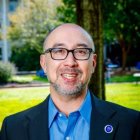
With the World Cup underway across the U.S., Canada, and Mexico, Dr. Simon Medcalfe, economist at Augusta University's Hull College of Business, wrote for Augusta Business Daily about why FIFA's headline economic projections for the tournament don't hold up. His piece breaks down why most of the spending tied to hosting the event isn't new activity but rather it's money that would have been spent elsewhere regardless. As Medcalfe put it: "New spending is not created; it is just moved around." Read his full column in Augusta Business Daily : Dr. Medcalfe is a Professor of Economics and Finance at Augusta University, with research spanning sports economics, community and economic development, and social determinants of health. He holds a PhD in Business/Managerial Economics from Lehigh University. If you're covering the economics of hosting major sporting events, public subsidies for host cities, or the gap between projected and actual tourism impact, Dr. Medcalfe is available for comment. Click on the contact button in his profile below.



Expert Insights on the Manhattan High-Rise Structural Concerns
The unfolding structural emergency at the former Pfizer headquarters on East 42nd Street in Midtown Manhattan raises urgent questions issues such as load limits, weight redistribution, structural steel, emergency shoring and in general the challenges of converting older office towers into residential buildings. As officials and engineers continue to investigate what happened, the incident points to a larger issue facing many major cities: how safely can older commercial buildings be adapted for new uses, especially when vertical additions, new floor loads and major structural modifications are involved? ExpertFile has a range of structural engineering experts available to help journalists and audiences understand the engineering issues behind this story. Featured Experts Edward Sippel, P.E., Ph.D. Assistant Professor, Milwaukee School of Engineering Edward Sippel is an expert in structural engineering at the Milwaukee School of Engineering with a focus on steel structures, stability and structural analysis. His expertise in structural steel, finite element analysis and nonlinear analysis makes him especially relevant to questions about column buckling, steel-frame behavior, temporary reinforcement and how engineers assess whether a damaged steel structure can be stabilized or repaired. David O. Prevatt Professor, University of Florida David O. Prevatt is a structural engineer at the University of Florida whose areas of expertise include structural load paths, structural engineering and resilient building performance. His expertise is especially relevant to explaining how loads move through a building, what happens when weight is added or redistributed, and why engineers must understand the full path that gravity loads take from upper floors down to the foundation. Key Questions Experts Can Address How do added floors or major renovations change the way weight moves through an existing building? What causes a steel column to buckle, and how is that different from other types of structural failure? Why do transition points between older and newer parts of a structure require special attention? How do engineers use temporary shoring, jacks and steel reinforcement to stop movement during an emergency? What should cities, developers and regulators consider as office-to-residential conversions become more common? Additional Structural Engineering Experts Available Beyond load paths and steel mechanics, this story also raises broader questions about structural health monitoring, building inspections, retrofits, aging infrastructure, concrete systems, structural dynamics and resilient design. ExpertFile includes additional experts who can speak to these related issues, including: For journalists covering the Manhattan high-rise situation, office-to-residential conversions, emergency building stabilization or the future of urban infrastructure, these experts offer relevant structural engineering expertise that may help add context, clarity and perspective to your reporting. Looking for more experts? Visit: www.expertfile.com About ExpertFile ExpertFile is the worlds largest open-access, curated search engine for experts. ExpertFile is the best way to search and connect with credible experts on over 50,000+ topics. Our award-winning software platform is trusted by leading knowledge-based organizations to help them manage and connect their research and perspectives to a broader audience. Download the ExpertFile Mobile App.


Dr. Brian LaPointe, Research Professor at Florida Atlantic University’s Harbor Branch Oceanographic Institute, is one of the nation’s most recognized experts on marine ecosystems. His work spans algal physiology, biochemistry, biodiversity, and coastal conservation — with more than a decade of dedicated research focused on the rise and impact of sargassum blooms across the Atlantic. LaPointe confirmed that sargassum levels in the North Atlantic have hit a new biomass record — and much of it is now washing ashore across South Florida’s coastlines. The scale of this bloom, he says, could have lasting consequences for marine ecosystems, tourism, and public health. LaPointe recently spoke to CNN about why this record bloom is raising alarm bells: “Sargassum goes from being a very beneficial resource of the North Atlantic to becoming what we refer to as… a harmful algal bloom when it comes ashore in excessive biomass.” Ammonia is another problem emitted by the decaying seaweed, LaPointe noted. The chemical compound “strips the oxygen out of the waters along our coastal ecosystems like mangroves, coral reefs, seagrass beds,” he said. The scale of the bloom is staggering. According to University of South Florida estimates cited by LaPointe, over 31 million tons of sargassum have been detected this year — a 40% increase over the previous record. Dr. Brian LaPointe is available to speak with the media on this topic. For interviews, click below to view his full profile and click the connect button.


Can Music Legends Rewrite Their Legacy?
The Stones didn’t need another hit. With six decades of chart-topping albums, sold-out tours, and songs woven into popular culture, their place in rock history has long been secure. Yet the band’s scheduled release of another studio album, “Foreign Tongues,” on July 10, raises questions about how late-stage work can impact the legacy of the Stones and other enduring musical acts. For John Covach, director of the Institute of Popular Music at the Univeristy of Rochester and a leading scholar of rock music, that’s where the real story is. “Every late-career album asks us two questions,” Covach says. “What does it say about where the artist is now? And does it change how we hear everything that came before?” It’s a question that could be applied to artists from Bob Dylan and Paul McCartney to Bruce Springsteen and Neil Young. Sometimes late work reflects an unexpected creative renaissance. Sometimes it simply reinforces an artist’s legacy. Sometimes it challenges audiences to rethink musicians they thought they already understood. Sometimes it becomes a footnote to their career. “An artist's latest act can in many ways be as revealing as their first,” Covach says. Covach, who co-edited The Cambridge Companion to the Rolling Stones (Cambridge University Press 2019) and whose online course on the music of the Rolling Stones has enrolled thousands of students worldwide, says reporters covering the Stones’ new album have an opportunity to explore broader issues that resonate across popular culture: • Can new work meaningfully change an artist’s historical legacy? • Why do some musicians continue creating well into their seventies and eighties while others stop? • Can a new release introduce younger listeners to artists whose biggest hits predate them by decades? • How do critics — and fans — judge new music from legendary performers differently than music by younger artists? • What determines whether late-career work becomes an essential part of an artist's catalog — or a historical footnote? Covach has spent decades studying the evolution of popular music, and his books and scholarship have helped shape how the genre is taught. He is also a frequent media commentator on the cultural significance of major artists and musical milestones. Click on his profile to connect with him.



University of Delaware structural engineering expert Michael Chajes is available to discuss the engineering challenges involved in assessing and stabilizing high-rise buildings following structural damage, structural failures and concerns about potential collapse. Chajes, a professor of civil and environmental engineering and a registered professional engineer, specializes in structural engineering, structural health monitoring and forensic engineering. He has provided expert commentary to national media outlets on major structural failures, including the Surfside condominium collapse and the Francis Scott Key Bridge collapse. His expertise is particularly relevant to the ongoing situation in New York involving a high-rise that is at-risk of partial collapse. He can discuss. • The conditions that can trigger structural instability during construction, renovation or changes in building use. • How engineers assess damaged structures and determine whether a building can be stabilized or safely repaired. • The engineering challenges involved in converting older office towers into residential buildings, including changes in structural loads, construction sequencing and temporary support systems. • How structural health monitoring and inspection technologies help engineers evaluate the safety of aging infrastructure and high-rise buildings. To arrange an interview with Chajes, visit his profile and click on the contact button. Interested reporters can also send an email to MediaRelations@udel.edu.



Sample Provides Analysis of Landmark Supreme Court Decisions
Professor James Sample of the Maurice A. Deane School of Law at Hofstra University was among the nation’s leading legal scholars providing analysis of the U.S. Supreme Court’s landmark end-of-term decisions this week, appearing on ABC News and MSNBC’s MS NOW to examine the Court’s rulings alongside other major legal and constitutional developments. Professor Sample summarized the recent analysis on his “Who Decides Who Decides” Substack. Across his June appearances, Professor Sample provided legal insight into the Supreme Court’s decisions involving birthright citizenship, immigration, transgender athletes, and religious liberty, while also analyzing election law disputes, executive authority, federal investigations, and litigation involving the Trump administration. His commentary offered audiences context on the constitutional questions shaping the Court’s term and the broader implications for American law and democratic governance.


Built to Last: What It Takes to Compete Across Generations of World Cups
The 2026 FIFA World Cup is giving fans an unusual view of football history: several of the game’s biggest names are still competing long after most elite careers have ended. Cristiano Ronaldo and Lionel Messi are appearing in their sixth World Cups. Ronaldo has scored twice in this tournament and 10 times overall, while Messi has added six goals in 2026 to reach 19 for his World Cup career. Luka Modrić is playing in his fifth tournament. Neymar and Kevin De Bruyne are each appearing in their fourth. Those numbers say something important about talent. They say even more about durability. Reaching one World Cup is difficult. Returning four, five or six times means surviving nearly two decades of club schedules, injuries, travel, tactical changes and competition from younger players. It also means finding new ways to contribute when the body no longer responds exactly as it once did. That opens up several timely questions for journalists covering this final stage of their careers. Below, experts in sports science, biomechanics, psychology and sports business offer perspective on what it takes to compete across multiple World Cups—and what allows some players to remain influential long after their physical peak. What does it take physically to last this long? The World Cup lasts only a few weeks, but the careers behind it are built over thousands of training sessions and matches. For older players, the challenge is not simply staying fit. It is managing fatigue, recovering faster and avoiding the injury that could end the run. Hofstra exercise physiologist Katie Sell can speak to the less visible work behind these careers: sleep, hydration, nutrition, endurance and the tighter recovery window athletes face as they age. At the University of Delaware, Tom Kaminski brings expertise in soccer injuries, concussions and player safety. He can help explain how accumulated wear, repeated head impacts and return-to-play decisions influence whether a player can continue at the highest level. Texas Christian University’s Peter Weyand, an expert in sprint mechanics and running performance, can discuss what happens to speed and acceleration over time—and which physical qualities can still be protected through training. How do great players change their game? Longevity rarely comes from playing the same way forever. Ronaldo moved from the wing into a more central scoring role. Messi became more selective with his movement. Modrić continued to control matches through timing, positioning and awareness rather than physical dominance. These are not signs that aging players have stopped influencing games. They are signs that influence has changed. Carnegie Mellon biomechanics researcher Eni Halilaj can speak to how athletes adjust their movement patterns, conserve energy and reduce physical strain as they get older, while her colleague Eric Yttri, who studies motor control and decision-making, can explain how anticipation and experience allow veteran players to act earlier and more efficiently. Texas Christian University’s Peter Weyand can also add context on why older players often change positions, reduce repeated sprinting or become more selective about when they make high-intensity runs. Why keep coming back? By the time a player reaches a fourth or fifth World Cup, money and recognition are unlikely to be the main reasons for continuing. The harder question is what keeps an athlete committed after years of success, injuries and public scrutiny—especially when their role may be smaller than it once was. TCU sport psychology expert Robyn Trocchio can speak to motivation, focus and how accomplished athletes continue setting meaningful goals late in their careers. Hofstra’s Genevieve Weber can address performance anxiety, media pressure and the emotional weight of entering what may be a final international tournament. Georgia Southern sport psychologist Brandonn Harris can discuss resilience, confidence and the mental discipline required to recover from injury, disappointment and changing expectations. How should an aging superstar be judged? Goals are easy to count. Leadership, timing and influence are not. A veteran player may no longer dominate every match, but may still shape how teammates prepare, how opponents defend and how supporters respond. For coaches, that creates a difficult balance between reputation, current performance and what an experienced player brings in moments of pressure. At Emory University’s Goizueta Business School, Michael Lewis can discuss the value of global stars beyond the score sheet, including fan interest, brand strength and the attention they bring to a national team. Carnegie Mellon University’s Eric Yttri can speak to the on-field contributions that statistics often miss, including positioning, anticipation and decision-making. Texas Christian University’s Robyn Trocchio can address the leadership side of the story, including the difficult transition from automatic starter to mentor, substitute or situational player. A generation nearing the end The 2026 World Cup may be remembered not only for the players who emerged, but for the ones who were leaving. Ronaldo, Messi, Modrić, Neymar and De Bruyne have played through different tactical eras and alongside multiple generations of teammates. Their longevity was not built on talent alone. It required adaptation, recovery, discipline and a willingness to accept that staying great sometimes means becoming a different kind of player. For reporters, their careers offer a timely way to examine how elite athletes age—and why some remain relevant long after the normal limits of the game suggest they should.

From clay on the ground to construction on the moon
Building material samples from the University of Delaware spent six months mounted outside of the International Space Station, where the harsh conditions of low Earth orbit tested their limits. Some returned with higher measured strength than identical samples stored on Earth. The findings are a promising sign for the long-term goal of building infrastructure on the moon. There are no lunar supply yards, and transporting building materials from Earth would be prohibitively expensive. The solution may lie underfoot, in the form of lunar dust known as regolith. “Regolith is essentially a clay-like silicate material,” said Norman Wagner, Unidel Robert L. Pigford Chair in Chemical Engineering. “It is one of the most abundant materials on both Earth and the moon, which makes it interesting for construction.” Wagner's laboratory develops geopolymers, a cement alternative that binds clays into a strong solid through chemical reactions rather than high-temperature manufacturing. Their goal is to use regolith with minimal additives to produce construction materials without energy-intensive processing. The approach could contribute to more sustainable Earth-based construction, too. To evaluate how geopolymers hold up in space, the UD team sent thin plates made from commercially available simulated lunar and Martian regolith to the International Space Station as part of NASA's MISSE-20 mission. The findings, published in Advances in Space Research, showed the geopolymers did not deteriorate, and in some cases were stronger after their time in orbit. Lunar construction materials must not only survive space conditions, they also must be reliably manufactured on-site. In a separate study in Acta Astronautica, Wagner's team used artificial intelligence to tackle a practical challenge: not all lunar clays are the same. The researchers developed a machine learning model that can predict how strong a geopolymer will be based on the characteristics of the starting regolith and how it is processed. Complementary work from the Wagner lab offers insight into how geopolymers behave while being mixed, pumped and shaped before they harden. The researchers identified a key transition point, known as the critical gel point, at which the material shifts from a workable slurry into a solidifying structure. Mixing or shearing before that point did not affect how long the material took to harden or its final strength. This suggests that engineers may have flexibility in how they handle and process lunar construction materials, without compromising quality. That work appears in a special issue of the Journal of Rheology focused on materials behavior beyond Earth. To speak with Wagner about his space expertise, reach out to mediarelations@udel.edu.
Heart Disease's Hidden Immune Players Come Into Focus
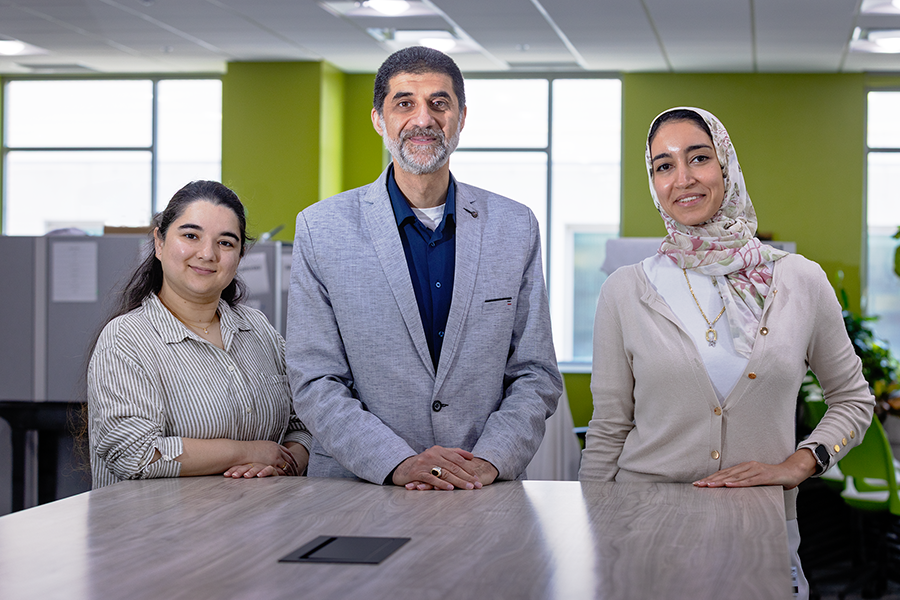
Heart disease has long been linked to familiar risk factors such as high cholesterol, high blood pressure and lifestyle choices. But according to a recent Augusta University Jagwire article highlighting research published in Nature Reviews Cardiology, the immune system might also play a critical role in determining how cardiovascular disease develops and progresses. The review, led by Ishita Tandon, PhD, Hossam Abdelsamed, PhD, and Alaa M. Khalifa, PhD, examines the emerging role of CD8+ T cells, specialized immune cells best known for fighting infections, in atherosclerosis, the chronic inflammatory disease responsible for most heart attacks and strokes. By synthesizing the latest evidence, the researchers show how different populations of these immune cells can either fuel inflammation or help regulate it, revealing new opportunities to better understand, diagnose and eventually treat cardiovascular disease. The review also identifies important gaps in current knowledge and outlines promising directions for future research. As scientists continue to better understand how these immune cells behave within arterial plaques, their discoveries could lead to more precise diagnostic tools and a new generation of immune-targeted therapies for cardiovascular disease. Together, the researchers' work offers journalists valuable insight into one of the fastest-evolving areas of cardiovascular research, where immunology and heart health are converging to reshape how cardiovascular disease is understood and treated. "This study highlights the major role of CD8+ T cells in atherosclerosis and their potential impact on cardiovascular diseases." Hossam Abdelsamed, PhD To learn more about this amazing research and connect with Ishita Tandon, Hossam Abdelsamed or Alaa M. Khalifa, contact AU's External Communications Team mediarelations@augusta.edu to arrange an interview today.