
Experts Matter. Find Yours.
Connect for media, speaking, professional opportunities & more.

Society matters LIVE: Lab made meat on the menu?
• Research at Aston University focuses on both creating lab-based meat and its psychological acceptance • Dr Eirini Theodosiou and Dr Jason Thomas will be speaking at April’s Society matters LIVE event • Lab made meat on the menu? will take place at Cafe Artum in Hockley Social Club on Thursday 27 April. Lab made meat will be the topic of the latest Society matters LIVE event from Aston University at Café Artum at Birmingham’s Hockley Social Club on Thursday 27 April. Dr Eirini Theodosiou and Dr Jason Thomas at Aston University are conducting research into lab-made or cultivated meat, both exploring the creation of the meat and the psychological impact of the product. Dr Eirini Theodosiou, senior lecturer in the School of lnfrastructure and Sustainable Engineering, focuses on ways to produce enough cell mass to create the meat. Meanwhile Dr Jason Thomas’ work explores the psychology behind supporting people to accept lab-made food. The research comes as current trends indicate that demand for animal-based foods will increase by 70% in 2050 to feed the predicted 9.8 billion people. Dr Theodosiou said: “Cultivated or lab grown meat offers a safer, more sustainable and animal cruelty-free alternative for consumers. It is a very young industry trying to replace traditional meat production methods however, with 800 million people worldwide suffering from hunger and malnutrition, it is a viable option.” “In addition, the livestock industry is responsible for 12-18% of the total greenhouse gas emissions and is a cause of deforestation. Increased meat production and factory farming are the topmost likely causes of the next pandemic due to the extensive use of antibiotics and increasing emergence of zoonotic diseases.” Dr Thomas said: “It is a relatively new food technology, and much work still needs to be done to make it affordable and on a massive scale. We are interested in finding out what factors can influence consumer purchase of and consumption of lab-made meat.” The event is organised by Aston University and Café Artum at Hockley Social Club as part of the Society matters LIVE series. Free tickets are available at https://www.eventbrite.co.uk/e/lab-made-meat-on-the-menu-tickets-464161147487?aff=ebdsoporgprofile


UC Irvine NATO expert available to discuss Finland membership
Heidi Hardt, associate professor of political science at UC Irvine, is a scholar whose expertise is in transatlantic security, US foreign policy, national security and European security and defense, including NATO, the EU and OSCE. She is the author of the book, NATO's Lessons in Crisis: Institutional Memory in International Organizations (Oxford UP, 2018). She recently completed a 2021-2022 Council on Foreign Relations International Affairs Fellowship for Tenured International Relations Scholars (IAF-TIRS). During the year, she worked for the US State Department (NATO Desk). Professor Hardt can be reached via email at hhardt@uci.edu.

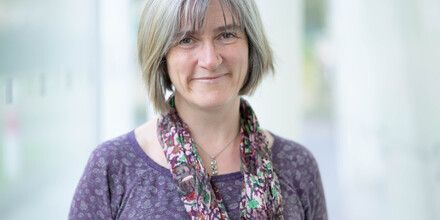
• Professor Patricia Thornley welcomes latest UK energy security plans • But calls for more exploration of bioenergy with carbon capture and storage • She believes plans shouldn’t concentrate solely on energy such as wind and solar power. A leading biomass scientist at Aston University has welcomed the government’s announcement to ensure UK energy is more secure. However, Professor Patricia Thornley, director of Aston University’s Energy and Bioproducts Research Institute (EBRI), believes the government shouldn’t just concentrate on energy such as wind and solar power. She is calling for the government to explore the use of power bioenergy with carbon capture and storage (or power BECCS). On 30 March the Department for Energy Security and Net Zero published the Powering Up Britain: Net Zero Growth Plan, and the Powering Up Britain: Energy Security Plan to set out steps to make the UK more energy independent, secure and resilient. Professor Thornley believes that the UK’s carbon reduction targets could be tackled by delivering negative emission BECCS projects. The process uses sustainable biomass and waste materials to generate electricity in combination with carbon capture and permanent storage. Through this physical removal of greenhouse gases from the atmosphere, power BECCS is able to deliver negative emissions. Professor Thornley said: “It is wonderful to see the government moving forward with its carbon reduction plans, whilst recognising the scale of the challenge faced. “Bioenergy is delivering carbon reductions around the UK today - 62% of our renewable energy and around 13% of our electricity comes from biomass - and developing sustainable biomass conversion with carbon capture and storage (CCS) would be a natural progression for the UK. “So it is good to see commitment to CCS, but to fully leverage the UK’s negative emission potential we need BECCS technology to be rapidly deployed.” EBRI and the Supergen Bioenergy hub, which is led by Aston University, are working on applied research to progress this ambition. Professor Thornley added: “Our research at Aston University has demonstrated the potential for sustainable BECCS facilities to deliver a substantial proportion of UK required negative emissions but that the exact amount of negative emissions achieved can vary hugely with plant design and operational choices. So we hope to use our knowledge and research outputs to support UK deployment of sustainable bioenergy moving forward.“ As well as her research at Aston University, Professor Thornley has been contributing her expertise to a government working group exploring the sustainable use of biomass for two years. ENDS


Aston University establishes new independent investment company
Aston University is part of a group of eight universities which has established a new investment company Midlands Mindforge will accelerate the commercialisation of university research It aims to raise up to £250 million from investors. Aston University is one of eight research intensive universities in the Midlands to establish a new investment company to accelerate the commercialisation of university spinouts and early-stage IP rich businesses in the region. Midlands Mindforge Limited has been co-founded by Aston University, University of Birmingham, Cranfield University, Keele University, University of Leicester, Loughborough University, University of Nottingham and University of Warwick, collectively Midlands Innovation. This ambitious, patent capital investment company plans to raise up to £250 million from strategic corporate partners, institutional investors and qualifying individuals. It aims to transform ground-breaking science and technology into successful businesses with real-world impact. Midlands Mindforge will help to address the significant funding deficit for early-stage technology businesses in the region. Through the combination of additional capital and company-building skills, Midlands Mindforge will lay the foundations of a more vibrant ecosystem for emerging science-backed companies in areas such as Clean Technology, AI and Computational Science, Life Sciences and Health Tech. Professor Aleks Subic, Vice-Chancellor of Aston University, said: "Aston University has a strong track record in bringing together industry and academia to solve real world problems and drive innovation through applied and translational research. Â Investment raised through Midlands Mindforge will enable a step change that will ensure we get the very best outcomes for our research. "The impact of increased investment in research translation will be felt widely, with Midlands Mindforge supporting the growth of high value added businesses and jobs in the region and creating the right conditions to build future global companies. This is a hugely exciting time for Aston University and the wider Midlands Innovation group of universities, and I look forward to seeing the benefits that this strategic development will bring." Collectively, the eight founding universities have the most postgraduate students, the highest levels of annual income, more research disclosures and patents generated per unit of research spend in the last three years, in comparison to any other UK university grouping. Minister of State for Science, Research & Innovation George Freeman MP said: "Commercialising UK science & technology for global industrial adoption has never been more urgent for both the UK economy and the global resource challenges facing us. The Midlands Innovation universities are driving a new era of innovation from robotics and advanced manufacturing to life science and autonomous vehicles and much more. "As we in Government increase UK public R&D to a record £20 billion a year, the key is private finance backing spinouts and scale-ups. The Midlands is rapidly becoming a world class UK cluster of excellence and Midlands Mindforge will play a key role in bringing global investors to help back world class companies." Chairman of the Midlands Engine Partnership, Sir John Peace, said: "The Midlands has always been associated with exceptional invention and creativity, but has long experienced significant underinvestment and consequently productivity levels have lagged behind the rest of the UK. "This bold and ambitious initiative led by the Midlands Innovation universities has the potential to help close the investment gap, supporting our region to reach its true potential for sustainable economic growth. Midlands Mindforge will help to further fast-track commercialisation of research ideas, creating a more resilient economy and playing an important role in levelling up the Midlands." Andy Street, Mayor of the West Midlands, said: "A key part of my mayoral mission is to drive our regional recovery forward and help generate the high-quality jobs of the future in order to improve quality of life for local people. This exciting new investment vehicle will very much support that mission planting the seeds for long-term sustainable economic growth here in the West Midlands. "Many brilliant ideas and top businesses have spun out from Midlands universities and this new venture will help us to advance that agenda and retain more of our innovative success stories within our region. "Together we can better nurture the enterprising talent on our doorstep and this new endeavour creates a wonderful opportunity to do just that." For more information about Midlands Mindforge visit www.midlandsmindforge.com

Aston University and asbestos consultancy to use AI to improve social housing maintenance
• Aston University and Thames Laboratories enter 30-month Knowledge Transfer Partnership • Will use machine-learning and AI to create a maintenance prioritisation system • Collaboration will reduce costs, emissions, enhance productivity and improve residents' satisfaction. Aston University is teaming up with asbestos consultancy, Thames Laboratories (TL) to improve efficiency of social housing repairs. There are over 1,600 registered social housing providers in England, managing in excess of 4.4 million homes. Each of these properties requires statutory inspections to check gas, asbestos and water hygiene, in addition to general upkeep. However, there is not currently a scheduling system available that offers integration between key maintenance and safety contractors, resulting in additional site visits and increased travel costs and re-work. Aston University computer scientists will use machine-learning and AI to create a maintenance prioritisation system that will centralise job requests and automatically allocate them to the relevant contractors. The collaboration is through a Knowledge Transfer Partnership (KTP) - a collaboration between a business, an academic partner and a highly-qualified researcher, known as a KTP associate. This partnership builds on the outcomes of TL’s first collaboration with Aston University, by expanding the system developed for the company’s in-house use - which directs its field staff to jobs. The project team will improve the system developed during the current KTP to enable it to interact with client and contractor systems, by combining an input data processing unit, enhanced optimisation algorithms, customer enhancements and third-party add-ons into a single dynamic system. The Aston University team will be led by Aniko Ekart, professor of artificial intelligence. She said: “It is a privilege to be involved in the creation of this system, which will select the best contractor for each job based on their skill set, availability and location and be reactive to changing priorities of jobs." TL, based in Fenstanton, just outside Cambridge, provides asbestos consultancy, project management and training to businesses, local authorities, social housing and education facilities, using a fleet of mobile engineers across the UK. John Richards, managing director at Thames Laboratories, said: “This partnership will allow us to adopt the latest research and expertise from a world-leading academic institute to develop an original solution to improving the efficiency of social housing repairs, maintenance and improvements to better meet the needs of social housing residents.” Professor Ekart will be joined by Dr Alina Patelli as academic supervisor. Dr Patelli brings experience of software development in the commercial sector as well as expertise in applying optimisation techniques with focus on urban systems. She said: “This is a great opportunity to enhance state-of-the-art optimisation and machine learning in order to fit the needs of the commercial sector and deliver meaningful impact to Thames Laboratories.”
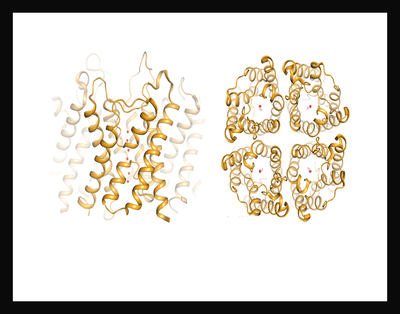
• Leading scientist wins €2.2 million ERC Advanced Grant • The five-year project will explore early dementia interventions through understanding how an aquaporin water channel regulates glymphatic clearance • ERC Advanced Grant funding is amongst the most prestigious and competitive of the EU funding schemes. A world leading scientist in the College of Health and Life Sciences at Aston University has been awarded a €2.2 million ERC Advanced Grant to understand how the movement of a protein known as aquaporin-4 in the brain can help slow cognitive decline. The FORTIFY project, which will run for five years, is led by Professor Roslyn Bill in the School of Biosciences. She will apply her discovery of the movement of aquaporin-4 to understand how the cleaning mechanism in the brain works during sleep. The research will focus on how aquaporin-4 controls the glymphatic system, which is the mechanism that allows us to clear waste products from our brains while we sleep. Her hypothesis is that the movement of aquaporin-4 in the brain changes the effectiveness of this cleansing mechanism - which lessens as people age. A greater understanding of this process could lead to an early intervention treatment that could slow the onset of dementia, such as Alzheimer’s and Parkinson’s Diseases. ERC Advanced Grant funding is amongst the most prestigious and competitive of the EU funding schemes, providing researchers with the opportunity to pursue ambitious, curiosity-driven projects that could lead to major scientific breakthroughs. Professor Bill said: “Every three seconds someone in the world develops dementia and there is no cure. I want to stop that from happening. By understanding the molecular mechanisms of brain waste clearance, we have an opportunity to develop medicines that can slow the onset of dementia, very much in the same way that statins are prescribed to control heart disease”. Roslyn Bill discovered that the water channel protein aquaporin-4 increases the permeability of brain cells to water after a brain or spinal cord injury. Around 60 million people a year suffer such injuries following falls or accidents. For example, after a skiing accident in the French Alps in 2013, Michael Schumacher suffered a severe head injury. He was placed in a medically induced coma and underwent several surgeries to treat his injuries. Until now doctors have only been able to manage the symptoms of brain injury (swelling on the brain) through interventions that may require surgery. Professor Bill and her team are due to start clinical trials in summer 2023, to test a method to stop the swelling from happening in its tracks, building on her discoveries. Roslyn’s new ERC-funded project, FORTIFY, will focus on how aquaporin-4 controls fluid flow in the healthy, uninjured brain. In this round of Advanced Grants, the European Research Council (ERC) is awarding €544 million to 218 outstanding research leaders across Europe, as part of the Horizon Europe programme. The grants will support cutting edge research in a wide range of fields, from medicine and physics to social sciences and humanities. The grant is awarded to established, leading researchers with a proven track-record of significant research achievements over the past decade. The funding will enable the researchers to explore their most innovative and ambitious ideas. Mariya Gabriel, European Commissioner for Innovation, Research, Culture, Education and Youth, said: “ERC grants are a top recognition and a significant commitment from our best researchers. The €544 million funding puts our 218 research leaders, together with their teams of postdoctoral fellows, PhD students and research staff, in pole position to push back the boundaries of our knowledge, break new ground and build foundations for future growth and prosperity in Europe” Maria Leptin, ERC President, added: "These new ERC Advanced Grantees are a testament to the outstanding quality of research carried out across Europe. I am especially pleased to see such a high number of female researchers in this competition and that they are increasingly successful in securing funding. “We look forward to seeing the results of the new projects in the years to come, with many likely to lead to breakthroughs and new advances.”


Professor James Wolffsohn and Dr Sònia Travé Huarte in collaboration with NuVision won the Medilink Business Award 2023 for a Partnership between Academia and Business The optometry researchers were recognised with an award for their partnership with a company that develops treatments for ocular diseases The collaboration has directly benefitted patients and enhanced global research knowledge. Researchers in the School of Optometry and Vision Sciences at Aston University have been recognised with an award for their partnership work with NuVision, a company that develops treatments for ocular diseases Professor James Wolffsohn and Dr Sònia Travé Huarte recieved the Medilink Business Award 2023 for a Partnership between Academia and Business at a prestigious ceremony held on 16 March in the Great Hall at the University of Birmingham. Professor Wolffsohn, who is also the head of the School of Optometry at Aston University, said: “We are delighted to have won this Medilink award in partnership with NuVision. This collaboration has directly benefitted our patients with this common chronic, debilitating disease, has enhanced global research knowledge in dry eye management and enhanced the local economy. The team at NuVision are exceptional and it is a pleasure to continue to innovate with them.” NuVision has an expert team of scientific, clinical and industry professionals dedicated to building innovative ocular biotherapies. It was founded in 2015 based on 15 years of translational research at the University of Nottingham. The company develops ocular biotherapies through research and innovation. The Medilink Midlands Business Awards 2023 are sponsored by the University of Birmingham and the Precision Health Technologies Accelerator Ltd. The awards event saw 13 life science companies based in the East and West Midlands receive awards from Start-Up to Outstanding Achievement. A further six companies received Highly Commended certificates. For more information about the School of Optometry and the Vision Sciences Research Group please visit our website.


How Colorism Impacts Professional Achievement
Melissa J. Williams is associate professor of organization and management at Emory University’s Goizueta Business School. She investigates what happens when social identities collide with workplace hierarchies, and the consequences of putting people in positions of power and leadership. Here she looks at something less documented: the extent to which our appearance is stereotypically Black or white. And what that means for our prospects. Rosa Parks made history on December 1, 1955, when she refused to relinquish her bus seat to a white passenger. Her simple gesture of defiance ignited a city-wide bus boycott in Montgomery, Alabama, and has gone down in the annals as a pivotal moment for the social justice movement in the United States. However, Parks was not the only African American to make a stand against racial segregation. Nor was she the first. In March of the same year in the same city, 15-year-old Claudette Colvin also refused to give up her seat to a white woman on a Montgomery bus. So why isn’t she a household name? In part, Colvin’s age was a factor. The National Association for the Advancement of Colored People and other Black civil rights groups got behind Parks, reasoning that an older woman would be better equipped to withstand the controversy. But as Colvin herself stated, there were other factors at play. There was something about Parks’ appearance that gave her more leverage, reasons Colvin explained in Philip Hoose’s award-winning book on the civil rights movement. She had the “right hair and the right look.” Not only that, but her appearance “was the kind that people associate with the middle class. She fit that profile.” Success isn’t black or white. It’s shades of…white. Colorism has long been documented in the U.S. and elsewhere. Discrimination against human beings on the basis of their facial features, hair, and skin color transcends race—it is prevalent even within groups that share the same ethnic identity, where lighter skin tones are perceived to be more valuable than dark. Research over the years has shed light on the nefarious effects of colorism or shadeism in terms of equity and access to opportunity. But a new landmark study by Associate Professor of Organization & Management Melissa Williams, and Goizueta colleagues, PhD student Tosen Nwadei and Roberto C. Goizueta Chair of Organization & Management Anand Swaminathan, looks at just how Black or white someone appears—and how this shapes the way others see their potential; as well as the kinds of professional outcomes they can expect. What Williams and her co-authors, who also include James B. Wade from George Washington University and C. Keith Harrison and Scott Bukstein of University of Central Florida, find in their studies, is that Black professionals are less likely to be promoted to leadership roles. What’s more, for Black professionals whose physical appearance is more Black-stereotypical, their chances drop from 12 percent to a mere seven percent. For white professionals, on the other hand, having a more white-stereotypical appearance is an advantage for leadership – looking more stereotypical as a white person increased their chances of holding a leadership role from 32 percent to 43 percent. Williams and colleagues ran both an archival study and a lab experiment with volunteers to discover the extent to which degrees of ethnicity in appearance influence perceptions of a person’s potential for leadership and actually predict their likelihood of success in an industry. While the science unequivocally shows that white people enjoy advantages over Black people in opportunity and outcome across the board, Williams et al. were also interested in exploring what she calls the “continuum of race:” the more nuanced racial characteristics and differences that shape how the world sees us. There’s an assumption that everyone within the same ethnic group—Black or white—will experience the same degree of bias and prejudice, or acceptance and success. And we wanted to push back on that idea to really explore how degrees of whiteness or Blackness play out in people’s minds and shape how they read you physically. -Associate Professor of Organization & Management Melissa Williams Previous research shows the link between persisting in STEM-based majors in college and how much students are perceived to look “like their race,” she says. Those who are perceived to look less typically Black tend to make more friends outside their ethnic group—a boundary-crossing behavior that can help drive careers. To test these ideas, Williams and co-authors ran two studies. First, they accessed publicly available data including photographs, professional background, and positions from one large industry within the U.S.: American college football. College football is really rich in data. You can access job titles, photos, leadership, and non-leadership roles; and you can separate individuals out into head coaches and position coaches who have overseeing roles but who are not leaders per se. Separately, Williams et al. recruited a group of volunteers to look at the images of the football coaches: a mix of Black and white head and position coaches. These volunteers were asked to rate how typical they perceived each individual’s appearance to be of European or white Americans, or of Black Americans, ascribing each person a score out of five based on features such as their skin color, hair, eyes, nose, cheeks, and lips. These scores were then regressed—or cross-referenced—with the position held by the individuals in the photos to determine the relationship between their racial stereotypicality and their leadership role. Crunching the numbers, Williams found a direct correlation between the degree of perceived whiteness or Blackness of the coaches and how likely they actually were to be successful leaders. “We do find a kind of consensus in people’s view of what it means to be Black or white straight off,” says Williams. “So we do all seem to agree on the physical attributes of race. But it gets really interesting when you regress the scores that these photos get and compare them with the actual jobs these guys hold.” What we see is that, controlling for their age, attractiveness, and professional experience, the white guys who look less stereotypically white are 32 percent likely to occupy leadership roles. This rises to 43 percent with the men who look more like a stereotypical white guy. For Black professionals, the inverse is true, she notes. The more typically Black an individual looks, the less probability there is that he occupies a leadership job. Specifically, that figure drops from 12 to seven percent. So benchmark leadership probability is not only already lower for Black individuals, but drops even further when people are deemed to look “more typically Black,” says Williams. A follow-up experiment invited volunteer football fans to compare how they saw the potential future success of two same-race college football players—one more stereotypical in appearance than the other. The results confirm what Williams et al. suspect: 70 percent of the time, participants chose the more-typical white individual over the less-typical white individual as having greater leadership potential. In other words, the more white a white person looks, the more they are seen as leadership material. These findings should translate into an imperative, says Williams; and that is to think more broadly about race and how it impacts life outcomes. Because race is not a uniform experience, she says. “Organizations might want to look beyond just ticking the box when it comes to diversity and inclusion, and give deeper thought to who they want to recruit, support and push forward in representation. For white people, paying attention to whiteness—the types of white people who enjoy advantages in leadership—can be useful in reframing certain questions. A good place to start might be for leaders to ask: do I want to support people who look like me? Because the face you choose can ultimately help disrupt, or reinforce, the stereotype.” Interested in learning more or connecting with Melissa J. Williams, associate professor of organization and management at Emory University’s Goizueta Business School? She's available to speak about this subject - Simply click on her icon now to arrange an interview today.



Protein engineer to explore route from DNA blueprint to synthetic antibodies – public lecture
Professor Anna Hine will explore how advances in protein engineering have enabled us to make both synthetic antibodies and their replacements Inaugural lecture will take place at Aston University on Tuesday 28 March 2023 at 6.30pm Members of the public may attend in person or online. Professor Anna Hine, a molecular biologist specialising in protein engineering in the College of Health and Life Sciences at Aston University, is to present her inaugural public lecture on Tuesday 28 March 2023. During her lecture, A route to synthetic antibodies (and their replacements), Professor Hine will take the audience from the basics of molecular biology to explaining her inventions in protein engineering, through to examining the ways in which her research is being applied internationally to develop synthetic antibodies. Professor Hine gained her PhD in molecular biology from The University of Manchester Institute of Science and Technology in 1992 and did her postdoctoral training at Harvard Medical School. She returned to the UK to take up a lectureship in molecular biology at Aston University in 1995. Professor Anna Hine, professor of protein engineering, said: “Antibodies are one of our major lines of defence against infection and we can create them very quickly to help incapacitate a multitude of biological invaders. Humans do this by changing the part of the antibody that recognises the invading pathogen, through a process of rapid, natural mutation. Protein engineers have learned to mimic this process in the laboratory to create synthetic proteins – particularly antibodies - for use in both therapy and fundamental research.” “I am delighted to have the opportunity to present our discoveries in a way that I hope will make just as much sense to non-scientists as to a scientific audience.” Similar to the natural mutation of antibodies, protein engineers can make vast numbers of tiny variations of a protein such as an antibody. Professor Hine added: “We will contemplate the vast numbers involved in protein engineering and present how our Aston University-based inventions have made the creation of DNA (and thus protein) ‘libraries’ as efficient as possible. “We will then examine the ensuing problem of how to find the few proteins that we really want from within a protein library. This includes collaborating with experts who specialise in computer-assisted library design and also working with those who have developed the latest methods to search the libraries that we make.” Professor Hine will also show how her latest collaborative projects are starting to move beyond the antibody itself. The lecture will take place at Aston University at 6.00pm for 6.30pm on Tuesday 28 March 2023. It will be followed by a drinks reception from 7.30 pm to 8.00 pm. The lecture is open to the public and free to attend. Places must be booked in advance via Eventbrite.

Optometry professor recognised for excellence in research at awards ceremony
Professor James Wolffsohn recognised for research excellence at London awards ceremony Professor Wolffsohn specialises in myopia management, dry eye disease and contact lenses research Excellence in eye care event is hosted by the Association of Optometrists. A world leading optometrist from Aston University has been recognised for his research excellence in the field of optometry specialising in myopia management, dry eye disease and contact lenses research. Professor James Wolffsohn was the recipient of the Recognising Research Excellence award on Sunday (26 February) at the Excellence in eye care event in London - hosted by the Association of Optometrists. Professor Wolffsohn, who is also the head of the School of Optometry said: “I was very surprised and truly honoured. It is lovely to have my research recognised.” “I have always been driven by wanting to know more. I think research is important because you want healthcare professionals to be working at the cutting edge and using techniques that are proven to work without bias.” James’s first experience of research occurred during his pre-reg placement at Moorfields Eye Hospital. He said: “They had a project on automatic teller machines – bank machines were fairly new and we were working for a major bank on the optimum colour combinations for people with visual impairment.” James went on to complete his doctorate in ocular motor research at Cardiff University, before travelling to Australia to work as a researcher at the University of Melbourne. During this time, Professor Wolffsohn continued to work in practice and would fly into the outback to provide low vision services to remote communities. Since returning to Aston University in 2000, he has worked in a variety of different academic roles – including as head of department across three different disciplines. “I will rarely turn down a collaborative proposal if there is an opportunity to make a difference to evidence-based clinical practice,” Wolffsohn said. James is also passionate about ensuring that scientific discoveries result in tangible change for patients. Three spin-out companies have been developed on the basis of research he has contributed to at Aston University. Alongside research and academic roles, Professor Wolffsohn continues to work a half-day in clinic each week. He has also played an influential role in spearheading consensus among the profession on evolving scientific fields, from myopia management to dry eye disease. James led the diagnostic committee for the Tear Film & Ocular Surface Society DEWS II report and chaired the Contact Lens Evidence-based Academic reports of the British Contact Lens Association. For more information about the School of Optometry and the Vision Sciences Research Group please visit our website.