Experts Matter. Find Yours.
Connect for media, speaking, professional opportunities & more.

‘You Can Do and Be Anything Coming From an HBCU’
A late July dinner was the finale to her second internship with ChristianaCare for Tania Paden. Her eight weeks at Christiana Hospital had left her feeling more confident in herself and excited to continue exploring direct patient care as she prepares to head back to Delaware State University in the fall. “I learned how to be more comfortable with direct patient care and communicate with the patients,” Paden said. “My favorite thing would have to be going to tour the different units and getting shadowing experiences throughout the hospital.” Paden is one of 10 Future of Health Scholarship Program recipients at ChristianaCare. Graduates from Delaware high schools attending Historically Black Colleges and Universities (HBCUs) were each awarded a $12,500 annual scholarship and a paid summer internship in 2021 each year until they graduate. The program, a partnership between ChristianaCare and the HBCU Week Foundation, is designed to help support HBCU students as they pursue degrees in health care. Teachable moments and big opportunities Paden’s enthusiasm is shared by Natalie Torres, director of Inclusion & Diversity at ChristianaCare, who oversees the scholarship program. “This experience is so much more than offering the scholarship funding,” Torres said. “It’s the time, it’s those quiet moments in-between meetings and their experiences where the teachable moments really take place. “When they come to us, we really want to lock into their lived experiences, and not only make sure they can thrive at ChristianaCare, but in life.” With these scholarships and other community-based endeavors, ChristianaCare continues to work to build a diverse workforce and represent its communities. Forbes recently listed ChristianaCare as one of America’s Best Employers for Diversity for the fourth year in a row. Although she is a young intern herself, Aniyah Barnett, a rising biochemistry junior at Hampton University, jumped at the chance to help make new caregivers feel comfortable at ChristianaCare. She played a key role welcoming medical and dental residents to campus. “My favorite project was probably the new resident orientation,” Barnett said. “I spent time getting all the new residents together, making sure they have all the information they need, and getting to meet them!” A pathway to medicine For Ashley Christopher, Esq., founder and CEO of HBCU Week Foundation, these scholarships mean a lot. Ten years ago, Christopher had a stroke that left her feeling scared and alone as she lay in hospital. Her cardiologist, a Black woman, was the only one who made her feel heard, she told the students during their summer-end dinner. With IT experiences gained at ChristianaCare, Future of Health scholar Solomon Devard is thinking about continuing on that path to become a system administrator for a big corporation. “She was the only one who made me feel safe, secure and seen during a time where I was questioning life as I knew it,” Christopher said. “You can do and be anything coming from an HBCU. This scholarship gives students who want to go to HBCUs a pathway to the field of medicine for more people who look like me to tend to the care of patients.” The HBCU Week Foundation creates opportunities through coaching and scholarships for students who want to attend HBCUs. To support these efforts, ChristianaCare committed $500,000 to providing financial and networking support, and hands-on experiences for HBCU students. “These students are energized, they’re talented, and I’m so excited for the next step,” Christopher said. “I just feel so happy to be a part of that process.”



University of Delaware experts share insights and strategies for navigating the upcoming school year
The College of Education and Human Development in the University of Delaware has a number of stories and experts for the upcoming school year. Stories Bridging the language gap: How AWE software fosters inclusivity for English Language Learners and Non-English Language Learners alike Creating a mindful classroom: Tips for teachers on how to have a peaceful transition into the 2024-2025 school year Empowering Black and Latinx Boys in Their Postsecondary Journeys: The Role of School Communities UD assistant professor Eric Layland shares new research on LGBTQ+ developmental milestones and supporting LGBTQ+ youth University of Delaware assistant professor explores the tensions between hopes and expectations in vocational planning for autistic young adults Experts Allison Karpyn – an associate professor who can speak to topics related to hunger, obesity, school food, supermarket access, and food insecurity. She has spoken extensively about food in schools and can offer context to those subjects. Roderick Carey – an assistant professor whose current interdisciplinary research serves to make sense of the school experiences of black and Latino adolescent boys and young men in urban contexts. He can also talk about teacher education as it relates to men in the field/the impact of male teachers. To contact Karpyn or Carey, click their profiles. More experts... If you would like to pursue any of these stories or speak to any of the following experts, they are all willing and excited to chat. Contact mediarelations@udel.edu to speak to them. Eric Layland – an assistant professor who can speak about LGBTQ+ student experiences from a research perspective. His work bridges LGBTQ+ developmental research to community impact through developmentally-informed, affirmative interventions. Sarah Mallory – an assistant professor who specializes in special education with a special focus on autism and other intellectual and developmental disabilities. She also works within the Center for Disabilities Studies. Sarah Curtiss – an assistant professor who specializes in special education with a special focus on autistic youth. Brittany Zakszeski – an assistant professor and nationally certified school psychologist, licensed psychologist and behavior analyst. She focuses on student and teacher mental health and can comment on what concealed weapons carried by teachers can do for the mental wellbeing of both students and teachers. Lauren Bailes – an associate professor who focuses on the ways in which organizational, social-cognitive, and leadership theory unite to promote the success of school leaders and K-12 students. Bryan VanGronigen – an assistant professor who specializes in organizational resilience and change management in K-12 schools with specific interest areas in efforts to improve schools, the preparation and professional development of educational leaders and educational policy analyses. Lynsey Gibbons – an associate professor specializing in mathematics education, in teacher professional learning and school partnerships across content areas. Contact mediarelations@udel.edu to speak to these experts or for more information on the stories above.



Success stories: How Team USA racked up so many medals
Team USA took home 120 medals from the 2024 Paris Olympics – the highest total of any nation. This didn’t come as a big surprise to Matt Robinson, professor of sport management at the University of Delaware. Robinson says the U.S. is an example of a trend in Olympic success: Nations perform better when they are hosting the next Olympics. "With the 2028 L.A. Olympics on the horizon, Team USA performed as expected for a nation that is next in line for hosting the games," he said. Robinson, who was in Paris to watch the Summer Games, has researched and published text about the Olympics and can give the backstory on The International Coaching Enrichment Certificate Program (ICECP). Robinson is the author of a number of highly successful sport management texts: Profiles of Sport Industry Professionals: The People Who Make the Games Happen and Sport Club Management and has authored over 25 articles and has made over 100 national and international scholarly and professional presentations. He can be contacted by clicking his profile.


A future with one plug: how universal EV outlets simplify charging for electric vehicle owners
Have you ever found yourself frustrated with the numerous types of charging plugs for electric vehicles when going to charge your car? Picture this: a future where every charging station supports a universal outlet. No more worrying about whether your plug will fit or if you need an adapter. Sounds like a dream, right? Well that dream is now real. University of Delaware professor Willett Kempton and his coauthors have recently released a new paper outlining a new universal EV outlet standard in World Electric Vehicle Journal. His coauthors include University of Delaware PhD graduates Rodney McGee and Garrett Ejzak. There are three standard EV charging connectors – the part you hold in your hand that plugs into EVs with matching inlets – in North America. Rather than requiring three charging stations at each location, Willett and his team proposed to have a universal EV outlet on the charging station, and cars would come with a cable with a universal plug to plug into the station. The solution for EV charging is similar to what has already evolved for charging cell phones and other portable electronics. Cell phones and laptops have many different types of power inlet connections on the device, incompatible with each other. This solution was deliberately designed so that todays’ EVs and charging stations do not need to be replaced. Because these new standards have resulted from a consensus of more than 150 participants from the automotive, charger, and power industries, new innovations will also be coming with the adoption of the new standards. These include lower-cost and lower-maintenance charging stations, higher energy efficiency. Kempton, McGee and Ejzak can be reached by clicking Kempton's contact button.


Bridging the language gap: How AWE software fosters inclusivity for ELs and Non-ELs alike
When ChatGPT burst onto the scene in November 2022, many educators and parents worried that new writing tools powered by artificial intelligence (AI) would help their students bypass important learning opportunities. Instead, as University of Delaware associate professor Joshua Wilson has shown, AI-powered writing and evaluation tools have actually helped students develop their writing skills and have supported teachers in providing meaningful feedback. Now, in a recent study published in Learning and Instruction, Wilson and his co-authors turn their attention to elementary English learners (EL), investigating how this growing population of students interacts with and benefits from automated writing evaluation (AWE) software. AWE is a class of educational technology tools that use natural language processing and AI to provide students with automated formative feedback that supports improvements in writing quality. They found that AWE technologies are equally beneficial for ELs as they are for non-ELs. Study participants accessed writing feedback to a similar extent, achieved equal gains in writing quality, focused on consistent dimensions of writing when revising and endorsed the AWE system to similar degrees, regardless of their language status. “As AI-based feedback applications become increasingly prevalent, it’s critical that researchers examine the consequences of implementing those tools in authentic educational settings, with a particular focus on equity,” said Wilson. Wilson’s study focuses on MI Write, an AWE system designed to improve the teaching and learning of writing by providing students with automated feedback and writing scores. To investigate interaction with the AWE software, Wilson and his co-authors looked at three dimensions of engagement: behavioral, or the actions students take in response to feedback; cognitive, or the thinking and revision strategies that students use in response to feedback; and affective, or how students feel about and perceive feedback. Across all three dimensions, Wilson and his co-authors found similar levels of engagement across all students. They also found that the overall improvements in student writing over the course of the school year was not related to language status. But, even in light of these positive findings, Wilson emphasizes that it’s important to view AWE as a teaching tool rather than as a replacement for classroom teaching. For more on Wilson's research or to speak to him about AI in the classroom, click on his profile and reach out to him.

Those last days of summer: How to entertain your kids before the break ends
Are you one of the parents who is panicked at the prospect of entertaining your children for those final weeks of the summer? Did you miss the day camp sign ups early in the summer? University of Delaware expert Roberta Golinkoff has you covered. Golinkoff is an education professor in the fields of education and psychology with over 30 years of experience in childhood education. She is currently Unidel H. Rodney Sharp Chair and Professor in UD's School of Education as well as a member of the Departments of Psychological and Brain Sciences and Linguistics and Cognitive Science. She also directs the Child’s Play, Learning, and Development laboratory. She gives tips on how to keep kids entertained throughout the summer, particularly this last month of summer. Work with others in your neighborhood in the same boat to create an at home day camp. What happens at day camps can be duplicated at home. Consider how they work. Peers get together under the supervision of a young adult and engage in outdoor activities such as foot races and ball games and indoor activities such as arts and crafts. Camps are hotbeds for playful learning – the way that children learn best. Camps unwittingly nurture communication between peers and adults, collaboration in helping your team, and creative thinking of all types – during craft activities but much more. Making a tentative agenda for kids with other parents in the same boat will be invaluable. But there is no room for a rigid schedule! Time has to be flexible. During the regular year when parents are rushing hither and yon, there is little time to stop and let the action continue. But the summer changes all that. Discoveries like hungry turtles in a nearby pond can be a delight for children. Even if you can’t find a teen helper or another parent to trade off with, you can engage your children in many activities they will love. Limited screen time can be beneficial. There is nothing wrong with playing with apps or watching television as long as parents make sure the content is appropriate for the age of their children. There are shows that amuse children and that they can learn from – Sesame Street and Reading Rainbow are prime examples. And parents can build on these shows by asking children to design the next episode, “What would happen if Peppa Pig couldn’t find a playmate?” or draw pictures showing the characters at the beach! A new website called Stories with Clever Hedgehog and designed in Ukrainian for Ukrainian children suffering from the war is also available in English. Designed by developmental psychologists – including Golinkoff herself – has numerous activities such as games, songs, art, fun facts for children to enjoy. But media that takes place indoors should just be used as cool down periods and even then only briefly, or on rainy days. Luxurious breezes, sunshine, and physical activities are what summer is meant for. Boredom is ok. Boredom is not a bad thing and can be a time for reflection and inner growth. Ask children to think about what they want to do next and make a plan for the rest of the day. Ask children to come up with a brand new activity that other kids would like. Media is not a great solution to boredom anyway but developing strategies to consider boredom a plus can be. Golinkoff is available to give more tips. She also welcomes reporters to visit her lab to see what she and her group are working on. Contact her by clicking on her profile.


Stephen Pearlman, M.D., Honored for Excellence in Neonatology Education
Stephen Pearlman, M.D., MSHQS, will receive the 2024 Avroy Fanaroff Neonatal Education Award at the American Academy of Pediatrics’ annual meeting in September. This honor, presented by the AAP’s section on Neonatal-Perinatal Medicine, recognizes an educator who makes outstanding contributions in neonatal-perinatal medicine for health care students, professionals or the public. Pearlman, an expert in neonatology, intensive care and pediatrics, is clinical effectiveness officer for acute care at ChristianaCare. He is also professor of pediatrics at Sidney Kimmel College of Medicine at Thomas Jefferson University. “Stephen is deeply committed to excellence in neonatal education and the highest quality care,” said Kert Anzilotti, M.D.,MBA, system chief medical officer at ChristianaCare. “As a faculty member, physician and leader, he continues to make a lasting impact at ChristianaCare and beyond with his pioneering initiatives in quality improvement and safety in health care.” A faculty member for almost 40 years, Pearlman has served ChristianaCare in clinical, educational and administrative roles. Among them, he was chair of the Pediatric and Neonatal Safety Committee, director of Neonatal Quality Improvement, associate director of Neonatology and director of Pediatric Medical Education. Pearlman has led initiatives that have been spotlighted by the federal government as exemplars of how to improve safety at health systems. He developed an innovative quality-improvement curriculum for neonatal fellows, which the Organization of Neonatal-Perinatal Training Program Directors adopted. “I’m passionate about educating clinicians about ways to improve the quality of patient care, so it’s humbling to receive this recognition,” Pearlman said. “I am honored to have been selected as a recipient of this award.” Pearlman is also an associate editor of Quality Improvement for the Journal of Perinatology and an executive committee member of the American Academy of Pediatrics’ Perinatal Section.


Teacher mindfulness doesn't begin on the first day of classes in the late summer or early fall. It is an invaluable skill that can be practiced and perfected all throughout the year, especially when teachers are on summer break. Leigh McLean is an an associate research professor in the School of Education and Center for Research in Educational and Social Policy at the University of Delaware. In her program of research, she investigates how teachers’ emotions and emotion-related experiences including well-being impact their effectiveness. Her work particularly focuses on how teachers’ emotions impact their instructional practices, and the role that early-career teachers’ emotions play as they transition into the career. She holds expertise in quantitative, mixed-methods, and longitudinal study design and implementation, multileveled data analysis, and classroom observation. Below she gives a few tips on how teachers can begin preparing themselves – and by extension their future students – for all the ups and downs of the upcoming school year. Engage in restorative rest this summer. One of the ways to prepare for the upcoming school year is to get restorative rest. It's important to let your brain disengage for a short time, but it's also beneficial to set aside time, before the school year begins, to think about the past school year. What went well? What might you want to do differently?? What techniques are you hoping to improve in the coming school year? As we as a society still reel from the COVID-19 pandemic, meaningfully reflect on the past four years and ask yourself what you've see with your students. What might they need to succeed this upcoming year? How can you facilitate an environment where students are getting supports for the unique challenges that the pandemic created? Incorporate mindfulness into your daily habit. A mindfulness practice is a daily regime of awareness, contemplation, and processing of all the things going on both within and outside of you. Mindfulness is a key skill when it comes to the larger goal of emotional understanding and regulation, and it has been shown to be a particularly helpful practice for teachers. However, you cannot expect to dive into mindfulness on day one of a new school year, it take practice. A great place to start is to pay attention to your emotions and work on emotional awareness in the weeks leading up to the school year. Shift your thinking fromo "emotions are noise that get in the way" to "My emotions are important signals that I have to pay attention to." This type of shift can be difficult to do for the first time in the heat of teaching so summer is a great time to practice these techniques. As educators, teachers experience the full range of human emotions every day, and they are usually the only adults in the room. While this might at the outset seem intimidating, teachers have the unique opportunity to use their emotions intentionally as cues for their students to pick up on. Dr. Jon Cooper, Director of Behavioral Health for the Colonial School District in New Castle, Delaware noted: "We want teachers to be the emotional thermostat, not the thermometer," and "We want them to intentionally set the emotional tone of the classroom." During the summer, think about how to set classroom norms and expectations to be responsive to your emotions and those of your students in a way that will create a more mindful classroom all around. This could look like including a classroom norm stating that aAll emotions are ok, even the bad ones. It could also look like acknowledging in your classroom management approaches that there is a difference between emotions and behaviors; so while all emotions are ok, not all behaviors that come from those emotions are ok. Take yourself through a school day and anticipate the needs of your students. One major mindfulness practice is taking yourself through a typical school day and identifying parts where students are most likely to have difficulties. Do students have challenging moments during small groups? Is there a lot of math anxiety going on in your class? Try structuring your day, approach, even your expressions so that you set yourself and your students up for success during these moments that are more likely to be challenging. Utilize mindfulness websites and apps. There are websites and apps teachers can use to further incorporate mindfulness into their daily lives, including: The Center for Healthy Minds UCLA's Free Mindfulness App For more tips... McLean is available for interviews and can expound on the ways teachers can set themselves – and their students – up for success. Click on her profile to connect.

Olympics 2024: Expert details the danger of headings in soccer
One of the most popular Olympic sports is soccer, and one of its most exciting plays – headers – is more commonly deployed by international teams. Given the risk of concussions during that play, experts like the University of Delaware's Thomas Kaminski will be watching the event closely during the 2024 Summer Games. Kaminski, professor of kinesiology and applied physiology in UD's College of Health Sciences, is a leading expert on concussions in soccer and serves as the sole U.S. representative on the FIFA Heading Expert Group. “FIFA is concerned about the disparity in concussions between men and women,” Kaminski said. “Women are at a higher risk of concussion due to a variety of reasons, including neck strength and overall body strength.” Concussions often occur during aerial challenges. “When players compete for the ball at the same time, they need to use their body to protect their head space, taking the strain off the head,” Kaminski said. Expect the ball to be in the air quite a bit in Olympic competition. “Many international teams tend to play the ball in the air more, but the USA will be ready for that. They know what to do,” Kaminski said. What to keep an eye out for: “Anytime a ball is scored from a header, it’s a picture of beauty in the game,” Kaminski said.

#Expert Insight: Political Fandom
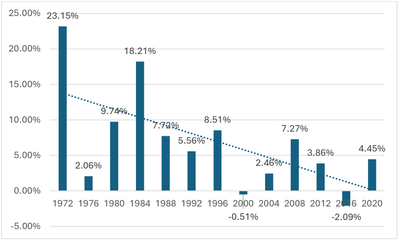
The 2024 Presidential campaign has been a roller coaster ride this summer. The upheavals are so fast and unprecedented that the reaction to each event often seems too muted. An assassination attempt and sudden pre-convention withdrawal? In a past generation, these events would be decisive, but in 2024, they seem like just the latest blip in the news cycle. The polls never seem to move more than a couple of points. In such an oddly volatile but also stable environment, our best bet to understanding what is going to transpire during the last 100 days of the election cycle is to look at data that gets to the heart of how voters view the candidates. My choice of fundamental data or essential metric is candidate fandom. Fandom is an unusual metric in politics, but it should be more common. Fandom is about passion for and loyalty to a cultural entity, be it a team, singer, university, or even politician. In fact, MAGA Trump supporters and Bernie Bros share many characteristics with Swifties and Lakers fans. Fans of all these things show up, spend, wear branded apparel, and fiercely defend the object of their fandom. The politicians who inspire fandom, such as AOC, Donald Trump, Barack Obama, and Marjorie Taylor Green, enjoy many advantages and are the celebrities of the political world. Fandom is critical in politics because fans are loyal, engaged, and resilient. Fans are not casual potential voters who may change preferences and are unlikely to make an effort to stand in line to vote. Fans are the voters who will show up rain or shine and who can’t be swayed. In 2024, a fan will interpret a conviction of their candidate as political “lawfare” rather than evidence of criminality. Also, in 2024, a fan will make excuses for signs of aging that would result in children taking a senior’s car keys. The flip side of fandom, anti-fandom, is also a powerful political force. Indeed, politics may be the cultural context in which anti-fandom has the most impact. Taylor Swift may have haters, but these anti-Swifties are not buying tickets to see Katy Perry in protest. But in politics, hatred of a candidate might be as powerful a tool for generating a vote as fandom. Joe Biden’s 2020 campaign was notoriously bad at drawing crowds, suggesting he inspired little passion. In contrast, Trump’s rallies looked like rabid sports crowds complete with matching hats. However, the hatred and fear of Donald Trump inspired sufficient anti-fandom to make Biden competitive. Of course, fandom doesn’t entirely decide elections. In most elections, there isn’t all that much fandom or passion. Beyond the presidency and senatorial contests, most candidates are barely known, and identity factors (race, gender, party affiliation) and candidate awareness are the determining factors. Even in presidential elections, get-out-the-vote efforts (ballot harvesting) and election regulations (voter suppression) combined with effective marketing to the few percent of swing (low information) voters are often the determining factors. Looking toward the future, fandom may be an increasingly salient political metric for multiple reasons. First, the last two decades have witnessed many candidates raised quickly from obscurity with somehow Hollywood-worthy origin stories (Barack Obama, AOC, JD Vance, etc.). In the modern media environment, candidates’ reputations (brands) are increasingly the product of marketing narratives rather than a lifetime of real-world accomplishments. In this new world of politics, fandom will be a critical metric. Second, with the increasing diversity of the American electorate, voting will be increasingly based on identity rather than ideology. Identity-based voting segments are likely to be driven by fandom (and anti-fandom) rather than policy. We see a form of this in 2024, as high inflation has barely made a dent in voters’ preferences for the two parties. A fragmented electorate comprised of racial and gender segments whose preferences are driven by fandom and anti-fandom will lead to increasingly negative campaigns featuring ads highlighting the threat of the non-preferred party’s candidates. When voters are focused on identity, negative advertising becomes the ideal method to use fear to create anti-fandom (hate) to motivate turnout. Kamala Harris versus Donald Trump Barring further disruptions, the matchup is set for the 2024 presidential contest (as of this writing, we do not know the Democratic VP). We do know the matchup between Donald Trump and Kamala Harris is a contest between polarizing figures. Donald Trump is a movement candidate who has redefined the Republican party. He inspires passionate fandom from his followers and amazing antipathy from major media and cultural outlets. Harris is also polarizing. In the immediate aftermath of Biden’s withdrawal, Harris received massive media and donor support. However, Harris has not demonstrated any significant national voter appeal, and her time as VP has generated ample blooper real material. My approach to assessing the race is to examine each candidate's fandom and anti-fandom. Fandom is the candidate’s core, resilient support, while anti-fandom is about antipathy. Fandom and anti-fandom are especially powerful metrics for a candidate because they are relatively fixed after a candidate gains high awareness. Once an individual identifies with the candidate (e.g., they are on the same team), an attack on the candidate is an attack on the individual. This means attack ads do not work because fans feel they are being attacked. Anti-fans are also important because they constrain a candidate’s support. A Trump anti-fan is unpersuadable by efforts from the Trump campaign because their identity is steeped in opposition to him. Fans and anti-fans are trapped in a cycle of confirmation bias where all information is processed to fit their fandom. I use data from the Next Generation Fandom Survey to assess candidate fandom and anti-fandom. The Next Generation Fandom Survey involves a nationwide sample of the U.S. population regarding fandom for sports and other cultural entities. In the 2024 edition, political figures such as Donald Trump, Joe Biden, Kamala Harris, and RFK Jr were included. The survey captured responses from 2053 subjects split evenly across the four primary generations (Gen Z, Millennials, Gen X, and Baby Boomers), and the sample is representative in terms of racial background. The survey does not focus on likely or registered voters, so the results reflect overall societal sentiments rather than the electorate's opinions. The critical survey question asks subjects to rate how much of a fan they are of a celebrity on a 1 to 7 scale. In the following discussion, individuals who rated their fandom a 6 or 7 on the 7-point scale are categorized as Fans, while those who rate their fandom a 1 or 2 are classified as Anti-Fans. Table 1 shows the Fandom and Anti-Fandom rates for the entire sample. Donald Trump has a 27% fandom rate compared to Harris's 21%. The fandom rate is crucial because it identifies the candidate's core support. It also indicates something important about the candidate’s potential likability. In terms of anti-fandom, Harris has a slightly higher Anti-Fandom rate. Anti-Fandom is also critical as it shows the percentage of people who hate a candidate. The data suggests that Americans find Harris to be more dislikable than Trump. Notably, the anti-fandom rates are significantly higher than the fandom rates. The American public has significant disdain for politicians. The high anti-fandom rates are both the product of past negative advertising and the cause of future negative campaign strategies. Table 1: Candidate Fandom and Anti-Fandom Table 2 reports fandom rates based of the two gender segments. Trump has a 7%-point advantage with men and a surprising 4% advantage with women. This is a stunning result as Trump is generally regarded as having weakness with female voters. However, this weakness shows up in the anti-fandom rates. In the male segment, Trump has a 5%-point advantage in anti-fandom (fewer anti-fans), but a 3% disadvantage in the female segment. This reveals that Trump is polarizing to women, and almost half of women find Trump to be highly dislikable. This finding is why the Harris campaign is likely to use advertising that casts Trump as misogynistic or a threat to women to motivate turnout by female voters. Table 2: Candidate Fandom by Gender Table 3 shows the fandom rates for the two younger demographic segments: Gen Z and Millennials. This Table also shows Trump’s relative performance versus Biden (in parentheses in the last column). Trump enjoys higher fandom and lower anti-fandom than Harris in both the Gen Z and Millennial segments. In terms of fandom, Trump is plus 6% in Gen Z and plus 11% with Millennials. Critically, Harris outperforms Biden. The Gen Z anti-fandom gap between Trump and Biden favored Trump by 6% points. However, this gap shrinks to just 1% point when Harris is the comparison. The data suggests that Harris is stronger with Gen Z than Biden. Table 3: Candidate Fandom in Younger Generations Table 4 reports the fandom rates based on a racial segmentation scheme. Specifically, the sample is divided into White and Non-White categories. This is a crude segmentation, but it illustrates some essential points. Trump enjoys a significant 14% positive fandom advantage in the White demographic. He also enjoys a 10-point edge in (lower) anti-fandom. The pattern essentially reverses in the Non-White segment, as Harris has a 10-point advantage in fandom and a 17-point edge in anti-fandom. Trump’s anti-fandom in the Non-White segment is critical to the campaign. Nearly half of this segment has antipathy or hate for Trump. This high anti-fandom suggests an opportunity for the Harris campaign to emphasize racial angles in their attacks on Trump. Table 4: Candidate Fandom by Race In addition to fandom and anti-fandom rates across demographic categories, insights can be gleaned by looking at segmentation variables that reflect cultural values or personality. Table 5 shows fandom and anti-fandom rates for Trump and Harris for segments defined by fandom for Taylor Swift (Swifties) and Baseball. The Swifties skew towards Harris. The implication is that young women engaged in popular culture have more positive fandom for Harris and more negativity toward Trump. This is unsurprising given the content of the popular culture and Swift’s personal liberalism. The Swiftie segment shows a much stronger skew for Harris than all but the Non-White segment. Examining the data at a cultural level is vital as it indicates that it isn’t necessarily youth or gender where Harris has an advantage but a combination of youth, gender, and a specific type of cultural engagement. The table also includes fandom rates for baseball fans. In the Baseball Fan segment, Trump enjoys an 8% point fandom advantage and a 7% anti-fandom advantage (lower anti-fandom). Like the case of the Swifties, the fandom rates of Baseball Fans reveal something about Trump’s core support. Baseball is a very traditional game with an older fan base, and traditionalism is probably the core value of Trump fans. Trump’s negative advertising is likely to focus on the threats to traditional values (i.e., Harris is a San Francisco liberal). Table 5: Candidate Fandom and Cultural Segments Commentary and Prediction Fandom is a powerful metric for predicting political success, but like most data points, it doesn’t tell the whole story. Fandom is a measure of unwavering core support while anti-fandom measures the group that will never support and is likely to show up to vote against a candidate. Examining fandom rates across multiple segments reveals that Harris’ core support is concentrated in specific cultural and racial segments. The analysis also suggests that Trump's core support is broader than is usually acknowledged and that his main problem is significant anti-fandom with women and minorities. Harris’ problem is a lack of love, while Trump’s is too much hate. Notably, I am not paying too much attention to the current wave of excitement and enthusiasm surrounding Harris. The recent enthusiasm is likely more a manifestation of the Democratic base’s hopes and a relentless media onslaught than an actual increase in passion for Harris. Maybe there will be a permanent shift upward in Harris’s fandom, but I don’t see any logic for why this would occur. Harris isn’t suddenly more likable or aspirational than she was last month. The argument that the American people are becoming more acquainted with her is dubious, given that she has been the Vice President or a major presidential candidate for almost five years. What are the implications for the upcoming election? Voting is not only about fandom or hate, so we must consider some additional factors. For instance, many potential voters lack passion and knowledge and are more prone to vote based on identity rather than ideology. If a region or demographic segment consistently votes for a party 75% of the time, that’s voting more based on fixed identities than current societal conditions. The American electorate has many of these types of fixed-preference voter segments. Furthermore, as the American electorate becomes more diverse, identity-based voting seems to be making presidential contests more predictable. The baseline seems to be that the Democratic candidate will win the popular vote by a few percentage points, and the Electoral College will come down to a few states, such as Michigan, Pennsylvania, and Wisconsin. Examining past electoral maps shows far more shifting of states across elections. Now, all but a handful of states are regarded as non-competitive. The Figure below shows the presidential popular vote margins for the last 50 years. It shows a trend towards smaller margins for the winning candidate, which is at least partly due to growing ethnic diversity and more fixed (at least in the near and medium terms) identity-based voting. Over the last 13 cycles, the margin of victory has dropped by about 1% every four years. Demographic change has also locked in a high baseline level of support for Democratic candidates. The last time a Republican won the popular vote was in 2004, with George Bush as the incumbent. Figure 1: Presidential Vote Margin 1972 to 2020 In addition to shrinking election margins, demographic change promises to change future campaign tones. The increasing relevance of fandom and anti-fandom, combined with the growing diversity of the electorate, will make 2024 an extremely negative campaign. The 2024 election will be determined by identity-based demographic trends and negative (anti-fandom) marketing campaigns. Demographics are destiny, and America is changing rapidly in ways that make it increasingly difficult for the Republicans to win the popular vote. It doesn’t matter if the Democrat is Harris, Newsom, Clinton, or Whitmer while the Republican is Rubio, Haley, Cruz, or Burgum. The baseline is probably 52% to 48%, D to R. Candidate fandom and anti-fandom probably shift the vote 2 or 3 percent in either direction. The correlation of demographic traits with voting behaviors creates incentives for campaign strategies that focus on identity. Republicans are eager to shift some percentage of Black or Hispanic voters to their cause because it simultaneously reduces the Democrats' base and grows Republican totals. In contrast, Democrats need to motivate marginal voters in the female, Black, and Hispanic segments to turn out. Fear-based appeals are the most effective tool for both parties' goals. Negative messaging is also prevalent because of the general view of politicians. Politicians tend to inspire more antipathy (anti-fandom) than admiration (fandom). The fandom data shows this, as both candidates have far more anti-fans than fans (this holds with other politicians) . The modern election calculus is, therefore, focused on aggressive negative ads that inspire marginal voters to take the initiative to vote against a hated candidate. Passion drives behavior, and it's far easier to drive fear and hatred of a candidate than to inspire passion and admiration. Considering the fandom data and the current electorate, I have two predictions. First, we will witness an incredibly nasty race. Harris’s best bet is to demonize Trump to motivate the anti-Trump voters to turn out. The American culture of 2024 includes constant repetition that many Democratic voting constituencies are marginalized and threatened. These segments are best motivated by using messages that cast the Republicans as the danger or oppressor. Women will fear losing reproductive rights, and African Americans will be primed with threats to voting rights. Trump will also employ negative messaging, but Trump’s adoption of a negative campaign comes from a slightly different motivation. Trump’s core support consists of conservatives who are frustrated by a lack of cultural power and representation. This group is looking for someone who will fight for their values. This desire for a “fighting advocate” explains much of Trump’s appeal, as his supporters are enthusiastic about his “mean tweets and nicknames.” There will also be fear-based advertising as Harris will be positioned as wanting to defund police and open the border. Second, Trump wins in a close contest. Comparing Trump’s and Harris’ fandom and anti-fandom suggests the Harris campaign faces an uphill challenge. Despite the current blitz of enthusiasm for Harris as a replacement for a failing Joe Biden, her “brand” has not shown an ability to stimulate passion, and her dislike levels exceed Trump's. It seems unlikely that she will be able to inspire fans. While Trump has a significant fanbase and weaknesses in terms of strong anti-fandom levels in minority and cultural segments, he probably beat Clinton in 2016 because her anti-fandom was equivalent to his. In contrast, he lost to Biden because Biden had less anti-fandom (in 2020). Kamala Harris seems more like Clinton than Biden, so look for a similar outcome as in 2016. The bottom-line prediction: An exceptionally negative campaign, with Trump’s greater baseline fandom and Harris’s charisma deficit leading to a narrow Trump victory. As in 2016,Trump wins the Electoral College while losing the popular vote. Addendum: Future Fandom Lesson The structure of the American electorate and the propensity of people to vote based on identity rather than ideology mean that negative campaigns are the standard in the near future. The essential observation is that demographic trends create an electorate that is more a collection of identity segments than a homogeneous population that varies in ideology. An increasingly diverse electorate likely means increasingly negative presidential campaigns as negative or fear-based appeals are especially effective when elections focus on threats to identity groups. The tragedy of this situation is that the negative messages of campaigns amplify racial division and acrimony. When the next election occurs, the electorate is even more polarized, and negative or fear-based appeals are again the most effective. Mike Lewis is an expert in the areas of analytics and marketing. This approach makes Professor Lewis a unique expert on fandom as his work addresses the complete process from success on the field to success at the box office and the campaign trail. Michael is available to speak with media - simply click on his icon now to arrange an interview today. Interested in following Future Fandom! Subscribe for free to receive new posts.