Experts Matter. Find Yours.
Connect for media, speaking, professional opportunities & more.

NBA stars' leg injuries loom over the new season. What's the prognosis?
Over the past year, fans in multiple NBA cities watched in horror as their stars went down with major lower leg injuries. And even though players like Tyrese Haliburton (ankle), Jayson Tatum (ankle) and Kyrie Irving (knee) will be back at some point, it’s quite possible they will never return to their prior peak, says the University of Delaware’s Dr. Karin Gravare Silbernagel. Dr. Silbernagel, an associate professor of physical therapy at UD, studies tendon injuries in the ankle and knee in elite athletes, especially Achilles ruptures and ankle function. She was quoted in an ESPN story on this topic at the end of last season and can specifically address the stars' injuries and what it might mean for their careers. Her research shows that even after successful surgery, many players return to the court but not many among them return to peak explosiveness or durability. Dr. Silbernagel, whose research on ankle and knee injuries dates back to the early 2000s, can also talk about the larger pattern of lower leg injuries reshaping the NBA. She consults with professional sports teams relating to tendon injuries and is a consultant to the NFL's Musculoskeletal Committee. To connect with Dr. Silbernagel directly and arrange an interview, visit her profile and click on the "contact" button. Interested reporters can also email MediaRelatons@udel.edu.


Julian Ku Leads Conversation on International Law and Defense of Taiwan
Hofstra Law Professor Julian Ku spoke at the New York University School of Law U.S.-Asia Institute’s Taiwan Legal Speaker Series, where he discussed what international law says about the defense of Taiwan.



Have you ever wondered why we just can't get enough of the creatures hiding beneath our beds and lurking in the shadows? Whether it's watching a spine-tingling horror movie or telling ghost stories around the campfire, Americans have a long-standing love affair with all things spooky and scary. But what's driving this fascination? Persephone Braham is a Professor of Spanish & Latin American Studies at the University of Delaware and has those answers. She can talk about monsters in a variety of ways including the following: Monsters are therapeutic. They act out our fears – and our fantasies. We love to hate monsters. They channel our anxieties and expose our desires. Monsters sneak into our dreams, stalk us in the dark and make us scream. Why do we love them? Have you hugged a monster today? Why do we need monsters? They keep us from crossing the line. Who believes in monsters? Anyone who considers themselves human. What are monsters, and why do we need them? From ghosts to vampires, every culture has its favorite monsters. Halloween scream: Why we like to play vampires. Who decides what a monster is? You do! Why do zombies want your brains? Monsters and eerie tales serve as representations of our internal anxieties and societal fears. They act as metaphors for the complex emotions and situations we encounter. Braham can give this context and more. She can be contacted by emailing mediarelations@udel.edu.
New path to combating global malnutrition found in soil
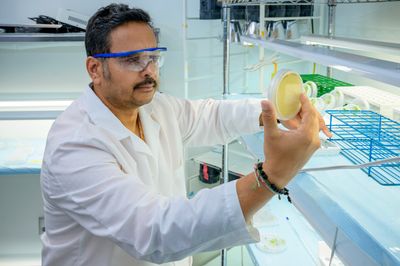
A new University of Delaware study has found that a naturally occurring soil microbe can boost protein-building amino acids in wheat. The finding by UD's Harsh Bais and others could pave the way for nutrient-rich staple crops — helping combat global malnutrition as fluctuations in weather reduce crop quality. In the study, published in the journal Frontiers in Microbiology, Bais and a team of researchers from UD, Stroud Water Research Center and the Rodale Institute investigated how a bacteria naturally found in the soil that is beneficial to human health can enhance the levels of the amino acid and antioxidant ergothioneine in spring wheat. The researchers grew the spring wheat — one of the most widely consumed cereal crops — in a laboratory. After letting the seeds germinate and grow for seven days, they added a strain of bacteria called Streptomyces coelicolor M145 to the spring wheat roots. After combining the bacteria and the plant, they separated the plant’s leaves and roots. Then, they extracted the amino acid ergothioneine from the samples, working to determine how much protein was in the plant’s roots and shoots. They found that 10 days after S. coelicolor had been added to the spring wheat roots, the bacteria was able to inhabit spring wheat’s roots and shoots, producing ergothioneine, bypassing the plant’s innate defense mechanisms, and fortifying the spring wheat. Wheat roots were inoculated with the benign bacteria Streptomyces coelicolor. The image shows the presence of bacteria on the root hairs on day 5. “It’s unusual," Bais said. “Unless there is a mutual advantage for either the plant or the microbe.” The findings suggest that an alternative plant breeding approach could be utilized to associate plants with benign microbes to increase protein content in staple crops. All of our cereal crops are very low in protein. Think rice and breakfast cereals, common foods people eat, derived from these crops. “This approach of harnessing a natural association of microbes with plants may facilitate fortifying our staple crops, enhancing global nutritional security,” Bais said. Bais said he believes using microbes to transport nutrients depends on the microbes’ relationship with plants’ roots. He continues to work to catalyze the colonization of plant roots by beneficial microbes. "Establishing a partnership with the appropriate types of microbes or microbial consortia for plants represents a method of engineering the rhizosphere — the region of the soil near plant roots — to foster a more favorable environment for either microbial associations that stimulate plant growth traits or enhance nutrient availability, which is the path forward,” Bais said. Bais, a professor of plant biology who was named a UD Innovation Ambassador earlier this year, said plants’ “below-ground” traits, such as how nutrient-dense they are, have long been overlooked. “As far as food security, we will have significant challenges by 2050 when the world’s population doubles,” Bais said. “We incentivize our farmers for crop yield; we don’t incentivize them for growing nutrient-dense crops. Growing nutrient-dense plants will enable the population to be fed better and avoid any potential nutrient deficiencies.” The study was funded by the U.S. Department of Agriculture and the Foundation for Food and Agriculture Research. Scientists have become more interested in soil bacteria as a means to solve issues with malnutrition and nutrient deficiencies. Alex Pipinos, the lead author and a UD Class of 2025 graduate with a master’s in microbiology, said environmental conditions are one factor diminishing protein content in plants. “Essentially, crops are becoming less nutrient-dense,” Pipinos said. “The more nutrients in crops, the more healthy humans can be.” Pipinos points to a strong link between soil microbes, plant health and human health. Ergothioneine, she said, has already been shown to lower the risk of cardiovascular disease. It’s also been shown to combat cognitive decline, with a strong link to healthy cognitive aging. “By enhancing ergothioneine in plants, we can improve human health,” Pipinos said. To reach Bais directly and arrange an interview, visit his profile and click on the contact button. Reporters can also contact UD's Media Relations Department.

Aston University: From Metformin to modern obesity therapies
Early beginnings: from herbal medicine to modern drug The origins of a modern diabetes therapy can be traced back to Galega officinalis (goat’s rue), a herb used in European folk medicine for centuries to treat excessive thirst and urination. Its active chemical, guanidine, was found to lower blood sugar in animals in 1918, inspiring the synthesis of a family of drugs known as biguanides. Among these new drugs was metformin, created in 1922 and introduced as a treatment for diabetes in Europe in the late 1950s. However, by the 1970s, metformin was largely disregarded because other biguanide medicines were being withdrawn due to their side-effect of lactic acidosis. Revival in the 1990s: Aston’s role in rediscovery In the early 1990s, research at Aston University provided a decisive turning point. Professor Cliff Bailey and his colleagues revealed that metformin’s primary action occurred in the intestine, where it promoted glucose metabolism and reduced blood sugar without causing weight gain. Their studies clarified that concerns about lactic acid were largely due to misuse, not inherent toxicity. These findings reignited global interest in metformin. Professor Bailey presented his work as an expert witness to the US Food and Drug Administration in 1994, a critical step in securing approval of the drug in the US. He also assisted the European Medicines Agency during periodic reassessments. “My research has always focused on understanding how type 2 diabetes develops and how best to treat it.” Professor Clifford Bailey, Aston University. Establishing global first-line therapy Momentum built through the late 1990s. The UK Prospective Diabetes Study (1998) demonstrated that metformin not only improved blood sugar but also reduced cardiovascular risk, strengthening the case for its wider adoption. By 2012, the American Diabetes Association and the European Association for the Study of Diabetes recommended metformin as the preferred first-line treatment for type 2 diabetes. “We discovered that metformin worked somewhat differently from what was previously thought. By showing how it could be used safely and effectively, we helped pave the way for its wider acceptance.” Today, metformin is the most prescribed diabetes drug worldwide. It is included in the World Health Organization’s Essential Medicines List and has been taken by hundreds of millions of patients, profoundly reshaping global diabetes care. New directions: dapagliflozin and the SGLT-2 inhibitors After the success of metformin, Aston played a central role in the next wave of diabetes medicines. In the 2000s, Professor Bailey was principal investigator in clinical trials for dapagliflozin, the first of the sodium-glucose co-transporter-2 (SGLT-2) inhibitors. Unlike older therapies, SGLT inhibitors lower blood sugar by blocking reabsorption of glucose in the kidneys, causing excess glucose to be excreted in urine. Large international trials demonstrated additional benefits, including weight reduction, lower blood pressure, and improved outcomes for patients with kidney and heart disease. Since its launch in 2012, dapagliflozin has become the most widely prescribed SGLT-2 inhibitor, with more than five million patients treated. It is now embedded in global treatment guidelines, expanding therapeutic options to improve the control of blood glucose and body weight. Foundations for modern obesity therapies The influence of Aston University’s research extends beyond metformin and dapagliflozin. The University’s diabetes research team also studied gut hormones such as GIP (glucose-dependent insulinotropic peptide), which play a central role in regulating insulin secretion and fat metabolism. These early discoveries helped lay the groundwork for today’s incretin-based therapies, including combined GIP/GLP-1 receptor agonists such as tirzepatide. Now widely known as 'anti-obesity injections', these medicines emerged as diabetes treatments and are now transforming care for overweight people with and without type 2 diabetes. Key findings from the research at Aston University Metformin is now being investigated for its anti-ageing and fertility benefits Dapagliflozin shows promise against heart and kidney diseases and gout Gut hormones such as GIP may hold the key to entirely new treatment strategies Why does this matter? The work by Professor Bailey and his colleagues at Aston University has contributed to metformin’s recognition as the primary treatment worldwide for type 2 diabetes. Today, at least half of all patients in Western countries are prescribed metformin — an incredibly cost-effective medicine that continues to save lives. “We identified early on that gut hormones such as GIP were central players in the control of blood glucose and body weight — long before they became the basis for today’s new generation of anti-obesity medicines.” This original research helped lay the scientific foundation for breakthrough treatments like tirzepatide, widely hailed as a game-changer in obesity and diabetes care. Aston University also contributed to the development of dapagliflozin, the first in a new class of drugs that lower blood sugar while also protecting the heart and kidneys. “Millions of people worldwide are living longer and healthier lives because of therapies that have been underpinned by research at Aston University.” Looking ahead Type 2 diabetes remains one of the world’s most pressing health challenges, affecting more than 500 million people globally. Its progressive nature demands a continual search for safer, more effective treatments. From helping rescue a nearly forgotten drug in the 1990s to shaping the next generation of therapies, Aston University’s research has left an enduring mark on clinical practice, regulation, and patient outcomes. The legacy of this work is clear: millions of people worldwide are living longer, healthier lives because of medicines that Aston helped bring to the forefront of modern diabetes and obesity care. About Cliff Bailey is Emeritus Professor of Clinical Science and Anniversary Professor at Aston University in Birmingham, England. He has served on medical and scientific committees of Diabetes UK (formerly the British Diabetic Association), Society for Endocrinology, and European Association for the Study of Diabetes. He has served as a diabetes expert for the approval of new medicines by regulatory agencies including the European Medicines Agency and NICE. His research is mainly directed towards the pathogenesis and treatment of diabetes, especially the development of new agents to improve insulin action and reduce obesity, and the therapeutic application of surrogate beta-cells. Dr Bailey has published over 400 research papers and reviews, and four books, and he is particularly known for research on metformin. References to Case Studies and Key Sources Bailey CJ et al. Metformin: Changing the Treatment Algorithm for Type 2 Diabetes. Aston University REF Impact Case Study, 2014. Bailey CJ. Metformin: Historical Overview. Diabetologia, 2017. Bailey CJ & Day C. Treatment of Type 2 Diabetes: Future Approaches. British Medical Bulletin, 2018.


New Poll Measures Presidential Popularity
Dr. Meena Bose was interviewed by Newsweek regarding a new poll from Marquette University that found Americans view former President Barack Obama more favorably than President Donald Trump. Dr. Bose explained that Obama’s “personal appeal, inspirational rhetoric, and unanticipated success in the 2008 presidential race continue to have strong public support.” “The promise of hope and change are defining features of the Obama presidential campaign and still influence assessments of his presidency,” she said. Dr. Bose is a Hofstra University professor of political science, executive dean of the Public Policy and Public Service program, and director of the Kalikow Center for the Study of the American Presidency.


With the opening of a new cardiology practice at its Wilmington campus, ChristianaCare is bringing life-saving treatment for peripheral artery disease (PAD) closer to home for people who live in and around the city of Wilmington. Peripheral artery disease happens when plaque builds up in the arteries and limits blood flow to the legs. This can cause pain, cramping and difficulty walking. If left untreated, it can lead to serious problems like limb loss, heart attack or stroke. “We’re on a mission to improve the heart and vascular health of our community, and one of the key ways we do that is to identify where people need access to care and ensure that it’s convenient, high-quality and accessible. ChristianaCare’s expansion of cardiology services to the Wilmington campus has made it easier for patients in Wilmington and the surrounding community to receive excellent heart and vascular care,” said Kirk Garratt, M.D., MSc, medical director of the Center for Heart and Vascular Health. “Importantly, it’s part of a multi-disciplinary effort to bring a focus on PAD that includes vascular surgery and interventional radiology. We’re expanding those services in the Wilmington community, too.” In Delaware, an estimated 45,000 to 50,000 people are living with PAD. The condition is more common among older adults and those with diabetes, high blood pressure or a history of smoking, all of which are widespread in the state. Because symptoms can be subtle, many people may not know they have it. That’s why awareness and early diagnosis are so important. Anyone who experiences leg pain, numbness or slow-healing sores should talk with their doctor. A simple test can measure blood flow, and with the right treatment or lifestyle changes, people can ease symptoms and lower their risk of serious complications. The new practice, located in the Gateway Building at Wilmington Hospital, 501 West 14th Street, 4th Floor, offers convenient access to diagnosis and treatment in the heart of the city. The practice is open on Wednesdays from 8 a.m. to 12 p.m., and hours will be adjusted based on patient demand. Meet the Cardiologist: Dr. Vikashsingh Rambhujun Board-certified interventional cardiologist Vikashsingh Rambhujun, MBBS, has cared for ChristianaCare patients for more than a decade and now sees patients at the Wilmington practice. Rambhujun earned his medical degree from SSR Medical College in Mauritius. He completed his residency in internal medicine at the NYU Grossman Long Island School in New York and did his fellowship in cardiovascular medicine and interventional cardiology at ChristianaCare. Rambhujun also spent a year doing interventional cardiology and endovascular medicine and interventions at Yale University Hospital in New Haven, Connecticut. His research has been published widely in medical journals. Rambhujun aims to help patients manage PAD before it becomes advanced. When appropriate, he can perform minimally invasive catheter-based procedures to open blockages in the arteries. “We have new patients with blockages that haven’t progressed to the point that they need a procedure, which is where we want to catch them,” Rambhujun said. “We can manage their cholesterol, blood pressure and other risk factors to prevent disease from progressing.” When Rambhujun began practicing in Wilmington, he made it a priority to speak at local community meetings, raising awareness about the warning signs of heart and vascular disease. His message is simple but urgent: don’t wait; seek treatment early. “We’re trying to help people keep their toes and feet,” he said. “When we treat blockages from peripheral artery disease, the difference can be dramatic,” he said. “Patients who once struggled to walk even a short distance because of pain can leave the hospital able to move freely again. Helping someone reclaim their basic freedoms to walk, stay active and enjoy life is incredibly rewarding.”



From field to festival: How pumpkins grew into an autumn symbol
Type “Halloween” into your phone’s emoji search bar, and you’ll get three icons: a skull, a ghost, and a jack-o'-lantern. The skull and ghost make sense — but how did the pumpkin carve out such a starring role in our fall celebrations? Cindy Ott, associate professor of history and material culture at the University of Delaware, has the answer. She literally wrote the book on pumpkins, exploring how this humble orange gourd grew from a survival crop to a powerful symbol of American identity and nostalgia. Today, pumpkins dominate the fall season — from pumpkin pies and soups to the ever-popular pumpkin spice latte. Ott’s research uncovers how the pumpkin’s transformation from practical produce to cultural icon reflects broader shifts in American history, values, and traditions. To schedule an interview with Professor Ott, contact MediaRelations@udel.edu.
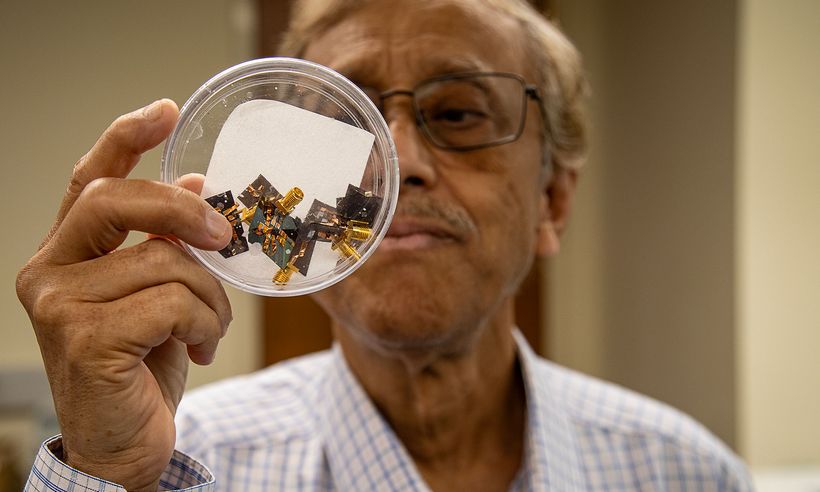
Supporting the development of advanced computing hardware, the National Science Foundation (NSF) awarded Supriyo Bandyopadhyay, Ph.D., Commonwealth Professor in the Department of Electrical and Computer Engineering at the Virginia Commonwealth University (VCU) College of Engineering with more than $300,000 to develop processor-in-memory architecture using quantum materials. “This is one of the first mainstream applications of quantum materials that have unusual and unique quantum mechanical properties,” Bandyopadhyay said. “Quantum materials have been researched for more than a decade and yet there is not a single mainstream product in the market that utilizes them. We want to change that.” The four-year project, titled “Collaborative Research, Foundations of Emerging Technologies: PRocessor In Memory Architecture based on Topological Electronics (PRIMATE),” aims to advance computing hardware and artificial intelligence by integrating topological insulators and magnetic materials. Topological insulators are a special material with an electrically conductive surface and an insulated interior. They have special quantum mechanical properties like “spin-momentum locking,” which ensures the quantum mechanical spin of an electron-conducting current on the surface of the material is always perpendicular to the direction of motion.This marks the first time such quantum materials will be used in a processor-in-memory system. “We place a magnet on top of a topological insulator,” Bandyopadhyay said. “We then change the magnetization of the magnet by applying mechanical strain on it. That changes the electrical properties of the topological insulator via a quantum mechanical interaction known as exchange interaction. This change in the electrical properties can be exploited to perform the functions of a processor-in-memory computer architecture. The advantage is that this process is fast and extremely energy-efficient.” If successful, this approach could reduce energy use and dramatically speed up computing by moving data processing into the memory itself. It addresses the longstanding “memory bottleneck,” the slowdown caused by computers constantly needing to move data back and forth between processor and memory. These efficiencies could make advanced AI more efficient and accessible, paving the way for the first commercially viable applications of quantum materials.. The research is a collaboration with University of Virginia professors Avik Ghosh and Joseph Poon. A VCU Ph.D. student will work on the project and receive training in fabrication, characterization and measurement techniques, preparing them to lead in the rapidly evolving field of computing hardware.

'Brain-on-a-chip': Engineering tomorrow’s breakthroughs today
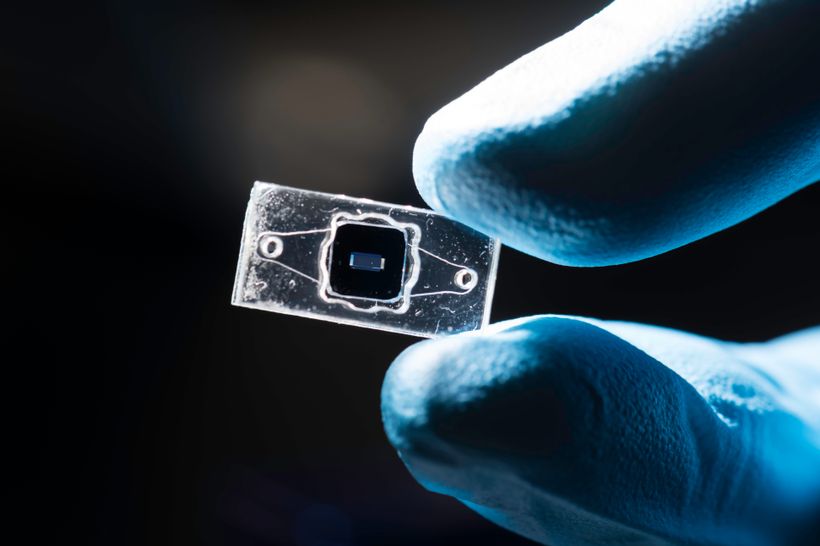
A “brain-on-a-chip” technology might sound like science fiction, but it’s real-world hope. James McGrath, a biomedical engineer at the University of Rochester, leads a team that develops micro-scale tissue chips to study diseases in lieu of conducting animal experiments. The team’s “brain-on-a-chip” model replicates the blood-brain barrier — the critical membrane separating the brain from the bloodstream — to mimic how the barrier functions under healthy conditions and the duress of infections, toxins, and immune responses that can weaken it. Recent findings from McGrath’s team show how systemic inflammation, such as that caused by sepsis, can compromise the barrier and harm brain cells. The researchers also demonstrated how pericytes — supportive vascular cells — can help repair barrier damage, an insight that could guide new therapies for Alzheimer’s and Parkinson’s. The research culminated in a pair of recent studies published in Advanced Science and Materials Today Bio. “We hope that by building these tissue models in chip format, we can arrange many brain models in a high-density array to screen candidates for neuroprotective drugs and develop brain models with diverse genetic backgrounds,” McGrath says. McGrath aims to transform how scientists test drugs and predict neurological side effects before they occur — helping rewrite how we study, and one day safeguard, the brain. Contact McGrath by clicking on his profile