
Experts Matter. Find Yours.
Connect for media, speaking, professional opportunities & more.

Georgia Southern achieves record enrollment post-consolidation
Georgia Southern University has set several enrollment records according to official Fall 2024 enrollment data, verified by the University System of Georgia. The University continues to experience growth across various areas including enrollment on the Armstrong Campus in Savannah, online classes, dual enrollment, and graduate program enrollment, among others. The University’s official Fall 2024 total enrollment is 27,506, a 5.4% increase over Fall 2023, and the highest enrollment the University has recorded post-consolidation. “This record enrollment highlights the strength of our academic programs and the commitment of our faculty and staff to Georgia Southern’s mission of preparing career-ready graduates to meet the talent and workforce needs of a growing region,” said Georgia Southern President Kyle Marrero. Records set this year include: Total number of dual enrolled students (new and returning) – this year there are 1,550 enrolled, an increase of 492 students (46.5%) from last fall. New dual enrolled students – this year there are 1,063 enrolled, an increase of 290 students (37.5%) from last fall. The previous record was 773 in Fall 2023. Total number of graduate students (new and returning) – this year there are 3,888 enrolled, an increase of 135 students (3.6%) from last fall. The previous record was 3,753 in Fall 2023. Honors College students – this year there are 340 beginning freshmen enrolled, up from 302 (12.6%) last fall. Masters degree students – this year there are 2,883 enrolled, an increase of 125 students (4.5%) from last fall. The previous record was 2,758 in Fall 2023. Doctoral students – this year there are 705 enrolled, an increase of 17 students (2.5%) from 2023. The previous record was 688 in 2023. Out-of-state students (new and returning) – this year 3,674 students are enrolled, an increase of 805 students (28.1%) from last fall. The previous record was 2,869 in Fall 2023. International students – this year there are 671 international students enrolled, an increase of 59 students (9.6%) from the previous records in 2016 and 2017. Here’s how some of Georgia Southern’s numbers break out in the last 5 years: “This post-consolidation record enrollment reflects our commitment to expanding access to a Georgia Southern education and underscores the unwavering support we provide our students to help them persist, retain and graduate,” said Executive Vice President for Enrollment, Marketing and Student Success Alejandra C. Sosa Pieroni, Ed.D. If you're interested in learning more about Georgia Southern University and all the amazing things happening on campus then let us help - simply contact Georgia Southern's Director of Communications Jennifer Wise at jwise@georgiasouthern.edu to arrange an interview today.


Turning on the tap for a drink of clean water may seem like part of an everyday routine for many. Yet, for countless communities—even here in the U.S.—this simple act remains a daily challenge, with each glass or clean drop of water far from guaranteed. One Georgia Southern University professor is working to change that. Thirty percent of the Navajo Nation population lacks access to clean drinking water. Lewis Stetson Rowles, Ph.D., assistant professor in the Department of Civil Engineering and Construction in the Allen E. Paulson College of Engineering and Computing at Georgia Southern University, is working to increase access to clean water for this community and beyond by engaging with locals to understand how materials used in traditional cultural practices can be transformed into life-changing solutions. “My first trip to the Navajo Nation as an undergraduate student was a really eye opening experience for me,” Rowles said. “To realize that there were people within the U.S., in our own backyard, who lacked clean water is what inspired my whole career in research and education.” Establishing trust was an important challenge to overcome for Rowles and his fellow researcher and mentor Navid Saleh, Ph.D., professor of environmental and water resources engineering at the University of Texas at Austin. “Years of uranium mining left the mineral-rich area and the connection with the Navajo community polluted,” Rowles said. “It has been a decade-long effort to build community relationships, understand the issues and develop potential solutions specific to the needs of the Navajo Nation.” Finding solutions specific to local needs and cultures is key to their implementation and success according to Rowles. “We have to work with communities to truly understand the issues and collaboratively develop functional solutions because locals are the people who understand the problems the best,” Rowles said. “I don’t believe that there’s a one-size-fits-all solution. For technologies to really be sustainable, we need to understand if they’re going to work in a specific location, which means we need to develop community-specific solutions.” Working with the community is important for more than just understanding the issue at hand. When thinking about big-ticket issues, like clean water, Rowles said that it’s easy to fall into the trap of thinking about large-scale, infrastructure-based solutions. But some of the most immediately effective and impactful solutions happen on a much more intimate level. “Centralized distribution systems take a long time to build, they’re also very costly,” Rowles said. “The need for clean water is dire in many communities, so point-of-use technologies are great because they can be adopted quickly. They also bring power to the people in a way, because technologies can be developed with local materials, like we’re doing here with clay and pinyon resins for ceramic filters. This can create immediate solutions to water contamination issues.” Rowles, who specializes in environmental engineering, worked with members of the Navajo community to discover how the process of creating traditional pottery can help solve the problem of clean drinking water at a local level for families. Deanna Tso, a third-generation Navajo potter, has been integral to this process to ensure that the novel solutions don’t detract from traditional practices. “If you’ve ever climbed a pine tree and gotten sap stuck on your hands, you know it’s very sticky,” Rowles said. “The Navajo people have been using this sap for centuries to waterproof pottery and baskets. Meanwhile, one of the biggest limitations to the use of silver nanoparticles for water treatment is the immobilization of those particles. We used this local resin to coat the nanoparticles, keeping them in place and extending the lifetime of the filters while still allowing them to kill bacteria. It also acts as a really unique barrier that prevents silver poisoning by stopping the silver from interacting with other compounds that would inhibit the dissolution of silver nanoparticles into silver ions which kill bacteria.” By working together to integrate new technologies into existing traditions, Rowles and his partners are one step closer to changing the lives of many in the Navajo Nation. Their hope is that this knowledge will be used to expand access to potable water to more parts of the world. “While we started working with Deanna on a very specific pine tree sap, the more we’ve researched, we’ve seen there are similar pine and conifer trees throughout the continent, even into Mexico, that have been used by indigenous groups for centuries,” Rowles said. “This means that this research has much broader applications across the world, particularly in areas that lack centralized water treatment systems where people go and collect water from distant sources or wells, bring it back to their house, and then treat it at the household level.” The extension of this knowledge begins by sharing it, which is precisely what Rowles’ team has done over the last year. They published their research Integrating Navajo Pottery Techniques To Improve Silver Nanoparticle-Enabled Ceramic Water Filters for Disinfection in October 2023 and shortly thereafter began working with PBS NOVA. Their work will now be shared as part of a documentary series highlighting engineers working to positively change the world. “The Navajo Nation is just one area impacted by lack of access to clean water,” Rowles said. “Around 1.5 million people across the U.S. lack indoor plumbing and many more rely on wells and septic systems that are often aging or failing, leading to sanitation concerns. There are a lot of great organizations and a lot of great research working to address sanitation issues abroad, but I hope this research can open people’s eyes to the fact that this is a local problem, too. Don’t take it for granted that you’re able to turn on the tap and have safe, clean water, because that is not true for a lot of Americans and for much of the world.” You can continue exploring Rowles’ research on an episode of PBS NOVA—Building Stuff: Change It! and by watching the Innovations in Water Treatment with Navid Saleh from Building Stuff: Change It! Twitch episode of Building Stuff with NOVA. If you're interested in learning more or a reporter looking to speak with Stetson Rowles - simply contact Georgia Southern's Director of Communications Jennifer Wise at jwise@georgiasouthern.edu to arrange an interview today.

Exploring language as an early behavioral marker of Alzheimer's Disease
Professors from the University of Delaware and Carnegie Mellon University will use a $3.7 million RF1 grant from the National Institute on Aging (NIA) to examine language as an early behavioral marker of Alzheimer’s Disease. If successful, this research could pave the way for earlier interventions. “Identifying these individuals as early as possible gets them into preventive treatments sooner,” said Alyssa Lanzi, assistant professor of Communications Sciences & Disorders at UD. The study builds on pilot data gathered by Anna Saylor, a third-year doctoral student in the communication sciences and disorders doctoral program, housed in the UD's College of Health Sciences. “We know a lot about how language develops in childhood but not much about how it changes in older adults,” Saylor said. “Our data suggest subtle language changes might signal future cognitive decline.” To explore these changes on a larger scale, Lanzi is collaborating with MacWhinney, who founded TalkBank, open science database of language samples. Within TalkBank is DementiaBank, a shared database of multimedia interactions for studying communication in dementia. However, DementiaBank is outdated and limited in demographics, and the quality and rigor of the data need improvement. Lanzi is seeking to change that. Her five-year study seeks 300 older adults aged 60-90 nationwide from underrepresented backgrounds or populations vulnerable to health disparities. “Current DementiaBank data is representative of Caucasians of a higher socioeconomic status,” Lanzi said. “We must intentionally recruit people who are at the greatest risk — for example, adults who are Black, Asian, Hispanic, Latin and those living in rural areas.” The recruitment strategy, rooted in community engagement at locations in Wilmington, Delaware, is part of the novelty of Lanzi’s grant. “This is a feasibility study to see if our approach in Wilmington can be replicated in other states,” Lanzi said. Lanzi has also established an advisory committee of nationwide faculty with relevant expertise on specific priority populations. Their input will tailor plans to population needs while data is collected through a central site at UD. The Delaware Center for Cognitive Aging Research (DECCAR) also provides critical infrastructure for the study. “This project is an example of the success of DECCAR, and our impact extends far beyond state lines,” said Lanzi, an executive committee member with DECCAR. Participants selected for the study will participate in a comprehensive cognitive and language testing battery via telehealth, so they don’t have to travel to UD’s campus, which is novel and unique to this study. “To study their language, they’ll see pictures and be asked to describe them and share stories from their past,” Lanzi said. Study participants will receive a gift card for participating and feedback about their memory to share with their healthcare provider. “Building trust and giving back are key elements of our strategy,” Lanzi said. Lanzi is already preparing for the next phase of her research, supported by an additional $800,000 grant from the NIA. This phase will test the effects of an online treatment Lanzi developed for individuals identified as at risk. “If we find that language is an early marker of disease, I want to take this research to the next level and develop treatments that teach strategies to enhance independence and improve the quality of life for those at risk of developing dementia,” she said.


New study shows alarming rate of potential species extinction due to climate change
A recent study authored by the University of Connecticut's Mark Urban found that close to one third of species across the globe would be at risk of extinction by the end of the century if greenhouse gases continue to increase at current levels. His study, published in the journal Science, looked at more than three decades of biodiversity and climate change research. The findings are alarming. The study found that if global temperatures rise to 2.7 degrees Fahrenheit (1.5 degrees Celsius) above the pre-industrial average temperature, exceeding the target of the Paris Agreement, extinctions would rapidly accelerate — especially for amphibians; species in mountain, island and freshwater ecosystems; and species in South America, Australia and New Zealand. Earth has already warmed about 1.8 F (1 C) since the Industrial Revolution. Climate change causes shifts in temperatures and precipitation patterns, altering habitats and species interactions. For instance, warmer temperatures have caused monarch butterfly migration to mismatch with the blooming of plants they pollinate. Many animal and plant species are shifting their ranges to higher latitudes or elevations to follow more favorable temperatures. While some species might adapt or migrate in response to changing environmental conditions, some can't survive the drastic environmental changes, resulting in population declines and sometimes extinction. Global assessments have predicted rising extinction risks for over a million species, but scientists have not clearly understood how exactly this growing risk is linked to climate change. The new study, published Thursday (Dec. 5) in the journal Science, analyzed over 30 years of biodiversity and climate change research, encompassing over 450 studies of most known species. If greenhouse gas emissions are managed in accordance with the Paris Agreement, nearly 1 in 50 species worldwide — an estimated 180,000 species — will be at risk of extinction by 2100. When the climate model's temperature is increased to a 4.9 F (2.7 C) rise, which is predicted under current international emissions commitments, 1 in 20 species around the world would be at risk of extinction. Hypothetical warming beyond this point makes the number of species at risk rise sharply: 14.9% of species were at risk of extinction under a 7.7 F (4.3 C) warming scenario, which assumes high greenhouse gas emissions. And 29.7% of all species would be at risk of extinction under a 9.7 F (5.4 C) warming scenario, a high estimate, but one that is possible given current emissions trends. The increase in the number of species at risk increases steeply beyond the 1.5 C warming target, study author Mark Urban, a biologist at the University of Connecticut told Live Science. "If we keep global warming to below 1.5 C, in accordance with the Paris Agreement, then the [extinction] risk from today to 1.5 C is not a large increase," Urban said. But at a 2.7 C rise, the trajectory accelerates. Species in South America, Australia and New Zealand face the greatest threats. Amphibians are the most threatened because amphibians' life cycles depend heavily on weather, and are highly sensitive to shifting rainfall patterns and drought, Urban said. Mountain, island and freshwater ecosystems have the most at-risk species, likely because these isolated environments are surrounded by inhospitable habitats for their species, making it difficult or impossible for them to migrate and seek more favorable climates, he added. Limiting greenhouse gas emissions can slow warming and halt these growing extinction risks, but understanding which species and ecosystems are most affected by climate change can also help target conservation efforts where they're needed most. Urban hopes the results have an impact on policymakers. "The main message for policymakers is that this relationship is much more certain," Urban said. "There's no longer the excuse to do nothing because these impacts are uncertain." December 5, 2024 - Live Science This is an important topic, and if you're a journalist looking to learn more, we can help. Mark Urban is an international award-winning scientist; a professor of ecology and evolutionary biology and the Arden Chair Ecology & Evolutionary Biology at UConn; and a global expert on climate change impacts on nature. He is available to speak with media - simply click on his icon now to arrange an interview today.


Charges Dropped Against President-Elect Trump
Dr. Meena Bose talked to Fox News Radio stations around the country about a judge dropping the charges against President-elect Donald Trump in the D.C. case against him. The dropping of charges followed a request made by Special Counsel Jack Smith. Dr. Bose spoke to: WILS in Lansing, MI; WFLA in Orlando, FL; and WKIM in Memphis, TN. Dr. Bose is a Hofstra University professor of political science, executive dean of the Public Policy and Public Service program, and director of the Kalikow Center for the Study of the American Presidency.


Humans have long taken inspiration from the natural world. From the indigenous cultures of the world who understand and utilize the properties of plant and animal products, to Leonardo da Vinci’s “flying machine” sketches inspired by his observations of flying birds, humankind has often looked to nature to help solve its problems and drive innovation. With rapid scientific advancements of the 19th and 20th centuries, and the exponential growth of sustainability practices over the last quarter century, the concepts of bio-inspired design and biomimicry have been increasingly pursued across myriad disciplines of study and implementation. Alyssa Stark, PhD, associate professor of biology at Villanova University, is one of the “boots-on-the-ground” researchers in pursuit of nature’s solutions to human problems. She recently took the time to chat with us about these fields, her research interests and the future of biomimicry. Villanova PR: We sometimes hear the terms “bio-inspired design” and “biomimicry” used interchangeably. Are they the same concept? Alyssa Stark: I see those as two different things. Bio-inspired design is when we are looking at an organism and see that it’s doing something that we want to emulate as humans. I work with animals that have unique adhesive properties. I ask questions like: Can we see that? Can we build it? Can we transfer that information, those ideas, those principles – it could be chemistry, physics, biological structure – and make something useful for us? That is also true with biomimicry, but the big difference for me is that we're keeping in mind the sustainability components. The natural world is not polluting. If we're using this biomimicry lens, how do we learn from nature to make products or solve problems in a sustainable way, keeping in mind the specific environment in which we are located? As an example, we wouldn't use a heavy water process if we were in the Arizona desert, instead we should look to our immediate surroundings to solve problems. PR: It seems the work going on in this field really takes a unique level of interdisciplinary collaboration. What types of different professionals are working in biomimicry? AS: It really pulls together biologists, engineers, physicists, chemists, even design artists and businesspeople. I've worked with a lot of different businesses that want to have sustainability in their company at broad levels by using biomimicry. They are not motivated by making a cool product, but realizing it actually saves them money if they think about their whole company in a biomimetic perspective. There are people who work on the social side of biomimicry, helping these companies completely restructure themselves to be more efficient and more time and money sensitive, without ever making a product. But of course, products are a huge part of it, too. And to make that happen, all of those professions, and more, are vital and active in this space. PR: In terms of products, what are some of the most successful examples of biomimetic designs being implemented? AS: A classic one is a building in Africa that doesn't have any air conditioning units because it has a series of vents like a termite mound. Or the bullet train being shaped like a kingfisher’s beak. One scientist found that whales have bumps on their fins, which you might think is not hydrodynamic. But as it turns out, it actually cuts through water more efficiently by creating little vortices. This concept was then applied to wind turbines. There are many examples of biomimicry actually working and being used. My mind is blown when I talk to an artist or designer about biomimicry because it's just wild the way they think. PR: Where does your overall work as a biologist fit into the world of biomimicry? AS: My hard science work is very much functional morphology – shape and structure of things and how they function. That includes behavior and their organismal interaction with the environment. I ask questions like: How do their structures function and perform? How sticky are they? How fast are they? How do they behave in their environment? What happens if they hit different challenges in their environment? My work kind of naturally fits well with biomimicry, especially for product development. I observe the natural world and then I start testing questions and predictions that I have about it, like figuring out how the heck this ant is sticking to this wet leaf. My results can then be applied directly. We have to first understand how these organisms work, and then others can run with it to try to put it to use. PR: What organisms do you work with and what about them are you studying? AS: I mostly study geckos, ants, and sea urchins and I just started working with some coral, looking at why some coral undergo bleaching, and some don’t. With sea urchins, we're also figuring out where their incredibly hard teeth are mineralized so we can understand it enough to try to mimic it. I like playing in that zone, because it still provides me a chance to do the hard science, but also talk to engineers and others and provide them information. With geckos, what I kind of broke open with my PhD thesis was that they have an adhesive that works in wet environments. Having a reusable adhesive that can work on skin, especially in the medical world, is a big problem and where most of my research lies. Think of a bug that you can’t pry off, but then it suddenly runs. How do these organisms move with such sticky feet? Figuring out how to make a reusable adhesive that doesn’t get dirty and can handle all these different environments is a difficult problem to solve. PR: How do you see this field evolving, especially as we strive for a greener, more sustainable future? AS: I would say the next step is the social levels of these big ecosystems. How do we build a city that functions like a rainforest or like a coral reef? Not just a product, but how do we actually shape our world by taking behaviors, processes, or systems that we see in the natural world to help us? Look at a pride of lions and their hierarchy, or what kind of feedback loops are there in an ant colony that allow them to give information back to their colony members quickly and share resources. I think that is the future of this field, and it’s an exciting future. *To learn more about Dr. Stark’s research and the field of biomimicry, click here to listen to a recent episode of NPR’s science show, “The Pulse.”


Maureen Leffler, D.O., Named ChristianaCare’s Chief Wellbeing Officer
Maureen “Mo” Leffler, D.O., MPH, has been appointed chief wellbeing officer of ChristianaCare, effective Nov. 25. In her role, Leffler leads the ChristianaCare Center for WorkLife Wellbeing and strategies to enhance the professional fulfillment and well-being of ChristianaCare’s nearly 14,000 caregivers, overseeing advocacy programs and initiatives to optimize their experience and foster a culture of well-being throughout the organization. She works closely with leaders across key departments to address factors impacting caregiver well-being. Leffler most recently served as the inaugural chief wellbeing officer at Nemours Children’s Health, where she helped the organization to achieve the 2022 Joy in Medicine distinction from the American Medical Association for prioritizing proven efforts to enhance the professional fulfillment of physicians. There, she established a Center for Associate Wellbeing; led the first systemwide assessment to strategically address well-being and burnout; and implemented a peer support program and expanded the scope of resources available to support the emotional and mental health needs of employees. In collaboration with organizational leaders, she supported targeted clinical team assessments and systems-based interventions to foster well-being. Prior to this role, Leffler served as a pediatric rheumatologist at Nemours and as an assistant professor of pediatrics in the Division of Rheumatology at Thomas Jefferson University. Since 2017, Leffler has served as the course director of the Chief Resident Leadership Training Program for the Accreditation Council for Graduate Medical Education (ACGME). In response to the COVID-19 outbreak, she co-chaired ACGME’s National Task Force on Well-Being. She and her team developed a national graduate medical education well-being community, which she continues to convene, to understand the evolving challenges and share strategies to improve well-being. She represents the ACGME as a coach for the National Academy of Medicine Action Collaborative on Clinical Well-Being and Resilience. She also serves as a consultant to the Professional Satisfaction team at the American Medical Association. Leffler earned her medical degree from the Philadelphia College of Osteopathic Medicine, followed by a residency in pediatrics at Nemours and Thomas Jefferson University Hospital, where she served as chief resident. She subsequently trained in pediatric rheumatology at Nemours and Jefferson. She also earned a Master of Public Health from Temple University and studied chemistry at St. Joseph’s University. Recently, Leffler completed the Georgetown Executive Leadership Certification Program.


Study: Intuitive introverts lead the most successful teams
An unwritten law of leadership states the loudest voices in the room are not always the wisest. Some of history’s most notable and successful leaders were known introverts who wrangled loads of information for sizable teams: Abraham Lincoln, Bill Gates and Oprah Winfrey, to name a few. New research from the University of Delaware found introverted leaders who rely on intuition to handle this large bundle of information lead the most successful teams. The research, co-authored by professor Dustin Sleesman, explored the concept of intuition and when it's helpful for leaders who are in charge of large teams. Sleesman and his co-authors from Michigan State University studied more than 3,000 U.S. Air Force captains at a military base in Alabama. As part of their leadership training, the captains participated in a team-based battlefield simulation, which gave the researchers an opportunity to observe and analyze their behavior. Sleesman and his co-authors accurately predicted that teams performed better when their leaders were armed with high amounts of information. But they made two interesting findings they didn't expect: • Introverted leaders led more successful teams when intuitively handling large amounts of information. • Intuitive leaders, in general, led more successful teams when they had to handle a lot of information. "Introverted people tend to be more reflective, more introspective, they tend to be more observational than extroverted leaders," Sleesman said. "So pairing intuition with introversion tended to be very effective for team performance." Sleesman, an associate professor of management in UD's Lerner College of Business & Economics, studies the psychology of decision-making, negotiation and conflict resolution, as well as team effectiveness. To set up an interview, click on the link below.


The social media platform TikTok is on the verge of a U.S. ban—unless it can be stopped by President-elect Donald Trump. The policy will take effect on January 19, requiring that TikTok find a U.S. parent company or face a ban in the United States. This comes after concerns about user data falling into possession of the Chinese government and fears that they could use TikTok to spread misinformation. Derrick Green, communication expert at Cedarville University, has spoken about the motive behind this ban and why Trump may reverse it. Here are three key points from his recent interview: Trump has pointed out that he would not let TikTok be banned, if elected as president. How could he actually implement this and block this ban from taking effect? The President-elect used TikTok as a part of his campaigning strategy and found success on the app, this coming after he proposed to ban it in 2020. Did his use of TikTok influence his desire to save the app? The proposed ban of TikTok was based on national security and the mental health of young people in the United States. If TikTok was shut down in the United States, what would the effects be? If you are a journalist covering the TikTok ban or the effects of social media, our experts are here to help with all of your questions and stories. Derrick Green is the Chair of the Department of Communication at Cedarville University. Green is available to speak with the media regarding digital media and its effects. Simply click on his icon or email mweinstein@cedarville.edu to arrange an interview.


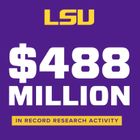
National Science Foundation Confirms Record Research Growth at LSU
The National Science Foundation confirmed LSU’s record research expenditures of $488 million in fiscal year 2023. This historic growth of 14% compared to 2022 was previously announced by LSU and represents top performance alongside research university peers such as the University of Kentucky and the University of Tennessee. The growth reflects increased research activity across the LSU Family—especially on the flagship campus and at LSU Health New Orleans and LSU Health Shreveport. The national ranking of LSU’s five research campuses—the flagship in Baton Rouge, the LSU AgCenter, Pennington Biomedical Research Center, and the two LSU Health campuses—increased from 71 to 69, a rise moderated by the average growth of U.S. research universities around 11%. Compared to its peers, LSU is a leader in win-win partnerships with state and local government, with strong and continued investment in research. LSU research adds an estimated $1.3 billion to the Louisiana economy each year. The numbers that were just confirmed by the National Science Foundation recognize LSU as especially strong in federally grant-funded research in life sciences, geosciences, math and statistics, and computer and information sciences. These strengths align with the data-driven research priorities of the LSU Scholarship First Agenda to create new solutions for agriculture, biomedicine, coast, defense, and energy. “This NSF report confirms our focus on research growth to meet the needs of the state as well as our dedication to LSU’s Scholarship First Agenda,” said Robert Twilley, LSU vice president of research and economic development. “The significant increase in federal grants to LSU and Louisiana represents growing investment in our competitiveness and capacity to solve problems for the state and nation.” Read the full NSF report: https://ncses.nsf.gov/surveys/higher-education-research-development/2023
