
Experts Matter. Find Yours.
Connect for media, speaking, professional opportunities & more.

Researcher develops microrobots to battle cancer with unique precision
Magnetic robots that can target cancer cells are nothing new. But the patented microrobots developed by the University of Delaware's Sambeeta Das can be guided with a magnetic field to deliver medication to cells – or to destroy infectious cells, such as cancer – inside the body. To mark the launch of National Inventors Month, Das, assistant professor of mechanical engineering, shared her journey toward invention. Q: Tell us about your patented invention on microrobots for cancer research. What problem were you trying to solve? Das: One of the biggest issues with cancer research is the ability to target cancer cells without harming healthy cells. Cancer cells are sneaky, and they have evolved ways of hiding from the body’s immune cells. A big part of our research focuses on targeting, specifically precision targeting. We want to be able to target a single cell in a mass of cells, whether that is a single cell in a mass of cancer cells or whether it is a single abnormal cell surrounded by healthy cells. To do this, we use magnetic microrobots that can be driven inside the body by magnetic fields to a particular cell location. Magnetic fields are biocompatible, meaning they are not harmful to biological tissues, and our microrobots are very small, around 20 microns, which is about the size of a single bacteria cell. We can load our microrobots with various drugs and modify their surface in such a way that when the robots come in contact with the cells we are targeting, they can kill the target cell or perform some other function. Q: How is this solution unique? Das: Other people have made magnetic microrobots, but our system is unique since it allows us to do automatic targeting with a lot of precision. For example, a person operating our microrobots can just point to a cell and our system will drive the microrobot there. Additionally, the instrument we have made and patented is an all-in-one portable device that can be used anywhere. We don’t need a separate microscope, camera or software, it is all built in and very user friendly. Anyone can use it. This makes it super portable, which means quick solutions for health practitioners. In addition, poor and resource challenged areas can also be accessed with this portable solution. Q: What drives you toward invention? Das: I like to solve problems, and I like seeing something come together from nothing. I am very interested in problems that affect human health and longevity, particularly those that affect the common person. Q: How do you approach solving a problem, and whose support has been critical along the way? Das: One thing I have realized is that it is imperative to ask the right question to solve a problem. You must really get to the core of the issue. The second thing is to always keep the end user in mind. So, it’s kind of a two-pronged approach—looking from both ends of the problem. For support, I would say my team members and my collaborators. Their support has been invaluable in helping me solve the problems that I want to solve. In fact, my graduate students keep a running list of crazy ideas that they have come up with. It helps us look at problems in a unique way and come up with innovative solutions. Q: Not every invention makes it. How do you deal with failure? Das: The way that I start working on a problem is to assume that whatever we do, we are going to fail. I always tell my students that their first couple of experiments or designs will always fail. But failure is essential because it will teach you what not to do. And knowing what not to do is sometimes the critical part of the invention process. The failures inform us about the ways of not doing something which means now there is another way of doing something. Q: What is the best advice you’ve ever received? Das: The best career advice I’ve ever received is that there is always another way. If you run into roadblocks there is always another answer, there is always another opportunity. So we just need to keep going and trying new and crazy ideas. Q: How are inventive minds created – is it innate or can it be developed? How do you encourage innovation among your students? Das: That’s an interesting question and honestly, I am not sure. I do believe in what Edison said, “Genius is 1% inspiration and 99% perspiration.” He is a known inventor, so I would go with his interpretation on this. As for my students, I give them lots of freedom. I think freedom is essential in encouraging innovation. The freedom to come up with crazy ideas without anyone saying that won't work and the freedom to fail—multiple times. Das is available for interviews to talk about her microrobots and other projects at UD. To reach her, visit her profile and click the "contact" button.



A monumental anniversary approaches as we commemorate the 1931 opening of the Empire State Building, an architectural marvel that has stood as an emblem of innovation and human achievement for nearly a century. Beyond its towering presence on the New York City skyline, this anniversary is a poignant moment to reflect on the enduring legacy of this iconic structure and its resonance with the public, encapsulating themes of perseverance, ingenuity, and urban development. Here are several compelling story angles that journalists may find ripe for exploration: Historical significance and architectural marvel: Delve into the fascinating backstory of the Empire State Building, exploring the engineering feats and human endeavor that brought this skyscraper to life. Evolving skyline and urban identity: Examine how the Empire State Building has shaped the cultural and visual landscape of New York City, and its enduring significance in an ever-changing metropolis. Sustainable initiatives and environmental impact: Explore the building's initiatives toward sustainability and energy efficiency, offering insights into its role as a model for sustainable urban development. Economic impact and tourism: Investigate the economic impact of the Empire State Building on local communities, tourism, and its enduring appeal as a global tourist destination. Cultural resonance and popular culture: Uncover the building's rich cultural legacy, from its appearances in film, literature, and art, to its symbolic significance in popular imagination. Preservation efforts and historical conservation: Shed light on ongoing efforts to preserve and maintain the architectural integrity and historical significance of this iconic landmark for future generations. Connect with an Expert about Architecture and the Empire State Building: Dana Cupkova Associate Professor · Carnegie Mellon University Richard Campanella Associate Dean for Research, Senior Professor of Practice - Architecture and Geography · Tulane University Eric Corey Freed Founding Principal · OrganicARCHITECT Peter Christensen Arthur Satz Professor of the Humanities and Professor of Art History · University of Rochester Dennis Shelden Director, Center for Architecture Science and Ecology (CASE) · Rensselaer Polytechnic Institute To search our full list of experts visit www.expertfile.com Photo Credit: Ben Dumond


Assigned a Piece for May Day? Our Experts are Here to Help with Your Questions and Coverage
May Day, celebrated on May 1st each year, holds significance as a global day of action for anti-capitalist, anarchist, and other left-wing activists. Originating from the historic struggles of the labor movement, May Day symbolizes solidarity, workers' rights, and social justice. Understanding the importance of this event requires recognizing its relevance to contemporary societal issues and its potential to spark discussions on a wide range of topics that resonate with the public. Key sub-topics that may interest journalists and the public include: Labor Rights and Worker Advocacy: Exploring the current state of labor rights worldwide, including issues such as fair wages, workplace safety, and the challenges faced by marginalized workers. Social Justice Movements: Examining the role of May Day in amplifying the voices of social justice movements advocating for equality, diversity, and inclusion across various sectors of society. Economic Inequality: Analyzing the growing disparities in wealth and income distribution globally and how May Day serves as a platform to address systemic economic injustices. Political Activism and Protest Culture: Investigating the tradition of political activism and protest culture associated with May Day, including its historical roots and contemporary expressions. Global Solidarity: Highlighting instances of international solidarity and collaboration among activists, unions, and grassroots organizations during May Day events worldwide. The Future of Work: Discussing the evolving nature of work in the digital age, automation's impact on employment, and the need for policies to ensure a just transition for workers. May Day serves as a powerful reminder of the ongoing struggles for social and economic justice, offering journalists and the public an opportunity to engage with pressing issues, amplify marginalized voices, and envision a more equitable future. Connect with an Expert about May Day: Steven E. Harris Associate Professor · University of Mary Washington Dr Elisabeth Schimpfössl Senior Lecturer · Aston University Edward Lopez Professor · Western Carolina University David Smilde Charles A. and Leo M. Favrot Professor of Human Relations and and Senior Associate Fellow at CIPR · Tulane University To search our full list of experts visit www.expertfile.com Photo Credit: Sinitta Leunen

Dr Carl Senior identified two types of smile – affiliative and reward – given by political leaders during the last UK general election in 2019 The eventual winner, Boris Johnson, was found to display the affiliative smile, which acts to align voter behaviour The study is the first to look at how supporters of election losers react to the eventual winner. New research led by Aston University’s Dr Carl Senior has found that the type of smile used by a political leader can influence voters to support them and their political agenda. There are many different types of smile, and the researchers, which also included Professor Patrick Stewart from the University of Arkansas, US, Professor Erik Bucy from Texas Tech University, US, and Professor Nick Lee from Warwick Business School at the University of Warwick, UK, focused on two in particular – the ‘reward’ smile and the ‘affiliative’ smile. They used videos from political leaders from the 2019 UK general election, which was won by the Conservative party, then led by Boris Johnson. The Labour party, then led by Jeremy Corbyn, came second. Jo Swinson was the leader of the third-placed Liberal Democrat party. The ‘reward’ smile is the genuine, or felt smile, associated with joy and enthusiasm. It is the smile most likely to be contagious with onlookers, and has been linked to higher levels of trust. The ‘affiliative’ smile, meanwhile, communicates approachability, acknowledgement, and appeasement. It is associated with an affinity towards the onlooker and is thought to be important for developing cooperative relationships. The researchers selected volunteers professing to be supporters of each of the three main parties and showed them the same video footage of the three leaders – Johnson, Corbyn and Swinson – before and after the 2019 election. The team assessed the emotional response to the different smiles for the candidates, whether positive (happiness and affinity) or negative (anger and distress). When shown footage of election winner Johnson’s affiliative smile after the election, people in all groups showed an increase in happiness and affinity compared to when they were shown the footage before the election. Supporters of the losing parties showed an overall decrease in the negative effect. It was only this affiliative smile which was found to act as a mechanism to align voter feelings and behaviour to the dominant, or winning, political message. The reward smile did not have the same effect. Supporters of Labour showed an increased level of anger and distress when viewing Johnson’s reward smile after the election compared to before it. The effects for Corbyn and Swinson were less marked, showing that they failed to significantly change voters’ responses to them. Their appeal was somewhat fixed and failed to match Johnson’s charm. Johnson tapped into the voters’ feeling of annoyance about the slow Brexit process with his ‘Get Brexit done’ slogan, while Corbyn’s position was ambiguous. Swinson’s party was pro-Europe but lacked Johnson’s performative abilities to link a strong message to his nonverbal communication. Previous work by various researchers has shown that observers judge leadership traits and behaviour, or a lack thereof, from non-verbal cues such as facial expressions. However, there has, until now, been little research outside the US on the effect of facial displays on voter behaviour. Dr Senior said: “The human smile can convey both rewarding and affiliative social intent and thus has significant utility in politics, where the ability to bond with and reassure voters is vital to electoral success. We are in an unprecedented year as there are numerous elections scheduled to take place across several continents. The outcome of these campaigns will have a significant impact on millions of people across vast geopolitical regions. Given that almost all politicians involved in these election campaigns will make full use of broadcast media to reach voters, it is crucial to understand the effectiveness of their non-verbal displays in shifting voting preference.” Professor Lee said: “The individual appeal of party leaders has become increasingly influential. A smile can’t win an election on its own. But Johnson’s personal appeal transcended party policies, connecting with people who hadn’t planned to vote for him. “The upside for today’s politicians is that charisma is not an innate quality. It can be taught. By paying attention to their facial behaviour and ensuring they display the right smile in the right context, they can still leverage the power of emotional responses. It is something leaders of all organisations can learn.” The researchers say more work is required to understand how smiles work together with other verbal and nonverbal displays to generate affinity in voters and convey social dominance to other leaders. PLOS ONE DOI: 10.1371/journal.pone.0301113


Anthony Fauci to visit University of Delaware as part of Disaster Research Center's 60th anniversary
Dr. Anthony Fauci will take part in a fireside chat on Friday, May 3 in honor of the 60th anniversary of the University of Delaware's Disaster Research Center. Fauci, former director of the National Institute of Allergy and Infectious Diseases at the National Institutes of Health and former chief health advisor to President Joe Biden, will join Valerie Biden Owens, Chair of UD's Biden Institute, for a chat at 4 p.m. about decision-making during crises as well as lessons for the next generation of leaders. The visit caps off an international workshop held by the Disaster Research Center (DRC) from May 2-4. The workshop will include a pre-workshop for graduate students; a researcher-in-residence day at the DRC where the E.L. Quarantelli Resource Collection (full of rare, disaster-related objects) will be showcased and available for use; and a two-day workshop with a range of presentations, films and activities. Fauci's chat takes place at UD's Clayton Hall and will be livestreamed from 4-5 p.m. NOTE: For future coverage of hurricanes, floods, tornadoes, earthquakes, wildfires and other disasters, visit the profiles of the Disaster Research Center-affiliated experts connected to this post and click "contact."
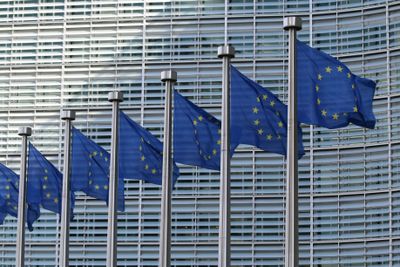
Two decades ago, the European Union welcomed ten new member states, including Cyprus, Czech Republic, Estonia, Hungary, Latvia, Lithuania, Malta, Poland, Slovakia, and Slovenia. This historic expansion not only reshaped the geopolitical landscape of Europe but also holds significance for global politics, economics, and cultural integration. Understanding this event's importance requires recognizing its impact on various fronts, from fostering regional stability to influencing trade dynamics and promoting cross-cultural exchange. Key sub-topics that may interest journalists and the public include: European Integration and Unity: Exploring how the expansion has contributed to the European Union's efforts towards unity, cooperation, and peace among member states. Economic Implications: Analyzing the economic effects of the expansion on both existing and new member states, including trade patterns, investment flows, and disparities in development. Political Dynamics: Investigating the political changes within the European Union, such as shifts in power dynamics, decision-making processes, and the challenges of governance in a larger union. Cultural Exchange and Identity: Examining the cultural exchange and diversity resulting from the inclusion of new member states, and how it has enriched the European cultural tapestry. Challenges and Achievements: Assessing the successes and ongoing challenges faced by the European Union post-expansion, including issues related to migration, integration, and institutional reforms. Future Prospects: Speculating on the future of the European Union, considering factors like potential further expansions, the rise of Euroscepticism, and the Union's role in global affairs. The 20th Anniversary of the Expansion of the European Union marks a significant milestone in the continent's history, offering journalists and the public alike a chance to reflect on the achievements, challenges, and the future trajectory of European integration. Connect with an Expert about the EU: Carolyn Dudek Professor of Political Science · Hofstra University Dr Martin Brenncke Lecturer in Law · Aston University David R. Dorondo Professor · Western Carolina University To search our full list of experts visit www.expertfile.com Photo Credit: Guillaume Périgois

Climate change research trailblazer elected to prestigious list of AAAS Fellows
University of Delaware professor Rodrigo Vargas has been elected as a fellow of the American Association for the Advancement of Science (AAAS) — one of the largest scientific societies in the world and publisher of the Science family of journals. The new class of AAAS Fellows includes 502 scientists, engineers and innovators across 24 disciplines, who are being honored for their scientifically and socially distinguished achievements. Vargas, professor of ecosystem ecology and environmental change in UD’s College of Agriculture and Natural Resources, is recognized "for distinguished contributions to carbon dynamics across the terrestrial-aquatic interface, development of environmental networks, novel data analysis tools and his leadership in creating a more diverse scientific workforce." Deborah Allen, who retired from UD in 2019 as a professor of biological sciences, was also names as a fellow. She was cited “for transformational contributions to STEM education nationally and internationally, particularly for developments in problem-based learning and faculty development.” Vargas is an ecosystem ecologist who studies how nature-based solutions can help address global environmental change in both terrestrial and coastal ecosystems, Vargas uses a variety of research methods, including data mining, machine learning, remote sensing, measurements of greenhouse gas fluxes and modeling techniques for forecasting applications.

New book explores minority languages in the digital age
Heritage Languages in the Digital Age. The Case of Autochthonous Minority Languages in Western Europe offers invaluable insights for educators, activists, policymakers and researchers The book describes the challenges faced by minority languages in today's interconnected world and asks whether digital communication could potentially reverse the decline of smaller and lesser used languages A researcher from Aston University has co-edited a book that explores the intricate relationship between technology, language policy and cultural identity, presenting case studies of digital communication in smaller languages such as Breton, Gaelic, Faroese, Frisian, Lombard, Low German, and Welsh. Heritage Languages in the Digital Age asks whether digital communication can help to prevent language loss of smaller languages and offers invaluable insights for educators, activists, policymakers and researchers navigating the challenges faced by minority languages in today's interconnected world. Edited by Gertrud Reershemius, a professor of linguistics and language contact at Aston University, and Birte Arendt from Greifswald University in Germany, the book's central focus is on minority languages which are facing a declining number of speakers and a loss of communicative domains in an increasingly globalising world. As these languages contend with the dominance of majority languages, stakeholders such as teachers, language activists, planners and researchers are re-evaluating traditional media strategies, language policies and teaching methodologies to counteract language shift trends. The book also discusses how online communities influence language usage and cultural exchanges for minority speakers and advocates for adaptive language policies and innovative teaching methods to support minority languages and bilingualism while fostering linguistic pride and identity. Professor Gertrud Reershemius said: “The languages examined in this book are still spoken by a considerable number of speakers and enjoy varying forms of institutional, legal, financial and ideological support. “While the overall numbers of speakers may be declining, their significance in identity construction and cultural commodification processes is undeniably growing. “As the global discourse on language diversity and cultural preservation gains momentum, this book serves as a comprehensive resource for understanding and addressing the multifaceted challenges and opportunities facing minority language communities.” You can purchase a copy of Heritage Languages in the Digital Age here.

Veterinary deal would increase UK agrifood exports to EU by more than a fifth, research shows
A veterinary deal would increase agri-food exports from the UK to the EU by at least 22.5%, say researchers Agri-food exports overall are worth £25 billion to the UK economy, but the two years since the new trading rules were put in place have seen a fall of 5% in exports to the EU from 2019 levels, during a period where the sector has otherwise grown. Team from Aston University and University of Bristol have analysed trade deals and export figures worldwide to estimate impact of a new veterinary deal on UK–EU exports A veterinary deal with the European Union could increase UK agricultural and food exports by over a fifth, according to new research. The team, from Aston University’s Centre for Business Prosperity and the University of Bristol, analysed the agricultural and veterinary aspects of trade deals around the world to estimate their impact on exports. They then modelled the potential impact of different types of agreement on UK exports to the EU. Veterinary Agreements specifically focus on regulations and standards related to animal health and welfare, as well as to the safety of animal-derived products such as meat, dairy, and seafood. They aim to align, harmonise, or recognise veterinary requirements and certifications, and reduce the number of inspections between countries to facilitate the safe and efficient trade of live animals and animal products. The EU–UK Trade and Cooperation Agreement (TCA), implemented in January 2021, eliminates tariffs and quotas but does not remove non-tariff barriers to trade. These can be particularly burdensome for agricultural and animal-derived food (agri-food) exports, involving complex rules and requirements, production of extensive documentation and veterinary checks. The UK agri-food sector is a cornerstone of the UK economy, with exports worth £25 billion and employing 4.2million people. Although the sector is growing overall, exports to the EU shrank in 2022 by 5% compared to 2019, in part due to the new trade arrangements. This has led to calls for an EU–UK veterinary agreement from business and agri-food organisations, including the Confederation of British Industry, British Chambers of Commerce, UK Food and Drink Federation, Chartered Institute of Environmental Health and British Veterinary Association. Analysing data from the World Bank on 279 trade agreements and export statistics from over 200 countries, the researchers found that shallow agreements, that went little further than provisions already covered by World Trade Organisation (WTO) rules, had significant negative impacts on agri-food exports. However, where trade agreements went beyond WTO provisions to include more commitments on sanitary and phytosanitary (SPS) measures (which aim to protect countries against risks relating to pests, diseases and food safety) and were legally enforceable, they had a robust, positive impact on exports, particularly exports of animal products and food. Applying this to the UK–EU relationship, the team estimate that a veterinary agreement that went beyond the existing TCA provisions would increase agri-food exports from the UK to the EU by at least 22.5%. Imports from the EU would also increase by 5.6%. In the 203 countries studied for the research, positive effects of deep trade deals that included provisions on agriculture took between 10 and 15 years to manifest. But the UK might not have to wait so long, according to report co-author Professor Jun Du, Director of Aston University’s Centre for Business Prosperity. “There is no blueprint out there that mirrors the UK–EU relationship. Most veterinary agreements are agreed as part of a trade deal between countries that haven’t previously had close alignment and it takes a while for the benefits to take effect. “Until recently, the UK had frictionless agri-food exports to the EU, so it’s possible that a supplementary veterinary agreement to reduce some of the frictions created by Brexit could allow trade that previously existed to pick up again quite quickly.” However clear the economic arguments, the legal and political barriers to a veterinary agreement still remain. The researchers address these in their report, suggesting that the best format for the additional measures would be as a supplementary agreement to the TCA. The key question for the UK government in negotiating such an agreement would be what the EU demanded in return. “The closest model is the EU-Swiss relationship, which sees Switzerland largely follow EU law,” said report co-author from the University of Bristol, Dr Greg Messenger. “That’s unlikely to be an option for the UK. As we wouldn’t expect to eliminate all paperwork, we could both agree that our rules meet each other’s standard for phytosanitary protection. As most of our rules are still essentially the same as the EU, that wouldn’t require any major change, though we’d have to agree a greater level of coordination in relation to the development of new rules.” The report was written jointly by Professor Du, Dr Messenger and Dr Oleksandr Shepotylo, senior lecturer in economics, finance and entrepreneurship at the Centre for Business Prosperity, Aston Business School.


Dr Raghunath Anant Mashelkar delivered the 2024 Aston University Annual Distinguished Lecture He has been president of the Indian National Science Academy and director general of the Indian Council of Scientific and Industrial Research and has received multiple honours and awards He was also presented with an honorary professorship in recognition of his outstanding contribution to academia and beyond. Dr Raghunath Anant Mashelkar delivered Aston University’s 2024 Annual Distinguished Lecture to more than 70 invited guests on 22 April. One of the world’s renowned figures in polymer science, research leadership and intellectual property rights, Dr Mashelkar, a chemical engineer, is a global leader and inspiration in his native India and the wider international research community. In recognition of his outstanding contribution to the research community, Dr Mashelkar was bestowed with an honorary professorship at the end of the lecture by Professor Aleks Subic, Vice-Chancellor and Chief Executive of Aston University. The title of Dr Mashelkar’s lecture was ‘Trapeze Artistry in Biomimetic Smart Gels’. ‘Smart gels’, made from synthetic polymers (types of plastics), can be developed with specific functional properties, such as reacting to changes in temperature and pH. Whilst Director at India’s National Chemical Laboratories, Dr Mashelkar led work which discovered smart gels which can mimic biological functions (biomimetic), including being self-healing, self-organising, and acting as enzymes in chemical and biological processes. Their properties can be reversibly switched on or off, or they can change volume or shape, through the use of pH or temperature, the ‘trapeze artistry’ of the title, giving them many uses. This included temperature-responsive comfortable insoles for diabetic feet, drilling fluids which can quickly, but reversibly, plug an oil well, and medical devices for the digestive system, which resist the acidic environment of the stomach to deliver drugs, but dissolve harmlessly in the alkaline environment when they leave the stomach. One of the defining factors of Dr Mashelkar’s work has been serendipity. He told the story of a smart gel that dried to become a completely different shape when dried in his laboratory’s old oven rather than the new oven. One of his research team discovered this was due to the presence of copper ions from corrosion in the oven, which changed the way the molecules arranged themselves and led to a whole new area of research on polymer self-assembly. As he said: “Eyes do not see what the mind does not know. Look at the 'failed' experiment very carefully, maybe the next big breakthrough is waiting there!” Dr Mashelkar also spoke on his life story, from a young boy in India, attending the local municipal school, to addressing thousands of the world’s best minds at places like the World Economic Forum and the World Bank. His great passion now is ‘Gandhian Engineering’ based on the principle of more performance, from fewer resources, for more people. He created the Anjani Mashelkar Award, named after his mother, for the best low-cost, high-technology innovations. Winners have included an Internet of Things-based maternal healthcare system for rural areas and a smartphone app to assess lung health. Dr Mashelkar is proud of his work on Gandhian Engineering. Speaking after the lecture he said: “Rising inequalities create social disharmony. Now, you can’t make the inequalities vanish because you can’t make poor people rich overnight. What is needed is access. Can we give access equality, despite the income inequality? And that’s the principle of Gandhian Engineering. In my lecture I showed a photograph of a poor lady in a hut with a mobile, and a rich lady from a city who also had a mobile. This is equal access. It was not possible previously when mobiles were so expensive. In India now we have good public infrastructure. Data is now Rs 4 per GB and wireless is free. Once you start giving access, there is a parity.” Professor Subic said: “It was a privilege and a pleasure to welcome such a celebrated scientist as Dr Mashelkar to give the Aston University Annual Distinguished Lecture this year. Once again, we have brought a renowned international leader to engage with our community and present some of the most exciting research going on in our world today, while also inspiring the next generation of researchers and international citizens. I am deeply honoured that Dr Mashelkar has accepted an honorary professorship from Aston University in recognition of his international standing and significant contributions to scientific research and innovation.” The distinguished lecture series was established by Professor Subic in 2023. It brings influential speakers to the University to address major scientific breakthroughs, as well as social, cultural and policy issues. The first distinguished lecture was given by Nobel Laureate Peter Agre in 2023. Speaking after the lecture, Dr Mashelkar said: “I am absolutely honoured to get this honorary professorship from Aston University. Aston University is excelling in a number of areas. In terms of its future, I consider that to be very bright for the simple reason that the University’s dynamic Vice-Chancellor is making big changes with speed and skill, with expansion, inclusion and excellence. To be honoured with an honorary professorship is one of the greatest satisfactions and fulfilments of my life.” The lecture was followed by a drinks reception to allow guests to meet Dr Mashelkar and further discuss his work. A video recording of the 2024 Annual Distinguished Lecture will be made available on the University website at a later date.