
Experts Matter. Find Yours.
Connect for media, speaking, professional opportunities & more.

Expert reaction to the UK AI Safety Summit
Today the UK government announced a "world first agreement" on how to manage the riskiest forms of AI. It focuses on so-called "frontier AI" - what ministers consider highly advanced forms of the tech - with as-yet unknown capabilities. The agreement, signed by countries including the US, the EU and China, was announced at the UK's AI Safety Summit. Dr Alina Patelli, Senior Lecturer in Computer Science, Aston University, comments: “A summit on AI safety is long overdue. As is the case with all groundbreaking technologies, AI’s transformative potential for public good is only matched by its risks, which are unlikely to be successfully avoided, if AI tech design and deployment are left unregulated and therefore open to misuse, either intentionally or accidentally. The scope of the summit is appropriate, reflective of Government’s cautious approach to managing interactions with AI safety experts from multiple nations and disciplines: the summit focus is kept narrow, to five objectives only, and the number of participants is wisely limited to 100, to keep the conversation productive.” What is likely to come out of this summit? “The summit’s main output will most likely be a bare-bones regulatory document comprising (1) a shared understanding of AI (i.e., a generally accepted definition of the term reflective of all summit participants’ views, not just those of tech experts), (2) a list of major risks associated to AI misuse, both in terms of potential damage as well as likelihood of becoming a reality, and (3) a policy draft outlining the core elements that a yet-to-be-developed governance framework should include.” What AI safety could/should look like? “Although it would be premature to venture a definition of AI safety ahead of the summit, one thing that is certain is that a comprehensive, therefore effective, AI regulatory framework would encompass more than just laws. Non-legally binding codes of conduct, tech design and development processes that are bound by moral and ethical values, both in the commercial ecosystem, as well as when it comes to individual entrepreneurs, revised open-access licenses under which AI should be used in the public domain, etc. are equally important pieces. The best way to integrate all these in a cohesive, overarching governance plan is perhaps a topic to explore in one of the post-summit events.” What are the potential practicalities for a route forward towards safe AI? “The practical way to systematically regulate AI is incremental. Initially, the development and application of those AI tools deemed to be high-risk will most likely be restricted to controlled environments, where the potential benefits justify the risks and where sound mitigation procedures can be quickly and effectively enforced to mitigate those risks. As regulations become better prescribed, AI’s (safe and legal) application space will gradually expand, making its benefits available to larger groups of people without any of the downsides.” To interview Dr Alina Patelli or request further details contact Nicola Jones, Press and Communications Manager, on (+44) 7825 342091 or email: n.jones6@aston.ac.uk

/cloudfront-us-east-1.images.arcpublishing.com/gray/AYBAAIIRXNAI7DF4F3YUO6E3XM.jpg)
Georgia Southern Libraries celebrates grand opening for Patent and Trademark Resource Center
Patenting an invention and trademarking a product name can be challenging, yet protecting intellectual property is vital. To that end, Georgia Southern University Libraries celebrated the grand opening of its Patent and Trademark Resource Center (PTRC) with ribbon-cutting events at the Armstrong Center in Savannah this past September. The PTRC is part of a nationwide network of 84 public, state and academic libraries designated by the United States Patent and Trademark Office (USPTO) to support the public with trademark and patent assistance. Georgia Southern Libraries is one of two designated PTRCs in Georgia. “With the recent economic development of Hyundai’s Motor Group Metaplant America, associated suppliers and regional commerce, our PTRC cultivates a culture of innovation and entrepreneurship,” stated Georgia Southern’s PTRC librarian representative John Schlipp. “Innovators and creative colleagues utilizing the PTRC service at Georgia Southern University Libraries will be able to determine the potential for their patent applications and federal registration for a trademark on their inventions, products or services.” Georgia Southern’s PTRC partners with the University’s Business Innovation Group (BIG) and other regional, like-minded organizations to foster innovation and creativity. Dignitaries from the USPTO, including Deputy Under Secretary of Commerce for Intellectual Property and Deputy Director Derrick Brent, and Georgia Southern President Kyle Marrero attended the ribbon-cutting in Savannah. Both events acted as workshops for inventors, entrepreneurs and business startups. The PTRC at Georgia Southern can assist patrons in conducting their own free patent and trademark searches on specialized USPTO databases. Additionally, patrons can receive one-on-one instruction on the application process, improve awareness of a product field, determine application feasibility and prepare for consulting with an attorney. Interested in learning more? Contact Georgia Southern's Director of Communications Jennifer Wise at jwise@georgiasouthern.edu to arrange an interview today.


• Rice straw could be a fuel of the future in rural Philippines • Across Asia 300 million tonnes of rice straw go up in smoke every year • New proposals includes scaling up harvesting system with straw removal, biogas-powered rice drying and storage and efficient milling. An Aston University bioenergy researcher has been explaining how rice straw could be a fuel of the future in rural Philippines. Dr Mirjam Roeder who is based at the University’s Energy & Bioproducts Research Institute (EBRI) is collaborating with the UK company Straw Innovations Ltd, Southeast Asian Regional Center for Graduate Study and Research in Agriculture (SEARCA) and Koolmill Systems Ltd to showcase their research. The Food and Agriculture Organisation (FAO) states that rice is the number one food crop globally and 91% of it is produced and consumed in Asia. As a crop it is responsible for 48% of global crop emissions and for every kilogram of rice, a kilo of straw is produced. Across Asia 300 million tonnes of rice straw go up in smoke every year when burnt after harvest, releasing emissions and air pollutants that triple risks of increased respiratory diseases and accelerate climate change. To raise awareness of sustainable uses for rice straw Dr Roeder has travelled to the sixth International Rice Congress in Manila, Philippines to explain the potential of the emerging technology. Rice straw is an underdeveloped feedstock and can be collected and digested to produce biogas, unlocking sustainable straw management options and renewable energy for farmers using anaerobic digestion (AD) from rice straw. Dr Roeder has been working with Straw Innovations on their UK Innovate project demonstration facility in the Philippines, the Rice Straw Biogas Hub, which is scaling up a complete harvesting system with straw removal, biogas-powered rice drying and storage, together with efficient milling. Craig Jamieson, Straw Innovations said: “The International Rice Congress is only held every four years and is a key event for coordinating and tracking progress in rice research. “Our partnership with Aston University and SEARCA adds independent, scientific rigour to the work we do and amplifies our message to government policy makers. We are grateful to Innovate UK for their ongoing support through the Energy Catalyst Programme, which is accelerating our development.” At the conference Dr Roeder has been explaining how independent environmental and social research can increase farmer incomes, equality of opportunity, food security and decarbonisation benefits. She said: “Engaging with stakeholders and working in partnership across organisations is vital to the successful adoption of new technologies. I am delighted to have had the opportunity to host an event with our project partners at this prestigious conference, bringing the cutting-edge research of using rice straw for clean energy to the forefront of the rice research community and supporting the pathway to net zero.” Dr Glenn B Gregorio, Center Director of SEARCA, added: "We are gaining insights into the environmental impact of rice straw utilisation and implementing policies to unleash its potential to empower us to make informed decisions that are instrumental to climate change mitigation and decarbonisation," Professor Rex Demafelis, University of the Philippines, is also working with SEARCA and is leading the project on life cycle analyses and measurements of rice straw greenhouse gas emissions. He said: “Rice straw is a valuable resource, and we are grateful to be part of this team which seeks to harness its full potential and promote circularity, which would ultimately contribute to our goal of reducing our greenhouse gas emissions.” ENDS The Supergen Bioenergy Hub works with academia, industry, government and societal stakeholders to develop sustainable bioenergy systems that support the UK’s transition to an affordable, resilient, low-carbon energy future. The Hub is funded jointly by the Engineering and Physical Sciences Research Council (EPSRC) and the Biotechnology and Biological Sciences Research Council (BBSRC) and is part of the wider Supergen Programme. For further information contact Rebecca Fothergill and Catriona Heaton supergen-bioenergy@aston.ac.uk Follow us on Twitter @SuperBioHub Visit our website at supergen-bioenergy.net Visit our YouTube Channel to watch the video on Carbon Balance FAO: RICE PRODUCTION IN THE ASIA-PACIFIC REGION: ISSUES AND PERSPECTIVES - M.K. Papademetriou* (fao.org) https://www.fao.org/3/x6905e/x6905e04.htm About Aston University For over a century, Aston University’s enduring purpose has been to make our world a better place through education, research and innovation, by enabling our students to succeed in work and life, and by supporting our communities to thrive economically, socially and culturally. Aston University’s history has been intertwined with the history of Birmingham, a remarkable city that once was the heartland of the Industrial Revolution and the manufacturing powerhouse of the world. Born out of the First Industrial Revolution, Aston University has a proud and distinct heritage dating back to our formation as the School of Metallurgy in 1875, the first UK College of Technology in 1951, gaining university status by Royal Charter in 1966, and becoming The Guardian University of the Year in 2020. Building on our outstanding past, we are now defining our place and role in the Fourth Industrial Revolution (and beyond) within a rapidly changing world. For media inquiries in relation to this release, contact Nicola Jones, Press and Communications Manager, on (+44) 7825 342091 or email: n.jones6@aston.ac.uk


The University of Delaware's Day Lab, led by associate professor Emily Day, is conducting innovative research on high-precision therapies using unique nanoparticles. With a recent R35 grant from the National Institutes of Health (NIH), the lab aims to advance the design and use of nanoparticles for managing various diseases, including cancers, blood disorders, and reproductive health conditions. The lab specializes in developing nanomaterials with properties that allow them to target specific cells, evade immune detection and deliver therapeutic cargo effectively. The focus is on understanding the interaction of these nanoparticles with cells and tissues to improve the study, diagnosis, and treatment of diseases. What sets Day's group apart is its ability to bridge the gap between fundamental research and practical applications in nanomedicine. The lab received an NIH Maximizing Investigators' Research Award (MIRA) to support their research for five years, providing stability and flexibility to pursue breakthroughs in overcoming biological barriers to nanoparticle delivery. Key research questions include understanding protein corona-mediated immune clearance and how nanoparticles cross blood vessel walls, addressing challenges in particle distribution and targeting. Overcoming these barriers could significantly enhance the clinical impact of nanomedicine and improve the treatment of various diseases. While the lab's research is fundamental, its implications extend broadly across the field of nanomedicine. The discoveries made, particularly in membrane-wrapping research, may have applications in enhancing the effectiveness of treatments, such as mRNA COVID vaccines, by preventing clearance from the body. Researchers are hopeful that their work will contribute to advancements in targeted therapies, making them more widely available for various diseases. To arrange an interview with Day, visit her profile and click the "contact" button.


Think your city is ready for a cyber-attack? Think again according to our experts
There is no way around it; every day there are new cybersecurity threats to not only individuals, but governments at all levels as well. There have been some high-profile breeches that involve major cities like Atlanta and Baltimore. But those attacks are going to all levels, and recent research has shown most municipalities and cities are ill-prepared for cyberattacks. Research conducted by Donald Norris, PhD, and Laura Mateczun, JD, of the University of Maryland, Baltimore County along with William Hatcher, PhD, Wesley Meares, PhD, and John Heslen, PhD, of Augusta University, found various reasons why local governments struggle with cybersecurity. The research shows local governments recognize the need for cybersecurity but are not taking crucial next steps to ensure cybersecurity by integrating policies into daily management practices. Not just that, some local governments were unaware how often they were under cyberattack. Throw in budgetary constraints, and it leads local governments to be in a tough situation. That, unto itself, is a major sticking point, but the burden could be lessened. “Effective cybersecurity is expensive and too much of a strain on the budgets of many cities and counties,” said Hatcher, chair of the Department of Social Sciences in Pamplin College of Arts, Humanities, and Social Sciences at Augusta University. “This is why we suggest regional solutions to the program, so multiple governments carry the cost.” Meares, associate professor and MPA director in Pamplin College, added it’s not just the financial aspect, but said there’s a shortage of cybersecurity talent nationwide, which compounded with limited budgets, makes it tough to compete. In the quest for talent between private and public sector, usually the private sector can offer more to entice a cybersecurity expert to come work for them. There’s also an issue of many local governments using dated technologies, which may be easier for cyber criminals to attack. “Local government is increasingly being more digitally connected, with vital infrastructure, data and services connected which creates more opportunities for cyber-attacks. Additionally, local governments tend to lag in updating critical technology due to limited resources (both human and financial resources),” added Meares. None of this comes as a surprise in the lack of cybersecurity training. “It’s an expensive service for local governments to provide. This is why we suggest more budgetary support for the training,” said Heslen, assistant professor in Pamplin College. “We’re also unsurprised because local governments often struggle to fund professional training in other areas.” But researchers say there are ways to improve upon safety of critical data most notably adopting dedicated cybersecurity budgets funded at an appropriate level in all local governments. Those resources can help address many limitations in local government cybersecurity programs, from staffing and hardware and software deficiencies to awareness training for all parties in local governments. They also recommend the adoption and implementation of cybersecurity policies to manage and regulate actions taken by all that affect the organization’s cybersecurity. By taking the recommended actions, local governments will have a better chance to provide high levels of cybersecurity and protect their information assets more effectively. This is an important topic and if you are a journalist looking to know more about the importance of being ready and able to react if and when a municipality comes under threat from a cyber-attack - then let us help/. William Hatcher and John Heslen are both available to speak with media - simply contact them now to arrange an interview today.



'Shake it Off' - Do Grammy-Winning Pop Artists Take More Creative Risks Than Their Runners-Up?
Taylor Swift has had a career marked by an evolution in sound and style. Swift emerged into the industry a country star and was later rebranded a pop icon. She’s gone on to explore alternative rock and indie folk sounds. Research by Giacomo Negro, professor of Organization & Management and professor of Sociology (by courtesy), suggests Grammy award wins may be credited as the catalyst for these changes. Swift, who holds 11 Grammy awards, won her first in 2010, taking home Album of the Year for country album “Fearless,” then again for her first exclusively pop album “1989” and again in 2021 for her indie folk album “Folklore.” Each time she earned another Grammy, she tried something new. Swift is not the only one. After winning Album of the Year in 1988 for classic arena rock album “The Joshua Tree,” U2 released “Achtung Baby,” an album that dabbled with kraut rock and electronic music. Similarly, Fleetwood Mac’s “Rumours” won them Album of the Year in 1978, after which, they released their double album “Tusk,” an experimental record that incorporated punk-rock. Does Missing out on a Grammy Win Make Artists Timid? Negro’s research shows Grammy award winners tend to release albums that are more distinct from the work of other artists, whereas Grammy nominees who do not win create music that is more similar to other artists than they had prior to their nomination. Negro co-authored the research with Balázs Kovács from Yale University and Glenn Carroll from Stanford University–a culmination of more than five years of work. Negro says he has always been interested in cultural production, and he set out to study the patterns of differentiation in the music market. He chose the Grammys because these symbolic awards provide a situation similar to a natural experiment that is hard to find in real life or without a controlled environment. The Grammys are also unique because they share the names of both the award winners and the nominees, presenting a comparison among candidates of similar quality. To explore this question, Negro obtained data from four main sources: Grammy Awards Academy, online music database AllMusic, Spotify, and Billboard. From the academy information, he collected data for the Grammy nominated artists and winners from 1959 to 2018 in four “general” categories: Album of the Year, Record of the Year, Song of the Year,and Best New Artist. From AllMusic, they collected data based on the Grammy information that included artist name, recording name, year of release, record labels the artists released the music with, the production team they worked with, and the stylistic tags attached to each recording. Spotify holds a repository of popular songs; from here, they sourced data on the songs’ sonic features, which are the objective parameters of the music that qualify how the music sounds and is measured by algorithms, including tempo, genre, and key. Looking at the Billboard charts for the 2000s, they found the most albums that sold the most copies. “We combined all of this information coming from different sources, which was a challenge and an endeavor by itself, to attach information related to styles, sonic features, performance on the chart, and performance with the awards,” Negro says. They compared albums of Grammy winners with the albums of the nominees, then compared these with albums from a group of artists in the general market matched on a series of characteristics (such as genre and length of recording career). The researchers found that after artists win a Grammy, they become more experimental with their work, whereas the runners-up make music that is stylistically more conventional. This latter result was unexpected. Negro argues that there is value to be seen in the Grammys–even though it may be criticized for being too commercial or questioned for its relevance–because it has an impact on the music market and the careers of artists who are nominated and awarded. “These prizes celebrate creativity and innovation but may have unintended consequences in terms of their artists’ behavior,” he adds. “If more people become more conventional because of not receiving an award, one implication for cultural production is that awards have mixed impact. They benefit winners because they afford them more autonomy and, perhaps, confidence to explore new ideas, but they don’t necessarily benefit innovation in the field overall because more artists are just becoming more conventional.” He offers that, conversely, there may be a positive impact for artists who were not nominated at all. These artists may try to imitate the winners and try different things in the future. From this, it is clear that there is a benefit to mention who wins an award, but he says it is inconclusive whether there is a benefit to sharing the names of shortlisted candidates. What are the Greater Cultural Implications? “It’s interesting to observe how cultural production is sensitive to symbolic awards,” Negro says. “We tend to think that artists mainly follow their muse or their inspiration, but they respond to the stimuli around them.” Negro speculates that the results found in this study might apply to other industries in which producers or artists can combine different elements of styles to create their products, such as book publishing, visual arts, film, or television. He adds, these results may apply more generally to other markets and professional settings, in which employers create programs of rewards for employees. A bestowal of such awards may empower winners to continue with their behaviors, while discouraging those who were not recognized for their efforts, leading them to return to more typical behaviors. Negro is interested in following up this research by looking at the general impact of all Grammy Awards–not just the general ones–to see if specialized awards have a similar impact. He is also curious to investigate the patterns of collaboration between artists, and if stylistic changes are related to changes in the people artists work with. When Business Meets Research, What Can Students Take Away? Negro says this research also yielded findings that his team did not expect, as in the difference between winners and non-winning nominees. Where they thought they may see similarities, they, instead, saw differences, reiterating the importance of questioning how industries operate. To inquisitive students he advises, “Keep your eyes open and be curious about understanding why or how things work the way they do. Then, be persistent because it can take a long time to bring your idea to fruition.” Interested in knowing more or connecting with Giacomo Negro - simply click on his icon now to arrange an interview or time today.



Is too much of a good thing actually a bad thing? That’s what researchers in Georgia Southern’s Biodynamics and Human Performance Center aim to find out through a recent study of 75 ultramarathon runners during the 50th anniversary of the Western States 100-mile Endurance Run (WSER) in California. The study focuses on the benefits of physical activity beyond the typical recommended amount by examining the cardiovascular effects of extreme exercise in the WSER, a 100-mile trail race through the Sierra Nevada mountains that climbs more than 18,000 feet and descends nearly 23,000 feet before runners reach the finish. Drs. Grosicki and Babcock (University of Colorado, Anschutz Medical Campus) work through the night to collect cardiovascular measures on race finishers. “We know that exercise is beneficial for health, and national and international public health agencies, such as The American Heart Association, advise that adults get at least 150 minutes of moderate or 75 minutes of vigorous physical activity per week,” said Gregory Grosicki, Ph.D., associate professor in the Waters College of Health Professions Department of Health Sciences and Kinesiology. “Moreover, there is a dose-response relation between exercise and health, whereby an individual can gain even more health benefits by being active for up to 300 minutes per week,” he continued. “However, it is uncertain whether exercising for greater than 300 minutes will confer any additional health benefits, and importantly, excess exercise may actually detract from cardiovascular health.” It is important to note, Grosiciki said, that this apparent “partial loss of health benefits” from excess exercise is theoretical for the time being. “Studies such as ours will help to determine whether this hypothesis is valid, and if so, what can be done about it,” he said. This is the third year Grosicki and colleagues attended WSER to collect data on some of the world’s most extreme athletes. Previous studies focused on changes in gut health during exercise, which, believe it or not, may actually be linked to changes in cardiovascular health. Associate Professor Gregory Grosicki, Ph.D., and research colleagues stand at the start line of the Western States Endurance Run. Grosicki recruited 10 research faculty and students from Auburn University, Florida State University, San Francisco State University and the University of Colorado Anschutz to assist in the data collection. “We measured blood pressure, arterial stiffness, heart size and function and kidney blood flow, and we collected blood and urine from 75 athletes pre-race, 55 of which completed the race and returned for post-race measures,” stated Grosicki. “This is, without question, the largest and most comprehensive dataset ever to be collected at a single event like this.” WSER begins in Olympic Valley, California, and ends in Auburn, California, and is considered one of the oldest and most competitive ultramarathons in the United States. Participation is highly selective, and if chosen, athletes have only 30 hours to cover the distance. The Western States Endurance Run Research Foundation funded this project. This is exciting research and you are a reporter looking to contact Gregory Grosicki, Ph.D. from the Waters College of Health Professions Department of Health Sciences and Kinesiology - then let us help. Simply contact Georgia Southern's Director of Communications Jennifer Wise at jwise@georgiasouthern.edu to arrange an interview today.
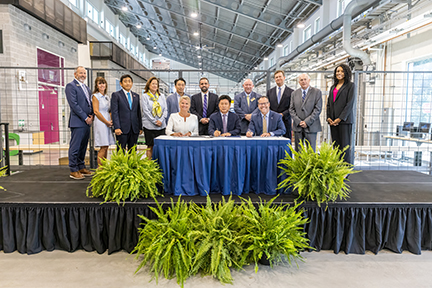
In a milestone collaboration aimed at fostering workforce development, innovation, and community enrichment, Hyundai Motor Group Metaplant America (HMGMA), Georgia Southern University and Ogeechee Technical College are signing a formal agreement to work together in addressing regional workforce needs while advancing academic excellence and technological innovation. Ogeechee Technical College President Lori Durden, HMGMA CEO and President Oscar Kwon, and Georgia Southern University President Kyle Marrero sign transformative agreement surrounded by officials from both institutions and HMGMA. The partnership will encompass a diverse range of initiatives that reflect the shared commitment HMGMA and its local education partners have to catalyze positive change for both the academic community and the broader society. Leveraging their respective strengths, this collaboration aims to address workforce demands, create transformative educational pathways, and drive impactful research endeavors. “Together, we are not just building cars; we are building futures, strengthening the community and driving progress,” said HMGMA CEO Oscar Kwon. “That is part of Hyundai’s mission: progress for humanity. Our partnership with these institutions reflects our shared vision for a brighter, more innovative future.” As part of this partnership, Georgia Southern University has committed to build on the success it has already seen in recruitment services for HMGMA. These services will include on-campus information sessions, dedicated company recruiting events, and on-campus interview days for graduating seniors. By bridging the gap between academia and industry, the University is ensuring that its students are well-prepared for the demands of the professional world. The university also will offer professional development certifications and courses for the company’s employees through its Continuing and Professional Education programs. “This partnership stands as a testament to the value of collaboration between academia and industry in driving holistic growth,” said Georgia Southern President Kyle Marrero. “By uniting forces, HMGMA and Georgia Southern University are forging a path that not only elevates educational opportunities but also cultivates a thriving community equipped to meet the challenges and opportunities of the future.” Georgia Southern also will strengthen its alliance with Ogeechee Technical College to create revised and expanded articulation agreements, pathway programs, and credit transfers. These initiatives will pave the way for the development of collaborative academic programs tailored to meet the specific workforce needs of the region. This includes exploring innovative degree pathways such as Advanced Manufacturing Engineering, as well as fostering additional academic collaborations that align with workforce-driven educational programs. Ogeechee Tech’s commitment includes continuing its record of providing training to local companies to include implementing the Electric Vehicle Professional Technical Certificate of Credit and Hybrid/Electric Vehicle Repair Technician Technical Certificate of Credit programs, and developing Industrial Maintenance Noncredit Training for HMGMA Employees. Additionally, Ogeechee Tech agrees to provide on-campus recruitment events and career fairs to current and past graduates. “Ogeechee Technical College is very excited about entering into this MOU with HMGMA,” said Lori Durden, president of Ogeechee Tech. “This has been several months in the making, and like other institutions and technical colleges in our region, we are going to do all that we can to support the efforts of our Governor to make Georgia the electric mobility capital of America. This is an exciting day for Ogeechee Technical College, and we look forward to supporting the evolving workforce development needs of this region.” With the Memorandum of Understanding, HMGMA will help promote educational opportunities in the region; develop internship, career pathway programs, and other appropriate work-based learning opportunities; and commit to exploring potential research, innovation, and commercialization projects. Interested in learning more or looking to talk with Georgia Southern President Kyle Marrero about this exciting new partnership ? Contact Georgia Southern's Director of Communications Jennifer Wise at jwise@georgiasouthern.edu to arrange an interview today.
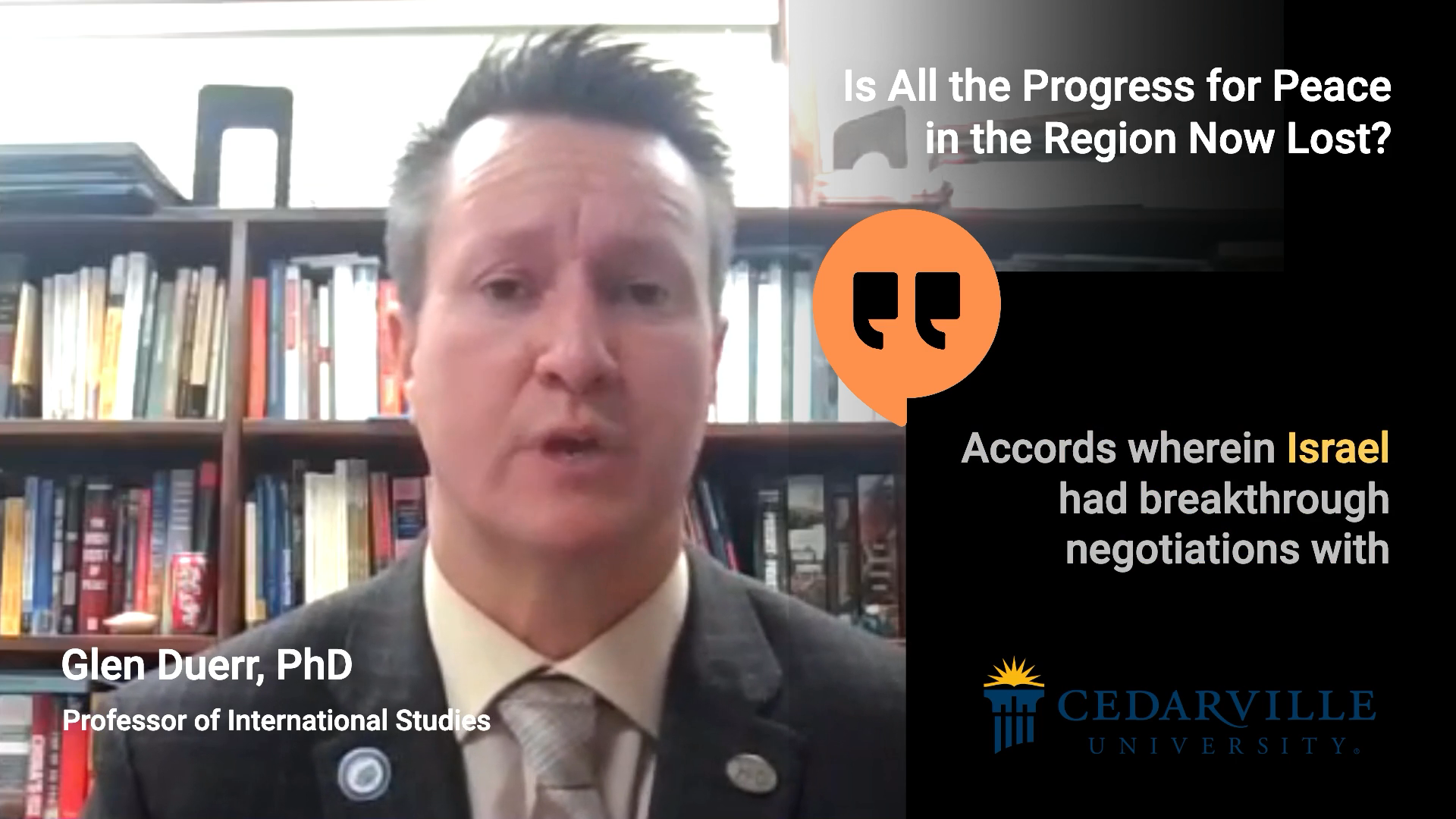
Progress lost? Is there any chance for lasting peace in the Middle East?
War is on again in the Middle East - and after years of talks, negotiations and most recently the Abraham Accords - has it all been lost now that war has returned? Glen Duerr, Ph.D. a Professor of International Studies at Cedarville University and a renowned expert in the areas of international relations and comparative politics, can explain the peace process and what might be next in Arab-Israeli relations. If you're covering this ongoing war and need to know more - then let us help with your questions and stories. Dr. Duerr is an expert on this subject and is available to speak to media regarding this topic– simply click on his icon to arrange an interview.


It's a fabulous fall - and our expert can explain why all those colors come out this time of year
Autumn has arrived. And as we all take time to welcome this wonderous palette that nature delivers year after year, those who are curious about all those colors are looking for answers. Why there are so many different shades, tints, and tones? What causes the colors to change? And where's the best place to find one of nature's finest displays of leaves? It's a topic that comes up every year, and recently Connecticut Public Radio connected with UConn's Bob Fahey to get some of the answers about autumn in New England. I ventured into a forest in northeastern Connecticut with two UConn tree experts. We met up at Horsebarn Hill, one of the best viewpoints in the state, surveying a rolling river valley showing off with fall colors. We see oaks just starting to turn red. Nearby hickories provide a dash of yellow – and, of course, the maples are already stealing the show, even on a cloudy day. Here’s what I found out: Our trees are diverse One reason the foliage is so good is simply due to the number of species we have. “We have a very diverse hardwood forest in this part of New England,” said Bob Fahey, an associate professor and forest ecologist at UConn. “We have both species that are more southern species and also some of the more northern species.” “In comparison to say, the Mid-Atlantic or other places that have lots of deciduous species, we have maples, which are just the best,” he said. “We also have a number of species that have nice yellow foliage,” he said. “Birches and beech. If you go a little bit farther south from here, mostly what you have is oaks. And oaks can have good fall foliage colors, but there are a lot of times they don't and they don't last for as long.” We have lots and lots of trees The diversity of species provides a diversity of color, said Tom Worthley, an associate extension professor and a forester at UConn. He asked me to remember the last time I flew over Connecticut. What did you see, he asked. Lots of trees, right? “Most of the ground is covered by a tree canopy,” Worthley said, noting that some estimates put that tree canopy cover at around 75% of the land area of the whole state. “Back where we were standing a few minutes ago, we had some cherry trees,” Worthley said, his eyes scanning the trees enveloping us. “There's a few remnant ash, there's some walnut around the edges here. And let's see, some hickory.” A walnut tree towers over us – and there are even some white pines. It’s that varied bioscape that sets New England forests apart. “Even in my two-acre forest behind my house, I have 22 different species of tree, which is more than some regions of the northern part of the U.S.,” Fahey said. Travel to the west, and what you’re likely to see are lots of evergreens and aspen trees. “Not that there aren't others, there are plenty of others, but not in the same abundance and not in the same kind of mix that we have around here,” Worthley said. Climate plays a role Across New England are rolling hills with microclimates that can contribute to vibrant fall colors. “You’ll see ... highly different color in different parts of the landscape, which has to do with temperature differences,” Fahey said. Combine that with Connecticut’s mix of southern and northern species and the colors here might not be as exciting and bright as what you would see in Vermont and New Hampshire, Fahey said. But our foliage season can sometimes last a little bit longer. One reason? Oaks. “We have so much more of that oak component,” Fahey said. “The oaks will hold their leaves until the end of October.” Moisture, temperature and the amount of daylight all contribute to how long it takes for a tree to shed its leaves. And, for each species, the calculation is different. “A tree makes an economic decision,” Worthley said. “It decides, ‘Well, it's costing more in energy to keep these leaves going than what they're producing for me and so it's time to shut them off.’” Why do leaves fall anyway? It’s when leaves are green that the most important work is happening, pulling carbon out of the atmosphere and giving us oxygen. And for that green color, we can thank the pigment chlorophyll. “The color that's in the leaves – is always there from the time the leaf is grown,” Worthley said. “As the growing season fades, the chlorophyll disappears,” he said. Then the other colors in the leaf can begin to show off. Pigments like anthocyanins (reds and purples) and carotenoids (yellows and oranges) peek out, tiny threads in an autumnal blanket transforming New England’s green forests into a richly colored landscape. The colors are out - but only for a limited time. If you're a journalist looking to know more about this topic before all the leaves fall, then let us help. Dr. Fahey is an Associate Professor in the Department of Natural Resources and the Environment and Center for Environmental Sciences and Engineering at the University of Connecticut. He is also the George F. Cloutier Professor in Forestry, director of the UConn Forest, and associate director of the UConn Eversource Energy Center. Simply click on his icon now to arrange a time to talk today.

