Experts Matter. Find Yours.
Connect for media, speaking, professional opportunities & more.
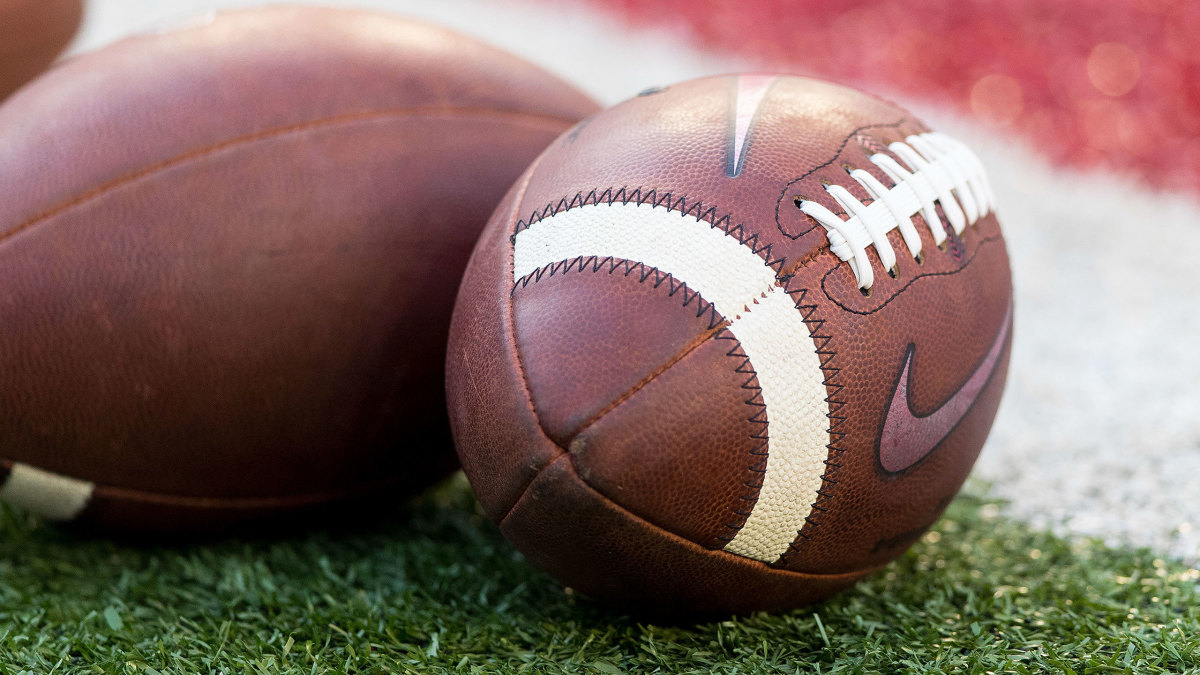
The landscape of college athletics has changed greatly in the past year. For the first time ever, student athletes can now profit from the use their name, image and likeness. It’s been a hot topic subject for years, and now it’s come to fruition. Dr. David Hunt is an associate professor at Augusta University’s Pamplin College of Arts, Humanities, and Social Sciences and also the faculty athletics representative at AU. “It’s different for Division I and for Division II. For DI, there’s bigger audiences and they have bigger followings. But it isn’t D1, D2 and D3 specific; it just seems like people are willing to put more money into programs at the D1 level,” said Hunt. While some may think NIL deals go to the most popular athletes, that’s not always the case. “There are a lot of NIL opportunities for people who don’t have a huge number of followers, because it tends to hit a particular niche,” added Hunt. It’s not just the notoriety on the court or playing field that can garner an NIL deal, but also a player's social media activity and number of followers. These can be a big tool for student athletes receiving compensation for outside business ventures. “It can be cash or it can be in-kind payments. So for some influencers, companies just send them stuff in an effort to get them wearing it on their social media channels.” Some schools and athletic programs have already negotiated deals for an entire team where all the players can benefit from it, but Hunt said it could lead to legal questions over potential conflict of interest deals. “If a basketball program gets a NIL deal for the whole program with Adidas, can an individual player wear Under Armour? Can an athletic department even do that? It can be helpful and beneficial and monetarily advantageous for those students, but it’s not the students doing that,” said Hunt. All the NIL deals, especially those where schools negotiated them, can be used as a recruiting tool to entice athletes to come play for their program. This could create a recruiting advantage for some states over other states. “One university received NIL deals for every single female athlete. That is a huge advantage compared to other universities. So now some universities can recruit students based on the NIL opportunities and if the university has a support program for it, they can say we have a structure in place that you can take advantage of.” This is an important and emerging topic happening in schools and athletic programs across America, and if you’re a journalist looking to know more, then let us help with your questions and coverage. Dr. David Hunt is available to speak with media regarding student athletes now being able to profit from their name, image and likeness – simply click on his icon now to arrange an interview today.


Study reveals the inside of your car is dirtier than the average toilet
A study by researchers in the College of Health and Life Sciences at Aston University and commissioned by Scrap Car Comparison has revealed that the inside of our cars have significantly higher levels of germs on them than the average toilet. The researchers took samples from car interiors with varied ownership histories, to establish bacterial contamination levels within the vehicles and to highlight how thoroughly people clean their cars. The results revealed that motorists should be cleaning the inside of their cars more frequently, with harmful bacteria likely to be discovered in most cars out on the road today. In particular, the study found that the car boot plays host to significantly high levels of bacteria, with E.coli likely to be found in every boot and potentially on your driver’s seat. More commonly known as faecal bacteria, the findings pose a clear concern for anyone that puts their fruit and vegetables in the boot after a trip to the shops or enjoys a drive-thru dinner in the driver’s seat. Dr Jonathan Cox, a senior lecturer in microbiology at Aston University, said: “The results of this study are fascinating, as they help to show that despite cleaning our cars, the older they are, the dirtier they generally are. “This becomes key when thinking about areas such as the car boot or driver’s seat. Many of us have placed loose food shopping in our boots, or dropped the odd crisp onto our seat, before picking it up and eating it.” Other areas tested included the gearstick, dashboard and backseat which also saw higher levels of bacterial contamination than is found on the average domestic toilet. Bacteria found included Pseudomonas, a bacterium with strains that can’t easily be treated with antibiotics and Staph Aureus, a germ associated with coughs and sneezes that in some cases is linked to MRSA. The researchers identified the filthiest areas of a car: 1. Boot - 1,425 bacteria identified 2. Driver’s seat - 649 bacteria identified 3. Gearstick - 407 bacteria identified 4. Back seat - 323 bacteria identified 5. Dashboard - 317 bacteria identified 6. Steering wheel - 146 bacteria identified. There was also a correlation discovered between the age of a car, and the levels of bacteria likely to be found within it. The older cars sampled for the study exhibited higher bacteria loads than those that have been on the road for a shorter amount of time. However, the researchers found that out of all areas of our cars, the steering wheel was generally found to be the cleanest. This high-contact area saw very low levels of bacterial contamination and could be due to the uplift in hand sanitiser use following the COVID-19 pandemic. Dr Cox added: “These results highlight that we should change how we think about our cars and cleanliness. Often, we will clean our cars based on whether they ‘look’ clean versus whether they actually are clean. But you would never even think about eating off your toilet seat. “Upholstery should ideally be given a deep clean and in future I will always clean any used car I might purchase!” Dan Gick, managing director at Scrap Car Comparison, commented: “Taking care of your car, from making sure it’s running well to keeping it clean, all work towards ensuring it has a long life and is a car you love mile after mile. The last thing you want is for your car to become a risk on the roads, as well as a risk to your health. “We hope the results of this study help to highlight the importance of taking good care of your car inside and out. It’s worth thinking about how often you clean the inside of your house and apply the same thought process to your car, especially if you tend to drive it every day”.


Intimate relationships demand real understanding
University of Rochester psychology professor Harry Reis says it's important for us to have "real understanding" in our closest relationships so that others know who we are and will, in turn, be caring, validating, and accepting. And as Reis puts it, "With all the stresses and tensions that we're experiencing today, there's an even greater need to connect with people." In his research, Reis investigates some of the psychological processes that affect the course and conduct of close relationships, with a particular focus on intimacy, attachment, and emotion regulation. In any close relationship, Reis says it's important to put aside presumptions of what the other is thinking or feeling, and, instead, listen to what that person is actually saying. Reis points out that understanding has value beyond intimate relationships. For example, he says medical care works better when patients feel doctors are truly listening. "It's also important in the classroom. Students are more likely to succeed when they feel their teachers understand them and their priorities."



The modern office has changed. According to some experts, it’s much overdue. For others, the idea of the separation of domestic and professional lives is still something to accept. Either way, with the onset of COVID-19 and as workplaces adjust to life after the pandemic, working from home is the new norm for many people and it’s likely going to stay that way indefinitely for some. With that reality also comes the fact that your home office needs to be just as safe and secure as your former place of work once was. Worry not – we’ve got experts who can help. It’s why we asked Augusta University’s Dr. Jeffrey Morris, assistant professor in the School of Computer and Cyber Sciences, for some easy tips and helpful advice on making that happen. How to separate home or work? The best way to keep work materials safe would be to have a separate device that is used only for work, such as a company-supplied laptop. Since most of us will not have devices supplied to us, the next best would be to use a device that has minimal other use: Try not to use a computer that the rest of the family uses. If others use the computer, create a new user login and use that for work only. Keep all your work files in an encrypted folder. Ensure you have security software installed on the computer you are using for work. Some of the other ways include using a Virtual Private Network, which I’ll address in the next question. What's the best way to secure your connection? Using a Virtual Private Network (VPN) is a must. Hopefully, your work will provide a VPN connection for use. With the spread of cloud data storage, ensuring all connections are secured (the little lock icon in your browser is visible) is a must. If you have a work laptop/computer assigned to you, do you need to take additional steps to secure it while working from home? Much like being in the workplace, the same rules apply: You should log out of the device once you are done working for the day. This prevents accidental use of the computer by others in the home. Turning the device off when not in use is a good way to ensure this. The device needs to be physically secured as well. If the device does not have an anti-virus software program installed from work, you need to ensure it has it before you use it at home. What are the biggest red flags you should look out for? Be wary of emails. Many people mix their work and personal emails when working from home. You may receive a phishing email to your personal email that is aimed at accessing your work email and computers. Cybercriminals are aware that many people are working from home and trying to gain access to company networks by breaking into home computers and waiting for the user to log into company networks or cloud storage. And don’t forget … Updates. Do them as often as possible. Keep your computers updated. This includes not only the operating system but all the other programs installed on the machine. Cybercriminals are targeting all the other software on the computers as the operating systems are getting harder to exploit. There are programs available that can inventory the software on a computer and tell you which programs need updating. Looking to know more? Then let us help. Dr. Jeffrey Morris is an assistant professor at Augusta University’s School of Computer and Cyber Sciences. He’s available to speak about keeping your home office safe – simply click on is icon now to arrange an interview today.


Free masks are coming - here's what you need to know
As stores across America prepare to receive "the largest deployment of personal protective equipment in U.S. history," UConn epidemiologist Dr. David Banach is answering the questions about N95 respirators, how they work, and how to use them properly in a new interview with Buzzfeed news: There are several different types and shapes of N95s; some look like duck bills, others like domes, and several have three panels. The main difference between nonsurgical and surgical N95s is that the latter are also fluid resistant to protect doctors and nurses from blood and other bodily fluid sprays, Dr. David Banach, an infectious disease physician and hospital epidemiologist at UConn Health of the University of Connecticut, told BuzzFeed News. ****** N95 respirators are regulated by the US with standards set by the National Institute for Occupational Safety and Health (NIOSH), while KN95s (and KF94s and others) follow international standards, meaning they also should screen out about 95% of germs and particles, but their effectiveness can vary between brands sold in the US. That’s why Banach advises extra caution if you choose to wear these masks. ****** N95 respirators do expire, Banach said, but it’s usually several years after they are made. As long as you store your N95s according to its box instructions, you’ll be fine — unless you’re saving them for the next inevitable pandemic. Dr. David Banach is an expert on infectious diseases and epidemiology and is a leading expert on COVID-19 in America. To book an interview with Dr. Banach, click on his icon today.


The world's gone crazy for Wordle - Our expert explains why
You can't avoid it these days - Wordle is everywhere. Social media is peppered with people's results, it's the topic of talk shows, and even SNL did a parody of it - essentially baptizing Wordle as a part of American culture. It's a phenomenon that has caught fire - and media everywhere are trying to figure out why. That's why when the Washington Post was trying to spell out just what makes Wordle so enticing - the reporter contacted Dimitris Xygalatas from UConn to get to the source of this five-letter craze. In the beginning, Americans created sourdough starters. As people looked for rituals to cope with the early uncertainties of the pandemic, many bought Peloton bikes, built gardens and watched “Tiger King.” And in Brooklyn, a software engineer said: “Let there be Wordle!” And there was Wordle. Big-time. In recent weeks, the online game has become a kind of ritual for its players, who pilgrimage daily to a website to solve a five-letter puzzle. After completing the game, many share their score with their friends, along with the grid of yellow and green squares that show how many tries it took them to solve the puzzle. The game with no ads was created in late 2021 by Josh Wardle for his partner as a way to kill time during the pandemic. Humans’ brains are designed for pattern-seeking in order to help us make sense of the world, said Dimitris Xygalatas, an anthropologist and cognitive scientist at the University of Connecticut. When humans aren’t able to find patterns, we can experience stress, he said. Something like doing Wordle daily can give people a sense of regularity and a sense of control. Xygalatas’s studies have found that people who participate in collective rituals have lower levels of cortisol that correspond with lower stress and are often able to build social-support networks. This is why, he said, communal rituals — such as cheering for health-care workers from apartment balconies — took off in the early months of the pandemic. “Our mind craves regularity,” he said. “It’s one of the main ways we try to fight anxieties.” Professor Xygalatas is an anthropologist and cognitive scientist at the University of Connecticut who specializes in some of the things that make us human, including ritual, sports, music, cooperation, and the interaction between cognition and culture. He is available to speak with media, answering all your Wordle questions. Click on his icon to arrange an interview today.


All eyes on Virginia as parents and school systems sue over mask-optional orders
Virginia has become the center of attention for lawmakers as seven school boards are taking Gov. Glenn Youngkin to court over mask-optional orders for students. A group of parents are also suing the new governor, who campaigned on ending mask mandates in public schools, and made it one of his first executive orders. It’s a complicated and no doubt controversial stance – and to fully comprehend what’s going on and the political implications for both sides, media organizations like The Washington Post are contacting experts like UMW’s Stephen Farnsworth to help break it all down. Fairfax School Board Chair Stella Pekarsky said in an interview Sunday that the lawsuit boils down to an issue of local control: “Can we make policies for our school system, or does the governor get to come and do that for us?” Youngkin, Pekarsky added, “does not tell us what to do.” Stephen Farnsworth, a political science professor at the University of Mary Washington, said the twin lawsuits place significant pressure on Virginia’s court system to step in quickly to resolve the debate. “In situations like this, where there is no middle ground and where neither side has any interest in backing down, only judges can be the necessary umpires,” Farnsworth said. “The sooner they do so, the better for all concerned.” But nobody knows when that will happen. This is a hot button topic, and the result of the lawsuits may have national implications. Dr. Stephen Farnsworth is a sought-after political commentator on presidential politics. He has been widely featured in national media, including The Washington Post, Reuters, The Chicago Tribune and MSNBC. If you are a reporter covering the midterms and especially Virginia politics, simple click on his icon to arrange an interview today.



Tension are rising in Eastern Europe as troops, tanks and weapons are piling up on both sides of the border separating Russia and Ukraine. And with each passing day, the invasion of Ukraine and the possibility of outright war seems to be increasing. Is war inevitable? How did this situation escalate so quickly? Is this a power-play but Vladimir Putin? Should other neighboring countries be worried? And what is the strategic and historical significance of Ukraine when it comes to Russia wanting to invade? How could this affect the U.S.? There's a lot of questions to be answered - and if you are a reporter covering this escalating news story, then let our experts help. Jacek Lubecki, Ph.D., is an associate professor of political science and international studies at Georgia Southern University. He is also expert in Polish and European military history. Lubecki is available to speak with media regarding this topic - simply click on his icon now to arrange an interview today.


Across America it seems deliveries are delayed; shelves are looking increasingly bare and there’s an elevated sense of anxiety when it comes to what lies ahead for America’s economy. All of these important topics are forefront in the minds of many and reporters are covering these stories locally and nationally on a daily basis. It's making news, and that’s why we’ve asked Dr. Richard M. Franza, the Dean of the James M. Hull College of Business at Augusta University, a few quick questions that we’re seeing pop up in media coverage across Georgia. Q 1 - What is causing shortages here at home, especially in grocery stores? “Like most things, it is complicated, not a lot of easy answers, but there are clearly a few things in play here. First, companies have been having a hard time finding workers throughout the supply chain. It starts at the producer level, whether it is meat processing plants or producers of other foods and sundry items, production levels are down due to limitations on workers. Then, there have also been worker issues at the transportation/logistics part of the supply chain. Particularly in the area of trucking. So, even when producers have enough supply, they are having difficulty getting it to the stores. Finally, there are issues at the grocery stores themselves. Both at their distribution locations and the store themselves, they have been short on labor unloading and picking items, again delaying products from getting on the shelves. The problem has gotten worse in the past few weeks due to the COVID spikes due to omicron. While omicron is causing less serious results, it appears to be easier to catch. So, lots of people are getting it, making people have to miss work for five days, putting a further crunch on the labor force.” Q 2 - Is this a problem we are likely to see continue through the first quarter or half of the year? “I am optimistic that we can get past the omicron crunch in the coming weeks (by mid to late February, if not sooner). So, things should get better this quarter. However, this will just put us back to where we were pre-omicron, with still some lingering issues. I am hopeful that as the pandemic evolves into an endemic, things will resemble a more normal environment. While this virus has been unpredictable, I am hopeful that we can return to more normal environment no later than the end of the second quarter.” Q 3 - What we can we expect once the pandemic finally subsides? “I am extremely optimistic concerning our economy post-COVID. We have been pretty resilient to date, so I think if COVID transitions to endemic, I think we will see more spending and more people going to work.” If you’ve got more questions to be answered, or if you’d like to speak with him one on one – then let us help. Dr. Richard M. Franza is available to speak with media about important issues like America’s supply chain and the economy – simply click on his icon now to arrange an interview today.


Ask an Expert - Are American Fan-Based Businesses at Risk for Decreased Revenue?
Modern fandom, according to Mike Lewis, is about having a passion for something—a sports team, entertainer, politician, fashion brand, a university—something. Lewis, professor of marketing and faculty director, Emory Marketing and Analytics Center (EmoryMAC) and host of the podcast, Fanalytics, considers fandom important because what people are fans of defines a modern culture. We can laugh at the sports fan with the painted face and the open shirt and the spikes on the sleeves, but the reality is, the traits that drive that level of enthusiasm and commitment are the traits that change the world outside of the arena. Mike Lewis, professor of marketing and director of EmoryMAC To better understand modern fandom and its effect on culture, Lewis, along with Yanwen Wang, Associate Professor of Marketing and Behavioral Science, and Canada Research Chair in Marketing Analytics, University of British Columbia, created EmoryMAC’s “Fandom Analytics Initiative.” The Fandom Analytics Initiative’s first report, Next Generation Fandom Survey, Generation Z: The Lost Generation of Male Sports Fans, published in September 2021, examines the results of a national survey the initiative commissioned. Nearly 1,400 people across four demographic groups—Generation Z, Millennials, Generation X and Baby Boomers—participated in the survey. Is Gen Z the Lost Generation of Male Sports Fans? The results reveal a somewhat troubling trend: Generation Z males (those born between 1990 and 2010) “seem to be increasingly indifferent and negative to traditional sports,” Lewis and Wang write in their report. “Generation Z’s relative lack of passion for sports and other categories is troubling for fandom-based businesses and a curiosity for those interested in the state of American society.” While only 23 percent of Generation Z defined themselves as “avid sports fans,” 42 percent of Millennials did, along with 33 percent of Gen Xers and 31 percent of Baby Boomers. Perhaps even more revealing is the percentage of respondents who considered themselves “anti-sports fans”—a startling 27 percent of Generation Z tagged themselves as “anti-sports” compared to 7 percent of Millennials, 5 percent of Gen X, and 6 percent of Baby Boomers. “That was unexpected,” says Lewis, who thought Generation Z would line up similar to Millennials, given that both groups are digital natives. “I’m still more and more surprised at how different Generation Z is than Millennials and, frankly, everyone else.” When Lewis and Wang took a look at the differences between male and female Generation Zers, things got even more interesting. In traditional sports categories (football, basketball, hockey, baseball, soccer), more Generation Z females defined themselves as “avid sports fans” than did their male counterparts. When it came to football, 20 percent of both Generation Z males and females described themselves as avid fans (the lowest percentage of all the demographic groups). But in every other traditional sport, Generation Z “avid sports fan” females outnumbered males by a discernable margin. Only when it came to eSports did Generation Z males outnumber Generation Z females. “I think there’s a very deep issue going on,” says Lewis. “Something fundamental has shifted.” The survey included questions about fandom-related psychological traits, specifically, community belonging and self-identity. On both, Generation Z males scored lower than Millennials. “The findings related to sports are particularly germane from a cultural perspective,” states the report. “Part of the lack of Generation Z fandom is due to younger individuals having less intense feelings of group belonging in general.” Beyond the Playing Field, How Does Loyalty Shine? While the report doesn’t take a deep dive into the psychology behind Generation Z’s fandom differences, it does note that Generation Z came of age during a time of “ubiquitous social media, dramatic demographic changes, and a hyper-partisan political environment,” they write. “These dramatic changes may fundamentally alter how members of Generation Z engage with cultural industries.” Overall, Millennials were shown to have the “highest preference across all sports,” according to the report. Millennials are not only willing to watch games, but they also enthusiastically wear team gear. Baby Boomers are up for watching games but are less interested in following teams on social media. As it turns out, note the authors, Generation Z isn’t totally disconnected. Across the entertainment categories, Generation Z is similar to other generations. “Sports fandom is the outlier,” they state. In addition to sports, Lewis and Wang looked at six other fandom segments: new and now celebrities, social justice culture, athletic excellence, old school personalities, brand fanatics, and Trump Fans. Lewis points to the fact that whatever one thinks of Donald Trump, he does generate fandom. “That passion for whatever it is—sports, politics, movies, music—that’s really what drives the world,” says Lewis. Because of its importance, fandom is, notes the study, “increasingly actively managed,” whether to garner viewers, money, or votes. Recent trends such as streaming across devices, the ubiquity of social media, an increase in demographic diversity (not to mention a once-in-a-lifetime pandemic), have affected mainstream sports and entertainment. As a result, Lewis believes it’s important to study how fans are changing across generations. Leagues, teams, networks, studios, celebrities, and others need to understand why there is less engagement to formulate strategies for acquiring the next generation of fans. Authors Mike Lewis and Yanwen Wang As sports leagues and teams see more growth opportunities with women and increasingly diverse fan bases, Lewis wonders if some sports teams may alienate their current fan bases by marketing to non-traditional groups. “If you’re a league or a team, you’ve got a real dilemma at this point,” he explains. “If the NFL wants positive press, it has to market to the non-traditional fan segments. If they do that, are the traditional fan segments going to be less interested? Perhaps.” EmoryMAC’s research on fandom in the modern age is ongoing. A study into how eSports’ fandom differs from traditional sports fandom is also in process—as is research on how younger demographic groups see colleges and universities as institutions worthy of fandom. EmoryMAC will continue to make data and insights available on its fandom analytics website. “Looking at the fandom and passion of young groups now will tell you a lot about what the world will look like in 20 years,” says Lewis. I suspect that the era of sports being a mass marketing product and also a cultural unifier is probably going to end. Mike Lewis While that strikes Lewis as sad, he and EmoryMAC are merely following the data. “It may be the reality of where this is going,” he adds. If you're a reporter looking to know more - then let us help. Professor Michael Lewis is an Associate Professor of Marketing at Emory University’s Goizueta Business School. In addition to exploring trends in the overall marketing landscape, Lewis is an expert in sports analytics and marketing. He is available for interview - simply click on his icon to arrange a discussion today.