
Experts Matter. Find Yours.
Connect for media, speaking, professional opportunities & more.
ChristianaCare recognized by American Medical Association with 2021 Joy in Medicine distinction
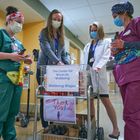
ChristianaCare one of only 44 nationwide to receive the distinction; one of only five to receive the highest level – Gold Recognition (WILMINGTON, Del. – Oct. 7, 2021) ChristianaCare has been named a recipient of the American Medical Association’s Joy in MedicineTM Health System Recognition Program. The distinction recognizes health systems that demonstrate a commitment to preserving the wellbeing of health care team members by engaging in proven efforts to combat work-related stress and burnout. The American Medical Association awarded ChristianaCare a “Gold Recognition” – the highest level within the program. Only 44 health systems nationwide received the Joy in Medicine distinction, with only four other health systems along with ChristianaCare achieving the Gold Recognition. “When caregivers feel supported and fulfilled in their work, the quality of both their experience and their patient’s experience improves,” said Heather Farley, M.D., MHCDS, chief wellness officer and head of ChristianaCare’s Center for WorkLife Wellbeing. “That’s why, when the COVID-19 pandemic struck, we deepened our investment of resources to support our caregivers. While there’s still a long way to go, we are grateful to receive this recognition as it affirms our commitment to helping our caregivers foster meaning, connection and joy in work and in life.” ChristianaCare received the “Gold Recognition” for achieving six criteria: An organization-wide commitment to improving physician wellbeing. An assessment of the costs of physician burnout. Evidence-based interventions to reduce and eliminate burnout. Leadership commitment to address areas for improvement. Interventions to improve teamwork. Structured programs that actively engage doctors to cultivate community at work. These criteria align with ChristianaCare’s commitment to support its caregivers in alignment with the organization’s core values of love and excellence. ChristianaCare has implemented structured ways of working that encourages leaders to create environments where their workers feel safe asking questions and feel empowered to identify and solve problems. ChristianaCare also uses numerous surveys and assessments to track progress in improving the wellbeing and experience of caregivers. ChristianaCare’s Unique Center for WorkLife Wellbeing ChristianaCare established the Center for WorkLife Wellbeing in 2016 to develop support systems to enable clinicians to reconnect with the joy and meaning in medicine. “We recognized the growing problem of stress and burnout in health care, and we made a decision to tackle it head-on,” said Janice E. Nevin, M.D., MPH, ChristianaCare president and CEO. “The work of our psychologists, researchers, clinicians and peer supporters in the Center for WorkLife Wellbeing is built on the understanding that when we care for ourselves, we are better able to care for others, resulting in decreased medical errors and a better experience of care for everyone involved.” The Center soon expanded its mission to support all of ChristianaCare’s caregivers, including those who don’t work in clinical roles. The Center also has received national recognition for its expertise and leadership in the field of workplace wellbeing. Throughout the pandemic, the Center for WorkLife Wellbeing has proactively shared a variety of resources to support caregivers as they work to provide safe, effective care and reduce the spread of COVID-19. This includes: The Care for the Caregiver program, which provides confidential individual peer support and group support to caregivers when they experience stress related to patient care or the workplace. Peer supporters and organizational leaders receive training so they can provide psychological first aid to caregivers whom they recognize are struggling as well as connect them to helpful resources if needed. Emotional support through mindfulness resources and regular rounds where the Center’s experts can check on staff wellbeing. OASIS Rooms, which are quiet sanctuaries inside the hospital where caregivers can go to take a break, de-stress, meditate or enjoy a chair massage. 24/7 mental health services and programs to help caregivers maintain healthy habits including proper exercise, sleep and nutrition. Fitness centers that are free for all caregivers to use and provide easy access to exercise and fitness programs. “I always use the analogy, you can’t take the canary out of the coal mine and teach it to be more resilient and then put it back in the same coal mine and expect it to survive,” Dr. Farley said. “You actually have to change the coal mine – the environment surrounding our caregivers and clinicians. That’s what we’re doing in the Center for WorkLife Wellbeing.” Solutions to a National Problem A national study examining the experiences of physicians and other health care workers who worked in health systems during the COVID-19 pandemic found that 38% self-reported experiencing anxiety or depression, while 43% suffered from work overload and 49% had burnout. “The COVID-19 pandemic has placed extraordinary stress on physicians and other health care professionals,” said American Medical Association President Gerald E. Harmon, M.D. “While it is always important for health systems to focus on the wellbeing of care teams, the imperative is greater than ever as acute stress from combatting the COVID-19 pandemic has contributed to higher rates of work overload, anxiety and depression. The health systems we recognize today are true leaders in promoting an organizational response that makes a difference in the lives of the health care workforce.” Launched in 2019, the Joy in Medicine Health System Recognition Program is a component of the American Medical Association’s practice transformation efforts, an ambitious initiative to advance evidence-based solutions to address the physician burnout crisis. Candidates for the program were evaluated according to their documented efforts to reduce work-related burnout through system-level drivers. Scoring criteria were based on demonstrated competencies in commitment, assessment, leadership, efficiency of practice environment, teamwork and support. About ChristianaCare Headquartered in Wilmington, Delaware, ChristianaCare is one of the country’s most dynamic health care organizations, centered on improving health outcomes, making high-quality care more accessible and lowering health care costs. ChristianaCare includes an extensive network of primary care and outpatient services, home health care, urgent care centers, three hospitals (1,299 beds), a freestanding emergency department, a Level I trauma center and a Level III neonatal intensive care unit, a comprehensive stroke center and regional centers of excellence in heart and vascular care, cancer care and women’s health. It also includes the pioneering Gene Editing Institute. ChristianaCare is nationally recognized as a great place to work, rated by Forbes as the 5th best health system to work for in the United States and by IDG Computerworld as one of the nation’s Best Places to Work in IT. ChristianaCare is rated by HealthGrades as one of America’s 50 Best Hospitals and continually ranked among the nation’s best by Newsweek and other national quality ratings. ChristianaCare is a nonprofit teaching health system with more than 260 residents and fellows. With its groundbreaking Center for Virtual Health and a focus on population health and value-based care, ChristianaCare is shaping the future of health care. #####


A new model of health care is coming to Wilmington’s Riverside neighborhood and the Kingswood Community Center. ChristianaCare Virtual Health is now available at The Coker Family Resource Center, inside Kingswood Community Center. It offers convenient, personalized, always-accessible care that makes it easier for people to connect with the care they need and stay well. “This is an entirely new model of health care powered by data and technology to make it easier for people to access care when they need it, and one that fosters strong relationships between patients and their care team,” said Janice E. Nevin, M.D., MPH, president and CEO of ChristianaCare. “In our commitment to make a positive impact on health for everyone in the communities we serve, we’re excited to bring this leading-edge model of care to our neighbors at Riverside. We’re grateful for the partnership of The WRK Group and Kingswood Community Center in this collaborative effort that will support the health and wellbeing of the people in this community.” At The Coker Family Resource Center, patients can connect to ChristianaCare Virtual Health for a virtual appointment with a primary care provider or a member of their care team and also receive access to medical services such as vaccines, blood pressure checks and in-person exams. But care doesn’t have to happen at Kingswood Community Center. Patients can have a virtual visit with their care team anytime and from anywhere they have access to the internet with a smartphone, tablet or laptop with a camera. “Throughout the pandemic, many people have learned the convenience of having a video visit with their doctor instead of coming in for an in-person appointment. At ChristianaCare, we’ve actually been developing this kind of care since the launch of our Virtual Primary Care practice for ChristianaCare caregivers in 2018, in addition to our CareVio data-powered care management platform,” said Sharon Anderson, RN, MS, FACHE, chief virtual health officer at ChristianaCare. “What we’re able to provide today is not just video visits, but an entirely new kind of care that’s always on—it enables patients to interact with their care team when they need support through video visits, secure text messages and other ways that provide care in ways that fit into each person’s lifestyle.” Sharon Anderson, RN, MS, FACHE, chief virtual health officer at ChristianaCare In addition to the on-site medical services provided at the Kingswood location, patients can also receive in-person help with the technology so that they can become comfortable with this new model of care, and ask questions or get help when they need it. Kingswood Community Center, a member of The WRK Group (The Warehouse, REACH Riverside, and Kingswood Community Center), has been a pillar of the Riverside community for 75 years and is located at 2300 Bowers St, Wilmington, DE 19802. In-person appointments are available every Tuesday and Thursday from 12:30 – 2:30 (times may vary). Information and appointments are available by calling 302-428-2400. Establishing easily accessible health care within the Riverside neighborhood marks a long-time goal of The WRK Group. “We are incredibly thankful for this partnership with ChristianaCare Virtual Health as they become the first primary care service provider that exists within Riverside,” said Logan S. Herring, Sr., CEO of The WRK Group. “ChristianaCare has created a nimble solution for our neighbors that includes valuable in-person services and care as well as virtual appointments. Creating this physical and virtual space is an achievement for our community and one in a series of initiatives The WRK Group plans to bring to the local area.” The WRK’s Group managing partner, REACH Riverside, is currently overseeing a $250M holistic revitalization project which includes building a new and improved community center, developing a mixed income housing community, and investing in physical capital to create a thriving and vibrant neighborhood. Introducing the Coker Family Resource Center The Coker Family Resource Center is a new addition to the Kingswood Community Center, made possible by the generous donation of the Coker family, a pillar in the Riverside and Wilmington community. From matriarch and civil rights leader Beatrice “Bebe” Coker and her activism efforts to daughters Dr. Joan Coker, Laurie Coker Reid, and Julie Coker's collective philanthropic and community work, the Coker family embodies the values of Kingswood Community Center and The WRK Group’s collective mission to empower the community to reach its full potential. “Thank you to the entire Coker family, who have dedicated themselves to bettering our community for decades, as well as for providing the needed funding to create the physical space that ChristianaCare Virtual Health inhabits,” Herring continued. “The Coker family has once again demonstrated the value of believing and investing in their community. As we look to the future and continue to dream big about the new Kingswood Community Center, I am excited by the prospect of what this space will evolve into and what additional services we can offer our community.” For more information about ChristianaCare Virtual Care at Kingswood Community Center, click here. About ChristianaCare Headquartered in Wilmington, Delaware, ChristianaCare is one of the country’s most dynamic health care organizations, centered on improving health outcomes, making high-quality care more accessible and lowering health care costs. ChristianaCare includes an extensive network of primary care and outpatient services, home health care, urgent care centers, three hospitals (1,299 beds), a freestanding emergency department, a Level I trauma center and a Level III neonatal intensive care unit, a comprehensive stroke center and regional centers of excellence in heart and vascular care, cancer care and women’s health. It also includes the pioneering Gene Editing Institute. ChristianaCare is nationally recognized as a great place to work, rated by Forbes as the 5th best health system to work for in the United States and by IDG Computerworld as one of the nation’s Best Places to Work in IT. ChristianaCare is rated by HealthGrades as one of America’s 50 Best Hospitals and continually ranked among the nation’s best by U.S. News & World Report, Newsweek and other national quality ratings. ChristianaCare is a nonprofit teaching health system with more than 260 residents and fellows. With its groundbreaking Center for Virtual Health and a focus on population health and value-based care, ChristianaCare is shaping the future of health care. About The WRK Group The WRK Group, which is comprised of three organizations and over 130 employees, shares a collective mission to empower the community to reach its full potential by eliminating the barriers of structural racism and revolutionizing teen engagement. REACH Riverside, overseeing a $250M holistic revitalization, also serves as the managing partner for Kingswood Community Center, a pillar of the Northeast Wilmington neighborhood for 75 years, and The Warehouse, an educational and recreational oasis for teens. The Warehouse: Developed "For Teens, By Teens" - Innovative, one-stop center serving ages 13 to 19 Teen-driven programming focused on recreation, education, arts, career, and health Collaborating with over 140 youth-serving organizations Three goals: safety, educational support, and workforce readiness REACH Riverside: Developed "With the Community, For the Community" Member of the national Purpose Built Communities Redevelopment: Up to 600 units of high quality, mixed-income housing Education: cradle-to-college and career readiness pipeline Community Health: health, wellness, safety services, and programming Kingswood Community Center Empowering the Community of Riverside and Northeast Wilmington since 1946 Early Learning Academy: high quality, evidence-based programming (ages one through five) School-age services (ages six through twelve): before, after-school, and summer programming Jimmy Jenkins Senior Center: activities to remain healthy and self-sufficient Kingswood Academy: alternative school, located at The Warehouse (seventh through twelfth grade) Preparing for the development of a new, state-of-the-art facility that will replace and enhance the current community center ####

Start Your Children's Day Off Right So They Can Be Productive at School
Though the 2020 school year may be very different from past years, it's still an ideal time to get kids back on track—with their activity, nutrition and overall wellness to support a productive and happy school year. Breakfast is an important meal for kids and should not be overlooked. According to the Academy of Nutrition and Dietetics, kids who eat breakfast in the morning are more alert during the school day and perform better. If you don’t have a lot of time for a sit-down breakfast, try brown-bagging it with a banana, a bag of trail mix made with whole-grain cereal, shelled pistachios and a favorite dried fruit (like diced apricot, pineapple or mango). "When it comes to school lunches, even if lunch break this year means your child is sitting at your kitchen table and not at the school cafeteria, that does not mean you can't have fun and pack a nutritious lunch," says Rebecca Shenkman, MPH, RDN, LDN, director of the MacDonald Center for Obesity Prevention and Education at Villanova's M. Louise Fitzpatrick College of Nursing. A continued favorite lunch box fad for kids is the Bento Box lunch. "These sleek lunch boxes offer an easy way to provide a visually appealing meal for kids while helping parents compartmentalize and assemble a healthy meal by placing a different food group in each section," says Shenkman, who suggests cut-up grapes, whole wheat crackers with peanut butter, cheese sticks and sliced cherry tomatoes—"anything to get kids to eat healthier and that you can keep in the fridge until they're ready to eat knowing that you provided them nutritional energy for the day."


Conquering COVID -19. Is a cure or a vaccine close?
With a pandemic now touching just about every part of the globe, the race is on by scientists and researchers to find a vaccine or cure for COVID-19. Can it be done, by when and how long to get to market? With testing and lengthy trials – could it even help? As well, with SARS, MERS, H1N1 and the flu all appearing in dangerous scenarios this century, why weren’t there already vaccines in place for the next time a coronavirus took flight? There’s a lot of information out there, and in an effort to keep the public informed with objective opinions and evidence-based facts – that’s where our experts can help. Dr. Marc Sweeney is the Founding Dean of the School of Pharmacy at Cedarville University. He is an expert in health and wellness and advanced medical equipment. Dr. Sweeney is available to speak to media regarding this topic – simply click on his icon to arrange an interview.

Coronavirus Confirmed – Let our experts help with your questions and coverage of this emerging story
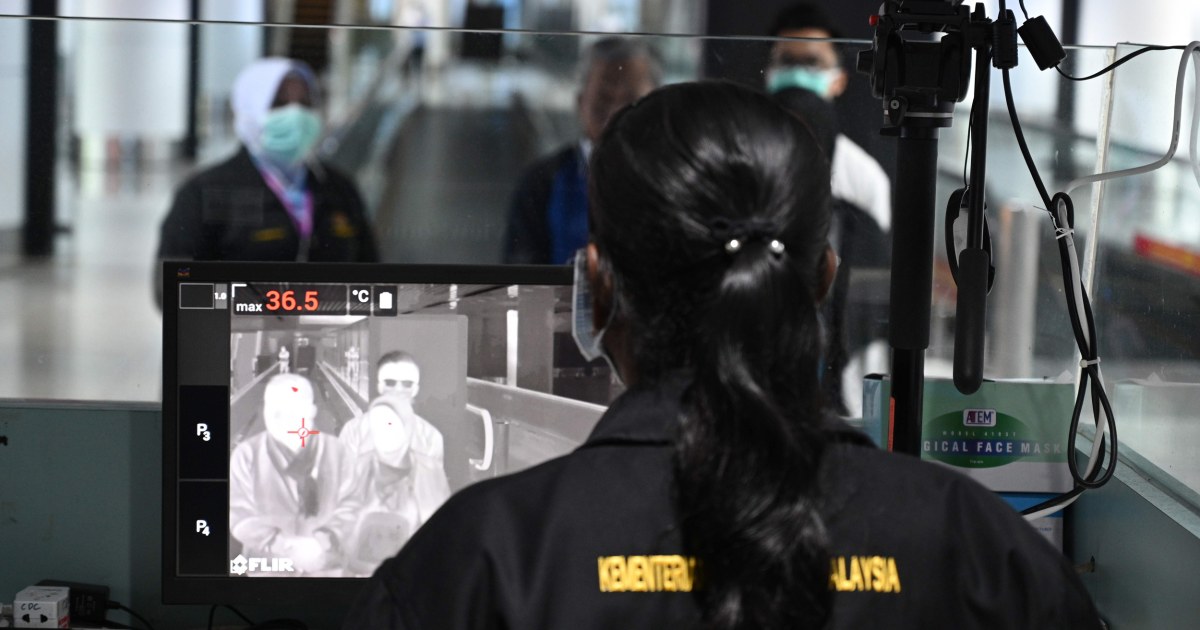
It’s here – and Washington State gets the unfortunate honor of being the location of the first confirmed case of Coronavirus on American soil. “The patient in Washington state, a resident of Snohomish County, is a male in his 30s. The CDC said the man arrived in the U.S. around Jan. 15 after visiting Wuhan. He had not, however, visited the seafood market where this virus is said to have originated.” What is a coronavirus? Coronaviruses are a group of viruses that can cause a range of symptoms including a runny nose, cough, sore throat and fever. Some are mild, while others are more likely to lead to pneumonia. They're usually spread through direct contact with an infected person. The coronavirus gets its name from the crown-like spikes on its surface, according to the Centers for Disease Control and Prevention. (Corona is Latin for crown.) Including the newly identified form of the virus, there are a total of seven coronaviruses that can infect humans, the CDC says." January 21 – NBC News But how safe are Americans – and a lot of concerns to be addressed How is the virus transmitted? Are there simple and easy ways to diagnose simples? What preventable practices can be put in place? Are there vaccines or how long will it take to develop and distribute a vaccination program? And is America better equipped to handle this since the SARS epidemic? There are a lot of questions – and that’s where our experts can help. Dr. Sweeney is the Founding Dean of the School of Pharmacy at Cedarville University. He is an expert in health and wellness and advanced medical equipment. Dr. Sweeney is available to speak to media regarding this topic – simply click on his icon to arrange an interview.

Ask our experts - Self-care a necessity for graduate students; what are programs doing to help?
Life doesn’t stop when you’re in a doctoral program. Erin Ayala, Ph.D., has done extensive research into self-care, stress, and quality of life of students, particularly those in human service doctoral programs (like medical students and those in nurse anesthesiology, psychology, and counseling). She knows the recipe for stress and burnout: • These stressful programs tend to attract high achievers. It’s already in their nature to balance several commitments and responsibilities. • These programs and professions have a high level of responsibility. • Students in these programs are frequently at an age where they are also going through significant developmental milestones (marriage, children, purchasing homes). “When you bring all of that together, it can be really difficult to prioritize time for self-care,” she said. “Prevention and health promotion are really important, and it’s not just about mental health. It’s not just about being reactive and addressing distress or burnout when it hits. The question is what can we do on the front end to help prevent negative consequences down the road.” What is self-care? Often, Dr. Ayala said, media romanticizes and glamorizes self-care with advertisements for fizzy bath bombs and manicures. “What we have found is that it is completely personalized,” Dr. Ayala said. “For women, social support is really important. Ultimately, there needs to be time to disconnect, whether it’s doing nothing, or just taking a break from your dissertation. You’ve got to give yourself permission to do that. “Nutrition, exercise, hydration, spiritual life, different people have a different recipe for what their self-care looks like. It ebbs and flows just like any exercise or meditation or spiritual practice. Some weeks we’re doing great and other times we’re not, and that’s part of the process.” Dr. Ayala’s most recent research involves analyzing qualitative data, coming from over 200 students throughout the U.S. in clinical counseling and school psychology, all high achievers in the middle of doctoral programs. She’s investigating what faculty are doing to model or not model the importance of physical and psychological wellness. “Students might know that self-care is important, but it can be hard to act on it if they're in an environment that doesn’t support it,” she said. “The biggest supportive theme that came up was faculty simply encouraging them to do it, asking their students, ‘What did you do this weekend for self-care?’ They take the time to check in with their students and give them permission to take time for themselves. That takes zero effort.” “What can we do to make sure faculty are also able to model self-care for their students? The behaviors students are picking up now pave the foundation for the rest of their career. If faculty are working themselves to the bone, it sets an expectation for their students that they are supposed to do the same. If faculty model self-care and talk about its importance, students may be more likely to do it themselves.” Dr. Ayala said when her team asked students what programs can do to support self-care, answers ranged from formal programming and talking about it in the classroom, to referrals for therapists, discounts for gym memberships, or places to meditate on campus — ways to make self-care easier to access. When students are asked what the biggest barrier to self-care is, the answer wasn’t surprising. The majority of students responded that time was an issue. “That’s a tough one because there’s only so much programs can do to minimize the amount of work required,” Dr. Ayala said. “Students have to balance all these professional responsibilities and don’t know what to give up.” Are you looking to know more about self-care and other similar topics when it comes to high education? Or, are you a journalist covering this topic and looking to book an interview? That’s where we can help. Dr. Erin Ayala is a licensed psychologist and core faculty member in the counseling psychology doctoral program at Saint Mary’s University of Minnesota. To book an interview with Dr. Ayala – simply click on her icon to arrange a time.


Multicultural Millennials Respond Positively to Health ‘Edutainment,’ Baylor Marketing Research Says
One-on-one interviews reveal which health issues concern millennials and their longing for optimal health Storytelling that educates and entertains – aka “edutainment” – is a powerful communications tool that can lead to positive health-related changes among multicultural millennials, according to a new marketing study from Baylor University. Tyrha Lindsey-Warren, Ph.D., clinical assistant professor of marketing in Baylor University’s Hankamer School of Business, led the study, “Making multicultural millennials healthy: The influence of health ‘edutainment’ and other drivers on health-oriented diet change,” which is published in the Journal of Cultural Marketing Strategy. Charlene A. Dadzie, Ph.D., assistant professor of marketing at the University of South Alabama, coauthored the research. The research sought to determine which health issues most concerned multicultural millennials and to gauge how effective media can be as a tool to address those issues and drive change. “This study finds that by bolstering self-identity and employing health ‘edutainment,’ it is possible to have a positive impact on the health intentions and behaviors of the millennial generation,” the researchers wrote. There are more than 92 million millennials (ages 20-34) in the United States today, the researchers observed. More than 9 million of those are identified as being overweight, and much of that can be attributed to a sedentary lifestyle and media consumption. White Americans watch an average of 140 hours of television per month (35 hours per week); African Americans watch 213 hours of television per month; and Latino Americans watch 33 hours of television per week and stream more than six hours of video per month. “Millennials are tech-savvy, they love social media, they’re actually more health conscious than previous generations, and they have significant economic power,” Lindsey-Warren said. “With so many millennials – in the scope of this study, multicultural millennials – watching so many screens, there is great opportunity to generate information and increase products and services geared towards health-oriented behavior.” But to take advantage of this opportunity, public and private organizations need to understand what drives millennials’ health choices and communicate accordingly, the researchers wrote. A total of 265 people participated in two components of the study – a health survey of 245 undergraduate students and one-on-one, in-depth interviews of 20 multicultural millennials. ‘I’m old-young and it’s getting real.’ For the second part of the study, the researchers interviewed 20 people – 10 women and 10 men – from two organizations, a large northeastern U.S. university and a mid-sized nonprofit organization in Harlem, New York. The subjects represented cultural, socioeconomic and educational diversity. The interviews were used to better understand the health status of these millennials as well as their relation to storytelling in the media, the researchers said. Participants answered health and wellness questions regarding their own health and personal network (example: “What is your ideal health?”) and questions about their personal media usage (example: “What are the top five health and wellness issues you see regularly portrayed in the media?”). One of the strongest themes to emerge from those interviews was that multicultural millennials “long to be healthy in mind, body and spirit” and are open to “seeing authentic and relevant storytelling regarding health issues in the media that is meaningful.” “They would definitely respond to health messages when they truly see themselves in storytelling that meets them where they are in life,” the researchers wrote. Some of the health-related topics addressed by those being interviewed included healthy eating, asthma, sexual health, mental health and fitness. One interviewee, a 21-year-old woman said she gets “out of breath” when she runs up the stairs and her knees “crack and hurt.” “I would love to have ideal health again. I really would. I would love it. I’m old-young, and it’s getting real,” she said. ‘More involved in the narrative’ In addition to the one-on-one interviews, each of the 20 interviewees watched media clips from two television programs – ABC’s “Private Practice” and the nationally syndicated health show, “The Doctors.” Each show highlighted the accurate health information concerning attention deficit hyperactivity disorder (ADHD). “Private Practice” told its story via fictional characters in an episodic dramatic storytelling format. In this format, health issues were not directly promoted and there was no direct-to-camera discussion of those issues. “The Doctors,” on the other hand, utilized the format of real doctors conveying accurate health information in real-life situations, directly to the camera and in front of a studio audience. “From the interviews, it was apparent that the storytelling in the health edutainment stimuli worked because the participants enjoyed and were more involved in the narrative conveyed in ‘Private Practice’ versus ‘The Doctors,’” the researchers wrote. “For example, the ‘Private Practice’ segment told the story of a young boy and his parents who desperately asked their doctor to give them a prescription for ADHD medicine for their son, even though the son did not want the medicine and the doctor felt that the prescription might not have been needed.” The “Private Practice” story resonated better with those watching and scored high across genders, according to the study. One 21-year-old male university student said he was diagnosed with ADHD as a child and saw himself and his parents in the “Private Practice” clip. He said he took ADHD medicine for a while. “I didn’t like it and I stopped taking it, and that was it. My parents were, ‘OK – if you don’t like it, that’s the way it is – you’re going to study harder, though. And, that was it,” he told the interviewers. A 28-year-old female from the nonprofit program said she saw the “Private Practice” clip and could relate to the situation as a parent. “I felt I could relate because I felt that my son had ADHD, and I really, I kind of diagnosed him myself, and said that, so I was really interested in this topic,” she told the researchers. Marketing and advertising implications Given the constant barrage of media in the lives of millennials, it is only reasonable to question the effect of this environment on their health and well-being, Lindsey-Warren said. The findings of the study are useful for practitioners in marketing, advertising, public relations, digital and branded entertainment. “Ultimately, the key to making a difference in the lives of multicultural millennials and their health, both now and into the future, may be achieving the right balance of educating and entertaining them,” the researchers wrote. “For millennials, Gen Z and alpha – the newest generation – ‘edutainment’ is and will continue to be a primary way to educate them,” Lindsey-Warren said. “It’s through the stories we tell on digital, on streaming, on gaming – that’s the way those generations are learning.” ABOUT BAYLOR UNIVERSITY Baylor University is a private Christian University and a nationally ranked research institution. The University provides a vibrant campus community for more than 17,000 students by blending interdisciplinary research with an international reputation for educational excellence and a faculty commitment to teaching and scholarship. Chartered in 1845 by the Republic of Texas through the efforts of Baptist pioneers, Baylor is the oldest continually operating University in Texas. Located in Waco, Baylor welcomes students from all 50 states and more than 90 countries to study a broad range of degrees among its 12 nationally recognized academic divisions. ABOUT HANKAMER SCHOOL OF BUSINESS AT BAYLOR UNIVERSITY At Baylor University’s Hankamer School of Business, integrity stands shoulder-to-shoulder with analytic and strategic strengths. The School’s top-ranked programs combine rigorous classroom learning, hands-on experience in the real world, a solid foundation in Christian values and a global outlook. Making up approximately 25 percent of the University’s total enrollment, undergraduate students choose from 16 major areas of study. Graduate students choose from full-time, executive or online MBA or other specialized master’s programs, and Ph.D. programs in Information Systems, Entrepreneurship or Health Services Research. The Business School also has campuses located in Austin and Dallas, Texas. Visit www.baylor.edu/business and follow on Twitter at twitter.com/Baylor_Business.


Guinness World Record Holder Jon Bruney To Speak at Biohacker Summit in Toronto
(Toronto) Renowned Strongman and Fitness Expert to speak at Spark Biohacker Summit at Metro Toronto Convention Center on October 15th, 2018 Jon Bruney, creator of the “Pressing the Limits” motivational strength program, will appear in Toronto at the Spark Biohacker Conference. A devoted researcher in the pursuit of finding the edge in performance, Jon will speak about his experience using transcranial and intranasal light therapy. Jon, one of a number of elite athletes, has been working with Technology developed by Dr. Lew Lim, NMD, MBA and Founder & CEO of Vielight in Toronto. Dr. Lim will be on hand to answer questions about the broad base of international research behind photobiomodulation and what we know so far about it's mechanism. "With photobiomodulation, you can tap into the secrets of the nervous system, helping your body to push farther, to push harder, to push longer than you ever believed you could." Jon Bruney using Vielight photobiomodulation device at his Performance Training Center in Indiana Jon Bruney and Dr. Lew Lim, Founder and CEO of Vielight, will be available for questions at the Vielight exhibition booth held alongside the Biohackers Summit. For one-to-one interviews, please contact Edward D'Mello on 647-865-2803. Session Details Monday Oct. 15, 2018 1230PM - 130PM Metro Toronto Convention Centre South Building (Hall G) 222 Bremner Boulevard Toronto, Ontario M5V 3L9 About John Bruney John's work with competitive athletes includes Olympians and NFL players. He has been featured in Ripley’s Believe it or Not, The Guinness Book of World Records, shown nationwide on NBC’s America’s Got Talent, The Today Show, ABC’s To Tell the Truth, and TruTv’s Guinness World Records unleashed. A true renaissance man in the realm of strength-development, Jon Bruney is a best-selling author, world-class trainer, coach and motivational speaker. He is the author of the best-seller Neuro-Mass: The Ultimate System for Spectacular Strength and The Neuro-Grip Challenge: A Radical Program For Building Strength and Power in Your Upper Body. He also writes a training series called “Foundations”, featured in MILO, widely considered the world’s most prestigious strength training journal. Jon has been responsible for the design of numerous pieces of cutting-edge training equipment now in use around the world. Jon is a veteran of multiple trainer certification courses and was the first to achieve the grueling Battling Ropes Level 2 Certified status. He is also the co-owner of Submit Strength equipment. About the The Biohacker Summit The Biohacker Summit is the largest biohacking event in the world that connects well-being companies with medical professionals, technology experts, investors, entrepreneurs, health and nutrition enthusiasts, and other pioneers. Biohacking - better living through science, technology and nature - is a fast growing international trend. The aim of the conference is to make the world healthier and happier place, prevent disease, and extend human capabilities and lifespan. Media Contact Edward D'Mello M: 647-865-2803 E: edward@vielight.com #photobiomodulation #light #therapy #Toronto #Canada #Ontario #wellness #health #mentalhealth #quantifiedself #biohack #biohacker #mental #brain #body #sport #performance

Were you prepared for the different financial needs as a civilian?
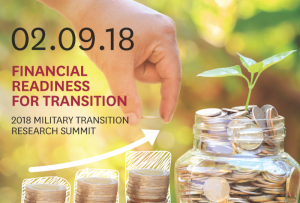
The USC Center for Innovation and Research on Veterans & Military Families is hosting the 2018 Military Transition Research Summit: Financial Readiness for Transition on Friday, Feb. 9, 2018. A series of panel discussions will feature personal transition experience from veterans and expert perspectives on the financial challenges facing service members and veterans. Attendees will also learn about innovations in financial wellness. Featured panelists from Prudential, USO, and the U.S. departments of Defense, Veterans Affairs and Labor, among others. From our experts: "Financial readiness along with one's military identity possibly represent the two most important elements of a military transition for the service member." -- Carl Castro, associate professor and director, CIR "Financial preparation is essential to finding success after separation from the military. From putting down a deposit on an apartment or a home loan to covering bills while finding a job, transition can be a financially stressful period. Through financial preparedness and understanding the expenses associated with transition from the military, our veterans can alleviate a significant source of stress." -- Sara Kintzle, research associate professor Source:


World Heart Day: Do You Have an Exercise Regime to Protect Your Heart?
Sept. 29 is World Heart Day. It’s a day researchers, practitioners and health officials around the globe are taking part in to spread awareness about heart disease and stroke prevention. According to the World Heart Federation (WHF), heart disease and strokes kill more than 17 million people every year. It’s the leading cause of death on the planet, edging out cancer. One way to achieving better heart health is maintaining a healthy lifestyle by making physical fitness a key component of everyday life. But what makes an effective exercise program and what types of exercises are right for you? How do you start if you’re not used to being active? Missouri State University’s Dr. Barbara Bushman, an expert in health, wellness and exercise, can answer these questions and provide insight on reducing the risk of heart disease. She is editor of the first and second editions of American College of Sports Medicine’s Complete Guide to Fitness & Health. She has been quoted in news outlets and magazines, such as USA Today, The Boston Globe, Huffington Post and Reader's Digest. Click on her icon to contact her. Source:
