
Experts Matter. Find Yours.
Connect for media, speaking, professional opportunities & more.

Education specialist tips: How to support displaced families
The California wildfires have devastated the Los Angeles region as families have lost their homes, places of work and schools. With expertise in housing insecurity and social work, University of Delaware faculty in the College of Education and Human Development (CEHD) explain how community members can support these families. Ann Aviles and Ohiro Oni-Eseleh, both CEHD faculty, share resources for displaced families and guidance for parents, educators and other community members who want to support them. Aviles, an associate professor, said an unexpected displacement can be unsettling for anyone, but they can have greater impacts on certain populations. "Populations that are especially vulnerable include those from low-income families, families of color (in particular, Black and Latiné communities), unaccompanied youth and undocumented families," she said. "These families often have less access to economic resources for temporary housing such as hotels or short-term rentals." She notes that the main way educators and community members can assist these populations is to first and foremost treat them with respect and dignity. "Priority should be given to short-term solutions that are informed directly by the people most impacted. Educators, community leaders and others wanting to provide families support should ask them what is most important and needed, and then respond accordingly," she said. Oni-Eseleh, an assistant professor and director of the master of social work program at UD, notes that there are multiple hotlines and community groups dedicated to assisting families that are displaced. "Many communities have emergency hotlines that provide immediate support and connect individuals to social workers or mental health professionals. These hotlines often operate 24/7 and can be a valuable resource during a crisis," he said. For more tips from both of these experts, please reach out to mediarelations@udel.edu.


Just before the holiday season, as he entered his final month as President of the United States, Joe Biden announced that he would be granting clemency to roughly 1,500 American citizens. The clemency acts, which included sentence commutations for individuals placed on home confinement during the pandemic and pardons for 39 individuals with non-violent offenses, were touted by the administration as the most ever in a single day in modern history. A month later, on January 17, he commuted the sentences of roughly 2,500 individuals convicted of non-violent drug offenses, shattering December's mark and giving him the most pardons and commutations of any president in United States history. The unprecedented size of the actions has been underscored throughout The White House’s press materials and has headlined most subsequent news coverage. But for Anton Robinson, JD, associate professor of law and director of Villanova’s Caritas Clemency Clinic in the Charles Widger School of Law, the importance of the clemency went far beyond the impressive scale. “Acts like these bring much needed awareness to the clemency process, and to the epidemic of excessive sentencing in United States courtrooms,” Professor Robinson said. “At our clinic, we are already having people call to ask about opportunities for pardons and additional support for their cases.” Public perception of presidential acts of clemency can, at times, be marred by partisan divisiveness. To some, these latest acts were overshadowed by President Biden’s earlier pardon of his son, Hunter, and eyes are already on incoming President Trump regarding how he might handle those charged in relation to the January 6 insurrection. Professor Robinson acknowledges that acts like these can cause people to “rightfully question the power that is being used,” but those are the outliers, not the norms, and steer the conversation away from the root purpose of clemency. “People deserve a second chance,” Professor Robinson said. “There’s a tendency for system actors to focus primarily on the crime committed when considering whether a person’s sentence should be cut short. But many are different people today—sometimes decades later—than they were at the time of the crime’s commission. “There is also no shortage of individuals in prison for whom a charge doesn’t tell the whole story. For example, a young person’s involvement in a crime, while sufficient for a legal conviction, might be weighed differently today, given increasing acceptance of scientific research on the portion of the human brain which controls decision-making, impulse control and executive function. Research shows all of that continues to develop well into adulthood.” Determining who fits the criteria for clemency, Professor Robinson says, is not always easy to do. Collecting records of good behavior that illustrate change while in a carceral setting is much more difficult than collecting records of bad behavior. That’s why entities like the Caritas Clemency Clinic, in which Villanova Law students work directly on behalf of such clients under Professor Robinson’s guidance, spend so much time talking to anyone who has had a relationship with the incarcerated person. “What we often find is that despite being incarcerated and having very little given opportunity, these individuals make their own opportunities to build community and rich relationships and try their best to contribute to society in a positive way,” Professor Robinson said. A military veteran who helped church members in poor health perform tasks. A nurse who spearheaded COVID vaccination efforts and natural disaster response. A counselor who helps guide youth away from destructive behavior and involvement with gangs. Those are the types of actions Professor Robinson references, all of which were highlighted specifically in the White House’s fact sheet for President Biden's December acts, just before the words “The United States is a nation of second chances.” “I'm hoping that these large acts of clemency encourage folks to think, ‘Hey, what about my loved one? What about me? I am a completely different person than I was 20 years ago, what can I do to try to secure my freedom and my ability to live the life that I've missed out on?’” Professor Robinson said. “It really is a great opportunity to remind ourselves that people are far better than the worst things that they've ever done, and that we have an opportunity to acknowledge that as a society and to encourage more of this action, both on a federal and state level.”


Is all screen time bad? Experts weigh in on healthy habits for kids and teens.
With the winter holiday season upon us, many children and adolescents will be home from school for break. As with any extended periods of time outside of school, screen time for children will become a topic of discussion for families. "For academic benefits of screens, it isn't only about the screen 'time,' but about the type of activities youth are doing on screens," said Teya Rutherford, associate professor at the University of Delaware. "There is huge variance in the quality of engagement with online games, etc." During the holiday season, children and adolescents have way more time to fall down the rabbit hole of social media and general web surfing. The American Psychological Association recently released guidelines to help parents coach their teens to have healthier relationships with viewing videos online. Some of the findings include limiting screen time, monitoring content and teaching children and adolescents about misinformation. "This finding is in line with the literature on parental monitoring – in that, if parents monitor their adolescents’ use of social media, then outcomes (i.e., academic achievement) are often better for the adolescent, than for the adolescent whose parent does not engage in such monitoring behaviors," said Mellissa Gordon, associate professor at the University of Delaware. Rutherford can speak about creating engaging online environments, the science behind learning in online environments, motivating students to learn in STEM contexts and self-regulated learning. Gordon conducts research on the social mechanisms that influence adolescent and young adult development. In a 2023 Youth and Society study, she found that as middle schoolers’ social media use increased, their academic performance suffered. Both can be contacted by emailing mediarelations@udel.edu.

Dangers of the Metaverse and VR for U.S. Youth Revealed in New Study
The metaverse, a space where the lines between physical and digital realities blur, is rising among younger populations. As of March, 33% of teens own a virtual reality (VR) device and 13% use it weekly. With the metaverse offering richer emotional experiences, youth may be particularly vulnerable to significant harm in these immersive spaces, underscoring the need to explore potential risks. Unfortunately, research of online victimization in the metaverse is sorely lacking. A new study by Florida Atlantic University , in collaboration with the University of Wisconsin-Eau Claire, is one of the first to examine the experiences of harm in the metaverse among youth in the United States. Using a nationally-representative sample of 5,005 13 to 17 year olds in the U.S., researchers focused on their experiences with VR devices, including 12 specific types of harm experienced, protective strategies employed, and differences in experiences between boys and girls. Results of the study, published in the journal New Media & Society, found a significant percentage of youth reported experiencing various forms of harm in these spaces, including hate speech, bullying, harassment, sexual harassment, grooming behaviors (predators building trust with minors), and unwanted exposure to violent or sexual content. The study also revealed notable gender differences in experiences. Among the study findings: 32.6% of youth own a VR headset (41% of boys vs. 25.1% of girls) More than 44% received hate speech/slurs (8.9% many times); 37.6% experienced bullying; and 35% faced harassment Almost 19% experienced sexual harassment; 43.3% dealt with trolling; 31.6% were maliciously obstructed; and 29.5% experienced threats More than 18% were doxed (publicly revealing someone’s personal information without their consent); and 22.8% were catfished (creating a false identity online to deceive someone, typically for romantic purposes) Nearly 21% faced unwanted violent or sexual content; 18.1% experienced grooming or predatory behavior; and 30% were targeted for factors like weight, sexual preference, sexual orientation or political affiliation Boys and girls experienced similar patterns of mistreatment, but girls experienced sexual harassment and grooming/ predatory behavior more frequently than boys. Boys and girls were equally as likely to be targeted because of their voice, avatar, race, religion or disability. “Certain populations of youth are disproportionately susceptible to harm such grooming, especially those who suffer from emotional distress or mental health problems, low self-esteem, poor parental relationships and weak family cohesion,” said Sameer Hinduja, Ph.D., first author, a professor in the School of Criminology and Criminal Justice within FAU’s College of Social Work and Criminal Justice, co-director of the Cyberbullying Research Center, and a faculty associate at the Berkman Klein Center at Harvard University. “Due to the unique characteristics of metaverse environments, young people may need extra attention and support. The immersive nature of these spaces can amplify experiences and emotions, highlighting the importance of tailored resources to ensure their safety and well-being.” Findings also reveal that girls employed in-platform safety measures significantly more so than boys such as “Space Bubble,” “Personal Boundary” and “Safe Zone.” “We found that girls are more likely to select avatars designed to reduce the risk of harassment and to use in-platform tools to maintain a safe distance from others. Additionally, both boys and girls feel comfortable leaving metaverse rooms or channels like switching servers in response to potential or actual victimization, although overall, youth tend to use these safety features infrequently,” said Hinduja. Among the recommendations offered to youth by the researchers include: Using platform-provided safety features to restrict unwanted interactions and infringements upon their personal space. It is also essential that youth understand and take advantage of the safety features available within metaverse experiences, including blocking, muting, and reporting functionalities. Continued research and development in these areas to determine how to meet the needs of users in potential or actual victimization contexts Streamlining platform reporting mechanisms to ensure swift action is taken against perpetrators Age-gating mechanisms for metaverse environments where mature content and interactions proliferate Encouraging parents and guardians to take the time to familiarize themselves with available parental control features on VR devices and metaverse platforms to set boundaries, monitor activities, and restrict certain features as needed. An active mediation approach is ideal, where they engage in open and supportive dialogue with children about their metaverse experiences. The integration of updated, relevant, and accessible digital citizenship and media literacy modules into school curricula to provide youth with the necessary knowledge and skills to navigate VR and other emerging technologies safely and responsibly Consideration by content creators of the ethical implications of their metaverse creations, ensuring that they promote inclusivity, respect, and discourage any form of harassment. They should strive to make their virtual experiences accessible to users from diverse backgrounds, languages, cultures and abilities. “VR concerns of parents and guardians generally reflect and align with their historical anxieties about video games, excessive device use, its sedentary nature, cognitive development, and stranger danger,” said Hinduja. “There remains so much promise with these new technologies, but vigilance is required when it comes to the unique challenges they present as well as the unique vulnerabilities that certain youth users may have. As such, it’s ‘all hands on deck’ to build a safer and more inclusive metaverse as it continues to evolve.” If you're looking to know more - let us help. Sameer Hinduja, Ph.D., is a professor in the School of Criminology and Criminal Justice at Florida Atlantic University and co-director of the Cyberbullying Research Center. He is recognized internationally for his groundbreaking work on the subjects of cyberbullying and safe social media use, concerns that have paralleled the exponential growth in online communication by young people. He has written seven books, and his interdisciplinary research is widely published and has been cited more than 18,000 times. Simply click on Sameer's icon now to set up an interview today.



#ExpertSpotlight: A look at Afghanistan
Afghanistan has been at the center of international focus since 2001, enduring decades of conflict, social change, and efforts toward rebuilding. This topic remains significant as the world reflects on the lasting impact of the Afghanistan war, the country's evolving human rights landscape, and the enduring resilience of its people. For the public, understanding Afghanistan's history and current situation is essential to grasp the broader issues of international policy, humanitarian needs, and global security. This subject also highlights the importance of accountability and the role of the international community. Key story angles that may interest a broad audience include: The impact of foreign intervention on Afghan society: Exploring how two decades of international involvement have reshaped the country politically, economically, and socially. Human rights challenges and progress: Analyzing the state of women’s and minority rights, including access to education and healthcare under various regimes. Refugee crises and displacement: Examining the large-scale displacement of Afghans over the years and the humanitarian response by neighboring and Western nations. The resilience of Afghan culture and identity: Highlighting how art, music, and traditions have survived despite conflict, and how cultural preservation remains vital to Afghan communities. The future of Afghanistan’s youth: Discussing the aspirations and challenges facing a generation born into conflict, and the role of education and innovation. The international community’s role and response: Assessing current global engagement, diplomatic efforts, and the responsibilities of the U.S. and allied countries toward Afghanistan. Connect with an expert about the History of Conflict in Afghanistan: To search our full list of experts visit www.expertfile.com


[ Deputy Chief Jen Davis, Police Chief Mark Crowell, Catherine Conoboy WRPS SSP Program Coordinator, Deputy Chief Eugene Fenton, Leslie Rocha, CAA SCO ] CAA South Central Ontario (CAA SCO) is proudly awarding Catherine Conoboy, a civilian professional with the Waterloo Regional Police Service (WRPS), with the CAA School Safety Patrol® (SSP) Program Achievement Award for her outstanding contribution and dedication to the program. As the Corporate Events Coordinator for WRPS, Conoboy has trained CAA School Safety Patrollers for 23 years, demonstrating her unwavering dedication to student safety since 2001. As part of her passion for educating the youth in her community, Conoboy organizes an annual mass training event every September, training between 1,000 to 1,200 student Patrollers at each event. “Conoboy’s commitment to the CAA School Safety Patrol program over the past two decades has been exceptional. Her leadership, collaboration with key partners, and dedication to student safety are the cornerstones to this program’s success,” says Leslie Rocha, community program consultant at CAA SCO, “Whether organizing appreciation events or securing support from local groups or governments, her passion for student safety and community engagement shines through.” In Waterloo Region, during the 2024/2025 school year, 90 schools registered for the program – 46 more schools than in the school year prior. Together with the Student Transportation Services of Waterloo Region, Conoboy has encouraged and promoted schools to participate in SSP training. “We are extremely proud to see Catherine being honoured with an award that recognizes her exemplary work and commitment to public safety,” said Cherri Greeno, director of corporate affairs, Waterloo Regional Police Service. “Through this program, Catherine has shown her dedication and passion to building community relationships while improving the health and safety of thousands of youth within Waterloo Region.” Every year, CAA SCO recognizes community partners across Ontario with the CAA School Safety Patrol Program Achievement Award, given to a road safety advocate who embodies their commitment to the program’s mission of keeping school zones safe. “CAA always advocates for the safety of our communities and the children and pedestrians that reside within them,” says Rocha. “We continue to work alongside our community and police partners to empower elementary school students to help keep themselves safe when travelling to and from school.” The CAA School Safety Patrol program was developed in 1929 to protect, educate, and empower elementary school children on safe road-crossing practices. With more than 90 years of proven experience in teaching road safety and children’s safety in school zones, the program gives Patrollers an acute awareness of road safety and gives them the tools to help them stay safe as they travel to and from school. To help make the program a success, Conoboy also works closely with the local bussing consortium, Waterloo Regional Police, Fire Services, and Paramedics to ensure Patrollers are trained to be safety advocates in their communities. “Year after year, Conoboy’s ability to foster these critical relationships ensures the SSP program runs smoothly and effectively,” says Rocha. Waterloo Regional Police Service has participated in the SSP program for over 30 years. Since its start, the CAA School Safety Patrol program has helped keep students safe in school zones. Every year, approximately 800 schools in Ontario participate in the CAA SSP program, which CAA SCO delivers with local partners. For more information, visit www.caaschoolsafetypatrol.com

LSU expert in social and economic issues: Rural America’s unique struggles affect how it votes
An expert in social and economic issues, Professor Slack explains the unique struggles facing rural communities—like changes in jobs, health concerns, and population shifts. In this Q&A, he clears up common misunderstandings about rural life, discusses the problems rural voters face, and explores how these issues may affect their votes in this important election. What is your area of expertise? I am a professor of sociology at LSU. My research coalesces around the areas of social stratification and social demography with an emphasis on geographic space and the rural-urban continuum as axes of difference. With my colleague Shannon Monnat (Syracuse University), I recently authored the book Rural and Small-Town America: Context, Composition, and Complexities, published by the University of California Press. What are the key socio-economic challenges facing rural voters in this election? Wow. Where to start? There are so many myths and misunderstandings about rural America. One is that “rural” is synonymous with farming. To be sure, agriculture is a vital industry in terms of sustenance and national security. But technological advances and farm consolidation—the shift from many smaller farms to fewer larger farms—means most rural Americans don’t have direct economic ties to agriculture anymore. The two largest sectors of employment in rural America today are services and manufacturing, respectively. A concern regarding the service sector is that it produces jobs that vary greatly in quality depending on people’s educational level; good professional jobs for the more educated and lower quality jobs—low wages, low hours, and few to any fringe benefits—for less educated folks. Those good professional jobs tend to be concentrated in urban areas (the emergence of remote work may reshape this in the future). Manufacturing employment, which has historically been the “good jobs” sector for less educated people, has been in steady decline in terms of its share of jobs for the past 50 years. While people sometimes think of plant and factory work as urban, it has provided a larger share of jobs and earnings in rural America for decades. Deindustrialization is causing real pain in rural America: it is one thing for a plant to shut down in a large and diversified metropolis, but quite another when it is the lone “good jobs” employer in town. Other big issues are the challenges posed by population aging and youth out-migration in rural America, as well as increasing racial and ethnic diversity. Another is the factors underlying the “rural mortality penalty”—that rural America has higher death rates and lower life expectancy than urban America. These are all pressing issues. What role will rural voters play in this close presidential race, and what may sway their vote? Rural voters will play a key role in this election, assuming the margins end up being as close as they have been in the last two presidential cycles. A persuasive working-class message and a sense that rural people and places are seen—that they aren’t just “flyover country”—will help. Given that the two leading candidates hail from New York City and San Francisco, both picked running mates with a rural and small-town backstory as a nod to that constituency. All of that said, the power of the rural vote should not be overstated. The contemporary U.S. is mainly an urban society, so the winning candidate will ultimately pull most of their votes from cities and suburbs. Can you discuss any recent research on how rural voting patterns have evolved over the last few election cycles? The short answer is that the rural vote has been steadily trending Republican for decades. The last presidential election in which voters in metropolitan and nonmetropolitan counties were essentially equal regarding party preferences was in 1976 when Jimmy Carter was elected. Since that time, the percentage of nonmetro votes for the Republican candidate has trended steadily upward. In 2020, roughly two-thirds of the nonmetro vote went to Donald Trump, more than 20 points higher than in metro counties. That said, rural voters are not a monolith. The flip side of the 2020 numbers above is that roughly 1 in 3 voters in nonmetro counties cast their ballot in the other direction. And rural places with majority Black, Latino, and Indigenous populations often vote in the Democratic column. Moreover, you have political legacies particular to certain places that matter—like the left-leaning Farmer-Labor Party in Minnesota (today the Democratic-Farmer-Labor Party or DFL) or the rural state of Vermont electing a socialist to the U.S. Senate (Bernie Sanders). So, there are notable deviations from the aggregate trend. “ The problems and prospects facing rural America in the 21st century matter for this nation. Personally, I would love to see a less ideological and more pragmatic politics emerge that puts that in focus. ” How do political campaigns target rural voters, and how effective do you think these strategies are? This is a bit outside my area of expertise, and I want to stay in my lane. But I will raise two issues. One is what the political scientist Katherine Cramer has called “rural consciousness”: a belief that rural areas are ignored by policymakers, that rural areas do not get their fair share of resources, and that rural folks have distinct values and lifestyles that are misunderstood and disrespected by city folks. The message from some quarters that rural people vote “against their own self-interest” or vote “the wrong way,” essentially that they are rubes, feeds into this. The other issue is that much of rural America is a local “news desert.” That is, there simply are no sources of comprehensive and credible local news. So, people rely on cable TV news or—if they have access to broadband—the internet. The result is that all news becomes national, even when those issues may have little bearing on local life. It used to be said that “all politics is local,” but in today’s media environment, that is increasingly untrue. Is there anything else you want to add? I would just emphasize that common myths and misunderstandings about rural America run deep. Rural America is not a paragon of stability, social and economic change abounds. And rural America is not a monolith, it is socially and regionally diverse. The problems and prospects facing rural America in the 21st century matter for this nation. Personally, I would love to see a less ideological and more pragmatic politics emerge that puts that in focus. Link to original article here.



University of Delaware experts share insights and strategies for navigating the upcoming school year
The College of Education and Human Development in the University of Delaware has a number of stories and experts for the upcoming school year. Stories Bridging the language gap: How AWE software fosters inclusivity for English Language Learners and Non-English Language Learners alike Creating a mindful classroom: Tips for teachers on how to have a peaceful transition into the 2024-2025 school year Empowering Black and Latinx Boys in Their Postsecondary Journeys: The Role of School Communities UD assistant professor Eric Layland shares new research on LGBTQ+ developmental milestones and supporting LGBTQ+ youth University of Delaware assistant professor explores the tensions between hopes and expectations in vocational planning for autistic young adults Experts Allison Karpyn – an associate professor who can speak to topics related to hunger, obesity, school food, supermarket access, and food insecurity. She has spoken extensively about food in schools and can offer context to those subjects. Roderick Carey – an assistant professor whose current interdisciplinary research serves to make sense of the school experiences of black and Latino adolescent boys and young men in urban contexts. He can also talk about teacher education as it relates to men in the field/the impact of male teachers. To contact Karpyn or Carey, click their profiles. More experts... If you would like to pursue any of these stories or speak to any of the following experts, they are all willing and excited to chat. Contact mediarelations@udel.edu to speak to them. Eric Layland – an assistant professor who can speak about LGBTQ+ student experiences from a research perspective. His work bridges LGBTQ+ developmental research to community impact through developmentally-informed, affirmative interventions. Sarah Mallory – an assistant professor who specializes in special education with a special focus on autism and other intellectual and developmental disabilities. She also works within the Center for Disabilities Studies. Sarah Curtiss – an assistant professor who specializes in special education with a special focus on autistic youth. Brittany Zakszeski – an assistant professor and nationally certified school psychologist, licensed psychologist and behavior analyst. She focuses on student and teacher mental health and can comment on what concealed weapons carried by teachers can do for the mental wellbeing of both students and teachers. Lauren Bailes – an associate professor who focuses on the ways in which organizational, social-cognitive, and leadership theory unite to promote the success of school leaders and K-12 students. Bryan VanGronigen – an assistant professor who specializes in organizational resilience and change management in K-12 schools with specific interest areas in efforts to improve schools, the preparation and professional development of educational leaders and educational policy analyses. Lynsey Gibbons – an associate professor specializing in mathematics education, in teacher professional learning and school partnerships across content areas. Contact mediarelations@udel.edu to speak to these experts or for more information on the stories above.



#Expert Insight: Political Fandom
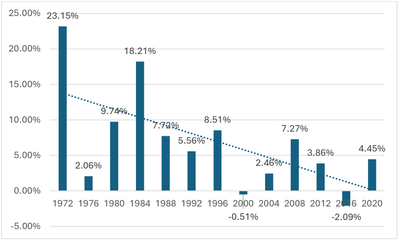
The 2024 Presidential campaign has been a roller coaster ride this summer. The upheavals are so fast and unprecedented that the reaction to each event often seems too muted. An assassination attempt and sudden pre-convention withdrawal? In a past generation, these events would be decisive, but in 2024, they seem like just the latest blip in the news cycle. The polls never seem to move more than a couple of points. In such an oddly volatile but also stable environment, our best bet to understanding what is going to transpire during the last 100 days of the election cycle is to look at data that gets to the heart of how voters view the candidates. My choice of fundamental data or essential metric is candidate fandom. Fandom is an unusual metric in politics, but it should be more common. Fandom is about passion for and loyalty to a cultural entity, be it a team, singer, university, or even politician. In fact, MAGA Trump supporters and Bernie Bros share many characteristics with Swifties and Lakers fans. Fans of all these things show up, spend, wear branded apparel, and fiercely defend the object of their fandom. The politicians who inspire fandom, such as AOC, Donald Trump, Barack Obama, and Marjorie Taylor Green, enjoy many advantages and are the celebrities of the political world. Fandom is critical in politics because fans are loyal, engaged, and resilient. Fans are not casual potential voters who may change preferences and are unlikely to make an effort to stand in line to vote. Fans are the voters who will show up rain or shine and who can’t be swayed. In 2024, a fan will interpret a conviction of their candidate as political “lawfare” rather than evidence of criminality. Also, in 2024, a fan will make excuses for signs of aging that would result in children taking a senior’s car keys. The flip side of fandom, anti-fandom, is also a powerful political force. Indeed, politics may be the cultural context in which anti-fandom has the most impact. Taylor Swift may have haters, but these anti-Swifties are not buying tickets to see Katy Perry in protest. But in politics, hatred of a candidate might be as powerful a tool for generating a vote as fandom. Joe Biden’s 2020 campaign was notoriously bad at drawing crowds, suggesting he inspired little passion. In contrast, Trump’s rallies looked like rabid sports crowds complete with matching hats. However, the hatred and fear of Donald Trump inspired sufficient anti-fandom to make Biden competitive. Of course, fandom doesn’t entirely decide elections. In most elections, there isn’t all that much fandom or passion. Beyond the presidency and senatorial contests, most candidates are barely known, and identity factors (race, gender, party affiliation) and candidate awareness are the determining factors. Even in presidential elections, get-out-the-vote efforts (ballot harvesting) and election regulations (voter suppression) combined with effective marketing to the few percent of swing (low information) voters are often the determining factors. Looking toward the future, fandom may be an increasingly salient political metric for multiple reasons. First, the last two decades have witnessed many candidates raised quickly from obscurity with somehow Hollywood-worthy origin stories (Barack Obama, AOC, JD Vance, etc.). In the modern media environment, candidates’ reputations (brands) are increasingly the product of marketing narratives rather than a lifetime of real-world accomplishments. In this new world of politics, fandom will be a critical metric. Second, with the increasing diversity of the American electorate, voting will be increasingly based on identity rather than ideology. Identity-based voting segments are likely to be driven by fandom (and anti-fandom) rather than policy. We see a form of this in 2024, as high inflation has barely made a dent in voters’ preferences for the two parties. A fragmented electorate comprised of racial and gender segments whose preferences are driven by fandom and anti-fandom will lead to increasingly negative campaigns featuring ads highlighting the threat of the non-preferred party’s candidates. When voters are focused on identity, negative advertising becomes the ideal method to use fear to create anti-fandom (hate) to motivate turnout. Kamala Harris versus Donald Trump Barring further disruptions, the matchup is set for the 2024 presidential contest (as of this writing, we do not know the Democratic VP). We do know the matchup between Donald Trump and Kamala Harris is a contest between polarizing figures. Donald Trump is a movement candidate who has redefined the Republican party. He inspires passionate fandom from his followers and amazing antipathy from major media and cultural outlets. Harris is also polarizing. In the immediate aftermath of Biden’s withdrawal, Harris received massive media and donor support. However, Harris has not demonstrated any significant national voter appeal, and her time as VP has generated ample blooper real material. My approach to assessing the race is to examine each candidate's fandom and anti-fandom. Fandom is the candidate’s core, resilient support, while anti-fandom is about antipathy. Fandom and anti-fandom are especially powerful metrics for a candidate because they are relatively fixed after a candidate gains high awareness. Once an individual identifies with the candidate (e.g., they are on the same team), an attack on the candidate is an attack on the individual. This means attack ads do not work because fans feel they are being attacked. Anti-fans are also important because they constrain a candidate’s support. A Trump anti-fan is unpersuadable by efforts from the Trump campaign because their identity is steeped in opposition to him. Fans and anti-fans are trapped in a cycle of confirmation bias where all information is processed to fit their fandom. I use data from the Next Generation Fandom Survey to assess candidate fandom and anti-fandom. The Next Generation Fandom Survey involves a nationwide sample of the U.S. population regarding fandom for sports and other cultural entities. In the 2024 edition, political figures such as Donald Trump, Joe Biden, Kamala Harris, and RFK Jr were included. The survey captured responses from 2053 subjects split evenly across the four primary generations (Gen Z, Millennials, Gen X, and Baby Boomers), and the sample is representative in terms of racial background. The survey does not focus on likely or registered voters, so the results reflect overall societal sentiments rather than the electorate's opinions. The critical survey question asks subjects to rate how much of a fan they are of a celebrity on a 1 to 7 scale. In the following discussion, individuals who rated their fandom a 6 or 7 on the 7-point scale are categorized as Fans, while those who rate their fandom a 1 or 2 are classified as Anti-Fans. Table 1 shows the Fandom and Anti-Fandom rates for the entire sample. Donald Trump has a 27% fandom rate compared to Harris's 21%. The fandom rate is crucial because it identifies the candidate's core support. It also indicates something important about the candidate’s potential likability. In terms of anti-fandom, Harris has a slightly higher Anti-Fandom rate. Anti-Fandom is also critical as it shows the percentage of people who hate a candidate. The data suggests that Americans find Harris to be more dislikable than Trump. Notably, the anti-fandom rates are significantly higher than the fandom rates. The American public has significant disdain for politicians. The high anti-fandom rates are both the product of past negative advertising and the cause of future negative campaign strategies. Table 1: Candidate Fandom and Anti-Fandom Table 2 reports fandom rates based of the two gender segments. Trump has a 7%-point advantage with men and a surprising 4% advantage with women. This is a stunning result as Trump is generally regarded as having weakness with female voters. However, this weakness shows up in the anti-fandom rates. In the male segment, Trump has a 5%-point advantage in anti-fandom (fewer anti-fans), but a 3% disadvantage in the female segment. This reveals that Trump is polarizing to women, and almost half of women find Trump to be highly dislikable. This finding is why the Harris campaign is likely to use advertising that casts Trump as misogynistic or a threat to women to motivate turnout by female voters. Table 2: Candidate Fandom by Gender Table 3 shows the fandom rates for the two younger demographic segments: Gen Z and Millennials. This Table also shows Trump’s relative performance versus Biden (in parentheses in the last column). Trump enjoys higher fandom and lower anti-fandom than Harris in both the Gen Z and Millennial segments. In terms of fandom, Trump is plus 6% in Gen Z and plus 11% with Millennials. Critically, Harris outperforms Biden. The Gen Z anti-fandom gap between Trump and Biden favored Trump by 6% points. However, this gap shrinks to just 1% point when Harris is the comparison. The data suggests that Harris is stronger with Gen Z than Biden. Table 3: Candidate Fandom in Younger Generations Table 4 reports the fandom rates based on a racial segmentation scheme. Specifically, the sample is divided into White and Non-White categories. This is a crude segmentation, but it illustrates some essential points. Trump enjoys a significant 14% positive fandom advantage in the White demographic. He also enjoys a 10-point edge in (lower) anti-fandom. The pattern essentially reverses in the Non-White segment, as Harris has a 10-point advantage in fandom and a 17-point edge in anti-fandom. Trump’s anti-fandom in the Non-White segment is critical to the campaign. Nearly half of this segment has antipathy or hate for Trump. This high anti-fandom suggests an opportunity for the Harris campaign to emphasize racial angles in their attacks on Trump. Table 4: Candidate Fandom by Race In addition to fandom and anti-fandom rates across demographic categories, insights can be gleaned by looking at segmentation variables that reflect cultural values or personality. Table 5 shows fandom and anti-fandom rates for Trump and Harris for segments defined by fandom for Taylor Swift (Swifties) and Baseball. The Swifties skew towards Harris. The implication is that young women engaged in popular culture have more positive fandom for Harris and more negativity toward Trump. This is unsurprising given the content of the popular culture and Swift’s personal liberalism. The Swiftie segment shows a much stronger skew for Harris than all but the Non-White segment. Examining the data at a cultural level is vital as it indicates that it isn’t necessarily youth or gender where Harris has an advantage but a combination of youth, gender, and a specific type of cultural engagement. The table also includes fandom rates for baseball fans. In the Baseball Fan segment, Trump enjoys an 8% point fandom advantage and a 7% anti-fandom advantage (lower anti-fandom). Like the case of the Swifties, the fandom rates of Baseball Fans reveal something about Trump’s core support. Baseball is a very traditional game with an older fan base, and traditionalism is probably the core value of Trump fans. Trump’s negative advertising is likely to focus on the threats to traditional values (i.e., Harris is a San Francisco liberal). Table 5: Candidate Fandom and Cultural Segments Commentary and Prediction Fandom is a powerful metric for predicting political success, but like most data points, it doesn’t tell the whole story. Fandom is a measure of unwavering core support while anti-fandom measures the group that will never support and is likely to show up to vote against a candidate. Examining fandom rates across multiple segments reveals that Harris’ core support is concentrated in specific cultural and racial segments. The analysis also suggests that Trump's core support is broader than is usually acknowledged and that his main problem is significant anti-fandom with women and minorities. Harris’ problem is a lack of love, while Trump’s is too much hate. Notably, I am not paying too much attention to the current wave of excitement and enthusiasm surrounding Harris. The recent enthusiasm is likely more a manifestation of the Democratic base’s hopes and a relentless media onslaught than an actual increase in passion for Harris. Maybe there will be a permanent shift upward in Harris’s fandom, but I don’t see any logic for why this would occur. Harris isn’t suddenly more likable or aspirational than she was last month. The argument that the American people are becoming more acquainted with her is dubious, given that she has been the Vice President or a major presidential candidate for almost five years. What are the implications for the upcoming election? Voting is not only about fandom or hate, so we must consider some additional factors. For instance, many potential voters lack passion and knowledge and are more prone to vote based on identity rather than ideology. If a region or demographic segment consistently votes for a party 75% of the time, that’s voting more based on fixed identities than current societal conditions. The American electorate has many of these types of fixed-preference voter segments. Furthermore, as the American electorate becomes more diverse, identity-based voting seems to be making presidential contests more predictable. The baseline seems to be that the Democratic candidate will win the popular vote by a few percentage points, and the Electoral College will come down to a few states, such as Michigan, Pennsylvania, and Wisconsin. Examining past electoral maps shows far more shifting of states across elections. Now, all but a handful of states are regarded as non-competitive. The Figure below shows the presidential popular vote margins for the last 50 years. It shows a trend towards smaller margins for the winning candidate, which is at least partly due to growing ethnic diversity and more fixed (at least in the near and medium terms) identity-based voting. Over the last 13 cycles, the margin of victory has dropped by about 1% every four years. Demographic change has also locked in a high baseline level of support for Democratic candidates. The last time a Republican won the popular vote was in 2004, with George Bush as the incumbent. Figure 1: Presidential Vote Margin 1972 to 2020 In addition to shrinking election margins, demographic change promises to change future campaign tones. The increasing relevance of fandom and anti-fandom, combined with the growing diversity of the electorate, will make 2024 an extremely negative campaign. The 2024 election will be determined by identity-based demographic trends and negative (anti-fandom) marketing campaigns. Demographics are destiny, and America is changing rapidly in ways that make it increasingly difficult for the Republicans to win the popular vote. It doesn’t matter if the Democrat is Harris, Newsom, Clinton, or Whitmer while the Republican is Rubio, Haley, Cruz, or Burgum. The baseline is probably 52% to 48%, D to R. Candidate fandom and anti-fandom probably shift the vote 2 or 3 percent in either direction. The correlation of demographic traits with voting behaviors creates incentives for campaign strategies that focus on identity. Republicans are eager to shift some percentage of Black or Hispanic voters to their cause because it simultaneously reduces the Democrats' base and grows Republican totals. In contrast, Democrats need to motivate marginal voters in the female, Black, and Hispanic segments to turn out. Fear-based appeals are the most effective tool for both parties' goals. Negative messaging is also prevalent because of the general view of politicians. Politicians tend to inspire more antipathy (anti-fandom) than admiration (fandom). The fandom data shows this, as both candidates have far more anti-fans than fans (this holds with other politicians) . The modern election calculus is, therefore, focused on aggressive negative ads that inspire marginal voters to take the initiative to vote against a hated candidate. Passion drives behavior, and it's far easier to drive fear and hatred of a candidate than to inspire passion and admiration. Considering the fandom data and the current electorate, I have two predictions. First, we will witness an incredibly nasty race. Harris’s best bet is to demonize Trump to motivate the anti-Trump voters to turn out. The American culture of 2024 includes constant repetition that many Democratic voting constituencies are marginalized and threatened. These segments are best motivated by using messages that cast the Republicans as the danger or oppressor. Women will fear losing reproductive rights, and African Americans will be primed with threats to voting rights. Trump will also employ negative messaging, but Trump’s adoption of a negative campaign comes from a slightly different motivation. Trump’s core support consists of conservatives who are frustrated by a lack of cultural power and representation. This group is looking for someone who will fight for their values. This desire for a “fighting advocate” explains much of Trump’s appeal, as his supporters are enthusiastic about his “mean tweets and nicknames.” There will also be fear-based advertising as Harris will be positioned as wanting to defund police and open the border. Second, Trump wins in a close contest. Comparing Trump’s and Harris’ fandom and anti-fandom suggests the Harris campaign faces an uphill challenge. Despite the current blitz of enthusiasm for Harris as a replacement for a failing Joe Biden, her “brand” has not shown an ability to stimulate passion, and her dislike levels exceed Trump's. It seems unlikely that she will be able to inspire fans. While Trump has a significant fanbase and weaknesses in terms of strong anti-fandom levels in minority and cultural segments, he probably beat Clinton in 2016 because her anti-fandom was equivalent to his. In contrast, he lost to Biden because Biden had less anti-fandom (in 2020). Kamala Harris seems more like Clinton than Biden, so look for a similar outcome as in 2016. The bottom-line prediction: An exceptionally negative campaign, with Trump’s greater baseline fandom and Harris’s charisma deficit leading to a narrow Trump victory. As in 2016,Trump wins the Electoral College while losing the popular vote. Addendum: Future Fandom Lesson The structure of the American electorate and the propensity of people to vote based on identity rather than ideology mean that negative campaigns are the standard in the near future. The essential observation is that demographic trends create an electorate that is more a collection of identity segments than a homogeneous population that varies in ideology. An increasingly diverse electorate likely means increasingly negative presidential campaigns as negative or fear-based appeals are especially effective when elections focus on threats to identity groups. The tragedy of this situation is that the negative messages of campaigns amplify racial division and acrimony. When the next election occurs, the electorate is even more polarized, and negative or fear-based appeals are again the most effective. Mike Lewis is an expert in the areas of analytics and marketing. This approach makes Professor Lewis a unique expert on fandom as his work addresses the complete process from success on the field to success at the box office and the campaign trail. Michael is available to speak with media - simply click on his icon now to arrange an interview today. Interested in following Future Fandom! Subscribe for free to receive new posts.



Small Changes Can Save Lives: How a Police Officer’s First Words Can Transform Communities
Britt Nestor knew something needed to change. Nestor is a police officer in North Carolina. Unlike many in her field, who recite interview-ready responses about wanting to be a police officer since childhood, Nestor admits that her arrival to the field of law enforcement was a serendipitous one. Told by teachers to start rehearsing the line “do you want fries with that?” while in high school, Nestor went to college to prove them wrong—and even graduated with a 3.9 GPA solely to prove those same people wrong—but she had absolutely no idea what to do next. When a local police department offered to put her through the police academy, her first thought was, “absolutely not.” “And here I am,” says Nestor, 12 years into her career, working in Special Victims Investigations as an Internet Crimes Against Children detective. A Calling to Serve Community Brittany Nestor, New Blue Co-Founder and President Though she’d initially joined on a whim, Nestor stuck around and endured many growing pains, tasting some of the problematic elements of police culture firsthand. As a woman, there was particular pressure to prove herself; she resisted calling for back-up on dangerous calls for fear of being regarded as weak, and tried out for and joined the SWAT team to demonstrate her mettle. "It took time to realize I didn’t need to make the most arrests or get the most drugs and guns to be a good cop. What was important was recognizing that I was uniquely positioned and given opportunities every single shift to make a difference in people’s lives—that is what I wanted to focus on." Britt Nestor Nestor found she took great pleasure in interacting with different kinds of people all day. She’s deeply fond of her community, where she is also a youth basketball coach. One of her greatest joys is being on call or working an event and hearing someone hail her from the crowd by yelling, “hey, coach!” When she landed in the Juvenile Investigations Unit, Nestor truly felt she’d found her calling. Still, what she’d witnessed in her profession and in the news weighed on her. And she’s not alone; while there is continued debate on the urgency and extent of changes needed, 89% percent of people are in favor of police reform, according to a CBS/YouGov poll. A few weeks after George Floyd’s murder in 2020, Nestor’s colleague Andy Saunders called her and told her they had to do something. It felt like the tipping point. “I knew he was right. I needed to stop wishing and hoping police would do better and start making it happen.” Andy Saunders, New Blue Co-Founder and CEO That conversation was the spark that grew into New Blue. Founded in 2020, New Blue strives to reform the U.S. Criminal Justice system by uniting reform-minded police officers and community allies. The organization focuses on incubating crowd-sourced solutions from officers themselves, encouraging those in the field to speak up about what they think could improve relations between officers and the communities they serve. “Over the years I’ve had so many ideas—often addressing problems brought to light by community members—that could have made us better. But my voice was lost. I didn’t have much support from the police force standing behind me. This is where New Blue makes the difference; it’s the network of fellows, alumni, partners, mentors, and instructors I’d needed in the past.” Nestor and Saunders had valuable pieces of the puzzle as experienced law enforcement professionals, yet they knew they needed additional tools. What are the ethical guidelines around experimenting with new policing tactics? What does success look like, and how could they measure it? The Research Lens Over 400 miles away, another spark found kindling; like Nestor, Assistant Professor of Organization & Management Andrea Dittmann’s passion for making the world a better place is palpable. Also, like Nestor, it was an avid conversation with a colleague—Kyle Dobson—that helped bring a profound interest in police reform into focus. Dittmann, whose academic career began in psychology and statistics, came to this field by way of a burgeoning interest in the need for research-informed policy. Much of her research explores the ways in which socioeconomic disparities play out in the work environment, and—more broadly—how discrepancies of power shape dynamics in organizations of all kinds. When people imagine research in the business sector, law enforcement is unlikely to crop up in their mind. Indeed, Dittmann cites the fields of criminal justice and social work as being the traditional patrons of police research, both of which are more likely to examine the police force from the top down. Andrea Dittmann Dittmann, however, is a micro-oriented researcher, which means she assesses organizations from the bottom up; she examines the small, lesser-studied everyday habits that come to represent an organization’s values. “We have a social psychology bent; we tend to focus on individual processes, or interpersonal interactions,” says Dittmann. She regards her work and that of her colleagues as a complementary perspective to help build upon the literature already available. Where Dittmann has eyes on the infantry level experience of the battleground, other researchers are observing from a bird’s eye view. Together, these angles can help complete the picture. And while the “office” of a police officer may look very different from what most of us see every day, the police force is—at the end of the day—an organization: “Like all organizations, they have a unique culture and specific goals or tasks that their employees need to engage in on a day-to-day basis to be effective at their jobs,” says Dittmann. Theory Meets Practice Kyle Dobson, Postdoctoral Researcher at The University of Texas at Austin What Dittmann and Dobson needed next was a police department willing to work with them, a feat easier said than done. Enter Britt Nestor and New Blue. "Kyle and I could instantly tell we had met people with the same goals and approach to reforming policing from within." Andrea Dittmann Dittmann was not surprised by the time it took to get permission to work with active officers. “Initially, many officers were distrustful of researchers. Often what they’re seeing in the news are researchers coming in, telling them all the problems that they have, and leaving. We had to reassure them that we weren’t going to leave them high and dry. If we find a problem, we’re going to tell you about it, and we’ll work on building a solution with you. And of course, we don’t assume that we have all the answers, which is why we emphasize developing research ideas through embedding ourselves in police organizations through ride-alongs and interviews.” After observing the same officers over years, they’re able to build rapport in ways that permit open conversations. Dittmann and Dobson now have research running in many pockets across the country, including Atlanta, Baltimore, Chicago, Washington, D.C. and parts of Texas. The Rise of Community-Oriented Policing For many police departments across the nation, there is a strong push to build closer and better relationships with the communities they serve. This often translates to police officers being encouraged to engage with citizens informally and outside the context of enforcing the law. If police spent more time chatting with people at a public park or at a café, they’d have a better chance to build rapport and foster a collective sense of community caretaking—or so the thinking goes. Such work is often assigned to a particular unit within the police force. This is the fundamental principle behind community-oriented policing: a cop is part of the community, not outside or above it. This approach is not without controversy, as many would argue that the public is better served by police officers interacting with citizens less, not more. In light of the many high-profile instances of police brutality leaving names like Breonna Taylor and George Floyd echoing in the public’s ears, their reticence to support increased police-to-citizen interaction is understandable. “Sometimes when I discuss this research, people say, ‘I just don’t think that officers should approach community members at all, because that’s how things escalate.’ Kyle and I acknowledge that’s a very important debate and has its merits.” As micro-oriented researchers, however, Dittmann and Dobson forgo advocating for or dismissing broad policy. They begin with the environment handed to them and work backward. “The present and immediate reality is that there are officers on the street, and they’re having these interactions every day. So what can we do now to make those interactions go more smoothly? What constitutes a positive interaction with a police officer, and what does it look like in the field?” Good Intentions Gone Awry To find out, they pulled data through a variety of experiments, including live interactions, video studies and online experiments, relying heavily on observation of such police-to-citizen interactions. "What we wanted to do is observe the heterogeneity of police interactions and see if there’s anything that officers are already doing that seems to be working out in the field, and if we can ‘bottle that up’ and turn that into a scalable finding." Andrea Dittmann Dittmann and her colleagues quickly discovered a significant discrepancy between some police officers’ perceived outcome of their interactions with citizens and what those citizens reported to researchers post-interaction. “An officer would come back to us and they’d say it went great. Like, ‘I did what I was supposed to do, I made that really positive connection.’ And then we’d go to the community members, and we’d hear a very different story: ‘Why the heck did that officer just come up to me, I’m just trying to have a picnic in the park with my family, did I do something wrong?’” Community members reported feeling confused, harassed, or—at the worst end of the spectrum—threatened. The vast majority—around 75% of citizens—reported being anxious from the very beginning of the interaction. It’s not hard to imagine how an officer approaching you apropos of nothing may stir anxious thoughts: have I done something wrong? Is there trouble in the area? The situation put the cognitive burden on the citizen to figure out why they were being approached. The Transformational Potential of the “Transparency Statement” And yet, they also observed officers (“super star” police officers, as Dittmann refers to them) who seemed to be especially gifted at cultivating better responses from community members. What made the difference? “They would explain themselves right from the start and say something like, ‘Hey, I’m officer so-and-so. The reason I’m out here today is because I’m part of this new community policing unit. We’re trying to get to know the community and to better understand the issues that you’re facing.’ And that was the lightbulb moment for me and Kyle: the difference here is that some of these officers are explaining themselves very clearly, making their benevolent intention for the interaction known right from the start of the conversation.” Dittmann and her colleagues have coined this phenomenon the “transparency statement.” Using a tool called the Linguistic Inquiry & Word Count software and natural language processing tools, the research team was able to analyze transcripts of the conversations and tease out subconscious cues about the civilians’ emotional state, in addition to collecting surveys from them after the encounter. Some results jumped out quickly, like the fact that those people whose conversation with an officer began with a transparency statement had significantly longer conversations with them. The team also employed ambulatory physiological sensors, or sensors worn on the wrist that measure skin conductivity and, by proxy, sympathetic nervous system arousal. From this data, a pattern quickly emerged: citizens’ skin conductance levels piqued early after a transparency statement (while this can be a sign of stress, in this context researchers determined it to reflect “active engagement” in the conversation) and then recovered to baseline levels faster than in the control group, a pattern indicative of positive social interaction. Timing, too, is of the essence: according to the study, “many patrol officers typically made transparency statements only after trust had been compromised.” Stated simply, the interest police officers showed in them was “perceived as harassment” if context wasn’t provided first. Overall, the effect was profound: citizens who were greeted with the transparency statement were “less than half as likely to report threatened emotions.” In fact, according to the study, “twice as many community members reported feeling inspired by the end of the interaction.” What’s more, they found that civilians of color and those from lower socioeconomic backgrounds —who may reasonably be expected to have a lower baseline level of trust of law enforcement—“may profit more from greater transparency.” Talk, it turns out, is not so cheap after all. Corporate Offices, Clinics, and Classrooms The implications of this research may also extend beyond the particulars of the police force. The sticky dynamics that form between power discrepancies are replicated in many environments: the classroom, between teachers and students; the office, between managers and employees; even the clinic, between medical doctors and patients. In any of these cases, a person with authority—perceived or enforceable—may try to build relationships and ask well-meaning questions that make people anxious if misunderstood. Is my boss checking in on me because she’s disappointed in my performance? Is the doctor being nice because they’re preparing me for bad news? “We believe that, with calibration to the specific dynamics of different work environments, transparency statements could have the potential to ease tense conversations across power disparities in contexts beyond policing,” says Dittmann. More Research, Action, and Optimism What could this mean for policing down the road? Imagine a future where most of the community has a positive relationship with law enforcement and there is mutual trust. "I often heard from family and friends that they’d trust the police more ‘if they were all like you.’ I can hear myself saying, ‘There are lots of police just like me!’ and I truly believe that. I believe that so many officers love people and want to serve their communities—and I believe a lot of them struggle with the same things I do. They want to see our profession do better!" Britt Nestor “When I get a new case and I meet the survivor, and they’re old enough to talk with me, I always explain to them, ‘I work for you. How cool is that?’ And I truly believe this: I work for these kids and their families.” The implications run deep; a citizen may be more likely to reach out to police officers about issues in their community before they become larger problems. An officer who is not on edge may be less likely to react with force. Dittmann is quick to acknowledge that while the results of the transparency statement are very promising, they are just one piece of a very large story with a long and loaded history. Too many communities are under supported and overpoliced; it would be denying the gravity and complexity of the issue to suggest that there is any silver bullet solution, especially one so simple. More must be done to prevent the dynamics that lead to police violence to begin with. “There’s a common narrative in the media these days that it’s too late, there’s nothing that officers can do,” says Dittmann. Yet Dittmann places value on continued research, action and optimism. When a simple act on the intervention side of affairs has such profound implications, and is not expensive or difficult to implement, one can’t help but see potential. “Our next step now is to develop training on transparency statements, potentially for entire agencies,” says Dittmann. “If all the officers in the agency are interacting with transparency statements, then we see this bottom-up approach, with strong potential to scale. If every interaction you have with an officer in your community starts out with that transparency statement, and then goes smoothly, now we’re kind of getting to a place where we can hopefully talk about better relations, more trust in the community, at a higher, more holistic, level.” While the road ahead is long and uncertain, Dittmann’s optimism is boosted by one aspect of her findings: those community members who reported feeling inspired after speaking with police officers who made their benevolent intentions clear. "That was really powerful for me and Kyle. That’s what gets me out of bed in the morning. It’s worth trying to move the needle, even just a little bit." Andrea Dittmann Looking to know more? Andrea Dittman is available to speak with media about this important research. Simply click on her icon now to arrange an interview today.