
Experts Matter. Find Yours.
Connect for media, speaking, professional opportunities & more.

University Communications Needs a Bigger Role in the Research Conversation
While attending the Expert Finder Systems International Forum (EFS), several notable themes emerged for me over the 2-day event. It's clear that many universities are working hard to improve their reputation by demonstrating the real-world impact of their research to the public and to funders, but it's proving to be a challenging task - even for the largest R1 universities. Many of these challenges stem from how institutions have traditionally organized their research functions, management systems, and performance metrics. Engaging faculty researchers in this process remains a significant challenge, despite the need for rapid transformation. While this EFS conference was very well-organized and the speakers delivered a great deal of useful information, I appeared to be one of the few marketing and communications professionals in a room full of research leaders, administrative staff, librarians, and IT professionals. There's a certain irony to this, as I observe the same phenomenon at HigherEd marketing conferences, which often lack representation from research staff. My point is this. We can't build better platforms, policies, and processes that amplify the profile of research without breaking down silos. We need University Communications to be much more involved in this process. As Baruch Fischhoff, a renowned scholar at Carnegie Mellon University, notes: Bridging the gap between scientists and the public “requires an unnatural act: collaboration among experts from different communities” – but when done right, it benefits everyone. But first, let's dive in a little more into RIM's and Expert Finder Systems for context. What are Research Information Systems (RIMs) Research Information Management systems (aka Expert Finder Systems) are the digital backbone that tracks everything researchers do. Publications, grants, collaborations, patents, speaking engagements. Think of them as massive databases that universities use to catalog their intellectual output and demonstrate their research capacity. These systems matter. They inform faculty promotion decisions, support strategic planning and grant applications, and increasingly, they're what institutions point to when asked to justify their existence to funders, accreditors, and the public. But here's the problem: most RIM systems were designed by researchers, for researchers, during an era when academic reputation was the primary currency. The game has fundamentally changed, and our systems haven't caught up. Let's explore this further. Academic Research Impact: The New Pressure Cooker Research departments across the country are under intense pressure to demonstrate impact—fast. State legislators want to see economic benefits from university research. Federal agencies are demanding clearer public engagement metrics. Donors want stories, not statistics. And the general public? They're questioning whether their tax dollars are actually improving their lives. Yet some academics are still asking, “Why should I simplify my research? Doesn’t the public already trust that this is important?” In a word, no – at least, not like they used to. Communicators must navigate a landscape where public trust in science and academia is not a given. The data shows that there's a lot of work to be done. Trust in science has declined and it's also polarized:. According to a Nov. 2024 Pew Research study, 88% of Democrats vs. 66% of Republicans have a great deal or fair amount of confidence in scientists; overall views have not returned to pre-pandemic highs and many Americans are wary of scientists’ role in policymaking. While Public trust in higher education has declined, Americans see universities having a central role in innovation. While overall confidence in higher education has been falling over the past decade, a recent report by Gallup Research shows innovation scores highest as an area where higher education helps generate positive outcomes. Communication is seen as an area of relative weakness for scientists. Overall, 45% of U.S. adults describe research scientists as good communicators, according to a November 2024 Pew Research Study. Another critique many Americans hold is the sense that research scientists feel superior to others; 47% say this phrase describes them well. The traditional media ecosystem has faltered:. While many of these issues are largely due to research being caught in a tide of political polarization fueled by a significant rise in misinformation and disinformation on social media, traditional media have faced serious challenges. Newsrooms have shrunk, and specialized science journalists are a rare breed outside major outlets. Local newspapers – once a reliable venue for highlighting state university breakthroughs or healthcare innovations – have been severely impacted. The U.S. has lost over 3,300 newspapers since 2005, with closures continuing and more than 7,000 newspaper jobs vanished between 2022 and 2023 according to a Northwestern University Medill Report on Local News. Competition for coverage is fierce, and your story really needs to shine to grab a journalist's attention – or you need to find alternative ways to reach audiences directly. The Big Message These Trends are Sending We can’t just assume goodwill – universities have to earn trust through clear, relatable communication. Less money means more competition and more scrutiny on outcomes. That's why communications teams play a pivotal role here: by conveying the impact of research to the public and decision-makers, they help build the case for why cuts to science are harmful. Remember, despite partisan divides, a strong majority – 78% of Americans – still agree government investment in scientific research is worthwhile. We need to keep it that way. But there's still a lot of work to do. The Audience Mismatch Problem The public doesn't care about your Altmetrics score. The policymakers I meet don't get excited about journal impact factors. Donors want to fund solutions to problems they understand, not citations in journals they'll never read. Yet our expert systems are still designed around these traditional academic metrics because that's what the people building them understand. It's not their fault—but it's created a blind spot. "Impact isn't just journal articles anymore," one EFS conference panelist explained. "It's podcasts, blogs, media mentions, datasets, even the community partnerships we build." But walk into most research offices, and those broader impacts are either invisible in the system or buried under layers of academic jargon that external audiences can't penetrate. Expert systems have traditionally been primarily focused on academic audiences. They're brilliant at tracking h-Index scores, citation counts, and journal impact factors. But try to use them to show a state legislator how your agriculture research is helping local farmers, or explain to a donor how your engineering faculty is solving real-world problems? There's still work to do here. As one frustrated speaker put it: "These systems have become compliance-driven, inward-looking tools. They help administrators, but they don't help the public understand why research matters. The Science Translation Crisis Perhaps the most sobering observation came from another EFS Conference speaker who said it very plainly. "If we can't explain our work in plain language, we lose taxpayers. We lose the community. They don't see themselves in what we do." However, this feels more like a communication problem masquerading as a technology issue. We've built systems that speak fluent academic, but the audiences we need to reach speak human. When research descriptions are buried in jargon, when impact metrics are incomprehensible to lay audiences, when success stories require a PhD to understand—we're actively pushing away the very people we need to engage. The AI Disruption Very Few Saw Coming Yes, AI, like everywhere else, is fast making its mark on how research gets discovered. One impassioned speaker representing a university system described this new reality: "We are entering an age where no one needs to click on content. AI systems will summarize and cite without ever sending the traffic back." Think about what this means for a lot of faculty research. If it's not structured for both AI discovery and human interaction, your world-class faculty might as well be invisible. Increasingly, you will see that search traffic isn't coming back to your beautifully designed university pages—instead, it's being "synthesized" and served up in AI-generated summaries. I've provided a more detailed overview of how AI-generated summaries work in a previous post here. Keep in mind, this isn't a technical problem that IT can solve alone. It's a fundamental communications challenge about how we structure, present, and distribute information about our expertise. Faculty Fatigue is Real Meanwhile, many faculty are experiencing serious challenges managing busy schedules and mounting responsibilities. As another EFS panelist commented on the challenges of engaging faculty in reporting and communicating their research, saying, "Many faculty see this work as duplicative. It's another burden on top of what they already have. Without clear incentives, adoption will always lag." Faculty researchers are busy people. They will engage with these internal systems when they see direct benefits. Media inquiries, speaking opportunities, consulting gigs, policy advisory roles—the kind of external visibility that advances careers and amplifies research impact. And they require more support than many institutions can provide. Yet, many universities have just one or two people trying to manage thousands of profiles, with no clear strategy for demonstrating how tasks such as profile updates and helping approve media releases and stories translate into tangible opportunities. In short, we're asking faculty to feed a system that feels like it doesn't feed them back. Breaking Down the Silos Which brings me to my main takeaway: we need more marketing and communications professionals in these conversations. The expert systems community is focused on addressing many of the technical challenges—data integration, workflow optimization, and new metadata standards — as AI transforms how we conduct research. But they're wrestling with fundamental communication challenges about audience, messaging, and impact storytelling. That's the uncomfortable truth. The systems are evolving whether we participate or not. The public pressure for accountability isn't going away. Comms professionals can either help shape these systems to serve critical communications goals or watch our expertise get lost in translation. ⸻ Key Takeaways Get Closer to Your Research: This involves having a deeper understanding of the management systems you use across the campus. How is your content appearing to external audiences? —not just research administrators, but the journalists, policymakers, donors, and community members we're trying to reach. Don't Forget The Importance of Stories: Push for plain-language research descriptions without unnecessarily "dumbing down" the research. Show how the work your faculty is doing can create real-world benefits at a local community level. Also, demonstrate how it has the potential to address global issues, further enhancing your authority. And always be on the lookout for story angles that connect the research to relevant news, adding value for journalists. Structure Expert Content for AI Discoverability: Audit your content to see how it's showing up on key platforms such as Google Gemini, ChatGPT. Show faculty how keeping their information fresh and relevant translates to career opportunities they actually care about. Show Up at These Research Events: Perhaps most importantly, communications pros need to be part of these conversations. Next year's International Forum on Expert Finder Systems needs more communications professionals, marketing strategists, and storytelling experts in the room. The research leaders, administrators and IT professionals you will meet have a lot of challenges on their plate and want to do the right thing. They will appreciate your input. These systems are being rapidly redesigned - Whether you're part of the conversation or not. The question is: do we want to influence how they serve our institutions' communications goals, or do we want to inherit systems that work brilliantly for academic audiences but get a failing grade for helping us serve the public?


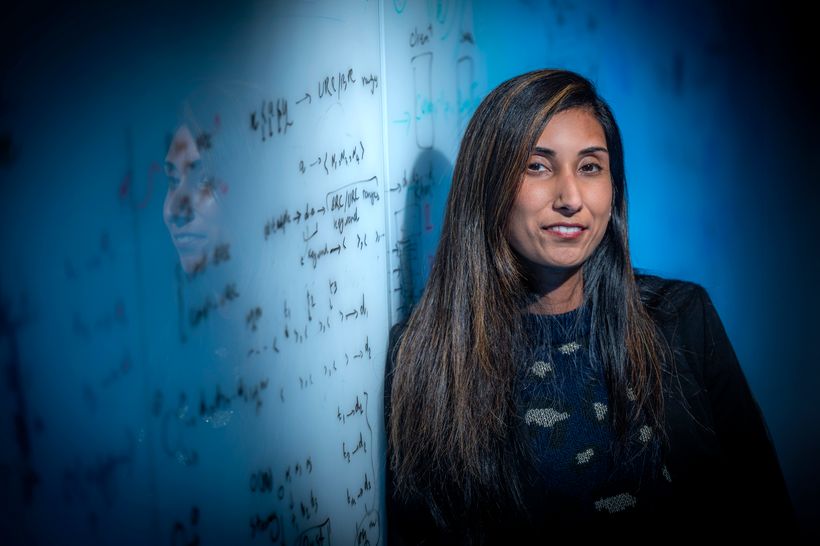
Ask an Expert: Augusta University's Gokila Dorai, PhD, talks Artificial Intelligence
Artificial Intelligence is dominating the news cycle. There's a lot to know, a lot to prepare for and also a lot of misinformation or assumptions that are making their way into the mainstream coverage. Recently, Augusta University's Gokila Dorai, PhD, took some time to answer some of the more important question's she's seeing being asked about Artificial Intelligence. Gokila Dorai, PhD, is an assistant professor in the School of Computer and Cyber Sciences at Augusta University. Dorai’s area of expertise is mobile/IoT forensics research. She is passionate about inventing digital tools to help victims and survivors of various digital crimes. View her profile here Q. What excites you most about your current research in digital forensics and AI? "I am most excited about using artificial intelligence to produce frameworks for practitioners make sense of complex digital evidence more quickly and fairly. My research combines machine learning with natural language processing incorporating a socio-technical framework, so that we don’t just get accurate results, but also understand how and why the system reached those results. This is especially important when dealing with sensitive investigations, where transparency builds trust." Q. How does your work help address today’s challenges around cybersecurity and data privacy? "Everyday life is increasingly digital, our phones, apps, and online accounts contain deeply personal information. My research looks at how we can responsibly analyze this data during investigations without compromising privacy. For example, I work on AI models that can focus only on what is legally relevant, while filtering out unrelated personal information. This balance between security and privacy is one of the biggest challenges today, and my work aims to provide practical solutions." Q. What role do you see artificial intelligence playing in shaping the future of digital investigations? "AI will be a critical partner in digital investigations. The volume of data investigators face is overwhelming, thousands of documents, chat messages, and app logs. AI can help organize and prioritize this information, spotting patterns that a human might miss. At the same time, I believe AI must be designed to be explainable and resilient against manipulation, so investigators and courts can trust its findings. The future isn’t about replacing human judgment, but about giving investigators smarter tools." Q. What is one misconception people often have about cybersecurity or digital forensics? "A common misconception is that digital forensics is like what you see on TV, instant results with a few keystrokes. In reality, it’s a painstaking process that requires both technical skill and ethical responsibility. Another misconception is that cybersecurity is only about protecting large organizations. In truth, individuals face just as many risks, from identity theft to app data leaks, and my research highlights how better tools can protect everyone." Are you a reporter covering Artificial intelligence and looking to know more? If so, then let us help with your stories. Gokila Dorai, PhD, is available for interviews. Simply click on her icon now to arrange a time today.


In an age of fast-moving misinformation, our expert teaches students how to spot what’s credible
As the new academic year begins, and at a time when misinformation often travels faster than facts, University of Rochester’s Kevin Meuwissen offers educators and young learners clarity and practical strategies for identifying credible sources. As an associate professor and chair of teaching and curriculum at the Warner School of Education and Human Development, Meuwissen focuses on how children and teens learn about politics and history — and how they can be taught to critically evaluate what they consume. “Young people pay close attention to who’s been consistently accurate,” he says. “They’re more likely to trust someone over time if their information holds up.” To empower students in our complex information environment, Meuwissen champions the so-called SIFT method — an easy-to-remember acronym and evidence-based toolkit that breaks down like this: • Stop! Pause before reacting or sharing • Investigate the source • Find better coverage • Trace claims back to their origin He also warns about how emotional framing, AI-generated visuals, deep fakes, and repeated exposure can distort judgment through the illusory truth effect — making misinformation feel believable even when it isn’t. His "Ever Wonder: How Can You Tell If A Source Is Credible?" video is a handy teaching tool. Meuwissen and his colleagues encourage teachers grappling with resistance over topics like climate science to consider not just evidence depth, but also students’ identities — political, cultural, and otherwise — when designing lessons. His approach emphasizes building trust, modeling thoughtful verification, and nurturing classroom norms rooted in accuracy — traits essential for forming discerning digital citizens. Kevin Meuwissen is available for interviews about identifying misinformation. He can be contacted through Warner School of Education Director of Communications Theresa Danylak at tdanylak@warner.rochester.edu.


Navigating the Higher Ed Noise
In 2025, higher education institutions face a perfect storm: shrinking budgets, increasing government scrutiny, widespread misinformation, and growing public skepticism. For marketing and communications professionals, the stakes have never been higher. Key Challenges Cuts to Research Funding Increasing Government Oversight & Regulation Economic Uncertainty & Budget Strains Misinformation & Disinformation 2025 will test how well universities can communicate their value to an increasingly complex world. The Decoder Guide is a smart, timely resource for higher ed leaders ready to rise to that challenge —offering practical, proactive steps to improve transparency, trust, and engagement. DOWNLOAD THE GUIDE HERE (no signup required) Upcoming Speaking Events June 8 IABC World Conference, Vancouver “The Thought Leadership Blueprint: Why & How to Build a High-Impact Program” Register Here Sept. 12-13 PRSA East Central Conference, Cleveland “The New Comms Leadership Skillset” Register Here About ExpertFile ExpertFile is revolutionizing how organizations connect their experts to journalists, podcasters, and conference organizers who need to find credible experts on tight deadlines…fast. Featuring experts on over 50,000 topics, our free Apple and Android mobile app is the go-to resource for journalists at media outlets such as the New York Times, CNN, NPR Radio, Fox News, BBC, The Guardian, ABC News, CBC, AXIOS and Time Magazine. For over a decade, our award-winning software platform has been helping marketing departments better manage and promote their online thought leadership to reach a wider audience. Clients include Carnegie Mellon University, ChristianaCare Health, Villanova University, Aston University and Emory University. Learn more at: expertfile.com/getstarted

A Bumpy Ride Ahead for HigherEd
A confluence of political, economic, and social challenges is threatening the very fabric of US universities. In both red and blue states, the political and economic headwinds facing institutions are fierce, public skepticism is high, and social media has become a polarizing battleground of filter bubbles filled with mis/disinformation. Universities find themselves squeezed by funding cuts, scrutinized by lawmakers, and caught in cultural crossfire. This presents a unique challenge for communications professionals. In this era of declining trust and “alternative facts,” they need to be hyper-informed, adapt quickly, and boldly emphasize the critical value institutions have in society. Communications should function as a vital link, bridging this growing divide between town and gown. In red and blue states, the political and economic headwinds hitting higher education are fierce, public skepticism is high, and social media has become a polarizing battleground of filter bubbles filled with mis/disinformation. It's important to note that throughout history, universities often emerge stronger and more deeply connected to the public during times of turbulence. Universities played a key role in partnering with the government to implement Roosevelt's New Deal, helping with emergency relief and agricultural programs. They helped democratize education with the GI Bill after World War II. They responded to societal demands during the civil rights era. Most recently, they played a key role in public health amidst the COVID-19 pandemic. Campus communicators have a unique set of skills and a vital responsibility to steer their institutions through these tough times. But the road ahead will be hard. The New Reality for Campus Communicators Cuts to Research Funding The lifeblood of academic innovation—research dollars—is under threat. The new political regime in Washington is looking to cut billions in federal research funding. A sudden cap on NIH indirect costs (slashed to 15% from an average of 28%) will have a profound impact on programs. Many researchers report that major grants are frozen or are expected to shrink. This “budget axe” isn’t theoretical for research universities—it’s biting right now. Communicators must convey what’s at stake: essential contributions such as groundbreaking science, community health programs, and innovation pipelines that fuel the economy hang in the balance as money gets tighter. Increasing State Oversight & Regulation In state capitals, politicians are muscling into campus affairs like never before. Republican-controlled statehouses are overhauling higher education governance, introducing over 150 bills in 35 states aimed at tightening control over public institutions. Even tenure is threatened. In the past year, lawmakers in seven states moved to eliminate or curb tenure and impose stricter post-tenure reviews – an unprecedented encroachment on academic freedom. New laws and proposals are creating oversight committees, mandating changes to the curriculum, and even threatening funding for programs out of political favor. The message from some state capitols is clear: “We’re watching you.” This surge in oversight and regulatory meddling means university communicators must navigate an increasingly fine line, demonstrating transparency and accountability at every turn to appease regulators while fiercely defending their institution’s academic autonomy. Political Pressure and DEI Backlash Diversity, equity, and inclusion initiatives are under open attack. What began as partisan rhetoric has evolved into concrete threats – and actions – against campus diversity efforts. Dozens of states have passed or proposed laws to defund DEI offices, ban diversity training, or restrict teaching about race and gender. The result? An “inconsistent and confusing landscape” for colleges as they respond to swelling political pressure. The campaign against campus DEI has dramatically accelerated in 2025, turbocharged by signals from the Trump administration pushing to eliminate DEI efforts across government and higher ed. According to The Chronicle of Higher Education 270 campuses in 38 states have already scaled back or dismantled some DEI programs under this pressure. For communications teams, the DEI backlash creates a messaging minefield. They must affirm institutional values of inclusion and support for marginalized groups, even as those very programs face hostile scrutiny from powerful critics. Threats to the Federal Department of Education In Washington, the unthinkable is suddenly on the table: the U.S. Department of Education itself is in the crosshairs. President Trump has made good on campaign promises by signing an executive order to dismantle the Department of Education. While outright abolition requires Congress, the administration has already laid off nearly half of the department’s staff and moved to strip the agency to its bare bones. “We’re going to shut it down… it’s doing us no good,” Trump declared. This unprecedented move could upend federal support and guidelines for universities – from financial aid administration to civil rights enforcement – leaving states to fill the void. Communications professionals must reassure students, faculty, and the public that education won’t grind to a halt if federal oversight wanes. It’s a communications tightrope: acknowledging the potential for massive change while conveying stability in the university’s core mission. After all, even if Washington pulls back, universities still answer to accreditation bodies and the public trust. The Misinformation Deluge on Social Media The information ecosystem has never been more chaotic – or more dangerous. Universities are grappling with viral misinformation and disinformation that can ignite campus controversies overnight. In the age of TikTok rumors and politicized Twitter (or “X”) feeds, false narratives spread like wildfire before facts can catch up. Recent campus incidents have shown how quickly truth gets muddled: one university saw fake reports about a protest spread widely. At the same time, another dealt with a gross misinterpretation of a student gathering that went viral. Photos and videos are routinely ripped out of context or deliberately edited with misleading labels. The public, meanwhile, is “bombarded with misinformation” online and growing distrustful of experts. For higher ed communicators, countering misinformation means fighting a two-front war: rapidly correcting falsehoods about their institution and proactively pushing out accurate, compelling content to capture attention before the rumors do. Economic Uncertainty and Budget Turbulence. Even aside from targeted funding cuts, universities are feeling economic whiplash. Inflation, endowment fluctuations, and post-pandemic enrolment dips have collided to squeeze campus finances. Many institutions face structural deficits and tough choices about programs and staffing. In fact, according to the Chronicle of Higher Education, two-thirds of colleges now show at least one sign of financial stress – a startling statistic that underscores how widespread the budget crunch has become. From flagship public universities to small private colleges, hiring freezes and spending cuts are the order of the day. Every dollar is scrutinized by trustees and legislators alike. Communications pros must now operate in a climate of fiscal anxiety, where messages about any new initiative or expense can trigger questions about priorities. The task at hand is to highlight the university’s economic stewardship and continued value to students and the community, even as belts tighten. It’s critical to communicate that the institution is navigating the storm responsibly—protecting its academic core and maximizing the impact of every precious dollar. Demands to Prove Real-world Impact “What is higher ed really doing for society?” In 2025, that question echoes from state capitols, donors’ boards, and kitchen tables across America. Universities are under intense pressure to demonstrate the real-world value of their research and teaching like never before. Lawmakers openly discuss ROI (return on investment) for degrees and research grants, seeking data on graduates’ earnings and innovations spawned per taxpayer dollar. Public confidence in higher education has been shaken – a recent Gallup survey found Americans’ confidence in colleges has plummeted to 36%, down from 57% in 2015. Many believe in personal value (a college degree for better jobs) but doubt that higher education delivers for the greater good. In short, the public is skeptical whether campus research and scholarship are worth the cost. University communicators must do more than publicize exciting discoveries – they must connect the dots for people. Every media release, story, or tweet should answer: Here’s how this university’s work benefits you, your community, and the world. Whether it’s a medical breakthrough, a tech startup from the lab, or a student project solving a local problem, the mandate is clear: show impact or risk losing support. In my next post, I'll provide a detailed blueprint to help communications professionals proactively plan and organize their teams for the road ahead. This actionable framework will help you better identify where you can add value for your institution where it needs it the most and confirm your critical role as a trusted resource. To your success! Upcoming Speaking Events April 23 PRSA Virtual Workshop "Cutting Through the Noise: What Thought Leadership Strategies are Working in Today’s Environment” Register Here June 8 IABC World Conference, Vancouver “The Thought Leadership Blueprint: Why & How to Build a High-Impact Program” Register Here Sept. 12-13 PRSA East Central Conference, Cleveland “The New Comms Leadership Skillset” Register Here About ExpertFile ExpertFile is revolutionizing how organizations connect their experts to journalists, podcasters, and conference organizers who need to find credible experts on tight deadlines…fast. Featuring experts on over 50,000 topics, our free Apple and Android mobile app is the go-to resource for journalists at media outlets such as the New York Times, CNN, NPR Radio, Fox News, BBC, The Guardian, ABC News, CBC, AXIOS and Time Magazine. For over a decade, our award-winning software platform has been helping marketing departments better manage and promote their online thought leadership to reach a wider audience. Clients include Carnegie Mellon University, ChristianaCare Health, Villanova University, Aston University and Emory University. Learn more at: expertfile.com/getstarted

How to help children cope when tragedy and social media collide
When a child feels traumatized by stressful events or a tragedy, exposure to social media can exacerbate the problem. That's in part because social media can be wrought with misinformation and disinformation, and appropriate communication on its platforms is often lacking. “There are no rules on social media, and kids can gang up on each other,” says Jennie Noll, professor of psychology at the University of Rochester and executive director of the university’s Mount Hope Family Center, which provides evidence-based intervention and prevention services to thousands of children and their families in the Rochester area, with a primary focus is supporting children and families affected by stressful or traumatic experiences. What can adults do to help children cope with tragedy and check in on their emotional and social well-being? The best thing that parents, guardians, and other caretakers of children can do is help youngsters understand that there is more to communication, more to friendship, and more to their self-worth than what arises on social media."We need to understand how we treat each other as humans on social media. Social media has exasperated everything that we thought was risky with regard to how teens interact." She recommends parents check in with their children, enforce breaks from social media for them when they're confronting a stressful situation, and help them make alternative plans. Media outlets often turn to Noll for her insights into child psychology, maltreatment prevention, and social media use. She can be reached by clicking on her profile.


A Beginner’s Guide to Expertise Marketing
Audiences today are consuming more digital content than ever, but they’ve also become far more discerning. Algorithms, AI search summaries, and social platforms have changed how information is discovered and trusted. The result is that organizations often get caught up in pushing out content quickly—only to be overlooked when it lacks depth or credibility. From misinformation to shallow click-driven posts, audiences are quick to disengage. What they’re seeking now are authoritative voices backed by proven expertise. That’s where Expertise Marketing comes in: a strategy focused on showcasing real knowledge, research, and experience in ways that build trust, attract attention, and strengthen reputation. According to Edelman’s Trust Barometer Study, experts play a vital role in establishing credibility amongst audiences and developing more meaningful interactions with businesses and organizations. As far back as their 2019 report results showed that 56% of people trust businesses as a source of news and information while only 47% trusted the government. On top of that, they also reported that 73% of participants were worried about false information or fake news being used as a weapon. This distrust has only gotten worse since COVID and the polarizing politics of recent years. With this in mind, there’s a real opportunity for knowledge-based organizations to step up and show their smarts through expertise marketing. What is Expertise Marketing? Expertise marketing is the practice of making the knowledge and skills of your human resources more visible to your partners and audiences. It draws attention to the value that your people can bring as brand ambassadors and strategically leverages the work your experts are doing to tell a more personal story. In many cases, expertise marketing can also be used to showcase your strengths in research and innovation. Creating a stronger digital presence, expertise marketing more effectively uses your channels to connect with audiences such as media, customers, partners and donors. It builds a sense of trust with your audiences and above all else, it helps establish your reputation as an industry leader. Expertise Marketing Defined: The practice of collectively promoting an organization's experts as brand ambassadors to demonstrate their skills or knowledge. Best practices to publish and connect organizational expertise in ways that foster internal discovery, collaboration, shared knowledge and diversity. Activities that leverage expertise to nurture conversations and connections with audiences such as media, customers, partners, government and funding agencies. How to Make Your Expertise More Visible Properly executed, expertise marketing is about harnessing your in-house expertise and making it more visible. By delivering comprehensive, relevant information in a visually engaging format, you can create a window into your organization that helps audiences better understand your offering and encourages more meaningful conversations. Here are three areas where expertise excels: On Your Website There’s a good chance that you already created touchpoints for expertise marketing but they’re just not optimized for audiences. For example, many organizations are unaware that the “About Page” is the second most visited page on a website and may overlook its potential for attracting audiences. Other webpages that strongly benefit from expert content include: Speaker’s Bureaus Media Rooms Employee Directories Faculty Directories Blogs Employee Intranets Awards Recognition Research & Technology Transfer Through Search Engines Content marketing and search engine optimization (SEO) go hand-in-hand – and it’s key to making your expertise more visible. In Google’s search algorithm, factors like trust and authority are significantly impacted by items such as content and expertise. While SEO is no small task, tools like the ExpertFile Platform are designed to make aggregating and optimizing expert content as seamless as possible. In addition, organizations can also improve their rankings by: Identifying and showcasing a range of expertise Using rich media to display expert content Regularly updating your website with expert content Producing content related to current trends and emerging news Through Distribution Networks Showcasing your experts isn’t just about hosting profiles on your own website—it’s about ensuring they are discoverable where key audiences are already looking. By publishing expert content on dedicated search engines such as expertfile.com and the ExpertFile Mobile App, organizations dramatically expand their reach beyond their immediate networks. These channels are designed for the very audiences that matter most—media, event organizers, research partners, donors, and prospective clients—who are actively searching for credible voices to inform stories, shape agendas, and build partnerships. Leveraging these distribution networks amplifies visibility, positioning your experts as go-to authorities well beyond the boundaries of your institutional website. In The Media For many organizations, media opportunities are an afterthought but it’s the perfect way to highlight your expertise and attract a broad range of audiences. Media outlets are constantly on the hunt for topic-specific experts to speak at conferences, weigh-in on their editorials and enhance the overall quality of their reporting. By making your experts more visible to this audience, you’re not only building your brand reputation as an industry authority but you’re also creating opportunities for new revenue. Starting an Expertise Marketing Program Bringing an expertise marketing program to life starts by taking a deeper look at your human resources and pinpointing the people in your organization who can support your expertise marketing initiatives. This post on Identifying Expertise is a great starting point for understanding what makes someone an expert and how you can position them for various tasks in your expertise marketing program. From there, it’s about getting buy-in from key stakeholders, collaborating across departments to surface expert content and strategizing with your team about where your expertise is best served. Download The Complete Guide to Expertise Marketing For a comprehensive look at how expertise marketing benefits the entire organization and drives measurable return on investment, follow the link below to download a copy of ExpertFile’s Complete Guide to Expertise Marketing for Corporate & Professional Services, Higher Education Institutions, Healthcare Institutions or Association & Not-for-Profits.



Is all screen time bad? Experts weigh in on healthy habits for kids and teens.
With the winter holiday season upon us, many children and adolescents will be home from school for break. As with any extended periods of time outside of school, screen time for children will become a topic of discussion for families. "For academic benefits of screens, it isn't only about the screen 'time,' but about the type of activities youth are doing on screens," said Teya Rutherford, associate professor at the University of Delaware. "There is huge variance in the quality of engagement with online games, etc." During the holiday season, children and adolescents have way more time to fall down the rabbit hole of social media and general web surfing. The American Psychological Association recently released guidelines to help parents coach their teens to have healthier relationships with viewing videos online. Some of the findings include limiting screen time, monitoring content and teaching children and adolescents about misinformation. "This finding is in line with the literature on parental monitoring – in that, if parents monitor their adolescents’ use of social media, then outcomes (i.e., academic achievement) are often better for the adolescent, than for the adolescent whose parent does not engage in such monitoring behaviors," said Mellissa Gordon, associate professor at the University of Delaware. Rutherford can speak about creating engaging online environments, the science behind learning in online environments, motivating students to learn in STEM contexts and self-regulated learning. Gordon conducts research on the social mechanisms that influence adolescent and young adult development. In a 2023 Youth and Society study, she found that as middle schoolers’ social media use increased, their academic performance suffered. Both can be contacted by emailing mediarelations@udel.edu.


The social media platform TikTok is on the verge of a U.S. ban—unless it can be stopped by President-elect Donald Trump. The policy will take effect on January 19, requiring that TikTok find a U.S. parent company or face a ban in the United States. This comes after concerns about user data falling into possession of the Chinese government and fears that they could use TikTok to spread misinformation. Derrick Green, communication expert at Cedarville University, has spoken about the motive behind this ban and why Trump may reverse it. Here are three key points from his recent interview: Trump has pointed out that he would not let TikTok be banned, if elected as president. How could he actually implement this and block this ban from taking effect? The President-elect used TikTok as a part of his campaigning strategy and found success on the app, this coming after he proposed to ban it in 2020. Did his use of TikTok influence his desire to save the app? The proposed ban of TikTok was based on national security and the mental health of young people in the United States. If TikTok was shut down in the United States, what would the effects be? If you are a journalist covering the TikTok ban or the effects of social media, our experts are here to help with all of your questions and stories. Derrick Green is the Chair of the Department of Communication at Cedarville University. Green is available to speak with the media regarding digital media and its effects. Simply click on his icon or email mweinstein@cedarville.edu to arrange an interview.


Higher Education Enters the Ring
Why it matters Yesterday’s announcement that Linda McMahon is President-elect Donald Trump’s pick to lead the Department of Education ushers in a new era for universities and colleges. This signals a sharp pivot toward decentralization and pro-business policies, and it's expected that McMahon’s leadership will focus on dismantling traditional federal education structures, expanding school choice, and aligning education priorities with a business-first agenda. Higher education faces funding uncertainties, new accountability pressures, and the need to demonstrate its relevance in supporting economic growth. The Big Picture McMahon’s appointment reflects Trump’s broader strategy to reframe education policy in a way that prioritizes state control, entrepreneurship, and conservative cultural values. This will likely have significant consequences for higher education, including: Decentralization: Shifting control of education policy and funding to the states. School Choice Expansion: Redirecting public funds to private, religious, and homeschooling options. Economic Alignment: Pressuring institutions to support industry, small business, and workforce development through research, partnerships, and entrepreneurship/startup programs. Cultural Shifts: Rolling back policies on diversity, equity, and inclusion while emphasizing “patriotic” education. What’s at Stake Federal Funding Cuts: Threat: Research funding, Pell Grants, and other federal supports may face cuts. Reality Check: Congressional approval is required to eliminate funding streams like Title I, making complete federal withdrawal unlikely but changes and funding disruptions possible. Policy Shifts: Threat: Federal oversight will likely weaken, and policies favoring vocational and workforce-aligned education will likely put increased pressure on programs such as liberal arts. Universities will also likely face increasing pressure to align with ideological goals, such as restricting DEI (diversity, equity, and inclusion) initiatives. The new administration could wield considerable control over the school accreditation process, which has been seen by some to force ideological changes on campuses. There has been a movement to decentralize accreditation authority, reduce federal oversight, and align educational standards with conservative values. According to the Council for Higher Education, many of the ideas put forward focus on empowering states to authorize accrediting agencies and even serve as accreditors themselves, shifting control from federal to state governments. Action: Institutions must better identify their options amidst a rapidly evolving agenda at both the state and federal levels, develop strategies and secure the resources necessary. For instance, there are calls to prohibit accreditors from requiring institutions to implement Diversity, Equity, and Inclusion (DEI) policies. Institutions also need to understand what the implications of a more diverse accreditation landscape could be, with standards varying significantly across states, potentially affecting the uniformity and transferability of academic credentials nationwide. Reputational Risks: Concern: Growing public skepticism toward higher education undermines enrolment and support. Impact: Conservative narratives favoring alternatives like apprenticeships and other programs that support the economy and job growth will likely gain traction. Preserving Institutional Independence: Pressure: Universities face increased scrutiny of their course curriculum and research priorities that may be deemed ideologically contentious. Opportunity: Institutions must tangibly demonstrate their value to society. The more they can do to break down barriers between “town and gown” and counter the narrative that paints them as too expensive, elitist, and out of touch. Demonstrating Economic Impact: Need: Universities must showcase their role in driving economic growth through research, commercialization, and support for small businesses and entrepreneurs. Opportunity: Institutions should communicate their relevance in relatable ways that engage with businesses, emphasizing tangible contributions to research innovation and job creation as a positive return on investment that can be messaged to taxpayers. Key Questions for Higher Ed Leaders Funding: How can we diversify revenue streams and reduce reliance on federal support? Advocacy: How should universities engage state and federal leaders to protect their interests? Reputation: How can higher education rebuild public trust and counter skepticism? Relevance: How do we better communicate the value of university research and its role in supporting a pro-business agenda? Adaptation: Can institutions innovate by expanding industry partnerships, online education, and workforce-aligned programs? Implications of Project 2025 Project 2025 is a comprehensive initiative spearheaded by the Heritage Foundation, a conservative think tank, aiming to reshape the U.S. federal government through a conservative lens. Launched in April 2023, it serves as a strategic blueprint for a potential conservative administration, detailing policy proposals, personnel strategies, training programs, and a 180-day action plan. Analysis from the Brookings Institution states that "many proposals in Project 2025 would require an unlikely degree of cooperation from Congress, though others could be enacted unilaterally by a second Trump administration.” While we don’t know the full extent to which Project 2025 will be implemented, its agenda seeks to reshape federal agencies, including the Department of Education, with a significant impact on the sector. Key areas of focus include: Title I and Student Aid Proposals to give parents more control over federal funds could deprioritize public education. Tax Credits for School Choice Incentives to support private school tuition may shift K-12 pipelines, impacting university enrolment. Economic Realignment Universities will need to align with business priorities, emphasizing innovation, commercialization, and job creation. Diversity Equity & Inclusion Project 2025 explicitly calls for reducing federal spending on what it deems unnecessary or politicized initiatives, and DEI programs are likely to fall under this categorization. This could have wide-ranging impacts, including changes to school ranking systems that have a DEI component. Ranking bodies such as US News & World Report may need to adjust their methodologies to account for changes in diversity initiatives and data availability. With potential reductions in diversity-related data, rankings might place greater emphasis on other factors such as academic performance, faculty qualifications, and post-graduate outcomes. This also could extend to endowments, which direct funding toward diversity programs through scholarships and fellowships. For institutions that rely heavily on DEI as a cornerstone of their fundraising and donor relations strategies, they may experience reduced donor enthusiasm, particularly from philanthropic organizations or alumni committed to these causes. Regulatory Rollbacks There is the potential for significant changes to Title IX protections and federal loan forgiveness programs, creating legal and financial uncertainty. What Universities Can Do Now: Secure Funding Build relationships with private donors, businesses, and industry partners. Strengthen advocacy efforts at the state level to safeguard funding & other resources. Adopt proactive strategies to mitigate potential policy impacts, such as diversifying revenue sources, engaging donors with aligned government priorities, and ensuring compliance with evolving regulations. Reinforce Public Trust Explain complex topics in accessible ways to help the public and policymakers make informed decisions. Help promote and support faculty who can serve as credible sources for the media, countering misinformation and fostering informed dialogue. Strengthen community connections with your experts through public speaking engagements, workshops, and local events. Position the university as a hub for knowledge and innovation that benefits the community. Capitalize on the reach and influence of alumni. Highlight their successes to show how they benefitted from educational programs and research. Position them as important role models and advocates in the community who are contributing to economic growth. Demonstrate Relevance Showcase faculty and their research breakthroughs. Demonstrate how their work benefits industries, supports entrepreneurship and addresses societal challenges. Speak to real-world outcomes in health, technology, the environment, and more. Use accessible language to connect with policymakers, business leaders and taxpayers. Strengthen Advocacy: Partner with peer institutions to shape policy discussions. Position universities and colleges as vital contributors to a pro-business agenda. Innovate: Expand stackable credentials and micro-credential programs that are aligned with private and public sector requirements and emerging skills-based models. Look at new online education options. Embrace partnerships that connect academic research to real-world economic impact. Universities must deliver a more compelling, data-driven, yet humanized story about their institution’s contributions, fostering stronger relationships with government, the private sector, and taxpayers. What's Next This new era will most certainly challenge higher education to rethink its approach to funding, policy, and public engagement. For all institutions, both public and private, there is no place to hide. As they step into the ring, Higher Education leaders will need lots of support as they look to forge new paths for research, teaching, and community service while engaging their stakeholders in ways that more powerfully communicate their vital contributions to society. The bell has rung—are you ready?