Experts Matter. Find Yours.
Connect for media, speaking, professional opportunities & more.

Over 2850 people supported by eye health education and vision screening delivered by Villa Vision
“Aston University and Aston Villa Foundation have a strong social purpose and the successful delivery of Villa Vision in our local schools demonstrates this perfectly. Eyesight problems shouldn’t hold any child back.” Jack Dromey, MP for Birmingham, Erdington The Villa Vision initiative is raising awareness of the importance of eye health to children in schools and individuals in local community setting It is a joint project between the Aston Villa Foundation, Aston University’s Optometry School and optical lens supplier Essilor Vision for Life Jack Dromey, MP for Birmingham Erdington, visited Aston University campus to learn more about it Jack Dromey, MP for Birmingham Erdington, visited Aston University campus on Friday July 23 to learn about a unique initiative to deliver good eye health to communities in Birmingham. Villa Vision, a joint project between the Aston Villa Foundation, Aston University’s Optometry School and optical lens supplier Essilor Vision for Life, aims to benefit the local community through the provision of free eye care and to raise awareness of the importance of eye care for all. Pupils from the poorest backgrounds are more likely to suffer from uncorrected vision problems. Left untreated, vision problems may result in the need for more learning support at school and can lead to health and vision consequences in later life. Aston University worked alongside the Aston Villa Foundation and Citizens UK to listen to the local community, which identified that children and adults in the local area face a number of challenges when it comes to accessing eye care, including a lack of parental support, awareness, accessibility, language barriers and a misconception about cost. In addition, it has been shown that children from less affluent areas are nearly 30% less likely to have an eye test than children from more affluent areas, with this number significantly increasing among adults. Funded by the Premier League and the Professional Footballers’ Association (PFA), the project is designed to fill a crucial lack of knowledge surrounding the importance of having an eye test and how preventative measures can ensure, among a host of benefits, a lifetime of good vision. The Villa Vision team is delivering a programme of eye-health awareness lessons in the classroom, as well as free vision and colour vision screening, followed by a more comprehensive eye test and free glasses to those children who require them, using a fully operational custom-designed mobile eye care unit. So far, the initiative has engaged with over 1750 local children and adults through classroom workshops and have vision and colour vision screened around 1100 local primary aged children. Jack Dromey, MP for Birmingham, Erdington, said: “Aston University and Aston Villa Foundation have a strong social purpose and the successful delivery of Villa Vision in our local schools demonstrates this perfectly. Eyesight problems shouldn’t hold any child back.” “Poor vision can often go unnoticed, particularly amongst children so Villa Vision will provide the opportunity for children to have a free vision screening check at school. In addition to this, for those children requiring further investigation the initiative will also provide a full eye examination and glasses if required for free using a fully equipped mobile eyecare unit.” Nikhil Sonpal, Villa Vision project manager and optometrist said: “Children may not always recognise whether there is something wrong with their vision and it is particularly damaging if vision problems go undetected. “We understand that, particularly in more deprived communities, many children and adults may face a number of significant challenges and barriers when it comes to accessing eye care services,” Mr Sonpal added. Dr Angela Jeffery, director of regional strategy at Aston University, said: “Engaging with communities on Villa Vision has provided insights into the challenges local people face and helped to shape Aston University’s Civic Agreement.” “Our approach to public engagement draws on innovative community-facing activities across the University and we are constantly developing new and exciting ways of engaging with the public and look to the diverse communities around us to contribute, collaborate and coproduce initiatives with us.” Professor Leon Davies, professor of optometry and physiological optics and head of the School of Optometry at Aston University said: “We are delighted to be working with Aston Villa and Essilor to share our clinical and research expertise in providing evidence-based eye care. “Designed for our region, Villa Vision will benefit our local community through the provision of free eye care and by raising awareness of the importance of eye health for all.”



England’s identity: fans sing football’s coming home, but what is home?
Sport matters to national identity. The pageantry of flags, emblems and anthems (both official and unofficial) load sport with symbolism and imagery of the nation. One of the key reasons governments spend billions of dollars to host sporting mega events is to build or reinforce a sense of national identity. However, national identity is fluid, not fixed. Sport offers an arena in which national identity can adapt and change. In England, where many civic institutions represent Britain as a whole, the men’s national football team is particularly important to English identity. In 1996, the country hosted the European Championships tournament. This coincided with the so-called awakening of English national identity, symbolised by the supplanting of the union flag with the waving of the Saint George’s cross at Wembley football stadium and the singing of a new fans’ anthem, Three Lions (Football’s Coming Home). In recent years, celebrating Englishness has often been linked to a narrow and exclusive imagery, which is said to marginalise ethnic minorities and those with a more socially liberal perspective, and has been tied to a football culture often associated with hooliganism. Yet now, as England have reached the finals of the Euros for the first time, the team and its manager, Gareth Southgate, have put football at the centre of a debate about English identity for the opposite reason. Is a more proud, inclusive version of Englishness emerging? Multicultural teams in a globalised world A recent graphic promoted by the UK’s Museum of Migration shows a stark picture of what England’s starting 11 would look like without immigration over the past two generations. With only three players without a parent or grandparent born overseas, the national team is held up as a microcosm of a diverse, multicultural population (although the absence of England’s significant Asian communities is glaring). To paraphrase historian Eric Hobsbawm, the imagined community of multicultural England seems more real as a team of eleven named people. As Southgate said before the 2018 World Cup: “In England we have spent a bit of time being a bit lost as to what our modern identity is. I think as a team we represent that modern identity and hopefully people can connect with us.” In many ways, this is old news. Sport in England and the UK (akin to national identity) has always been a multinational affair, owing to its colonial ties with the countries of the former British Empire. Whether it was Jamaican-born John Barnes scoring against Brazil in 1984, Kevin Pietersen (South African born) winning the Ashes in 2005, or Greg Rusedski (Canadian born), Johanna Konta (Australian born) or, more recently, Emma Raducanu (Canadian born) performing at Wimbledon, British sport has long reflected its colonial history and the tensions and contingencies that brings. Nor is this issue unique to England or the UK. In 1998, the French World Cup-winning team was both celebrated and attacked by pro- and anti-migrant voices for the multiracial makeup of their “rainbow team”, as a large proportion of its players – including its star Zinedine Zidane – had ethnic backgrounds in former French colonies in Africa and the Caribbean. The imperial legacies of Belgium, Netherlands and Portugal are also evident in the diversity of their respective squads. Beyond former colonial powers, most national teams are now more ethnically diverse than they were 30 years ago, due to globalisation and the naturalisation of foreign athletes. England’s quarter-final opponents Ukraine have fielded Brazilian born players Júnior Moraes and Marlos this year, and their captain Andriy Yarmolenko was born in Russia. In addition to historical, cultural and linguistic connections, there is a clear performance imperative: teams that embrace ethnic diversity often outperform teams that don’t. ‘Englishness’ and immigration What is significant about this moment is the wider political context in the UK – particularly the uncertainty over what is “English” national identity and, critically, what should it be. All this comes amid the fray of polarised debate over the issues of immigration and race in England, and the UK more generally. The prospect of a tighter, points-based system of immigration, which has now been introduced, was one of the key themes of the Leave campaign in the 2016 EU referendum. Had such a system been installed several decades ago, the graphic about the English team’s immigration history may well have been approaching reality. And without the talents of Raheem Sterling, Kalvin Phillips, Kieran Trippier and others, England fans may well have been lamenting another disappointing tournament campaign. Amid the euphoria of reaching a final, there remains much soul-searching, as well as division, among the English on the key questions of “who are we” and “what exactly do we want to celebrate”? Fans, quite rightly, are celebrating the achievements of the whole English team, as well as the activism of individual heroes like Sterling and Marcus Rashford. Yet while many fans embrace the diversity of the team, the booing of their own players taking the knee against racism – a gesture that originated in the US – shows that identity politics can still divide, on and off the pitch. In spite of the positive image of diverse modern England projected by this group of players and manager, it is unrealistic to expect football to navigate the current “culture war” and be able to consolidate a more progressive, inclusive vision of Englishness – at least on its own. Other civic, and possibly political, institutions are needed if England is going to mean more than “the 11 men in white shirts at Wembley”. Notwithstanding how people identify themselves in terms of their nationality, research shows that both hosting a football tournament and making successful progression through it can have a positive impact on national feelings of happiness and well-being. If England beat Italy at Wembley on Sunday and win Euro 2020, a feel-good factor will inevitably abound, which may be a springboard to unite a country that is still deeply divided.


Social Work is Advancing Addiction Science Research
Tens of thousands of Americans die from drug use and addiction every year, with overdoses killing over 63,000 people in America in 2016, according to the National Institute on Drug Abuse. Add in deaths linked to alcohol overuse and tobacco, and the number climbs above half a million Americans. The collective work of several researchers at the USC Suzanne Dworak-Peck School of Social Work, in collaboration with other USC faculty and outside organizations, is advancing knowledge of substance use disorders. Social work has become a hub where researchers and practitioners drive understanding and improve treatment for this disease that impacts millions of families each year. “Either as a cause or consequence, addiction relates to every problem we deal with in social work,” said John Clapp, professor and associate dean for research and faculty development at the USC Suzanne Dworak-Peck School of Social Work. Addiction’s complexity The social work field is uniquely poised to help effect change because of its holistic approach to individual well-being and the public good. According to Clapp, substance use disorder problems are inherently ecological, impacting and being impacted by individuals, families, peers, neighborhoods, communities and public policy in complex and dynamic ways. Untangling those causes and effects and interdependencies is one part of the solution. The other part is understanding that simple solutions may stay out of reach. “We will not find a one-size-fits-all answer,” said Clapp. Looking at addiction as a genetic, psychological or sociological issue only shows one piece of the overall cause. A comprehensive approach is essential, he said, especially when statistics from the National Institute on Alcohol Abuse and Alcoholism (NIAAA) show alcohol use disorders alone as the third leading cause of preventable death in the world. A hub for addiction science The need for a transdisciplinary response to this worldwide crisis was behind the 2018 creation of the USC Institute on Addiction Science (IAS), a joint venture between social work and the Keck School of Medicine of USC, with membership from 10 different schools, colleges and hospitals. Its vision is to strengthen the discipline of addiction science and improve the lives of those touched by the disease. Clapp is co-director of the institute and one of its founding architects. IAS is quickly becoming the foremost place for a broad effort focused on addiction that brings together researchers from the fields of public health, social work, law, public policy, mathematicians, computer engineers and others in recognition of the promise of new approaches to longstanding problems. The USC Suzanne Dworak-Peck School of Social Work has eight faculty making substantial contributions to the prevention of addiction-related disorders as members of the IAS: Professor Avalardo Valdez, associate professors Julie Cederbaum and Alice Cepeda, and assistant professors Jordan Davis, Shannon Dunn, Jungeun Olivia Lee, Danielle Madden, and Hans Oh. “Social work brings one of the broadest perspectives on the underpinnings and solutions to the addiction crisis,” said Adam Leventhal, director of IAS and professor of preventive medicine and psychology at Keck. “By approaching addiction as a health condition and a social justice issue, social work brings to the table the opportunity for high-impact, multi-modal intervention and social policy approaches, which are needed to address the addiction epidemic.” A holistic approach Social work faculty are raising the bar in addiction science research, developing new and novel approaches to improving outcomes for those affected by addiction. In a study recently published in Addiction, a multidisciplinary team lead by Davis and Clapp found gender differences in the risk factors for relapse following treatment for opioid use disorder. The study was the first in this field to use machine learning techniques to process large data sets and identify risk factors for relapse, said Davis, who also serves as associate director of the USC Center for Artificial Intelligence in Society (CAIS). The findings may result in more personalized treatment for opioid use disorder with lasting results. This dovetails with additional research Davis is conducting with computer science engineers at CAIS to collect and input neighborhood and census data into their models in an effort to better understand how these macro variables affect relapse. “We are finding that data points such as crime statistics, population density and concentrated poverty tend to be some of the most important predictors of relapse, over and above individual-level predictors such as impulsivity, motivation or gender,” Davis said. These findings echo Clapp’s description of addiction as ecological and point to the need for holistic solutions. “These machine learning techniques are helping us gain an apparent picture of what the most important factors are surrounding someone’s recovery,” Davis said. “Environment matters greatly.” Davis is also collaborating closely with Eric Pedersen, associate professor at Keck School of Medicine at USC, on several research efforts examining substance use among veterans. Most recently, they have assembled a survey group of approximately 1,200 veterans whom they survey quarterly about their well-being. A recently conducted survey of the group found that veterans with PTSD prior to the COVID-19 pandemic were now managing their symptoms with more frequent alcohol and cannabis use. Another joint research endeavor between the two is examining the use of mindfulness smart phone apps to help reduce substance use in Operation Enduring Freedom/Operation Iraqi Freedom veterans with PTSD and alcohol use disorder. Where well-being and inequalities intersect Jungeun Olivia Lee also seeks to decode the network of relationships between socioeconomic status, adverse childhood experiences and drug use. Her experience as a social work practitioner working directly with clients drives her motivation to demonstrate to policymakers what she sees as a linkage between unemployment, economic stress and substance use disorders. She is lead author on a paper published in Nicotine & Tobacco Research that found unemployment may advance nicotine addiction among young adults, rather than the idea that nicotine addiction may lead to unemployment. Lee’s research interests lie at the intersection of substance use and co-occurring mental health, social inequalities (such as poverty and low socioeconomic status), and adverse childhood experiences. She is interested in combining these three areas of inquiry to explore their influence on addictive behavior that can persist over generations of at-risk families, such as adolescent mothers and their children. Her memories of working directly with clients struggling with the impact of addiction remain clear in her mind. When Lee hears policymakers and others suggest that individual willpower will solve substance use disorder problems, she has a straightforward response: “People are not born with addiction.” In her view, many factors contribute to the triggered distress, including socioeconomic status and adverse childhood experiences. Lee is exploring an idea with other IAS researchers to investigate the relationship between financial strain and employment uncertainty and addiction. “Individual circumstances, such as losing a job, certainly influence substance use, but policy-level decisions, such as the generosity of unemployment insurance, can mitigate the impact,” she said. Transdisciplinary collaboration with social scientists, psychologists and medical researchers at IAS and across the USC campus enriches and amplifies her work. “We are breaking down discipline-specific silos and bringing new and valuable perspectives to this work,” she said. “The synergy is both useful and inspiring.” Looking ahead Researchers also hope to spark interest in the field among the next generation. A new minor for undergraduate students in addiction science was introduced at USC in Fall 2020. The minor is an interdisciplinary collaboration of the Keck School of Medicine, the USC Suzanne Dworak-Peck School of Social Work, the USC School of Pharmacy and the USC Dornsife College of Letters, Arts, and Sciences. It is designed to provide students with a transdisciplinary approach to understanding and treatment of the broad spectrum of addiction-related problems. The goal of addiction science research and education is to improve the long-term effect of addiction treatment and save lives. As society’s understanding of the cause of addiction grows, researchers like those in the school of social work and the IAS strive to bridge the gap between science, practice and policy to positively impact outcomes for those affected by addiction.


Welcoming 2021: The Year of Resiliency
Happy New Year to all — may 2021 be a better and brighter year for everyone. It has been just over a year since I came to Japan Society as President and CEO, with a mandate to take the Society into the future while preserving its 113-year-old mission of building bridges between the U.S. and Japan. The pandemic has accelerated the pace of change for everyone, globally, nationally, locally, and within our own workplaces and households. Change is hard, but it is also necessary. In a recent email, my friend Parag Khanna wrote, “Our global system evolves the way humanity does, not through grand design or random accident but by adaptation to changing realities. The faster we react to an accelerating world, the better our chances of shaping the future to our benefit.” I’d like to speak to Parag’s point personally rather than geopolitically. The experience of leading a New York nonprofit during this time — an institution that is both deeply and historically embedded in onsite programming and tradition — has both clarified and strengthened my vision for Japan Society’s future. Bending Adversity If 2020 has forced us to prioritize, 2021 will be the year of resiliency. 2021 represents the year of the Ox in Japan, where the ox is considered an industrious, cautious, and faithful friend that is always glad to offer help. After the 2020 we’ve all had, we could use more faithful friends like the ox in 2021. We are looking toward 2021 as a year in which we as a society ultimately overcome COVID-19 through the efforts of scientists, frontline workers, and governments around the globe. We hope to see the world come together in a big way for the first time at the rescheduled Summer Olympics in Tokyo. In some ways, we have already seen the future in Japan and in Asia more broadly, with its successful response to the COVID pandemic. Japan also represents a recent example of how to bend adversity and bounce back, as it did from the Great East Japan Earthquake, tsunami and nuclear disaster of 3/11/2011. The entire country came together in solidarity to support the affected Tohoku region, including concrete measures such as limiting electricity usage at a national level to avoid rolling regional blackouts. A decade on, Japan still remembers, with the Olympic flame set to depart from Fukushima Prefecture in the torch relay that will cross the country before arriving in Tokyo for the Opening Ceremony. Out of Crisis: Opportunity Optimism and positivity are necessary to move forward. I’m optimistic not because I’m naïve about the challenges ahead as we continue to navigate these wild currents, but I am confident that we will find safe passage because of what we have learned collectively and adapted to over the past months. Japan Society’s Language Center had a record year in 2020 despite the pandemic as our teachers reached beyond our physical classrooms to virtual ones; more people joined us than ever before for our first-ever digital JAPAN CUTS, the largest festival of Japanese cinema in North America. We have opened possibilities far beyond our physical building, the original Japan House, designed by Japanese modernist architect Junzo Yoshimura 50 years ago, and named New York City’s youngest landmark in 2011. In crisis comes opportunity, and from opportunity come the possibilities for our collective future. While we are hurting without our physical programs and admissions revenue, we’ve literally been able to connect across the world, and even beyond — from Japanese astronaut Soichi Noguchi, who is currently on the International Space Station, to countless leading voices in Japan such as Olympics Director Nomura Mansai — to create unique experiences for our members. In this time, I return to the Japanese concept of kaizen (改善), continual self-improvement and change for the better. Regardless of the next challenges on the horizon, I’m committed to ensuring that we continuously improve and adapt in this spirit. I believe that our mission has never been more critical than in 2021 as we strengthen U.S.-Japan relations with new administrations in both capitals and seek opportunities to engage, explore, and educate our societies about our collective resiliency as we welcome the new year. Joshua Walker (@drjwalk) is president and CEO of Japan Society. Follow @japansociety. The views expressed in this article are the writer’s own.


Savannah is drenched in history, but many of the city’s stories often go untold. Four Georgia Southern University history students aim to shed light on these untold stories as a part of their project, Savannah History Remix. The project, developed by graduate students Lauren Della Piazza Hartke, R. Dalton Bryant, Noah Prince, and Dalton Blackmon, is a series of walking tours featuring lesser-known stories of Savannah’s history. “The walking tours seemed like the safest bet and a good opportunity to learn some digital skills,” said Assistant Professor of history Alena Pirok, Ph.D., who is overseeing the project. “The tours intend to bring new and useful historical information to the city, its residents and the historical tourism industry.” When the project began, the students identified subjects not found on commercial tours of Savannah, including modern immigration, laborers, common people of Savannah and the LGBTQ community. Hartke created the tour, “A Seat at the Table: A Social History of Savannah’s Foodways,” which revolves around the culinary history of the city. “My goal for this project was to show how Savannah’s food scene today is the product of many years of input and contribution from many different subgroups of peoples,” she said. “I want people to understand how our notion of southern food is the product of English, West African and Native American foodways, combined with regional practices unique to Savannah’s economy and ecology.” Pirok said the Savannah History Remix tours have more freedom than commercial tours. “A non-profit tour like ours does not have to worry about losing customers and money,” she said. “This gives us the freedom to take more risks and to offer new, but academically sound, historical narratives that people do not find familiar or ones that might challenge their vision of the world.” Despite COVID-19, students at Georgia Southern University are combining innovation, technology and creativity to see the projects they want to fulfill come to fruition. If you’re a journalist looking to know more about the Savannah History Remix or similar projects, simply reach out to Georgia Southern Director of Communications Jennifer Wise at jwise@georgiasouthern.edu to arrange an interview today.


Best-selling author Peter Singer talks with the Brunswick Review about winning the increasingly crowded and contentious war for attention What do Isis and Taylor Swift have in common? According to author and digital-security strategist Peter Singer, both the terrorist organization and pop star are fighting for your attention online and employing similar tactics to try and win it. ISIS kicked off its 2014 invasion of Mosul with the hashtag, “#AllEyesonISIS.” More recently, the terror group posted photos of its members holding cute cats in an effort to make them more relatable – tactics familiar to most celebrities and online marketers around the world. These online battles, the rules governing them, and their real-world impact are the focus of Mr. Singer’s latest book, LikeWar, which he coauthored with Emerson T. Brooking, at the time a research fellow with the Council of Foreign Relations. “A generation ago people talked about the emergence of cyber war, the hacking of networks. A ‘LikeWar’ is the flip side: the hacking of people and ideas on those networks. Power in this conflict is the command of attention,” says Mr. Singer, who in addition to his writing is also a strategist and Senior Fellow at the New America Foundation. Pretty much everyone who posts online – from governments to marketers to reality TV stars – is a combatant in this fight for virality, according to Mr. Singer. Triumph in a “LikeWar” and you command attention to your product or propaganda or personality. Lose and you cede control of the spotlight and the agenda. Mr. Singer recently spoke with Brunswick’s Siobhan Gorman about the trends he’s seeing in LikeWars around the world, and what companies can do to avoid being on the losing end. What were you most surprised by in researching LikeWar? One of the more interesting characters in the book was at one time voted TV’s greatest villain: Spencer Pratt, a reality TV star on MTV’s “The Hills.” He’s basically one of these people who became famous almost for nothing. But what Pratt figured out really early was the power of narrative, which allowed him to become famous through, as he put it, “manipulating the media.” In the same week, I interviewed both Pratt and the person at the US State Department who’s in charge of the US government’s efforts to battle ISIS online. And Pratt, this California bro who’s talking about how to manipulate the media to get attention, understood more of what was playing out online than the person at the State Department. Spencer Pratt, a reality TV star… understood more of what was playing out online than the person at the State Department.” How much have online conflicts changed the rules in the last few years? First, the internet has left adolescence. It’s only just now starting to flex its muscles and deal with some of its responsibilities. The structure of the network changes how these battles play out. So, it’s this contest of both psychological but also algorithmic manipulation. What you see go across your screen on social media is not always decided by you. The rule makers of this global fight are a handful of Silicon Valley engineers. Another aspect of it is that social media has effectively rendered secrets of any consequence almost impossible to keep. As one CIA person put it to us, “secrets now come with a half-life.” Virality matters more than veracity; the truth doesn’t always win out. In fact, the truth can be buried underneath a sea of lies and likes. And the last part is that we’re all part of it. All of our decisions as individuals shape which side gets attention, and therefore which side wins out. But you highlight that this is playing out differently in China. Exactly. There are two different models shaping the internet, and shaping people’s behavior through the internet, playing out in the West and in China. Essentially, internet activity in China is all combined. Look at WeChat, which is used for everything from social media to mobile payment; it’s Amazon meets Facebook meets Pizza Hut delivery. And you combine that with an authoritarian government that’s had a multi-decade plan for building out surveillance, and you get the social credit system, which is like Orwellian surveillance crossed with marketing. The social credit system allows both companies and the government to mine and combine all the different points of information that an online citizen in China reveals of themselves, and then use that to create a single score – think of it as your financial credit score of your “trustworthiness.” For example, if you buy diapers your score goes up, because that indicates you’re a parent and a good parent. If you play video games for longer than an hour your score goes down because you’re wasting time online. And it’s all networked. Your friends and family know your score. It creates a soft form of collective censorship; if your brother posts something that’s critical of the government, you’re the one who goes to him and says, “Knock it off ’cause you’re hurting my score.” And you do that because the score has real consequences. Already it’s being used for everything from seating on trains and job applications to online dating. Your score literally shapes your romantic prospects. So, you have this massive global competition between Chinese tech companies and other global tech companies not only for access to markets, but also for whose vision of the internet is going to win out. How can companies win a “LikeWar”? Everyone’s wondering: What are the best ways to drive your message out there and have it triumph over others? The best companies I’ve seen create a narrative, have a story and have emotion – in particular, they have emotion that provokes a reaction of some kind. It’s all about planned authenticity. That sounds like a contradiction, but it’s about acting in ways that are genuine, but are also tailored because you’re aware that the world is watching you. A good comparison here is Wendy’s versus Hillary Clinton. Wendy’s is a hamburger chain – not a real person – but it acts and comes across as “authentic” online and has developed a massive following. They’re funny, irreverent. Yet Hillary Clinton – a very real person – never felt very authentic in her online messaging. And that’s because it involved a large number of people – by one account, 11 different people – all weighing in on what should be tweeted out. Inundation and experimentation are also key. Throwing not just one message out there, but massive amounts of them. Treating each message as both a kind of weapon, but also an experiment that allows you to then learn, refine, do it again, do it again, do it again. How do you measure and gauge battles online now? Is it just volume? It all depends on what your battle is, what your end goal is. Is it driving sales? Is it getting people to vote for you, to show up to your conference? This is what the US gets wrong about Russian propaganda and its disinformation campaigns. We think they’re designed to make people love or trust a government. From its very start back in the 1920s, the goal of propaganda coming from the Soviet Union, and today Russia, has been instead to make you distrust – distrust everything, disbelieve everything. And we can see it’s been incredibly effective for them. First, we need to recognize that we’re a part of the battle. In fact, we’re a target of most of the battles. How effective have disinformation campaigns actually been in the US? What can be done? One of the scariest and maybe saddest things we discovered is that the US is now the story that other nations point to as the example of what you don’t want to have happen. There’s no silver bullet, of course. But one example was something called the Active Measures Working Group, a Cold War organization that brought together the intelligence community, diplomats and communicators to identify incoming KGB disinformation campaigns and then develop responses to them. We’re dealing with the modern, way more effective online version of something similar, and we haven’t got anything like that. There are also digital literacy programs. I find it stunning that the US supports education programs to help citizens and kids in Ukraine learn about what to do and how to think about online disinformation, but we don’t do that for our own students. What can people like you or me do? First, we need to recognize that we’re a part of the battle. In fact, we’re a target of most of the battles. And we need to better understand how the platforms work that we use all the time. A majority of people actually still don’t understand how social media companies make money. The other is to seek out the truth. How do we do that? And the best way is to remember the ancient parable of the blind man and the elephant – don’t just rely on one source, pull from multiple different sources. That’s been proven in a series of academic studies as the best way to find the facts online. It’s not exactly new, but it’s effective. Where will the next online war be fought? The cell phone in your pocket, or if we’re being futuristic, the augmented reality glasses that you wear as you walk down the street. It’ll come from the keepsake videos that you play on them. If you want to know what comes next in the internet there have always been two places to go: university research labs and the porn industry. That’s been the case with webcams, chat rooms and so on. What we’re seeing playing out now are called “deep fakes,” which use artificial intelligence to create hyper-realistic videos and images. There’s also “madcoms,” which are hyper-realistic chat bots that make it seem like you’re talking to another person online. Combine the two, and the voices, the images, the information that we’ll increasingly see online might be fake, but hyper-realistic. The tools that militaries and tech companies are using to fight back against the AI-created deep fakes are other AI. So, the future of online conflict looks like it’ll be two AIs battling back and forth. Let me give you a historic parallel, because we’ve been dealing with these issues for a very long time. The first newspaper came when a German printer figured out a way to monetize his press’s downtime by publishing a weekly collection of news and advice. And in publishing the first newspaper, he created an entire industry, a new profession that sold information itself. And it created a market for something that had never before existed – but in creating that market, truth has often fallen by the wayside. One of the very first newspapers in America about a century later was called the New England Courant. It published a series of letters by a woman named Mrs. Silence Do-good. The actual writer of the letters was a 16-year-old apprentice at the newspaper named Benjamin Franklin, making him the founding father of fake news in America. In some sense it’s always been there, using deception and marketing to persuade people to your view.



The tug between protecting privacy and building brand loyalty
The coronavirus pandemic has put much of normal life on hold, but it hasn’t stopped hackers. According to Securityboulevard.com, in the first quarter of 2020, more than 8.4 billion records from healthcare institutions, technology, software, social media, and meal delivery companies were exposed — a 273 percent increase from Q1 2019. While data breaches are costly to companies — a recent Ponemon Institute data breach report found that data breaches cost organizations an average of $7 million in the U.S. — their frequency is enough to cause some consumers to wonder if their private information is safe with their favorite brands. The increase in data breaches is concerning, noted Jesse Bockstedt, associate professor of information systems & operations management, but several studies have found that the out-of-pocket expense to consumers due to identity theft is less than $1,000. “Which isn’t zero, but it’s not like a few years ago when [identity theft] ruined your life and destroyed your credit,” Bockstedt said. As for the companies, he added, “It’s not a brand killer anymore.” Yet despite consumers’ growing unease, Goizueta faculty say the relationship between privacy and brand loyalty is a bit more intricate. While a data breach can nick a firm’s reputation, it’s the data that is purposely collected beyond the name and vital statistics that worry consumers more. Our experts found the following key points were necessary when it comes to finding the safe ground between privacy and brand loyalty. In fact, we have an expert from Goizueta who can explain each one: Building digital trust “Companies are increasingly worried that people will buy less from their brand if they’re perceived to be fast and loose with customer data,” said Daniel McCarthy, assistant professor of marketing. For instance, after political data-analytics firm Cambridge Analytica secretly collected data on roughly 87 million Facebook users, back-lash followed. In an effort to regain users’ trust, Facebook founder and CEO Mark Zuckerberg laid out a “privacy-focused vision” for Facebook, but those efforts were widely criticized as not going far enough. Advertising boycotts followed. Trust: the key to customer loyalty Minus regulatory guardrails, the differentiating factor is trust, explained Jagdish Sheth, the Charles H. Kellstadt Chair in Marketing. “Trust is built over time by doing what you promise to do and by company behavior that is considered appropriate or right,” Sheth said. Loyalty programs such as those with airlines, hospitality companies and grocery stores are founded on a relationship between a consumer and a brand. “Loyalty programs mean relationships, and in all relationships, trust and commitment are key,” he added. Let’s make a deal “Brands that are able to deliver a personalized experience in a privacy-friendly manner will have a competitive advantage,” explained David Schweidel, professor of marketing, in a recent “Goizueta Effect” podcast. “Putting a premium on privacy means forgoing the benefits that come from allowing organizations to collect data they use to deliver a better experience. From a commercial standpoint, the onus is on the marketers to make the case that the benefits outweigh privacy concerns.” We’ve attached a full article with even more advice and helpful information from our experts – but if you are looking to learn more or cover this topic, we can help. All of our faculty are available to speak with media, simply click on either expert’s icon now – to book an interview today.




Businesses must have a strategy for a messy tomorrow
John Kim is a Senior Lecturer in Organization & Management at the Goizueta Business School at Emory University. He is a management consultant with more than 20 years of experience working with executives to make difficult decisions and implement sustainable change. Recently, John published a piece that details a ‘Strategy for a messy tomorrow’ where he outlines how businesses must have a strategy development and implementation for an unpredictable business world. The piece is attached and a must read, especially in these turbulent and unpredictable economic times. In the article, he focuses on three key points: 1.Beware of False Choices “One thing we try to teach here at the business school is to be careful of false choices. Business is incredibly dynamic. Every industry is now a technology business, and the corporate playbook that evolved to protect profits is quite outdated.” Kim notes that Thomas Friedman poetically described this new normal in his 2005 book The World is Flat, and over the last 15 years, competition has only accelerated because of the explosion of two resources: cheap money and data. Kim notes that it’s a great environment to start or fund a business because interest rates have been low for the last 10+ years. There are dozens of new entrants in all industries, and all parts of the value chain, who are often well-funded, flexible, and are not weighed down by legacy business models and assets. The big winners are the customers who have increasing choice, lower prices, and great value capture. 2.The Challenging Environment From his corporate experience, Kim sees two significant challenges to strategy implementation. First, senior leaders turn over quickly. “It’s hard to have consistency of vision and leadership and implementation when there is such a movement in the C-suite with someone moving in and someone moving out every 5–6 months. So, it’s not a surprise that a lot of strategies either don’t follow through or there are too many cooks in the kitchen, and strategy gets a little bit muddled as a result.” Secondly, when the strategy does eventually make it to the ground-floor and needs to be executed, things have often moved on, and the market responses are rarely the ones you expect. Riffing on Peter Drucker’s famous quote on uncertainty, Kim explains to his students that, “Instead of trying to think of something brilliant to do tomorrow, why don’t you think of something very actionable today that prepares us for what we know will be a totally messy, crazy, unpredictable tomorrow.” 3.A Business Executive’s Response The business executive’s job is to not only set the direction, build a climate of trust, and create the energy for change—but also to be willing to test the assumptions and constraints around a given problem. Increasingly the answers will lie outside of a given industry, and thus require leaders to be broader in their horizon-scanning and more open to alternative paths forward. If you are interested in learning more about why business do indeed need a a strategy for a messy tomorrow – the let us help. John Kim is available to speak regarding this topic – simply click on his icon now to arrange an interview today.

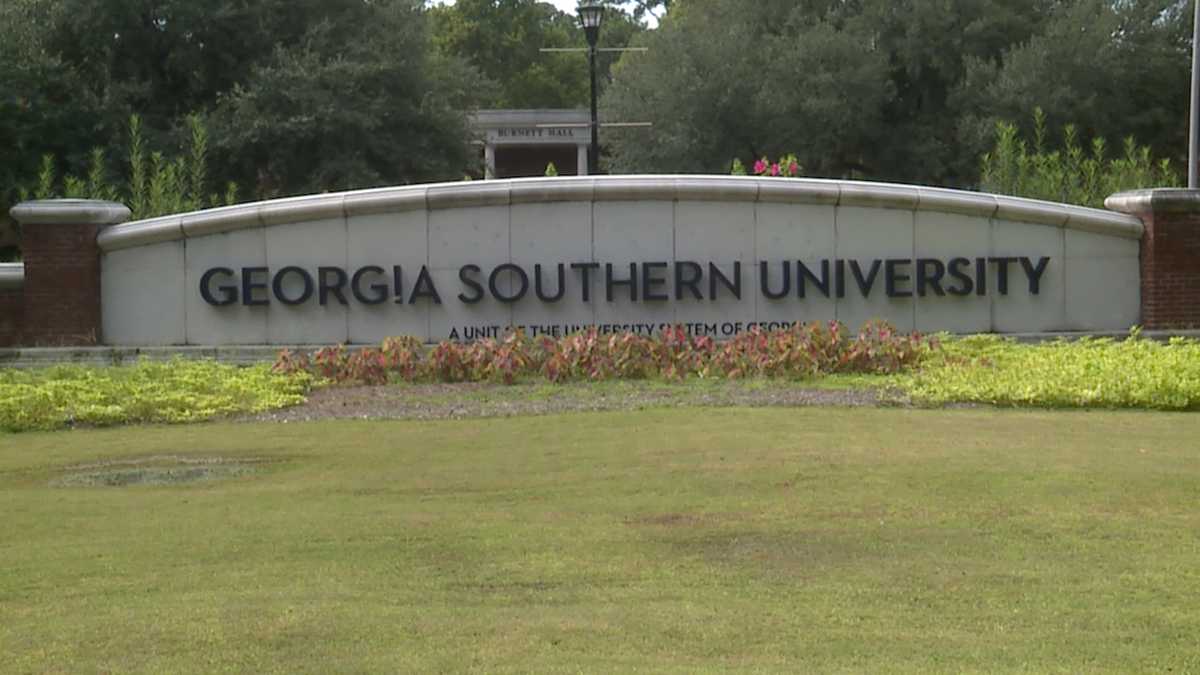
Georgia Southern University President Kyle Marrero delivered a virtual State of the University fall 2020 address to faculty and staff, broadcast live from the Performing Arts Center on the Statesboro Campus on Aug. 12. Maxing out with 1,507 viewers at one point, University members tuned in from remote locations to hear the president discuss how Georgia Southern is successfully adapting during extraordinarily difficult times and will continue to be nimble during the fall semester. “We are being asked to be innovative, flexible, nimble and willing to adapt and change,” Marrero said after welcoming all back to the three campuses. “And I want to thank you. You all have been tremendous, remarkable, heroic even, as we made it through these times and as we navigate through these uncertain times.” Marrero touted the herculean efforts of faculty and staff, who maintained the integrity of the University’s five pillars — student success, teaching and research, inclusive excellence, operational efficiency, effectiveness and sustainability, and community engagement, in the midst of a pandemic that caused the University to move fully online in March. He cited specific examples of performance excellence since March with the following collective efforts: Moved more than 5,000 classes to fully online to complete the Spring 2020 Semester; Delivered summer term fully online while seeing credit-hour generation move up by more than 4%, compared to the Summer 2019 Semester; Moved 4,600 students out of housing and provided support for more than 100 students who remained on campus; Refunded almost $11 million in housing, dining and fees to students; Held virtual Spring 2020 Commencement, viewed by more than 100,000 worldwide; Provided more than $11 million in CARES Act grant funding directly to students; Developed and began implementation of Initial Return to Campus and Return to Campus Plans, based on input from more than 130 faculty staff across campus and public health guidance from the Centers for Disease Control and Prevention and the Georgia Department of Public Health; Modeled a 14% state budget reduction for FY21, then completed a 10% realized reduction, totaling $14.2 million; Developed and implemented flexible and remote work processes; Assessed and modified almost 5,000 courses for fall 2020; Prepared campus with signage, cloth face coverings, face shields, PPE, hand sanitizer stations; Formed and implemented the CARES Service Center; Continued communication, coordination and monitoring of community health care providers, public/private schools, municipalities and agencies. Marrero also presented August figures showing that fall 2020 enrollment looks strong compared to this same time last year, however, he was quick to note that the figures may fluctuate based on various factors throughout the semester. Final fall enrollment figures will be released in October. “We can continue to move forward,” he said. “We can continue to elevate and live our mission and our vision and our values even in these times. We will adapt, we’ll be nimble and we’ll ensure that every day that the public health and safety of our faculty, staff, students and our community is of paramount importance. “I am confident that we are ready as we can be and together we’ll assess and navigate the entirety of the fall semester with the goal and outcome of our students being successful. As a whole Georgia Southern University can make it through this together.” If you are journalist and would like to know more about Georgia Southern university and how it is succeeding during COVID-19, simply reach out to Georgia Southern Director of Communications Jennifer Wise at jwise@georgiasouthern.edu to arrange an interview today.

Featuring: B. Frank Gupton, Ph.D. A former process development executive in the pharmaceutical industry, B. Frank Gupton, Ph.D., was coaxed out of retirement to teach in the Department of Chemical and Life Science Engineering at Virginia Commonwealth University. Gupton, whose research focuses on improving health care by making pharmaceutical production cleaner and more cost-effective, is founder and CEO of the Medicines for All Institute (M4ALL), based in the VCU College of Engineering. The institute began with a simple idea: expand global access to lifesaving medications by producing them more efficiently. The institute’s team of chemical engineers and chemists demonstrated compelling results with its first target, the anti-HIV/AIDS drug nevirapine. As the researchers continue to work on additional therapies for HIV/AIDS treatment and other diseases, M4ALL is now working with a manufacturer in South Africa and partnering with the government of Ivory Coast to bring their advances to the places they are most needed. VCU Engineering’s experts are available to speak about how M4ALL is transforming pharmaceutical engineering and improving access to medicines around the world. Gupton is the Floyd D. Gottwald Junior Chair in Pharmaceutical Engineering, professor and chair of the Department of Chemical and Life Science Engineering. An award-winning researcher and National Academy of Inventors Fellow with multiple patents, he is an expert in his field. Simply click on his icon to arrange an interview.