
Experts Matter. Find Yours.
Connect for media, speaking, professional opportunities & more.

Is AI taking over traditional procurement practices?
Artificial intelligence (AI) is everywhere. It’s taking questions from clients, running assembly lines and is now pretty much part of every appliance in every house and is also an integral part of industry. In fact, in the attached article, Joe McNamara, global director of IT for food giant Kraft-Heinz details how he has implemented AI as a vital source for manufacturing and procurement across his company. Recently, Ruomeng Cui an Assistant Professor in the Department of Information System and Operations Management at the Goizueta Business School, Emory University along with colleagues from Rutgers University and Tianjin University, authored a paper regarding how Artificial Intelligence will be playing an expanded role in areas like procurement and how it will increase accuracy and efficiency for businesses on a global scale. If you’re looking to learn more about this topic – then let us help with your questions or coverage. Ruomeng Cui investigates how operations strategies create value in digital retail and platform markets. Professor Cui is available to speak with media regarding this topic – simply click on her icon to arrange an interview.



Baylor Expert Shares Tips to Help Kids Maintain, Improve Fitness During Time Out of School
Millions of children and teens throughout the United States are relegated to their homes in attempt to help “flatten the curve” and spread of COVID-19. As parents struggle to carve out a new normal for themselves and their children, a Baylor University professor says physical fitness should still be a priority. Paul Gordon, Ph.D., professor and chair of Baylor University’s department of health, human performance and recreation, is recognized nationally as a top expert in muscular fitness and health outcomes. His areas of expertise include physical activity and lifestyle-based research related to obesity. “Beyond improving your health, physical activity will also improve your mental state,” Gordon said. “A sense of accomplishment and satisfaction is often felt after exercise. Consequently, when you need a mood lift either from ‘cabin fever’ as a result of being shut in or the stress of our current health crisis, take an exercise break. It will help you keep your spirits up.” In the following Q&A, Gordon shares tips to help parents and children stay fit during the coronavirus pandemic. Q: With millions of kids now out of school due to coronavirus – and without the benefits of a gym class – what advice would you give parents and guardians about helping those kids maintain or improve fitness? A: With the onset of school closures and recommendations to limit groups, parents do find themselves challenged to figure out a new routine that encourages healthy living such as opportunities for exercise. Given the current challenges we are facing to prevent the spread of this dangerous disease, parents need to step up and actively oversee their children’s activities. The following points are important considerations: Engage in Active Parenting. Many children/adolescents will be engaging in remote learning formats through much, if not all, of the remaining school year. Consequently, parents will need to assist their kids, particularly the younger children, with access and supervise their work. We cannot expect teachers to have the same control as when they are in class. Similarly, opportunities for engaging in physical activity need to be planned and encouraged and where possible supervised. Some exercise is better than none. This concept is true for adults and kids alike. Don’t give up on getting exercise completely if you can’t plan a full workout. A little is good, and more is better. Remember, exercise is helpful for more than weight control. It improves cardiovascular and skeletal health as well. It can even bolster your immunity response. Q: Are there exercises that kids from kindergarten on up can do? What would you recommend in terms of time and style of exercise? A: Younger children are more likely to engage in activity if they have someone to play with. Parents should engage in active games with their children. If the parent is working from home, take short breaks and play with your child. Active games that involve running, skipping, jumping and climbing are perfect types of activities. Take them for walks in the park or neighborhood. Once children hit adolescence, they are more inclined to perform limited stationary exercises such as on a stationary bicycle or cross trainer. Throwing the ball and playing controlled games (tag, kickball, etc.) can be effective. Playing with your child is an excellent way to spend time and build memories that last a lifetime. Older children can also engage in regular calisthenics such as push-ups, jumping jacks, wall sits, etc. Make it a game or contest and you’ll likely get their involvement. Q: Do you recommend any online plans or resources for parents to follow? A: There are a number of online resources available. A few examples are listed below: GoNoodle KidsHealth.org BeActiveKids.org Q: What are the negatives associated with being sedentary – whether it’s in front of a television or sitting and spending too much time in front of a screen? A: A sedentary lifestyle has numerous untoward effects on health. In fact, even individuals who are meeting basic activity levels can be at increased risk for diseases if they are overly sedentary. Increased risk for cancer, cardiovascular disease and metabolic abnormalities (i.e., diabetes) occur from sedentary living. Obesity has reached epidemic levels in our society, and a primary factor is sedentariness. It’s important to take breaks from sitting and get up and walk around. ABOUT BAYLOR UNIVERSITY Baylor University is a private Christian University and a nationally ranked research institution. The University provides a vibrant campus community for more than 18,000 students by blending interdisciplinary research with an international reputation for educational excellence and a faculty commitment to teaching and scholarship. Chartered in 1845 by the Republic of Texas through the efforts of Baptist pioneers, Baylor is the oldest continually operating University in Texas. Located in Waco, Baylor welcomes students from all 50 states and more than 90 countries to study a broad range of degrees among its 12 nationally recognized academic divisions. ABOUT ROBBINS COLLEGE OF HEALTH AND HUMAN SCIENCES AT BAYLOR UNIVERSITY The Robbins College of Health and Human Sciences at Baylor University was established in 2014, a result of identified priorities for strengthening the health sciences through Baylor’s strategic vision, Pro Futuris, and the University’s Illuminate strategic plan. The anchor academic units that form Robbins College – Communication Sciences and Disorders; Family and Consumer Sciences; Health, Human Performance and Recreation; Public Health; and Division of Health Professions – share a common purpose: improving health and quality of life. The College’s curricula promotes a team-based approach to transformational education and research that has established interdisciplinary research collaborations to advance solutions for improving quality of life for individuals, families and communities. For more information, visit www.baylor.edu/chhs.


Coming next fall, Georgia Southern University School of Human Ecology will debut the Birth to Kindergarten Teacher Education Program. The program offers students the opportunity to apply for a Georgia teaching certificate at the completion of all program requirements. The program was designed to operate with a strong social justice lens. “We, the program developers and supporters, know how important it is to recognize the role that contextual influences like race, religion, income level and family structure play in a child’s growth and development,” said Georgia Southern Associate Professor of Child and Family Development Dina Walker-DeVose, Ph.D. “Our program seeks to cultivate cohorts of teachers who are equipped with a sound knowledge base that is grounded in research, a teaching pedagogy that is culturally responsive and flexible to the needs of diverse groups of children, and a spirit of advocacy to support and fight for each and every child, particularly those who are marginalized in our society.” Associate Dean of the College of Behavioral and Social Sciences, John Kraft, Ph.D., said the decision to house the program on the Armstrong Campus in Savannah was influenced by M. Ann Levett, Ed.D., alumna and superintendent of Savannah-Chatham County Public Schools. Levett is experienced in developing early childhood education centers. “Dr. Levett’s vision is more than childcare or pre-k in the ordinary sense,” Kraft said. “She wants these children to experience a holistic program that integrates systemic child development and educational programming and intervention. Birth to kindergarten certified teachers are the foundation for her early childhood education centers.” Walker-Devose said program graduates will have experience working with young students, and they will benefit from a financial standpoint because of the specific training. “Our students will enter the classroom feeling well-equipped for the difficult task of meeting children at their current level of mastery and moving them toward identified goals,” she said. “They will be able to do this while recognizing that certain contextual factors such as race and family income have real impacts on student outcomes. Equipped with this knowledge, skill set and a teaching license, they will be compensated at higher rates than those who are not licensed.” Walker-Devose said Southeast Georgia communities will be one of the biggest benefactors of the program. “Every community that is touched by the children who will be educated by the amazing teachers we will produce will benefit from the program,” she said. “Research shows a positive return on investment for every dollar that is invested in quality early childhood education. This body of research is another reason that society should be looking for ways to support its youngest learners and fairly compensate those trusted with their care and education.” Are you a reporter looking to learn more about Human Ecology and how it will positively impact communities not just in Georgia but potentially across America? Then let our experts help. John Kraft is the associate dean of the College of Behavioral and Social Sciences at Georgia Southern. He has written about human social behavior and is considered an expert in the field. Dr. Kraft is available to speak with media regarding this topic – simply click on his icon to arrange an interview.


Fifty years ago, the first computer-to-computer connection was made through ARPANET, the precursor to the modern internet. What will the internet look like 50 years from now? That's the topic of a new report by Elon University's Imagining the Internet Center and Pew Research. The report, "The Next 50 Years of Digital Life," is part of a series on the future of the internet and features insights from 530 technology pioneers, innovators, developers, business and policy leaders, researchers and activists. They were asked to respond to a series of questions about how individuals' lives might be affected by the evolution of the internet during the next 50 years. “In just 50 years the internet grew from a handful of interlinked computers to a worldwide network connecting billions of active users across all corners of the globe,” said Kathleen Stansberry of Elon University’s Imagining the Internet Center, the lead author of the report. “This vast experiment in human collaboration has not been without cost, but these experts believe that by enacting thoughtful reform today the vision of the internet as a tool of equality and enlightenment can still be realized.” Overall, 72 percent of these respondents said they hope and expect that the next 50 years might bring significant change for the better; 25 percent say they fear there could be significant change for the worse and 3 percent said they expect there will be no significant change. You can find a list of key themes from the report here, and the full report, including scores of comments from experts, here. If you're interested in talking with Professor Stansberry about the report, please reach out to Owen Covington, director of the Elon University News Bureau, at ocovington@elon.edu or (336) 278-7413. Professor Stansberry is available for phone, email and broadcast interviews.


When people hear the term “assisted living,” they might think “nursing home” or “old folks’ home.” But what people don’t know is that interior designers are working hard to ensure that these facilities provide a sense of comfort and a sense of home to their residents. “Designing for assisted living environments requires careful consideration of the needs of the residents living there. But really, in that way, it is no different from designing for any population,” said Elise King, assistant professor of interior design in Baylor University’s Robbins College of Health and Human Sciences. Baby boomers would rather live at home or in a residential setting, according to SeniorLiving.org. This will require more locations to have independent and assisted living available. With the baby boomer generation transitioning into retirement, many will require additional care but don’t want to be in nursing homes like their parents. “You should always begin by understanding the users of the space and assessing their needs and requirements,” King said. “And what you’ll find is that across the lifespan, while there are different needs which must be met by various functional requirements, our innate desires are not that different.” 1. Bring outdoors inside by incorporating nature into facility design. One way designers enhance facilities is by incorporating nature into their design and bringing the outdoors inside. At Baylor, Debra Harris, Ph.D., associate professor of interior design — who has researched the impact of health care facility design on patients, families and health care workers — teaches a sustainability course that addresses some aspects of nature in design. “We reinforce all aspects of indoor environmental quality through research activities and through the entire design process,” Harris said. “For years, architects have discussed the concept of organic architecture and more recently, the term ‘biophilic design’ has been used,” King said. “And in the past 30 or so years, we’ve seen a growing body of research that supports what we’ve assumed for a long time, essentially that humans desire a connection with nature and that nature can have a positive impact on health and well-being.” She said one way this can be accomplished is by having ample windows, particularly those that look onto greenspaces or treetops. It also is important to consider that some residents will be using walkers, canes or wheelchairs. Window height should be considered so that all residents can benefit. Another way to incorporate nature into the design is by using natural materials when possible or using materials that have textures or patterns reminiscent of nature. Harris agrees that incorporating nature into a facility’s design is important and beneficial to the residents living there. “Direct access to nature, like gardening or nature walks, and indirect access to nature, through a window, provide real tangible benefits,” Harris said. 2. Access to natural light, as well as artificial light that mimics daylight, provides benefits to seniors that are associated with well-being. Harris said having access to natural light provides benefits associated with well-being, such as reinforcing our natural clock, known as circadian rhythms, which helps with the quality of sleep and may contribute to management of chronic conditions. Designing to provide access to nature through gardening and walking also can increase physical activity and social interactions, she said. Artificial lighting is also an important factor in interior design, especially for seniors. Harris said there are lighting systems that can mimic daylight, changing over the course of the day to support our circadian rhythms, which can lead to an elevated sense of well-being. This may contribute to other aspects, such as social interactions, physical activity, and satisfaction, she said. 3. Designing for all five senses is critical for making a facility feel more like home. King said it’s important to design for all the senses, not just the visual aspect of the facility. She said sound, smell and touch are other critical aspects that need to be taken into consideration to make a facility feel more like a home. “Designers have to use research to understand how we can best address the specific needs of a mature population through design,” King said. “By creating environments that value and support these innate needs — self-actualization, esteem, love and belonging, safety needs and physiological needs — we’re reinforcing a sense of place and hopefully, a sense of home.” ABOUT BAYLOR UNIVERSITY Baylor University is a private Christian University and a nationally ranked research institution. It provides a vibrant campus community for more than 17,000 students by blending interdisciplinary research with an international reputation for educational excellence and a faculty commitment to teaching and scholarship. Chartered in 1845 by the Republic of Texas through the efforts of Baptist pioneers, Baylor is the oldest continually operating University in Texas. Located in Waco, Baylor welcomes students from all 50 states and more than 90 countries to study a broad range of degrees among 12 nationally recognized academic divisions. ABOUT ROBBINS COLLEGE OF HEALTH AND HUMAN SCIENCES AT BAYLOR UNIVERSITY The Robbins College of Health and Human Sciences at Baylor University was established in 2014, a result of identified priorities for strengthening the health sciences through Baylor’s strategic vision, Pro Futuris, and the University’s Illuminate strategic plan. The anchor academic units that form Robbins College – Communication Sciences and Disorders; Family and Consumer Sciences; Health, Human Performance and Recreation; Public Health; and Division of Health Professions – share a common purpose: improving health and the quality of life. The College’s curricula promotes a team-based approach to transformational education and research that has established interdisciplinary research collaborations to advance solutions for improving quality of life for individuals, families and communities. For more information, visit www.baylor.edu/chhs.

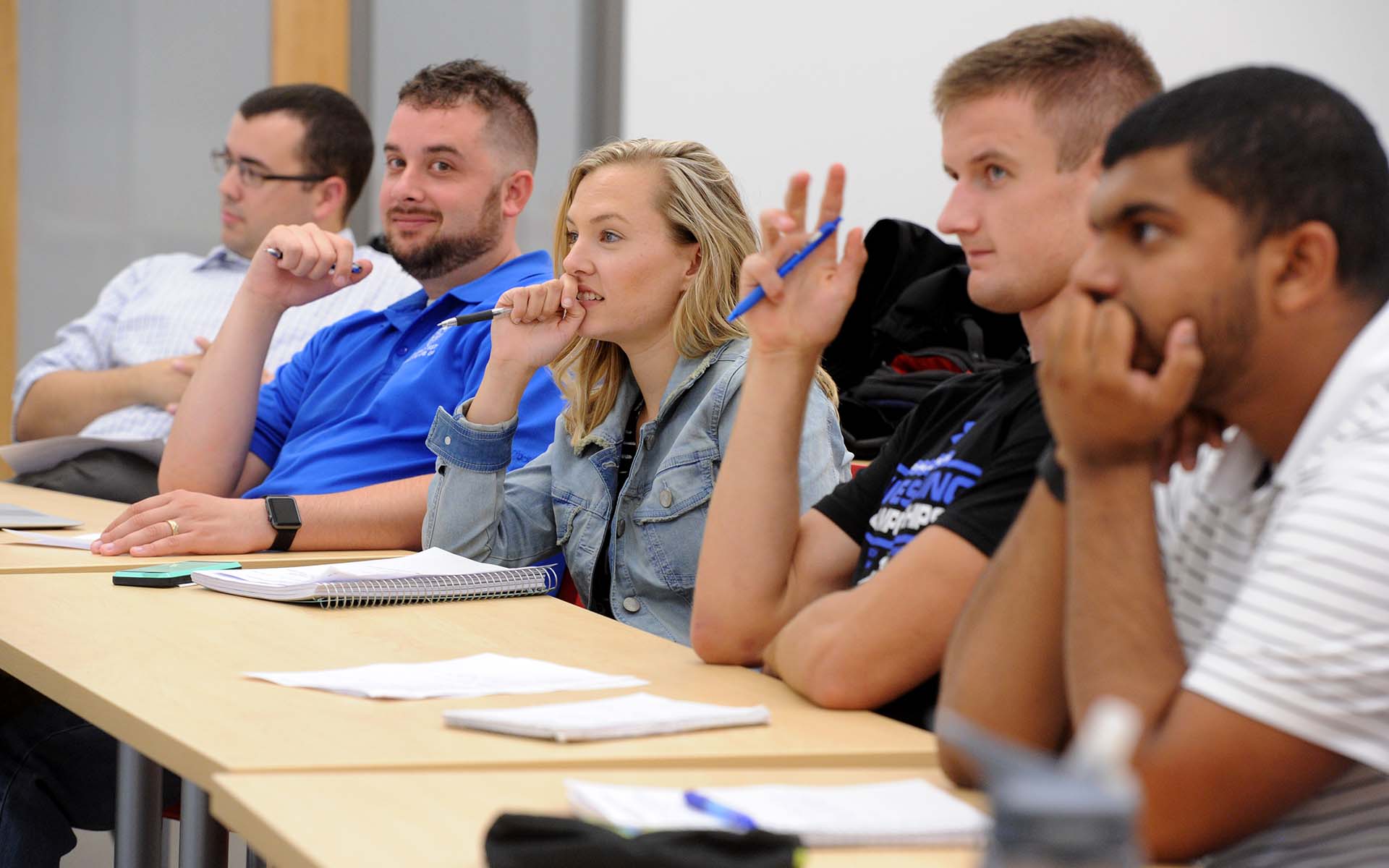
“Design thinking is a human-centered approach to innovation that draws from the designer's toolkit to integrate the needs of people, the possibilities of technology, and the requirements for business success.” - Tim Brown, CEO of IDEO I would add the following to Mr. Brown’s statement. This innovation approach requires more than a designer’s toolkit. It requires multiple departments within an organization to engage in the approach. If I’ve learned one thing in my more than 5 years in higher education it’s that companies continue to push for employees to become better problem solvers, more creative/critical thinkers, and ultimately stronger communicators. Why? Company growth is critical, and the aforementioned skills are how many companies will achieve growth. At Otterbein, we continue to provide education that addresses the development of these skills. We are designing a new focus in the MBA Program; Design Thinking. Otterbein University’s MBA Program is collaborating with the Master of Design (MDes) Program at the Columbus College of Art & Design (CCAD), to integrate a Design Thinking Area of Focus within the MBA program. Design Thinking combines design research, service design, studio & project course for prototyping/impression/artifact work, along with design thinking principles critical in succeeding in business and industry. It is designed for individuals who wish to pursue a career in business design, organizational change, and innovation, among other potential career paths. Are you a reporter covering stories that involve Design Thinking? Are you a student considering pursuing Design Thinking as a postsecondary option? If so, let our experts help with any of your questions. Eric is Director of the MBA Program at Otterbein University and is available to speak to the concepts of Design Thinking. Simply click on his icon to arrange an interview.


In what was once a wide field to replace the fallen British Prime Minister Theresa May has now become a race for Boris Johnson to lose. As the outspoken and bold British MP looks to unite his party, pull Britain from the EU by the end of October and defeat Labour in the next election – what will his presence at 10 Downing Street mean for his country, Europe the rest of the world? Britain is one of the cornerstones of the west, but what will a wildcard like Johnson mean? What’s his background and do people need to know more about the man who will reside in the chair as historic figures like Tony Blair, Margaret Thatcher and Sir Winston Churchill? If you are covering and need to no more – that’s where we can help. Dr. Glen Duerr's research interests include nationalism and secessionism, comparative politics, and international relations theory. Glen is available to speak to media regarding Boris, Brexit and Britain – simply click on his icon to arrange an interview.


Keratoconus – ever heard of it? It’s an eye condition where genetics and environmental factors like ultraviolet light and vigorous eye rubbing conspire to make the usual curvature of the cornea more pointy, leaving us with double vision and nearsighted. National Basketball Association and Golden State Warriors star Stephen Curry helped make keratoconus, which affects an estimated 1 in 2,000, a more visible eye condition this April. A $2.1 million grant from the National Eye Institute is now helping Dr. Yutao Liu, vision scientist and human geneticist, learn more about keratoconus’ causes and identify points to better diagnose, treat and possibly prevent the progressive disease that typically starts in our teens. “We want to help patients better understand what is happening to their vision by better understanding how keratoconus happens, and give physicians better points to intervene,” says the scientist in the Department of Cellular Biology and Anatomy at the Medical College of Georgia and James and Jean Culver Vision Discovery Institute at Augusta University. For Curry, his solution was simple – treatment with corrective contact lenses. But keratoconus does progress and some who suffer may eventually require a corneal transplant surgery or corneal collagen cross-linking as treatment. Keratoconus is a fascinating disease and the research by experts at Augusta University will be groundbreaking. Do you need to know more? That’s where we can help. Dr. Yutao Liu is an associate professor of Cellular Biology and Anatomy with the Center for Biotechnology and Genomic Medicine at Augusta University. Dr. Liu and is available to speak with media regarding this rare disease - simply click on his icon to arrange an interview.


Phasing out opioids – can it be done?
It’s a crisis that’s gripped America and has hit epidemic levels. More and more Americans are hooked on prescription painkillers, in fact, in 2017 close to 50,000 people in the United States died due to overdose from pills. And recently, it’s been suggested that perhaps phasing out and replacing these pills with less addictive and dangerous options is the only way to solve this issue? “FDA Commissioner Scott Gottlieb, who plans to leave his job at the agency next week, wants companies to develop pain drugs that could eventually allow older opioids to be restricted or to come off the market entirely. “Given the public health crisis we face, and that American families are still being destroyed by the opioids epidemic, I believe that the FDA should treat opioids, as a class, differently from other drugs,” Gottlieb told a Senate appropriations subcommittee on Thursday.” - Denver Post It's a bold statement from a bureaucrat leaving his post – but is it possible? · Will big pharma comply? · Is it a matter of money over morality or are more rigids rules required? · Or is the only aspect left legal and government intervention? There are a lot of questions to be answered and that’s where an expert from Cedarville University help. Dr. Marc Sweeney is the Founding Dean of the School of Pharmacy at Cedarville University and is an expert in the fields of drug abuse, prescription drug abuse and Opioid addiction. Marc is available to speak with media regarding this growing issue. Simply click on his icon to arrange an interview.

Grip Strength of Children Gives Clues about Their Future Health, Study Finds
Measuring hand grip can help identify youths who could benefit from lifestyle changes to improve health, Baylor researcher says Adolescents with a strong hand grip — an indicator of overall muscle strength — have better odds of being healthy over time, according to a two-year study of 368 elementary school children. While other studies have shown that muscle weakness as measured by grip strength is a predictor of unhealthy outcomes — including cardiovascular and metabolic diseases, disability and even early mortality — this is the first to do so for adolescent health over time, a Baylor University researcher said. “What we know about today’s kids is that because of the prevalence of obesity, they are more at risk for developing pre-diabetes and cardiovascular disease than previous generations,” said senior author Paul M. Gordon, Ph.D., professor and chair of health, human performance and recreation in Baylor’s Robbins College of Health and Human Sciences. “This study gives multiple snapshots over time that provide more insight about grip strength and future risks for developing diabetes and cardiovascular disease,” he said. “Low grip strength could be used to predict cardiometabolic risk and to identify adolescents who would benefit from lifestyle changes to improve muscular fitness.” The study — "Grip Strength is Associated with Longitudinal Health Maintenance and Improvement in Adolescents" — is published in The Journal of Pediatrics. It was conducted by researchers at Baylor University, the University of Michigan and the University of New England. Students tracked in the study were assessed in the fall of their fourth-grade year and at the end of the fifth grade. Using the norms for grip strengths in boys and girls, researchers measured the students’ grips in their dominant and non-dominant hands with an instrument called a handgrip dynamometer. Researchers found that initially, 27.9 percent of the boys and 20.1 percent of the girls were classified as weak. Over the course of the study, boys and girls with weak grips were more than three times as likely to decline in health or maintain poor health as those who were strong. Researchers also screened for and analyzed other metabolic risk factor indicators, including physical activity, cardiorespiratory fitness, body composition (the proportion of fat and fat-free mass), blood pressure, family history, fasting blood lipids and glucose levels. “Even after taking into account other factors like cardiorespiratory fitness, physical activity and lean body mass, we continue to see an independent association between grip strength and both cardiometabolic health maintenance and health improvements,” Gordon said. While much emphasis has been placed on the benefits of a nutritious diet and aerobic activity, this study suggests that greater emphasis needs to be placed on improving and maintaining muscular strength during adolescence. If someone with a strong grip develops an even stronger grip, “we don’t necessarily see a drastic improvement in that individual’s health,” Gordon noted. “It’s the low strength that puts you at risk. “Given that grip strength is a simple indicator for all-cause death, cardiovascular death and cardiovascular disease in adults, future research is certainly warranted to better understand how weakness during childhood tracks into and throughout adulthood,” he said. “Testing grip strength is simple, non-invasive and can easily be done in a health care professional’s office. It has value for adults and children.” *An estimated 17.2 percent of U.S. children and adolescents aged 2 to 19 years are obese and another 16.2 percent are overweight, according to the National Center for Health Statistics. Excess weight carries a greater lifetime risk of diabetes and premature heart disease. While the World Health Organization and the U.S. Department of Health and Human Services recommend that youths perform at least 60 minutes of moderate to vigorous physical activity daily — including vigorous activity at least three days a week — fewer than a quarter of U.S. children do so, according to a report by the nonprofit National Physical Activity Plan Alliance. ABOUT THE STUDY The data source was the Cardiovascular Health Intervention Program (CHIP), supported by a subcontract from the Children’s National Medical Center in Washington, D.C., which was funded from The Clark Charitable Foundation. Co-researchers were lead author Mark D. Peterson, Ph.D., assistant professor, University of Michigan Department of Physical Medicine and Rehabilitation in Ann Arbor, Michigan; Baylor graduate Sonja Smeding, B.S. (Biology), ’18; and Paul Visich, Ph.D., professor and chair, University of New England’s Department of Exercise and Sport Performance in Biddeford, Maine. ABOUT BAYLOR UNIVERSITY Baylor University is a private Christian University and a nationally ranked research institution. The University provides a vibrant campus community for more than 17,000 students by blending interdisciplinary research with an international reputation for educational excellence and a faculty commitment to teaching and scholarship. Chartered in 1845 by the Republic of Texas through the efforts of Baptist pioneers, Baylor is the oldest continually operating University in Texas. Located in Waco, Baylor welcomes students from all 50 states and more than 80 countries to study a broad range of degrees among its 12 nationally recognized academic divisions. ABOUT THE ROBBINS COLLEGE OF HEALTH AND HUMAN SCIENCES The Robbins College of Health and Human Sciences at Baylor University was established in 2014, a result of identified priorities for strengthening the health sciences through Baylor’s strategic vision, Pro Futuris, which serves as a compass for the University’s future. The anchor academic units that form the new College – Communication Sciences and Disorders, Family and Consumer Sciences and Health, Human Performance and Recreation – share a common purpose: improving health and the quality of life. The College is working to create curricula that promote a team-based approach to patient care and establish interdisciplinary research collaborations to advance solutions for improving the quality of life for individuals, families, and communities. For more information visit Robbins College of Health and Human Sciences.