Experts Matter. Find Yours.
Connect for media, speaking, professional opportunities & more.
Solving sargassum: Florida Tech researchers exploring ways to make seaweed useful
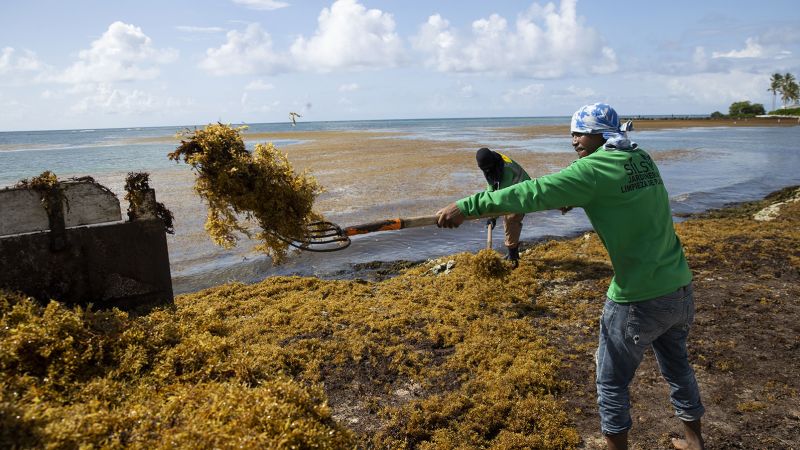
Sargassum, a type of large brown seaweed, has been in the news lately, with a massive blob that’s visible from space and threatening ocean life. University research funded by the U.S. Environmental Protection Agency could address the issue, while also helping solve another problem in our water. Toufiq Reza, an assistant professor of chemical engineering in the Department of Biomedical and Chemical Engineering and Sciences, along with research students Cadianne Chambers, Swarna Saha, Savannah Grimes and Josh Calhoun, were part of the research paper, “Physical and morphological alteration of Sargassum‐derived ultraporous superactivated hydrochar with remarkable cationic dye adsorption.” The paper was published in the May edition of Springer Nature’s Biomass Conversion and Biorefinery journal. The paper is part of a three-year, nearly $400,000 EPA grant to examine different uses of sargassum. It explains that the team can produce biochar from sargassum that can filter water. Though the team has tested model dye in this paper, they plan to extend their research for other applications including harmful algal bloom remediation and nutrient recovery in the future. While sargassum has been around for centuries (Christopher Columbus is credited with the first written account after he encountered it in 1492), and you’ve probably seen bits of brownish seaweed on the beach – it sometimes smells like rotten eggs – the quantities in the ocean and washing up on shores are a more recent phenomenon. There are multiple reasons behind the increased amount of sargassum, including global warming that intensifies sargassum production and nutrient runoff making its way to ocean water and overfertilizing the seaweed growth. More sargassum is expected to show up on Florida shores in the future, inspiring the team to explore more positive uses of the abundant seaweed. “In the next couple of years, we’ll be seeing much more sargassum coming into our way. It’s not a common practice to utilize sargassum,” Reza said. “We go to a beach and then we see a little bit of sargassum just dried out. That doesn’t bother us that much, but when it started to come as a foot-tall sargassum wave, that’s where it gets more alarming.” Sargassum in the lab is labor intensive. Because it contains salt from the ocean, it is washed with tap water first, then put in a freezer for preservation. Next, it goes through hydrothermal carbonization, a thermochemical process that uses heat and pressure to convert biomass and organic waste (such as the sargassum being used) into solid hydrochar. Lastly, the solid char goes through pyrolysis, where it is heated in a high-temperature, oxygen-free chamber into a biochar that is used to filter water. For Swarna Saha, a first-year doctoral student, her goal as a researcher is to identify an environmental problem and come up with a sustainable solution. Having grown up in Bangladesh around textile factories that generate dyes that pollute the surface water, she was inspired to work on solutions that improved water quality with biochar. “I came in the project when we were experimenting on dye adsorption and saw how a tiny amount of biochar changes the color of the water,” she said. “For me, seeing the results made me the happiest. When we saw that our biochar is effective, that is the biggest achievement for me. That made me happy.” Cadianne Chambers, a second-year doctoral researcher, was motivated by her home country of Jamaica and its massive issues with sargassum. Chambers has heard accounts of fishermen unable to go out to sea because of the sargassum buildup. A popular destination for summer vacation, Jamaica is facing serious environmental and economic problems with waves of sargassum. “A team in Jamaica saw that article and they reached out to us, and they’re trying to cultivate sargassum. They want us to teach them how to make export-quality hydrochar and biochar, which could help solve their environmental problem and generate revenues,” Chambers said. “So, everything is just connecting nicely and I’m hoping to continue our collaboration with them. If it’s something that I can go home and put my PhD research to work and help the community, that would be really satisfying.” Looking to know more about sargassum and the ground-breaking research taking place at Florida Tech? Then let us help with your coverage and questions. Toufiq Reza is an assistant professor in the biomedical and chemical engineering and sciences department at Florida Tech. He's available to speak with media about this topic - simply click on his icon now to arrange an interview today.


If you’re looking for comment on this week’s announcement about government’s proposed £50bn investment in creative industries we have a design expert available. Dr Tim Whitehead is associate dean and senior lecturer, engineering and technology, Aston University. He believes that although the Tory's promise spending for the creative industries they need to invest in education first. His full response is attached and below: “This week the government announced a plan to boost the creative industries by £50bn by 2030 and invest £77m in funding for the sector. “This news is fantastic and long overdue. The UK design economy contributes £97.4bn GVA and for every £1 invested in design we see a return of £4 to the wider economy. “The creative sector is a major British export with film, TV, music being some of the biggest exports. However, we also have physical products; If you’ve ever used an iPhone, a Dyson or ridden on a London double decker bus then you’ve used world class British design. “The funding is welcome, however we really need investment in our schools to teach creativity and align this with recent announcements in maths education. “The majority of our most successful designers / creative engineers started with Design and Technology at school. “Between academic years 2009-10 and 2021-22, the proportion of pupils taking Design and Technology GCSEs fell from around 42% to 27% in all schools in England. With only a minor increase in pupils taking Art and Design GCSE which increased from 27% to 29% over the same period. “There is a big gap here, and we really need to ensure that children have access to a creative education as school. “By embedding creativity into the next generation it will help foster new creative engineers data scientists etc. and the next Dyson.” Dr Tim Whitehead, associate dean and senior lecturer, engineering and technology, Aston University For inquiries contact Nicola Jones, Press and Communications Manager, on (+44) 7825 342091 or email: n.jones6@aston.ac.uk


Pioneering UConn Researcher Regrows Human Bone Using a Biodegradable Implant
A pioneer in the field of regenerative engineering, UConn's Dr. Cato T. Laurencin is charging toward his goal of regenerating a human limb by the year 2030. In a step toward reaching that goal, Dr. Laurencin and his team have detailed their success in regrowing bone using a plant-derived molecule in a recent study published by PNAS, marking a major step toward affordable, safe bone regeneration and growing replacement limbs. Dr. Laurencin discussed this impressive breakthrough this week with Hearst Connecticut Media: Most bone fractures heal reasonably well with care. But in severe breaks, where sections of bones are missing, or in crush injuries bones don’t always heal very well. In those cases, self-grafts or donated grafts of healthy bone from other, non-broken bones can be used to help close the gaps. But bone grafts don’t always take. Since about 2001, recombinant bone morphogenic proteins have been used to help stimulate bone growth in injuries where bone wouldn’t otherwise heal but their use has limits. While they work on long bone fractures, like those in your limbs, they’re not used on more complex bones. In some experimental treatments with fractured pelvises, recombinant bone protein caused bone tissue to form outside the skeleton. Forming bone tissue outside the skeleton is one of the more troubling side effects of this treatment. Bone tissue engineering seeks to get around this by developing implants that use adult stem cells to direct the growth of new bone across breaks that bones could not heal on their own. Some of this work involves building custom implants designed to mimic the missing bone to guide bone healing. Others attempt to deliver the bone protein in an implant, stopping it from leaving the injury area, to prevent side effects. These bone treatments are also expensive. In a meta-analysis from 2006, researchers found that they cost more than standard care for severe fractures. But UConn team took a different approach, using the drug forskolin, a molecule derived from a plant in the mint family. Forskolin triggers cells to make something called “cyclic AMP” a messenger molecule that is normally made in response to hormones. This messenger molecule turns on a wide variety of cell functions depending on what cells in which locations it stimulates. “We were intrigued by being able to find some natural material that people were already consuming in quantity,” said Dr. Laurencin, “But obviously there’s a difference between ingesting it and putting it on one location, like a bone site.” Dr. Laurencin’s team created a biodegradable plastic implant impregnated with forskolin, testing this on rabbits. The implants guided the creation of new bone tissue after 12 weeks. If you're a journalist looking to know more about this groundbreaking research taking place at UConn, let us help with your questions and coverage. Dr. Cato Laurencin, CEO of the Cato T. Laurencin Institute for Regenerative Engineering at UConn, is available to for interviews. Simply click on his icon now to arrange a time to talk today.



Aston University wins £1.8m to boost West Midlands low carbon markets
• Aston University and local industry to develop technology to convert organic material into commercially valuable products • Sawdust, diseased trees and dried chicken litter among what can be transformed into sustainable bioproducts • West Midlands companies are invited to join a cluster to develop new low carbon products for growing markets. Aston University is to receive £1.8 million to transform the West Midlands into a powerhouse of low-carbon product development and commercialisation. The University will be building on its existing research facilities to lead the region’s Biochar CleanTech Accelerator as part of the West Midlands Innovation Accelerator. The project was set up with the aim to secure export contracts for low carbon products worth over £200 million, to be made by a regional industrial cluster. It is hoped that the development of a low-carbon business cluster in the West Midlands will open up new domestic and export markets to help rebuild the region’s engineering and manufacturing status. Biochar, a sustainable form of charcoal, can be used as a soil and plant growth enhancer. It stores carbon in the ground, so there are fewer greenhouse gases in the atmosphere. Other products such as oils can be used as low carbon fuels for boilers and engines and the liquid by-product can be used for low carbon weedkiller, fungicide and plant growth. Aston University’s innovative technology is installed at its urban biochar demonstrator in south Birmingham. The project is based on the strengths of the University’s Energy and Bioproducts Research Institute (EBRI) and its Centre for the Circular Economy and Advanced Sustainability (CEAS). Tim Miller, director of engagement at EBRI, said: “This new development has the potential to rebuild product development, engineering and manufacturing in our region. “The project aims to commercialise knowledge, facilities and the results of long-term university research for the benefit of the environment and our regional economy. “Using the University’s existing expertise and facilities we have the potential to launch new technology-based opportunities as they emerge and mature, The Biochar CleanTech Accelerator is part of the West Midlands Innovation Accelerator which was first announced in the government’s 2022 Levelling up White Paper and started this spring. It is funded through a share of a £100m from Innovate UK, to be divided by three regional innovation accelerators over the next two years. Launched by the West Midlands Combined Authority (WMCA) in March 2023, it will target investment on projects enabling new solutions around Medical and Clean Technologies, to further reinforce the region’s position at the frontier of the UK innovation revolution. The University will also play a key role in two other projects in the West Midlands Innovation Accelerator. Companies interested in joining the cluster can get further information at https://www.aston.ac.uk/biochar-cleantech-accelerator or emailing biochar@aston.ac.uk


Researchers seek to apply nanoparticle drug delivery to coral wound healing
Coral reefs are the foundation of many aquatic ecosystems and are among the ocean’s most vulnerable inhabitants. While natural processes, like animal predation and storms, frequently damage coral, man-made causes, like ship collisions and global warming, destabilize these environments beyond their ability to recover. Researchers like Nastassja Lewinski, Ph.D., associate professor of chemical and life science engineering, are working to understand how corals heal in order to aid the restoration of these fragile ecosystems. They also seek partnerships with stakeholders that can support coral preservation by applying this research to industry practices and providing funding for continued research. “Coral ecosystems are vital to human life,” Lewinski said, “When there’s a high-intensity storm, reefs can absorb the impact and reduce the damage we see on land. They’re also important to the aquatic food web and serve as the foundation to many foods we eat.” Discovering the limits of coral healing is part of Lewinski’s work. Ideal water temperature for coral is 25 degrees Celsius, so research is conducted at the ideal temperature and elevated temperatures of 28 to 31 degrees Celsius, the projected water temperatures influenced by global warming. Successive imaging of wound closure in these conditions builds an understanding of the rate of closure during healing. “We’re looking to understand the mechanics of healing,” Lewinski said, “Some of what we’ve found suggests a process similar to human healing. We want to understand the actors in this process at a cellular level and what their role is in repairing tissue.” These observations inform the mathematical, cell-based wound healing model developed by Lewinski’s collaborators, Angela Reynolds, Ph.D. and Rebecca Segal, Ph.D., both professors in the Department of Mathematics and Applied Mathematics in VCU’s College of Humanities and Sciences. Similar to humans, corals have been documented as following the same four stages of the healing process. These stages include: 1) coagulation to close the site of injury, 2) infiltration with immune cells to ward off infection, 3) cell migration and proliferation and 4) scar remodeling. “With our observations and a mathematical model, the next step is to collect data on the cellular dynamics of the healing process,” Lewinski said, “We want to observe what kinds of cells enter the wound area and what functions they perform during healing.” Fluorescent tagging is used to mark specific cells so they may be observed entering the wound area when healing occurs. Because corals are naturally fluorescent, the selection of the fluorescent tags must take this into account. Phagocytic properties allow immune cells to engulf and absorb bacteria and other small cells, in this case the fluorescent particles being used to tag immune cells. Nutritional variables are also being considered within the experiment. Corals derive energy from consuming small organisms and their symbiotic relationship with algae colonies. Modifying nutritional balance in the lab emulates the coral’s participation in the food web, where accessibility to vital nutrients could impact healing. Developing a nanoparticle drug-delivery system designed to deliver molecules to speed wound healing is the culmination of this research. Lewinski hypothesizes the delivery system would promote an energy-burning state within the corals that could result in increased healing. This is among a few examples of harnessing nanotechnology for safeguarding coral reefs, which are discussed in a recently published comment in Nature Nanotechnology. “The research we’re doing on wound healing in corals is the start of something bigger,” Lewinski said. “Our goal is to create a center dedicated to engineering new technologies for corals. We want to find partners who can translate our research findings to practice, helping preserve coral reefs and the vital resources they provide.” Through this consortium, newly-developed science can be disseminated more effectively within each partner’s respective industry. The result: a renewed commitment to aquatic sustainability and the protection of vital coral ecosystems.


Georgia Southern adding two engineering doctorates this fall
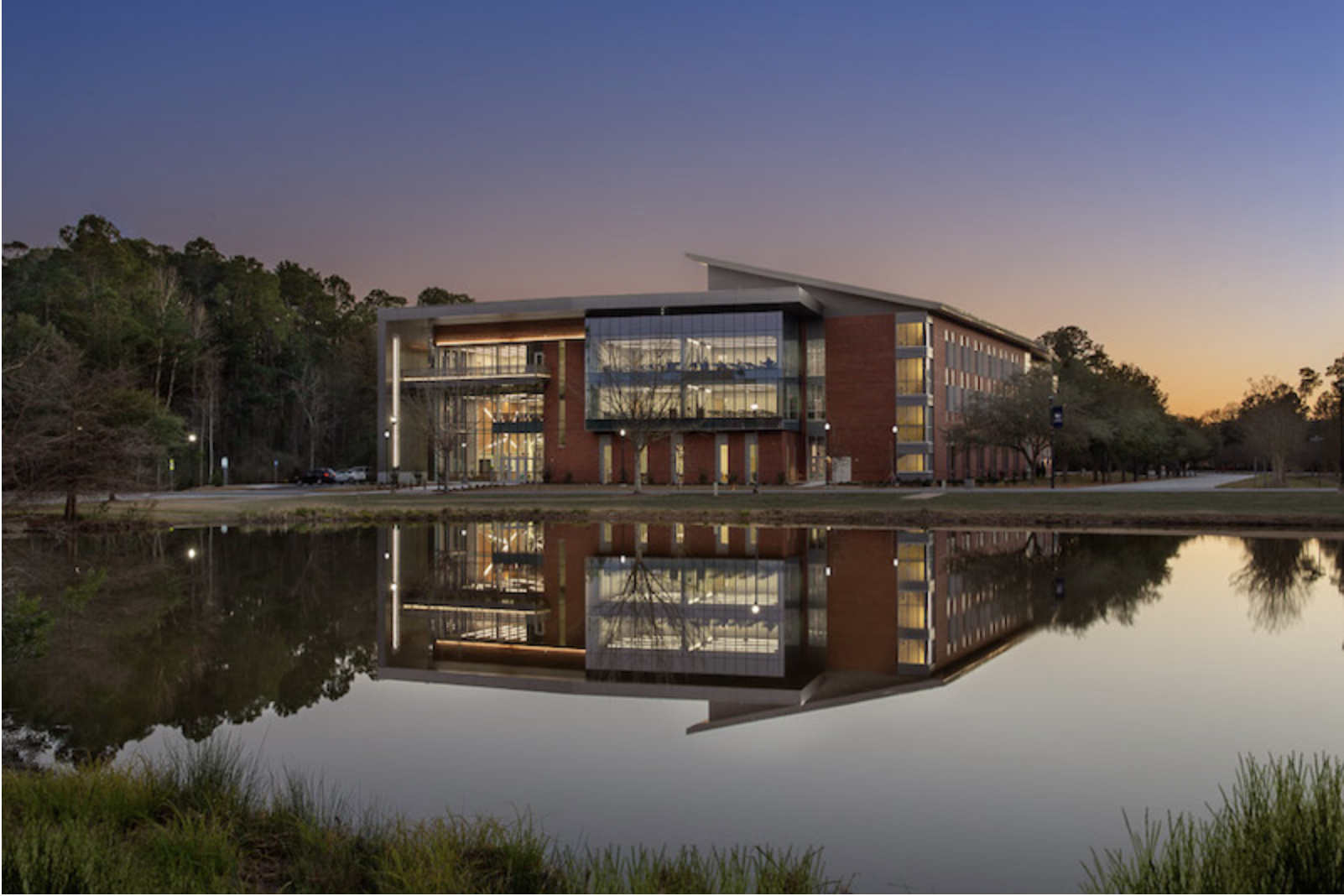
Georgia Southern University is launching two new engineering doctorates – a Ph.D. in applied computing degree and a Ph.D. in engineering – after approval of the programs this week from the University System of Georgia’s Board of Regents. With almost 4,000 students in its programs, Georgia Southern’s Allen E. Paulson College of Engineering and Computing identified the need for the new graduate degrees to sustain growth in the discipline, continue to aid workforce development in the region, add substantially to the university’s research capabilities, and provide additional teacher-scholars for Georgia. “In line with Georgia Southern’s Strategic pillars, the new Ph.D. programs will greatly enhance the University’s research capabilities and further advance key partnerships in the region,” said Carl Reiber, Ph.D., Georgia Southern’s provost and vice president for academic affairs. “A strong Ph.D. program improves faculty recruiting and is a prerequisite for applying for research grants from sources such as the National Science Foundation, the National Institutes of Health, the Department of Energy and the Department of Defense.” The proposed engineering Ph.D. program will have concentrations in civil, electrical, advanced manufacturing and mechanical engineering, and will fuel future multidisciplinary research synergies with other departments and centers within Georgia Southern in fields such as natural sciences, environmental sustainability, public health and education. Greater scholarly collaborations with sister institutions within the university system and beyond are also envisioned. The Ph.D. in engineering program will have a positive impact on the economic and technological development of Southeast Georgia, contributing significantly to the growth of the I-16 technology corridor. The Ph.D. in applied computing degree program will be offered jointly by the Department of Computer Science and the Department of Information Technology within the Allen E. Paulson College of Engineering and Computing at Georgia Southern Universit. The program will provide students with the requisite foundation to conduct basic and applied research to solve advanced technical problems in computing foundations, cybersecurity and machine learning. The program aims to promote the education of individuals who will become exceptional researchers, high-quality post-secondary educators, and innovative leaders and entrepreneurs in the field of applied computing. It will advance research and the generation of new knowledge in applied computing and support the growing knowledge-based economy in Southeast Georgia. The mission of the Ph.D. in applied computing degree program is to ensure student, graduate and faculty success by preparing graduates with the skills and depth of knowledge to advance the computing disciplines through application and scholarship. It will mentor students who will support faculty in their scholarly pursuits as they prepare to assume professional computing and computing-related positions that utilize their applied technical skills, problem-solving aptitude and scholarly abilities upon graduation. “The addition of these two new degree programs is part of Georgia Southern University’s commitment to be a world-class institution that provides a population of advanced graduates who can contribute to regional economic development and public-impact research,” Reiber said. “The programs will enhance the vitality and growth of the bachelor’s and master’s computer science and information technology degree programs by expanding the academic and research missions of the Allen E. Paulson College of Engineering and Computing." For more information about these new engineering doctorates coming to Georgia Southern this fall research or to speak with Carl Reiber, Ph.D., Georgia Southern’s provost and vice president for academic affairs — simply reach out to Georgia Southern's Director of Communications Jennifer Wise at jwise@georgiasouthern.edu to arrange an interview today.


The memorandum of understanding (MoU) will strengthen existing partnership and form basis for future collaborations Official signing took place during an official visit by delegation from NEFU and AEMG on 22 May Delegation met senior staff from College of Engineering and Physical Sciences as well as NEFU students studying at Aston University. Aston University in Birmingham, UK and Northeast Forestry University (NEFU) in Harbin City in Heilongjiang Province, China have signed a memorandum of Understanding (MoU) to develop their strategic partnership. The MoU will see the universities renew and strengthen their existing partnership and explore future collaborations in the areas of both teaching and research. The partnership is facilitated by AEMG Education, who have over 20 years of experience in brokering strategic relationships with Chinese universities. The official signing by Professor Aleks Subic, Vice-Chancellor and Chief Executive of Aston University, Professor Li Shunlong, Vice President of Northeast Forestry University and Mr Stephen Connelly, Vice President of AEMG Education, took place on 22 May during a visit to Aston University by a senior delegation from NEFU and AEMG Education. The delegation from NEFU also included Professor Liu Zhiming, Dean of Aulin College, Mr Sun Zhiping, Director of the International Cooperation Office and Professor Li Hongfen, Associate Professor of the College of Civil Engineering. AEMG Education was represented by Mr Stephen Connelly, Vice President of Business Development and Engagement, Dr Jacko Feng, Director of Research and Partnerships and Ms Sarah Armstrong, Director of Business Development, UK & Europe. During the visit, the delegation met with senior staff from the Department of Civil Engineering and the College of Engineering and Physical Sciences, including Executive Dean, Professor Stephen Garrett. They also had the opportunity to meet with the NEFU students studying at Aston University who have just completed their final year examinations. The Aston University/NEFU partnership was established around the development of a joint programme in BSc Construction Project Management which was approved by the Chinese Ministry of Education (MoE) in January 2018, under which students from NEFU are able to transfer into the final year of the programme at Aston University. In 2021/22, the first cohort of 21 students successfully finished their studies,10 of whom achieved first class degrees. Professor Aleks Subic, Vice-Chancellor and Chief Executive of Aston University, commented: “I am delighted to welcome visitors from NEFU and AEMG to Aston University and to sign the Memorandum of Understanding with NEFU. “This represents an important milestone in taking forward our collaboration. We are committed to continuing to strengthen our strategic relationship with NEFU and look forward to welcoming more students in the future.”

Aston University biofuel experts advise on how Ukraine can build back greener
• Aston University biofuel experts provide advice on Ukraine’s recovery • Professor Patricia Thornley and Dr Vesna Najdanovic were invited to Royal Society conference • Outcomes will be presented to policymakers at Ukraine Recovery Conference in June. Two Aston University scientists have provided expert advice on how the UK’s wealth of research can support Ukraine’s reconstruction. A two-day conference was organised by the Royal Society and its outcomes will be presented to policymakers ahead of the UK government-hosted Ukraine Recovery Conference in June. As Ukraine is one of the largest agricultural producers and exporters it also generates large amounts of agricultural waste which could be used to produce biofuels and valuable chemicals. This could decrease the country’s fuel import dependency and increase the revenues for the sector. Researchers at the conference explored how to tackle some of the many challenges facing Ukraine, from rebuilding its economy, health and wellbeing, regional security and planning for a green recovery. Professor Patricia Thornley who is director of Aston University’s Energy and Bioproducts Research Institute (EBRI), was one of the just three academics invited to contribute to an infrastructure roundtable session. Professor Thornley said: “I was honoured to be asked to attend the infrastructure roundtable and share my expertise on renewable energy and sustainable products. “Ukraine has significant sustainable agricultural and forestry residues, which can be valuable to plug potential gaps in oil and gas supply for heating in the short term. But in the long term these can provide opportunities to produce sustainable bio chemicals and materials which could provide a basis to grow green chemical, material and construction industries. “UK researchers, such as those at EBRI at Aston University and the Supergen Bioenergy Hub, have the experience needed to work on developing these solutions to build back greener. Research evidence and expertise have a vital role to play in supporting policy makers to tackle the complex and urgent challenges related to the reconstruction and recovery of a resilient, sustainable Ukraine.” Meanwhile, Dr Vesna Najdanovic presented opportunities to develop bioenergy and bioproducts in Ukraine at the event and participated as a panel member. Ukraine’s recovery: rebuilding with research, which brought together Ukrainian and UK researchers and policy makers, was held on 15 and 16 May in London. It was funded by Universities UK International, Research England and the British Council and supported by the Academy of Medical Sciences, British Academy and the Royal Academy of Engineering.


Amanda Hewes, MS, education program manager at ChristianaCare’s Gene Editing Institute, has been named one of the 2023 Outstanding Delaware Women in STEM by Million Women Mentors, an international movement dedicated to encouraging girls and women to pursue careers in science, technology, engineering and math (STEM). Hewes’ selection spotlights her dedication to engaging young people in the science of gene editing by introducing the Gene Editing Institute’s CRISPR in a BoxTM educational toolkit into classrooms across Delaware and her commitment to bridging disparities in STEM education. “I’m overjoyed to be honored among so many amazing women in this state,” Hewes said. “It’s humbling to be considered and to stand alongside them. All of these women foster and lead dynamic communities of young women that inspire me every day. I hope that I can do the same by making young women in this state feel empowered through the work that I do.” Hewes joined ChristianaCare’s Gene Editing Institute in 2017 with a focus on expanding its CRISPR gene editing system in a cell-free environment. She was first author in a publication in Nature that established the highly innovative “gene editing on a chip” protocol that allowed CRISPR to edit DNA outside of the cell for the first time. This methodology enables researchers to take fragments of DNA extracted from human cells, place them in a test tube and precisely engineer multiple changes to the genetic code. This gene editing system eventually led to the creation of the CRISPR in a Box™ toolkit. This innovative educational resource provides a way for students to learn about this exciting frontier of science through a hands-on exercise in which they use CRISPR gene editing to disrupt a synthetic gene within a plasmid. The simplicity of this experiment allowed for the reaction to be developed into a remarkable teaching tool that can be brought into most school laboratories containing basic laboratory equipment. Once CRISPR in a Box™ was developed, Hewes recognized the potential it could have for high school and college students. She took on a new role as education program manager and expanded the Gene Editing 360™ platform, which is the Gene Editing Institute’s suite of educational tools for engaging students and the public. “Amanda has set us on a tremendous path toward providing more educational opportunities for Delaware students,” said Eric Kmiec, Ph.D., director of ChristianaCare’s Gene Editing Institute. “She’s inspired young women in multiple states and has created so much of this program with her own ingenuity and passion.” Hewes was honored alongside 10 other women by Gov. John Carney, Lt. Gov. Bethany Hall-Long and others at the Delaware State House with the signing of a proclamation to declare March 24, 2023, as “Delaware Women and Girls in STEM Day.”


Aston University predicted as one of the UK’s leading centres for lab-made meat
• Aston University named as one of the UK’s leaders in the potential future of food • Highlighted for research, teaching, public outreach, industry links and location • Process uses cells taken from animals via biopsy, so doesn’t involve slaughter. Aston University has been named as one of the UK’s leading lights in what is predicted to be the future of food - lab-made meat. The University is one of 17 higher education institutions that are expected to play a major role in the development of cultivated meat. Cultivated or lab-grown meat is made from cells taken from animals via biopsy. The cells are used to create meat which doesn’t involve the slaughter of animals. The process promises fewer greenhouse gases and a decrease in land required for its production compared to traditional livestock. The list of universities has been compiled by Cellular Agriculture UK, a non-profit organisation which promotes the UK’s so-called ‘cell-ag’ sector. Aston University is one of five institutions they chose to highlight in their report Mapping the potential for UK universities to become research and teaching hubs for cellular agriculture. Aston University is described in the report as having potential to be an anchor institution for cellular agriculture, and was highlighted for its research and teaching, public outreach work, links with emerging industry and its central location. Dr Eirini Theodosiou, senior lecturer in the School of lnfrastructure and Sustainable Engineering, focuses on ways to produce enough cell mass to create the meat. She said: “This is still a relatively new food technology. Unlike many others we work on biomaterials for microcarriers/scaffolds for cultivated meat, which puts us in a very strong position, in the UK at least.” Meanwhile Dr Jason Thomas’ work explores the psychology behind supporting people to accept lab-made food. Although many people are willing to try it, there are still many who are reluctant to do so. A recent study of the US and UK found that 35% of meat eaters and 55% of vegetarians claimed they were too disgusted by the idea of cultured meat to even try it. A key goal of his research is how to support people to not just try it but to integrate it into their diet. Dr Thomas said: “We are interested in finding out what factors can influence consumer purchase of and consumption of lab-made meat.” “The engineering/psychology link is one of our USPs and is something Aston University can capitalise on; learning what the consumer wants from cultivated meat, and what would encourage them to consume it, using psychological science, and then incorporating this directly into the production process via engineering. “It is a relatively new food technology, and much work still needs to be done to make it affordable, acceptable and on a massive scale, but it could easily end up being one of the most transformative new foods of the 21st century.”