
Experts Matter. Find Yours.
Connect for media, speaking, professional opportunities & more.

It truly has been a roller coaster of a month for those working in, invested in, or keeping a close eye on the financial markets this past month. It’s been the perfect winter storm of plunging oil prices, jittery investors and even a much over-due market correction. And now, with a pandemic declared, it looks like financial markets will continue on their wild ride due in part to COVID-19. If you are a journalist covering the markets and have questions about what possibly lies ahead – then let us help. W. Todd Roberson, Indiana University Kelley School of Business senior lecturer in finance, can discuss changes to financial markets, including stock markets, bond markets, interest rates and Fed policy changes. Professor Roberson can also give his thoughts and perspectives on what it means for investors and what investors should know and do in response to changing market conditions. Professor Roberson is available to speak with media, and if you would like to arrange an interview contact Teresa Mackin at tmackin@iu.edu or 317-274-2233.


Professor Barry Branch, Ledbetter Professor of the Practice at Scheller College of Business was a featured author in the article “National Rent Report for January 2020 Shows Growing Number of Renters” in the online magazine RENTCafe. Branch discussesd national trends that are leading more young people to rent rather than purchase a single-family home. “Young professionals are increasingly attracted to multifamily projects near their jobs. These buildings are attractive if they offer cutting edge technology that enables residents to work from home; attractive amenities that provide a healthy lifestyle and greater interaction with others; proximity to a variety of retail, food and entertainment attractions as well as public greenspaces; a significant reduction in their reliance on automobiles and access to public transportation; and greater flexibility to adjust to job changes and changes in their personal circumstances,” he said. In the piece he acknowledges the stable economy but notes that increased uncertainty in national, political, and economic environments may lead many people to resist the commitment to purchase a home. However, Branch points to the possibility that a larger demand for rental units may provide less inventory and therefore, an increase in rent prices. He states that “an offsetting factor among renters is the current trend towards rapidly increasing rental rates in many markets, which threatens their ability to manage their cost of living.” To offset these adverse factors, he cites low-interest rates that will incentivize developers to build more units and government programs for creating affordable housing as just a few factors that will continue to keep the rental market thriving. Are you a journalist looking to know more about this topic? Then let our experts help. Barry Branch is Sr. Professor of the Practice of Real Estate Development at Scheller College of Business, Georgia Institute of Technology. He is co-founder of The Branch-Shelton Company, LLC, a private investment management and financial advisory firm. Barry is available to speak with media regarding this important topic – simply click on his icon to arrange an interview.


U.S. economy continues to expand, but at a slower pace, reaching about 2 percent growth in 2020
INDIANAPOLIS -- The U.S. economy will continue to expand for a 12th consecutive year in 2020, but by only about 2 percent and struggling to remain at that level by year's end. Indiana's economic output will be more anemic, growing at a rate of about 1.25 percent, according to a forecast released today by the Indiana University Kelley School of Business. Over the past year, political dysfunction and international trade friction have disrupted supply chains and eroded both consumer and business confidence. U.S. employment has grown during 2019 but will decelerate throughout 2020, well short of 150,000 jobs per month and possibly to about 100,000 by year's end. A tight labor market will continue to be an issue for many companies. "The total number of job openings in the economy peaked in late 2018," said Bill Witte, associate professor emeritus of economics at IU. "Average hours worked have been flat over the past year, and auto sales have been flat for nearly two years. Given the reliance of the U.S. economy on consumer spending, these are disturbing signs. But they are vague signs, and not enough to convince us that the end of the expansion is in sight. "We expect that growth will be weaker than in the past two years, and this outlook is likely a best-case outcome," he added. "There is massive uncertainty in the current situation." The Kelley School presented its forecast this morning to Indianapolis community and business leaders at IUPUI. The Business Outlook Tour panel also will present national, state and local economic forecasts in seven other cities across the state through Nov. 20. Indiana's more meager economic growth expected in 2020 can largely be attributed to the outsized presence of manufacturing and particularly tight labor markets, said Ryan Brewer, associate professor of finance at Indiana University-Purdue University Columbus and author of the panel's Indiana forecast. Manufacturing contracts more rapidly versus other areas of the economy, and tight labor markets limit employers' capacity to grow, he said. Expectations about business investment have fallen short, and corporations have been buying back stock instead of making capital investments. The trade war with China and slowing global expansion have also affected state manufacturers. The world is about to record its slowest economic growth since the financial crisis of 2009. Next year, global growth is projected at 3.4 percent, with downside risks continuing to build. China and the European Union each face structural issues amid tariffs imposed by the United States. Brexit remains unresolved. Recent data from the Institute for Supply Management showed that manufacturing activity has slowed to its lowest rate since the beginning of the Great Recession. Indiana has sought to diversify its economy in recent decades, but manufacturing output represents nearly 28 percent of gross state product. Indiana continues to lead the nation in manufacturing employment, with more than 17 percent of its jobs in that sector. "Constrained by a historically tight labor market, Indiana is expected to experience slow growth in jobs and gross output, along with the possibility for continued rising wages," Brewer said. "With fewer and fewer available people to hire, tightness of the Indiana labor markets will serve as a drag to output and employment growth." The outlook for the Indianapolis-Carmel-Anderson metropolitan statistical area is slightly better, with expected growth between 1.5 and 2 percent. "Indianapolis continues to draw in talent and investment that should help it exceed the overall state level of growth," said Kyle Anderson, clinical assistant professor of business economics. "However, there is risk that weakness in the broader economy, and especially weakness in manufacturing, could make this forecast too optimistic." Other highlights from the forecast: The national and state unemployment rates will hold steady. The nation's rate could be below 4 percent by year's end, and the state will stay at or below full employment through 2020. Inflation will rise and end 2020 close to the Federal Reserve's 2 percent target. The stock market will struggle to get average returns with headwinds from trade, supply chain disruption and policy uncertainty. Earnings continue to exceed expectations, yet lack of definitive trade consensus continues to drive headwinds. Interest rates will remain low. The 10-year Treasury rate should stay below 2 percent and mortgages below 4 percent. Speculative grade bond yields have been rising, indicating increased risk of insolvency for marginal firms. Entry-level wage growth could cause costs to rise, earnings to fall and growth to stagnate for firms heading into 2020. Energy prices will be relatively stable, with average prices similar to those in 2019. Business investment will remain weak, although a little improved from this year. Housing will achieve a meager increase, ending two years of negative growth. Government spending will grow, but much more slowly than the past year, as the impact of the 2018 budget deal ends. The starting point for the forecast is an econometric model of the United States, developed by IU's Center for Econometric Model Research, which analyzes numerous statistics to develop a national forecast for the coming year. A similar econometric model of Indiana provides a corresponding forecast for the state economy based on the national forecast plus data specific to Indiana. A select panel of Kelley faculty members, led by Indiana Business Research Center co-director Timothy Slaper, then adjusts the forecast to reflect additional insights it has on the economic situation. A detailed report on the outlook for 2020 will be published in the winter issue of the Indiana Business Review, available online in December. In addition to predictions about the nation, state and Indianapolis, it also will include forecasts for other Indiana cities and key economic sectors. Presenting the forecast at the Indianapolis Business Outlook Tour event were Phil T. Powell, associate dean of Kelley academic programs at Indianapolis and clinical associate professor of business economics and public policy; Cathy Bonser-Neal, associate professor of finance; and Anderson.
Is the bubble bursting – and does America need to prepare for an economic slowdown?
With every news story about trade, tariffs, interest rates, global instability and political chaos…comes with it a hint that each incident could take a toll on America’s economy. And it seems that sub-plot may be slowly becoming a self-fulfilling prophecy for the current administration in Washington. A recent article in Forbes pointed out that most key indicators seem to be pointing down. Trump’s monthly job results are decelerating Trump’s job growth falling short of Obama’s last six years Wage growth is the lowest in a year September quarter GDPNow forecast lower than June’s 2.0% result It seems as if all of these ingredients combined, a slow down and potential recession or worse could be looming. Are you a journalist covering the short and long-term outlook of America’s economy? If so, let our experts help with your stories and coverage. Jeff Haymond, Ph.D. is Dean, School of Business Administration and a Professor of Economics at Cedarville and is an expert in finance and trade. Dr. Haymond is available to speak with media regarding this topic – simply click on his icon to arrange an interview.


It was a train running full speed and showed no signs of stopping – but America’s economy hit a bump last week and it sent a lot of people from Wall Street and beyond into a panic. The 800-point drop in the Dow Jones seemed to be the first sign of another severe recession. But before everyone cashes out, experts from Western Governors University are hoping we take a look back through the ages before rushing to worry. “What does history teach us? Even before the Great Depression of the 1930s, Nicolai Kondratieff discovered that the capitalist economy, going back to the 18th century was characterized by waves, or business cycles,” says Dr. Rashmi Prasad, Dean and Academic Vice President of Western Governors University's College of Business. “The Federal Reserve, under leadership of Ben Bernanke, claimed that while the business cycle had not been repealed, a ‘Great Moderation’ had emerged in the world post-1982. Independent central banking and the rise of the service economy were among the reasons cited. In a great irony of history, Bernanke was front and center as Chairman of the Federal Reserve during the ‘Great Recession’ of 2008-2009. Business cycles seem to be inevitable for capitalist economies. Will we return to the Great Moderation of 1982-2007, or are we in a new period of regular Great Recessions? Central Banks stabilize and soften the down-cycles of recessions, but the price of managing the Great Recession of 2008-09 has been the dramatic expansion of central bank balance sheets–no new investment cycles–property or finance often leads to recession.” So, where do we stand and what can we expect in the short-term? Prasad adds this perspective: “Conventional economic thinking indicated inflation by now, which may have added to interest rates and constrained the amount of debt that was sustainable. Rapidly rising interest rates posed the risk of a deep and extended downturn. If interest rates can be managed and kept low, then the next down-cycle could be shallowed and prolonged as monetary policy has little scope and fiscal deficits are already very high. Risks for a major downturn exist in extremely high debt levels and central bank balance sheets, but still may be a decade or two away, awaiting triggers that we cannot yet predict.” Are you a journalist covering the economy and do you need expert perspective and opinion for your stories? That’s where Western Governor’s University can help. Dr. Rashmi Prasad is Dean and Academic Vice President of Western Governors University's College of Business. He is an expert in the fields of economic and financial data and business analytics. Dr. Prasad is available to speak with media regarding the state of America’s economy – simply click on his icon to arrange an interview.

Not this time, but expect interest rates to get cut soon – our expert can explain why
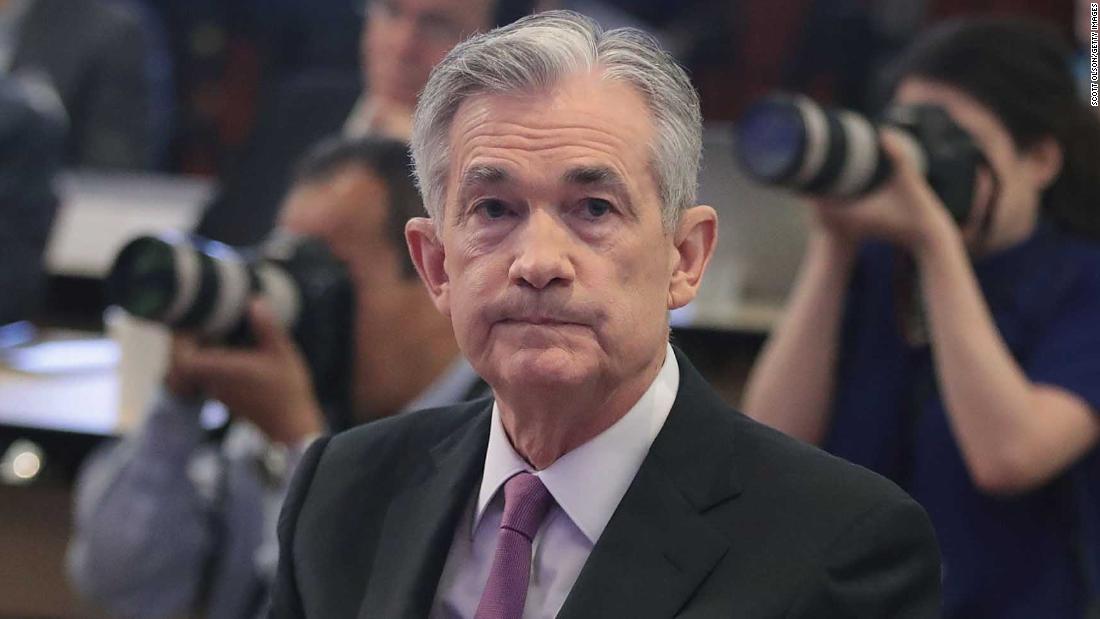
It was all eyes on the Fed this week, but when it came to decide, Federal Reserve Chairman Jerome Powell held U.S. Interest rates steady and unchanged. The pressure was on to lower the rates amid serious concerns that the current trade wars and tariff action could start impacting America’s economy and slow it down. Narayana Kocherlakota, the Lionel W. McKenzie Professor of Economics at the University of Rochester wasn’t surprised by the June decision to remain steady. And with serving six years as president of the Federal Reserve Bank of Minneapolis, his expertise and perspective indicates lower rates will come at the next meeting. “I am not expecting a change in policy, which means the interest rates should remain the same. What I am expecting is a lot of discussion, which takes place in secret, about cutting interest rates by a quarter percentage point at their next meeting in July. Why would they do that? The Federal Reserve is tasked with trying to keep inflation at 2 percent and keep unemployment low. Right now unemployment is about as low as it’s been in the past half-century, which is very good. Inflation remains lower than the Federal Reserve would like—it’s been below 2 percent for most of the last seven years. I think they’re mainly worried about risks. There are signs of risk around the world partly due to big variations in trade policy emerging from the White House. So, the Fed is thinking about cutting rates now in order to keep the economy as healthy as possible, if there’s any danger of a recession.” University of Rochester Newscenter. Will lower rates really keep America’s economy humming? Won’t lower rates impact the strong US dollar? And if we are headed toward recession, what else can de done to turn the economy around? There are a lot of questions – and that’s where our experts can help. Dr. Narayana Kocherlakota was the President and CEO of the Federal Reserve Bank of Minneapolis from 2009-2015. As part of his responsibilities in that position, he served on the Federal Open Market Committee (FOMC), the monetary policymaking arm of the Federal Reserve System. He is currently a Lionel W. McKenzie Professor of Economics and is an expert in financial economics, interest rates and monetary policy. Narayana is available to speak with media regarding the economic effects of the shutdown – simply click on his icon to arrange an interview.



Up, Down or Steady – What do Interest Rates Really Mean for Our Economy?
The heat was on Federal Reserve Chairman Jerome Powell this week to lower interest rates coming out of the June meetings of the Fed. He was under scrutiny from President Trump and others who share a growing worry that America’s economy could be slowing down and potentially turning toward recession. An option that is neither appetizing for investors, the business community or politicians looking for positive messaging as an election looms in 2020. Powell held the rates steady but there is massive speculation this will be for the last time and that rates will begin to be cut as of the next meeting of the Federal Reserve. There are a lot of questions about interest rates and the economy: How do rates encourage or dissuade investment and business? How much of a rate cut will it take to impact the economy? Do interest rates and the dollar go up and down in tandem? And how independent is the Fed and who influences these decisions? If you are covering, we can help. Jeff Haymond, Ph.D. is Dean, School of Business Administration at Cedarville and is an expert in finance and trade. Bert Wheeler, Ph.D. specializes in macroeconomics, international trade, economic development, and econometrics. Jeff and Bert are both available to speak to media regarding the current trade war with China – simply click on either expert’s icon to arrange an interview.

The Fed Should Consider Lowering Rates say the Experts from University of Rochester
On Wednesday, the Chairman of the Federal Reserve will be delivering another interest rate decision that could direct or at least prompt a punch to the arm the country’s economy. In fact, according to Narayana Kocherlakota who is currently a Professor of Economics at the University of Rochester, and who also served as the President and CEO of the Federal Reserve Bank of Minneapolis from 2009-2015 – the Fed should be dropping rates to increase stimulus t an economy in very much in need of help. In a column (see attached) published this week in Bloomberg Opinion, Kocherlakota offered this perspective, So, the Fed has been falling short — arguably well short — of both its inflation and employment mandates for a long time. How can it do better? It should take two steps. First, as I’ve argued before, the Fed shouldn’t be reducing the vast holdings of bonds that it amassed in its efforts to stimulate the economy after the last recession. Instead, it should commit to increasing its asset holdings by about 4 percent per year. That way, as the economy grows over time, its balance sheet will remain sufficiently large to help combat any recessionary risks. Second, the Fed often says that it sets monetary policy based on the incoming economic data. Such claims ring hollow when we look at the record. Recently released transcripts from its June 2013 policy-making meeting show that more than half the participants thought inflation would be below 2 percent for the next 30 months. All thought unemployment would stay above 5.5 percent. Yet it was precisely at that meeting that they agreed to begin tightening by announcing their intention to ease off on bond purchases in the near future.” So, what can we expect from Wednesday’s decision by the Fed? Will we see a drop in rates? What will a higher interest rate look like and what would that mean for America’s economy? Or … if nothing changes and the Fed holds steady, what will that mean for the economy in the short term? There are a lot of questions and that’s where the experts from the University of Rochester are available. Dr. Narayana Kocherlakota was the President and CEO of the Federal Reserve Bank of Minneapolis from 2009-2015. As part of his responsibilities in that position, he served on the Federal Open Market Committee (FOMC), the monetary policymaking arm of the Federal Reserve System. He is currently a Lionel W. McKenzie Professor of Economics and is an expert in financial economics, interest rates and monetary policy. Narayana is available to speak with media regarding the economic effects of the shutdown – simply click on his icon to arrange an interview.

Speculation and its impact on trading volume
Financial researchers have long wondered exactly which economic forces cause variation in asset prices and returns. For instance, traders will often target financial instruments due to their volatile and highly liquid nature, such as US treasury bonds. This speculative behavior takes advantage of the frequent price movements of the product. But the influence of that behavior remains the subject of debate. Francisco Barillas, assistant professor of finance, and Kristoffer Nimark (Cornell U) take a deep dive into the issue by investigating the impact of speculative trading activity on the variation of long maturity US bond yields. For their analysis, Barillas and Nimark use public information to develop a rational model to track “informed traders that take on speculative positions to exploit what they perceive to be inaccurate market expectations about future bond prices.” They argue that their research takes a more “suitable approach for empirical work” by factoring in how traders exploit private information that other traders may not have. The authors note that bond prices alone are not enough information for predicting bond returns. The two write, “If traders have access to different information, this price may differ from what an individual trader would be willing to pay for the bond if he had to hold it until maturity.” Ultimately, they find that this speculation remains a key driver of trading volume, accounting for a “substantial fraction of the variation in historical US bond yields along with the usual analysis of estimating returns based on bond prices.” Source:
