Experts Matter. Find Yours.
Connect for media, speaking, professional opportunities & more.

Why Are Canadian Banks Not Protecting Seniors? The $40 Billion Dollar Question
After an 89-year-old Victoria man lost $1.7 million to phone scammers despite bank red flags, retirement expert and authour, Susan Pimento, exposes a critical protection gap: while U.S. banks like Bank of America offer "Trusted Contacts" (designated people banks call to verify suspicious transactions) for all accounts, Canadian banks restrict this safeguard to investment accounts only—leaving everyday banking vulnerable where most fraud occurs. In Canada, senior fraud is vastly underreported (RCMP estimates only 5-10% surface), and banks are treating this as a cost issue rather than a moral crisis. Susan Pimento is available for interviews to discuss practical solutions, industry insights from her decades of work within financial institutions, and why Canadian banks are failing to implement a simple fix that could save seniors' life savings. Connect with her directly through ExpertFile to schedule TV, radio, podcast, or print interviews. As I was polishing this post for Canadian Financial Literacy Month, another senior fraud story flashed across my screen. This one stopped me cold. According to this CBC story, an 89-year-old man in Victoria, B.C., was tricked into handing over nearly $1.7 million of his life savings in a months-long phone scam. The caller claimed to be from the fraud department at CIBC and said he was helping with a national money-laundering case. (Spoiler: he wasn't.) Despite red flags and staff awareness, the bank still allowed large in-person withdrawals. He was told to buy gold bars — yes, actual gold bars — with drafts of up to $395,000, which couriers then collected like some twisted Uber Eats retirement fraud. Every week in Canada, we see another heartbreaking headline: a senior sends thousands, sometimes millions, to a scammer pretending to be their grandchild, the CRA, or — the ultimate irony — their bank. These scams targeting seniors don't require fancy hacking. They rely on fear, isolation, and misplaced trust. Once the money's gone, it's gone—no refund policy. And here's the kicker: what we're reading about is just the tip of the iceberg. For seniors, fraud now ranks as the top crime, and most fraud goes unreported—especially in this demographic. In a previous post, I showed how the data suggests the real figures could be 10 to 20 times higher than what's officially reported. The RCMP estimates that only 5-10% of fraud victims come forward. Many victims never speak out due to embarrassment, fear, or confusion. Translation? For every story that makes the news, countless others suffer in silence. How The Banking Industry Can Actually Fight Fraud I've worked within financial institutions for decades. Let's just say I understand how the process works. Banks have billion-dollar tech stacks, layers of compliance, and advanced fraud detection systems that can flag a suspicious $47 transaction in milliseconds. But the solution for this type of fraud isn't a multimillion-dollar algorithm or a new "AI-powered fraud prevention dashboard." Instead, it's a human-based approach called a Trusted Contact. What's a "Trusted Contact," Anyway? It's not an app, a chatbot, or some new gadget that requires a firmware update every Thursday. It's a person. Someone you trust — a family member, attorney, accountant, or another third-party who you believe would respect your privacy and know how to handle the responsibility of communicating with your bank in your best interests if something suspicious occurs. They don't access your money or view your accounts. They can't see that you spent $47 at the LCBO last Tuesday (Your secret is safe). They're simply your human safety net — a fraud wing person, if you will. The Origins of the Trusted Contact The concept began in the U.S. in 2018, when FINRA mandated investment firms to request a Trusted Contact Person. Canada followed in 2022, when the Canadian Securities Administrators introduced similar guidance for investment accounts. What things can be discussed with a trusted contact? As its name implies, a Trusted Contact is a designated person who is inherently trusted by the individual (and has no authority to transact business on a client’s account), so there is little to no danger that any reasonable disclosure would violate a client’s trust or give rise to any material issue.” What Canadian Banks Are Doing...And Not Doing Here's the good news. If you invest through Wealthsimple, RBC Direct Investing, TD Direct, or BMO InvestorLine, you can already designate a Trusted Contact. But here's where it gets ridiculous: RBC Direct might have that security feature — but your regular RBC chequing account? Not so much. That protection vanishes the moment Mom or Dad logs into their everyday banking. And that's where most fraud actually occurs. It's like installing a state-of-the-art security system on your front door but leaving the back door wide open with a welcome mat that says "Scammers Enter Here!" Fraud in Canada for Banks is Still a Budget Item: Not a Moral Crisis Here's the uncomfortable truth: For banks, fraud is considered a "cost of doing business." And since most of those losses are borne by customers, not the bank, there isn't much urgency to innovate. The Big Five earned over $40 billion in total last year. They have the means to care. They're not particularly motivated to actually do so. The Big Opportunity for Banks: Add a Little Humanity to the System Banks like to boast about their AI, blockchain, and next-gen fraud analytics. But most scams don't occur because of breached firewalls — they happen because of breached hearts. A Trusted Contact provides an additional simple, low-tech layer: human verification. Picture this: The bank spots an unusual transaction — a large new payee, an international wire transfer, or a sudden gold-bar purchase (it happens). Instead of sending another automated text alert, the system could ask: "This looks unusual. Would you like us to confirm with your Trusted Contact before proceeding?" or “Just a heads-up: scammers often use urgent or unusual requests. Prefer we run this by your Trusted Contact before we proceed?” That's it. One additional step. One extra set of eyes. One brief conversation could save someone's life savings. This isn't about limiting independence — it's about safeguarding autonomy. Ensuring your decisions are genuinely yours, not the scammer's. Banks could even call it "Senior Protection Mode." I'd sign up tomorrow. Heck, I'd pay extra for it. (Shhh, don't tell them that.) Here's the Proof Trusted Contacts Work: Bank of America Did It In 2022, Bank of America became the first major bank to extend Trusted Contacts beyond investment accounts to everyday banking clients. Customers can now add a trusted person the bank can call if something seems wrong, if they can't reach you, or if staff suspect undue influence. That person can't access your money — they're just the human speed bump before disaster: one simple form, one phone number, and much heartbreak avoided. If Bank of America can do it, why can't ours? Canadian banks already have the tech — and indeed the profits — to make it happen. What's Holding Canada's Banks Back? Cue the usual excuses: "Our legacy systems can't handle that." Sure — some of your code still thinks "Y2K" is an active threat. But if you can build an app that tracks my latte points and sends me notifications about my "spending insights," you can add one field for a Trusted Contact. "Privacy laws make it risky." Nope. FINRA and the CSA already provide safe-harbour protections. With consent, banks can legally contact a Trusted Person. Just add a checkbox. You love checkboxes. You make us check dozens of them every time we update our password. "Customers haven't asked for it." They're asking now. Loudly. With megaphones. And pointing at stories like the Victoria gentleman who lost $1.7 million in gold bars. The business case has historically been weak because most fraud losses affect customers, not the bank's balance sheet. But here's the catch: every fraud story damages trust. And in banking, trust is supposed to be the core of the business. For Canadian Banks There's a Competitive Advantage in Caring Rolling out a Trusted Contact feature isn't just good ethics; it's good business. Imagine the marketing campaign: "We don't just protect your password — we protect your peace of mind." Seniors would love this. So would their kids. That's multi-generational loyalty money can't buy. If EQ Bank or any challenger brand wanted a PR home run, this would be it. It's Time to Take Action on Fraud To the Banks: Stop waiting for regulators to force your hand. Lead. Be the first to offer Trusted Contacts for all customers — not just investors. You have the framework, the talent, and the budget. You absolutely do not need another consultant to tell you this is the right thing to do. To Policymakers: The Financial Consumer Agency of Canada should update its Code of Conduct to include a mandatory Trusted Contact option for all customers, safe-harbour rules allowing banks to pause suspicious transactions, and annual public reporting on outcomes. Because sunshine is the best disinfectant, even in banking. To Consumers: Don't wait for policy — be the policy. Ask your bank today if you can add a Trusted Contact. If they say no, ask why not — and post it. Loudly. Talk to your family. Choose your Trusted Person now. Write your MP or MPP and ask why U.S. banks protect seniors better than ours. Remember the $3 ATM Fee Rebellion? Canadians once revolted over paying $3 to access their own money at ATM's. We later got no-fee accounts, digital challengers, and a whole new generation of more innovative banking. If we can rally over an ATM fee, surely we can rally to protect our parents and grandparents from losing their life savings. Fraud isn't an inevitable part of aging — it's a solvable problem. And Trusted Contacts are one of the simplest, most human solutions we have. Don't Forget Two-Factor Authentication for the Soul Adding a Trusted Contact won't stop all fraud — let's be clear about that. But it will go a long way toward slowing it down, adding a common-sense pause, and potentially saving even one senior from losing any part of their hard-earned money. It's unfortunately too late for that gentleman and his family in BC, but it's not too late for countless others. This won't crash legacy systems or drain bank profits. It just adds a little humanity back into banking — right where it belongs. Because the best kind of security isn't just two-factor authentication. It's two people who care. And if we don't care about protecting our elders, who exactly do we care about? Sue Don’t Retire…Re-Wire! Want to become an expert on serving the senior demographic? Just message me to be notified about the next opportunity to become a "Certified Equity Advocate" — mastering solution-based advising that transforms how you work with Canada's fastest-growing client segment.



When it comes to transforming how organisations produce, consume, and reuse resources, Dr Luciano Batista, professor of operations management at Aston University, is a global pioneer. His research sits at the crossroads of innovation, digital transformation, and sustainability, tackling one of humanity’s most pressing challenges: our overconsumption of the planet’s resources. Reimagining the economy around renewal Dr Batista’s work focuses on circular supply chains —a model he helped establish at a time when 'closed-loop' systems dominated sustainability thinking. His early research laid the foundation for how businesses could move beyond recycling and linear take-make-dispose models, instead designing systems that reuse, restore, and regenerate. View his profile here From theoretical frameworks to real-world applications, his studies—such as comparative analyses of circular systems implemented by Tetra Pak in China and Brazil—demonstrate the measurable economic and environmental benefits of circularity in action. His 2022 Emerald Literati Award-winning paper introduced a methodology for mapping sustainable alternatives in food supply chains, earning international recognition for its real-world impact. A global voice for industrial symbiosis and circular innovation The influence of Dr Batista’s work reaches far beyond academia. He has advised the European Commission’s Circular Cities and Regions Initiative (CCRI) and contributed insights to policymakers through the UK All-Party Parliamentary Manufacturing Group. His expertise continues to inform national and regional strategies for sustainable production and industrial symbiosis —where one company’s waste becomes another’s resource. Today, he extends that impact globally as a visiting professor at the Massachusetts Institute of Technology (MIT), conducting research at the MIT Center for Transportation & Logistics on circular supply chain innovations, supported by Aston University’s study-leave programme. He also mentors future leaders in sustainability as part of Cambridge University’s Institute for Sustainability Leadership (CISL). Driving the next wave of sustainable transformation Looking ahead, Dr Batista is spearheading collaborations through Aston’s Centre for Circular Economy & Advanced Sustainability (CEAS), working with the Energy & Bioproducts Research Institute (EBRI) and West Midlands Combined Authority (WMCA) on projects developing biochar-based clean energy systems for urban districts. He is also advancing the social dimension of the circular economy—ensuring that the move toward sustainable production is inclusive and equitable. His Symposium on the Socially Inclusive Circular Economy, held at the 2025 Academy of Management Conference, has sparked new international research partnerships with Monash University (Australia) and the Vienna University of Economics and Business. A vision for a regenerative future At the heart of Dr Batista’s work is a simple but urgent truth: humanity is consuming resources at a rate our planet cannot sustain. Through his research and global collaborations, he is helping organisations, policymakers, and communities move toward a future where growth and sustainability coexist. “The transition to a circular economy is not optional—it is essential,” says Dr Batista. “Our goal must be to redesign systems that allow people, businesses, and ecosystems to thrive together.”



How UF researchers are helping Floridians to build resilience
When Hurricane Idalia hit the Big Bend region of Florida in 2023, Jeff Carney and his team were watching. A coalition of architects, planners, and landscape architects led by Carney worked closely with the tiny Gulf island of Cedar Key, which is particularly vulnerable to hurricanes, to prepare for this moment. The researchers had modeled for city officials how a major storm would flood the city’s core services. “Idalia caused flooding exactly where the maps said it would, including city hall, the historic downtown, older homes, and many streets,” Carney said. After the storm, Cedar Key moved city hall to higher ground, as outlined in the plan. And just in time. Barely a year later, Cedar Key was hit even harder by Hurricane Helene. Between the storms, Carney’s group had worked with the city to refine their storm preparation. The new plan focused more on resilience-boosting projects, like improving drainage around the city. Cedar Key finalized their plans just weeks before Helene. “A lot of the projects we put forward in this plan are in the process of seeking additional funding after Helene,” Carney said. A professor of architecture at the University of Florida, Carney directs the Florida Institute for Built Environment Resilience, or FIBER. A research institute in UF’s College of Design, Construction and Planning, FIBER engages with communities to understand how the designs of buildings and cities expose Floridians to risks — not just storms, but also excessive heat, poor air quality, even a lack of health care. FIBER faculty then work with cities to mitigate these hazards. By preparing for emergencies, upgrading buildings, and providing targeted services, communities across Florida are bolstering the resilience of their residents, all with expert help from UF researchers. Preparing to weather big storms That kind of resilience is especially important for some of Florida’s most vulnerable residents. Older and poorer Floridians face higher-than-average risks from natural disasters and other environmental hazards. That vulnerability was apparent in Cedar Key as it weathered the last two hurricane seasons. Centered around aquaculture and tourism, Cedar Key seems in many ways to be thriving. Yet, with the feel of a small fishing village, roughly 13% of its nearly 1,000 full-time residents are considered to be financially disadvantaged, according to U.S. Census data. Poorer residents may also have a harder time walking away from coastal communities devastated by storms. With savings invested into damaged homes and jobs tied to the local area, less-wealthy residents often have no choice but to stay and rebuild. Carney’s team helps people see the opportunities for rebuilding with a clearer vision of a future where rising sea levels are a reality. “You capture people’s attention and excitement when you can offer them options that are not doomsday,” said Carney, who has been working in Pine Island and Matlacha in Southwest Florida’s Lee County to help residents affected by recent storms prepare for the future. “There’s a lot of opportunity for rebuilding as long as you don’t try to have it be business as usual. We help people see how redevelopment can provide a community asset for the future,” he added. “We try to paint the picture of all the possible scenarios so people can find their own comfort level. It puts them in the driver’s seat.” Aging with fewer choices While that kind of agency is empowering, it can be harder to come by as people retire and find themselves facing tough decisions on fixed incomes. That’s a common experience in Florida, which has a larger proportion of seniors than any other state, due in part to its popularity as a retirement destination. More than 10% of Americans over the age of 65 live below the federal poverty line. This population often finds themselves moving to less safe places as they age. “Older people with more social vulnerability — such as low income or poor health — have a tendency to move to worse places,” said Yan Wang, Ph.D., a professor of urban and regional planning in the UF College of Design, Construction and Planning. “They are more likely to move to places with less economic stability, with less access to health care, and with more exposure to extreme weather.” Wang and postdoctoral researcher Shangde Gao, Ph.D., recently published a study that uncovered the risks low-income seniors face when moving. Compared to their peers with higher incomes, poorer seniors were more likely to end up in neighborhoods lacking access to health care facilities. To address these kinds of disparities, UF Health has launched mobile health units that can reach people who have trouble traveling to health centers, including low-income seniors. The Mobile Outreach Clinic provides primary care and referrals for specialists. And the newly launched cancer screening vehicle, which serves all of North Central Florida, can help catch the disease in the early stages when it is easiest to treat. It’s not just finding health care that’s a struggle. Older adults from minority racial groups were also more likely to increase their exposure to poor air quality and to natural disasters like flooding and hurricanes when they moved, Wang and Gao discovered. “If we understand the trend and causes of these income disparities better, we could better prepare some places with more health care resources or better hurricane preparation for these older populations,” Wang said. Building safer, healthier homes That preparation is happening right now in Jacksonville, not just for big storms but for the everyday nuisances and hazards — even the ones people are exposed to in their own homes — that threaten people’s lives and health. The Jacksonville Restore and Repair for Resiliency research initiative was founded to address these kinds of risks while improving energy efficiency. The R3 initiative, as it’s known, is a home remodeling program organized by a slew of community partners and supported by FIBER research on the impact of housing quality on health. The project aims to keep longtime residents of the Historic Eastside in their homes while addressing the home hazards that put people at risk for medical complications like asthma attacks and emergency room visits. “The designs of buildings impact human health and well-being,” said Lisa Platt, Ph.D., the lead researcher with the Jacksonville program and an assistant professor of interior design with FIBER. “Our research is helping the team prioritize the home improvements that will benefit residents’ health the most.” Jacksonville’s Eastside faces a lot of challenges. The population is older than the city as a whole. Roughly three-quarters of residents are over the age of 60, and the poverty rate is over 40%. Yet more than a third of residents own their own homes. Often passed down from previous generations, some of the houses are now over a century old and struggle to keep the intense Florida heat and humidity out. Platt’s research has modeled how things like high heat days — only growing more common in a warming world —are associated with increased emergency room use and poor perceived physical and mental health. That science helps guide the community partners to prioritize providing air conditioning and better insulation to protect Historic Eastside residents. To date, the Jacksonville program is targeting up to 70 homes for renovation. Builders have fixed holes in roofs, replaced drafty windows, and hooked up air conditioning for the first time, keeping the heat and humidity at bay and protecting residents’ health. Now the R3 initiative is applying for federal grants to expand the program. “I think the best way to approach this kind of community action research is with humility and outreach. Community members have amazing expertise. I always say, ‘I can build models to analyze the problem, but you are the ones that are the experts,’” Platt said. “That’s where UF can be most useful, is coming in from a perspective of service.”


#ExpertSpotlight: Why Do We Eat Turkey at Thanksgiving?
Thanksgiving is all about tradition — family gatherings, fall colours, and the annual moment where someone at the table says, “I swear the turkey was bigger last year.” But why this bird? Why not ham, roast beef, or something simpler that doesn't require hours of basting, brining, and YouTube tutorials from chefs with suspiciously perfect kitchens? It turns out, the turkey’s rise to holiday fame is a tale packed with practicality, politics, early marketing, and a few misconceptions that have stuck around longer than the leftovers. Turkey: The Accidental Icon While popular myth suggests the Pilgrims dined on turkey in 1621, historical accounts are vague. They definitely ate wild fowl — which could’ve been turkey, duck, or goose. But practical realities sealed the deal later on: Turkeys were plentiful: In the 1800s, wild turkeys roamed North America in massive numbers. They were big, available, and cheaper to raise than cows or pigs. Big bird = big table: A turkey could feed a crowd without sacrificing dairy-producing animals. Practicality wins again. Seasonal timing: Turkeys matured in the fall, just in time for an annual feast. Nature set the menu before Pinterest ever could. Sarah Josepha Hale: The 19th-Century Queen of Thanksgiving One of the biggest reasons turkey ended up on the national table? A woman named Sarah Josepha Hale — journalist, author, and relentless advocate for making Thanksgiving a national holiday. Hale spent decades campaigning, writing hundreds of letters, and filling her magazine with Thanksgiving recipes (including turkey). When Abraham Lincoln finally proclaimed the first national Thanksgiving in 1863, Hale’s influence helped cement turkey as the centrepiece. In other words: The “Mother of Thanksgiving” was also the Mother of Modern Turkey Marketing. The Power of Tradition (and Leftovers) By the 20th century, turkey was the default. Norman Rockwell painted it. Grocery stores promoted it. Manufacturers created special roasting pans for it. And millions of families quietly wondered whether it was worth the effort. Yet the turkey holds its place because: It symbolizes abundance It satisfies enough people to avoid mutiny Its leftovers power the real Thanksgiving tradition: sandwiches Great Story Angles for Journalists The forgotten role of Sarah Josepha Hale — the woman who shaped a national holiday How turkeys became big business — and how Thanksgiving drives Canada/U.S. poultry economics Turkey myths vs. facts — no, tryptophan alone doesn’t knock you out How immigrant communities reinterpret Thanksgiving menus What the “perfect” turkey says about North American food culture Why It Matters Today Thanksgiving remains a cultural anchor — a moment where millions gather over a shared meal whose main dish has become iconic, symbolic, and occasionally overcooked. Understanding how turkey became the star of the table opens conversations about food history, national identity, environmental sustainability, cultural adaptation, and of course… the annual debate over stuffing inside or outside the bird. For journalists exploring food history, cultural traditions, or holiday trends, culinary experts on ExpertFile can provide deeper context, historical insight, and delicious perspectives to bring your stories to life. Find your expert here: www.expertfile.com

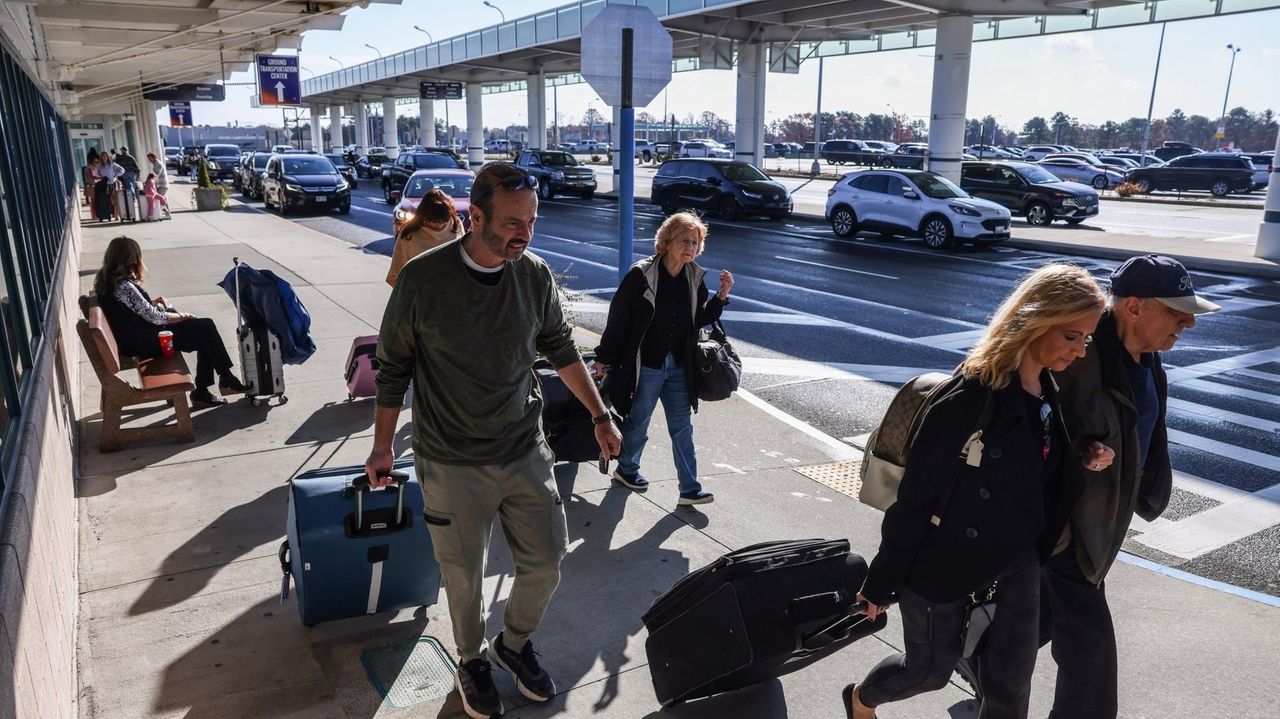
Government Plays Catch Up After End of Shutdown
Dr. Anoop Rai, professor of finance at Hofstra’s Frank G. Zarb School of Business, was interviewed by Newsday about the lasting economic impact of the recent federal government shutdown, the longest in the history of the United States. Dr. Rai told Newsday that the period of economic uncertainty caused by this latest shutdown is a “blip” and he expects a quick rebound as government spending resumes. “In the broad scheme of things, everything will come back to normal with a slight dip in [gross domestic production], but the question is — was it necessary?” he said. “The disruption the shutdown has caused should be measured in terms of the pain it has inflicted on a lot of people.”



Georgia Southern faculty featured on prestigious top 2% of scientists list
Twelve outstanding active faculty members from Georgia Southern University were featured on Stanford and Elsevier’s 2025 list of the top 2% of scientists in the world. This annual list features scientists whose work has had the highest citation count and citation impact in their fields within a given year. This year’s Georgia Southern honorees represent a diverse range of disciplines, from physics and chemistry to epidemiology and business. Ten of the 12 faculty members were also featured on last year’s list. Vice President for Research and Economic Development David Weindorf, Ph.D, P.G., is among them and takes pride in seeing so many familiar names, and a couple of new ones, included. “Seeing names from so many different disciplines, both old and new, speaks volumes about our growth and consistency,” said Weindorf. “I’m so thankful for these faculty who relentlessly pursue excellence and truly embody growing ourselves to grow others in research.” Check out who made the list from Georgia Southern by clicking on the attached media release below: Looking to know more about Georgia Southern University and it's nationally recognized faculty — simply contact Georgia Southern's Director of Communications Jennifer Wise at jwise@georgiasouthern.edu to arrange an interview today.


Black Friday 2025: Earlier, Bigger and More Digital Than Ever
Black Friday is no longer just a day – it’s becoming an entire season. In 2025, shoppers are starting earlier, spending more and relying heavily on technology to find the best deals. With online shopping now the dominant force, an estimated 71% of consumers plan to browse and buy from their screens rather than stand in long lines. Baylor University consumer behavior expert James A. Roberts, Ph.D., said this year’s sales stretch well beyond Thanksgiving weekend. Top 5 Black Friday Trends from Dr. James A. Roberts Retailers have pushed promotions into early November – and in some cases, late October – creating what many now call “Black November.” And for the true procrastinators, “Desperate in December” is the new reality, with next-day delivery extending holiday shopping right up to the last minute. Even as shoppers plan to spend up to 10% more, they’re extremely price sensitive, Roberts said. Inflation, rising living costs and ongoing economic uncertainty – including concerns over tariffs – are prompting consumers to hunt for deeper discounts and compare prices more closely than ever. That caution is also fueling another trend: increased use of buy-now-pay-later plans. While convenient, Roberts urges shoppers to approach them carefully to avoid overspending. Technology also is accelerating the shift. AI tools and retail chatbots are helping customers track deals and make purchases, while influencers and social media ads continue to shape buying habits. Cost-conscious platforms like Temu and Shein are poised for another strong season. Clothing, electronics and home goods remain top categories, Roberts said, with gift cards still the go-to for last-minute buyers. Walmart, Target and Kohl’s are expected to be the most popular in-store destinations, while Amazon – unsurprisingly – continues to dominate Cyber Monday. Overall spending remains robust. Shoppers are expected to spend roughly $20 billion across online and in-store purchases, split almost evenly between the two. The best bargains will be toys discounted about 25 percent, phones and computers discounted around 30 percent and TVs discounted an average of 23 percent. The typical shopper will spend about $650 this holiday weekend. How to navigate the shopping frenzy Roberts offers some simple advice for navigating the frenzy: Set a budget, stick to it, choose thoughtful gifts and keep the season in perspective. After all, the most meaningful gifts are the ones that show how well you know the people you love. ABOUT JAMES A. ROBERTS, PH.D. James A. Roberts, Ph.D., is The Ben H. Williams Professor of Marketing at Baylor University’s Hankamer School of Business. A noted consumer behavior expert, he is among the Top 2% Most-Cited Researchers in a database compiled by Stanford University. In addition to journal citations, Roberts has often been called upon by national media outlets for his consumer expertise and latest research. He has appeared on the CBS Early Show, ABC World News Tonight, ABC Good Morning America, NBC’s TODAY Show and NPR’s Morning Edition, as well as in articles in The New York Times, USA TODAY, The Wall Street Journal, TIME and many others. Roberts’ research has focused on how individual consumer attitudes and behavior impact personal and collective well-being, including investigating the factors that drive ecologically and socially conscious consumer behavior, the impact of materialism and compulsive buying on well-being and the effect of smartphone and social media use on personal well-being. He is the author of “Shiny Objects: Why We Spend Money We Don’t Have in Search of Happiness We Can’t Buy” and “Too Much of a Good Thing: Are You Addicted to Your Smartphone?”



12 Days of Holiday Experts - Goizueta Business School Sources for the Season
It's that time of the year again! And as Americans get ready for another journey into the festive season, there are always opportunities for stories to be told about shopping, travelling, buying, returning, and making sure you don't get ripped off or scammed during all the hustle and bustle, Here's a stocking full of topics and expert sources who are here to help with your coverage this holiday! Gifts, Giving, and all the Costs That Come With It Economics of the Holiday Season A successful Q4 makes the difference between annual profitability and loss for many businesses. Professor Tom Smith is available to discuss seasonal hiring, retail expectations, the impact of tariffs, and the importance of the holiday season to retailers. View his profile here Black Friday & Using AI to find the Perfect Gift Professor Doug Bowman expects to see more Shoppers (esp. Gen Z) experimenting with GenAI for personalization, inspiration, product discovery, summarizing reviews, generating lists, and finding deals. Results may be mixed, depending on the data the AI was trained on. He also expects more purposeful and complex shopping, with fewer impulse purchases and more searching (both online and in brick-and-mortar stores), due to lower inventory levels/assortments at some retailers. View his profile here Food and Travel Pricing Professor Saloni Firasta Vastani can discuss the cost of this year’s holiday dinners. What’s gone up and what’s gone down? She can also discuss the cost of travel this holiday season and offer tips on how consumers can secure a better deal. View her profile here Avoiding Holiday Overspend Professor Usha Rackliffe can discuss how holiday shopping can expose consumers to credit products, such as store credit cards, that offer various incentives and often result in overspending. She can discuss the pros and cons of the buy now, pay later offers and how interest rates will play into this year’s holiday shopping and spending. View her profile here Gift Giving Professor Ira Bedzow says there are three ways gift-giving can promote both personal growth and professional development. View his profile here Gifts Express Relationship, Not Reciprocity. Contracts and transactions are about keeping score—I give, you give back. Gifts are about connection. A thoughtful gift doesn’t close a deal; it opens a door. Personally, it reframes love and friendship as ongoing commitments rather than conditional exchanges. Professionally, treating interactions as opportunities to build trust creates loyalty, sparks creativity, and builds a culture no contract can guarantee. The Art of Perspective-Taking in Choosing Gifts: The best gifts come from stepping outside yourself and asking: What would this person really want? This act of empathy is a skill worth practicing. Personally, it pulls us beyond ego; professionally, it sharpens our ability to anticipate needs, see through others’ eyes, and make decisions aligned with their values—a foundation for real leadership. Gifts as Lessons in Friendship and Human Connection: True friendship isn’t built on ideology, convenience, or self-interest. It’s rooted in caring for someone simply for who they are. Gift-giving is a rehearsal for that kind of connection. Personally, it reminds us that what we truly want typically comes through relationships, not rivalry. Professionally, it shows that lasting success rests less on shared advantage and more on genuine respect and human connection. Shopping for Sustainability Consumers are increasingly seeking eco-friendly products, and brands that emphasize sustainability are likely to see higher sales. Nearly 69% of shoppers prefer to buy from companies committed to ethical practices, such as those that use carbon-neutral shipping and offer recyclable packaging. Professor Dionne Nickerson focuses on how companies can integrate sustainability in their products and why it matters to consumers. View her profile here Pressure Purchasing As the days inch closer to the holidays, shoppers feel the pressure to find a gift. Professor Max Gaerth can discuss how stress, scarcity, and time pressure shape purchasing decisions. View his profile here Online Shopping and Influencing AI Changing How We Shop Professor David Schweidel examines how new AI tools are transforming the shopping experience and the ways brands utilize AI to engage with prospective customers and personalize product recommendations. He can also discuss OpenAI’s Atlas and how it puts ChatGPT directly into your browser. View his profile here Influencers Influencing Our Purchases How are creators impacting the economy, and are influencers impacting our purchasing decisions? Professor Marina Cooley looks at the creator economy and how TikTok and Instagram are impacting our holiday wish lists, and what it takes for a product to go from unknown to trending. She can also discuss TikTok Shop (something Instagram has struggled to execute). View her profile here How to Attract Customers to the Store this Holiday: Shopping looks different, and it is up to retailers to stand out not just in the brick-and-mortar world but also online. The success of a business can balance on the customer experience. Professor Reshma Shah can discuss the policies that brick-and-mortar retailers need to have in place to successfully merge online shopping and the in-person shopping experience. View her profile here Holiday Scams Tis The Season for Scams Bad actors are using AI to scam consumers. From phone calls to emails, Professor Tucker Balch can tell us how to spot a scam and what we can do to protect ourselves. View his profile here Holiday Returns Product Returns Professor Doug Bowman can discuss the retail strategy and the impact of holiday gift returns, comparing online returns to those in brick-and-mortar stores. View his profile here He can also weigh in on: Why are returns so expensive for retailers? Online returns vs. brick and mortar returns Predicting online returns - helping retailers understand how likely it is that a product will be returned. As well: Are retailers still offering free returns? What’s this costing them? Is this likely to continue? What will they do differently? If you’re a journalist covering the holiday season, our experts can help shape your story. Use the “Connect” button on any expert’s profile to send an inquiry — all inquiries are monitored by our media team to ensure a quick, timely response.


Avoiding the Reverse Mortgage Reflex
Every once in a while, an industry article really hits the mark. Recently, one did just that—Canadian Mortgage Trends' "Who Uses Mortgage Brokers Today and Why? (Part 2)" gave seniors their own category, not as an afterthought, but as a client segment worthy of attention. Bravo. It's about time someone acknowledged that older Canadians aren't just "another niche." But then… came the reverse mortgage section. Don't get me wrong—it's refreshing to see financial professionals finally acknowledge that Canada's aging population presents both opportunities and complexities. But suggesting that "helping seniors" automatically means "offering a reverse mortgage" is like telling everyone who's thirsty to drink espresso. Some will love it. Others will lie awake at 3 a.m. with regrets. Let's call it what it is: type-casting seniors into a product. The Reverse Mortgage Reflex There's a curious habit in our industry. Mention the word "senior" and watch what happens: eyes light up, marketing decks shuffle, and—as if on cue—the term "reverse mortgage" materializes like a pop-up ad from 2007. It's as if the entire profession has agreed that every retiree with a pulse and property must be yearning to re-mortgage their home. Except… most aren't. Most seniors spent decades teaching their kids to avoid debt and pay off mortgages as quickly as possible CBC Radio. Suggesting they should now joyfully jump back into one to "solve retirement" isn't just unappealing—it's borderline insulting. Here's the truth: no one dreams of retiring into debt. And the numbers bear this out. Debt Levels: While only about a quarter of people over 65 had debt in the late 1990s, that figure has climbed to more than 40% today (Source: CBC News). Anxiety Levels: Nearly 50% of retirees now worry about their debt, according to the Credit Counselling Society. Reverse mortgages can absolutely be valuable tools. The reverse mortgage market has exploded, with over $8.2 billion in outstanding debt as of June 2024—an 18.3% increase from the previous year (Source: MoneySense). But offering one before understanding the client's full picture isn't being a trusted advisor—it's running on sales autopilot. Brokers, You're Better Than This Brokers pride themselves on being client advocates—the ones who shop the market, decode fine print, and find creative solutions when banks can't. The very definition of a broker is someone who matches the right solution to the customer's needs. So why, when it comes to seniors, do many skip the most important part—the needs assessment—and leap straight to the product? It's backwards. While it may seem very simple, a proper financial conversation starts with identifying the problem, then illustrating a solution, and finally defining the intended outcome. • Why does this person need to access equity? • What problem are they really solving? • How do they define "financial comfort" The first step of solution selling isn't talking—it's listening. Start With the Need, Not the Product Before reaching for any rate sheet, it's critical to understand the client's true priorities. According to research from HomeEquity Bank, 9 in 10 Canadians want to age in place and live out their retirement years in the comfort of their home (Source: Canadian Mortgage Trends). But their financial needs are as diverse as their travel insurance policies. The reality is stark: A 2024 survey by the Healthcare of Ontario Pension Plan (HOOPP) found that 39% of Canadians aged 55-64 have less than $5,000 in savings, and 73% have $100,000 or less. More than half of Canadians over 60 who remain in the workforce do so out of financial necessity, not choice (Source: CBC Radio). Ask the right questions: • Do they need to eliminate high-interest debt? • Do they need cash flow to cover rising expenses? • Are they struggling to afford in-home care or medical support? • Do they want income stability—that pension-like feeling—rather than a lump sum? • Do they want to downsize, relocate, or age in place with dignity? Only after understanding the full financial picture can you propose the best, most robust solution. That's not just good practice. That's respectful advising. Solution Selling: Connecting the Dots Here's a classic example: A client walks in with a paid-off home and a stack of monthly bills that feel heavier than the Sunday paper. They're anxious about cash flow but debt-averse. The reflex answer? "Reverse mortgage!" Not so fast. Solution sellers focus on understanding customers' challenges and delivering ideas that address their daily needs, rather than pushing products. When clients can see exactly what they're getting, they make better decisions and advisors earn lasting trust through transparency, not sales pressure. Maybe downsizing to a more manageable property makes sense. Perhaps a small secured line of credit covers the gap without interest compounding as quickly. Maybe an annuity provides steady income with less long-term cost. Or maybe—just maybe—they don't need a mortgage at all. Consider that a $100,000 reverse mortgage balance can grow to $150,000 in just 5 years at current rates, with interest compounding annually. When you solve the real problem (not just the balance sheet), you build lasting trust and genuine loyalty. The Psychology of the Senior Client It's not just about the math; it's about the mindset. Here's where most brokers stumble: they treat all seniors as if they're cut from the same cloth. They're not. Let's get real: seniors aren't a monolithic group. A 55-year-old and an 85-year-old? They're separated by 30+ years of life experience, different communication styles, varying financial literacy, and completely different emotional triggers around money. Cookie-cutter advice doesn't cut it. The best advisors listen first. They ask questions. They assess each client's actual financial situation—not what they assume it is—and then deliver advice that fits that person's life, not some generic "senior strategy." Respect Is the Real Differentiator Understanding a client's lifestyle, fears, and goals isn't just good ethics—it's good business. Seniors have finely tuned radar for sincerity. They can smell a sales pitch faster than a Labrador finds bacon. Want to stand out? Lead with curiosity, not a contract A holistic, solution-based approach positions you as a trusted advisor—not a product pusher. Once you earn that trust, referrals flow like coffee at a church social. From Product Pushing to Purpose Selling Here's the shift our industry needs: Stop viewing seniors as a market. Start viewing them as individuals with layered needs. Solution selling isn't anti-reverse mortgage—it's anti-assumption. It ensures the whole problem gets solved, not just the one that fits your product lineup. Yes, over 25% of Canadians aged 55 and older are considering a reverse mortgage (Source: Canadian Mortgage Trends), and it might eliminate a monthly payment—but if it doesn't solve for cash flow, health costs, or income stability, you've only done half the job. The real opportunity? Elevate the conversation from product placement to purpose-driven advising. Advisors, Reset Your Lens Seniors don't need to be sold. They need to be understood. Give them the dignity of choice, the respect of time, and the power of informed decision-making. When advisors show prospective clients detailed solutions, it allows clients to properly assess the quality of advice and make fully informed decisions, supporting healthy long-term relationships The best brokers—the ones shaping the next chapter of this industry—don't just sell mortgages. They sell confidence, clarity, and control. And that, my friends, is how you truly help Canadians retire hip, fit, and financially free. Want to become an expert on serving the senior demographic? Just message me to be notified about the next opportunity to become a "Certified Equity Advocate" — mastering solution-based advising that transforms how you work with Canada's fastest-growing client segment.

The keys to holiday happiness: Gratitude, giving and genuine connection
The holiday ads insist that it’s the time for cheer, buying gifts and reconnecting with friends and family. Various factors – social media, remote work, politics – have made that more difficult than ever. There is hope: Research by the University of Delaware's Amit Kumar shows the path to genuine happiness this season. Kumar, assistant professor of marketing in UD's Lerner College of Business & Economics, offered the following three strategies. Gratitude: • Gratitude and giving thanks has benefits for both the giver and the receiver. It makes both parties feel good, and provides a real-life human connection at a time when those are hard to come by. "Investing in doing is a better route to social connection than spending on having." - Amit Kumar A shift in gift buying strategy: • Experiences can make for better gifts than trinkets, coats, jewelry or other items. There's a better chance of social connection if you're doing something rather than giving something. Type less, talk more: • It's important to keep in touch, but reconnecting during the holidays through a phone call or face-to-face interaction (virtually or in person) has a better chance of strengthening our bonds. More information on Kumar, who is also an assistant professor of psychological & brain sciences, can be found on his website. To contact Kumar directly and arrange an interview, visit his profile and click on the contact button. Interested reporters can also send an email to MediaRelations@udel.edu.