
Experts Matter. Find Yours.
Connect for media, speaking, professional opportunities & more.
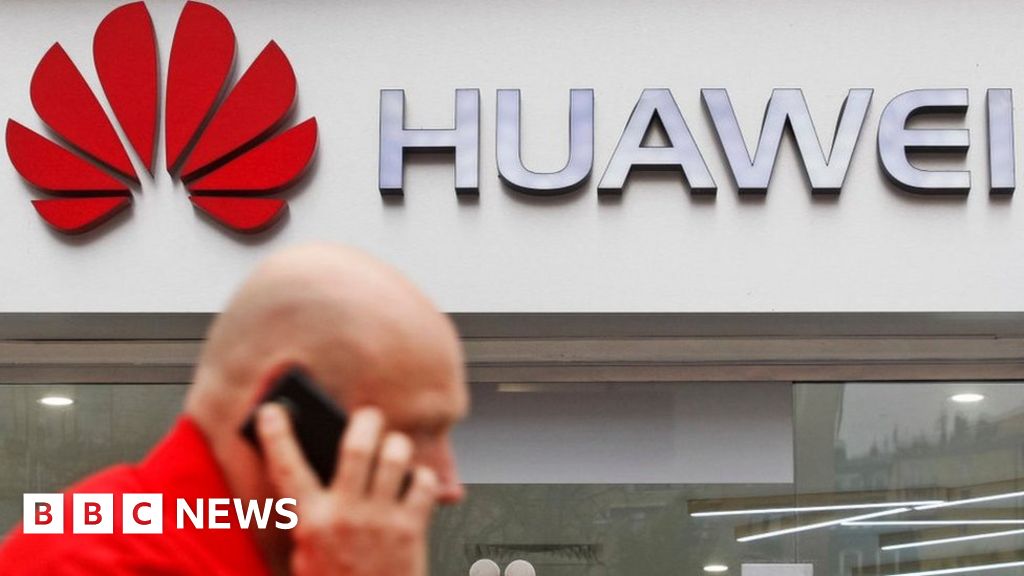
The three-way tug-of war between China, Canada and the United States
It’s a court trial in coastal Vancouver Canada that has gathered the attention of international media and plunged trade talks and international relations between America, China and America into tension, tariffs and a tug-of-war over one Chinese executive accused of fraud in in the United States. Here’s brief background courtesy of BBC: The Story in 100 Words Why is the US targeting Huawei, one of the world's largest smartphone makers, and executive Meng Wanzhou? Authorities claim they misled the US government about the company's business in Iran, which is under US economic sanctions. The US is also pursuing Huawei and Ms Meng in criminal charges including bank fraud and theft of technology. Both reject the claims. US officials want Ms Meng extradited from Canada to face the charges. Her arrest caused a diplomatic dispute between China and the US and Canada. The case against Huawei also comes as Western nations grow increasingly concerned about a possible spying risk related to the widespread adoption of the company's technology. So, is there any diplomatic resolution? What will happen if Meng Wanzhou is extradited to the United States? What will happen if she can return to China? Is Canada in a no - win situation? There are a lot of questions – and that’s where our experts can help. Dr. Glen Duerr's research interests include comparative politics, and international relations theory. Glen is available to speak to media regarding this topic– simply click on his icon to arrange an interview.


Voters Split on Whether Trump Should be Removed from Office Former U.S. Vice President Joe Biden has widened his lead to 26 points among Florida voters in the race for the Democratic party’s nomination for president in 2020, according to a statewide survey by the Florida Atlantic University Business and Economics Polling Initiative (FAU BEPI). Among the Democratic candidates, Biden has increased his support to 42 percent, up from 34 percent in BEPI’s September 2019 poll. U.S. Sen. Bernie Sanders jumped into second place at 14 percent, while U.S. Sen. Elizabeth Warren fell to third at 10 percent, down significantly from 24 percent support in September. Former New York City Mayor Michael Bloomberg came in fourth at 7 percent, followed by U.S. Sen. Amy Klobuchar at 6 percent, entrepreneur Andrew Yang at 5 percent and South Bend, Indiana Mayor Pete Buttigieg at 3 percent. A majority of Democratic primary voters (54 percent) said they will definitely vote for their top choice, with 46 percent saying there is a chance they could change their minds and vote for someone else. The Florida Democratic primary is March 17. “Joe Biden continues to be in a very strong position in Florida,” said Monica Escaleras, Ph.D., director of the FAU BEPI. “However, it will be interesting to see what impact the early contests in New Hampshire and Iowa will have on voters in Florida regarding their support for Biden.” Sanders fared best among Florida voters in head-to-head matchups against U.S President Donald Trump, with a 53-to-47 percent advantage on the president. Biden and Warren have narrow two-point leads on Trump, 51 to 49 percent, while Buttigieg finished in a 50-50 dead heat with the president. In September, Trump held small leads in each of these head-to-head matchups. With an impeachment trial in the U.S. Senate looming, Florida voters are split on whether Trump should be removed from office, with 51 percent saying he should be removed while 49 percent are against removal. Voters are also split about how their Congress person’s decision whether or not to impeach Trump will affect their support for them as a candidate, with 40 percent saying it will make them less likely to support the candidate, 38 percent saying they would be more likely to support them and 21 percent saying it would have no effect. Florida Gov. Ron DeSantis, who has just completed his first year in office, is popular among voters with 48 percent approval and 28 percent disapproval, while 25 percent of voters were neutral or had no opinion. With tensions rising with Iran, 61 percent of voters do not think the U.S. is going to get into a war with Iran, while 39 percent think recent military action will lead to war. Trump’s approval rating is slightly above water among Florida voters, with 45 percent approval and 43 disapproval. He continues to be hugely popular among GOP voters, with a 66-point lead on his Republican rivals, former U.S. Rep. Joe Walsh and former Massachusetts Gov. Bill Weld. “Floridians are deeply divided on the president and on impeachment,” said Kevin Wagner, Ph.D., professor of political science at FAU and a research fellow of the Initiative. “Nonetheless, Mr. Trump continues to perform better in Florida than in national polls.” The survey was conducted Jan. 9-12 and polled 1,285 Florida registered voters. The survey has a margin of error of +/- 2.6 percentage points. The margin of error for both the Republican primary and the Democratic primary is +/- 4.4 percentage points. The data was weighted by ethnicity, age, education, party affiliation, region and gender based on a 2016 voter model. It is important to remember that subsets carry with them higher margins of error, as the sample size is reduced. Data was collected using both an Interactive Voice Response (IVR) system of landlines and an online panel provided by Dynata. Are you a journalist covering the role Florida will play in the upcoming election? If so, let our experts help with your coverage. Kevin Wagner's research and teaching interests include presidential and judicial politics, political behavior and legislative behavior. Monica Escaleras is the Director of the Business and Economics Polling Initiative at Florida Atlantic University. Both experts are available to speak with reporters - simply click on either icon to arrange an interview.


In the latest round of legal decisions on the enforcement of international privacy laws between the EU and the U.S., Peter Swire, professor of Law and Ethics at the Georgia Tech Scheller College of Business, and associate director for Policy of the Georgia Tech Institute for Information Security and Privacy looks at how the EU may examine foreign intelligence surveillance in his article “Foreign Intelligence and Other Issues in the Initial Opinion in Schrems II” in Lawfare. The Schrems II case is the subject of the recent opinion from Advocate General (AG) Henrik Saugmandsgaard Øe before the Court of Justice of the European Union (CJEU). In the case, Austrian lawyer Max Schrems challenged Facebook’s ability to transfer personal data from the EU to the United States using the standard contractual clauses, which exist where a company such as Facebook follows EU-level privacy standards when private data is transferred outside of Europe. Schrems’s specific claim is that he cannot access any files that the National Security Agency (NSA) may have collected about him and lacks legal redress for any violation of his rights under EU law. Swire writes that the case examines the transfer of an individual’s personal data from the European Union to the United States using the standard contractual clauses and the Privacy Shield, which was negotiated in 2016 by the U.S. and the EU for privacy data transfers to the United States specifically. Facebook’s headquarters are in Ireland, and the Irish High Court ruled in favor of Schrems and certified 11 broad questions to the CJEU. The AG opinion published this week concerns this appeal in Schrems II from the Irish High Court. If Schrems wins this appeal, then many flows of personal data from the EU to the U.S. may become illegal. Swire’s expertise in U.S. privacy laws is extensive. He is a sought after privacy expert and he has been highlighted in Bloomberg Law, Le Monde, LawFare and numerous scholarly publications. He has appointments by courtesy with the College of Computing and School of Public Policy and is Senior Counsel with Alston & Bird, LLP. If you are a reporter covering this topic and would like to speak with Professor Swire – simply click on his icon to arrange an interview or email media@scheller.gatech.edu.


Generalists and Specialists – Key Ingredients for an Innovation Ecosystem
David Epstein describes in his book Range: Why Generalists Triumph in a Specialized World, the relationship between specialists and generalists. Specialists being the masters of depth while generalists integrate across a range of options and diverse applications. The combination of the two leads to powerful potential for innovation. InventionShare seeks to create a similar relationship between inventors and corporations. Leveraging inventions that have very broad applicability, InventionShare systematically researches across many industries searching for businesses that are poised to leap forward with a strategic technology injection. One such technology is called Circuit Seed which redefines analog electronic design with a new paradigm that enables configurable analog in a scalable digital format. This technology dramatically lowers the cost, power, noise and temperature thresholds enabling breakthrough advances in a diversity of applications such as: automotive radar, Lab-on-a-chip and many more. By applying Epstein’s principles, InventionShare through its unique business model, is creating an innovation ecosystem spanning many industries through partnership and collaboration. For more information, please contact: Lesley Gent Director Client Relations, InventionShare™ lgent@InventionShare.com (613) 225-7236, Ext 131 Or visit our website at InventionShare.com


Social Media Spaces Can Be Instruments of God’s Unconditional Love, Theologian Says
Being 'always on' can be a source of anxiety or sorrow, but it also can be a way to strengthen faith, Baylor author says Many of us are “always on” — scrolling through social media, checking email or searching the web, says author Angela Gorrell, Ph.D., assistant professor of practical theology at Baylor University’s George W. Truett Theological Seminary. In her book “Always On,” she writes about how social media spaces can be instruments of God’s unconditional love — but also sources of anxiety, jealousy and depression. With the arrival of 2020 — and its potential for change for the better — she discusses in this Q&A some tools for understanding social media and enabling Christian communities to address its use in constructive ways. Q: From your perspective as a practical theologian, are the social media strategies you recommend aimed solely at people of faith? Dr. Gorrell: Practical theology takes different forms. Ultimately, I aim to write about issues — like social media — that matter to people and shine the light of the Gospel on them. I also research and write about theology and faith in practice, how people express and perform their values, hopes and beliefs through practices, rituals, disciplines, activities, relationships, work—through their way of life. While I write about social media from a Christian perspective, much of what I have written about using social media mindfully and having “interested conversation” about media is applicable to people from a variety of religious and philosophical perspectives. Q: There is much talk about how people spend too much time on social media, to the point of ignoring family and friends when in their presence. How much is too much? And what problems can this create for people? Dr. Gorrell: The most important thing for people to realize is that how you spend time online is more important than how much time you spend online. There are a variety of issues that “passive,” unintentional, unregulated, time online can extend and nurture. I say extend because all of these issues can also be in-person issues. For example, empathy burnout, depression, anxiety and jealousy. We often encounter an enormous amount of suffering online. The amount of suffering and the velocity of these encounters — and rapidly seeing multiple examples back to back in articles or our newsfeeds — can nurture empathy burnout. We can become numb to the suffering we see online and take in but do nothing about it or think very little of it. Likewise, being on social media and passively scrolling through people’s status updates, tweets and stories for unbounded sets of time and looking at copious amounts of content but never replying, messaging, posting or sharing has been linked to depression and anxiety. Similarly, passive following, which is following people closely that we do not know (e.g., celebrities) or people we do not see regularly in person (e.g., high school friends) has been linked to jealousy, which can negatively impact how we perceive ourselves and our lives . . . When we see someone a lot in person or talk to them regularly by phone, we know that their lives have a lot more going on than what they are sharing online. Q: What strategies do you suggest help people use social media wisely? Dr. Gorrell: The goal is meaningful participation. I encourage people to limit passive scrolling and following as much as possible. Create something and share it online. Join conversations. Reply to people’s statuses rather than just clicking emojis. When you see that someone is celebrating, share their joy in a significant way. Share it as your status with a note of congratulations or text them or call them. When you notice someone is mourning, message them. When you encounter suffering online, stop scrolling and do something in response. Get offline, take a walk and pray about this suffering. Give money to an organization that is relieving this suffering. Find other articles and educate yourself on the issue. Learn more about how to help or how to invite other people to care. Q: Any suggestions as to how and where people might create a space to ask and answer questions about social media use? Dr. Gorrell: Asking powerful questions about people’s online experiences that encourage storytelling and helping each other think about new media can happen around the dinner table, in a church small group or on a road trip in the car. When family and friends ask each other about one another’s lives, we can include asking questions about and discussing social media experiences. We can ask curious, open-ended questions without simple yes or no answers like: 1. How do you make decisions about what to respond to online? 2. Have you ever been frustrated or sad about new forms of technology? What causes frustration or sadness for you? 3. When have you had a joyful experience online? Could you describe a time when you felt heard, affirmed or understood online? 4. How does social media help you love God and others and/or prevent you from loving God and others? 5. When have you had a painful experience online? Could you describe a time when you felt unheard, bullied, left out or misunderstood online? 6. What are the top two feelings you experience when using social media, and why do you think this is so? Q: How can we do a better job of using social media? Dr. Gorrell: Develop a rhythm for life with your friends or family that specifically addresses technology — when you will use it and for what purposes, when you will not use it, what boundaries you will have. Using social media constructively requires intentionality. I encourage people to find times in their week or month or year to not use devices and social media and to write down their plan on a calendar. A college student told me that he and his friends put all their phones in the center of the table at restaurants and say that the first person to pick up their phone during dinner pays the entire bill. Since they started this ritual, no one has picked up a phone during dinner. Practices like these help people to be present to people they are with in person. It is a great idea to put all devices away at night one to two hours before bed so minds and bodies can get prepared for sleep. I know families that have a basket for this purpose in their homes. I especially encourage parents to make sure children under 18 do not have a device in their room during sleeping hours so they can get adequate rest. I invite people to consider turning off notifications from all social media platforms and email and only check apps and email at a certain time each day. It is also important to have a plan for difficult moments and conversations online. What will you do when you get angry, disagree with someone else or feel depressed about your life or feel left out? What will you do next? It is equally important to think about what you will use social media for. How can you use social media to love people well, truly stay connected to people, expand your thinking on certain subjects, remain humble and open to being corrected, and nurture your creativity and increase your compassion? How might meaningful participation online support goals like these? ABOUT ANGELA GORRELL Angela Gorrell, Ph.D., assistant professor of practical theology at Baylor’s Truett Seminary, is the author of “Always On: Practicing Faith in a New Media Landscape,” which addresses the perils and possibilities of Christian faith in an era of massive technological change. She also is writing a book that addresses America’s crisis of despair, illuminated by its suicide rates and opioid addiction, and describes joy as the counteragent to despair. Gorrell earned a bachelor’s degree in youth ministry from Azusa Pacific University and an M.Div. and Ph.D. from Fuller Theological Seminary. She came to Baylor from the Yale Center for Faith and Culture at Yale Divinity School, where she developed relationships with more than 250 scholars from roughly 150 institutions on four continents while managing metrics and evaluation for the project. She has more than 14 years of experience in congregational and parachurch ministry, including serving as a chaplain at a women’s maximum-security prison. ABOUT BAYLOR UNIVERSITY Baylor University is a private Christian University and a nationally ranked research institution. The University provides a vibrant campus community for more than 17,000 students by blending interdisciplinary research with an international reputation for educational excellence and a faculty commitment to teaching and scholarship. Chartered in 1845 by the Republic of Texas through the efforts of Baptist pioneers, Baylor is the oldest continually operating University in Texas. Located in Waco, Baylor welcomes students from all 50 states and more than 90 countries to study a broad range of degrees among its 12 nationally recognized academic divisions. ABOUT GEORGE W. TRUETT THEOLOGICAL SEMINARY AT BAYLOR UNIVERSITY Baylor University’s George W. Truett Theological Seminary is an orthodox, evangelical school in the historic Baptist tradition that equips God-called people for gospel ministry in and alongside Christ’s Church by the power of the Holy Spirit. Accredited by the Association of Theological Schools, Truett Seminary provides theological education leading to the Master of Divinity, Master of Arts in Christian Ministry, Master of Theological Studies, Doctor of Ministry and Ph.D. in Preaching. The MACM and MTS degrees also can be completed at the seminary’s Houston campus. In addition, Truett Seminary offers joint degrees: M.Div./M.S.W. and M.T.S./M.S.W. with the Diana R. Garland School of Social Work, M.Div./M.B.A. with the Hankamer School of Business, M.Div./J.D. with Baylor Law School, M.Div./M.M. with the School of Music and M.Div./M.S.Ed. or M.Div./M.A. with the School of Education. Visit www.baylor.edu/truett to learn more.


It may be the most wonderful time of the year, but for those delivering packages to houses and homes across America this holiday season it’s also the busiest one. In fact, it’s expected that Amazon alone will ship close to 300 million packages for Christmas. Customers want their purchases quicker and cheaper and it’s changing how the landscape works. It's estimated that free shipping will cost Amazon more than a billion dollars this quarter alone. This explains why shippers are looking at some radical new technologies to cut the cost of the last mile – and this is not just limited to the retail shopping industry. “Technology-driven innovations such as delivery drones or driverless vehicles not only facilitate last-mile delivery, they help with the inclusion of new sets of “customers, especially those in remote locations or rural areas with poor infrastructure, says Morvarid Rahmani, assistant professor of Operations Management at Scheller College of Business at Georgia Institute of Technology. For instance, companies like UPS, CVS, and WakeMed are exploring the idea of drugs and other health-related items being delivered by drones. In a first, collaboration between the FAA and UPS partner Matternet made deliveries from a CVS pharmacy in Cary, North Carolina as well a customer’s retirement community in November. Rahmani thinks this type of delivery shows promise. “Using drones to deliver medical packages can give rural communities access to products and medical supplies, which they would not be able to access otherwise. This delivery model is a way of incorporating social concerns and conditions of underserved populations into business practices. Using drones to deliver medial packages is a great example of collaboration between a governmental agency and for-profit companies, which is toward the dual goals of promoting efficiency and inclusion,” she notes. So, while most consumers are coming to terms with drone technology as a means for the Amazons of the world to replace it’s fleet of trucks, many customers are seeing the future of receiving essential, potentially life-saving drugs to their doorstep. “These technologies enable inclusive retailing and distribution for large (excluded) communities all over the world, says Rahmani. “Successful implementation of inclusive business practices requires collaboration of for-profit firms with the public sector, civil society organizations, and communities”.CBS News - December 15, 2019 Morvarid Rahmani is an Assistant Professor of Operations Management at Scheller College of Business at Georgia Tech. She is an expert in the areas of research is on collaboration in work processes such as new product development, management/IT consulting, and education. Dr. Rahmani is available to speak with media regarding this topic – simple click on her icon to arrange an interview. About Scheller College of Business The Georgia Tech Scheller College of Business is located in a state-of-the-art building in Georgia Tech’s vibrant Technology Square, the core of the Atlanta’s high-tech business community. The College offers an internationally recognized business education, including full-time, evening, and executive MBA options as well as undergraduate and Ph.D. degrees, to approximately 2,000 degree-seeking students each year. Scheller College collaborates across Georgia Tech to offer joint MS degrees in quantitative and computational finance and business analytics. Custom and open enrollment programs for executives and professionals are offered through the Huang Executive Education Center, located within the College. Interdisciplinary centers for teaching and research within the College enrich the educational experience, the campus and the community by providing a direct connection with the real world. They fuel collaborative teaching and research in some of the most relevant areas in business today: leadership, innovation, sustainability, the global enterprise, and business ethics. For more information, contact media@scheller.gatech.edu

It's time to face the reality about the future of artificial intelligence
According to research from International Data Corporation, revenues for big data and business analytics solutions are forecasted to reach $260 billion in 2022. An increase in the use of artificial intelligence (AI) will result in $2.9 trillion of business value by 2030, according to a study by Gartner. “Progressive thinking businesses and organizations cannot afford to ignore the growing applications of artificial intelligence (AI) and data analytics,” says Michael Ratajczyk, the program director for B.A. and M.S. Business Intelligence and Data Analytics programs at Saint Mary’s University of Minnesota. “Sometimes machines can do it better than humans. As people say, machines don’t sleep, they don’t take vacation, they don’t get sick, and they don’t go on camping trips. They do what they’re told and a machine can do the work with far more precision — and without 20 years of training.” AI is here to stay, and it will be up to businesses and humans to adapt, adopt, and adjust to the future — especially in the areas of agriculture, transportation, and health care, where there is great potential for growth. “Businesses can’t afford to ignore AI to remain competitive, and students can’t afford to not keep up with AI trends either,” according to Ratajczyk. “Soon AI will be addressed in all business classes. It’s true that sometimes people can be replaced by machines, and that can be good for businesses and bad for employees. There will always be a need for those who can program AI software, and to prepare, analyze, interpret the data and, importantly, there needs to be a balance between technology and the human touch.” There’s a lot to learn about AI and how it will play a role in very near future. So, if you are a reporter covering this topic — then let our experts help. Michael Ratajczyk works with both undergraduate and graduate business intelligence and data analytics students at Saint Mary’s University. He’s an expert in the field and is available to help with any of your coverage or questions. To book an interview with Michael, simply click on his icon to arrange a time.


Villanova Experts Reflect on the 2010s
The iPad. Hurricane Sandy. Affordable Care Act. #MeToo. Brexit. Streaming services. Since 2010, there have been so many memorable and historic events that have shifted culture and society into unfamiliar territory around the world. Two Villanova experts have put together thoughts on a few of the decade's top stories that will continue to be relevant for the next ten years—and beyond. Stephen Strader, assistant professor of geography and the environment Over the last decade we have seen the issue of anthropogenic or human-induced climate change shift from something discussed between select, interested scientists to the front page of the news on a daily basis. This dramatic change in the importance and coverage of climate change makes complete sense given six of the last ten years globally have been in the top ten warmest on record. Actually, it's very likely, if not certain, that the last five years will be the hottest globally on record. The odds of that happening naturally are very close to zero. Nowhere have the effects of a changing climate been realized more so than in the western United States, where wildfires have wreaked havoc year after year in the 2010s. States such as California, Colorado, Kansas, Oklahoma, New Mexico and Washington all experienced record-breaking wildfires over the last decade. Specifically, the Camp Fire in 2018 became the deadliest and most destructive wildfire in California history, destroying 18,000-plus homes and killing 85 people in the town of Paradise. Additionally: Hurricanes Dorian, Irma, Harvey, Maria, etc. damaged entire countries (Puerto Rico and Bahamas) so much that there is question whether they will ever recover from the effects. The deadliest tornado season on record occurred in 2011, including the devastating April 27, 2011, tornado outbreak and the deadliest U.S. tornado in modern history, which struck Joplin, Missouri (158 fatalities). Between 2011 and 2017, drought and water shortages impacted the western U.S., with California seeing its worst drought in history (or worst in 1,200 years). The drought killed 100-plus million trees and resulted in water shortages that affected crops and caused municipalities to limit water use. Record-setting rainfall and floods occurred in locations such as Colorado, New York, Oklahoma, Texas, etc., resulting in hundreds dead and millions of dollars in crop losses. If the last 10 years have taught scientists, climatologists, policy makers and the general public anything, it's that we have our work cut out for us if we are to reverse this trend of increasing disasters around the world. The atmosphere continues to warm, and all model projections point to a progressively warmer future Earth if action is not taken. And this action can't be tomorrow or by 2025, 2050 or some other arbitrary year; it has to happen now if we want to reduce future economic and societal losses. Yes, it's easy to be afraid and fearful of the future when all we see as scientists and citizens are rising temperatures, deadlier disasters and a lack of drastic climate action. However, we can't let this fear result in crippling inaction; we have to let it motivate us to fight, not for just our futures but our children's, grandchildren's and great-grandchildren's futures. Let's give them a chance to see the world the way we used to: beautiful. Jerusha Conner, associate professor of education and counseling The latter half of this decade witnessed a resurgence of student activism, sparked by Black Lives Matter protests and the dramatic events at the University of Missouri in the fall of 2015. Highlighting 2015 as a pivotal year for student activism, the authors of the American Freshman National Norms survey deemed the 2015 freshman class "the most ambitious" group in 49 years of the survey's administration in terms of their expectations for participating in protests, connecting to their communities and influencing the political structure; and the numbers of freshmen who report having participated in demonstrations as high school seniors has ticked up every year since. In my own research with college student activists in 2016, I found three striking trends: Nearly half came to college already seeing themselves as activists; only 10% consider themselves single-issue activists (with more than half identifying seven or more issues their activism addressed); and a significant share were not protesting their own institution's policies or practices, but instead concerning themselves with broader social and political issues. They are what I call "outward-facing activists," who use their campuses to stage and mobilize campaigns, rather than as the targets of their change efforts. In the last couple of years, we have seen activism among high school students take off, as students have staged walkouts and school strikes to protest inaction on climate change and gun violence. Although these movements may appear narrowly focused on a single issue, the students involved have intentionally advanced an intersectional perspective, which draws attention to the racialized, economic and gendered dimensions of the multifaceted problems they are seeking to address. Digital natives, these young people have deployed the affordances of social media not only to mobilize their peers in large-scale collective action, but also to attract and sustain the attention of the media, pressure business leaders and politicians and shape public understanding of the issues. One interesting shift with this generation of student activists is that, rather than turning their backs on the system or seeking to upend it, they are focused on enhancing voter registration and turnout, especially among young people. And their efforts appear to be working. Youth turnout in the 2018 midterms was double that of 2014, and record numbers of youth are continuing to register to vote. As the decade comes to a close and the 2020 campaign season revs up, the engagement of student activists in electoral politics will be important to continue to track.


3 Steps to Earn Local News Coverage
“HOW DO WE GET OUR COMPANY FEATURED POSITIVELY IN THE LOCAL NEWS?” This is the question I get asked the most as a public relations professional, media coach and as a former long-time journalist with the Canadian Broadcasting Corporation (CBC): how do we get in the local news? The question usually comes from a small, independently-owned business owner — a company or organization that doesn’t have anyone doing marketing or communications. They are looking for LOCAL media coverage primarily — but they don’t even know where to start. It’s understandable for them to ask this question. Earned media is the holy grail of building credibility and reputation — having your executives featured in the news media as experts on a subject. Those stories then get shared on social media and it becomes the gift that keeps on giving, living on in perpetuity on the Internet, helping your search engine optimization. I can tell you this — the local media wants your story pitches. That doesn’t guarantee you’ll get covered. However, local media has been cutback so much and is forced to do so much work in such little time now, that they appreciate a good story idea landing on their desk for consideration — especially during a slow news cycle — and especially if it’s not coming from a slick PR agency voice on the other end of the line. They want authenticity. So, how do you get there? Here are 3 simple tips based on my experiences. In no way am I saying this is the only way to do it — but I’ve seen others have success with it and hopefully you will as well: #1 – Do NOT Hire An Agency Yup. I just said that. And, yes, I do realize I am a public relations professional. However, based on experience, I can tell you the majority of small, independent businesses aren’t going to be able to afford PR firms to get local news. I reiterate we are talking about getting local news coverage — not national news. So, if they’re not going to pay for it anyways, why not give them a hand? I believe in karma. With a little bit of guidance on this blog, you’ll be able to do it yourself. In the past, I’ve helped small companies, pro-bono, get in the media (hoping they make it big and hire me later). In the future, I’ll just send them the link for this blog and save me some time. You can do this. Just stick to the basics. #2 – Prepare A Newsworthy Pitch This is important. And, it can be as complicated and detailed as you want — but for the sake of this blog, I recommend keeping it very simple and keeping it authentic. Answer these questions to decide whether the story you want the media to cover is actually newsworthy from the reporter’s perspective — because they are the people who assess the newsworthiness of a pitch. What is the story? You should be able to summarize the story in less than 30 seconds. Just like a good pitch deck for potential investors, a good media pitch typically involves the identification of a problem or a trend and coming up with a solution for it or insightful analysis in the case of a media story. This is simplified but you get the picture. Why should people care about this story? A good reporter wants stories that appeal broadly to their audience, the public. So, be prepared to proactively explain why people will care about this? Is it timely? Does it impact a broad group of people? Does it solve a problem that’s been impacting society? Who is driving this story? Is it you? Is it one of your employees? Who will be the main interview for the reporter and why them? (FOR TV) What are the visuals? If it’s television, what are some strong visuals the news crew will be able to capture on video? What can viewers expect to see in this story? It will help your TV pitch if you can illustrate a visual image for them ahead of time. #3 – Pick Up The Phone Pick one media outlet you want to pitch your story to and make the call. First decide what news media is good for your story? Is it a story with very strong visuals? Perhaps TV is the way to go. Is it a story that requires a more fulsome conversation? Maybe public radio is the best option. Newspaper is the best if you’re a nervous person and worried about being on TV or radio. Newspaper is the least intrusive of the media. Once you’ve decided what outlet, decide which reporter specifically. No emails at first in my opinion. It’s too impersonal for local news and you risk getting lost in the inbox shuffle. Doing it by phone also allows the reporter to ask any clarification questions they may have, right then and there. Now, if you call the general media outlet phone number, you can end up in phone transfer Hell or end up getting an editor or producer who is putting out six fires and juggling 4 balls. So, you are better to call an individual reporter (perhaps your favourite one). Do this in the first part of the morning before they get too busy. If they’re not there, leave a message and be prepared to call back later. Reporters are busy and may forget to call you back. Don’t take it personally. If you reach them, thank them for taking your call and make your pitch. Get to the point. A few minutes tops for the pitch. If they like it, they’ll tell you. If they don’t like it — again — don’t take it personally and don’t burn any bridges. Thank them for their time. When you get off the phone, contact a reporter with a different media outlet and do it again. Shop that story around and you’re likely to get a nibble. Final Thoughts: This isn’t a science. There are no guarantees. This process is just my personal opinion based on experience. Just be yourself. Be genuine. The reporters will like that as opposed to dealing with professional PR people or communications officers. They may find it refreshing to deal with a “real person” who isn’t trying to spin them. Beyond the initial pitch, whether it’s successful or not, offer yourself as a research resource to them on issues related to your industry — even if it means you won’t be in the story. This is how you build a relationship with a reporter and it may bode well for you in the future. Good luck. Let me know how it goes.



EXPERT PITCHING 101: The Power of Spotlights
Of all the angles and perspectives, when pitching your experts, you need to figure out how yours stands out amongst the rest. How are you getting the perspectives of your subject matter experts out there? Have you figured out your 'bench strength' to know who can comment on what and how? Do you have a good way to get your people out there to the public? Sadly, when asked these questions, most PR and Marketing professionals struggle to give you a straight answer with confidence on how they get their people to comment on certain storylines. With a defeated tone, I often hear, “Well – we have our resident rock star, Professor Jones, who does most of our media interviews” often followed by, “but he’s not always the best person for the story.” Although, most organizations have a list of subject matter experts, they are often over-reliant on the same ‘go-to’ people. Here’s why: First, these people are tried and true. For media, it’s a big deal when contacting an expert for comment - especially if the interview will be conducted on camera. So, why risk the chance of speaking with someone new? The second thing, it’s time consuming. It’s easy to find a previous expert pitch in an email and forward it on to someone new. However, gathering this content for each new person every time an individual is being pitched is very time consuming and difficult to manage. Especially, when this content is strewn across the web and you need to add links for videos on YouTube, books on Amazon, articles on ResearchGate, presentations on SlideShare etc. Once you’ve found the right person for the story, and you’ve aggregated the necessary background content to send, you must tie the loose ends and make the person contextual and relevant. Why is this person the best individual to comment on the story? What angle is this person going to provide? What sort of background qualifies this person to being the subject matter expert on the topic? Don’t worry, help is on the way At ExpertFile, we’ve heard the stories about organizations missing out on opportunities to get national or international media coverage because of their small team. These understaffed teams don’t have enough bandwidth to continuously pitch their people and comment on storylines. Their websites don’t paint a full picture of their experts’ abilities and knowledge. So, we got together with these PR, Marketing and Comms people, and looked to develop a solution. Then we created “Spotlight” - putting all of the necessary tools into the hands of PR, Marketing and Communications teams. Spotlight allows you to contextualize the relevance of your expert with a the story. Write your expert pitch to explain why that person is the best to comment on that topic, and the angle they’d be able to provide. Combine that with rich media profiles created by the ExpertFile team, you now have a central home for all of your experts’ content, and it provides a more engaging representation. So, when the media are vetting, they can now watch a video of that individual speaking in front of a camera, see their latest Media Appearances to know they have experience talking to reporters, and a Contact button for the quickest way to reach that individual, while simultaneously routing to any other internal stakeholders. This last part is important to consider as every story has many angles. Take the recent United Airlines debacle, where a passenger was viciously pulled out of his seat due to the plane being overbooked. Aside from the traumatic events from the video that surfaced of the incident, after the dust settled media are left scrambling to find out more on the protocol for overbooked flights, the global impact (there was a big uproar in China due to initial reporting that he was of Chinese descent), and the economic impact on the company. Which means, you don’t need to limit yourself to an aviation expert in order to comment on an aviation story. Every story has multiple angles - this lets you offer up a unique perspective, pitch a concept others are not covering and insert your expert into an already crowded narrative. Spotlight helps you grow those invisible experts into great sources, and it helps you efficiently pitch when you have resource constraints. Spotlights in Action Since the launch of the ExpertFile News Digest service, we’ve seen some significant results for our customers. We've only been with ExpertFile a short time. We've been using Spotlights from the News Digest and have noticed a lot more attention from media. They're easy to request - and the turnaround is fast. We recently were asked to comment on the Supreme Court nominee and booked a radio show thanks to a Spotlight. It’s been a great way to get additional exposure for Augusta University. We've only been with ExpertFile a short time. We've been using Spotlights from the News Digest and have noticed a lot more attention from media. They're easy to request - and the turnaround is fast. We recently were asked to comment on the Supreme Court nominee and booked a radio show thanks to a Spotlight. It’s been a great way to get additional exposure for Augusta University. -Kelly Jasper Senior Digital Media Coordinator - Augusta University With Spotlights we are seeing immediate pick-up of the stories we want to be part of. It’s letting us tell the Cambrian College story to a wide audience. As well, we’re noticing one Spotlight generates multiple media contacts. Once one outlet sees or reads our expert weighing in on a trending topic - the others follow. It’s an earned media coup. -Shawn Poland Associate Vice President, College Advancement - Cambrian College Once I integrated my Spotlights onto the Emory University business school website, it was so simple for me to have the ExpertFile Newsroom team whip up a pitch and publish it. Especially with limited resource on my team, it’s been a huge help to get my people out there in a more efficient manner. -J. Michael Moore Senior Communications Manager, Emory University - Goizueta School of Business Want to see an example of how to pitch your expert? Send your storyline to success@expertifle.com and we will have our Newsroom team send you a draft Spotlight ASAP. Is there anything that I missed? I’d love to hear what’s worked for you to get your people speaking with the media.