
Experts Matter. Find Yours.
Connect for media, speaking, professional opportunities & more.

Optometry professor recognised for excellence in research at awards ceremony
Professor James Wolffsohn recognised for research excellence at London awards ceremony Professor Wolffsohn specialises in myopia management, dry eye disease and contact lenses research Excellence in eye care event is hosted by the Association of Optometrists. A world leading optometrist from Aston University has been recognised for his research excellence in the field of optometry specialising in myopia management, dry eye disease and contact lenses research. Professor James Wolffsohn was the recipient of the Recognising Research Excellence award on Sunday (26 February) at the Excellence in eye care event in London - hosted by the Association of Optometrists. Professor Wolffsohn, who is also the head of the School of Optometry said: “I was very surprised and truly honoured. It is lovely to have my research recognised.” “I have always been driven by wanting to know more. I think research is important because you want healthcare professionals to be working at the cutting edge and using techniques that are proven to work without bias.” James’s first experience of research occurred during his pre-reg placement at Moorfields Eye Hospital. He said: “They had a project on automatic teller machines – bank machines were fairly new and we were working for a major bank on the optimum colour combinations for people with visual impairment.” James went on to complete his doctorate in ocular motor research at Cardiff University, before travelling to Australia to work as a researcher at the University of Melbourne. During this time, Professor Wolffsohn continued to work in practice and would fly into the outback to provide low vision services to remote communities. Since returning to Aston University in 2000, he has worked in a variety of different academic roles – including as head of department across three different disciplines. “I will rarely turn down a collaborative proposal if there is an opportunity to make a difference to evidence-based clinical practice,” Wolffsohn said. James is also passionate about ensuring that scientific discoveries result in tangible change for patients. Three spin-out companies have been developed on the basis of research he has contributed to at Aston University. Alongside research and academic roles, Professor Wolffsohn continues to work a half-day in clinic each week. He has also played an influential role in spearheading consensus among the profession on evolving scientific fields, from myopia management to dry eye disease. James led the diagnostic committee for the Tear Film & Ocular Surface Society DEWS II report and chaired the Contact Lens Evidence-based Academic reports of the British Contact Lens Association. For more information about the School of Optometry and the Vision Sciences Research Group please visit our website.


AI-powered cruise control system may pave the way to fuel efficiency and traffic relief
The CIRCLES Consortium, consisting of Vanderbilt University, UC Berkeley, Temple University and Rutgers University-Camden, in coordination with Nissan North America and the Tennessee Department of Transportation, concluded a five-day open-track experiment on Nov. 18. Congestion Impacts Reduction via CAV-in-the-loop Lagrangian Energy Smoothing (CIRCLES) Researchers tested an AI-powered cruise control system designed to increase fuel savings and ease traffic using 100 specially equipped Nissan Rogue vehicles. The experiment—which ran from Nov. 14 through Nov. 18 on a sensor-filled portion of Interstate 24—is based on the results from an earlier, closed-track study where a single smart vehicle smoothed human-caused traffic congestion, leading to significant fuel savings. A single AI-equipped vehicle could influence the speed and driving behavior of up to 20 surrounding cars, causing a kind of positive ripple effect in day-to-day traffic. The CIRCLES Consortium will spend the next several months analyzing data collected on the AI-equipped vehicles and their impact on the flow of traffic over the duration of the experiment. The test was conducted on the recently opened I-24 MOTION testbed, the only real-world automotive testing environment of its kind in the world. Stretching for four miles just southeast of downtown Nashville, the smart highway is equipped with 300 4K digital sensors capable of logging 260,000,000 vehicle-miles of data per year. The CIRCLES Consortium research is supported by the National Science Foundation and the U.S. Departments of Transportation and Energy. Support was also provided by Toyota North America and General Motors. The experiment included Toyota RAV4 and Cadillac XT5 vehicles. Preliminary vehicle and traffic flow detection in the I-24 Mobility Technology Interstate Observation Network (MOTION). “On November 16 alone, the system recorded a total of 143,010 miles driven and 3,780 hours of driving. The I-24 MOTION system, combined with vehicle energy models developed in the CIRCLES project, provided an estimation of the fuel consumption of the whole traffic flow during those hours. The concept we are hoping to demonstrate is that by leveraging this new traffic system to collect data and estimate traffic and applying artificial intelligence technology to existing cruise control systems, we can ease traffic jams and improve fuel economy,” the CIRCLES team said in a joint statement. “Nissan has always been a pioneer in automotive innovation, and with our long-term vision, Nissan Ambition 2030, we know our future is autonomous, connected and electric,” said Liam Pedersen, deputy general manager at the Nissan Alliance Innovation Lab in California’s Silicon Valley. “CIRCLES shares our common goal of building a safer, cleaner world by empowering mobility.” “When it comes to transportation and mobility in Tennessee, we are at a critical juncture,” said Deputy Governor and TDOT Commissioner Butch Eley. “Traffic congestion is now becoming more prominent throughout Tennessee, and not just in urban areas. Addressing these challenges will force us to think critically about solutions, as transportation infrastructure projects traditionally are not identified nor completed before traffic congestion more dramatically affects our quality of life. One of these solutions is greater use of technology to enhance mobility. We are confident that this project and others like it will further strengthen Tennessee’s reputation for being a hub of automotive excellence.” “The I-24 MOTION project is a first-of-its-kind testbed, where we’ll be able to study in real time the impact connected and autonomous vehicles have on traffic in an open road setting,” said Meredith Cebelak, adjunct instructor in civil and environmental engineering at Vanderbilt and Tennessee transportation and transportation systems management and operations department leader at Gresham Smith. “The permanent infrastructure has been designed and installed, meaning the testbed will always be ‘on’ and available to researchers. By unlocking a new understanding of how these vehicles influence traffic, vehicle, infrastructure, and traffic management strategies, design can be optimized to reduce traffic concerns in the future to improve safety, air quality and fuel efficiency.” “Partnership across universities, government and the private sector is the key to pioneering projects like this one,” Vice Provost for Research and Innovation Padma Raghavan said. “From its earliest inception, all the partners in this effort have played vital roles. That trusted collaboration continues as the team analyzes results to seek new insights to address pressing challenges in transportation in Tennessee and beyond.”


Optometry researchers to improve understanding of short sightedness management strategies in kids
• Optometry researchers funded to assess the impact of myopia interventions on vision and visual behaviour in children • Research partnership will improve understanding of myopia management strategies in children • Two-year collaboration between Aston University and industry Researchers at Aston University specialising in myopia - or short sightedness - are starting work on a project with industry partners to better understand how myopia management strategies affect children. The research team based in the College of Health and Life Sciences has secured a £500,000 grant to determine the impact of myopia management interventions on vision and visual behaviour in children, for example, looking at how their vision responds to an intervention such as spectacles when they view objects at different distances. The new grant builds upon the team’s portfolio of research in the field of myopia, where clinical studies are underway with children between the ages of six and 15 years old. The researchers are working on slowing the progression of myopia in children. The interventions under trial include low dose atropine eye drops, contact lenses and spectacle lenses. Myopia is an eye condition where distant objects appear blurry. It typically occurs in childhood and progresses through the teenage years. It can lead to eye disease in later life, as the eye grows longer with myopia, it causes stretching in parts of the eye. Myopia is becoming increasingly prevalent throughout the world and it has been predicted to affect approximately 50 per cent of the world's population by 2050, based on trending myopia prevalence figures. Myopia is an overlooked but leading cause of blindness, particularly among the working age population. The two-year programme of research is being led by an internationally recognised team of academics from the School of Optometry, including Professor Leon Davies, Professor Nicola Logan, Dr Amy Sheppard, and Professor James Wolffsohn. The research grant will also support the appointment of two clinical research optometrists. Professor Leon Davies, professor of optometry and physiological optics at Aston University and president of the College of Optometrists said: “As Aston University has an established, internationally recognised track record in myopia research, we are pleased to be able to continue our work in this area to further our understanding of myopia management strategies for the benefit of patients.” Professor Nicola Logan, professor of optometry and physiological optics, at Aston University added: “As an advocate for evidence-based advancements, this research collaboration will further our scientific understanding of myopia progression. The work will increase our knowledge and better facilitate translation to clinical practice to manage young children more actively with myopia.”



Choreographing Love: Pulling Back the Curtain on Staged Intimacy
Picture this... You're watching your favorite romantic comedy. It's reached the best part; the leads go in for that famous relationship-affirming kiss and bam, happy ending. Everything on screen feels so natural and easy. Well, not quite. The intimate moments we see depicted in movies, on television and in theatre are carefully discussed and staged before and during production, with intimacy professionals leading the way. To unpack all the romantic details, we turned to Bess Rowen, PhD, an assistant professor in the Department of Theatre at Villanova University and trained intimacy choreographer. On set, intimacy choreographers (theatre) and intimacy coordinators (film and television) make sure that the intimate contact viewers see is agreed upon beforehand with actors and the director. "In other words, we don't want to surprise an actor," says Dr. Rowen. The cast and crew work hard to make the romantic moments feel real and spontaneous within the predetermined and agreed-upon guidelines. While intimacy coordination is a relatively new field, it has really grown in the last several years. "In 2020, SAG-AFTRA (the largest professional union for screen actors and radio actors) laid out guidelines for the use of intimacy coordinators for all union productions," says Dr. Rowen. And there are many organizations that train and produce qualified intimacy professionals, ensuring that they are engaging with new practices as the field continues to grow and evolve. And, akin to real-world encounters, consent is the backbone of intimacy on stage and screen. "Instead of feeling forced, possibly by a power imbalance in the room to simply agree to the director's vision, intimacy coordinators empower actors to identify their boundaries," Dr. Rowen says. "Actors can feel pressured to seem 'easy to work with,' thus creating situations where their consent may get lost. To keep everyone accountable, intimacy coordinators will introduce self-care cues, boundary practice and other consent-based practices to create a space that foregrounds an actor's boundaries for any and all physical contact." As an intimacy choreographer, Dr. Rowen understands the importance of the role. "This job is essential because it adds an advocate to set. An actor might hesitate to tell a director they're uncomfortable doing something, but if I'm there and can directly ask an actor about something, then the individual can end up feeling a lot more in control of the situation," she says. "That consent-based, trauma-informed practice leads, in my experience both as a professional and as an audience member, to more fully integrated scenes of intimacy." An actor's comfort translates to the viewer, creating a more enjoyable experience for everyone. This type of oversight is exciting. "For years we have trained actors to expect the unexpected and be ready for anything, so it takes a minute for them to realize that this training is the opposite of that," says Dr. Rowen. "There aren't surprises or jump-scares in this work. It's about transparency. And once that's made clear, you tend to see people relax in their bodies. It's really powerful."


Aston University appoints new pro-vice-chancellor and executive dean of business and social sciences
Professor Zoe Radnor has been appointed as Pro-Vice-Chancellor and Executive Dean of the College of Business and Social Sciences She has had a successful career in higher education for over 25 years Professor Radnor will be joining Aston University in Spring 2023. Aston University has appointed Professor Zoe Radnor as the new Pro-Vice-Chancellor and Executive Dean of the College of Business and Social Sciences. Professor Radnor will succeed Professor George Feiger, who will be standing down after 10 years of leadership of Aston Business School and the College of Business and Social Sciences. With a successful career in higher education spanning over 25 years, Professor Radnor will be joining Aston University from The University of Law (ULaw), where she is currently Provost and Deputy Vice-Chancellor, specifically focused on leading the diversification of the academic portfolio, including building an academic model for the provision of high quality, innovative teaching and thought leadership. In addition, she is leading the TEF submission at the institution Prior to her executive role at ULaw, she was Vice-President for Strategy and Planning; Equality, Diversity and Inclusion and Professor of Service Operations Management at City, University of London, leading the development of the University EDI strategy. In this role she also led the creation of the new enabling Civic Strategy and established the new institution-wide Change Support Unit. Before City, Professor Radnor was the founding Dean of the School of Business at the University of Leicester, and prior to that, as Associate Dean Teaching and Learning, she led the development of new curriculum offerings for the Loughborough University campus in London. Professor Zoe Radnor is a Fellow of the Academy of Social Sciences (FAcSS) and the British Academy of Management (FBAM). She is also a member of the Athena Swan Governance Committee for Advance HE. Her main research interests are in performance, process improvement and service value within public sector organisations. She has led research projects for a number of Government and healthcare organisations, evaluating the use of ‘lean’ and associated techniques and continues to maintain a strong ongoing research profile. Professor Aleks Subic, Vice-Chancellor and Chief Executive of Aston University, said: “I am looking forward to welcoming Professor Radnor to the Executive Team at what is a hugely exciting period of development for the University and to working with her as we shape our Aston University 2030 Strategy. Zoe brings significant leadership experience to the team and ambition in line with our bold vision. “I would also like to take this opportunity to acknowledge the significant contribution made by Professor George Feiger during his leadership of Aston Business School and the College of Business and Social Sciences over the last 10 years.” Professor Radnor said: “I am delighted to be joining such a prestigious and forward-thinking University and College. “The reputations of the College of Business and Social Sciences and of Aston University generally and the strategic vision of the new Vice-Chancellor and University leadership are what attracted me to this exciting role. I can’t wait to get started working with so many talented and innovative new colleagues.” Professor Radnor will be taking up her post in Spring 2023.
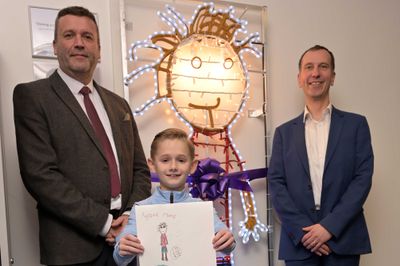
‘Shining a light on Colour Blindness’ competition winner unveils light sculpture at Aston University Winner 10-year-old Leo Evans helped unveil the feature of footballer Tyrone Mings The competition helped highlight the challenges of colour blindness - particularly in sport. A light sculpture named after the Aston Villa footballer Tyrone Mings has been unveiled at Aston University as part of a campaign to help raise awareness of colour blindness. In the UK there are approximately 3 million colour blind people (about 4.5% of the entire population), most of whom are male. Worldwide, there are estimated to be about 300 million people with colour blindness. The competition, ‘Shining a Light on Colour Blindness’, was launched by non-profit organisation Colour Blind Awareness and supported by various football club charities - including the Aston Villa Foundation. Young supporters were asked to take part by drawing a colourful picture of their favourite footballer. The winning entry was then made into a light feature. The winning artwork, which came from the Aston Villa Foundation, was transformed into a light feature and was selected to go on display inside the Aston University Vision Sciences building in the paediatrics bay, as part of the ongoing partnership between the Aston Villa Foundation and Aston University. Colour Blind Awareness is a non-profit organisation designed to highlight the relevance and impact of colour vision deficiency amongst those that live with it - including the challenges in sport. The organisation is part of an EU-funded project, Tackling Colour Blindness in Sport. Competition winner, 10-year-old Leo Evans from Erdington, helped unveil the light sculpture alongside Professor Anthony Hilton, pro-vice-chancellor & executive dean of the College of Health and Life Sciences. Professor Hilton said: “We are delighted for Leo, his winning drawing of Tyrone Mings looks fantastic as a light sculpture and we are proud to host it in our Vision Sciences building for our students, staff and visitors to enjoy, whilst raising awareness about colour blindness.” Commenting on his winning drawing, Leo said: “I am very proud that my picture won the competition and that Tyrone Mings liked it. I now better understand what being colour blind means and I hope my picture has helped someone else.” Cheryl Evans, Leo's Mum, said: “I couldn't be prouder of Leo and the fact that his drawing is of his favourite player Tyrone Mings makes it even more special. This competition has meant that as a family we have had many conversations about colour blindness and it has educated us all more on this topic. Well done Leo!” Kathryn Albany-Ward, CEO at Colour Blind Awareness CIC, said: “Aston Villa Foundation’s entry from Leo charmed the judges and who were delighted to award it first prize. We’re very grateful to Aston University for hosting the light feature and can’t wait to see it displayed. We hope its location in the Vision Sciences Department will help raise more awareness of a condition which affects 8% of boys and 0.5% of girls worldwide, impacting on their education and ability to perform to their best in sport if left unsupported.” Leo was met and congratulated by the head of the Aston Villa Foundation, Guy Rippon, and foundation manager, Ross Alexander. Ross said: “The Aston Villa Foundation would like to say a big congratulations to Leo for his amazing achievement! This is a really proud moment for Leo and we are thrilled that he was inspired by his favourite Aston Villa player. “It has also been a pleasure to have supported Colour Blind Awareness, who have done some great work in highlighting such an important and relevant topic during our coaching team’s workforce development. The support has culminated in a competition that was won by Leo, a participant in one of our Football in the Community holiday sessions. “The stunning light feature of Tyrone Mings will now be housed at Aston University for all to see and we are grateful for the University’s ongoing support with the Club.”

Award jointly given to President and CEO Dr. Janice Nevin and Chief Digital and Information Officer Randy Gaboriault ChristianaCare has earned the Transformational Leadership Award for excelling in its development and deployment of transformational information technology that improves the delivery of care and streamlines administrative services. Presented by the College of Healthcare Information Management Executives (CHIME) and the American Hospital Association, the award is jointly bestowed to Janice Nevin, M.D., MPH, ChristianaCare’s president and CEO, and Randy Gaboriault, MS, MBA, ChristianaCare’s chief digital and information officer and senior vice president. “Their trailblazing commitment to rapid transformation has set an example for the entire industry in how to pursue a leadership vision with determination, brilliant planning and courage to overcome all challenges,” said CHIME President and CEO Russell P. Branzell. Under the leadership of Nevin and Gaboriault, ChristianaCare has created and deployed new organizational, digital capabilities for both patient and caregiver. Using voice-enabled technology, ChristianaCare HomeHealth patients can interact with an internally developed Alexa capability to guide them through their personalized daily therapy regimens. Similarly, ChristianaCare recently launched the ability for in-house postpartum patients to use an Amazon Echo device to ask questions, request help or communicate with their care team. Taking voice and digital capabilities further, in February 2022, ChristianaCare deployed an innovative tool called Moxi, a collaborative robot – or “cobot” – that can assist in the hospital by making deliveries and performing other non-clinical tasks so that nurses and other clinical caregivers can spend more time focused on what they do best: caring for patients. “Randy is a phenomenal leader, with a relentless focus on creating a culture of innovation for impact, solving for the most complex problems and delivering significantly improved outcomes,” Nevin said. “His work has made ChristianaCare a model for how transformative technology can help to create health so that every person can flourish.” ChristianaCare continues to be recognized for leading innovation in the health care industry. The organization was recently recognized by CHIME’s Most Wired program with Performance Excellence Awards in its acute and ambulatory categories. That level is reserved only for organizations that are considered leaders in health care technology who “actively push the industry forward” and are “realizing meaningful outcomes, including improved quality of care, improved patient experience, reduced costs and broader patient access to healthcare services.” “Under Dr. Nevin’s extraordinary leadership, we have made an intentional commitment to placing technology at the center of all our initiatives to enable our caregivers to best serve our patients,” Gaboriault said. “That commitment, reinforced by our organization’s core behavior to continuously look for new ways to innovate, means that we are able to introduce and leverage robotic nursing assistants in a way that drives meaningful value for both patients and providers. And because our caregivers embrace change, we are confident that we will be using our cobots to assume more tasks in the future, and enable our nurses to devote even more of their precious time to direct patient care.”



ChristianaCare Names Its Breast Center: The Tatiana Copeland Breast Center
ChristianaCare has named its Breast Center The Tatiana Copeland Breast Center at the Helen F. Graham Cancer Center & Research Institute in recognition of Gerret and Tatiana Copeland’s generous financial support. The Copelands, local philanthropists and business entrepreneurs, provided a $1.2 million gift to the Graham Cancer Center in 2019 for breast cancer prevention and research for underrepresented women. Tatiana Copeland previously provided $800,000 to fund the purchase of two 3D mammography units. As a result of their philanthropic leadership, the Graham Cancer Center was one of the first facilities in the nation to offer 3D mammography. “ChristianaCare is deeply grateful to the Copelands for their generous support of the Helen F. Graham Cancer Center & Research Institute,” said Janice Nevin, M.D., MPH, ChristianaCare president and CEO. “They have made a tremendous difference in the lives of so many women in and around Delaware. We are deeply honored to name the Breast Center after Tatiana.” In a private event celebrating the naming, Dr. Nevin read a personal letter from President Joe Biden and First Lady Jill Biden that was sent to Tatiana about her support of the Breast Center. “Tatiana is a woman with extraordinary vision and a compassionate heart,” wrote President Biden. “As a breast cancer survivor, she has taken her pain and turned it into purpose, ensuring that all those who come in for testing at the Breast Center will receive extraordinary care. She has put lifesaving and life-altering care within the reach of those who need it most. And through it all, she has pushed for progress, fought for patients and kept hope alive.” “The Copelands share our commitment to providing our patients with the very best breast care, diagnosis and treatment,” said Nicholas J. Petrelli, M.D., Bank of America endowed medical director of the Helen F. Graham Cancer Center & Research Institute. “Their generous gifts have enabled women from Delaware and surrounding communities to receive expert, compassionate care right here at the Breast Center without ever having to leave the state. The Copelands have a way of discovering a need and then making the impossible possible.” “As longtime Graham Cancer Center supporters and as a breast cancer survivor myself who received wonderful treatment here, we are confident our investment in the Breast Center will continue to enable women to receive the same care that I did,” Tatiana Copeland said. “The atmosphere of the Breast Center is very comforting — like a nurturing hospital,” she said. “Everybody is very caring and attentive. Dr. Petrelli has created a team effort that is truly admirable. We hope our support inspires others to join us in the fight against cancer.” At The Tatiana Copeland Breast Center, patients are supported by an exceptional care team that includes radiologists, surgeons, radiation oncologists, genetic counselors and support staff. On-site capabilities include: 3D mammography. Digital mammography. Dedicated breast MRI. Breast ultrasound. Minimally invasive breast biopsies. Financial resources. Delaware’s first Center for Breast Reconstruction. According to the Delaware Division of Public Health, breast cancer is the most common cancer diagnosed among women in Delaware and the second leading cause of cancer death among women in the state after lung cancer. The Graham Cancer Center conducts community outreach to educate women about the importance of breast cancer detection and early prevention, including specially designed programs for underrepresented communities, including Black, Latinx and Asian women. “The Copelands’ ongoing generosity and support have helped us elevate the level of care at the Breast Center,” said Dia Williams, vice president of Philanthropy at ChristianaCare. “This gift will have an impact for generations to come.” To learn more about ChristianaCare’s philanthropy opportunities, visit https://christianacare.org/donors.


#Expert Perspective: The Journey of an Idea
Creativity is the lifeblood of innovation and cutting-edge business. During a Goizueta Effect Podcast, Jill Perry-Smith, senior associate dean of strategic initiatives and professor of Organization & Management, spoke about her decades of work at the intersection of creativity, innovation, and business. Creativity may come naturally for some, but everyone has the capacity to develop a creative skillset. When we think of creativity, we think of artistic expression. In the workplace, we think of breakthroughs in technology, but some of the most important creativity has to do with problem solving. In today’s flexible workspace, creativity is rewarded and encouraged. Each new idea takes a bumpy journey as it evolves, often cycling back and forth as novelty wears, obstacles arise, and risks become clear. Though circumstances may be different, each idea journey shares distinct phases. In the generation phase, innovators need inspiration. Sharing ideas with strangers rather than friends can be beneficial and can facilitate open-mindedness. During the elaboration phase, creators need support and encouragement to develop their ideas. Deeply analyzing the idea with one or two other people as opposed to sharing it with a larger collective is most valuable. While in the promotion phase, influence and reach are critical due to the risk associated with the idea and its lack of precedent. This is the time for resource gathering and professional networking. For the implementation phase, shared vision and trust are needed. At this point, a cohesive team with a shared north star can drive success. So how can a business facilitate workplace creativity? Perry-Smith recommends the following: Encourage creativity and innovation in your workplace. Make simple changes to the way your organization and teams operate, and always ask for more problem-solving alternatives. More alternatives lead to variety and creative solutions. Be collaboratively flexible and reduce conformity. Think of teams as a tool that is helpful when necessary. Always consider novel approaches. Don’t overlook the “creative nuggets” that arise from the idea journey. Listen to “The Journey of an Idea” podcast on Goizueta Effect. Looking to know more or connect with Jill Perry-Smith? Simply click on her icon now to arrange an interview and a time.



MEDIA RELEASE: Motorists are urged to slow down and stay alert for trick-or-treaters this Halloween
As Halloween approaches, motorists can expect even the quietest streets becoming busy with trick-or-treaters. To ensure everyone has a safe and fang-tastic night, CAA South Central Ontario (CAA SCO) is reminding motorists to be extra vigilant while driving in areas with higher volumes of pedestrians. “In the excitement of dressing up in costume and going trick-or-treating, children may not always be looking out for oncoming traffic,” says Michael Stewart, community relations consultant, Government and Community Relations, CAA SCO. “With this in mind, it’s important for motorists to slow down, obey all traffic signs and continually scan not only the road ahead, but also driveways, front yards and the spaces between parked cars.” With the majority of trick-or-treating happening after dark, visibility is key for both motorists and pedestrians. Motorists are advised to turn their headlights on 30 minutes before sunset and keep them on when it’s dark while pedestrians should opt for makeup instead of masks to not obstruct their vision. “Trick-or-treaters can also help make themselves more visible to motorists by choosing brightly coloured costumes instead of all-black ones as well as using reflective items and accessories while trick-or-treating,” adds Stewart. CAA is offering free reflector tags at CAA Stores in south-central Ontario that can be attached to backpacks and jackets. Find your nearest CAA Store here and stop by to get up to four free tags per family. CAA is also reminding all road users to take extra caution as daylight saving time ends at 2 a.m. on Sunday, November 6. The return to standard time means fewer daylight hours and reduced visibility for both motorists and pedestrians. What motorists can do to stay safe: Always look for pedestrians crossing the road. Be alert and attentive while driving and yield to pedestrians at crosswalks, school crossings and crossovers. Mind your blind spots. Be aware of blind spots when making turns at intersections. Stay focused and vigilant behind the wheel. Put the phone away, reduce your speed and obey speed limits in residential neighbourhoods. Be cautious and considerate. Be alert around stopped transit vehicles and be courteous to pedestrians with different mobility needs that may require more time to cross. Use your lights. Motorists should use their full lighting system when it gets dark and in low visibility situations. What pedestrians can do to stay safe: Remain on the sidewalk. Sidewalks give pedestrians a designated space to keep them safe. If no sidewalk is present, you should walk on the far-left side of the road. Always be aware of your surroundings. Avoid distractions and be alert while crossing the street. Follow the flow. Follow signals and only cross at designated locations or crosswalks. Stop, look, and listen. Ensure all traffic has come to a complete stop before crossing the road. Always remember to look both ways before crossing. Be visible. Make eye contact with motorists before crossing—never assume that drivers can see you or know your intentions. Pedestrians should also wear bright or reflective clothing or accessories at night to help with visibility.

