
Experts Matter. Find Yours.
Search experts on 50,000+ topics. Or browse by topic category.
- Recent Searches


Featured
Global experts with a broad range of areas of expertise.







Narda Quigley, PhD
- Title
- Mahoney Family Endowed Professorship in Business; Professor of Management | Villanova School of Business
- Role
- Villanova University
- Expertise


Connecting credible expert sources & academic research
ExpertFile is a trusted resource for journalists, industry, funding agencies and government policymakers looking for fresh perspectives and innovative academic research.


Spotlights
Read expert insights on a wide variety of topics and current events.
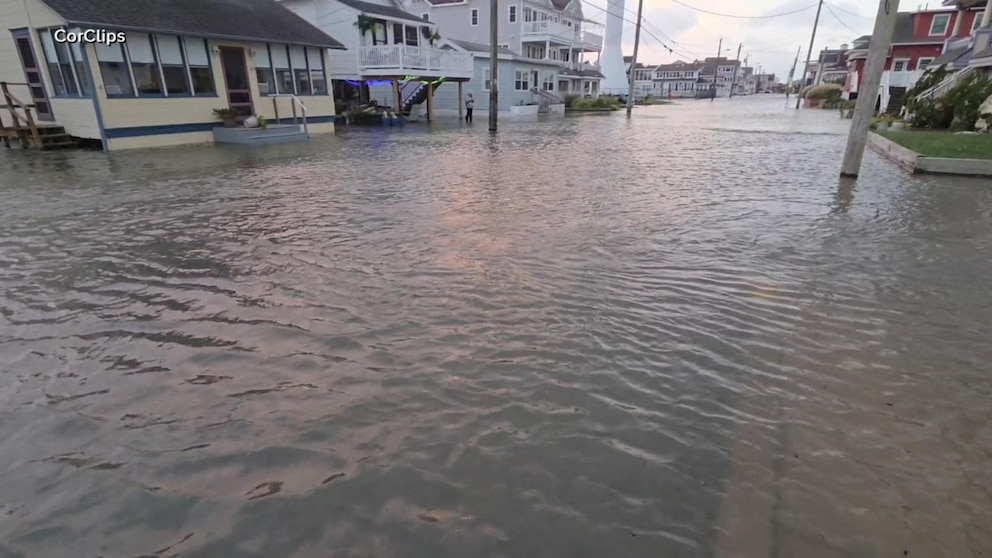
A Rare September Nor’easter Takes Aim at the East Coast
A rare September nor’easter is developing along the East Coast, bringing the potential for heavy rain, strong winds, dangerous surf, coastal flooding and beach erosion from the Mid-Atlantic into the Northeast. ABC News reports that the storm is expected to intensify off the coast this week, although its ultimate impacts will depend heavily on its track and how close it comes to shore. The storm arrives as El Niño continues to strengthen in the Pacific. NOAA's Climate Prediction Center says there is now a greater than 90% chance of a very strong El Niño this fall and winter, adding another important element to questions about what kind of weather the Northeast could experience in the months ahead. Jase Bernhardt, PhD, associate professor of geology, environment and sustainability and director of Hofstra University’s meteorology program, can discuss the developing nor’easter, the factors influencing its track and intensity, and how strong El Niño conditions could shape weather patterns across Long Island and the Northeast. View his profile Covering the storm? We can help. Bernhardt can provide perspective on: Why a September nor’easter is unusual and what is driving this week's storm The potential for strong winds, coastal flooding, heavy rain and beach erosion Why small changes in a nor’easter's track can dramatically change local impacts How a strong El Niño can influence fall and winter weather patterns Whether the region could see more coastal storms later this fall and winter How residents should interpret and respond to severe-weather warnings Bernhardt's research also explores how people respond to warnings about dangerous weather. He has developed virtual reality simulations designed to demonstrate the risks associated with events including hurricanes, flash floods and snow squalls and to study whether immersive experiences can improve public response to severe-weather warnings. To arrange an interview today, simply click on his profile below

Professor Julian Ku Discusses U.N.’s Role in Global A.I. Debate
Hofstra Law Professor Julian Ku was quoted in a recent New York Times article examining the United Nations’ efforts to influence global discussions about artificial intelligence as the United States and China continue to lead the technology’s development. Professor Ku explained that the United Nations has historically struggled to shape how global powers use technologies unavailable to most other nations, including nuclear weapons and advanced cybertools. He said the organization may have greater success helping countries share in the benefits of A.I. than influencing the actions of the United States and China directly. “The U.N. can’t really shape the actions of those who have the power directly,” Ku said, but it can represent countries without that power.


Got Expertise to Share?
ExpertFile works with leading organizations with trusted experts. We help make their expertise more discoverable, structured, and actionable for AI-driven discovery, strategic outreach, and real-world opportunities.

White House Pushes Back on Calls for Broader AI Safety Guardrails
As calls grow from technology leaders, researchers and lawmakers for stronger artificial intelligence safety rules, the White House is signaling a different priority: keeping the United States at the forefront of AI innovation. The administration has pushed back on proposals that could slow development or create sweeping federal approval requirements for new models, arguing that excessive regulation could weaken America’s competitive position—especially against China. That does not mean the administration is ignoring AI-related risks. Its approach emphasizes national security, cybersecurity and enforcement against criminal misuse of AI. Recent White House action has encouraged voluntary collaboration between government and AI developers to assess the cyber capabilities of advanced models, protect critical infrastructure and strengthen defenses against malicious actors. But the framework specifically avoids mandatory licensing or government preclearance before companies develop or release new AI systems. The debate raises important questions for business leaders, policymakers and the public: How can innovation move quickly without sacrificing security, privacy and public trust? And where should responsibility rest—within individual companies, through voluntary government-industry partnerships or through enforceable federal safeguards?


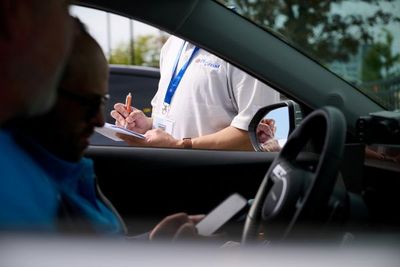
MEDIA RELEASE: 2026 CAA EV Circuit: EVs go the distance, but charging, efficiency and costs vary
The question for Canadians considering an EV may no longer be how far it can go, but how efficiently it uses energy, how quickly it charges and how much it costs to recharge. Results from the 2026 CAA EV Circuit found significant differences across vehicles in all three areas. “Range anxiety has long dominated the conversation about electric vehicles, but these results suggest the discussion can shift to more personalized considerations for drivers,” says Kaitlynn Furse, director, corporate communications, CAA Manitoba. “For many of today’s EVs, the question is becoming less about whether you can complete a trip and more about how efficiently you can make it, where you will charge, how long charging will take, and what it will cost.” All 22 electric vehicles participating in the CAA EV Circuit completed the same 230-kilometre route without needing to charge, including the vehicle with the shortest advertised range. A 15-minute charging test was completed at the end to capture further data. The route started in Blue Mountain, ON and ended in Vaughan, ON. On average, the vehicles used only 40 per cent of their battery charge over the route. EVs demonstrate a significant energy-efficiency advantage over traditional gasoline-powered vehicles The electric vehicles in the Circuit used the energy equivalent of approximately two litres of gasoline per 100 kilometres. By comparison, the average Canadian passenger vehicle consumes roughly eight to 10 litres of gasoline per 100 kilometres. Energy consumption among the participating EVs ranged from 11.43 kilowatt-hours per 100 kilometres to 28.91 kilowatt-hours per 100 kilometres, illustrating the variation among vehicle sizes, weights and designs. A more efficient EV generally requires less electricity to travel the same distance, which can contribute to lower charging costs and less time spent charging. A notable finding was that the vehicles in the September 2026 CAA EV Circuit consumed approximately 40 per cent less energy, on average, than the vehicles evaluated during the February 2025 CAA EV Winter Test. While the tests were conducted under different conditions and with different vehicles, the difference highlights the significant impact that temperature can have on EV efficiency. A short charging stop can meaningfully extend a trip When it comes to charging experience, during the standardized 15-minute charging session, participating vehicles added an average of 110 kilometres of displayed range. Almost two-thirds of the vehicles added at least 100 kilometres, demonstrating that a brief charging stop can provide a meaningful boost during a longer journey. Results differed significantly among vehicles. The displayed driving range added during the 15-minute session varied from 58 kilometres to 178 kilometres. Charging performance can be affected by the vehicle, charger, battery temperature, battery state of charge and conditions at the time of charging. These results also highlight the effect of Canadian climate variations. Vehicles tested in the September 2026 CAA EV Circuit added approximately 15 per cent more displayed range during the charging session than the group evaluated during CAA’s 2025 EV Winter Test. “For Canadians planning longer drives, knowing a vehicle’s total range is only part of the equation,” continues Furse. “Drivers should also understand how their vehicle charges and recognize that the number of kilometres added during a stop can change depending on the vehicle and the charging conditions.” Public fast-charging costs are not the same for every EV The Circuit found that the average cost of a 15-minute charging session at the public fast chargers used in the test was $13.45, but individual vehicle results ranged from $7.28 to $24.39. All vehicles were charged at Tesla charging stations to ensure a consistent charging experience, so it is important to note that Teslas receive preferred pricing at Tesla charging stations. The test was designed to reflect a higher-cost road-trip charging scenario, using premium public fast chargers operating at full capacity. It does not represent the typical cost of powering an EV. CAA’s National EV Driver Survey found that public fast charging accounts for only eight to 18 per cent of charging, meaning most EV drivers generally charge under lower-cost circumstances like at home or work. “Just as Canadians compare fuel economy when buying a gasoline-powered vehicle, they should compare energy efficiency and charging performance when considering an EV,” says Furse. “Where and how often someone expects to charge can make a substantial difference to their experience and road-trip costs.” Complete vehicle findings and additional information about the 2026 CAA EV Circuit are available at 2026 CAA EV Circuit: Complete Vehicle Findings -30- About the CAA EV Circuit The CAA EV Circuit was conducted on September 16, 2026, with 22 electric vehicles travelling the same 230-kilometre route from Blue Mountain to Vaughan, Ontario, across city streets, rural roads and highways. Using a neutral data-driven methodology, all vehicles followed the same route, operated under consistent settings and participated in a standardized charging session. Performance data was collected throughout the drive and validated by CAA’s business intelligence and automotive experts. Data Snapshot Most kilometres gained in a 15-minute charging session Lucid Gravity, 178 km Hyundai IONIQ 5, 136 km Mercedes-Benz CLA with EQ Technology, 135 km Cadillac LYRIQ, 131 km Nissan LEAF, 126 km Least kilometres gained in a 15-minute charging session Lucid Air, 58 km Chevrolet Equinox EV, 71 km Chevrolet Silverado EV, 80 km GMC HUMMER EV SUV, 90 km Tesla Model Y, 97 km Lowest cost per 100 kms of charge added Tesla Model 3, $7.28 Tesla Model Y, $8.23 Nissan LEAF, $10.13 Kia EV4, $10.25 Hyundai IONIQ 5, $10.68 Highest cost per 100 kms of charge added GMC HUMMER EV SUV, $24.39 Chevrolet Silverado EV, $19.05 Rivian R1T, $17.85 Tesla Cybertruck, $15.61 Volkswagen ID. Buzz, $15.48 Lowest energy consumption (kWh/100 km) Toyota bZ 11.43 kWh Tesla Model Y 11.81 kWh Tesla Model 3 11.85 kWh Kia EV4 11.89 kWh Nissan LEAF 12.48 kWh Highest energy consumption (kWh/100 km) Lucid Gravity 28.91 kWh GMC HUMMER EV SUV 23.55 kWh Tesla Cybertruck 23.41 kWh Rivian R1T 19.96 kWh Cadillac LYRIQ 19.1 kWh


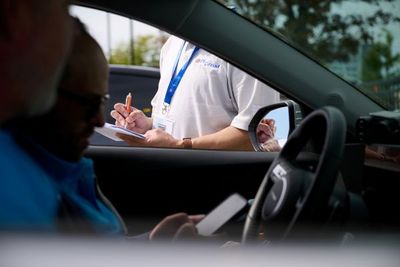
MEDIA RELEASE: 2026 CAA EV Circuit: EVs go the distance, but charging, efficiency and costs vary
The question for Canadians considering an EV may no longer be how far it can go, but how efficiently it uses energy, how quickly it charges and how much it costs to recharge. Results from the 2026 CAA EV Circuit found significant differences across vehicles in all three areas. “Range anxiety has long dominated the conversation about electric vehicles, but these results suggest the discussion can shift to more personalized considerations for drivers,” says Kaitlynn Furse, director, corporate communications, CAA South Central Ontario. “For many of today’s EVs, the question is becoming less about whether you can complete a trip and more about how efficiently you can make it, where you will charge, how long charging will take, and what it will cost.” All 22 electric vehicles participating in the CAA EV Circuit completed the same 230-kilometre route without needing to charge, including the vehicle with the shortest advertised range. A 15-minute charging test was completed at the end to capture further data. The route started in Blue Mountain, ON and ended in Vaughan, ON. On average, the vehicles used only 40 per cent of their battery charge over the route. EVs demonstrate a significant energy-efficiency advantage over traditional gasoline-powered vehicles The electric vehicles in the Circuit used the energy equivalent of approximately two litres of gasoline per 100 kilometres. By comparison, the average Canadian passenger vehicle consumes roughly eight to 10 litres of gasoline per 100 kilometres. Energy consumption among the participating EVs ranged from 11.43 kilowatt-hours per 100 kilometres to 28.91 kilowatt-hours per 100 kilometres, illustrating the variation among vehicle sizes, weights and designs. A more efficient EV generally requires less electricity to travel the same distance, which can contribute to lower charging costs and less time spent charging. A notable finding was that the vehicles in the September 2026 CAA EV Circuit consumed approximately 40 per cent less energy, on average, than the vehicles evaluated during the February 2025 CAA EV Winter Test. While the tests were conducted under different conditions and with different vehicles, the difference highlights the significant impact that temperature can have on EV efficiency. A short charging stop can meaningfully extend a trip When it comes to charging experience, during the standardized 15-minute charging session, participating vehicles added an average of 110 kilometres of displayed range. Almost two-thirds of the vehicles added at least 100 kilometres, demonstrating that a brief charging stop can provide a meaningful boost during a longer journey. Results differed significantly among vehicles. The displayed driving range added during the 15-minute session varied from 58 kilometres to 178 kilometres. Charging performance can be affected by the vehicle, charger, battery temperature, battery state of charge and conditions at the time of charging. These results also highlight the effect of Canadian climate variations. Vehicles tested in the September 2026 CAA EV Circuit added approximately 15 per cent more displayed range during the charging session than the group evaluated during CAA’s 2025 EV Winter Test. “For Canadians planning longer drives, knowing a vehicle’s total range is only part of the equation,” continues Furse. “Drivers should also understand how their vehicle charges and recognize that the number of kilometres added during a stop can change depending on the vehicle and the charging conditions.” Public fast-charging costs are not the same for every EV The Circuit found that the average cost of a 15-minute charging session at the public fast chargers used in the test was $13.45, but individual vehicle results ranged from $7.28 to $24.39. All vehicles were charged at Tesla charging stations to ensure a consistent charging experience, so it is important to note that Teslas receive preferred pricing at Tesla charging stations. The test was designed to reflect a higher-cost road-trip charging scenario, using premium public fast chargers operating at full capacity. It does not represent the typical cost of powering an EV. CAA’s National EV Driver Survey found that public fast charging accounts for only eight to 18 per cent of charging, meaning most EV drivers generally charge under lower-cost circumstances like at home or work. “Just as Canadians compare fuel economy when buying a gasoline-powered vehicle, they should compare energy efficiency and charging performance when considering an EV,” says Furse. “Where and how often someone expects to charge can make a substantial difference to their experience and road-trip costs.” Complete vehicle findings and additional information about the 2026 CAA EV Circuit are available at 2026 CAA EV Circuit: Complete Vehicle Findings -30- About the CAA EV Circuit The CAA EV Circuit was conducted on September 16, 2026, with 22 electric vehicles travelling the same 230-kilometre route from Blue Mountain to Vaughan, Ontario, across city streets, rural roads and highways. Using a neutral data-driven methodology, all vehicles followed the same route, operated under consistent settings and participated in a standardized charging session. Performance data was collected throughout the drive and validated by CAA’s business intelligence and automotive experts. Data Snapshot Most kilometres gained in a 15-minute charging session Lucid Gravity, 178 km Hyundai IONIQ 5, 136 km Mercedes-Benz CLA with EQ Technology, 135 km Cadillac LYRIQ, 131 km Nissan LEAF, 126 km Least kilometres gained in a 15-minute charging session Lucid Air, 58 km Chevrolet Equinox EV, 71 km Chevrolet Silverado EV, 80 km GMC HUMMER EV SUV, 90 km Tesla Model Y, 97 km Lowest cost per 100 kms of charge added Tesla Model 3, $7.28 Tesla Model Y, $8.23 Nissan LEAF, $10.13 Kia EV4, $10.25 Hyundai IONIQ 5, $10.68 Highest cost per 100 kms of charge added GMC HUMMER EV SUV, $24.39 Chevrolet Silverado EV, $19.05 Rivian R1T, $17.85 Tesla Cybertruck, $15.61 Volkswagen ID. Buzz, $15.48 Lowest energy consumption (kWh/100 km) Toyota bZ 11.43 kWh Tesla Model Y 11.81 kWh Tesla Model 3 11.85 kWh Kia EV4 11.89 kWh Nissan LEAF 12.48 kWh Highest energy consumption (kWh/100 km) Lucid Gravity 28.91 kWh GMC HUMMER EV SUV 23.55 kWh Tesla Cybertruck 23.41 kWh Rivian R1T 19.96 kWh Cadillac LYRIQ 19.1 kWh

From Automation to Autonomy: AI’s Next Role in the Supply Chain.
Artificial intelligence is creating new possibilities across global supply chains, but the bigger story may be how far companies are prepared to rethink the way their supply chains actually operate. A recent Financial Times article, “How AI is reshaping supply chains” looks at how AI is changing supply chain planning, logistics and decision making as organizations search for better ways to manage growing complexity and disruption. Among the experts featured is Dr. Maria Jesús Sáenz of the MIT Center for Transportation & Logistics (MIT CTL). At MIT CTL, Dr. Sáenz leads work focused on digital supply chain transformation and serves as Executive Director of the MIT Supply Chain Management master's program. Her research examines how AI and digital technologies are changing collaboration, decision making and performance across supply chains. MIT CTL has long been at the forefront of supply chain research and education, working at the intersection of industry, technology and some of the most pressing challenges facing global supply networks. Today, that increasingly includes understanding where AI can have a meaningful impact and what organizations need to do to put it to work effectively. MIT CTL describes Dr. Sáenz’s insights as part of its ongoing leadership in research spanning AI, digital transformation and supply chain innovation. For Dr. Sáenz, the potential of AI goes well beyond making existing processes faster. It points toward supply chains that can become increasingly autonomous, learn from changing conditions and adapt the way they operate. "It is more automated, more autonomous, more self-learning, self-correcting, more resilient." But technology alone will not create that transformation. Dr. Sáenz emphasizes the importance of redesigning processes, investing in digital capabilities and establishing a clear strategic vision before organizations deploy new technologies. That raises some important questions for supply chain leaders: How autonomous should supply chains become? Where should people remain firmly involved in decision making? Are organizations redesigning their operations around the capabilities of AI, or simply adding new technology to existing processes? These questions are becoming more important as companies explore the next generation of intelligent supply chains. Dr. Sáenz’s research at MIT CTL provides a valuable perspective on what separates incremental automation from deeper supply chain transformation. Her broader research includes intelligent and autonomous supply chains, AI in supply chains and the ways humans and AI can work together more effectively. Story Ideas Are autonomous supply chains actually within reach?: What AI can manage today and where human judgment remains essential. What comes after automation?: How self-learning and increasingly autonomous systems could change supply chain planning and execution. AI without the groundwork: Why companies may struggle to realize the benefits of AI without the right data, processes, digital capabilities and strategy. Human and AI decision making: How organizations can determine which supply chain decisions should be automated, supported by AI or left to people. Can AI make supply chains more resilient?: How intelligent systems could help organizations identify changing conditions and respond more quickly to disruption. Beyond the AI pilot: What separates organizations experimenting with AI from those using it to fundamentally rethink supply chain operations. Read the Financial Times article: How AI is reshaping supply chains Connect with Dr. Maria Jesús Sáenz to learn more about her research at the MIT Center for Transportation & Logistics on AI, digital transformation, human and AI collaboration, and intelligent supply chains.



Where Will AI Change Work First?
Artificial intelligence is changing the workplace, but predicting which jobs will disappear may be the wrong place to start. A recent Boston Globe article looks at new research from Pierre Bouquet, a PhD candidate and research assistant at the MIT Center for Transportation & Logistics (MIT CTL), and Luca Mouchel, a visiting student at MIT CTL completing his master’s thesis in affiliation with MIT. Their AI Labor Exposure Map examines the specific tasks that make up different occupations and measures which of those tasks can already be performed or accelerated by AI. The distinction matters. AI exposure does not mean that a job is about to disappear. It can mean that certain parts of a job are becoming easier to automate while other responsibilities, particularly those involving judgment, oversight and human interaction, remain firmly in human hands. (news.mit.edu) “It’s not a forecast. It’s a measurement.” Pierre Bouquet, MIT Center for Transportation & Logistics, speaking to The Boston Globe (ctl.mit.edu) That idea is central to the broader work Bouquet and Mouchel are doing at MIT CTL. Bouquet’s doctoral research focuses on the future of work and measuring AI’s impact on labor markets, organizations and society. Mouchel’s work focuses on quantifying workforce exposure to AI. Together, their research contributes to MIT CTL’s broader effort to understand how technology changes work at the level of individual tasks. (ctl.mit.edu) Their work is part of the Work Analytics Lab at MIT CTL, which studies AI exposure, job design, productivity and workforce planning. The goal is to give employers and policymakers better information about where AI may automate work, where it may augment people and how jobs themselves could evolve. That approach produces a more nuanced picture of the future of work. Exposure varies considerably across occupations and regions. Knowledge-intensive jobs can contain highly exposed tasks, while many service and physical roles remain less affected by current AI capabilities. Even within an exposed occupation, the parts of the job requiring human judgment, management and interpersonal skills may remain essential. For employers, the question may therefore be less about which jobs AI will replace and more about which parts of work should change. That creates an opportunity to think differently about workforce planning, job redesign, training and how organizations divide responsibilities between people and technology. Story Ideas AI exposure is not job loss: Why measuring tasks gives a clearer picture of workforce risk. Which jobs will AI change first? The occupations and regions showing the greatest exposure. What should stay human? Identifying the tasks where judgment and human interaction still matter most. The entry-level AI question: How automation could reshape the early stages of professional careers. Redesigning work around AI: How companies can use task-level data to rethink jobs, training and productivity. Read the Boston Globe article: AI’s impact on jobs? It’s all over the map. Visit MIT CTL to learn more about their work at the MIT Center for Transportation & Logistics are conducting on on AI, labor markets, workforce planning and the changing nature of work.

States Are Helping Thousands of Families Balance Work, Care, and the Costs of Raising Young Children
Raising an infant or toddler requires time, care, and financial resources, often while families are stretching their budgets to cover groceries, housing, child care, and other everyday needs. State policies help determine whether families have them. During the past year, states expanded paid leave, tax credits, wages, perinatal health services, and child care assistance. These changes can help thousands of families during the earliest years of a child’s life. The 2026 Prenatal-to-3 State Policy Roadmap, released by the Prenatal-to-3 Policy Impact Center at Vanderbilt University, tracks those changes and explains what they mean for families. Delaware, Maine, and Minnesota began providing statewide paid family and medical leave programs, making paid leave a leading area of state momentum in 2026. Approximately 84,300 babies are born each year across those three states. The programs are funded through payroll contributions, with each state setting its own rules for whether and how employers and workers divide the cost. For parents who previously had no paid leave, the new programs can mean recovering from childbirth and spending up to 12 weeks with their baby without sacrificing all their income. Pennsylvania newly implemented the Working Pennsylvanians Tax Credit, a refundable state earned income tax credit equal to 10 percent of the federal credit. For an eligible Pennsylvania family with two children, the new credit can provide up to $731 annually, helping to cover everyday expenses, including groceries, diapers, and child care. This progress comes during a period of significant federal change. New requirements affecting Medicaid and the Supplemental Nutrition Assistance Program, along with other federal actions affecting early care and education programs, may make health coverage, food assistance, and child care harder for some families to access. Against this backdrop, state policy decisions take on greater importance because they can expand resources and services even as families encounter new barriers. “Families do not experience paid leave, minimum wage, health care, and child care in isolation. Together, these policies create a system of care that can help families meet their children’s needs during the most important years of development. This year’s Roadmap shows states continuing to strengthen that system, even in a complex policy environment.” -Dr. Cynthia Osborne, Executive Director and Professor of Early Childhood Education and Policy at Vanderbilt University State action extended beyond those four milestones. Minimum wages increased in 23 states, increasing pay for workers earning the state minimum. Four states began covering community-based doula services through Medicaid, giving more families the option of care before, during, and after birth. Other states invested in group prenatal care, newborn screening, and connections to health and community services. States also confronted one of the greatest pressures facing families with young children: finding and affording child care. Changes to child care subsidy programs allowed more families to qualify, lowered what some parents pay, and directed additional funding to providers working to keep care available. Together, these changes show states responding to the pressures families face all at once. A stronger system of care can give parents more time with a new baby, help families cover everyday costs, improve access to care before and after birth, and make child care easier to find and afford. About the 2026 Prenatal-to-3 State Policy Roadmap The Prenatal-to-3 State Policy Roadmap guides state leaders on the most effective investments to ensure all children thrive from the start. Grounded in rigorous evidence, the Roadmap identifies state policies and strategies that support infants, toddlers, and their families and reduce disparities in access and outcomes. Explore the 2026 Roadmap at pn3policy.org/roadmap. About the Prenatal-to-3 Policy Impact Center The Prenatal-to-3 Policy Impact Center is a nonpartisan research center at Vanderbilt University’s Peabody College of Education and Human Development that provides state leaders with clear, evidence-based policy solutions to improve the lives of young children and their families. For more information, visit pn3policy.org.



From the Pump to the Bond Market: Why Rising Oil Prices Matter for Borrowing Costs
From the Pump to the Bond Market: Why Rising Oil Prices Matter for Borrowing Costs Rising oil prices are often felt first at the gas pump, but their effects can quickly extend to the broader economy. As higher costs for gasoline, diesel and jet fuel work their way through transportation, manufacturing and food production, investors are increasingly concerned that inflation could remain elevated longer than expected. That concern is helping push Treasury yields higher. When investors expect inflation to erode the future value of fixed-income returns, they typically demand higher yields on government bonds. The result can be a ripple effect across the economy: mortgage rates, auto loans, credit-card rates and business borrowing costs may all remain high or move higher. This is an important second stage of the oil-price story. The first concern is the direct impact on consumers and businesses as energy costs rise. The next concern is whether those higher costs become embedded in the economy, causing inflation expectations to increase and making it more difficult for the Federal Reserve to ease interest rates. For policymakers, the dilemma is clear. Raising or maintaining higher interest rates can help slow inflation, but it also makes borrowing more expensive for families, businesses and the federal government. If high energy prices persist, the Federal Reserve may face added pressure to prioritize inflation control even as consumers and employers feel the effects of tighter financial conditions. The issue is also global. Oil markets respond quickly to geopolitical instability and supply disruptions, while Treasury yields influence borrowing and investment decisions far beyond the United States. Together, high energy prices and rising yields can become a powerful test of economic resilience—affecting household budgets today and financial decisions for months to come.

