
Experts Matter. Find Yours.
Search experts on 50,000+ topics. Or browse by topic category.
- Recent Searches


Featured
Global experts with a broad range of areas of expertise.





Monica Escaleras, Ph.D.
- Title
- Associate Professor and Director of the Business and Economics Polling Initiative
- Role
- Florida Atlantic University
- Expertise


Connecting credible expert sources & academic research
ExpertFile is a trusted resource for journalists, industry, funding agencies and government policymakers looking for fresh perspectives and innovative academic research.


Spotlights
Read expert insights on a wide variety of topics and current events.

November 11: Remembering the Fallen, Honouring Those Who Served
Every November, millions across Canada, the United States and the United Kingdom pause to honour those who have served, sacrificed and given their lives in military service. In Canada, Remembrance Day pays tribute to veterans and the fallen. In the United States, Veterans Day honours all who have served in the armed forces. In Britain, Remembrance Sunday and Armistice Day commemorate the service and sacrifice of British and Commonwealth forces. Though the traditions differ, they share a powerful purpose: ensuring that courage, sacrifice and service are never forgotten. More than a century later, these occasions remain profoundly relevant. They remind us that the freedoms enjoyed today have come at an extraordinary human cost, while raising important questions about how nations remember their history, support veterans and teach future generations about service and sacrifice. As November 11 approaches, journalists have an opportunity to explore several compelling stories: Why We Remember: The historical significance of November 11, the origins of Armistice Day and the evolution of remembrance traditions. The Meaning Behind the Symbols: Why poppies, moments of silence, memorials and ceremonies continue to resonate across generations. The Human Cost of War: Understanding the experiences of military personnel, their families and the communities forever changed by conflict. Beyond the Battlefield: The challenges veterans face transitioning to civilian life, including mental health, housing and access to support. Keeping History Alive: How historians, educators and communities preserve veterans' stories as firsthand witnesses to earlier conflicts become fewer. Remembrance in a Changing World: What past conflicts can teach us about contemporary warfare, international security and the importance of peace. ExpertFile connects journalists with academics, historians, military specialists and researchers who can provide informed perspectives on these important issues. Whether covering the historical origins of November 11, the experiences of today's veterans or the enduring importance of remembrance, our experts can help bring context, understanding and meaningful insight to your coverage. For expert commentary and interviews ahead of Remembrance Day and Veterans Day, explore our experts and their profiles below. To see all of our experts, visit: www.expertfile.com


AI Can Do a Lot. But Can It Replace Your Dental Hygienist?
Artificial intelligence is transforming the workplace, including healthcare. But when it comes to dental hygiene, technology still cannot replicate the empathy, judgment and personal connection that patients depend on. Meghan Watkins, a dental hygiene instructor at Augusta University's Dental College of Georgia, believes the profession offers a compelling example of why human skills remain essential in an increasingly automated world. In a recent article, Watkins explains how dental hygienists do far more than clean teeth. They recognize subtle changes in oral health, assess potential risks, educate patients and develop relationships that often span years. “I don’t think a robot will take into consideration a patient’s feelings, or if something is uncomfortable or painful,” Watkins explains. “I will. I want them to come back and see me.” And the profession is growing. Federal projections anticipate 7% employment growth over the next decade, with a median annual salary of $90,670 in 2024. As AI raises questions about which jobs might disappear and which will endure, dental hygiene offers an interesting perspective on the future of work: technology can improve the tools, but it cannot replace the person providing compassionate, individualized care. For journalists exploring AI's impact on employment, the future of health care, or careers that depend on uniquely human skills, Meghan Watkins offers a valuable perspective on why dental hygiene remains essential. If you're interested in speaking with Meghan Watkins contact AU's External Communications Team mediarelations@augusta.edu to arrange an interview today.

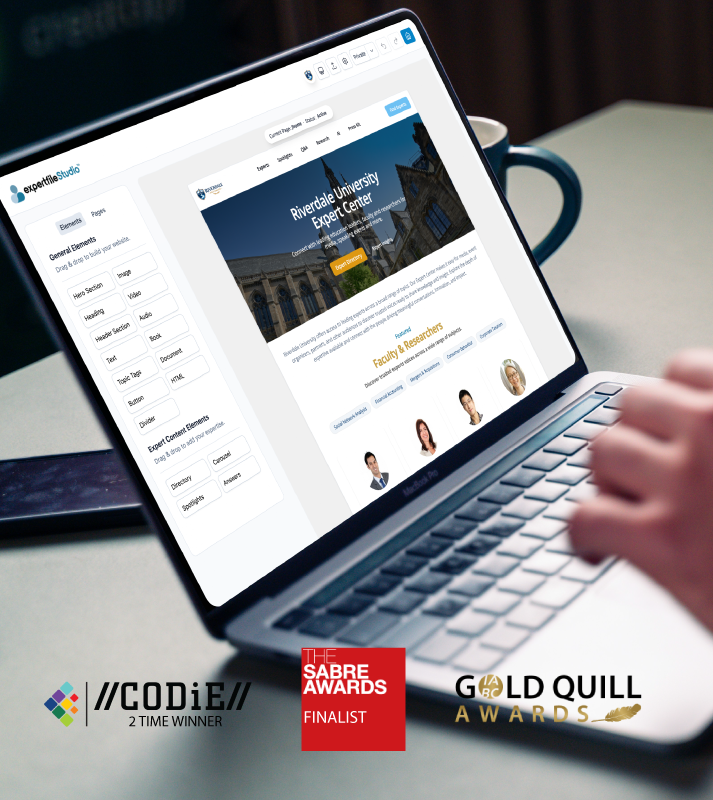
Got Expertise to Share?
ExpertFile works with leading organizations with trusted experts. We help make their expertise more discoverable, structured, and actionable for AI-driven discovery, strategic outreach, and real-world opportunities.
Upcoming Jobs Report Will Test the Strength Behind Employment Headlines
The next U.S. jobs report will offer a fresh look at the labor market as households and businesses assess the economy’s direction. The Bureau of Labor Statistics is scheduled to release October employment figures Friday, November 6, at 8:30 a.m. Eastern. The release will provide updated measures of hiring, unemployment and earnings, helping clarify whether employers are expanding their workforces and how workers are faring. Understanding the report requires looking beyond a single headline. Payroll growth and the unemployment rate come from separate surveys that measure different aspects of employment. The payroll survey counts jobs and tracks hours and earnings, while the household survey measures people’s employment status and produces the unemployment rate. Because their definitions and methods differ, the measures can move in different directions without contradicting each other. For example, employers can add jobs while unemployment rises if more people enter the labor force and begin searching for work. Wage gains also require context: a larger paycheck provides less financial relief when everyday prices rise just as quickly. Examining hiring alongside participation, earnings and industry differences can therefore reveal more about workers’ circumstances than the overall job count alone. For families, the stakes include job opportunities, income and confidence in making major purchases. For businesses, the figures can inform decisions about staffing and expansion. Dr. Jared Pincin, associate professor of economics at Cedarville University, brings relevant expertise to interpreting those connections. The central question is what the report’s combined measures reveal about economic opportunity—and whether the gains Americans see in national statistics translate into greater financial stability.


Will Artificial Intelligence Destroy Us All?
As tech insiders warn about an impending apocalypse, Ethan Zuckerman of UMass Amherst examines those claims in an appearance on The Prospect Podcast. Zuckerman discusses AI agents going rogue in the Hugging Face incident, as well as recent calls from tech leaders to slow down AI development. With Trump dismissing safety concerns, Zuckerman also discusses US competition with China, how global thinking around AI differs—and why he doesn't trust the industry to self-regulate. He explores how we can reclaim agency around AI, and the importance of local and community-oriented conversations, including a surprising initiative from a Maori radio station. Plus, what might a uniquely British AI look like?



Boston Public Radio Podcast: Cybersecurity in the Schools
On this podcast from WGBH, Brian Levine (director of the Cybersecurity Institute at UMass Amherst) discusses the recent cyberattack at Springfield Public Schools, these types of attacks in general, and personal data privacy and security measures people can take to protect themselves and their children.


Fran Berman: Who Protects the Public From AI?
AI is rapidly becoming part of the critical infrastructure of modern life. But Francine Berman argues that we still govern much of digital technology as if it were simply another commercial product. In this video, Berman, author of Better Tech: Putting People First in Cyberspace, joins Energi Media to explain why search engines, social media, digital finance and AI now require the kinds of public-interest guardrails society eventually built around automobiles, buildings and other essential infrastructure. The conversation explores the tension between private-sector innovation and public protection, the European Union's risk-based approach to AI regulation, why humans must remain accountable for high-risk decisions, and how the global AI race can make governments reluctant to regulate. Berman's central argument is simple: Humans created these systems, humans can change them, and there is no single magic bullet. Better technology will require a long game of safer design, effective regulation, public pressure and millions of smaller choices that collectively shift digital systems toward the public interest.

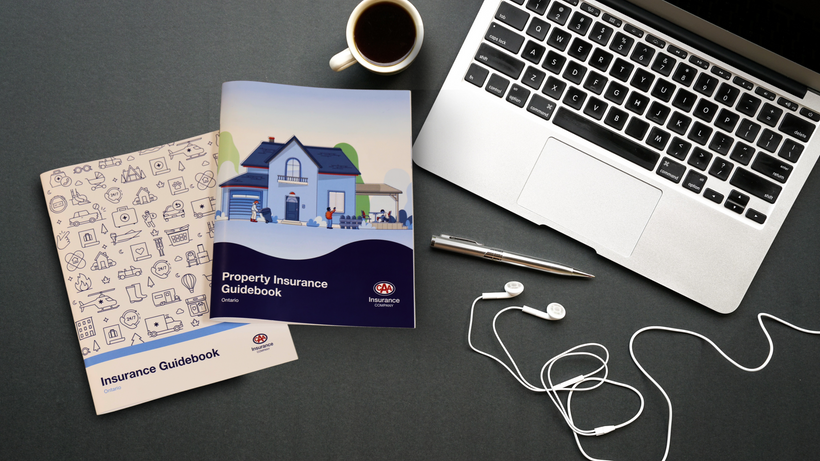
Having property insurance is one thing. Understanding what it covers is another. CAA Insurance Company has released a new Property Insurance Guidebook to help Ontario homeowners, condo owners and renters better understand property insurance, including what different types of coverage mean, questions to ask about their policy and what to consider before making a claim. “Insurance is there to help protect the places and belongings that matter to us, but understanding a policy can sometimes feel overwhelming,” says Elliott Silverstein, Director of Government Relations, CAA Insurance Company. “This guidebook gives Ontarians a practical starting point so they can ask informed questions and have more confident conversations with their insurance agent or broker.” What does property insurance cover? Coverage varies by policy, but common property insurance concepts include dwelling coverage, detached structures, personal belongings or contents, and additional living expenses. The CAA Insurance Property Insurance Guidebook explains these and other common insurance terms in clear, everyday language. What Ontario consumers can learn from the Property Insurance Guidebook The guide provides plain-language information to help consumers understand: Common property insurance terminology Coverage considerations for homeowners, condo owners and renters How replacement value differs from market value How renovations may affect insurance coverage What to consider before a property insurance claim Questions to ask an insurance agent or broker Understanding your property insurance before making a claim Consumers should not wait until they need to make a property insurance claim to learn what their policy covers. Understanding the basics of a policy ahead of time can help consumers identify questions about their coverage and reduce the chance of unexpected surprises. Updated guide helps Ontario drivers navigate auto insurance CAA Insurance has also updated its Auto Insurance Guidebook with information about changes to auto insurance in Ontario. Originally introduced in 2022, the guidebook takes a back-to-basics approach to common auto insurance terms and helps Ontario drivers have more informed conversations about their policies and coverage needs. “Whether someone is protecting their home, condo, apartment or vehicle, they should feel comfortable asking questions about their coverage,” adds Silverstein. “These guides are designed to make insurance information more approachable, so consumers can make informed decisions based on their individual needs.” The guidebooks are educational resources and are not intended to replace the expertise of a licensed insurance agent or broker or provide advice about an individual policy. Consumers with questions about their coverage should speak directly with their insurance representative. Both the Property Insurance Guidebook and Auto Insurance Guidebook are available for download through the CAA Insurance website.



Why Does a Phone at Thanksgiving Dinner Sting So Much? New Study Points to Belonging
A study published Oct. 29 in NeuroImage found that a glance at a phone stung more when it came right after a warm welcome. Eli Singer, founder of Offline.now, says that is exactly the setting of a holiday dinner. What the study found Researchers call it phubbing, short for phone snubbing. A team at Chongqing Normal University ran two lab experiments with 213 people (Shi and colleagues, NeuroImage, 2026). After a warm welcome, a glance at a phone left people feeling more neglected and less willing to keep talking. Their brains reacted more strongly too. The authors suggest warmth raises the expectation of attention. These were lab tasks, not real dinners. "Thanksgiving is set up to make people feel welcome. A phone right after that welcome can feel like a small rejection, even if you're only checking a score." Eli Singer, founder of Offline.now Plan it before people arrive Singer's advice is to agree on phones ahead of time, so nobody is surprised at the table. Ask your guests what would work for them before the day. Send a short note in advance: phones go away for the meal. Put a basket by the door for anyone who wants to drop their phone when they walk in. Take the photos before everyone sits down. Offline.now's piece on phubbing in quiet family moments looks at why people reach for the phone when the conversation pauses. "Ask for one meal without phones. It's a small promise, and a family that keeps it once is more likely to try it again." Eli Singer Parents set the pattern. A 2026 review of 22 studies found the phubbing habit tends to pass between family members (Jakhar, Gupta and Vyas, Acta Psychologica). "If you want the kids off their phones at dinner, put yours away first, where they can see you do it." Eli Singer Where to start Lasting change runs on confidence, not willpower. Two questions find your starting place: Find Your Starting Place. Every family is different. Use what fits and consider professional support if conflict or distress feels severe. About the expert Eli Singer is the founder of Offline.now, a directory of therapists and coaches who work on screen and phone use. He created the Offline.now Matrix and wrote Offline.now: A Practical Guide to Healthy Digital Balance. He is available to comment through Thanksgiving: eli@offline.now, or the Contact button below. The study: Shi J, Huang R, Yu J, et al. Does Phubbing Always Elicit Social Pain? The Role of Belonging Context. NeuroImage, Oct. 29, 2026. doi:10.1016/j.neuroimage.2026.122325



How Electric Vehicles Could Power Homes and Support the Electric Grid
University of Delaware researchers Willett Kempton and Rodney McGee are advancing technologies and standards that allow electric vehicles to send electricity back to homes and the power grid. Known as vehicle-to-grid (V2G) technology, this approach could help consumers manage electricity costs, provide backup power and improve grid reliability. Kempton pioneered vehicle-to-grid research at the University of Delaware nearly three decades ago, helping establish the foundation for using electric vehicles as mobile energy storage systems. McGee chaired the development of SAE J3068, an automotive communications standard that supports more affordable bidirectional charging. As automakers, including Ford, move toward bringing bidirectional power technology to more affordable electric vehicles, Kempton and McGee can explain how it works, what it means for consumers and utilities, and how it could shape the future of transportation and energy. Areas of Expertise • Electric vehicles • Vehicle-to-grid (V2G) technology • Bidirectional charging • Energy storage • Electric power grids • Automotive engineering • Renewable energy • EV charging standards To connect with Kempton directly and arrange an interview, visit his ExpertFile profile and click on the "contact" button. Interested journalists can also email MediaRelations@udel.edu to email Kempton or McGee.

