
Experts Matter. Find Yours.
Connect for media, speaking, professional opportunities & more.

A future with one plug: how universal EV outlets simplify charging for electric vehicle owners
Have you ever found yourself frustrated with the numerous types of charging plugs for electric vehicles when going to charge your car? Picture this: a future where every charging station supports a universal outlet. No more worrying about whether your plug will fit or if you need an adapter. Sounds like a dream, right? Well that dream is now real. University of Delaware professor Willett Kempton and his coauthors have recently released a new paper outlining a new universal EV outlet standard in World Electric Vehicle Journal. His coauthors include University of Delaware PhD graduates Rodney McGee and Garrett Ejzak. There are three standard EV charging connectors – the part you hold in your hand that plugs into EVs with matching inlets – in North America. Rather than requiring three charging stations at each location, Willett and his team proposed to have a universal EV outlet on the charging station, and cars would come with a cable with a universal plug to plug into the station. The solution for EV charging is similar to what has already evolved for charging cell phones and other portable electronics. Cell phones and laptops have many different types of power inlet connections on the device, incompatible with each other. This solution was deliberately designed so that todays’ EVs and charging stations do not need to be replaced. Because these new standards have resulted from a consensus of more than 150 participants from the automotive, charger, and power industries, new innovations will also be coming with the adoption of the new standards. These include lower-cost and lower-maintenance charging stations, higher energy efficiency. Kempton, McGee and Ejzak can be reached by clicking Kempton's contact button.


#Expert Insight: Political Fandom
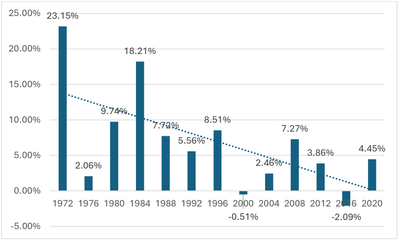
The 2024 Presidential campaign has been a roller coaster ride this summer. The upheavals are so fast and unprecedented that the reaction to each event often seems too muted. An assassination attempt and sudden pre-convention withdrawal? In a past generation, these events would be decisive, but in 2024, they seem like just the latest blip in the news cycle. The polls never seem to move more than a couple of points. In such an oddly volatile but also stable environment, our best bet to understanding what is going to transpire during the last 100 days of the election cycle is to look at data that gets to the heart of how voters view the candidates. My choice of fundamental data or essential metric is candidate fandom. Fandom is an unusual metric in politics, but it should be more common. Fandom is about passion for and loyalty to a cultural entity, be it a team, singer, university, or even politician. In fact, MAGA Trump supporters and Bernie Bros share many characteristics with Swifties and Lakers fans. Fans of all these things show up, spend, wear branded apparel, and fiercely defend the object of their fandom. The politicians who inspire fandom, such as AOC, Donald Trump, Barack Obama, and Marjorie Taylor Green, enjoy many advantages and are the celebrities of the political world. Fandom is critical in politics because fans are loyal, engaged, and resilient. Fans are not casual potential voters who may change preferences and are unlikely to make an effort to stand in line to vote. Fans are the voters who will show up rain or shine and who can’t be swayed. In 2024, a fan will interpret a conviction of their candidate as political “lawfare” rather than evidence of criminality. Also, in 2024, a fan will make excuses for signs of aging that would result in children taking a senior’s car keys. The flip side of fandom, anti-fandom, is also a powerful political force. Indeed, politics may be the cultural context in which anti-fandom has the most impact. Taylor Swift may have haters, but these anti-Swifties are not buying tickets to see Katy Perry in protest. But in politics, hatred of a candidate might be as powerful a tool for generating a vote as fandom. Joe Biden’s 2020 campaign was notoriously bad at drawing crowds, suggesting he inspired little passion. In contrast, Trump’s rallies looked like rabid sports crowds complete with matching hats. However, the hatred and fear of Donald Trump inspired sufficient anti-fandom to make Biden competitive. Of course, fandom doesn’t entirely decide elections. In most elections, there isn’t all that much fandom or passion. Beyond the presidency and senatorial contests, most candidates are barely known, and identity factors (race, gender, party affiliation) and candidate awareness are the determining factors. Even in presidential elections, get-out-the-vote efforts (ballot harvesting) and election regulations (voter suppression) combined with effective marketing to the few percent of swing (low information) voters are often the determining factors. Looking toward the future, fandom may be an increasingly salient political metric for multiple reasons. First, the last two decades have witnessed many candidates raised quickly from obscurity with somehow Hollywood-worthy origin stories (Barack Obama, AOC, JD Vance, etc.). In the modern media environment, candidates’ reputations (brands) are increasingly the product of marketing narratives rather than a lifetime of real-world accomplishments. In this new world of politics, fandom will be a critical metric. Second, with the increasing diversity of the American electorate, voting will be increasingly based on identity rather than ideology. Identity-based voting segments are likely to be driven by fandom (and anti-fandom) rather than policy. We see a form of this in 2024, as high inflation has barely made a dent in voters’ preferences for the two parties. A fragmented electorate comprised of racial and gender segments whose preferences are driven by fandom and anti-fandom will lead to increasingly negative campaigns featuring ads highlighting the threat of the non-preferred party’s candidates. When voters are focused on identity, negative advertising becomes the ideal method to use fear to create anti-fandom (hate) to motivate turnout. Kamala Harris versus Donald Trump Barring further disruptions, the matchup is set for the 2024 presidential contest (as of this writing, we do not know the Democratic VP). We do know the matchup between Donald Trump and Kamala Harris is a contest between polarizing figures. Donald Trump is a movement candidate who has redefined the Republican party. He inspires passionate fandom from his followers and amazing antipathy from major media and cultural outlets. Harris is also polarizing. In the immediate aftermath of Biden’s withdrawal, Harris received massive media and donor support. However, Harris has not demonstrated any significant national voter appeal, and her time as VP has generated ample blooper real material. My approach to assessing the race is to examine each candidate's fandom and anti-fandom. Fandom is the candidate’s core, resilient support, while anti-fandom is about antipathy. Fandom and anti-fandom are especially powerful metrics for a candidate because they are relatively fixed after a candidate gains high awareness. Once an individual identifies with the candidate (e.g., they are on the same team), an attack on the candidate is an attack on the individual. This means attack ads do not work because fans feel they are being attacked. Anti-fans are also important because they constrain a candidate’s support. A Trump anti-fan is unpersuadable by efforts from the Trump campaign because their identity is steeped in opposition to him. Fans and anti-fans are trapped in a cycle of confirmation bias where all information is processed to fit their fandom. I use data from the Next Generation Fandom Survey to assess candidate fandom and anti-fandom. The Next Generation Fandom Survey involves a nationwide sample of the U.S. population regarding fandom for sports and other cultural entities. In the 2024 edition, political figures such as Donald Trump, Joe Biden, Kamala Harris, and RFK Jr were included. The survey captured responses from 2053 subjects split evenly across the four primary generations (Gen Z, Millennials, Gen X, and Baby Boomers), and the sample is representative in terms of racial background. The survey does not focus on likely or registered voters, so the results reflect overall societal sentiments rather than the electorate's opinions. The critical survey question asks subjects to rate how much of a fan they are of a celebrity on a 1 to 7 scale. In the following discussion, individuals who rated their fandom a 6 or 7 on the 7-point scale are categorized as Fans, while those who rate their fandom a 1 or 2 are classified as Anti-Fans. Table 1 shows the Fandom and Anti-Fandom rates for the entire sample. Donald Trump has a 27% fandom rate compared to Harris's 21%. The fandom rate is crucial because it identifies the candidate's core support. It also indicates something important about the candidate’s potential likability. In terms of anti-fandom, Harris has a slightly higher Anti-Fandom rate. Anti-Fandom is also critical as it shows the percentage of people who hate a candidate. The data suggests that Americans find Harris to be more dislikable than Trump. Notably, the anti-fandom rates are significantly higher than the fandom rates. The American public has significant disdain for politicians. The high anti-fandom rates are both the product of past negative advertising and the cause of future negative campaign strategies. Table 1: Candidate Fandom and Anti-Fandom Table 2 reports fandom rates based of the two gender segments. Trump has a 7%-point advantage with men and a surprising 4% advantage with women. This is a stunning result as Trump is generally regarded as having weakness with female voters. However, this weakness shows up in the anti-fandom rates. In the male segment, Trump has a 5%-point advantage in anti-fandom (fewer anti-fans), but a 3% disadvantage in the female segment. This reveals that Trump is polarizing to women, and almost half of women find Trump to be highly dislikable. This finding is why the Harris campaign is likely to use advertising that casts Trump as misogynistic or a threat to women to motivate turnout by female voters. Table 2: Candidate Fandom by Gender Table 3 shows the fandom rates for the two younger demographic segments: Gen Z and Millennials. This Table also shows Trump’s relative performance versus Biden (in parentheses in the last column). Trump enjoys higher fandom and lower anti-fandom than Harris in both the Gen Z and Millennial segments. In terms of fandom, Trump is plus 6% in Gen Z and plus 11% with Millennials. Critically, Harris outperforms Biden. The Gen Z anti-fandom gap between Trump and Biden favored Trump by 6% points. However, this gap shrinks to just 1% point when Harris is the comparison. The data suggests that Harris is stronger with Gen Z than Biden. Table 3: Candidate Fandom in Younger Generations Table 4 reports the fandom rates based on a racial segmentation scheme. Specifically, the sample is divided into White and Non-White categories. This is a crude segmentation, but it illustrates some essential points. Trump enjoys a significant 14% positive fandom advantage in the White demographic. He also enjoys a 10-point edge in (lower) anti-fandom. The pattern essentially reverses in the Non-White segment, as Harris has a 10-point advantage in fandom and a 17-point edge in anti-fandom. Trump’s anti-fandom in the Non-White segment is critical to the campaign. Nearly half of this segment has antipathy or hate for Trump. This high anti-fandom suggests an opportunity for the Harris campaign to emphasize racial angles in their attacks on Trump. Table 4: Candidate Fandom by Race In addition to fandom and anti-fandom rates across demographic categories, insights can be gleaned by looking at segmentation variables that reflect cultural values or personality. Table 5 shows fandom and anti-fandom rates for Trump and Harris for segments defined by fandom for Taylor Swift (Swifties) and Baseball. The Swifties skew towards Harris. The implication is that young women engaged in popular culture have more positive fandom for Harris and more negativity toward Trump. This is unsurprising given the content of the popular culture and Swift’s personal liberalism. The Swiftie segment shows a much stronger skew for Harris than all but the Non-White segment. Examining the data at a cultural level is vital as it indicates that it isn’t necessarily youth or gender where Harris has an advantage but a combination of youth, gender, and a specific type of cultural engagement. The table also includes fandom rates for baseball fans. In the Baseball Fan segment, Trump enjoys an 8% point fandom advantage and a 7% anti-fandom advantage (lower anti-fandom). Like the case of the Swifties, the fandom rates of Baseball Fans reveal something about Trump’s core support. Baseball is a very traditional game with an older fan base, and traditionalism is probably the core value of Trump fans. Trump’s negative advertising is likely to focus on the threats to traditional values (i.e., Harris is a San Francisco liberal). Table 5: Candidate Fandom and Cultural Segments Commentary and Prediction Fandom is a powerful metric for predicting political success, but like most data points, it doesn’t tell the whole story. Fandom is a measure of unwavering core support while anti-fandom measures the group that will never support and is likely to show up to vote against a candidate. Examining fandom rates across multiple segments reveals that Harris’ core support is concentrated in specific cultural and racial segments. The analysis also suggests that Trump's core support is broader than is usually acknowledged and that his main problem is significant anti-fandom with women and minorities. Harris’ problem is a lack of love, while Trump’s is too much hate. Notably, I am not paying too much attention to the current wave of excitement and enthusiasm surrounding Harris. The recent enthusiasm is likely more a manifestation of the Democratic base’s hopes and a relentless media onslaught than an actual increase in passion for Harris. Maybe there will be a permanent shift upward in Harris’s fandom, but I don’t see any logic for why this would occur. Harris isn’t suddenly more likable or aspirational than she was last month. The argument that the American people are becoming more acquainted with her is dubious, given that she has been the Vice President or a major presidential candidate for almost five years. What are the implications for the upcoming election? Voting is not only about fandom or hate, so we must consider some additional factors. For instance, many potential voters lack passion and knowledge and are more prone to vote based on identity rather than ideology. If a region or demographic segment consistently votes for a party 75% of the time, that’s voting more based on fixed identities than current societal conditions. The American electorate has many of these types of fixed-preference voter segments. Furthermore, as the American electorate becomes more diverse, identity-based voting seems to be making presidential contests more predictable. The baseline seems to be that the Democratic candidate will win the popular vote by a few percentage points, and the Electoral College will come down to a few states, such as Michigan, Pennsylvania, and Wisconsin. Examining past electoral maps shows far more shifting of states across elections. Now, all but a handful of states are regarded as non-competitive. The Figure below shows the presidential popular vote margins for the last 50 years. It shows a trend towards smaller margins for the winning candidate, which is at least partly due to growing ethnic diversity and more fixed (at least in the near and medium terms) identity-based voting. Over the last 13 cycles, the margin of victory has dropped by about 1% every four years. Demographic change has also locked in a high baseline level of support for Democratic candidates. The last time a Republican won the popular vote was in 2004, with George Bush as the incumbent. Figure 1: Presidential Vote Margin 1972 to 2020 In addition to shrinking election margins, demographic change promises to change future campaign tones. The increasing relevance of fandom and anti-fandom, combined with the growing diversity of the electorate, will make 2024 an extremely negative campaign. The 2024 election will be determined by identity-based demographic trends and negative (anti-fandom) marketing campaigns. Demographics are destiny, and America is changing rapidly in ways that make it increasingly difficult for the Republicans to win the popular vote. It doesn’t matter if the Democrat is Harris, Newsom, Clinton, or Whitmer while the Republican is Rubio, Haley, Cruz, or Burgum. The baseline is probably 52% to 48%, D to R. Candidate fandom and anti-fandom probably shift the vote 2 or 3 percent in either direction. The correlation of demographic traits with voting behaviors creates incentives for campaign strategies that focus on identity. Republicans are eager to shift some percentage of Black or Hispanic voters to their cause because it simultaneously reduces the Democrats' base and grows Republican totals. In contrast, Democrats need to motivate marginal voters in the female, Black, and Hispanic segments to turn out. Fear-based appeals are the most effective tool for both parties' goals. Negative messaging is also prevalent because of the general view of politicians. Politicians tend to inspire more antipathy (anti-fandom) than admiration (fandom). The fandom data shows this, as both candidates have far more anti-fans than fans (this holds with other politicians) . The modern election calculus is, therefore, focused on aggressive negative ads that inspire marginal voters to take the initiative to vote against a hated candidate. Passion drives behavior, and it's far easier to drive fear and hatred of a candidate than to inspire passion and admiration. Considering the fandom data and the current electorate, I have two predictions. First, we will witness an incredibly nasty race. Harris’s best bet is to demonize Trump to motivate the anti-Trump voters to turn out. The American culture of 2024 includes constant repetition that many Democratic voting constituencies are marginalized and threatened. These segments are best motivated by using messages that cast the Republicans as the danger or oppressor. Women will fear losing reproductive rights, and African Americans will be primed with threats to voting rights. Trump will also employ negative messaging, but Trump’s adoption of a negative campaign comes from a slightly different motivation. Trump’s core support consists of conservatives who are frustrated by a lack of cultural power and representation. This group is looking for someone who will fight for their values. This desire for a “fighting advocate” explains much of Trump’s appeal, as his supporters are enthusiastic about his “mean tweets and nicknames.” There will also be fear-based advertising as Harris will be positioned as wanting to defund police and open the border. Second, Trump wins in a close contest. Comparing Trump’s and Harris’ fandom and anti-fandom suggests the Harris campaign faces an uphill challenge. Despite the current blitz of enthusiasm for Harris as a replacement for a failing Joe Biden, her “brand” has not shown an ability to stimulate passion, and her dislike levels exceed Trump's. It seems unlikely that she will be able to inspire fans. While Trump has a significant fanbase and weaknesses in terms of strong anti-fandom levels in minority and cultural segments, he probably beat Clinton in 2016 because her anti-fandom was equivalent to his. In contrast, he lost to Biden because Biden had less anti-fandom (in 2020). Kamala Harris seems more like Clinton than Biden, so look for a similar outcome as in 2016. The bottom-line prediction: An exceptionally negative campaign, with Trump’s greater baseline fandom and Harris’s charisma deficit leading to a narrow Trump victory. As in 2016,Trump wins the Electoral College while losing the popular vote. Addendum: Future Fandom Lesson The structure of the American electorate and the propensity of people to vote based on identity rather than ideology mean that negative campaigns are the standard in the near future. The essential observation is that demographic trends create an electorate that is more a collection of identity segments than a homogeneous population that varies in ideology. An increasingly diverse electorate likely means increasingly negative presidential campaigns as negative or fear-based appeals are especially effective when elections focus on threats to identity groups. The tragedy of this situation is that the negative messages of campaigns amplify racial division and acrimony. When the next election occurs, the electorate is even more polarized, and negative or fear-based appeals are again the most effective. Mike Lewis is an expert in the areas of analytics and marketing. This approach makes Professor Lewis a unique expert on fandom as his work addresses the complete process from success on the field to success at the box office and the campaign trail. Michael is available to speak with media - simply click on his icon now to arrange an interview today. Interested in following Future Fandom! Subscribe for free to receive new posts.


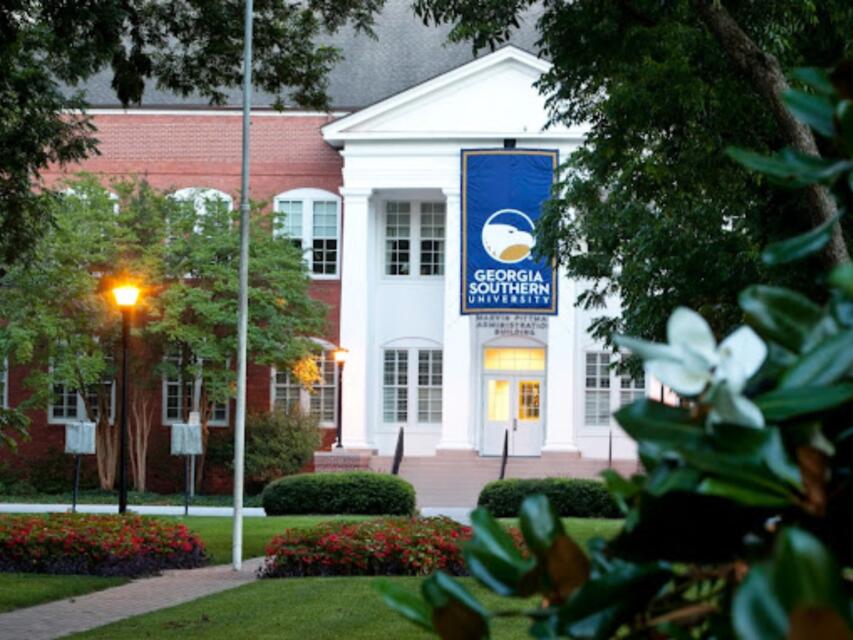
Students at Georgia Southern University now have even more opportunities to excel with the help of two new grants from the National Institute for Student Success (NISS) at Georgia State University totaling up to $600,000. The first is a $500,000 Acceleration Grant that will be distributed to Georgia Southern over the next two years to cover start-up costs for critical implementation steps of an ambitious program that further catalyzes Georgia Southern’s student success outcomes. “As Georgia Southern’s Fall 2024 enrollment continues to increase at record levels through freshman applications and admits, we are pleased to partner with the National Institute for Student Success to reinforce our commitment to providing exceptional student experiences and support that nurtures future leaders and global citizens,” stated Alejandra C. Sosa Pieroni, Ed.D., executive vice president, Division of Enrollment, Marketing and Student Success. “We are steadfast in our commitment to providing comprehensive, coordinated and differentiated student care to ensure every one of our students achieves their educational goals.” Funding through the Acceleration Grant will contribute to Georgia Southern’s existing initiatives to improve graduation rates and student success outcomes through the adoption of a suite of innovative, evidence-based programs. These programs, which deploy tools such as predictive analytics, AI technology, CRM platform, and big data to deliver personalized support to students, have been shown to help universities increase their graduation rates by 50% or more and to reduce discrepancies in graduation rates significantly. The second NISS award to Georgia Southern is the Keep HOPE Alive grant, which offers $100,000 across one year to support students who have lost the HOPE Scholarship as they work to regain eligibility. “We are enthusiastic about our partnership with Georgia Southern and working to deploy strategies that will contribute to substantive improvement in student outcomes,” said Timothy M. Renick, Ph.D., NISS executive director. Housed at Georgia State University, the NISS Acceleration Grants have been awarded to partner institutions that have completed a rigorous diagnostic analysis and have demonstrated a commitment to addressing structural and institutional barriers to the success of their students. Georgia Southern is a member of the second cohort to receive support from the NISS Accelerator Grant program, which launched in 2022. Unique to the Accelerator Grant program is up to three years of implementation coaching, webinars, meetings with expert practitioners and online resources provided by the NISS to support each awardee in implementing the new programs. The NISS coaching model is built on more than a decade of experience at Georgia State University developing and disseminating new approaches to student success that include predictive-analytics-based advising, AI-enhanced chatbots, and data-informed models for distributing financial aid. “These programs have helped Georgia State University increase its graduation rates for its bachelor’s students by 70% and its associate’s students by 300%,” according to Renick. “Black, Hispanic and low-income students now graduate from Georgia State at or above the rate of the student body overall.” The Acceleration Grant program will advance the NISS goal of producing 500,000 additional college graduates across its partner institutions over the next decade. Interested in learning more about this programming at Georgia Southern University or to arrange an interview with Alejandra Sosa Pieroni simply contact Georgia Southern's Director of Communications Jennifer Wise at jwise@georgiasouthern.edu to arrange an interview today.


300 million tonnes of rice straw are burned after harvest in Asia every year Aston University will be contributing to new international project to unlock renewable energy potential Its researchers will lead on calculating the greenhouse gas emissions savings of new systems. Aston University researchers are helping to make rice straw processing in India and the Philippines less environmentally damaging. The University will be contributing to a new international collaboration, the Renewable, Inclusive Carbon-negative Energy (RICE) project, funded by Innovate UK Energy Catalyst programme to unlock renewable energy for rice farmers. Already the University has worked with UK company Straw Innovations in the Philippines and now the two are expanding their collaboration to benefit more of the continent. Aston University working with UK company Straw Innovations and Indian enterprise, Takachar Rice straw is a crop waste byproduct and each year across Asia 300 million tonnes of it go up in smoke when burnt after harvest. This releases emissions and air pollutants that triple risks of increased respiratory diseases and accelerate climate change. India and the Philippines are the world’s second and eighth largest rice producers respectively and together they produce 130 million tonnes of both rice and straw per year. Aston University and Straw Innovations and will be collaborating with an Indian award winning small and medium sized enterprise, Takachar. The firm has developed small scale, low-cost, portable equipment which can convert agricultural waste on-site into higher value bioproducts such as fertilizer blends, chemicals and biofuels. "The company will develop a super-sized version which is 10 times bigger than their current device, make it adaptable to rice mills, and will send it to Straw Innovations, so the two firms can test out different business models for farmer adoption/benefit. Straw Innovations will also send their machines from the Philippines to India mid-project and the two countries will test out different business models for farmer adoption/benefit. And for the first time they will tap into the heat produced in the waste process to dry rice, instead of using diesel or kerosene. University researchers will lead on assessing the sustainability of the project, calculating the greenhouse gas emissions savings of the new systems introduced by Straw Innovations and Takachar. Sustainability expert Dr Mirjam Röder will also engage with the farming community and rural stakeholders to quantify how the systems can increase farmer incomes, equality of opportunity, food security and decarbonisation benefits, whilst highlighting any trade-offs. Dr Röder who is based at Aston University’s Energy & Bioproducts Research Institute (EBRI) said: “Environmentally, rice produces 48% of all global crop emissions, due to methane from flooded fields. This is halved when the straw is removed and reduced further when its carbon is stored in biochar. We are aiming for carbon negative which means removing carbon dioxide (CO₂) from the atmosphere or sequestering more CO₂ than is emitted. “Our new research leads on from our rice straw bio gas hub project with Straw Innovations, SEARCA and Koolmill and we’re pleased to be building further relationships with new partners in India. In January Biomass and Bioenergy published a paper about the topic written by Dr Röder, the director of EBRI Professor Patricia Thornley and Craig Jamieson of Straw Innovations called The greenhouse gas performance and climate change mitigation potential from rice straw biogas as a pathway to the UN sustainable development goals. Craig Jamieson from Straw Innovations said "We’ve been pioneering rice straw work with the team at Aston University for the past seven years. We're delighted to continue that strong partnership and widen it to include Takachar in this new project. “Takachar is a leader in making biochar from crop residues and our partnership with them is very strategic. We look forward to combining our new improved straw harvesting technology with their scaled-up biochar production. It will be a step change, creating a new, more efficient system for carbon negative energy and soil improvement for rural communities across Asia." Vidyut Mohan who founded Takachar said: “We are excited to partner with Aston University and Straw Innovations. “Our combined solutions can significantly move the needle in reducing crop residue collection costs and biochar production costs for carbon removal." Notes to Editors Rice straw is a crop waste byproduct and each year across Asia 300 million tonnes of it go up in smoke when burnt after harvest https://tinyurl.com/2afjhhsj To read The greenhouse gas performance and climate change mitigation potential from rice straw biogas as a pathway to the UN sustainable development goals visit https://www.sciencedirect.com/science/article/pii/S0961953424000254, Biomass and Bioenergy Volume 182, March 2024, 107072 Mirjam Röder and Patricia Thornley Energy & Bioproducts Research Institute (EBRI), College of Engineering and Physical Sciences, Aston University, Aston Triangle, Birmingham, B4 7ET, United Kingdom Craig Jamieson Straw Innovations Ltd., Lawes Open Innovation Hub, Rothamsted Research, West Common, Harpenden, HERTS, AL5 2JQ, United Kingdom https://doi.org/10.1016/j.biombioe.2024.107072 About Aston University For over a century, Aston University’s enduring purpose has been to make our world a better place through education, research and innovation, by enabling our students to succeed in work and life, and by supporting our communities to thrive economically, socially and culturally. Aston University’s history has been intertwined with the history of Birmingham, a remarkable city that once was the heartland of the Industrial Revolution and the manufacturing powerhouse of the world. Born out of the First Industrial Revolution, Aston University has a proud and distinct heritage dating back to our formation as the School of Metallurgy in 1875, the first UK College of Technology in 1951, gaining university status by Royal Charter in 1966, and becoming The Guardian University of the Year in 2020. Building on our outstanding past, we are now defining our place and role in the Fourth Industrial Revolution (and beyond) within a rapidly changing world. For media inquiries in relation to this release, contact Nicola Jones, Press and Communications Manager, on (+44) 7825 342091 or email: n.jones6@aston.ac.uk




Homes heated by human sewage could be a reality thanks to Aston University
Project to transform sewage sludge into clean water and energy awarded a share of £4.5 million by Ofwat Involves extracting energy from the waste produced during sewage and water treatment Gases obtained can be used to power engines or heat people’s homes. An Aston University project that could transform sewage sludge into clean water and energy has been awarded a share of £4.5 million by Ofwat. The University project with engineering consultancy ICMEA-UK involves extracting energy from the waste produced during sewage and water treatment and transforming it into hydrogen and/or methane. The gases can then be used to power engines or heat people’s homes. The aim is to create a sustainable and cost-efficiently run wastewater processes, plus extra energy. The initiative was one of ten winners of Ofwat’s Water Discovery Challenge, of which the Aston University scientists and two industrial partners have been awarded £427,000. Dr Jude Onwudili based at Aston University’s Energy and Bioproducts Research Institute (EBRI) is leading the team of scientists who will work with the partners to develop a trial rig to transform solid residues from wastewater treatment plants to hydrogen and/or methane. The two-stage process will involve the initial transformation of organic components in the sludge into liquid intermediates, which will then be converted to the fuel gases in a second stage. The project is called REvAR (Renewable Energy via Aqueous-phase Reforming), and Dr Onwudili will be working with lead partner and engineering consultancy company ICMEA-UK Limited and sustainable infrastructure company Costain. REVAR combines the use of hot-pressurised water or hydrothermal conditions with catalysts to achieve high conversion efficiency. The technique can treat sewage sludge in just minutes, and it is hoped that it will replace existing processes. In 2013, a Chartered Institution of Water and Environmental Management report stated that the sector is the fourth most energy intensive industry in the UK. Dr Onwudili said: “This project is important because millions of tonnes of sewage sludge are generated in the UK each year and the water industry is struggling with how to effectively manage them as waste. “Instead, they can be converted into valuable feedstocks which are used for producing renewable fuel gases, thereby increasing the availability of feedstocks to meet UK decarbonisation targets through bioenergy. “We will be taking a waste product and recovering two important products from it: clean water and renewable energy. Overall, the novel technology will contribute towards meeting UK Net Zero obligations by 2050 and ties in with the University’s purpose to make our world a better place through education, research and innovation.” The Water Discovery Challenge aims to accelerate the development and adoption of promising new innovations for the water sector. Over the next six months, winners will also receive non-financial support and will be able to pitch their projects to potential water company partners and/or investors. The 10 winning teams are from outside the water industry and were chosen because of their projects’ potential to help solve the biggest challenges facing the sector. The competition is part of the Ofwat Innovation Fund, run by the water regulator Ofwat, with Challenge Works, Arup and Isle Utilities and is the first in the water sector to invite ideas from innovators across industries. Helen Campbell, senior director for sector performance at Ofwat, said: “This competition was about reaching new innovators from outside the sector with different approaches and new ideas, and that’s exactly what the winners are doing. “The products and ideas recognised in this cross-sector challenge will equip water companies to better face challenges of the future – including achieving sustainability goals and meeting net zero targets – all while providing the highest-quality product for consumers.” ENDS A Blueprint For Carbon Emissions Reduction in the UK Water Industry The Chartered Institution of Water and Environmental Management https://www.ciwem.org/assets/pdf/Policy/Reports/A-Blueprint-for-carbon-emissions-reductions-in-the-water-industry.pdf Ofwat Innovation Fund Ofwat, the Water Services Regulation Authority for England and Wales, has established a £200 million Innovation Fund to grow the water sector’s capacity to innovate, enabling it to better meet the evolving needs of customers, society and the environment. The Innovation Fund, delivered in partnership with Challenge Works (formerly known as Nesta Challenges) and supported by Arup and Isle Utilities, is designed to complement Ofwat’s existing approach to innovation and to help deliver against Ofwat’s strategy which highlights the role of innovation in meeting many of the challenges the sector faces. About ICMEA-UK Based in Sheffield, in the North of England, ICMEA-UK is the UK arm of an established Italian innovative engineering company - ICMEA SRL. They are an innovative Engineering consultancy company, and work in partnership with a range of other organisations to provide innovative, bespoke solutions to problems where an Engineering solution is required. About Costain Costain helps to improve people’s lives by creating connected, sustainable infrastructure that enables people and the planet thrive. They shape, create, and deliver pioneering solutions that transform the performance of the infrastructure ecosystem across the UK’s energy, water, transportation, and defence markets. They are organised around their customers anticipating and solving challenges and helping to improve performance. By bringing together their unique mix of construction, consulting, and digital experts they engineer and deliver sustainable, efficient, and practical solutions. About Aston University For over a century, Aston University’s enduring purpose has been to make our world a better place through education, research and innovation, by enabling our students to succeed in work and life, and by supporting our communities to thrive economically, socially and culturally. Aston University’s history has been intertwined with the history of Birmingham, a remarkable city that once was the heartland of the Industrial Revolution and the manufacturing powerhouse of the world. Born out of the First Industrial Revolution, Aston University has a proud and distinct heritage dating back to our formation as the School of Metallurgy in 1875, the first UK College of Technology in 1951, gaining university status by Royal Charter in 1966, and becoming The Guardian University of the Year in 2020. Building on our outstanding past, we are now defining our place and role in the Fourth Industrial Revolution (and beyond) within a rapidly changing world. For media inquiries in relation to this release, contact Nicola Jones, Press and Communications Manager, on (+44) 7825 342091 or email: n.jones6@aston.ac.uk


Artificial Intelligence (AI) has emerged as a pivotal force driving innovation and reshaping our societal landscape. Its transformative potential spans across sectors, touching upon crucial global challenges such as ethics, privacy, and the future of employment. As AI continues to permeate various aspects of our lives, its intersection with pressing issues like climate change takes center stage. The upcoming launch of the Corporate Climate Responsibility Monitor by the NewClimate Institute in collaboration with Carbon Market Watch presents an invaluable opportunity to explore the symbiotic relationship between AI and corporate climate responsibility. Why This Matters to the Public: The Corporate Climate Responsibility Monitor 2024 serves as a beacon of insight into the nexus between corporate actions and environmental sustainability. Here are key sub-topics that offer intriguing story angles for a broad audience: Corporate Accountability in Climate Mitigation: Delve into how corporations are leveraging AI technologies to enhance their climate mitigation strategies. Highlight case studies of companies pioneering innovative approaches to reduce carbon emissions and promote sustainable practices. Transparency and Reporting Standards: Investigate the role of AI-driven data analytics in facilitating transparent reporting on corporate carbon footprints and environmental impact. Explore how enhanced transparency fosters accountability and drives corporate responsibility. Emerging Trends in Carbon Markets: Explore the evolving landscape of carbon markets and the role of AI in optimizing carbon trading mechanisms. Examine how AI-powered algorithms are revolutionizing carbon pricing strategies and incentivizing emission reductions. Collaborative Initiatives for Climate Action: Showcase collaborative efforts between corporations, NGOs, and government bodies in tackling climate change. Highlight partnerships forged to develop AI-driven solutions for environmental monitoring, renewable energy adoption, and sustainable supply chain management. The Economics of Climate Responsibility: Analyze the economic implications of corporate climate responsibility initiatives. Investigate how AI technologies are reshaping business models, driving cost savings through energy efficiency measures, and unlocking new revenue streams in the transition to a low-carbon economy. Impacts on Global Sustainability Goals: Assess the contribution of corporate climate responsibility efforts to achieving international sustainability targets such as the Paris Agreement and the United Nations Sustainable Development Goals (SDGs). Highlight success stories and challenges faced in aligning corporate strategies with broader environmental objectives. Connect with an Expert about Corporate Climate Responsibility For journalists with questions or looking to cover the the Corporate Climate Responsibility Monitor here is a select list of experts. To search our full list of experts visit www.expertfile.com Pamela Grothe Assistant Professor · University of Mary Washington Michael Vandenbergh Professor of Law · Vanderbilt University Sara Harris Professor of Teaching, Department of Earth, Ocean and Atmospheric Sciences · University of British Columbia Tom Rand Managing Director at MaRS Cleantech Fund I, L.P. · MaRS Cleantech Michael Rawlins Extension Associate Professor and Associate Director, Climate System Research Center · University of Massachusetts Amherst Photo Credit: Markus Spiske


National Puppy Day | Media Advisory
National Puppy Day celebrates the joy and companionship that puppies bring into our lives, while also raising awareness about the importance of adoption and the welfare of our canine friends. This day is an opportunity to advocate for responsible pet ownership, highlight the plight of dogs in shelters, and encourage adoption over purchasing from breeders. With millions of homeless dogs worldwide, National Puppy Day also serves as a reminder of the human-animal bond and our responsibility to protect and care for pets. Key sub-topics include: Adoption and Rescue Stories: Heartwarming tales of puppies finding their forever homes. The Importance of Spaying and Neutering: How these practices help reduce the number of homeless pets. Puppy Care and Training Tips: Expert advice on raising a healthy, well-behaved dog. The Role of Pets in Mental Health: Exploring how pets contribute to emotional and psychological well-being. Advocacy and Animal Welfare Legislation: Updates on laws and policies promoting the protection of dogs. Celebrating the Bond Between Humans and Dogs: The myriad ways puppies enrich our lives and communities. Connect with an Expert about Puppies and Pets For journalists seeking research or insights for their coverage about National Puppy Day, here is a select list of experts from our database. To search our full list of experts, visit www.expertfile.com Jennifer Applebaum Assistant Professor · University of Florida Meghan Herron Clinical Associate Professor I College of Veterinary Medicine · The Ohio State University Julie Levy Distinguished Professor · University of Florida Nicole Dorey Lecturer · University of Florida To search our full list of experts visit www.expertfile.com Photo by Jametlene Reskp

Big shift coming to the EV industry
Already a pioneer in the industry, the University of Delaware has once again played a key role in taking electric vehicles to the next level. Researchers there helped bring about new automotive standards that will drive lower-cost charging and vehicle-to-grid (V2G) integration and standardize Tesla’s connector so that future U.S.-made EVs will have this technology on it. The two newest standards for electric cars, both approved this month by standards committees of SAE International (formerly the Society of Automotive Engineers), should bring EV drivers great joy, according to Willett Kempton, professor at the University of Delaware’s Center for Transportation Electrification on UD’s Science, Technology and Advanced Research (STAR) Campus. Center director Rodney McGee was chairman of the two SAE committees, while postdoctoral researcher Garrett Ejzak, Kempton and administrative assistant Becky Cox played key roles in the engineering, research and policy work undergirding the new EV standards. “These developments mark a big shift for the EV industry,” said Kempton, who is affiliated with research centers in both the College of Earth, Ocean and Environment and the College of Engineering at UD. “Drivers will gain access to more charging stations and lower-cost charging. They will have new options for using their EV to help fight climate change and even make money when plugged in. These changes are likely to spur even greater adoption of EVs for clean, affordable transportation.” The so-called “V2G standard” (SAE J3068) provides the missing link for widespread use of vehicle-to-grid (V2G) technology, which Kempton and his colleagues invented at UD more than two decades ago. “We’ve been doing V2G for 20 years here at the University of Delaware, wondering when the rest of the world would catch on,” Kempton said. “One key missing piece has been a complete standard for controlling and managing V2G, which now exists within SAE J3068.” V2G allows you to plug your EV into an electrical outlet and send power from the car battery back to your local energy utility, making a little income while helping the nation’s power grid. This is becoming increasingly more important as more renewable sources of energy come online. When the sun isn’t shining or the wind isn’t blowing, EV owners can plug in and “perform important energy-balancing services,” according to Kempton. The savings from V2G can add up. “Our V2G demonstrations show an EV can earn between $100 a year and $1,500 a year. The wide variation is due to different markets and to regulations in different utilities. It also depends on the EV’s capabilities,” Kempton explained. Current EVs need a substantial update or retrofit to be able to do V2G, while new EVs equipped with the signaling technology are expected to be available by 2025. This standard also will make it possible to use your EV as backup power for your house. As extreme weather increases with climate change, that’s a good energy reserve to have when the lights go out. It takes one-and-a-half kilowatts to power the average house, Kempton said. Your electric car can produce 80 kilowatts of power, enough to run a whole house and more. “So, your EV can both help fight climate change and keep your house going when extreme storms happen,” Kempton said. With SAE J3400 now approved, the connector system Tesla developed for EV charging will now be standardized and can be included on future EVs of any brand. The first non-Tesla cars with this technology, also known as the North American Standard Connector, are expected to hit the market in 2025. “This will eliminate Tesla’s monopoly on their charging stations, making them available for use by any new EV,” Kempton said. According to Statista, the U.S. had more than 53,000 public EV charging stations and over 138,000 public charging outlets in May 2023. Visit Kempton's profile and click on the contact button to arrange an interview.

• Rice straw could be a fuel of the future in rural Philippines • Across Asia 300 million tonnes of rice straw go up in smoke every year • New proposals includes scaling up harvesting system with straw removal, biogas-powered rice drying and storage and efficient milling. An Aston University bioenergy researcher has been explaining how rice straw could be a fuel of the future in rural Philippines. Dr Mirjam Roeder who is based at the University’s Energy & Bioproducts Research Institute (EBRI) is collaborating with the UK company Straw Innovations Ltd, Southeast Asian Regional Center for Graduate Study and Research in Agriculture (SEARCA) and Koolmill Systems Ltd to showcase their research. The Food and Agriculture Organisation (FAO) states that rice is the number one food crop globally and 91% of it is produced and consumed in Asia. As a crop it is responsible for 48% of global crop emissions and for every kilogram of rice, a kilo of straw is produced. Across Asia 300 million tonnes of rice straw go up in smoke every year when burnt after harvest, releasing emissions and air pollutants that triple risks of increased respiratory diseases and accelerate climate change. To raise awareness of sustainable uses for rice straw Dr Roeder has travelled to the sixth International Rice Congress in Manila, Philippines to explain the potential of the emerging technology. Rice straw is an underdeveloped feedstock and can be collected and digested to produce biogas, unlocking sustainable straw management options and renewable energy for farmers using anaerobic digestion (AD) from rice straw. Dr Roeder has been working with Straw Innovations on their UK Innovate project demonstration facility in the Philippines, the Rice Straw Biogas Hub, which is scaling up a complete harvesting system with straw removal, biogas-powered rice drying and storage, together with efficient milling. Craig Jamieson, Straw Innovations said: “The International Rice Congress is only held every four years and is a key event for coordinating and tracking progress in rice research. “Our partnership with Aston University and SEARCA adds independent, scientific rigour to the work we do and amplifies our message to government policy makers. We are grateful to Innovate UK for their ongoing support through the Energy Catalyst Programme, which is accelerating our development.” At the conference Dr Roeder has been explaining how independent environmental and social research can increase farmer incomes, equality of opportunity, food security and decarbonisation benefits. She said: “Engaging with stakeholders and working in partnership across organisations is vital to the successful adoption of new technologies. I am delighted to have had the opportunity to host an event with our project partners at this prestigious conference, bringing the cutting-edge research of using rice straw for clean energy to the forefront of the rice research community and supporting the pathway to net zero.” Dr Glenn B Gregorio, Center Director of SEARCA, added: "We are gaining insights into the environmental impact of rice straw utilisation and implementing policies to unleash its potential to empower us to make informed decisions that are instrumental to climate change mitigation and decarbonisation," Professor Rex Demafelis, University of the Philippines, is also working with SEARCA and is leading the project on life cycle analyses and measurements of rice straw greenhouse gas emissions. He said: “Rice straw is a valuable resource, and we are grateful to be part of this team which seeks to harness its full potential and promote circularity, which would ultimately contribute to our goal of reducing our greenhouse gas emissions.” ENDS The Supergen Bioenergy Hub works with academia, industry, government and societal stakeholders to develop sustainable bioenergy systems that support the UK’s transition to an affordable, resilient, low-carbon energy future. The Hub is funded jointly by the Engineering and Physical Sciences Research Council (EPSRC) and the Biotechnology and Biological Sciences Research Council (BBSRC) and is part of the wider Supergen Programme. For further information contact Rebecca Fothergill and Catriona Heaton supergen-bioenergy@aston.ac.uk Follow us on Twitter @SuperBioHub Visit our website at supergen-bioenergy.net Visit our YouTube Channel to watch the video on Carbon Balance FAO: RICE PRODUCTION IN THE ASIA-PACIFIC REGION: ISSUES AND PERSPECTIVES - M.K. Papademetriou* (fao.org) https://www.fao.org/3/x6905e/x6905e04.htm About Aston University For over a century, Aston University’s enduring purpose has been to make our world a better place through education, research and innovation, by enabling our students to succeed in work and life, and by supporting our communities to thrive economically, socially and culturally. Aston University’s history has been intertwined with the history of Birmingham, a remarkable city that once was the heartland of the Industrial Revolution and the manufacturing powerhouse of the world. Born out of the First Industrial Revolution, Aston University has a proud and distinct heritage dating back to our formation as the School of Metallurgy in 1875, the first UK College of Technology in 1951, gaining university status by Royal Charter in 1966, and becoming The Guardian University of the Year in 2020. Building on our outstanding past, we are now defining our place and role in the Fourth Industrial Revolution (and beyond) within a rapidly changing world. For media inquiries in relation to this release, contact Nicola Jones, Press and Communications Manager, on (+44) 7825 342091 or email: n.jones6@aston.ac.uk

Think your city is ready for a cyber-attack? Think again according to our experts
There is no way around it; every day there are new cybersecurity threats to not only individuals, but governments at all levels as well. There have been some high-profile breeches that involve major cities like Atlanta and Baltimore. But those attacks are going to all levels, and recent research has shown most municipalities and cities are ill-prepared for cyberattacks. Research conducted by Donald Norris, PhD, and Laura Mateczun, JD, of the University of Maryland, Baltimore County along with William Hatcher, PhD, Wesley Meares, PhD, and John Heslen, PhD, of Augusta University, found various reasons why local governments struggle with cybersecurity. The research shows local governments recognize the need for cybersecurity but are not taking crucial next steps to ensure cybersecurity by integrating policies into daily management practices. Not just that, some local governments were unaware how often they were under cyberattack. Throw in budgetary constraints, and it leads local governments to be in a tough situation. That, unto itself, is a major sticking point, but the burden could be lessened. “Effective cybersecurity is expensive and too much of a strain on the budgets of many cities and counties,” said Hatcher, chair of the Department of Social Sciences in Pamplin College of Arts, Humanities, and Social Sciences at Augusta University. “This is why we suggest regional solutions to the program, so multiple governments carry the cost.” Meares, associate professor and MPA director in Pamplin College, added it’s not just the financial aspect, but said there’s a shortage of cybersecurity talent nationwide, which compounded with limited budgets, makes it tough to compete. In the quest for talent between private and public sector, usually the private sector can offer more to entice a cybersecurity expert to come work for them. There’s also an issue of many local governments using dated technologies, which may be easier for cyber criminals to attack. “Local government is increasingly being more digitally connected, with vital infrastructure, data and services connected which creates more opportunities for cyber-attacks. Additionally, local governments tend to lag in updating critical technology due to limited resources (both human and financial resources),” added Meares. None of this comes as a surprise in the lack of cybersecurity training. “It’s an expensive service for local governments to provide. This is why we suggest more budgetary support for the training,” said Heslen, assistant professor in Pamplin College. “We’re also unsurprised because local governments often struggle to fund professional training in other areas.” But researchers say there are ways to improve upon safety of critical data most notably adopting dedicated cybersecurity budgets funded at an appropriate level in all local governments. Those resources can help address many limitations in local government cybersecurity programs, from staffing and hardware and software deficiencies to awareness training for all parties in local governments. They also recommend the adoption and implementation of cybersecurity policies to manage and regulate actions taken by all that affect the organization’s cybersecurity. By taking the recommended actions, local governments will have a better chance to provide high levels of cybersecurity and protect their information assets more effectively. This is an important topic and if you are a journalist looking to know more about the importance of being ready and able to react if and when a municipality comes under threat from a cyber-attack - then let us help/. William Hatcher and John Heslen are both available to speak with media - simply contact them now to arrange an interview today.


