
Experts Matter. Find Yours.
Connect for media, speaking, professional opportunities & more.

New autism and disability training at Aston University aims to close gaps in healthcare
Aston University is leading a national shift in healthcare education with the rollout of Tier 1 of the Oliver McGowan Mandatory Training (OMMT) — a pioneering initiative developed by NHS England to improve support for individuals with autism and learning disabilities. Oliver McGowan was an 18-year-old with autism and learning disabilities who died in 2016 after a bad reaction to medication for epileptic seizures, which both he and his parents had requested should not be given after a previous bad reaction. Oliver's death was ruled 'avoidable' and revealed serious gaps in training for medical professionals caring for those with autism and learning difficulties. Oliver's mother Paula set up a foundation to campaign for appropriate training, and in 2022, an UK act of parliament mandated learning disability and autism training for all healthcare staff registered with the Care Quality Commission (CQC). This is now being introduced. The evaluation of the project at Aston University is being led by Dr Amreen Bashir, senior lecturer in biomedical science, in close collaboration with Dr Mary Drozd, senior teaching fellow in nursing and Dr Jayne Murphy, associate professorial teaching fellow in nursing. Aston is one of the first universities in the UK to implement this training across undergraduate healthcare programmes, including Nursing, Biomedical Science, Pharmacy, Optometry, and Physician Associate Studies. “Our students not only gained new knowledge, but they were vocal about the importance of this training staying in the curriculum permanently,” said Dr. Bashir. Student feedback highlights the transformative impact of the training: “I will use the training to ensure the patient care I provide is accommodating to people with special needs and will offer reasonable adjustments when needed. I understand autism and learning difficulties are not like other disabilities which are commonly physically noticed and that they may me hidden.” “The most useful aspect of the Oliver McGowan training is its focus on real-life experiences shared by individuals with autism and learning disabilities. These personal insights help to contextualise the challenges they face, making the training relatable and impactful.” “It opened my eyes as to how even within people who are practising and have already been working in clinical settings lack the understanding on how to care and approach those with autism and/or learning disabilities. It shouldn’t have got to a stage where what happened with Oliver happened and I am glad I have had this training so that I know what I can do as a healthcare professional in these situations. My previous job as a support worker also helped as I worked with service users who had autism and learning disabilities as well as physical disabilities and so this training assisted the knowledge I had already gained.” Measuring the impact A total of 176 students completed the pre-intervention survey and 94 students completed the survey post-OMMT. Participants were drawn from Nursing, Biomedical Science, Physician Associate Practice, Optometry, and Pharmacy at Aston University. How the training works Tier 1 of the OMMT consists of two parts: a 90-minute e-learning session completed independently, followed by a one-hour live interactive webinar co-facilitated by trained professionals and experts by experience. This format allows for reflective discussion and a deeper understanding of autism and learning disabilities through real-world perspectives. Post-training surveys measured changes in knowledge, attitudes, and perceptions. Early results Students showed significantly improved understanding of autism and learning disabilities, as well as greater sensitivity toward tailoring communication to individual needs. The training also identified critical areas for further attention, such as the role of ethnicity in healthcare access and the impact of silent conditions like constipation, which can go undetected and lead to preventable harm. The findings will be presented at the upcoming 'Horizons in STEM' higher education conference, which is being hosted at Aston University, with a manuscript currently in preparation for peer-reviewed publication. By embedding OMMT into its core curricula, Aston University is setting a benchmark for inclusive healthcare education across the UK. To follow this research or explore collaboration on the OMMT initiative, contact: Dr Amreen Bashir – a.bashir6@aston.ac.uk Dr Mary Drozd – m.drozd@aston.ac.uk Dr Jayne Murphy – j.murphy5@aston.ac.uk



Aston University researcher investigates safety risks of secondhand cosmetics sold online
As second-hand beauty products grow in popularity, so do questions about their safety. At Aston University, Dr Amreen Bashir, senior lecturer in biomedical science, is leading an academic investigation into the microbiological risks associated with pre-owned cosmetics being sold through online platforms like Vinted and Facebook Marketplace. The project, which has received ethical approval from the University’s Health and Life Sciences Ethics Committee, will assess the types of bacteria and potential contaminants found in used cosmetics – such as makeup and skincare – when they are resold and reused by new owners. “Second-hand beauty is trending for sustainability and affordability,” said Dr Bashir. “But very little research has explored what’s actually living in those products — and what kind of risk that might pose to everyday users.” Why this matters Pre-owned beauty items are often marketed as sustainable and cost-effective, but without careful handling they can harbour microorganisms – from bacteria to mould – that may cause infections, allergic reactions, or worse. Without knowing when a product was first opened or its expiry date, buyers could be unknowingly using unsafe cosmetics. Dr Bashir’s study will be among the first in the UK to analyse not just contamination, but also expiry timelines, and how low consumer awareness of these dates adds to the risk. The study will explore: • Types of microbiological contamination found in used products • Risks posed by product type (e.g., mascaras vs. powders) • Storage conditions and packaging integrity • Expiry dates and consumer awareness, for example: - Cosmetics have expiry timelines printed as either a date or a small jar symbol with a number (e.g., 6M, 12M, 24M, 36M), indicating months after opening. - Products can be contaminated long before the expiry date if not stored properly. - Dr Bashir’s previous research found that many makeup users didn’t know where to find the expiry date on the packaging and often kept products for years past their safe-use period. Potential to shape consumer safety and regulation With second-hand beauty sales on the rise, the findings could help shape public health messaging, consumer awareness campaigns, and online marketplace guidelines. Results could also support industry discussions on product labelling, returns, and hygiene standards. The project bridges the gap between digital consumer behaviour and health science, with implications for how individuals make purchasing decisions and how regulations adapt to a fast-changing beauty market. ⸻ Want to learn more or collaborate? Updates will be shared through academic publications and public-facing channels once data collection and sample testing are complete. Click on the icon below to connect with: Dr Amreen Bashir, senior lecturer in biomedical sciences Areas of expertise: Clinical microbiology, antimicrobial resistance, bacteria found in food, makeup products, food and water microbiology
Augusta University named NIH Specialized Center of Research Excellence on Sex Differences
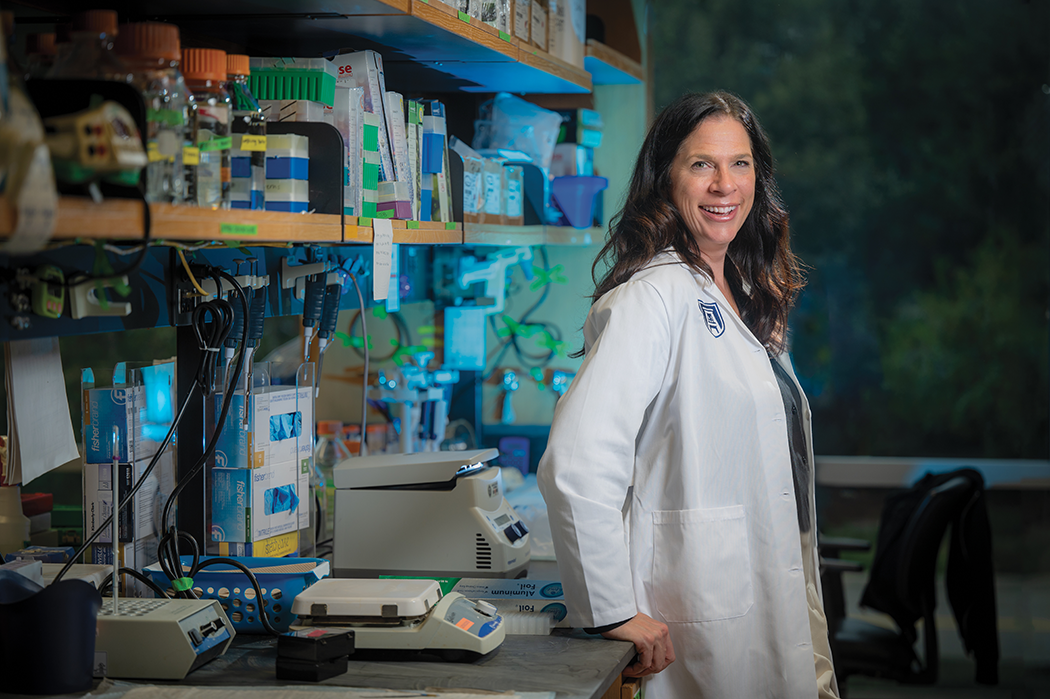
Jennifer C. Sullivan, PhD, dean of The Graduate School at Augusta University, has dedicated her research to better understand why blood pressure increases in hypertension and raising awareness to the dangers of not paying attention to heart health, particularly among women. Throughout her career, Sullivan has been continuously funded by the National Institutes of Health (NIH) and the American Heart Association since becoming a tenure-track faculty member in 2008, and now she has a chance to take her research further after securing a five-year, $7.5 million grant to have Augusta University designated as a Specialized Center of Research Excellence on Sex Differences (SCORE) by the NIH’s Office of Research on Women’s Health. It’s a distinction that places AU among 10 other leaders in research for the field, including Brigham and Women’s Hospital, Cedars-Sinai Medical Center, Emory University, Johns Hopkins University, Massachusetts General Hospital and Harvard Medical School, the Mayo Clinic, the Medical University of South Carolina, the University of Colorado and Yale University. The University of California, Los Angeles has two SCORE programs. “I’m so proud and excited for this opportunity because this has been what I have focused my research program on for my entire career, and to be able to advance it with a program like this, where we can actually build a unique program focused on an area that can make a difference, is just so much fun,” Sullivan said. “Just the fact that Augusta will be included on this list, attached to an organization of the caliber of NIH, will provide opportunities that we’ve never had before, especially for our students and younger researchers.” Sullivan’s SCORE project, “Improving awareness of women with hypertension: ROAR (Rural, Obese, At Risk),” focuses primarily on the fact that, while young women are considered “protected” from hypertension and the associated cardiovascular risk relative to age-matched men, the elimination of hypertension is projected to have a larger impact on cardiovascular disease (CVD) mortality in women. “The group of people with the highest risk of death from hypertension is in the rural South of the U.S., specifically Black women are particularly vulnerable to developing hypertension and CVD,” Sullivan said. According to Sullivan’s research and information available from the American Heart Association (AHA), approximately 19 million deaths were attributed to CVD globally in 2020, an increase of about 20% from 2010. Both Sullivan and the AHA state that cardiovascular disease remains the leading cause of death for both men and women in the United States, and that hypertension is a major modifiable risk factor for CVD. Sullivan said, “It has been suggested that eliminating hypertension would reduce CVD mortality by over 30% in men and 38% in women, but a critical barrier to limiting premature death from CVD is lack of awareness surrounding the risks of CVD. Our overall goal in this new funded project is to transform academic and community understanding of sex as a biological variable in the consideration of hypertension.” The three research projects include Sullivan’s lead project on high fat diets, a project on systemic lupus erythematosus (SLE) disproportionately affects young women led by Erin Taylor, PhD, at the University of Mississippi Medical Center, and another project looking at the role of inflammation and how immune cells are activated in SLE led by Michael Ryan, PhD, at the University of South Carlina’s School of Medicine. But there is more to SCORE than just conducting research. Each SCORE team is also responsible for a career enhancement core and a leadership administrative core. “What really sets these grants apart are the emphasis on the career enhancement and leadership administrative cores. The Career Enhancement Core is designed to be a bit open ended for each SCORE, but in talking to the NIH, what they were most excited about in our project is the community outreach piece we designed. “Our grant includes people across the entire campus, including Augusta University’s Medical College of Georgia, the College of Allied Health Sciences, the College of Education and Human Development and multiple campus partners including some of our sororities on campus and the Center for Writing Excellence,” Sullivan said. “More specifically, the COEHD is able to extend our outreach efforts to our local schools to begin educating children on the importance of screening, and our sororities are obviously connected with other chapters across the southeast which helps us spread our message, as well.” Sullivan notes that, through this portion of the project alone, there will be numerous opportunities to include students from Augusta University’s CAHS, College of Nursing, Department of Kinesiology, the Biomedical Sciences PhD program and the proposed School of Public Health. Marlo Vernon, PhD, associate professor at MCG and researcher for the Georgia Cancer Center, and Amanda Behr, chair of the Medical Illustration Program in CAHS, are also involved in various stages of the project. “The other thing the Career Enhancement Core will do is provide pilot grants to three research projects each year for early-stage investigators. We’ll also be able to fund sabbaticals for graduate students or postdocs to go someplace else and learn cutting edge techniques from other experts, so there is a lot built in that will help us support up-and-coming researchers,” Sullivan said. “We’re now part of this consortium, and they have a once-a-year, in-person meeting at the NIH offices, so we’ll go to that for the first time this year, and what’s neat about it is they’re really promoting young investigators. Each grant can bring up to eight people, the our hope is that we will have the investigators funded by the pilot projects attend next year, giving those folks the opportunity to present and talk to program officers with the NIH and develop a pipeline of investigators committed to studying women’s health and sex as a biological variable.” Sullivan is also looking to designate some of her summer graduate and undergraduate research positions to the project beginning next summer. “The Graduate School already has a summer program to support undergraduates that we will be able to piggyback off of. We have set aside five slots in that program for this that will go to students studying the sex as a biological variable, and the applications for that program, STAR, is already open,” Sullivan said. “We’re also planning a symposium in collaboration with the Physiology Department in April 2024. This is an annual event sponsored by the department, and this year they selected sex differences as the topic, so we are hoping to help increase exposure and attendance.” Looking to know more about the amazing research happening at Augusta? To connect with Jennifer Sullivan, simply click on her icon ow to arrange an interview today.


Name: Linxia Gu Title: Professor of biomedical engineering and science, department head Department/college: Department of Biomedical Engineering and Science/College of Engineering and Science Current research funding: $5 million as co-PI of ASCEND General research focus: My research focuses on developing physically based computational models and conducting mechanical testing to investigate how mechanical stimuli influence cell and tissue responses, providing new insights into the interplay between mechanics and biology. Dr. Gu’s research expertise lies in the biomechanics and biomaterials using both computational and experimental methods. The specific application areas include vascular mechanics and indirect traumatic injury to the brain and eye. Her group is particularly interested in developing multi-scale multi-physics models to study and exploit tissue responses and cellular mechanotransduction, and to gain new mechanistic insights into the interplay of mechanics and human body. The multidisciplinary effort has resulted in > 130 journal papers, and $11 million research funding from NIH, NSF, ARO, and NASA. Q: What has you excited about your current research? The opportunity to bridge the gap between mechanics and biology drives my research. By integrating computational models with experimental data, we are uncovering how mechanical forces influence tissue and cellular responses, particularly in the areas of vascular stenting and traumatic injury to the eye and brain. This had the potential to drive breakthroughs in understanding, prevention and treatment. Q: Why is it important to conduct research? Conducting research is vital for addressing pressing societal challenges and advancing our understanding of complex biomedical systems. Linxia Gu is available to speak with media. Contact Adam Lowenstein, Director of Media Communications at Florida Institute of Technology, at adam@fit.edu to arrange an interview today.


A final disbursement of $8.8 million completes the $17.8 million grant awarded by the Department of Defense (DoD) to Virginia Commonwealth University’s (VCU) Convergence Lab Initiative (CLI). The funding allows CLI to continue advancing research in the areas of quantum and photonic devices, microelectronics, artificial intelligence, neuromorphic computing, arts and biomedical science. “The Convergence Lab Initiative represents a unique opportunity to drive innovation at the intersection of advanced technologies, preparing our students to tackle the critical challenges of tomorrow,” said Nibir Dhar, Ph.D., electrical and computer engineering professor and CLI director. “By combining cutting-edge research in electro-optics, infrared, radio frequency and edge computing, we are equipping the next generation of engineers with the skills to shape the future of both defense and commercial industries.” Working with Industry Partnership is at the heart of CLI and what makes the initiative unique. CivilianCyber, Sivananthan Laboratories and the University of Connecticut are among several collaborators focusing on cutting-edge, multidisciplinary research and workforce development. The lightweight, low-power components CLI helps develop are capable of transforming military operations and also have commercial applications. The Convergence Lab Initiative has 25 collaborative projects in this area focused on: Electro-optic and Infrared Technologies: Enhancing thermal imaging for medical diagnostics, search-and-rescue operations and environmental monitoring. This improves military intelligence, surveillance and reconnaissance capabilities. Radio Frequency and Beyond 5G Communication: Developing ultra-fast, low-latency communication systems for autonomous vehicles, smart cities and telemedicine. Accelerating advancements in this area also address electronic warfare challenges and security vulnerabilities. Optical Communication in the Infrared Wavelength: Increasing data transmission rates to create more efficient networks that support cloud computing, data centers, AI research and covert military communications. Edge Technologies: Creating low size, weight and low power-consuming (SWaP) computing solutions for deployment in constrained environments, such as wearables, medical devices, internet of things devices and autonomous systems. These technologies enhance real-time decision-making capabilities for agriculture, healthcare, industrial automation and defense. Benefits for Students College of Engineering students at VCU have an opportunity to engage with cutting-edge research as part of the DoD grant. Specialized workforce development programs, like the Undergraduate CLI Scholars Program, provide hands-on experience in advanced technologies. The STEM training also includes students from a diverse range of educational backgrounds to encourage a cross-disciplinary environment. Students can also receive industry-specific training through CLI’s Skill-Bridge Program, which facilitates direct connections between business needs and academic education. Unlike the DoD program for transitioning military personnel, the CLI Skill-Bridge is open to students from VCU and other local universities, creating direct connections between industry needs and academic training. This two-way relationship between academia and industry is unlike traditional academic research centers. With the College of Engineering’s focus on public-private partnerships, VCU becomes a registered partner with the participating businesses, collaborating to design individualized training programs focused on the CLI’s core research areas. This approach ensures students receive relevant, up-to-date training while companies gain access to a pipeline of skilled talent familiar with the latest industry trends and innovations. “The significance of this grant extends beyond immediate research outcomes. It addresses critical capability gaps for both the DoD and commercial sectors,” says Dhar. “This dual-use approach maximizes DoD investment impacts and accelerates innovation in areas that affect everyday life — from healthcare and environmental monitoring to communication networks and smart infrastructure. Breakthroughs emerging from these collaborations will strengthen national security while creating commercial spinoffs that drive economic growth and improve quality of life for communities both locally and globally. Advances in infrared technology, in particular, will position the VCU College of Engineering as a center for defense technologies and new ideas.”


University of Delaware researchers have found that measuring brain stiffness is a reliable way to predict brain age. This information could be used to identify structural differences that indicate departure from the normal aging process, potentially identifying and addressing disorders such as Alzheimer’s disease and Parkinson’s disease. In recent findings, Curtis Johnson, associate professor of biomedical engineering, and Austin Brockmeier, assistant professor of electrical and computer engineering, show that measuring both brain stiffness and brain volume produces the most accurate predictions of chronological age. Their findings were published in a recent edition of the journal Biology Methods and Protocols. The pair worked with three current and former UD students to reach their conclusions. “Brain volume is a common measure that we use to study the brain,” Johnson said. “But something has to be happening to cause a brain to shrink. Something is happening at the microscale that causes it to shrink — changes in the tissue that also cause stiffness to change. And that precedes whatever happens when the volume changes.” “The stiffness maps all seem kind of random — until we see a large number of images and the randomness fades away and we start to see common patterns in stiffness,” Johnson said. “We sort of knew there was more [information] in there than what we were extracting." A cutting-edge magnetic resonance imaging (MRI) scanner at UD’s Center for Biomedical and Brain Imaging handled the brain scanning. On the artificial intelligence side, the brain maps were analyzed by three-dimensional “convolutional neural networks,” which — as the name suggests — are convoluted and complicated, incorporating many layers and dimensions. To arrange and interview with Johnson or Brockmeier, send an email to mediarelations@udel.edu


Nurse Scientist Susan Smith Birkhoff Makes Two Research ‘Firsts’ in Delaware
Susan Smith Birkhoff, Ph.D., RN, is making nursing history in the First State through the Delaware IDeA Network of Biomedical Research Excellence (INBRE). She is the first nurse scientist to be named an INBRE site principal investigator and she is the first nurse to receive the Seema S. Sonnad Mentor of the Year Award from INBRE’s Junior Investigator Network. INBRE is a collaborative network of Delaware academic, health care and research institutions, composed of ChristianaCare, Delaware State University, Delaware Technical Community College Nemours Children’s Health and University of Delaware. First nurse scientist to lead INBRE site As the INBRE site principal investigator at ChristianaCare, Smith Birkhoff will expand on the research network’s success at a large academic health center. In collaboration with the INBRE partners and the program manager, Kellie Patterson, BSN, RN, CCRP, she will leverage centers of excellence across ChristianaCare to host an exceptional student program, increase the health system's contributions to the pilot program pool and grow the visibility of INBRE across the enterprise. “Susan brings a terrific combination of skills to this role,” said Omar Khan, M.D., MHS, FAAFP, chief scientific officer for ChristianaCare and institutional representative on the INBRE steering committee. “She is a mentor, scientist and teacher, and her experience with INBRE and the state’s other premier research programs will ensure that we deliver the highest value for the Delaware community.” Smith Birkhoff leads and supports interprofessional research education, systemwide technology evaluation, and grantsmanship. She spearheads a diverse research program, encompassing areas such as robotics in health care, virtual reality in medicine and burnout in the nursing workforce. As program director of Technology Research & Education at ChristianaCare, she collaborates across the health system’s academic research enterprise to achieve both clinician- and patient-oriented research outcomes. “Susan is a wonderful colleague and she is a true researcher-educator,” said Neil Jasani, M.D., MBA, FACEP, chief academic officer for ChristianaCare. “She is a great fit for the work of Delaware INBRE as we advance ChristianaCare’s contribution to this essential research network.” She co-leads an innovative program to study the one of the first deployments of increasingly autonomous robots in a U.S. health care setting and directs the first Nursing Research Fellowship in Robotics and Innovation, housed at ChristianaCare. First nurse named Mentor of the Year Smith Birkhoff received the 2025 Seema S. Sonnad Mentor of the Year Award from INBRE’s Junior Investigator Network, nominated for her exceptional mentorship by ChristianaCare colleagues whom she mentored. Her nominators were: Kaci Rainey, MSN, RN, CEN, TCRN, an evidence-based practice specialist at ChristianaCare, and Briana Abernathy, BSN, RN, CEN, a nurse in utilization management at ChristianaCare and an inaugral nurse fellow in the Nursing Research Fellowship in Robotics and Innovation. “They say that if you are not at the table, you are on the menu. We are profoundly grateful that Dr. Smith Birkhoff selflessly provided us with a seat at the table and an overflowing feast of knowledge,” said Abernathy in presenting the award. “This knowledge has quenched our thirst for change and fueled our hunger for research and innovation, setting the stage for the rest of our careers.”




3D-printed lung model helps researchers study aerosol deposition in the lungs
Treating respiratory diseases is challenging. Inhalable medicines depend on delivering particles to the right lung areas, which is complicated by factors like the drug, delivery method and patient variability, or even exposure to smoke or asbestos particles. University of Delaware researchers have developed an adaptable 3D lung model to address this issue by replicating realistic breathing maneuvers and offering personalized evaluation of aerosol therapeutics. “If it's something environmental and toxic that we're worried about, knowing how far and how deep in the lung it goes is important,” said Catherine Fromen, University of Delaware Centennial Associate Professor for Excellence in Research and Education in the Department of Chemical and Biomolecular Engineering. “If it's designing a better pharmaceutical drug for asthma or a respiratory disease, knowing exactly where the inhaled aerosol lands and how deep the medicine can penetrate will predict how well that works.”that can replicate realistic breathing maneuvers and offer personalized evaluation of aerosol therapeutics under various breathing conditions. Fromen and two UD alumni have submitted a patent application on the 3D lung model invention through UD’s Office of Economic Innovation and Partnerships (OEIP), the unit responsible for managing intellectual property at UD. In a paper published in the journal Device, Fromen and her team demonstrate how their new 3D lung model can advance understanding of how inhalable medications behave in the upper airways and deeper areas of the lung. This can provide a broader picture on how to predict the effectiveness of inhalable medications in models and computer simulations for different people or age groups. The researchers detail in the paper how they built the 3D structure and what they’ve learned so far. Valuable research tool The purpose of the lung is gas exchange. In practice, the lung is often approximated as the size of a tennis court that is exchanging oxygen and carbon dioxide with the bloodstream in our bodies. This is a huge surface area, and that function is critical — if your lungs go down, you're in trouble. Fromen described this branching lung architecture like a tree that starts with a trunk and branches out into smaller and smaller limbs, ranging in size from a few centimeters in the trachea to about 100 microns (roughly the combined width of two hairs on your head) in the lung’s farthest regions. These branches create a complex network that filters aerosols as they travel through the lung. Just as tree branches end in leaves, the lung’s branches culminate in delicate, leaf-like structures called alveoli, where gases are exchanged. “Those alveoli in the deeper airways make the surface area that provides this necessary gas exchange, so you don't want environmental things getting in there where they can damage these sensitive, finer structures,” said Fromen, who has a joint appointment in biomedical engineering. Mimicking the complex structure and function of the lung in a lab setting is inherently challenging. The UD-developed 3D lung model is unique in several ways. First, the model breathes in the same cyclic motion as an actual lung. That’s key, Fromen said. The model also contains lattice structures to represent the entire volume and surface area of a lung. These lattices, made possible through 3D printing, are a critical innovation, enabling precise design to mimic the lung's filtering processes without needing to recreate its full biological complexity. “There's nothing currently out there that has both of these features,” she explained. “This means that we can look at the entire dosage of an inhaled medicine. We can look at exposure over time, and we can capture what happens when you inhale the medication and where the medicine deposits, as well as what gets exhaled as you breathe.” The testing process Testing how far an aerosol or environmental particle travels inside the 3D lung model is a multi-step process. The exposure of the model to the aerosol only takes about five minutes, but the analysis is time-consuming. The researchers add fluorescent molecules to the solution being tested to track where the particles deposit inside the model’s 150 different parts. “We wash each part and rinse away everything that deposits. The fluorescence is just a molecule in the solution. When it deposits, we know the concentration of that, so, when we rinse it out, we can measure how much fluorescence was recovered,” Fromen said. This data allows them to create a heat map of where the aerosols deposit throughout the lung model’s airways, which then can be validated against benchmarked clinical data for where such aerosols would be expected to go in a human under similar conditions. The team’s current model matches a healthy person under sitting/breathing conditions for a single aerosol size, but Fromen’s team is working to ensure the model is versatile across a much broader range of conditions. “An asthma attack, exercise, cystic fibrosis, chronic obstructive pulmonary disorder (COPD) — all those things are going to really affect where aerosols deposit. We want to make sure our model can capture those differences,” Fromen said. The ability to examine disease features like airway narrowing or mucus buildup could lead to more personalized care, such as tailored medication doses or redesigned inhalers. Currently, inhaled medicines follow a one-size-fits-all approach, but the UD-developed model offers a tool to address these issues and understand why many inhaled medicines fail clinical trials.

National Science Foundation Confirms Record Research Growth at LSU
The National Science Foundation confirmed LSU’s record research expenditures of $488 million in fiscal year 2023. This historic growth of 14% compared to 2022 was previously announced by LSU and represents top performance alongside research university peers such as the University of Kentucky and the University of Tennessee. The growth reflects increased research activity across the LSU Family—especially on the flagship campus and at LSU Health New Orleans and LSU Health Shreveport. The national ranking of LSU’s five research campuses—the flagship in Baton Rouge, the LSU AgCenter, Pennington Biomedical Research Center, and the two LSU Health campuses—increased from 71 to 69, a rise moderated by the average growth of U.S. research universities around 11%. Compared to its peers, LSU is a leader in win-win partnerships with state and local government, with strong and continued investment in research. LSU research adds an estimated $1.3 billion to the Louisiana economy each year. The numbers that were just confirmed by the National Science Foundation recognize LSU as especially strong in federally grant-funded research in life sciences, geosciences, math and statistics, and computer and information sciences. These strengths align with the data-driven research priorities of the LSU Scholarship First Agenda to create new solutions for agriculture, biomedicine, coast, defense, and energy. “This NSF report confirms our focus on research growth to meet the needs of the state as well as our dedication to LSU’s Scholarship First Agenda,” said Robert Twilley, LSU vice president of research and economic development. “The significant increase in federal grants to LSU and Louisiana represents growing investment in our competitiveness and capacity to solve problems for the state and nation.” Read the full NSF report: https://ncses.nsf.gov/surveys/higher-education-research-development/2023


Researchers race to detect Alzheimer's sooner using $3.9M grant
Too often, people learn they have Alzheimer’s disease when it’s too late. The changes in the brain that lead to the disease manifesting with symptoms have already been occurring for decades. Researchers at the University of Delaware will attempt to detect the disease sooner through a new study that examines changes in the arteries and brain tissue in midlife adults in their 50s and 60s. The findings of this work, funded by a nearly $4 million grant from the National Institute on Aging (NIA), could identify the earliest mechanisms linking vascular aging to the loss of brain tissue integrity, leading to new targets for interventions aimed at preventing age-related cognitive impairment. “People who develop high blood pressure or stiffening of the aorta and carotid arteries in midlife are at a much higher risk for developing cognitive impairment or dementia in late life,” said Christopher Martens, the principal investigator of the study. Martens, an associate professor of kinesiology and applied physiology in UD's College of Health Sciences and director of the Delaware Center for Cognitive Aging (DECCAR), is working closely with Curtis Johnson, an associate professor of biomedical engineering in the College of Engineering and leader of the neuroimaging biomarker core within DECCAR, on research funded by a nearly $4 million grant from the National Institute on Aging (NIA), a division of the National Institutes of Health (NIH). “A lot happens as we age, so we’re aiming to pinpoint the timing and exact mechanisms that cause these changes in midlife adults,” Martens said. This latest grant extends DECCAR’s ongoing Delaware Longitudinal Study for Alzheimer’s Prevention (DeLSAP), which seeks to study how risk and protective factors for dementia are related and change over time. Those eligible for DeLSAP could also meet the criteria for participating in the new study. In his Neurovascular Aging Laboratory, Martens studies mechanisms leading to the stiffening of arteries, while Johnson is specifically interested in measuring the stiffness of the brain. “As a person ages, the brain gets softer and breaks down, and we’re looking to see whether changes in arterial stiffness and patterns of blood flow in the brain cause this decline,” Johnson said. Changes in blood flow to the brain come from controllable factors. Smoking, cardiovascular health, diet and exercise all impact blood flow positively and negatively. “A lot of aging research is done at the end of life,” Johnson said. “We want to look at midlife and try to predict what happens later in life so we can prevent it.” While the brain gets softer with age, arteries get stiffer. “We hypothesize that midlife increases in stiffness in blood vessels cause damaging pulsatile pressure to enter the brain,” Martens said. “We believe this is one of the reasons we start to develop cognitive issues at an older age because the brain is exposed to increased pressure; that pressure is likely inflicting damage on surrounding brain tissue.” In Johnson’s Mechanical Neuroimaging Lab, researchers will use high-resolution magnetic resonance elastography (MRE) to determine where brain damage occurs and what specific brain structures may be affected. “From an MRI perspective, most researchers look at AD and other neurodegenerative diseases like multiple sclerosis with an emphasis on detection in a hospital setting,” Johnson said. “Using highly specialized techniques we’ve developed, we focus on the earlier side and how these changes progress into disease from the neuroscience side, emphasizing prevention.” Together, they’ll seek to learn whether arterial stiffness causes the kind of cognitive impairment seen in AD or whether the decline is associated with a loss in the integrity of brain tissue. “If we can prove arterial stiffness is playing a causal role in cognitive aging, that would provide further support for focusing on blood vessel health as an intervention for delaying AD or other forms of dementia versus solely focusing on the brain,” Martens said.
