
Experts Matter. Find Yours.
Connect for media, speaking, professional opportunities & more.

2024 presidential and Michigan state elections: MSU experts can comment
MSU experts can discuss national political issues to the Supreme Court and constitutional issues to Michigan's state politics and races The 2024 presidential election is in full swing. As President Joe Biden is set to cruise to the Democratic nomination and former President Donald Trump is likely poised to receive the Republican nomination, 2024 is setting up to be a rematch of 2020. Michigan’s primary is now earlier on the calendar, Feb. 27, with the Republicans holding a caucus to award their remaining delegates on March 2. Despite being a presidential election year, Michigan has important statewide elections. An open U.S. Senate seat, vacated by retiring Sen. Debbie Stabenow, could tip the balance of power in the Senate, potentially deciding which party holds the majority. Michigan’s seventh and eight congressional races have incumbents leaving office, making those set to be some of the most nationally watched and funded races nationally. The state House currently has an exact bipartisan split, setting up races with very high stakes. Michigan State University experts are available to comment on many issues of the presidential election including: political parties and their evolution, campaign strategy and polling, Trump’s legal troubles and the U.S. Supreme Court, political diversity and messaging and local elections and voting. Additionally, several of these experts can comment on Michigan’s federal and state elections. General presidential and Michigan election issues Corwin Smidt is an associate professor of American politics and research methods in the Department of Political Science in the College of Social Science. He can comment on national elections and polling for the presidential election as well as statewide elections. Contact: smidtc@msu.edu "Michigan continues to trend toward being a battleground state, but right now it looks like a battle of attrition. Donald Trump's poll numbers really haven't improved as much since 2021 as Joe Biden's have declined, but Governor Whitmer's popularity remains high. The state Republican party continues to have fights over its management and will have a contested and possibly divisive Senate primary. Despite this, Republicans have a chance to pick up seats in the US House and state legislature because of Democratic retirements and ongoing redistricting changes." Matt Grossmann is the director of MSU’s Institute for Public Policy and Social Research and a professor of political science. He is an expert on a broad range of topics surrounding the 2024 election, including political parties ,campaigns and elections. He also oversees survey research, candidate development and legislative training at MSU. Additionally, he can discuss Michigan’s primary and elections. Contact: grossm63@msu.edu “The presidential nomination process evolved out of reforms to the delegate selection process for those conventions, which now means delegates are overwhelmingly selected based on presidential primary results. From the voters’ perspective, it often looks like any other election where you select your preferred candidate. But the parties still have power to coordinate their rules and selection procedures. Michigan has an opportunity to set the terms for future elections, showing that it can become engaged, with diverse interests, and earn the right to vote early in the process in 2028. Since Michigan does not have party registration, voters will be able to participate in the primary of their choice, which has provided an incentive for individuals to vote in the contest that presents the most uncertainty.” Read more from Grossmann on MSUToday. Dante Chinni is a research specialist in MSU’s School of Journalism and is the director of the American Communities Project in the College of Communication Arts and Sciences. He can discuss polling and changes in the parties over time, as well as the voting patterns among groups in specific places. He can also comment on various Michigan political issues. Contact: chinni@msu.edu “In Michigan, and in other states, the 2024 election will be determined by the margin of victory in different kinds of places. Can the Democrats get what they need out of the big city and college town communities, like Wayne, Ingham and Washtenaw counties? Can the Republicans get the numbers they need out of blue-collar middle suburbs, such as Macomb? The turnout and margins in those kinds of places, and others, will determine who wins in November.” Constitutional issues and the Supreme Court Jordan Cash is an assistant professor of political theory and constitutional democracy in James Madison College. He can comment on general requests about the presidency and national elections as well as issues surrounding the Supreme Court. Contact: cashjor1@msu.edu “The 2024 election is already shaping up to be one of the most unusual elections in American history, but one of the most unique aspects is the role that the judiciary is likely to play in the process. With former president and likely Republican nominee Donald Trump facing indictments at both the state and federal levels, the election season is as likely to be punctuated with legal news and updates as it is with campaign speeches and negative advertising. Moreover, the Supreme Court will be critical as it has heard or will likely be hearing cases surrounding whether states can disqualify Trump from the ballot under the 14th Amendment and whether he has absolute immunity from when he was president. When we also consider that President Joe Biden is facing his own investigations from House Republicans, the election seems poised to not only raise the political stakes but also considerable constitutional and legal questions.” Read more from Cash about presidential elections on MSUToday. Brian Kalt is a professor of law and the Harold Norris Faculty Scholar in the College of Law. He can comment on 20th Amendment issues, the electoral college and presidential prosecution and immunities. Contact: kalt@law.msu.edu “A lot of constitutional law questions that seemed purely theoretical are now front and center in our election campaign. Hopefully, the Supreme Court will move quickly and provide some clarity and certainty on these issues so that when November rolls around, voters can make a fully informed choice.” Ryan Black is a professor of American politics in the Department of Political Science in the College of Social Science, and a faculty affiliate in the College of Law. His expertise includes public opinion and the Supreme Court, and he can speak to appointments and vacancies. Contact: rcblack@msu.edu “Results of the 2024 election have the potential to profoundly shift the center of gravity in the politics of appointments to the federal judiciary, which includes, most importantly, the Supreme Court. There is no doubt that a president's most enduring legacy is who they put on the High Court, but confirmation politics today make the partisan makeup of the Senate a prominent roadblock in a president’s path to success.” Erica Frantz is an associate professor of comparative politics in the Department of Political Science in the College of Social Science. She is a specialist on issues and themes relating to authoritarianism. Contact: frantzer@msu.edu “Today’s democracies typically fall apart at the hands of their elected leaders, such that elections are critical focal points for understanding democratic trajectories. Importantly, research shows that where leaders come to power backed by personalist parties – or parties that are synonymous with the leader’s persona – the risk of democratic erosion increases substantially. For the U.S., this implies that the more the Republican Party becomes indistinguishable from Trump, the more American democracy is vulnerable to collapse from within should Trump return to the presidency.” Political messaging and diversity Dustin Carnahan is an associate professor in the College of Communication Arts and Sciences. His work focuses on how exposure to political information influences people’s attitudes, beliefs and decisions. His recent research focuses on how people come to encounter and believe misinformation and the effectiveness of messages designed to correct misinformed beliefs. Contact: carnaha9@msu.edu “While research suggests that political misinformation does not have a profound impact on voters’ decisions, the proliferation of misinformation can have more subtle effects on voters and elections – such as fostering toxic discourse around issues and candidates, promoting political polarization and distracting from more substantive matters. Concerns around misinformation are likely to be of great interest during the upcoming election cycle as advances in AI technology pose significant challenges to voters’ ability to identify what is real and what is fake.” Eric Juenke is an associate professor of American politics in the Department of Political Science in the College of Social Science. He can comment on issues relating to minority candidates, specifically the candidacy and election of minority candidates. Additionally, he teaches in the Chicano/Latino Studies program. Contact: juenke@msu.edu “While we do seem to have a rematch at the top of the ticket, with a vice president who is a woman of color and another vice president who has yet to be announced but could also be a woman candidate, we will be seeing a continued diverse candidate pool this cycle, I expect. It’s still early yet in the congressional races, but there should be a number of high-profile races in the country and in Michigan that should highlight a more diverse candidate pool. While the parties still have a long, long way to go in recruiting and supporting women and racial and ethnic minority candidates to run for office, the trajectory is positive.” Daniel Bergan is an associate professor and the director of master’s studies in the College of Communication Arts and Sciences, who also has an appointment in James Madison College. His research focuses on constituent communications with policymakers. Contact: bergan@msu.edu “When communicating with a policymaker, especially one with whom you disagree, you want to prevent them from discounting your opinion. One way to do this is by citing quality evidence to support your position. When contacting a policymaker about an issue, be aware that they may discount your opinion if they disagree. But note also that carefully crafted communications can convey your position without being written off — and could improve how accurately the policymaker understands public attitudes about public policies.” Read more from Bergan on MSUToday. Importance of local elections Sarah Reckhow is a professor of American politics in the Department of Political Science in the College of Social Science. She can comment on topics related to education policy in the presidential election. She is a specialist on local elections and school board elections. Contact: reckhow@msu.edu “Partisan polarization is having a growing impact on education politics, and we can see growing disagreement between Democrats and Republicans on key issues such as school choice and curriculum. This polarization is playing a role in elections, even nonpartisan school board elections, and it will be an important trend to watch in 2024.” Erin Kramer is the community liaison coordinator for MSU Community and Student Relations. She also advises MSUVote to support students and the local community voting. She can comment on efforts to promote voting efforts and resources that can be offered by universities and municipalities. Contact: kramere6@msu.edu “Michigan State University is home to MSUvote, an Initiative that strives to support students in their civic engagement. Student participation in voting is both a right and a responsibility. MSUvote is committed to getting out the vote,getting out the vote, reducing barriers to registration, and supporting all educational initiatives. Over the years, Michigan State has been fortunate to work with the East Lansing, Lansing, Meridian Township, and Bath Clerks to support our students in exercising their right to vote. Participation is foundational to the function of democracy, and we are committed to supporting students in that activity. MSUvote has hosted registration rallies, absentee parties, and worked to facilitate awareness of elections through multiple campus channels over the years to support participation and education. This year, the MSU STEM Building will be home to one of East Lansing’s Early Voting Centers, it will be operating Saturday Feb. 17 through Sunday Feb. 25.” Top issues for voters David Ortega is an associate professor in the Department of Agricultural, Food and Resource Economics in the College of Agriculture and Natural Resources, where he is also a faculty laureate. He can comment on consumer, producer and agribusiness decisions that affect the agricultural and food sectors, including the cost of food, which remains a concern for many Americans. Contact: dlortega@msu.edu “Persistent high food prices are a constant reminder of the economic difficulties facing voters. Although overall inflation has cooled and grocery price increases have moderated, food costs 25% more today than it did four years ago. And given the frequent nature of grocery shopping, food costs have a disproportionate impact on how voters perceive inflation.” Robert Brathwaite is the associate dean for research and an associate professor with a specialization in international relations in James Madison College. He can comment on foreign conflict and relations, including how it will impact U.S. policy and the presidential election. Contact: brathwa1@msu.edu “As the war between Russia and Ukraine approaches it two-year mark, the political and economic ramifications of this conflict are becoming more profound. Some political dynamics to watch this year associated with this conflict include changes in NATO’s military posture, political unity of the European Union, deepening Sino-Russian strategic cooperation, and the 2024 US presidential election. This conflict will also impact important global economic trends this year that include global energy supplies, food security, technology export controls, and the role of the US dollar in the global economy. More importantly, this ongoing conflict is a catalyst to evolving changes in the global security architecture with costs and consequences that are unknown.” Jason Miller is the interim chairperson of them Department of Supply Chain Management and the Eli Broad Professor in Supply Chain Management in the Broad College of Business. He can comment on various supply chain issues such as the impact of Suez Canal diversions on disruptions and inflation as well as the impact of tariffs on U.S. firms and consumers, as foreign conflict and trade are top of mind this presidential election. Contact: mill2831@broad.msu.edu “Business leader across industries ranging from manufacturing and mining to retailing are closely watching the 2024 election cycle, as the outcome could substantially shape the business landscape in the form of tariffs, foreign policy toward China and Russia, and the extent of military escalation in the Mideast. All of these policies affect strategic, long-term decisions regarding global sourcing, market entry strategies, and capacity and demand planning.” Antonio Doblas Madrid is an associate professor in the Department of Economics in the College of Social Science. He can comment on the economy and the effect of inflation, which remains a top issue for voters this year. Contact: doblasma@msu.edu “The economy and inflation is an issue on the minds of many Americans.Forecasters and market-based measures of expectations both predict that inflation is likely to continue falling gradually in 2024, to about 2.5%. Thus, the inflation shock that hit the economy is expected to continue fading, although it may take some time to go that last mile from 3% to 2%. The Fed also appears to be quite optimistic on inflation, given its latest forward guidance.” Read more from Doblas Madrid on the economy and inflation on MSUToday.


Image shows how tiny water channels control how water enters and exits cells through their membranes The Aston Institute for Membrane Excellence (AIME) will be set up with a £10m grant from Research England AIME will be led by Professor Roslyn Bill from Biosciences and Professor Paul Topham from Chemical Engineering and Applied Chemistry The globally unique institute will use biomimetic polymer membranes for applications such as water purification and drug development Aston University will establish the Aston Institute for Membrane Excellence (AIME), a globally unique, cross-disciplinary institute to develop novel biomimetic membranes, after receiving a major grant of £10m from Research England. AIME will be led by Professor Roslyn Bill, from the School of Biosciences, with co-lead Professor Paul Topham from the department of Chemical Engineering and Applied Chemistry (CEAC). Membranes, both biological and synthetic, are hugely important in many sectors. For example, the world’s top ten selling human medicines all target proteins in biological membranes, while synthetic polymer membranes are used in the US$100bn/year water purification industry. The team behind AIME believes that the full potential of membranes will only be realised by an interdisciplinary group spanning biology, physics and chemistry that can investigate membranes holistically. Professor Bill, a European Research Council (ERC) Advanced grantee leads Aston Membrane Proteins and Lipids (AMPL) research centre of excellence that studies the structure and function of membrane proteins and associated lipids. Professor Topham leads Aston Polymer Research Group (APRG), which investigates the nanoscale behaviour of block copolymers (a type of polymer with a structure made of more than one type of polymer molecule) and polymer technologies for membranes. AMPL and APRG have already begun collaborative research and AIME will bring together the complementary expertise of both research clusters into one institute. AIME will initially comprise the eight researchers from AMPL and APRG. Alongside the co-leads Professor Bill and Professor Topham, will be Dr Alan Goddard, Professor Andrew Devitt, Professor Corinne Spickett, Dr Alice Rothnie, Dr Matt Derry and Dr Alfred Fernandez. It plans to recruit three further academics, six tenure-track research fellows, three postdoctoral research assistants (PDRAs), six PhD students, a research technician and a business development manager. Importantly, AIME will work with many existing Aston University colleagues to build a comprehensive research community focused on all aspects of membrane science. The new AIME team will focus on the development of bioinspired, highly selective polymer structures for applications in water purification and waste remediation, nanoparticles loaded with therapeutic molecules to treat disorders ranging from chronic wounds to neurological injuries, and the purification of individual membrane proteins with polymers to study them as drug targets. The vision is for AIME to become a ‘one-stop shop’ for interdisciplinary, translational membrane research through its facilities access and expertise, ideally located in the heart of the country. Professor Bill said: “The creation of AIME is ground-breaking. Together with Aston’s investment, E3 funding will deliver a step-change in scale and the rate at which we can grow capacity. We will address intractable scientific challenges in health, disease, and biotechnology, combining our world-class expertise in polymer chemistry and membrane biology to study membranes holistically. The excellence of our science, alongside recent growth in collaborative successes means we have a unique opportunity to deliver AIME’s ambitious and inclusive vision.” Professor Topham said: “We are really excited by this fantastic opportunity to work more closely with our expert colleagues in Biosciences to create advanced technology to address real world problems. From our side, we are interested in molecular engineering, where we control the molecular structure of new materials to manipulate their properties to do the things that we want! Moreover, we are passionate about a fully sustainable future for our planet, and this investment will enable us to develop technological solutions in a sustainable or ‘green’ way.” Professor Aleks Subic, Vice-Chancellor and Chief Executive of Aston University, says: “Our new Aston Institute for Membrane Excellence (AIME) will be a regional, national, and international research leader in membrane science, driving game-changing research and innovation that will produce a pipeline of high-quality research outcomes leading to socioeconomic impact, develop future global research leaders, create advanced tech spinout companies and high value-added jobs for Birmingham and the West Midlands region. Its establishment aligns perfectly with our 2030 strategy that positions Aston University as a leading university of science, technology and enterprise.” Steven Heales, Policy Manager (Innovation) at the West Midlands Combined Authority, said: “WMCA is delighted to see Research England back the Aston Institute for Membrane Excellence. This will enable Aston University’s excellent academics and research community to work closely with businesses to make advances in membrane technology and applications. “In 2023 the West Midlands Combined Authority agreed a Deeper Devolution Trailblazer Deal with Government, which included a new strategic innovation partnership with Government. Projects like AIME are exactly the kind of impact we expect this new partnership to generate, so watch this space.” Lisa Smith, chief executive of Midlands Mindforge, the patient capital investment company formed by eight Midlands research-intensive universities including Aston University, said: “This grant is an important vote of confidence in the Midlands scientific R&D ecosystem. AIME will play an important role in the future research of pioneering breakthroughs in membrane science and enable the world-leading research team at Aston University to develop solutions to real world problems. We look forward to closely working with the Institute and nurturing best-in-field research being undertaken at Aston out of the lab and into the wider society so it can make a positive impact”. Rob Valentine, regional director of Bruntwood SciTech, the UK’s leading developer of city-wide innovation ecosystems and specialist environments and a strategic partner in Birmingham Innovation Quarter, said: "As a proud supporter of the Aston Institute for Membrane Excellence (AIME), I am thrilled at the launch of this groundbreaking initiative. AIME exemplifies Aston University's commitment to advancing cutting-edge interdisciplinary research and further raises the profile of the region’s exemplary research capabilities and sector specialisms. AIME's vision of becoming a 'one-stop shop' for translational membrane research, strategically located at the heart of the country, aligns perfectly with our strategy at Bruntwood SciTech. We are committed to working with partners, including Aston University, to develop a globally significant innovation district at the heart of the UK where the brightest minds and most inspiring spaces will foster tomorrow’s innovation.” Membrane research at Aston University has also recently received two other grants. In November 2023, Professor Bill received £196,648 from the Biotechnology and Biological Sciences Research Council’s Pioneer Awards Scheme to understand how tiny membrane water channels in brain cells keep brains healthy. In December 2023, a team led by AIME team-member Dr Derry received £165,999 from the Engineering and Physical Sciences Research Council to develop biomimetic membranes for water purification. For more information about AIME, visit the webpage.



SME innovation through the lens of ancient myths - public lecture
Professor Nicholas Theodorakopoulos will explore the transformation in the perception of SMEs since the 1970s He will explain the significance of theory-driven design and delivery of interventions for building the capacity of SMEs to innovate The lecture will take place on Thursday 18 January 2024 at Aston Business School from 1800 hrs. Aston University entrepreneurship expert, Professor Nicholas Theodorakopoulos, will be giving his inaugural lecture at Aston Business School on Thursday 18 January 2024. In his talk SME Innovation, Theory-Driven Intervention, and Ancient Myths Professor Theodorakopoulos will explore the transformation in the perception of SMEs, from being viewed as an anachronism in the 1970s to becoming the driving engine of innovation and a prominent feature of public policy worldwide. Professor Theodorakopoulos will explore the significance of theory-driven design and delivery of interventions for building the capacity of SMEs to innovate and will explain that these are not just academic pursuits, but essential tools for developing replicable and impactful intervention programmes on a national and international scale. He will also present a compelling example of a successful intervention that he has run with colleagues for almost a decade in the West Midlands region. Professor Theodorakopoulos said: “The paradigm shift in SME perception necessitates a robust approach to fostering effective SME development ecosystems, not least through Research and Innovation policies. “A critical component of this policy domain lies in strengthening collaboration and knowledge exchange between universities and SMEs, often achieved through targeted interventions. “I look forward to drawing upon an ancient myth as a metaphor for the significance of knowing not just ‘what works’, but also ‘how it works’, in university-SME interventions.” The lecture is open to the public and free to attend in person or online. The in person event will be followed by a drinks reception. To book your place, click here.

(WILMINGTON, Del. – December 1, 2023) ChristianaCare is investing $1 million in local nonprofit organizations to improve health for communities in Delaware, Pennsylvania and Maryland. Announced during a special event Thursday at Ezion Fair Baptist Church in Wilmington’s Southbridge neighborhood, the funding was given to 19 nonprofits through ChristianaCare’s Community Investment Fund. The fund supports partnerships to build the collective capacity of communities to address social, behavioral and environmental factors that impact health. “In order to improve health equity and accelerate progress in addressing the social drivers of health, we need partners,” said Bettina Tweardy Riveros, chief public affairs officer and chief health equity officer at ChristianaCare. “While ChristianaCare provides excellent health care, we also understand that we are not the experts on every social driver of health. And that’s why we are committed to strengthening these organizations and enhancing their ability to make a positive impact. Together, we are creating health in the neighborhoods and communities we serve.” As an anchor institution in the community, ChristianaCare invests in community health improvement programs as a core component of its community benefit activities. To date, ChristianaCare has provided more than $4 million to 52 community organizations through its Community Investment Fund, which was established in 2019. This year’s awardees received funding to support community health improvement initiatives in high-need communities to address a diverse array of health-related needs, including safe housing, access to nutritious food – and even climate change, which the White House recently highlighted as a social driver of health. One of the organizations that received a grant is Delaware Humanities, which provides educational and cultural opportunities to help Delawareans gain a deeper understanding of human identity. The Wilmington, Del.-headquartered nonprofit will use its grant to develop environmental justice toolkits designed to inspire, facilitate and guide conversations about the importance of environmental issues in Delaware. “Major focus areas at our organization include health and environment, which impact human behavior and our collective sense of well-being,” said Michele Anstine, executive director of Delaware Humanities. “ChristianaCare’s grant will help us empower our communities so they can more truly understand the deep connection between health and their environment and its profound impact on the human experience.” Good Neighbors Home Repair, headquartered in Kennett Square, Pennsylvania, received a grant to expand its free home repair services to houses for low-income households, making their homes safer, healthier and more livable. “Many of the houses that we repair belong to people who are coming home after a hospital discharge,” said Brad Dunn, advancement director for Good Neighbors Home Repair. “They often are returning to homes with broken handrails and misshapen steps but are unable to pay for repairs because they live on fixed incomes. We are deeply appreciative that ChristianaCare is supporting our efforts to provide services that keep our clients safe, healthy and at home.” Recipients were selected based on the quality of their proposals and implementation plans, and on the alignment of their proposals with the key priorities of ChristianaCare’s Community Health Needs Assessment and Community Health Implementation Plan. The funded initiatives will be implemented throughout the upcoming year. The 19 latest Community Investment Fund recipients are: AIDS Delaware. Bayside Community Network, Inc. Children & Families First. Cornerstone West CDC. Deep Roots, Inc. Delaware 211. Delaware Center for Justice. Delaware Coalition Against Domestic Violence. Delaware Humanities. Delaware Interfaith Power & Light. Good Neighbors Home Repair. Green Beret Project. Healthy Food for Healthy Kids. Project New Start. Saint Patrick'’s Center. Sussex County Habitat for Humanity. The Resurrection Center. YMCA of Delaware. YWCA Delaware.


Georgia Southern University launches ‘Together We Soar’ Campaign
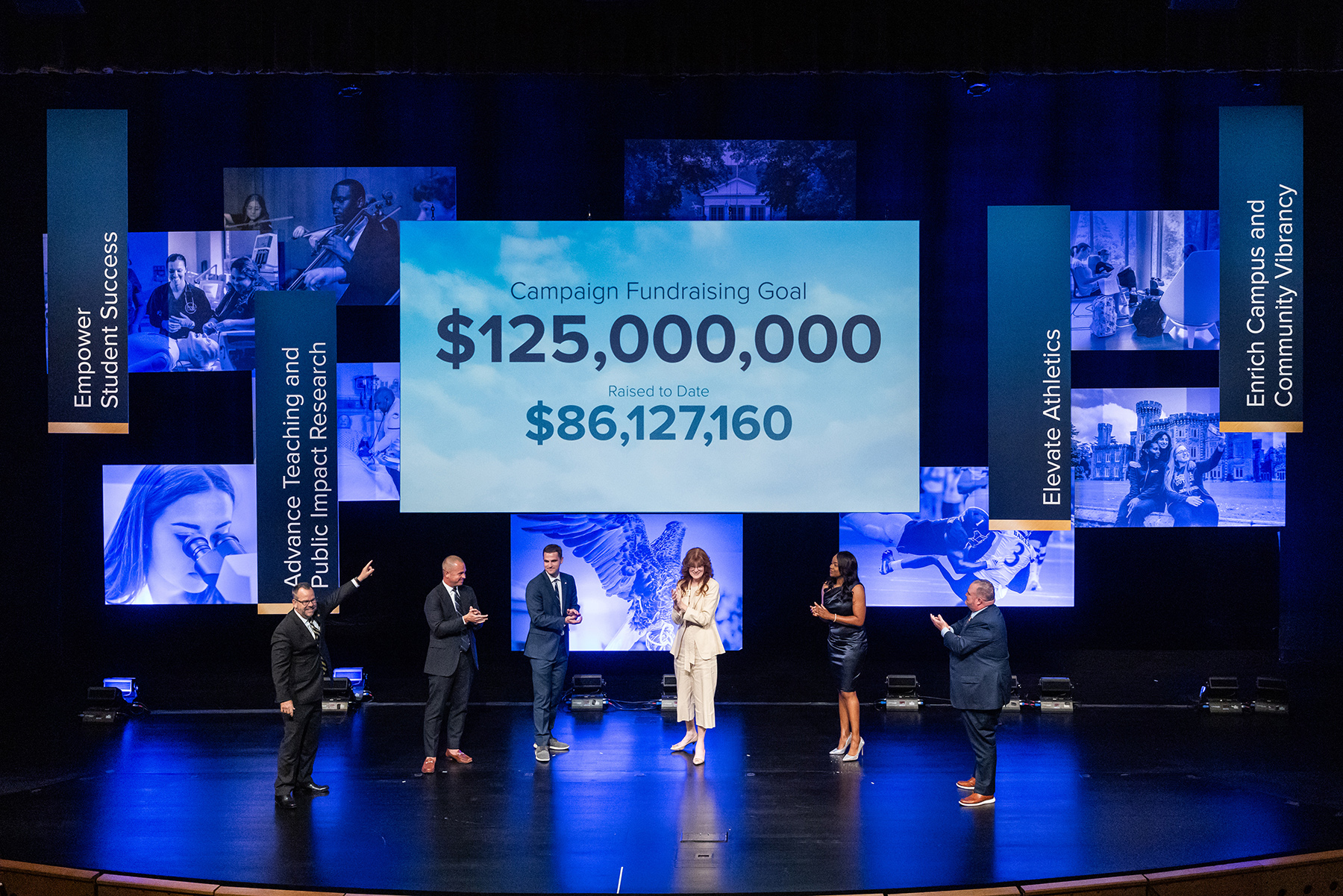
Georgia Southern University proudly announces the launch of its comprehensive campaign, “Together We Soar: The Campaign for Georgia Southern University.” This transformative initiative aims to elevate the University’s impact on students, faculty, research, athletics, and the communities it serves. Georgia Southern, renowned for its majestic campuses adorned with southern live oaks and towering pines, symbolizes not just American freedom but also the promise, achievement and boundless potential of its students. The University’s trajectory is on the rise, reaching for greater heights in education and community impact. Central to this momentum is the unwavering support from alumni, friends and the community. Publicly launched last Friday evening, Together We Soar: The Campaign for Georgia Southern University aims to raise $125 million by 2026. More than $86 million has already been secured. Dr. Kyle Marrero, President of Georgia Southern, expressed his gratitude and vision for the University. “Georgia Southern is on the move, in motion, and soaring to new heights. The ‘Together We Soar’ campaign—fueled by the generous support of our alumni, friends, and partners—will ensure our ability to drive innovation, develop talent, transform lives, and propel the economic development of a growing region.” (L-R) Georgia Southern President Kyle Marrero, Vice President for University Advancement Trip Addison, Deputy Athletics Director of Development Davis Hendrickson, Executive Director of Development Julie Gerbsch, Director of Alumni Relations Ava Edwards, and University Campaign Co-chair Leonard Bevill on stage at the Oct. 20 launch event for Together We Soar: The Campaign for Georgia Southern University. The campaign has identified four primary objectives: Empower Student Success: The campaign aims to stimulate learning by recruiting high-achieving students, increasing student access, and promoting inclusive excellence and career readiness. Advance Teaching and Public Impact Research: The focus is on meeting regional economic needs, increasing faculty expertise, and enhancing research capacity. Elevate Athletics: The campaign seeks to attract and retain elite student-athletes, provide top-notch facilities, and boost the Competitive Excellence Fund. Enrich Campuses and Community Vibrancy: The goal is to improve the communities surrounding the campuses and teach about local wildlife, among other initiatives. Campaign co-chairs Mike Sanders and Leonard Bevill shared their excitement for the campaign and what it will mean for Georgia Southern. “I could not be more excited about Georgia Southern and its possibilities. Opportunities abound for our University and the Together We Soar Campaign is the catalyst. It is time to do ‘more with more.’” - Mike Sanders “‘Together We Soar’ is spot on. From across campus to athletics and throughout our community, we’re perfectly aligned and equipped to launch to historic heights. I’m very blessed and excited to be involved.” Leonard Bevill The campaign also highlights the significant economic impact of Georgia Southern, with a regional economic contribution of $1.1 billion in fiscal year 2022. The University plays a critical role in the economic growth and transformation of Southeast Georgia. Marrero said Georgia Southern invites all its supporters, alumni and the community to join this transformative journey. With collective support, there’s no limit to how high Georgia Southern can soar. For more information or to contribute to the “Together We Soar” campaign, visit GeorgiaSouthern.edu/TogetherWeSoar.

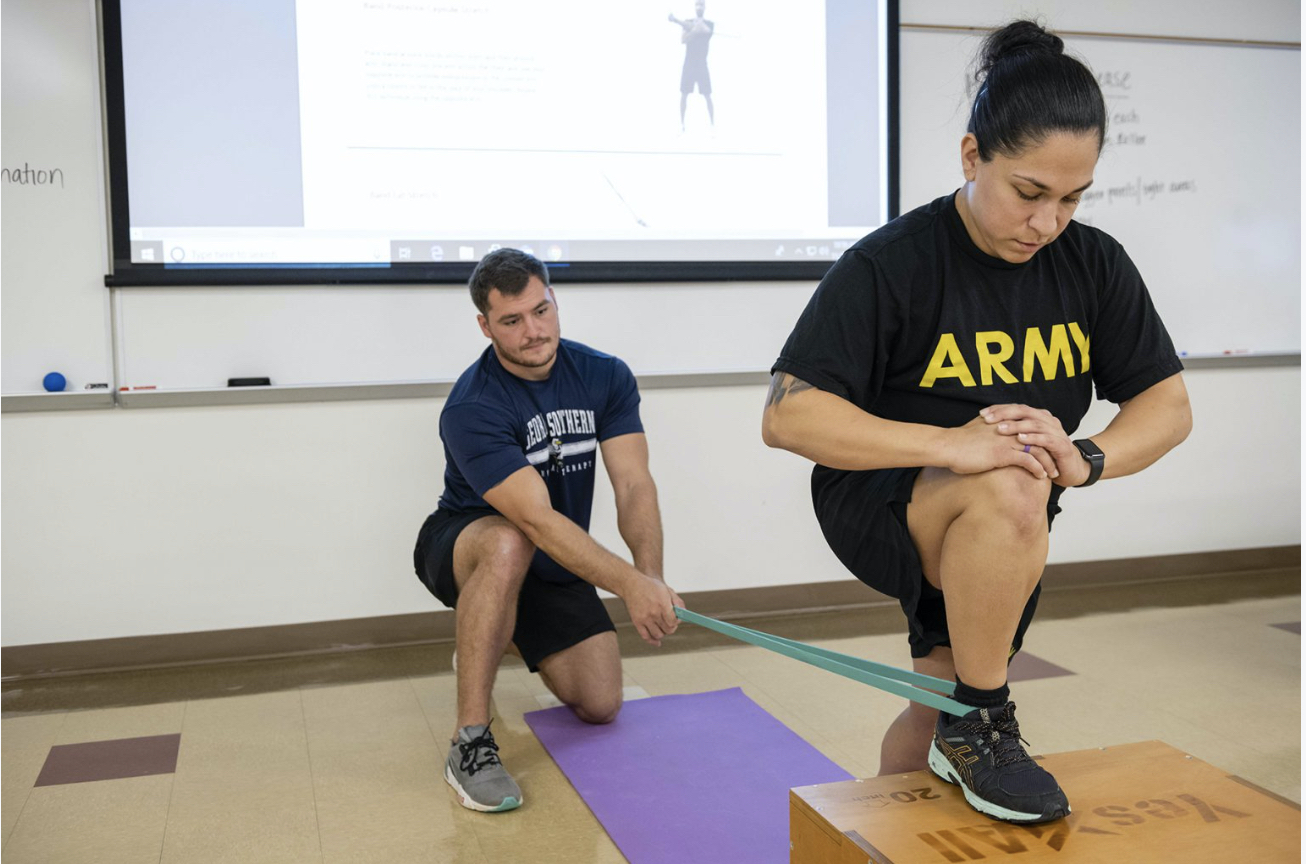
The Georgia Southern University Soldier Performance and Readiness (SPAR) program received a $1.5 million, two-year grant from the Department of Defense’s U.S. Army Medical Research and Development Command (USAMRDC). The grant will expand Georgia’s Southern research and programming capacity in injury prevention techniques that ensure force readiness for the Army. “Through this large-scale research study, Georgia Southern doctoral students have opportunities to be involved in the research process and work directly with soldiers,” said Nancy Henderson, Ph.D., assistant professor in the Doctor of Physical Therapy (DPT) program. “Additionally, the grant will fund graduate assistant positions in the Doctor of Physical Therapy program.” USAMRDC’s mission is to provide solutions to medical problems for American service members at home and abroad, as well as to the public at large. The scope of this effort and the priorities attached to specific projects are influenced by changes in military and civilian medical science and technology, operational requirements, military threat assessments and national defense strategies. Extramural research and development programs play a vital role in the fulfillment of the objectives established by the organization. Research and development funded through this are intended to benefit both military and civilian medical practices. “The grant investigates different physical training programs to identify those practices that best prevent non-combat injuries,” said Henderson. “Faculty on the research team will seek to advance the body of literature by determining the best educational models to educate soldiers on injury-prevention topics.” This is the first time that Georgia Southern will act as lead investigator on a collaborative research project with an Army research institute. However, SPAR has long been involved in multiple branches of research with community impact. “Georgia Southern has several initiatives underway to help improve the health, fitness and performance of military service members, law enforcement personnel and firefighting and rescue personnel,” said Joseph Kardouni, Ph.D., director of the Tactical Performance Group. “The Tactical Athlete Certificate (TAC) program is one of these initiatives that teaches service members exercise fundamentals to help mitigate training-related injuries. The funding coming through Medical Research and Development Command will improve evidence-based teaching methods and inform similar efforts to teach service members within this field. Leaders from health and human performance programs within the Army understand the importance of leveraging partnerships with academic institutions to work toward improving the quality of life, health and occupational performance of soldiers.” Faculty and students in the DPT program have educated soldiers on injury prevention topics since 2016 and this grant further provides students with the opportunity to assess effectiveness while learning how to improve educational methods with military service members. “This research is an important next step in delivering on the promise of the SPAR program and Georgia Southern’s close working relationship with Army research partners,” said Interim Vice President for Research and Economic Development Christopher Curtis, Ph.D. Curtis also noted that funding was made possible by the advocacy of U.S. Rep. Buddy Carter and the strong support of Georgia’s legislative delegation in Washington D.C. Interested in learning more or looking to talk with Nancy Henderson? Simply click on her icon now or Contact Georgia Southern's Director of Communications Jennifer Wise at jwise@georgiasouthern.edu to arrange an interview today.

Georgia Southern’s public health center receives $4 million to assist rural hospitals nationwide
Georgia Southern University’s Center for Public Health Practice and Research at the Jiann-Ping Hsu College of Public Health (JPHCOPH) received a $4 million grant from the Health Resources and Services Administration (HRSA) to provide targeted technical assistance to rural hospitals nationwide. The funding will support the team’s implementation of the Targeted Technical Assistance for Rural Hospitals Program over a five-year period (2023-2028). “Many rural hospitals are struggling financially across the U.S.,” said JPHCOPH Dean Stuart Tedders, Ph.D. “Long-term, the primary program goal of this grant is to ensure that all rural hospitals are financially viable and positioned to serve their communities with the essential health care services that we all need and expect. A viable health care system is essential for assuring that all communities and their residents thrive. I am very proud of the Center for Public Health Practice and Research at the JPHCOPH and the commitment they have made to improving the quality of life of rural and underserved populations across the country.” Bettye Apenteng, Ph.D., and Charles Owens, both professors of health policy and management, serve as the co-principal investigators for the grant. “We are proud to be selected to work cooperatively with rural hospitals across the U.S. to strengthen their viability so they can continue to provide essential health care locally so the residents, the local hospital and the community may thrive,” said Owens. As part of this cooperative agreement, the team will work in partnership with HRSA and rural health stakeholders to provide in-depth and tailored technical assistance to rural hospitals at risk of financial distress nationwide. Technical assistance delivered as part of this program will help rural hospital communities implement a prioritized strategy for maintaining essential services locally through capacity building in evidence-based decision-making, operational and financial improvement, strategic management, community partnership, project implementation and evaluation. “We are excited to extend the work we have done in Georgia with rural hospitals, for close to a decade, to the rest of the nation,” said Apenteng. “We look forward to building strong collaborative relationships with rural hospital communities nationwide.” The grant activities will be executed by a multidisciplinary team that includes additional JPHCOPH faculty Angie Peden; Andrew Hansen, DrPH; Linda Kimsey, Ph.D.; William Mase, DrPH; Tilicia Mayo-Gamble, Ph.D., and Samuel Opoku, Ph.D.; and Parker College of Business’ Kwabena Boakye, Ph.D.; and the College of Arts and Humanities’ Jason Murdock. Interested in learning more or looking to talk with Bettye Apenteng, Ph.D., and Charles Owens about this grant? Simply click on an expert's icon or contact Georgia Southern's Director of Communications Jennifer Wise at jwise@georgiasouthern.edu to arrange an interview today.


Holiday Season is Almost Here and Goizueta Business School has Holiday Experts Ready to Help
The holidays are the difference between operating in the red and operating in the black for many retail businesses. The Goizueta Business School has experts who can provide insight and expertise on a wide range of stories. Economics of the Holiday Season - Economist Tom Smith can discuss seasonal hiring, retail expectations, and the importance of the holiday season to retailers. Black Friday - Doug Bowman can discuss retail expectations and the importance of the holiday season to retailers. He expects this year shoppers will go to fewer stores and not travel long distances, delivery capacity will be an issue, and work from home/school purchases will be hot. AI Changing How We Shop - David Schweidel can discuss how new AI tools are changing how we shop and how brands are using AI to reach prospective customers. Product Reviews See Huge Increases: How Reviews Impact Holiday Shopping - What do reviews mean for the shopping experience and do reviews impact purchase? Reshma Shah can discuss the impact reviews have on the point of purchase. Product Returns - Marat Ibragimov can discuss the retail strategy and impact of holiday gift returns, comparing online returns to brick and mortar. Food and Travel Pricing - Saloni Firasta Vastani can discuss the cost of this year’s holiday dinners. What’s gone up and what’s gone down? She can also discuss the cost of travel this holiday season and what consumers can do to get a better deal. Avoiding Holiday Overspend - Rohan Ganduri can discuss how holiday shopping can expose consumers to credit products like store credit cards that offer various incentives to take up the credit card, often resulting in overspending. Ganduri can discuss his latest research paper on how taking up store credit cards can impact consumers’ future credit outcomes. Social Media & Advertising - David Schweidel can discuss how micro influencers work, how using product placement can cut through the advertising clutter, and the power of product reviews. The Constantly Changing Online Retail Experience - Styling videos, personal shoppers, messaging, and even Augmented Reality (AR) are being used to generate purchases. Doug Bowman can discuss how stores are reimagining the shopping experience to attract customers in person and online. Influencers Influencing Our Purchases - How are creators impacting the economy and are influencers impacting our purchasing decisions? Marina Cooley looks at the creator economy and how TikTok and Instagram are impacting our holiday wish lists and what it takes for a product to go from unknown to trending. She can also discuss how this holiday season will help normalize in-app TikTok shopping (something Instagram has struggled to execute on). How to Attract Customers to the Store this Holiday: Merging Online and In-person Experiences May be the Answer - Shopping looks different and it is up to retailers to stand out not just in the brick and mortar world but also online. The success of a business can balance on the customer experience. Reshma Shah can discuss the policies brick and mortar retailers need to have in place to successfully merge online shopping and the in-person shopping experience. To book your expert interview, call Kim Speece at (404) 849-6579 or email her at kim@leffassociates.com or simply click on the icon available. To find an expert on a specific topic, click the “Search” feature at https://goizueta.emory.edu/faculty/profiles. To check out other recent research, visit https://www.emorybusiness.com/faculty-research/.





ChristianaCare Launches a New Speakers Bureau: Is This the Future of Healthcare Communications?
Only just a few months after their win of an IABC Gold Quill Award (shared with ExpertFile), the ChristianaCare healthcare communications and digital team has once again made major moves to make their organization even more accessible to the community with the launch of their new ChristianaCare Speakers Bureau. As one of the leading healthcare systems in the United States, Delaware based ChristianaCare is home to a wide variety of medical experts. Now live, the ChristianaCare Speakers Bureau features 80 experts who are currently available for speaking engagements on a wide variety of health topics including: Aging and Senior Health, Cancer, Children’s Health, COVID-19, Diabetes, Pregnancy and Childbirth. Sports Medicine, Stroke, Weight Management and Women’s Health. Designed with the ExpertFile platform, the ChristianaCare Speakers Bureau provides easy discovery and access to experts, including their biographies, downloadable photographs, samples of past presentations, languages spoken and more. The site can be viewed here. Screenshot from the new ChristianaCare Speakers Bureau launched Aug. 2023. The site provides easy discovery and access to experts, with the ability to search by topics and keywords. Detailed profiles for experts include biographies, downloadable photographs, samples of past presentations, languages spoken and more. How a Speakers Bureau boosts thought leadership A Speaker's Bureau is an initiative within an organization that assembles a team of expert speakers who can represent the organization and speak authoritatively on its behalf. While media appearances are often the core focus for experts in organizations, a Speakers Bureau opens up additional opportunities to speak at events such as in-person conferences, webinars, podcasts. Speakers ideally represent a diverse group of professionals from within the organization, and can share their knowledge, insights, and experiences on a range of topics relevant to the organization's mission, values, and field of work. Through event appearances, these experts help to enhance the organization's visibility, foster community engagement, and solidify the organization's reputation as a thought leader in its field. Speakers Bureaus provide effective and efficient way to promote the organization's initiatives, achievements, and viewpoints to the wider public. Creating New Connections Between Experts and the Community Following a string of successes that followed the launch of their ChristianaCare Experts site that resulted in major increases in national media coverage and SEO performance, the formation of a Speakers Bureau was a smart move that will further extend the reach of the ChristianaCare brand. Events provide an excellent way to connect meaningfully with a wider audience to help ChristianaCare make progress on key goals such as delivering effective community health education and improving healthcare equity. “At ChristianaCare, our mission of service to the community includes a commitment to provide timely, accurate health information so that people can make informed decisions about their health,” said Karen Browne, vice president of marketing and communications. “Through our new speakers bureau, we’ve expanded our capacity to meet these needs in the community.” The Benefits of a Speakers Bureau Given the fragmentation of traditional media channels and the massive growth in events such as webinars and podcasts, Speakers Bureaus are fast gaining popularity as a proven way to personify your organization and build a stronger connection to your brand. So far the ChristianaCare Speakers Bureau appears to be off to a solid start. "We had a huge response to our media release when we launched earlier this week and in the first day alone we had multiple organizations sending speaking opportunities for our medical experts. We're also seeing a great response internally as more of our experts requested to join the Speakers Bureau once it went live," said Hiran Ratnayake, Senior Manager of Media Relations at ChristianaCare who played a key role in developing the Speakers Bureau with his colleagues Shane Hoffman, Communications Director and Tom Hendrich - Senior Digital Content Editor at ChristianaCare. Is a Speakers Bureau Right For Your Organization? Here are some key benefits to consider in determining if a speakers bureau makes sense for your organization: Bolsters Community Engagement: An active Speaker's Bureau helps create a bridge between your organization and the community you serve. Promotes Diversity and Inclusion: A Speaker's Bureau offers an exciting opportunity to showcase the diverse voices and unique experiences within your organization. Enhances Organizational Visibility: The increased exposure at events can lead to greater recognition in the industry, more opportunities for collaborations, and ultimately, a wider reach for your healthcare services. It also is a proven way to boost SEO pagerank and domain authority in search engines and also provides a lot of additional content for your social channels. Develops Professional Skills: For healthcare professionals who participate, a Speakers Bureau offers an excellent opportunity to develop public speaking skills, foster leadership abilities, and establish themselves as thought leaders in their respective fields. Facilitates Knowledge Sharing: A Speaker's Bureau cultivates a more dynamic learning environment, which can lead to new ideas, innovations, and improved patient care within your organization. Strengthens Crisis Management Readiness: Having a pool of trained speakers ready to contribute can be incredibly beneficial in times of crisis. These professionals can help your communications team more effectively communicate critical information to the public, media, and other stakeholders. Enhances Employee Engagement: Employees who are given the opportunity to share their knowledge and represent their organization publicly, often feel more valued and invested in their work. Going Beyond the Walls of Your Medical Facility In the constantly evolving world of healthcare, accurate and timely information is critical to informed patient decisions and effective treatments. Organizations such as ChristianaCare understand that their role as a prominent healthcare system is to deliver information that extends beyond their immediate medical responsibilities. It’s simply no longer adequate to provide care within the walls of a medical facility. Today there is a critical demand for a more engaged approach, requiring hospitals and healthcare systems to leverage their in-house expertise for community education. A more informed community, armed with knowledge, which can make empowered decisions about their healthcare. While the public has an abundance of medical information at their fingertips, to help them participate more actively in their healthcare, much of the information found on social media today often lacks clarity, context, and credibility, leading to confusion and misinterpretations. Healthcare experts, leaders, and executives can play a pivotal role in dispelling myths and offering credible, evidence-based insights. An engaged, approachable healthcare professional is a reassuring sight, reinforcing the community’s faith in the system. It’s a win-win for these experts and the healthcare institution they represent. And most importantly it's a win for the communities they serve, as people identify potential health issues earlier, adopt healthier lifestyles, and reduce emergency hospital visits. This puts less burden on the region’s healthcare system, and better utilizes resources to reach a broader audience. After all, healthcare is not just about curing the sick; it’s about educating, engaging, and empowering the community for a healthier future. Congratulations to the entire team at ChristianaCare for creating such a valuable resource for your community. And thank you for letting us be a part of this exciting journey.


Jacqueline Ortiz Honored for Increasing Patient Access to Interpreter Services
Fifty-eight years ago, a young man from Argentina wound up in surgery at a California hospital after stomach pains turned out to be peritonitis, a potentially life-threatening inflammation of the membrane lining the abdominal wall. He was discharged to his wife’s care, with one problem — neither the man nor his wife had any idea how to care for the open wound in his abdomen. Jacqueline Ortiz The couple did not understand the lengthy instructions delivered in English, and there was no interpreter to explain to them in their native Spanish what to expect. So, when the man tried to take a bath and discovered the gauze was stuck to his wound, he didn’t know what to do. Fear and uncertainty compounded an already stressful time. Jacqueline Ortiz wasn’t yet born when her father’s health care emergency took place, but growing up she heard the story over and over. It was more than family lore for Ortiz — it was a lesson. Ortiz said she wanted her mother, pictured with her at the DVTA event, to see the growing number of people working as interpreters to ensure people get the information they need in the language they understand. Ortiz, now the vice president for Health Equity and Cultural Competence at ChristianaCare, saw firsthand how the experience left her parents terrified of the medical environment. Removing barriers to good health Years later, Ortiz is a leader in advocating for patients to have access to qualified, culturally responsive medical interpreting services to remove communication barriers with providers and ensure the best possible care and outcomes. “Language access is what fills my heart and soul,” Ortiz said. Her pioneering efforts and enthusiasm for promoting the use of trained interpreters in health care earned Ortiz the inaugural Making an Impact Award from the Delaware Valley Translators Association (DVTA) during an event Sept. 9 at Widener University. In her role at ChristianaCare, she builds the organization’s capacity to reduce the incidence of disease and improve health outcomes, advance equitable health care services, and reduce health disparities for identified conditions and target populations through culturally competent care, including providing health care in patients’ native languages. She has over 20 years of experience researching, teaching and working in cultural competence and health equity, social networks, and economic sociology. “Language access is what fills my heart and soul,” Ortiz said. A vision for serving everyone Eliane Sfeir-Markus, CHI, president of the DVTA, said the award recognizes the efforts of those working to make interpreting and translation more available to people with limited English proficiency, and those who are deaf or hard of hearing. Ortiz’s pioneering work to expand language services for patients and implement comprehensive cultural competence training at ChristianaCare have set a standard for caring for patients in their native languages. “Jaki’s vision for a health care system that truly serves everyone, regardless of their cultural or linguistic background, is inspiring,” Sfeir-Markus said. “We as patients deserve someone who knows our culture to take care of us.” ChristianaCare has more than 20 health care interpreters and over 100 caregivers who have undergone additional training to provide interpreting services when needed. ChristianaCare has more than 20 health care interpreters — who wear eggplant-colored uniforms — and over 100 bilingual caregivers who have undergone special training to serve as interpreters in some settings. “Jaki is a well-known name in the field of interpreting and translation because she has advocated for education and professionalization of interpreters in health care,” said Claudia Reyes-Hull, MArch, CMI, CHI, manager of Cultural and Linguistic Programs at ChristianaCare. “Thanks to her advocacy, more health care systems are recognizing the need to have trained interpreters for their patients.” In accepting the award, Ortiz said interpreters play a critical role in health care by making it possible for patients — and their families — to take an active role in their own care and decrease the anxiety over visiting a health care provider. She credited the success of ChristianaCare’s interpreting and translations services and its continued growth to the collaborative spirit and camaraderie among its team of caregivers, particularly Reyes-Hull. Ortiz said her family’s personal experience with a lack of interpreting services during a hospital stay made them anxious about health care for years. “Probably all of us in this room have walked into a courtroom or a lawyer’s office or a hospital room or a clinic and introduced ourselves and seen that immediate response and relaxation in the person we were speaking with,” Ortiz said to the translators at the DVTA event. “You make those interactions within our legal, educational and health care systems so much better.”
