Experts Matter. Find Yours.
Connect for media, speaking, professional opportunities & more.

New research from Goizueta’s Diwas KC unpacks the dual impact of Prescription Drug Monitoring Programs on opioid prescriptions and heroin overdose deaths. More than two million individuals in the US are experiencing Opioid Use Disorder (OUD). The CDC defines OUD as “a problematic pattern of opioid use that causes significant impairment or distress.” Around 130 people die of opioid overdoses every day. Perhaps more startlingly, four million people over the age of 12 have reported using pain medication recreationally, including opioids. Prescription opioids are a highly-regulated class of drug. They interact with the opioid receptors on nerve cells throughout the body, as well as the brain, which reduces the intensity of pain signals to the body. For many, they are a necessary prescription to get through the pain of surgery or injury, as the body heals itself. Unfortunately, the function of opioids in the body—releasing endorphins and boosting feelings of pleasure, as well as reducing pain—also make them highly addictive. PDMP: A Successful Federal Mandate The United States continues to see increases in deaths from opioid overdoses. So, federal and state governments have been working in enact policies that are designed to decrease those fatalities. One of the methods states are using to prevent common abuse patterns like “doctor shopping,” which is the pattern of visiting multiple physicians to obtain prescriptions, is the Prescription Drug Monitoring Program (PDMP), designed to be used in conjunction with Health Information Technology (HIT) programs. PDMP serve two purposes: identifying drug-seeking behaviors in patients, and identifying physicians with patterns of inappropriate prescribing. Nearly all 50 states have enacted PDMPs of some degree. Some programs require physicians to check the PDMP before prescribing restricted pharmaceuticals, but in others it’s only suggested. Intrastate communication between PDMPs is not always possible, however. The Unintended Consequences The use of PDMPs has been shown to reduce the number of opioid prescriptions, the intended outcome of the program. Enter a recently published study by Diwas KC, Goizueta Foundation Term Professor of Information Systems & Operations Management. The research shows that during time the research was conducted, prescriptions for opioids declined by 6.1%. However, the research also brought to light a very serious and unintended consequence of the implementation of PDMPs. The study concluded that while the implementation of PDMPs did reduce opioid prescriptions, it did not reduce overall numbers of prescription opioid deaths. In fact, it may have contributed to a 50% increase in heroin overdose fatalities. “The heroin increase was definitely something we were not expecting, it was a total surprise,” says KC. "It was something that we had hypothesized. You’ve got a bunch of individuals who have used prescription opiates and had presumably been dependent. Now with the passage of this PDMP law, it has become more difficult to obtain prescription opiates. Therefore, some people might be forced to turn to the street version of it." Diwas KC “We didn’t expect the effect size it to be as significant as it is,” says KC. Heroin and commonly prescribed opioids like oxycodone and hydrocodone are very similar on a biochemical level. What’s more, they generate a similar sensation in the body, according to KC. That’s why he and his team had the initial hypothesis that some addicted individuals, when unable to get prescription medication, might turn to street drugs, which are much more dangerous on many levels. “There are many aspects to this. One has to do with the potency and the toxicity of the things you get on the streets. There are very little checks and balances on those. There’s no control in quality for sure,” KC says. He also notes the lack of checks and balances on the frequency of usage. “So the frequency of usage, the quality of the substances you’re putting inside your body, and possibly the circumstances of acquiring it might also be very risky too.” A Dual Impact The research concludes that mandating PDMP use is an example of a successful use of policy for intervention. It does, in fact, decrease the number of opioid prescriptions available to patients. That’s critical information for policy makers and physicians to take in. And it’s a solid reason to keep using and expanding PDMP usage, according to KC. "I should point out very clearly that the policy did have the intended effect of reducing prescriptions. So, it definitely benefited people who might otherwise have become addicted." Diwas KC “By reducing unnecessary prescriptions it might have limited the number of people who would have gotten hooked on the drugs in the first place. So there’s definitely the benefit of that,” says KC. “It’s just that when the policy was implemented, there was also this side effect because of people who were already using it. So, when those people were forced to look for alternatives, that’s when things got bad.” Research papers like this one show an important side of using data to mark successes and failures of government policies. Taken on the surface, data can show a policy’s impact for the greater good. But a deeper dive into the surrounding data—like the increase in heroin use after the implementation of PDMPs—gives everyone a better idea of the full impact of this mandate. "Policies have intended as well as unintended consequences. In this case of PDMP it had the desired effect of reducing prescriptions. That probably helped a lot of people not get addicted to opiates in the first place." Diwas KC “But sometimes policies also have unintended consequences,” says KC. “Like in the case of people who were already addicted to painkillers suddenly stopping it, causing them to take drastic actions, and that’s what happened for some of the people in the study. Policies need to consider the possibility of unintended consequences and take actions to also mitigate those unintended consequences.” Interested in knowing more? Diwas KC is the Goizueta Foundation Term Professor of Information Systems & Operations Management. He is available to talk about this important topic - simply click on his icon now to arrange an interview today



Expert Research: Hurricanes and Natural Disasters Linked to “Grocery Tax” for Lower-Income Americans
Research from Goizueta’s William Schmidt uncovers the disproportionate impact of natural disasters on low-income families’ access to essentials. Global warming is accelerating severe weather with cataclysmic outcomes for communities all over the world. In 2023, the hottest year on record, no fewer than 23 weather-related disasters struck the United States. These natural disasters claimed hundreds of lives and caused $57 billion in damage. Recently, the federal government has come under scrutiny for uneven aid response to communities affected by hurricanes, fires, and flooding in America. William Schmidt But might there be other factors at play that see disadvantaged groups more vulnerable to the impact of severe weather events? Weighing into this is award-winning research by Goizueta Business School’s William Schmidt, associate professor of Information Systems and Operations Management. He and Xabier Barriola from INSEAD Business School look at the effect of three major hurricanes in the U.S. in the last 20 years. They find evidence of higher paid prices for basic groceries in the aftermath of each storm that disproportionately impact lower-income communities in affected states. In fact, says Schmidt, when severe weather hits communities, these families end up paying anywhere between one and five percent more relative to high income households for essential food and goods. This puts a major strain on already-strained resources in times of massive disruption. "We see a spike in the prices paid for household groceries of up to five percent hitting low-income groups immediately after a major storm hits." William Schmidt “Then you have to factor in the reality that poorer households spend around eight times more of their disposable income on basic groceries than high-income households,” says Schmidt. “It becomes clear that the aftermath of severe weather is harder for them to bear. And in our research, this is an effect that lasts for months, not weeks or days.” Exposing Hidden Costs on Those Hit Hardest To get to these findings, Schmidt and Barriola worked from a hunch. They figured that in low-income areas, a lack of infrastructure, lower-quality construction, and fewer grocery store outlets could translate into supply shortages in emergencies. Ensuing stockouts might then lead to knock-on price inflation for customers. These are low-income families for whom inflation has serious and significant consequences, Schmidt says. "We know that inflation hurts poorer communities. High-income families have the option of switching between high and low-priced goods according to needs or preference. But families with lower incomes are already purchasing low-priced groceries." William Schmidt “When there are disaster-induced stockouts to their preferred products, those families are forced to substitute to higher priced groceries,” Schmidt continues. Then there’s retailer behavior. Following large environmental disasters, store managers may be unable to keep necessities in stock. Under those circumstances, it is difficult to justify running promotions or implementing planned price decreases. To test these ideas, Schmidt and his colleagues looked at data from the weeks and months following Hurricanes Katarina (2005), Ike (2008), and Sandy (2012). They decided to pinpoint those locations immediately impacted at the county level. To do so, they used major disaster declarations issued by the federal government at the time. Then they integrated this with detailed grocery store sales data provided by Information Resources Inc (IRI) with zip code-level household income and demographic data from the U.S. Census Bureau. With each hurricane, the researchers looked at IRI data covering 30 different product categories and around 200 million transactions over a 12-week period. Schmidt and his colleagues then ran a set of analyses comparing prices paid by communities before and after each hurricane. They also contrasted price increases paid by low-income and high-income households as well as communities outside of the areas affected by the storms. Crunching the Numbers “Doing this triple-difference regression analysis, we find that lower-income communities pay an average 2.9 percent more for their groceries. That’s in the eight weeks following each of these disasters,” says Schmidt. "The effect varies. But it is roughly commensurate with the overall economic damage wrought by each hurricane, with Katrina being the worst. Here low-income families were seeing a 5.1 percent increase in the cost of food and basic goods, relative to richer households." William Schmidt The study points to a variety of mechanisms driving these effects. As Schmidt and his co-authors hypothesize, there is evidence that the same disruptions lead to fewer price promotions. They also see more frequent stockouts of low-priced goods. At the same time, there’s a shift in household purchasing from low to higher-priced products. These effects are long-lasting, says Schmidt. According to the study, post-hurricane inflation in the prices paid by consumers continues to affect poorer families for eight or more weeks. This amounts to months of economic hardship for those least resilient to its effects. Schmidt calls this “permanent inflation.” Pursuing Equity in Crisis Operations managers and policymakers should factor these findings into emergency relief efforts, say Schmidt and his colleague. The goal should be to service communities more equitably. So, there should be more thought to the provision of essential food and household goods. Also, there should be a particular focus on those most vulnerable to natural disasters and their effects. Current disaster nutrition relief programs are typically short. Authorities might do better by vulnerable communities by also extending things like cash and voucher programs, says Schmidt. And they should prioritize the ordering, shipment, and warehousing of essential goods. “Our research shows that hurricanes cost certain groups of Americans more than others in the longer run. The permanent inflation on food stuff and household necessities that we find constitutes an additional burden on part of our national fabric. These are people who are least positioned to afford it.” Hurricanes and the economy are both sought-after topics - and if you're covering, we can help. William Schmidt is an associate professor of Information Systems & Operations Management at Emory University’s Goizueta Business School. His research focuses on understanding and mitigating operational disruptions, and applications of machine learning in operational decision making. To connect with William to arrange an interview - simply click his icon now.


Aston University researcher develops method of making lengthy privacy notices easier to understand
It has been estimated it would take 76 days per year to fully read privacy notices New method makes notices quicker and easier to understand by converting them into machine-readable formats Team designed a JavaScript Object Notation schema which allowed them to validate, annotate, and manipulate documents. An Aston University researcher has suggested a more human-friendly way of reading websites’ long-winded privacy notices. A team led by Dr Vitor Jesus has developed a system of making them quicker and easier to understand by converting them into machine-readable formats. This technique could allow the browser to guide the user through the document with recommendations or highlights of key points. Providing privacy information is one of the key requirements of the UK General Data Protection Regulation (GDPR) and the UK Data protection Act but trawling through them can be a tedious manual process. In 2012, The Atlantic magazine estimated it would take 76 days per year to diligently read privacy notices. Privacy notices let people know what is being done with their data, how it will be kept safe if it’s shared with anyone else and what will happen to it when it’s no longer needed. However, the documents are written in non-computer, often legal language, so in the paper Feasibility of Structured, Machine-Readable Privacy Notices Dr Jesus and his team explored the feasibility of representing privacy notices in a machine-readable format. Dr Jesus said: “The notices are essential to keep the public informed and data controllers accountable, however they inherit a pragmatism that was designed for different contexts such as software licences or to meet the - perhaps not always necessary - verbose completeness of a legal contract. “And there are further challenges concerning updates to notices, another requirement by law, and these are often communicated off-band e.g., by email if a user account exists.” Between August and September 2022, the team examined the privacy notices of 50 of the UK’s most popular websites, from globally organisation such as google.com to UK sites such as john-lewis.com. They covered a number of areas such as online services, news and fashion to be representative. The researchers manually identified the notices’ apparent structure and noted commonly-themed sections, then designed a JavaScript Object Notation (JSON) schema which allowed them to validate, annotate, and manipulate documents. After identifying an overall potential structure, they revisited each notice to convert them into a format that was machine readable but didn’t compromise both legal compliance and the rights of individuals. Although there has been previous work to tackle the same problem, the Aston University team focused primarily on automating the policies rather than data collection and processing. Dr Jesus, who is based at the University’s College of Engineering and Physical Sciences said: “Our research paper offers a novel approach to the long-standing problem of the interface of humans and online privacy notices. “As literature and practice, and even art, for more than a decade have identified, privacy notices are nearly always ignored and ”accepted” with little thought, mostly because it is not practical nor user-friendly to depend on reading a long text simply to access, for example a news website. Nevertheless, privacy notices are a central element in our digital lives, often mandated by law, and with dire, often invisible, consequences.” The paper was published and won best paper at the International Conference on Behavioural and Social Computing, November 2023, now indexed at IEEE Xplore. The team are now examining if AI can be used to further speed up the process by providing recommendations to the user, based on past preferences.


Is Florida becoming more affordable for renters?
Between high interest rates, an influx of newcomers eager for housing and inflation taking a toll on the cost of almost everything - it's been an expensive year for anyone living in Florida. But it appears the tide might be finally turning on high costs and the price to rent a place in the Sunshine State might be going down. It's a trend that has media looking for answers and experts like Florida Atlantic's Ken Johnson getting calls to provide his insight, opinion and expertise on the topic. Florida Atlantic University recently released a new study showing that the state’s rental markets might be stabilizing. In the release, FAU officials announced that rents in areas like Palm Bay and Jacksonville have recently gone below their long-term pricing trends. Meanwhile, the data indicates that other major cities in the state — such as Cape Coral, Orlando and Deltona — saw only slight increases in rent prices, with price increases gradually slowing down. As such, it could be a sign that many renters statewide could soon see lower prices. “While these measures are small, they are a positive sign of where the rental market could be heading in the future,” said Dr. Ken Johnson, a real estate economist with FAU’s College of Business. “These Florida cities are renting at a discount compared to their historical averages, and others appear to be heading in that direction, suggesting that rental markets around the state are stabilizing.” June 06 - Click Orlando.com Florida may be an interesting case study on what lies ahead. Will these rental trends in Florida start to appear nationally? Who will best benefit from lower rents and what will it mean for the economy? Will lower rents attract more people to Florida and could that reverse this trend? There's a lot to know and understand about the rental market. And if you're a journalist covering the topic or looking to know more - then let us help. Ken H. Johnson, Ph.D., an economist and associate dean in FAU’s College of Business, is available to speak to the media. Simply click on his icon to arrange an interview and time.


The 2024 Cision State of the Media Report is jam-packed with all sorts of detailed PR info which can be somewhat overwhelming. But there's an important theme to be found in the data. Kudos to the team at Cision for running this survey that polled over 3,000 staff journalists and freelancers, which is now in its 15th year. The big takeaway for me? Give journalists what they want. Sounds simple enough. Yet, with so many organizations competing for media attention amidst a sea of new AI-enabled platform hacks, many need to focus on the fundamentals of media relations, which this report nicely captures. The media is inundated with pitches. So, the secret to success lies in understanding what jobs journalists have to do and giving them what they need to file their stories…fast. According to the Cision 2024 survey, at the top of the journalists' wish list are: Topical Relevance (68%): Understanding the target audience and what they find relevant. Access to Experts (52%): Connecting journalists with experts and setting up interviews. Credible Data and Research (48%): Providing data and key research. Speed of Response (47%): Responding quickly to inquiries and respecting journalists’ deadlines. In short, journalists want relevant pitches, expert connections, and credible data, and they want it ASAP so they can meet their deadlines. While the Cision report outlines many other best practices that will undoubtedly improve your coverage rate (such as helping journalists quickly source multimedia assets like images), I want to focus on the importance of nailing these first four rules. Rule #1: Pitch Relevant Topics to Journalists Irrelevant pitches not only waste a journalist's time but also damage your credibility. In fact, 77% of journalists in the Cision study cited being spammed with irrelevant pitches as a reason to block a PR professional or put them on the "do not call" list. The study also reported that journalists are "fed up" with follow-ups to unsolicited pitches. Now, only 8% of journalists think it's okay to follow up more than once to check on a story they have pitched. Rule #2: Get Your Experts in Front of Journalists Connecting with credible expert sources is time-consuming. Joint research conducted by ExpertFile and the Associated Press revealed it takes on average, over 2 hours for journalists to secure an expert source for an interview. We can do better than that. As a PR/Media Relations pro, one of your "superpowers" needs to be the ability to spot a story opportunity and get your subject matter experts lined up for the media interview. This is an area where journalists see comms and media pros playing a vital role inside the organization. But if your pitch "sounds like a marketing brochure" the Cision survey shows that 55% of journalists would add you to their naughty list. One of the best ways to avoid this trap and enrich your story is to bring experts and their unique, specialized knowledge to the interview. That means ensuring you are attributing the source of your blog posts to experts in your organization and including links to their expert profile in your pitch. Enclosing a link to an outdated, boring biography on your website or a LinkedIn profile that hasn't been updated since the Yankees last won the World Series (2009), won't score points with journalists. Rule 3: Provide Journalists with Credible Data and Key Research Providing this information not only supports your story but also builds trust. Ensure that your pitches include the latest research findings, statistics, and data from reputable sources within your institution. This evidence-based approach enhances the credibility of your pitches and increases the likelihood of them being picked up by the media. While primary data is best, if you are curating data from other sources, it's critical to cite sources and, ideally, create derivative insights that help the journalist look at the information in a fresh way. For example we have many economists on our ExpertFile network that provide insights regularly on data they didn't gather. But their ability to critically analyze economic data from trusted sources such as the US Census Bureau or the European Union and generate unique, often counterintuitive or provocative insights is what sets them apart from other experts. Rule #4: Help Meet the Journalist's Deadline Journalists often work under tight deadlines and timely responses from PR professionals. Our software has helped organizations handle thousands of media requests every year and if there is one thing we've learned, media is all about speed. If you are a "serious player" you need protocols and processes to quickly respond to media inquiries and get your expert sources lined up to provide the necessary information and insights to meet same-day deadlines. This shows journalists you respect their time and are a reliable source and you will be on speed dial for future stories. Are You Pitching Effectively? Here’s a few tough questions. Answer truthfully. Are You Personally Wasting Time Pitching? How much time do you spend pitching the media vs. responding to inbound media opportunities? Data from Propel Media shows 97% of media pitches fail. While journalists open approximately half of the pitches they receive they only respond to an average of 2.99% of the pitches. Yet the Cision data shows that it's not always your fault. Why? Well, unless you're a gifted psychic, you simply can't know for sure how a journalist is going to react to your pitch. That's why more media departments and their PR agencies are cutting back on spammy pitch activities and moving to more strategic activities that get more traction. With the extra time they save, they can focus on promoting their experts online where journalists are actively searching for credible sources. The result is more qualified inbound inquiries from journalists genuinely interested in interviewing your experts. And that means a lot less anxiety about meeting your media coverage targets. Are You Wasting Journalists' Time? Is your newsroom or media relations page set up to allow journalists to quickly serve themselves 24x7? Can they easily search by specific topics to find an expert within seconds to help meet their deadlines? Or are you expecting them to email or call you for help. (hint: journalists don't have time for that kind of friction). Here's a nice example of how US-based health system, ChristianaCare makes their medical experts available to journalists round the clock while saving hundreds of hours a year for their Comms and Digital team. I'd love to hear more about how you are helping journalists and how that's paying off with increased media coverage. Let me know in the comments below or connect/follow me on LinkedIn or on ExpertFile.



From Boring to Brilliant: Writing that Transforms Your Thought Leadership into Must-Read Content
Insights from our Webinar with Author, Rhea Wessel Ask anyone who develops Thought Leadership programs, and they will tell you that experts are essential to a successful program. But experts are busy people. That makes expert engagement strategies a very popular topic with our Comms and Media Relations pros. That’s why we invited Rhea Wessel, Founder of The Institute for Thought Leadership, to join us last week for our ExpertFile webinar. Rhea, a former tech and financial journalist and author of “Write Like a Thought Leader,” has worked with organizations such as Harvard, CFA Institute, Accenture and the Max Planck Institute to help their experts focus on developing unique story angles while getting high-quality work produced. Having seen her in action at last year's IABC Global Conference, speaking to a standing-room-only crowd, I was really impressed by Rhea’s approach. Rhea uses a system that experts and comms teams can use to brainstorm topics and craft story angles that frame expertise and research to make them more compelling. In the session, she showed us how she helps brainstorm and select the best angles for thought-leadership stories using ideas such as “origin” stories, “what if” scenarios, personal-impact stories, and opinion pieces. Experts often have issues with the "dreaded first draft.” The frameworks Rhrea showed us from her book were clever and designed to pragmatically move experts from brainstorming into a writing mode that doesn’t feel forced. Here are some key points I took away from Rhea’s session: Defining Thought Leadership An essential attribute of Thought Leaders is that they share their knowledge for free, using journalistic skills to engage their audience by articulating emerging ideas, steering conversations and influencing others. Finding the Niche Finding and framing thought leadership is not about covering a broad topic. The best topics are often very narrow. And they are best found at the intersection of the expert’s passion, purpose, and big ideas. Think Like a Journalist Write in a conversational tone and include data, quotes & statistics, but not too much. Use short sentences and paragraphs while keeping the story fast-moving. And don’t forget your sense of humor. Spend Time on the Headlines By “thinking like a journalist” and focusing on headlines, one can narrow the focus when examining research and insights to create more clarity. Quoting Author Sean Coyne, Rhea referred to headlines as having the benefit of being an “enabling constraint." "One of the curses of subject matter expertise is that your experts know a lot. They tend to pack a lot [of their knowledge] in, and for a good story, you've got to slice out a narrow bit. That’s the constraint.” Rhea Wessel Time & Place Matters Stories are best anchored in time and place. When you are working with an expert and you want to enrich a story, don’t just think about how they developed their research and insights. Also, think about “where they were” and “when did it happen?” A good origin story explains why an insight is significant for the expert, creating a more emotional, relatable connection for the audience. Frame Your Story Keep it focused on a single yet relevant problem the audience has. Then explain why this matters to your audience and why now. Based on the feedback we received from this session, we'll have Rhea Wessel join us for more conversations on topics related to storytelling. We'd love to know what you think. Details about this session are below: Full Webinar Recording bit.ly/4e9YuWb Presentation Slides To get a copy of the presentation & Templates, just hit the connect button on my profile and let me know. Enjoy!
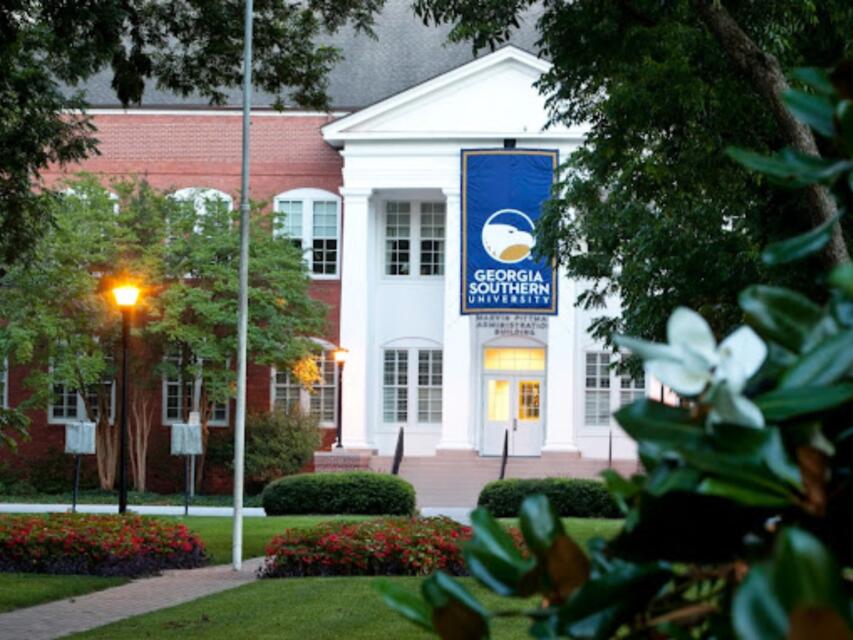
Students at Georgia Southern University now have even more opportunities to excel with the help of two new grants from the National Institute for Student Success (NISS) at Georgia State University totaling up to $600,000. The first is a $500,000 Acceleration Grant that will be distributed to Georgia Southern over the next two years to cover start-up costs for critical implementation steps of an ambitious program that further catalyzes Georgia Southern’s student success outcomes. “As Georgia Southern’s Fall 2024 enrollment continues to increase at record levels through freshman applications and admits, we are pleased to partner with the National Institute for Student Success to reinforce our commitment to providing exceptional student experiences and support that nurtures future leaders and global citizens,” stated Alejandra C. Sosa Pieroni, Ed.D., executive vice president, Division of Enrollment, Marketing and Student Success. “We are steadfast in our commitment to providing comprehensive, coordinated and differentiated student care to ensure every one of our students achieves their educational goals.” Funding through the Acceleration Grant will contribute to Georgia Southern’s existing initiatives to improve graduation rates and student success outcomes through the adoption of a suite of innovative, evidence-based programs. These programs, which deploy tools such as predictive analytics, AI technology, CRM platform, and big data to deliver personalized support to students, have been shown to help universities increase their graduation rates by 50% or more and to reduce discrepancies in graduation rates significantly. The second NISS award to Georgia Southern is the Keep HOPE Alive grant, which offers $100,000 across one year to support students who have lost the HOPE Scholarship as they work to regain eligibility. “We are enthusiastic about our partnership with Georgia Southern and working to deploy strategies that will contribute to substantive improvement in student outcomes,” said Timothy M. Renick, Ph.D., NISS executive director. Housed at Georgia State University, the NISS Acceleration Grants have been awarded to partner institutions that have completed a rigorous diagnostic analysis and have demonstrated a commitment to addressing structural and institutional barriers to the success of their students. Georgia Southern is a member of the second cohort to receive support from the NISS Accelerator Grant program, which launched in 2022. Unique to the Accelerator Grant program is up to three years of implementation coaching, webinars, meetings with expert practitioners and online resources provided by the NISS to support each awardee in implementing the new programs. The NISS coaching model is built on more than a decade of experience at Georgia State University developing and disseminating new approaches to student success that include predictive-analytics-based advising, AI-enhanced chatbots, and data-informed models for distributing financial aid. “These programs have helped Georgia State University increase its graduation rates for its bachelor’s students by 70% and its associate’s students by 300%,” according to Renick. “Black, Hispanic and low-income students now graduate from Georgia State at or above the rate of the student body overall.” The Acceleration Grant program will advance the NISS goal of producing 500,000 additional college graduates across its partner institutions over the next decade. Interested in learning more about this programming at Georgia Southern University or to arrange an interview with Alejandra Sosa Pieroni simply contact Georgia Southern's Director of Communications Jennifer Wise at jwise@georgiasouthern.edu to arrange an interview today.


MEDIA RELEASE: CAA survey reveals an increase in distracted drivers across Ontario
A recent survey conducted on behalf of CAA South Central Ontario (CAA SCO) indicates 44 per cent of Ontario drivers admit to driving distracted at one point – up four per cent compared to last year. The most concerning distractions drivers noted include: Holding a mobile device. Grooming. Making a video call. Typing in a destination. Watching TV. Eating and drinking while driving is also a growing concern. In-vehicle features, including connected apps and console screens, are another source of distraction for drivers, especially if adjusted while on the road. “Anything that can divert a driver’s eyes and mind off the road will always pose a threat while driving,” says Teresa Di Felice, assistant vice president for CAA SCO. Distracted driving remains a significant concern among 90 per cent of drivers in Ontario. Despite the growing number of self-identified distracted drivers, only three per cent admit to being charged for distracted driving. “While a vast majority of drivers recognize fines and penalties, including increased insurance rates, as the most effective ways to reduce distracted driving, our data shows that drivers have become less supportive of penalties that currently exist for distracted driving convictions,” says Di Felice. Of those surveyed, 57 per cent support increasing fines and stricter penalties for distracted driving convictions. “Currently, a driver can face a minimum fine of $615 up to $1,000, three demerit points and a three-day licence suspension for their first conviction of distracted driving,” says Di Felice. “But that’s not the only way it can cost you. A brief moment of distraction is all it takes for a collision.” Almost two-thirds of drivers in Ontario (63 per cent) have witnessed close-call collisions or traffic violations caused by distracted drivers – up four per cent compared to last year. Meanwhile, 12 per cent of drivers reported being involved in a collision due to distracted driving, mainly because of using a mobile device. “Whatever it is that you need to do – whether it’s sending that text, inputting your destination or setting up your playlist – do it all before you drive,” says Di Felice. “The risks of distracted driving are simply not worth it.”



MEDIA RELEASE: 18th Street in Brandon Named CAA's Worst Road in Manitoba
Potholes and Crumbling Pavement Along 18th Street in Brandon, Manitoba. (Submitted: March 27, 2024) The nominations have been tallied, and the 2024 CAA Worst Road is 18th Street in Brandon. 18th Street's issues with potholes and severe alligator cracking in the pavement have led to this dubious distinction. The road first appeared on the top 10 list in 2022 and has steadily climbed its way to the top. The second and third place spots are also taken by repeat offenders on the top 10 list are Leila Avenue in Winnipeg and Provincial Road 307 in Whiteshell. According to the voter insights, Leila Avenue's unavoidable potholes have damaged many vehicles, costing local drivers thousands of dollars in repairs. Voters also expressed concern over Provincial Road 307 regarding poor pedestrian infrastructure and road maintenance. "The 2024 CAA Worst Roads campaign provides a valuable snapshot of the roads that the public perceives as pain points," says Ewald Friesen, manager of government and community relations for CAA Manitoba, "For 13 years, this campaign has served as a powerful advocacy tool, initiating dialogue with decision-makers and driving positive change for safer roads across the province." CAA's most recent survey data shows that while 78 per cent of Manitobans do not appreciate road maintenance efforts, however, 88 per cent are willing to put up with the inconvenience of construction if that means they get a good road at the end of the repairs. The campaign received 486 road nominations from thousands of local voters across 71 municipalities. "Manitobans' frustration about the state of our roads is clear," says Friesen. “We know they voice their concerns to neighbours, friends, or mechanics; this campaign helps bring awareness to decision-makers, providing valuable insights on our preferences for how to prioritize road repair and maintenance." Half of the roads on the top 10 list have debuted this year. These include Highway 26, Pandora Avenue, Richmond Avenue, Grant Avenue, and Munroe Avenue, which are tied for ninth place. Manitoba's Top 10 Worst Roads for 2024 1. 18th Street, Brandon 2. Leila Avenue, Winnipeg 3. Provincial Road 307, Whiteshell 4. Kenaston Boulevard, Winnipeg 5. Provincial Highway 26, Saint François Xavier 6. Empress Street, Winnipeg 7. Pandora Avenue, Winnipeg 8. Saskatchewan Avenue, Winnipeg 9. Grant Avenue and Munroe Avenue, Winnipeg 10. Inkster Boulevard, Winnipeg and Richmond Avenue, Brandon "Municipalities are responsible for thousands of kilometres of roads across the province. Roads, sidewalks, and bike paths are only some of the things that municipal governments fund with limited revenue sources," adds Friesen. "It's important for communities to share their view on what and where investments should be made. CAA Worst Roads is a forum to do that." For more information and historical results, please visit: https://www.caamanitoba.com/advocacy/government-relations/worst-roads


In the crowded landscape of "experts," establishing a leading Thought Leadership program that gets your team noticed requires showcasing your organization's expertise on your website in a flexible, customizable, and SEO-compliant manner. As the demand for dynamic content and seamless integration grows, having various options to display your expert content can significantly enhance your online presence. At ExpertFile, we believe that embracing flexibility allows you to cater to different needs, preferences, and technical setups, ensuring your expert content is accessible, engaging, and easily manageable. In this post, we will explore the benefits of flexible integration options when profiling your organization's expertise, focusing on three key solutions: Customizable Embeds, WordPress Plugins, and RESTful API. The Power of Choice: Why Flexibility Matters Flexibility in integration options empowers organizations to tailor their online presence according to their unique needs. Whether you are a small business with limited technical resources or a large enterprise with a complex marketing stack, having a range of integration choices allows you to adapt and optimize your expert content for maximum impact. Without predefined, easy-to-follow, and well-documented integration options, organizations can face expensive and time-consuming integrations and development. At best, this results in sub-par integrations that fail to leverage your experts' insights effectively. At worst, your Thought Leadership program is abandoned before it even starts. Flexible solutions not only simplify the integration process but also enhance the user experience, improve SEO performance, and enable seamless connectivity with existing tools. These options also provide the flexibility to move your expert content quickly and easily to a new CMS if you decide to make broader changes to your website. Let's delve into the specific benefits and features of Customizable Embeds, the WordPress Plugin, and the RESTful API. 1 | Customizable Embeds: Effortless Integration for Any CMS Customizable Embeds provide a seamless and efficient way to integrate expert profiles into your website, no matter what content management system (CMS) you use. With our intuitive embed builder technology, creating custom integrations is as simple as a few clicks, eliminating the need for extensive IT support. This solution is perfect for organizations looking for a quick and hassle-free method to showcase their expertise. Key benefits include: Ease of Use: Embeds created using an Embed Builder guides you through the process of creating custom embeds, making it accessible to users of all technical skill levels. Whether you're a marketing professional or a web developer, you can effortlessly integrate expert content into your website. Versatility: Customizable Embeds work seamlessly with any CMS, ensuring that your expert content is displayed consistently across different platforms. This flexibility allows you to maintain a cohesive online presence without the need for extensive reconfiguration. Quick Implementation: With no heavy lifting or IT support required, you can quickly integrate expert profiles into your website, saving time and resources. This speed and efficiency are particularly beneficial for organizations with limited technical capabilities. ExpertFile Feature: Embed Builder: The ExpertFile Embed Builder provides an intuitive interface for creating custom integrations, enabling users to test drive the embed options and see real-time results. This hands-on step-by-step approach ensures that your expert content is displayed exactly as desired, generating an optimal user experience. Ask us about getting access to the Embed Builder View live Embed Integrations (University of Delaware, & Aston University) 2 | WordPress Plugin: SEO-Friendly and Visually Appealing For organizations using WordPress, the a WordPress Plugin offers a seamless and SEO-friendly solution to integrate expert content into your website. A plugin can provide users with an easy way to add valuable expert content to any WordPress site, ensuring a beautiful and modern presentation and is an easy to understand concept given the wide variety of plug-ins available today. Key benefits include: SEO Enhancement: The WordPress Plugin is optimized for search engines, helping your expert profiles rank higher in search results. By leveraging SEO best practices, you can increase the visibility of your expert content and attract more organic traffic to your website. Customizable Design: The plugin offers customizable design options, allowing you to match the appearance of your expert profiles with the overall look and feel of your website. This consistency in design enhances the aesthetic appeal and professionalism of your site. User-Friendly Integration: With an easy-to-use interface, the WordPress Plugin simplifies the process of adding expert profiles to your website. This user-friendly approach ensures that even non-technical users can manage and update expert content with ease. ExpertFile Feature: WordPress Plugin: The ExpertFile WordPress Plugin provides a straightforward and efficient way to integrate expert profiles into any WordPress site. With customizable, modern design options, you can ensure that your expert content is a beautiful addition to your website, enhancing both aesthetics and functionality all packaged in a common understandable plug-in form. View ExpertFile in the WordPress Plugin Store View live WordPress Integrations (Florida Institute of Technology & NJIT) 3 | RESTful API: Ultimate Control and Customization For organizations seeking complete customization and control over their expert content, access to RESTful API is the ideal solution. This powerful tool enables you to integrate expert profiles into your existing marketing stack, allowing seamless connectivity with CRM systems, CMS platforms, and other tools. Key benefits include: Complete Customization: The RESTful API gives you full control over how and where your expert content is displayed, enabling you to create a tailored and unique presentation. This level of customization ensures that your expert profiles align perfectly with your brand and marketing strategy. Seamless Integration: By connecting with existing tools in your marketing stack, such as CRM or CMS platforms, the RESTful API streamlines the process of managing and displaying expert content. This seamless integration enhances efficiency and ensures that your expert profiles are always up-to-date. Scalability: The API is designed to handle large volumes of data, making it suitable for organizations of all sizes. Whether you have a few expert profiles or hundreds, the RESTful API can accommodate your needs, providing a scalable solution for displaying expert content. ExpertFile Feature: API: The ExpertFile RESTful API offers unparalleled flexibility and control, allowing you to integrate expert profiles into your existing marketing stack. By providing easy connectivity with tools such as your CRM or CMS, the API ensures that your expert content is displayed exactly as desired, enhancing both functionality and user experience. Developers: Access detailed documentation View live API Integration (Vanderbilt University) Conclusion: Embrace Flexibility & Future Proof Your Integration In conclusion, the ability to flexibly integrate expert content into your website is essential for showcasing your organization's expertise in a dynamic and engaging manner. Without predefined, easy-to-follow, and well-documented integration options, organizations can face expensive, time-consuming integrations and development that make integration less likely and result in sub-par presentations. By not leveraging your experts and their insights in the best way possible, you miss out on significant opportunities to enhance your online presence. Whether you opt for Customizable Embeds, a WordPress Plugin, or the RESTful API, each solution offers unique benefits that cater to different needs and technical setups. By embracing these flexible integration options, you can enhance your online presence, improve SEO performance, and ensure seamless connectivity with existing tools. To learn more about how ExpertFile can help you profile your organization's expertise with flexibility and ease, visit our website and explore the various integration solutions available. For more information on promoting your thought leadership through the power of "Expertise Marketing" download our free guide.