
Experts Matter. Find Yours.
Connect for media, speaking, professional opportunities & more.

Confused About the Economy? We can Help!
In a recent piece on CNN ... eyebrows were raised about the state of America's economy. The article describes a growing disconnect in the U.S. economy: strong growth and rising corporate productivity driven by artificial intelligence, but weak job creation. Companies are investing heavily in AI and automation, which allows them to increase output without hiring more workers — especially in roles involving routine or administrative tasks. This dynamic has produced what economists call a “jobless boom”: profits and productivity rise, while new jobs lag behind. The Federal Reserve is increasingly concerned because this trend creates risks for both workers and the broader economy. Lower-skilled and entry-level workers face displacement, wage inequality may widen, and traditional unemployment metrics may understate how difficult it has become for people to re-enter the job market. Policymakers now face a harder balancing act as AI reshapes labor demand, raising questions about retraining, social supports, and how to manage an economy where growth no longer guarantees broad-based job creation. If you're confused - don't feel bad. In fact, if you're a journalist covering this topic - let us help. Dr. Jared Pincin is a nationally respected expert on economic issues facing the United States of America. He's available to speak with media - simply click on his icon now to arrange an interview today.


A Roadmap or a Rift? Examining Trump’s 28-Point Ukraine Peace Proposal
As negotiations around the war in Ukraine continue to dominate global headlines, a newly surfaced 28-point peace proposal associated with former U.S. President Donald Trump has triggered intense debate across NATO capitals, Kyiv, and Moscow. The document — described in reporting by Reuters, Axios, Sky News, Al Jazeera and other outlets — outlines a framework aimed at ending the conflict but includes provisions that many analysts say could significantly reshape Europe’s security landscape. A Plan Built Around Ceasefire, Guarantees, and Reconstruction At its core, the plan calls for a formal ceasefire, a non-aggression pact between Russia, Ukraine, and European states, and a set of “security guarantees” meant to deter future conflict. Reporting indicates that Ukraine would receive assurances that any renewed Russian offensive would trigger a coordinated international response. The plan also proposes the creation of a major reconstruction program — potentially financed in part with frozen Russian assets — to rebuild infrastructure and modernize Ukraine’s economy. The proposal references pathways for deeper Ukrainian integration with Europe, including support for progressing toward EU membership and providing enhanced access to European markets. A large “Ukraine Development Fund” is also mentioned in multiple summaries of the plan. Provisions Driving the Most Global Pushback The most controversial elements relate to Ukraine’s territorial integrity and long-term security posture. Outlets such as Sky News and Al Jazeera report that the draft would recognize Russian control over Crimea and large parts of Donetsk, Luhansk, Zaporizhzhia, and Kherson — areas currently occupied by Russian forces. Ukraine would also be required to formally abandon NATO membership and cap its military at 600,000 personnel. Additional provisions include restrictions on the presence of foreign troops in Ukraine, phased lifting of sanctions on Russia, full amnesty for war-related actions, and the reintegration of Russia into global economic and political structures. These components have drawn sharp responses, particularly from European leaders who argue the plan could reward aggression and undermine international legal norms. Dr. Glen Duerr is a citizen of three countries. He was born in the United Kingdom, moved to Canada as a teenager, and then to the United States to obtain his Ph.D. His teaching and research interests include nationalism and secession, comparative politics, international relations theory, sports and politics, and Christianity and politics. View his profile. What Remains Unclear or Still Under Discussion Reporting from Reuters and AP notes that many sections of the plan remain undefined or are still in flux. The exact mechanism behind the proposed security guarantees is not detailed. Oversight of reconstruction funds, timelines for reintegration of Russia, and the legal handling of frozen assets also require further clarification. Some reporting suggests parts of the plan draw from a prior informal Russian “non-paper,” raising questions about the provenance and intent of specific provisions. Why the Proposal Matters With the war approaching four years of fighting, any formal proposal for ending hostilities carries significant geopolitical weight. Supporters of the plan frame it as a pragmatic attempt to halt loss of life and begin rebuilding. Critics argue it risks legitimizing territorial conquest and weakening the broader post-Cold-War security order. As governments evaluate the implications, journalists covering defense, diplomacy, and international law will find this evolving proposal central to understanding where U.S., European, Russian, and Ukrainian negotiators may — or may not — be willing to go next.

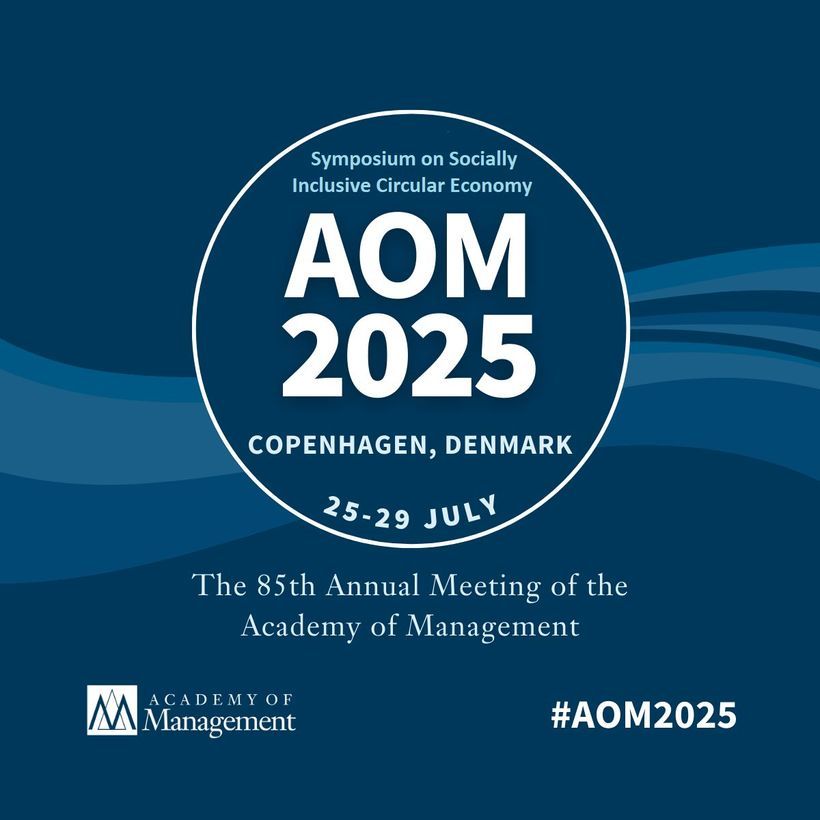
When it comes to transforming how organisations produce, consume, and reuse resources, Dr Luciano Batista, professor of operations management at Aston University, is a global pioneer. His research sits at the crossroads of innovation, digital transformation, and sustainability, tackling one of humanity’s most pressing challenges: our overconsumption of the planet’s resources. Reimagining the economy around renewal Dr Batista’s work focuses on circular supply chains —a model he helped establish at a time when 'closed-loop' systems dominated sustainability thinking. His early research laid the foundation for how businesses could move beyond recycling and linear take-make-dispose models, instead designing systems that reuse, restore, and regenerate. View his profile here From theoretical frameworks to real-world applications, his studies—such as comparative analyses of circular systems implemented by Tetra Pak in China and Brazil—demonstrate the measurable economic and environmental benefits of circularity in action. His 2022 Emerald Literati Award-winning paper introduced a methodology for mapping sustainable alternatives in food supply chains, earning international recognition for its real-world impact. A global voice for industrial symbiosis and circular innovation The influence of Dr Batista’s work reaches far beyond academia. He has advised the European Commission’s Circular Cities and Regions Initiative (CCRI) and contributed insights to policymakers through the UK All-Party Parliamentary Manufacturing Group. His expertise continues to inform national and regional strategies for sustainable production and industrial symbiosis —where one company’s waste becomes another’s resource. Today, he extends that impact globally as a visiting professor at the Massachusetts Institute of Technology (MIT), conducting research at the MIT Center for Transportation & Logistics on circular supply chain innovations, supported by Aston University’s study-leave programme. He also mentors future leaders in sustainability as part of Cambridge University’s Institute for Sustainability Leadership (CISL). Driving the next wave of sustainable transformation Looking ahead, Dr Batista is spearheading collaborations through Aston’s Centre for Circular Economy & Advanced Sustainability (CEAS), working with the Energy & Bioproducts Research Institute (EBRI) and West Midlands Combined Authority (WMCA) on projects developing biochar-based clean energy systems for urban districts. He is also advancing the social dimension of the circular economy—ensuring that the move toward sustainable production is inclusive and equitable. His Symposium on the Socially Inclusive Circular Economy, held at the 2025 Academy of Management Conference, has sparked new international research partnerships with Monash University (Australia) and the Vienna University of Economics and Business. A vision for a regenerative future At the heart of Dr Batista’s work is a simple but urgent truth: humanity is consuming resources at a rate our planet cannot sustain. Through his research and global collaborations, he is helping organisations, policymakers, and communities move toward a future where growth and sustainability coexist. “The transition to a circular economy is not optional—it is essential,” says Dr Batista. “Our goal must be to redesign systems that allow people, businesses, and ecosystems to thrive together.”



When Markets Wobble (Part 2): How Canadians Can Use Home Equity as Their Ultimate Cash Wedge:
In an earlier post I laid out one of the foundational blocks of your retirement defense system: the "Cash Wedge" - that boring-but-brilliant cushion of cash, GICs, and T-Bills that protects you from selling investments when markets wobble. The Cash Wedge is the mild-mannered superhero of your retirement plan. It buys you time, flexibility, and peace of mind, as it gives you permission to wait for markets to recover— Now if you missed Part 1, go back and give it a quick read here. For Canadian homeowners — especially those whose wealth is mostly in their property — there are additional options that allow you to use your equity as a second buffer, dramatically strengthening your financial resilience. How Home Equity Strategies Can Help You Create a Backup Wedge for Retirement Here's the risk that catches thousands off guard: sequence-of-returns risk combined with home equity concentration. Translation: While you own your home, you encounter problematic market conditions early in retirement while withdrawing, and your options narrow quickly. Author Wade Pfau's research demonstrates that home equity can serve as a "buffer asset," shielding investments during economic downturns. Instead of selling investments when markets are down, it might be smarter to temporarily access a pre-arranged HELOC or reverse mortgage. Once markets recover, you can repay the credit line. This isn't debt panic — it's strategic damage control. Warren Buffett's Wisdom Applied to Canadian Retirement As an investor, Warren Buffett is the epitome of control and discipline. His now famous quote rings true in these times. “The stock market is a device for transferring money from the impatient to the patient.” Translation for retirees: Keep dry powder. Own quality investments. Don't chase fads. And stop looking for the bottom — nobody knows where it is until it's in the rear-view mirror. The Canadian "Brick-and-Mortar" Retirement Strategy Listen up, homeowners. Canadians whose retirement plan is pretty much: buy a home, pay it off, and repeat; "we're mortgage-free" with pride. This strategy is very common and effective. But let's be honest: if your home is part of your retirement plan, economic changes matter even more. If you’re in this camp, you need to accept the facts and plan how you'll use your equity to secure your retirement. It’s better to have a ready, aim, fire approach than the more typical fire, ready, aim! When markets decline, central banks often cut rates. Lower rates can support real estate — but they don't guarantee rising prices. Meanwhile, inflation drives up costs, buyers' budgets fluctuate, property values can soften, and retirees feel the impact most quickly. Even a modest dip in home values creates real erosion in net worth when your home carries the bulk of your financial future. The Case for Securing Home Equity Access Now It's much easier to qualify for credit when home values are higher, finances are stable, and you're not already in a pinch. Your options: Home Equity Line of Credit (HELOC) This includes products like Manulife One: Competitive rates and flexible options — but retirees often face income qualification barriers. Reverse Mortgage: No income needed, no payments required. Plus, the No Negative Equity Guarantee — you can never owe more than your home is worth — but retirees dislike debt! HESA (Home Equity Sharing Agreement): You get cash now in exchange for sharing a percentage of your home's future appreciation. No monthly payments, not technically debt, but you give up a share of future gains. This isn't about needing money today. It's about safeguarding your future from having to sell, downsize, or rely on credit card debt because the economy experienced a mood swing. It's insurance — with a door handle. Building Your Cash Wedge: Step-by-Step Calculate 12–24 months of living expenses. Select where to store each layer (high-interest Savings Account, cashable GICs, T-Bills). Refill the wedge with income from dividends, distributions, or planned draws Monitor your situation closely. If your income is tight: consider arranging a home-equity line or reverse mortgage as a backup wedge - not an emergency scramble. Review annually — cost of living changes, inflation changes, and so should your wedge. The Bottom Line for Canadian Retirees The real question isn't "Do I need a Cash Wedge?" It's "Can I afford NOT to have one?" Retirees have limited capacity to earn income to cover shortfalls. Budgets can tighten unexpectedly. Inflation doesn't seek permission. And sometimes the thing we think we'll never need becomes the lifeline that secures our retirement. Your retirement security comes from: Owning quality investment Building reliable dividend income Preparing smart home-equity backstops Keeping emotions out of financial decisions Avoiding saving too much while living too little The Cash Wedge is the most boring tool in your retirement plan — and the most powerful. Yet most financial plans ignore it. Don't. Sue Don’t Retire… ReWire!!! Want to become an expert on serving the senior demographic? Just message me to be notified about the next opportunity to become a "Certified Equity Advocate" — mastering solution-based advising that transforms how you work with Canada's fastest-growing client segment.



12 Days of Holiday Experts - Goizueta Business School Sources for the Season
It's that time of the year again! And as Americans get ready for another journey into the festive season, there are always opportunities for stories to be told about shopping, travelling, buying, returning, and making sure you don't get ripped off or scammed during all the hustle and bustle, Here's a stocking full of topics and expert sources who are here to help with your coverage this holiday! Gifts, Giving, and all the Costs That Come With It Economics of the Holiday Season A successful Q4 makes the difference between annual profitability and loss for many businesses. Professor Tom Smith is available to discuss seasonal hiring, retail expectations, the impact of tariffs, and the importance of the holiday season to retailers. View his profile here Black Friday & Using AI to find the Perfect Gift Professor Doug Bowman expects to see more Shoppers (esp. Gen Z) experimenting with GenAI for personalization, inspiration, product discovery, summarizing reviews, generating lists, and finding deals. Results may be mixed, depending on the data the AI was trained on. He also expects more purposeful and complex shopping, with fewer impulse purchases and more searching (both online and in brick-and-mortar stores), due to lower inventory levels/assortments at some retailers. View his profile here Food and Travel Pricing Professor Saloni Firasta Vastani can discuss the cost of this year’s holiday dinners. What’s gone up and what’s gone down? She can also discuss the cost of travel this holiday season and offer tips on how consumers can secure a better deal. View her profile here Avoiding Holiday Overspend Professor Usha Rackliffe can discuss how holiday shopping can expose consumers to credit products, such as store credit cards, that offer various incentives and often result in overspending. She can discuss the pros and cons of the buy now, pay later offers and how interest rates will play into this year’s holiday shopping and spending. View her profile here Gift Giving Professor Ira Bedzow says there are three ways gift-giving can promote both personal growth and professional development. View his profile here Gifts Express Relationship, Not Reciprocity. Contracts and transactions are about keeping score—I give, you give back. Gifts are about connection. A thoughtful gift doesn’t close a deal; it opens a door. Personally, it reframes love and friendship as ongoing commitments rather than conditional exchanges. Professionally, treating interactions as opportunities to build trust creates loyalty, sparks creativity, and builds a culture no contract can guarantee. The Art of Perspective-Taking in Choosing Gifts: The best gifts come from stepping outside yourself and asking: What would this person really want? This act of empathy is a skill worth practicing. Personally, it pulls us beyond ego; professionally, it sharpens our ability to anticipate needs, see through others’ eyes, and make decisions aligned with their values—a foundation for real leadership. Gifts as Lessons in Friendship and Human Connection: True friendship isn’t built on ideology, convenience, or self-interest. It’s rooted in caring for someone simply for who they are. Gift-giving is a rehearsal for that kind of connection. Personally, it reminds us that what we truly want typically comes through relationships, not rivalry. Professionally, it shows that lasting success rests less on shared advantage and more on genuine respect and human connection. Shopping for Sustainability Consumers are increasingly seeking eco-friendly products, and brands that emphasize sustainability are likely to see higher sales. Nearly 69% of shoppers prefer to buy from companies committed to ethical practices, such as those that use carbon-neutral shipping and offer recyclable packaging. Professor Dionne Nickerson focuses on how companies can integrate sustainability in their products and why it matters to consumers. View her profile here Pressure Purchasing As the days inch closer to the holidays, shoppers feel the pressure to find a gift. Professor Max Gaerth can discuss how stress, scarcity, and time pressure shape purchasing decisions. View his profile here Online Shopping and Influencing AI Changing How We Shop Professor David Schweidel examines how new AI tools are transforming the shopping experience and the ways brands utilize AI to engage with prospective customers and personalize product recommendations. He can also discuss OpenAI’s Atlas and how it puts ChatGPT directly into your browser. View his profile here Influencers Influencing Our Purchases How are creators impacting the economy, and are influencers impacting our purchasing decisions? Professor Marina Cooley looks at the creator economy and how TikTok and Instagram are impacting our holiday wish lists, and what it takes for a product to go from unknown to trending. She can also discuss TikTok Shop (something Instagram has struggled to execute). View her profile here How to Attract Customers to the Store this Holiday: Shopping looks different, and it is up to retailers to stand out not just in the brick-and-mortar world but also online. The success of a business can balance on the customer experience. Professor Reshma Shah can discuss the policies that brick-and-mortar retailers need to have in place to successfully merge online shopping and the in-person shopping experience. View her profile here Holiday Scams Tis The Season for Scams Bad actors are using AI to scam consumers. From phone calls to emails, Professor Tucker Balch can tell us how to spot a scam and what we can do to protect ourselves. View his profile here Holiday Returns Product Returns Professor Doug Bowman can discuss the retail strategy and the impact of holiday gift returns, comparing online returns to those in brick-and-mortar stores. View his profile here He can also weigh in on: Why are returns so expensive for retailers? Online returns vs. brick and mortar returns Predicting online returns - helping retailers understand how likely it is that a product will be returned. As well: Are retailers still offering free returns? What’s this costing them? Is this likely to continue? What will they do differently? If you’re a journalist covering the holiday season, our experts can help shape your story. Use the “Connect” button on any expert’s profile to send an inquiry — all inquiries are monitored by our media team to ensure a quick, timely response.

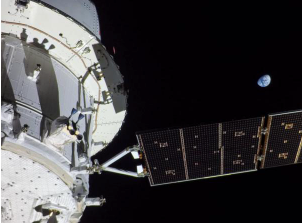
RPI Awarded Air Force Grant to Monitor Growing Traffic Between Earth and Moon
As nations and private companies prepare to ramp up the number of missions to the Moon, researchers at Rensselaer Polytechnic Institute (RPI) and Texas A&M University have secured a $1 million grant from the Air Force Office of Scientific Research to develop a system to track and monitor resident space objects — including spacecraft, satellites and debris — moving through the vast cislunar space between the Earth and the Moon. The initiative, called RCAT-CS (Reconfigurable Constellations for Adaptive Tracking in Cislunar Space), will develop intelligent networks of sensor satellites that can be reconfigured to perform resilient tracking of objects as they maneuver through this complex orbital environment. "Right now, we're seeing an explosive growth in cislunar missions, including everything from commercial lunar landers and orbiters to next-generation spacecraft that secure national interests in this contested domain," said engineering professor Sandeep Singh, Ph.D., RPI’s lead investigator on the project. "But our ability to track what's happening out there hasn't kept pace. Ground-based sensor systems have blind spots and cannot reliably provide measurements. A space-based constellation is the answer, but placing spacecraft in orbit is expensive and solving the resource constraint problem is essential." The cislunar region presents unique challenges for space domain awareness applications. Competing gravitational forces from the Earth and the Moon create complex orbital dynamics, while the sheer distances involved make tracking difficult. When spacecraft and satellites perform maneuvers in this space or behave unexpectedly, current systems can lose track of them entirely. RCAT-CS will tackle these problems by designing constellations of space-based sensors that can dynamically reposition themselves based on what they're observing. Professor Singh and his colleagues will develop novel algorithms to detect maneuvers made by tracked objects, balance fuel costs, track performance of the sensing satellites, and quantify the uncertainties underlying it all. The system addresses critical safety and security needs as cislunar space becomes increasingly congested and contested. The research will also advance fundamental knowledge in orbital dynamics and autonomous space systems, with implications for mission planning, collision avoidance, and safe coordination of a growing cislunar economy. Additionally, the project will train the next generation of space engineers in cutting-edge technologies essential for American leadership in space operations. “Congratulations to Professor Sandeep Singh and his team on securing a research grant in the important area of lunar space exploration,” said Shekhar Garde, Ph.D., the Thomas R. Farino Jr. ’67 and Patricia E. Farino Dean of the School of Engineering. “RPI has always been at the frontier of space exploration, from George Low’s work on the Apollo program to the forthcoming Artemis II mission, led by Commander Reid Wiseman ’97.” “Professor Singh’s work will not only advance research, it will strengthen RPI’s recently launched Aerospace Engineering undergraduate program by bringing the latest research into our classrooms,” Garde added. Looking to know more? Shekhar Garde, Ph.D. is available to discuss this topic. Simply click on his icon now to arrange an interview today.



Aston University’s approach to a global challenge Across industries, companies face mounting pressure to cut carbon, improve resource efficiency, and contribute to the UN Sustainable Development Goals (SDGs). Yet many firms still struggle to move from vision statements to measurable action. At Aston Business School, Dr Breno Nunes, reader in sustainable operations management, is developing practical frameworks that help organisations embed sustainability at their core. His concept of 'sustainability fitness' captures how firms can build the capabilities they need to adapt, compete, and thrive in the transition to a net zero economy. “Many organisations want to be sustainable but struggle to operationalise what that means. My work is about bridging that gap — helping businesses translate strategies into practice.” — Dr Breno Nunes The sustainability fitness concept involves both meeting human needs and respecting environmental limits. While it can also be applied at the societal and individual level, Dr Nunes focuses on organisations, where capability building delivers the fastest, measurable change. Corporate sustainability fitness examines how a firm is able to survive and meet its own needs, while aligning itself to wider essential needs of society and operating within limits imposed by its surrounding natural environment. From research to real-world action Dr Nunes’ research examines how organisations design, implement, and monitor sustainability strategies across operations, supply chains, facilities, and product development. He is the main author of the book Sustainable Operations Management: Key practices and cases, which applies the issues of sustainability to all strategic decisions of operations. His work is already making a tangible difference, including international partnerships in Brazil, Canada, and the US, bringing cross-cultural insights into organisational transformation, as well as for various companies and organisations. In an Innovate UK Knowledge Transfer Partnership (KTP) with automotive supplier Metal Assemblies, Dr Nunes and Professor Alexeis Garcia Perez, professor of digital business and society at Aston University, are working to calculate and report the carbon cost of metal components used in car production, tackling one of the industry’s biggest sustainability challenges. The digitalisation of processes will allow Metal Assemblies to meet customers' requirements and position itself as a trusted and transparent supplier of low-carbon components. In another KTP with Brockhouse Group, a forging manufacturer in the West Midlands, Dr Nunes worked with Aston colleague Dr Muhammad Imran, reader in mechanical, biomedical and design engineering. Together they developed a sustainable manufacturing strategy centred on carbon reduction and process improvement. The work involved the development of an energy dashboard, allowing analysis of data on gas and electricity consumption. The project also included analysis of alternatives for energy recovery systems, and development of routines and procedures to improve the manufacturing process. As a result, Brockhouse group is more competitive to supply in non-captive markets. Dr Nunes has also been involved with a collaboration with Birmingham Botanical Gardens to integrate sustainability into policy and practice, expanding the use of business sustainability theories to nonprofit sectors. Sustainability can be embedded across different areas of organisations while seeking financial stability. As an environmental education charity, it is important to for Birmingham Botanical Gardens to 'practise what it preaches'. It was recently awarded almost £20m from various grants (including Heritage Lottery) in a capital project, thanks to having sustainability at the core of renovation plans. These projects highlight Aston University’s role in bridging academia, industry, and policy — ensuring research findings reach the boardroom as well as the factory floor. Key insights from the research Dr Nunes’ studies highlight several critical factors for turning sustainability from intention into measurable results: • Organisational capabilities are central to embedding sustainability. These include empowering sustainability “champions” (institutional entrepreneurs), supportive structures, superior technologies, and the ability to learn and balance economic, environmental, and social performance. • The tensions in implementing sustainability vary not just by function (supply chains, governance, innovation) but also by an organisation’s maturity level. • Start with the low-hanging fruit: tools like self-assessments, capability diagnostics, and learning games allow firms to act at lower cost before committing to full environmental impact assessments or formal reporting. • Collaboration between academia, industry, and policymakers accelerates real-world impact. Why this matters The stakes are high. Businesses worldwide are expected to reduce carbon emissions, demonstrate social responsibility, and remain competitive in a rapidly changing global economy. Aston University’s research shows that strengthening sustainability capabilities not only improves environmental outcomes but also boosts resilience and cost savings. In pilot projects, teams working with Dr Nunes have achieved up to 30% reductions in both cost and carbon emissions — proof that sustainability can drive operational performance as well as compliance. Looking ahead: expanding the Sustainable Growth Hub The next phase of Dr Nunes’ work centres on Aston’s Sustainable Growth Hub, which is being developed as a reference point for SMEs seeking sustainability solutions. In 2025, the Hub will: • Launch its first industry club cohort and expand its team. • Roll out new self-assessment tools to size sustainability needs and decarbonisation goals. • Introduce new learning formats and follow-up courses to Aston’s Green Advantage programme, alongside sessions to play a new corporate sustainability game. • Host events to bring together businesses, policymakers, and the wider sustainability management community. • Attract new research grants and publish results to share knowledge across both academic and practitioner circles. These initiatives aim to equip organisations not only to meet today’s challenges, but to anticipate tomorrow’s. Get involved Follow Dr Nunes via his profile below, and soon through the Sustainability Fitness website. Businesses can also attend Aston Business School events to explore workshops, tools, and courses first-hand. About Dr Breno Nunes Dr Breno Nunes is reader in sustainable operations management at Aston Business School and president of the International Association for Management of Technology (IAMOT). He serves as associate editor of the IEEE Engineering Management Review and has published widely on sustainability strategy execution and innovation. Aston University’s work in sustainable operations — shaped by researchers like Dr Nunes — is helping organisations worldwide move from ambition to action, building the 'sustainability fitness' needed for a net zero future.


Federal Budget 2025: What's In It for Canadian Seniors?
Let's be honest: the word "budget" probably makes you want to take a nap. Or pour a stiff drink. Maybe both. We spent decades pinching pennies, brown-bagging lunches, and watching every dollar so we could finally retire and stop thinking about money every waking minute. Now here I am, telling you to read about a government budget. I know. I'm sorry. But stick with me—I promise to make this as painless (and possibly entertaining) as possible. Why You Should Care About the 2025 Federal Budget (Even If You Really Don't Want To) Some of you hate talking about money. I get it. But here's the thing: information is power, and denial isn't just a river in Africa (give it a second to land)—it creates unnecessary ignorance and real missed opportunities to regain some control over your financial life. Plus, this budget affects your kids and grandkids too. So even if you're sitting pretty, the people you love might not be. The Economy Right Now: A Very Quick Explainer You've probably noticed everything costs more. A lot more. Welcome to inflation, courtesy of today's tariff-happy trade wars. (And if you want a deeper dive into how inflation affects more than just your wallet, check out my earlier piece: "Inflation: It's not just for prices anymore".) Here's the short version: When governments slap tariffs on imported goods (think: "You want to sell your stuff here? Pay up!"), Companies pass those costs directly to you at checkout. Your grocery bill goes up. Your heating costs rise. Even that new garden hose costs more because, apparently, everything comes from somewhere else now. So when you're living on a fixed income—CPP, OAS, maybe some RRIF withdrawals—and prices keep climbing while your income stays flat, that's a problem. A big one. Enter: the federal budget. It's basically Ottawa's financial to-do list: where they'll spend money, what they'll cut, and (theoretically) how they plan to make your life easier. Or at least less expensive. What's Actually In This Federal Budget Thing (The Good Parts Only) I've waded through the charts, jargon, and multi-billion-dollar announcements so you don't have to. Here's what matters to you: 1. Your House: Now it's a Potential ATM Remember when turning your basement into a rental suite sounded expensive and complicated? Ottawa heard you. The Secondary Suite Loan Program is expanded: Borrow up to $80,000 at 2% interest (15-year term) to build a basement apartment, garden suite, or in-law unit. The refinancing rules are also relaxed: You can now refinance up to 90% of your home's post-renovation value to fund these projects. Translation: You can turn unused space into monthly rental income, house a caregiver, or create a spot for family—all while boosting your property value. It's like your house went to entrepreneurship school. For more on Additional Dwelling Units (ADUs), check out this post. 2. Slightly Less Painful Tax Season Ottawa is cutting the base federal tax rate for modest-income earners and cancelling the consumer carbon price on heating fuels. Translation: If you're still working part-time or living on CPP + OAS + RRIF withdrawals, expect slightly lower deductions and cheaper heating bills starting this winter. We're talking maybe $30–$50 more per month—not a windfall, but enough to buy groceries without wincing at the checkout. 3. Health Care: Maybe, Possibly, Getting Better The budget includes more money for provinces to spend on health care and long-term care reform. The goal? Shorter wait times and expanded home-care programs. Translation: The government says they're helping seniors age at home with dignity. Whether that actually happens depends on your province not blowing the money on consultants and photo ops. Keep your eyes on provincial announcements for new or expanded home-care subsidies. 4. Your Savings: Slightly Less Likely to Evaporate Budget 2025 confirmed Canada has the lowest debt-to-GDP ratio in the G7. They're also cracking down on bank fraud and scams targeting seniors. Translation: Lower national debt helps keep interest rates and inflation under control, protecting the real value of your fixed income. And Ottawa is finally recognizing that scammers love targeting retirees. (If you haven't already, read my piece on The Rise in Grandparent Scams—it's eye-opening.) About time. Watch for my upcoming article on a recent senior scam making the rounds—and my assessment of how banks can do much more to protect seniors. 5. $60 Billion in "Savings" (Don't Panic) You'll hear politicians bragging about cutting $60 billion. Before you worry they're gutting CPP or OAS, relax. They're trimming their own bureaucracy—less middle management, more digital tools, fewer wasteful meetings about meetings. Translation: They're supposedly spending less on themselves so they can spend more on things that matter—like housing, health care, and infrastructure. Whether they actually pull this off remains to be seen, but at least they're talking about it. So What Does All This Actually Mean? Look, I won't pretend this budget is a game-changer. It's not. But it does offer a few smart moves if you're willing to act. And let's remember: this is Carney's first budget. Changing financial policy and spending priorities takes time—and some patience on our part. Rome wasn't built in a day, and neither is a functional federal budget that actually helps everyday Canadians. Review your home equity. Could an ADU loan help you age in place and generate income? Audit your expenses annually. Cutting $100/month in spending equals roughly $1,500 in pre-tax income. That's real money. Stay vigilant against scams. Government protection is nice, but it starts with you not clicking sketchy emails and text messages. Ask about tax credits. Low-income seniors may qualify for increased refundable credits under provincial top-ups this year. This isn't a flashy budget. There are no big checks in the mail. But it does signal a shift toward pragmatism: help Canadians stay housed, healthy, and financially secure while Ottawa tightens its own belt. For Canadians 55+, that means: Slightly lower everyday costs More options to create income from your home Continued investment in health and home care A more stable economy to protect your savings Progress? Maybe. One cautious, bureaucratic step at a time. Your Next Move Take 30 minutes this week to think through how these programs could fit into your life. Could an ADU loan make aging in place possible? Could refinancing free up cash flow? Small adjustments now = big peace of mind later. And that's what being hit, fit, and financially free is all about. And hey—you just read an entire article about a government budget. Voluntarily. That deserves recognition. Go ahead, brag about it. You've earned it. Now go enjoy your retirement. You've definitely earned that too. Sue Don’t Retire…Re-Wire!!!
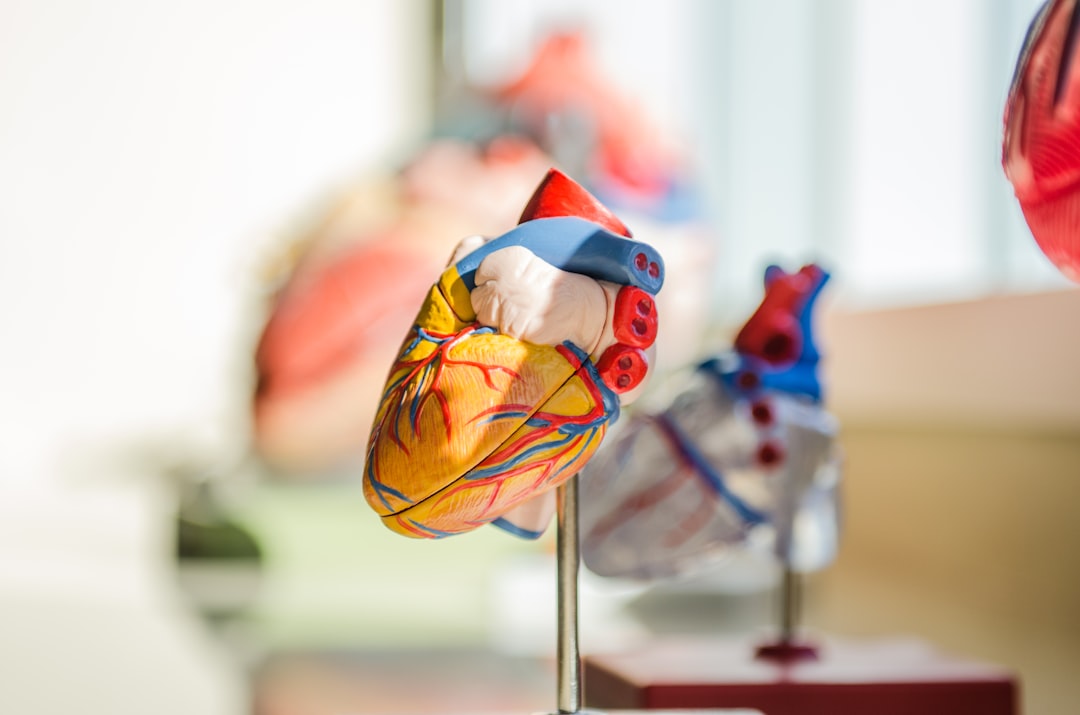
Heart valve developed at UC Irvine shines in early-stage preclinical testing
UC Irvine researchers designed and developed a minimally invasive replacement pulmonary heart valve. Created for pediatric patients, the device can be expanded as children grow, eliminating the need for multiple surgeries. The team successfully conducted laboratory and early-stage animal feasibility testing of the implant, crucial steps toward approval for human use. Irvine, Calif., June 23, 2025 — Researchers at the University of California, Irvine have successfully performed preclinical laboratory testing of a replacement heart valve intended for toddlers and young children with congenital cardiac defects, a key step toward obtaining approval for human use. The results of their study were published recently in the Journal of the American Heart Association. The management of patients with congenital heart disease who require surgical pulmonary valve replacement typically occurs between the ages of 2 and 10. To be eligible for a minimally invasive transcatheter pulmonary valve procedure, patients currently must weigh at least 45 pounds. For children to receive minimally invasive treatment, they must be large enough so that their veins can accommodate the size of a crimped replacement valve. The Iris Valve designed and developed by the UC Irvine team can be implanted in children weighing as little as 17 to 22 pounds and gradually expanded to an adult diameter as they grow. Research and development of the Iris Valve has been supported by the Eunice Kennedy Shriver National Institute of Child Health and Human Development; the National Heart, Lung, and Blood Institute; and the National Science Foundation. This funding has enabled benchtop fracture testing, which demonstrated the valve’s ability to be crimped down to a 3-millimeter diameter for transcatheter delivery and subsequently enlarged to 20 millimeters without damage, as well as six-month animal studies that confirmed successful device integration within the pulmonary valve annulus, showing valve integrity and a favorable tissue response. “We are pleased to see the Iris Valve performing as we expected in laboratory bench tests and as implants in Yucatan mini pigs, a crucial measure of the device’s feasibility,” said lead author Arash Kheradvar, UC Irvine professor of biomedical engineering. “This work represents the result of longstanding collaboration between our team at UC Irvine and Dr. Michael Recto at Children’s Hospital of Orange County built over several years of joint research and development.” Congenital heart defects affect about 1 percent of children born in the United States and Europe, with over 1 million cases in the U.S. alone. These conditions often necessitate surgical interventions early in life, with additional procedures required to address a leaky pulmonary valve and prevent right ventricular failure as children grow. The Iris Valve can be implanted via a minimally invasive catheter through the patient’s femoral vein. The Kheradvar group employed origami folding techniques to compress the device into a 12-French transcatheter system, reducing its diameter to no more than 3 millimeters. Over time, the valve can be balloon-expanded up to its full 20-millimeter diameter. This implantation method, along with the ability to begin treatment earlier in very young patients, helps mitigate the risk of complications from delayed care and reduces the need for multiple surgeries in this vulnerable population. “Once the Iris Valve comes to fruition, it will save hundreds of children at least one operation – if not two – throughout the course of their lives,” said Recto, an interventional pediatric cardiologist at CHOC who’s also a clinical professor of pediatrics at UC Irvine. “It will save them from having to undergo surgical pulmonary valve placement, as the Iris Valve is delivered via a small catheter in the vein and can be serially dilated to an adult diameter and also facilitate the future placement of larger transcatheter pulmonary valves – with sizes greater than 20 millimeters, like the Melody, Harmony and Sapien devices – if needed.” Kheradvar said that the next phase of preclinical testing of the Iris Valve is funded by the Brett Boyer Foundation, which is committed to supporting research into treatments for congenital heart disease. “We are actively engaged with the U.S. Food and Drug Administration to define and carry out the required experiments and documentation for first-in-human authorization of the Iris Valve,” Kheradvar said. “Our team is urgently advancing the Iris Valve through preclinical studies to enable its clearance for first-in-human use. This is a critical step toward providing toddlers – who currently have no viable minimally invasive treatment until they reach the 45-pound threshold – with a much-needed option.” First co-author Nnaoma Agwu, a biomedical engineering Ph.D. candidate at UC Irvine, said: “The development of the Iris Valve required a strong and knowledgeable team that understood the clinical and mechanical design requirements. This accomplishment would not have been possible without the collaboration of talented clinicians, veterinarians and engineers. With this milestone reached, we are rigorously advancing the Iris Valve’s development, setting our sights on human clinical trials.” Joining Kheradvar, Recto and Agwu as co-authors of the article in Journal of the American Heart Association were Daryl Chau, a recent UC Irvine master’s graduate; Gregory Kelley and Tanya Burney, both research specialists at UC Irvine, with Burney also affiliated with the Beckman Laser Institute; Ekaterina Perminov, a clinical veterinarian with UC Irvine’s University Laboratory Animal Resources; and Christopher Alcantara, a radiology technician at CHOC. About UC Irvine’s Brilliant Future campaign: Publicly launched on Oct. 4, 2019, the Brilliant Future campaign aims to raise awareness and support for the university. By engaging 75,000 alumni and garnering $2 billion in philanthropic investment, UC Irvine seeks to reach new heights of excellence in student success, health and wellness, research and more. The Samueli School of Engineering plays a vital role in the success of the campaign. Learn more by visiting https://brilliantfuture.UC Irvine.edu/the-henry-samueli-school-of-engineering About the University of California, Irvine: Founded in 1965, UC Irvine is a member of the prestigious Association of American Universities and is ranked among the nation’s top 10 public universities by U.S. News & World Report. The campus has produced five Nobel laureates and is known for its academic achievement, premier research, innovation and anteater mascot. Led by Chancellor Howard Gillman, UC Irvine has more than 36,000 students and offers 224 degree programs. It’s located in one of the world’s safest and most economically vibrant communities and is Orange County’s second-largest employer, contributing $7 billion annually to the local economy and $8 billion statewide. For more on UC Irvine, visit www.uci.edu. Media access: Radio programs/stations may, for a fee, use an on-campus studio with a Comrex IP audio codec to interview UC Irvine faculty and experts, subject to availability and university approval. For more UC Irvine news, visit news.uci.edu. Additional resources for journalists may be found at https://news.uci.edu/media-resources.


On Sunday, October 19, at 9:34 a.m., four masked individuals surged into the Louvre’s Galerie d’Apollon from a severed, second-floor window. Hurriedly, they smashed open two display cases, seized eight pieces of jewelry, then shimmied down a ladder and sped off on motorbikes toward Lyons. In seven minutes’ time, in broad daylight, they absconded with an estimated $102 million in valuables from the world’s most famous museum. This past Saturday, October 25, French authorities announced the first arrests in connection with the daring heist. However, despite the police’s progress, the country continues to litigate the matter—embroiled in discussions of heritage, history and national identity. Recently, Roderick Cooke, PhD, director of French and Francophone Studies at Villanova University, shared his perspective on the situation as well as the artifacts lost. Q: The Louvre heist has been described as “brazen,” “shocking” and a “terrible failure” on security’s part. Is there any sort of precedent for this event in the museum’s history? Dr. Cooke: Nothing on this scale has ever happened to the Louvre since its founding as a museum during the Revolution. The closest equivalent is the 1911 theft of the Mona Lisa by a former employee who claimed it should be returned to Italy. However, that was one painting, the heist was not committed by organized crime, and the Mona Lisa did not have the renown it enjoys today. The impact of the theft was thus lower, although it did cause major outrage and a sweeping law-enforcement response at the time. Ironically, that theft is often credited with making da Vinci’s painting the global icon it continues to be. Q: What has the reaction to this event been among the French people? DC: It’s harder to get a sense of reactions across French society, because so much of the aftermath has focused on the intellectual milieux’s opinions. And in those realms, it has immediately become a political football. Individuals positioning themselves as anti-elite or anti-status quo, such as Jordan Bardella of the National Rally party, have called the theft a “humiliation,” immediately tying it to French national prestige. Former President François Hollande has conversely and vainly called for the event to be de-polemicized, citing national solidarity. This is happening because the Louvre is one of the most visible manifestations of French soft power—the most-visited museum anywhere on Earth. As such, anything attacking its integrity becomes an attack on the nation, and how individual French citizens feel about the theft is closely tied to their broader view of the nation. Q: Several of the items stolen from the Louvre once belonged to Empress Eugénie. Could you share a bit of information on her story? DC: Eugénie de Montijo was a Spanish aristocrat who married the Emperor of the French, who ruled as Napoleon III between 1852 and 1870. It was a time of authoritarian repression and sham democracy—Napoleon III installed the Empire through a coup. Its clearest legacy is that Paris looks the way it does today largely because of the thorough modernizations overseen by Napoleon III’s appointee Baron Haussmann. So, Eugénie and her now-lost jewels represent a complex point in French history, when culture and the economy developed quickly, but did so in a climate of fear for any French person who opposed the regime too loudly (like Victor Hugo, who went into exile on the Channel Islands and wrote poems savaging Napoleon III and his deeds). Some accused the Empress of being responsible for the more hardline and conservative stances taken by her husband’s government. On a different note, she was a diligent patron of the arts and arguably the most significant figure in the contemporary fashion world, famous for setting trends such as the bustle that radiated across Europe. This explains the mix of anger and admiration that followed her depending on the sphere she was operating in. A new English-language biography argues that far from being a traditionalist, she was a pioneering feminist by the standards of the time. It looks like her historical importance will continue to be debated. Q: Interior Minister Laurent Nuñez described the stolen items as “of immeasurable heritage value.” How significant of a cultural loss do you consider this theft? DC: These jewels are referred to in French as “les Joyaux de la Couronne” (the Crown Jewels), but of course that phrase lands very differently in republican France than it does across the water in the United Kingdom. The items actually represent several different dynasties of French rulers, some of whom came to power through direct conflict with others. The now-ransacked display at the Louvre smoothed over these historical divisions, for which many French people died over the centuries. President Macron referred to the stolen items as embodying “our history,” which is emblematic of the French state’s work to create a conceptual present-day unity out of the clashes of the past. At a time when France is arguably more divided than at any point since World War II, any unitary symbol of identity takes on greater significance. Q: Do you have any closing thoughts on the artifacts taken and what they represent? DC: I’d reemphasize the previous point about the smoothing effect of the museum display on the violent history that made it possible. Much of the reporting on the stolen jewels lists off the different queens and empresses who owned them, without giving readers a sense of the complicated succession of regime changes and ideologies that put those women in power in the first place. The relative stability of the last 60-odd years is an anomaly in modern French history. This set of jewels and the names of their original owners may seem far removed from the concerns of an ordinary French citizen today, but just beneath their surface is a legacy of changing governments and tensions between social classes that survives in new forms in 2025.
