
Experts Matter. Find Yours.
Connect for media, speaking, professional opportunities & more.

Covering Earth Day - Our Experts can Help | Media Advisory
As we commemorate Earth Day, the urgency to address environmental challenges and foster sustainable practices has never been more critical. Earth Day serves as a reminder of our collective responsibility to protect and preserve our planet for future generations. This event matters to the public because it highlights the interconnectedness of environmental issues with our daily lives and underscores the importance of taking action. Here are several sub-topics that could be of interest to a broad audience: Climate change mitigation efforts and their impact on local communities Innovative technologies and initiatives for renewable energy sources Conservation efforts to protect endangered species and habitats Sustainable practices in agriculture and food production The role of businesses and corporations in promoting environmental sustainability Government policies and regulations aimed at addressing environmental challenges Connect with an Expert about Earth Day: For journalists with questions or looking to cover the streaming wars, here is a select list of experts. Bryan W. Brooks, Ph.D. Distinguished Professor, Environmental Science and Biomedical Studies; Director of Environmental Health Science · Baylor University Jase Bernhardt Associate Professor of Geology, Environment, and Sustainability · Hofstra University Saleem Ali Professor of Energy and the Environment Geography and Spatial Sciences; Biden School of Public Policy and Administration · University of Delaware Francis Galgano, PhD Associate Professor, Geography and the Environment | College of Liberal Arts and Sciences · Villanova University To search our full list of experts visit www.expertfile.com Photo Credit:Fateme Alaie

Food is Medicine: ‘It’s Not Just About Food–It’s About Friendship
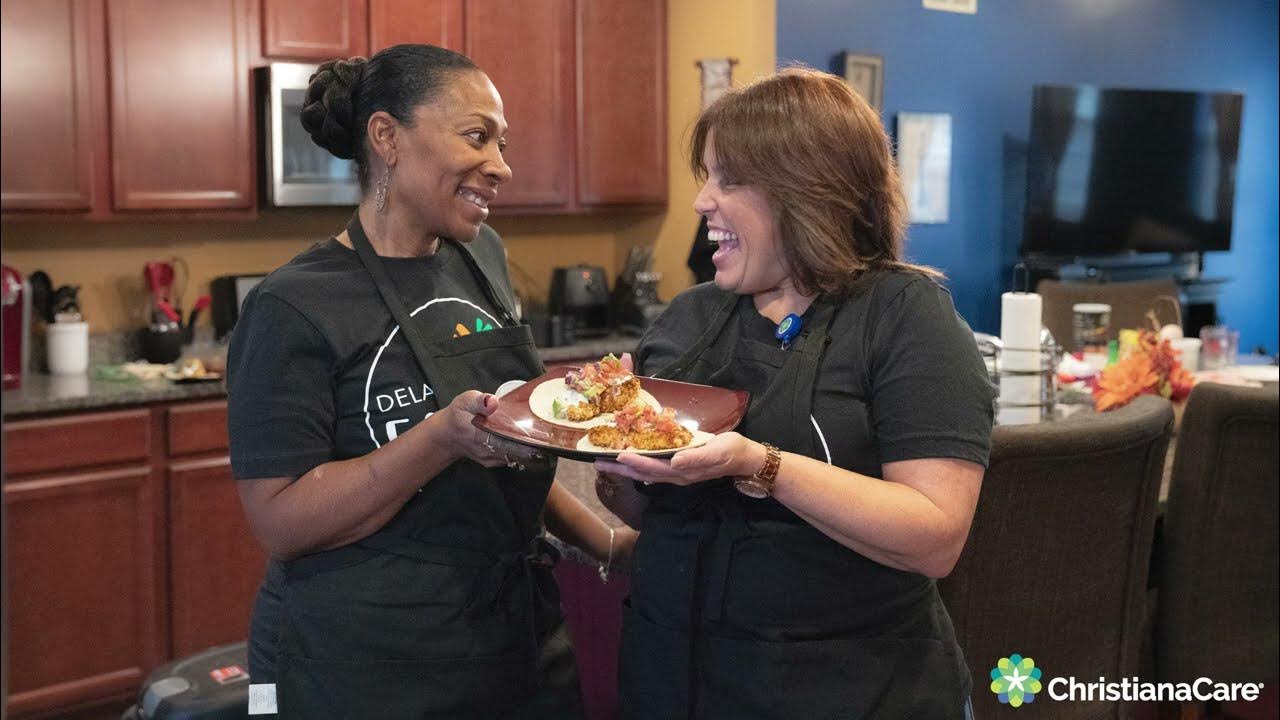
Kim Solomon’s kitchen showed all the signs of a good lunch in the making – chopped veggies on the counter, a few dirty dishes in the sink and two people laughing as they cooked. “Don’t worry, we’re going to clean all this up,” ChristianaCare community health worker Michelle Torres, BBA-HM, said as she sliced tilapia for the heart-healthy fish tacos she was making with Solomon. “I’m not worried about the mess, especially when it tastes this yummy,” Solomon said as she watched Torres place the raw fish – coated with panko crumbs, spices and an egg wash – into the air fryer. A few years earlier, Solomon’s lunch would have been something quick from the pantry after cooking for her sons or helping a neighbor. But after dealing with the life-threatening effects of high blood pressure, she is learning – with Torres’ help – how to prioritize her own nutrition and health. Solomon is one of more than 225 patients enrolled in the Delaware Food Farmacy, a ChristianaCare partnership with Lutheran Community Services that provides weekly deliveries of locally sourced produce, meat and other foods, along with one-on-one support from a community health worker. Delaware Food Farmacy participants report lower A1C blood glucose levels, healthier blood pressure readings and reduced body mass index. Dishing out good health “It took me getting very sick to finally make my own health a priority in my life, and that’s a humbling experience,” said Solomon, who lives in Bear, Delaware. “This is not just about food – it is about friendship, and Michelle’s support really gives me motivation. It keeps me excited to hear her voice and know that she’s there for me.” Kim Solomon (left) finds prioritizing her own nutrition and health can be delicious, as she prepares panko-crusted tilapia for fish tacos with community health worker Michelle Torres. ChristianaCare is expanding efforts to reduce food insecurity among patients in an ongoing commitment to ending disparities and in recognition that access to nutritious food is critical to overall health. In addition to the Delaware Food Farmacy, over 100 Maryland Primary Care Program (MDPCP) patients are participating in Healthy Food, Healthy Hearts, a 12-week program that delivers fresh groceries to under-resourced Medicare patients with complex health needs. “Our focus is empowering people to maintain their health by giving them the resources they need for whole-person care, including healthy food and education related to meal preparation and living with a chronic health condition,” said Erin Booker, LPC, chief biopsychosocial officer for ChristianaCare. “Through our work with our community partners in the Food Farmacy program in Delaware and our Healthy Food, Healthy Hearts program in Maryland, we are acknowledging the intersection of nutrition and health care and the importance of creating a more equitable food system.” Food is Medicine Both programs operate on the Food Is Medicine model, which recognizes that nutritious foods are essential for good health – and they must be accessible in the community, particularly in under-resourced areas. Studies have shown that evidence-based, tailored food interventions can lead to improved health outcomes and better use of health care services among participants while also reducing food insecurity, said Michelle Axe, MS, CHES, program manager of Food and Social Care Initiatives for ChristianaCare. The Centers for Disease Control and Prevention estimated in 2023 that food insecurity results in nearly $77 billion in excess health care spending. Veggie power: Much of the food in the Food Farmacy is sourced locally through a cooperative agreement with Delaware’s Department of Agriculture and the Farm-to-Community Program, which connects local farms with organizations distributing food to the community. Among Food Farmacy graduates, 26% report a decrease in food insecurity and 18% said they experience less anxiety. “With these programs, we’re offering participants an opportunity to make a change in their life, not only for them as individuals, but for the entire family,” Axe said. “This is about more than food.” From farm to table Getting health care professionals to prescribe healthier food options – and then making it possible for the patients to obtain them – helps close the gap between medical nutrition and financial health, said Rob Gurnee, executive director of Lutheran Community Services. “Providing food – that’s our core competency,” Gurnee said. “What really makes this program different and incredibly valuable is that ChristianaCare can funnel the right people into the program and then maintain these relationships to help patients make changes that are sustainable. Together, we utilize the strengths of our organizations with the goal of improving health outcomes.” Each week, Delaware Food Farmacy participants select from a menu of fresh produce, lean meats and fish, whole grains, low-fat dairy, snacks and other healthy items, all of which fall under the Dietary Approach to Stop Hypertension (DASH) diet. Fresh-picked: With Delaware Food Farmacy, patients are getting local produce that is typically picked within 24 to 48 hours. Much of the food distributed through Delaware Food Farmacy is sourced locally through a cooperative agreement with Delaware’s Department of Agriculture and the Farm-to-Community Program, which connects local farms with organizations distributing food to the community. Solomon’s refrigerator is filled with local produce, eggs and lean meats from the Food Farmacy program, but it’s Torres who keeps Solomon on the path to good health with her encouraging personality and a tasty supply of easy-to-make recipes. A recipe for healthy eating: Air Fryer Fish Tacos. Kim Solomon’s review? “Yummy.” “She’s there to support you and help you understand it’s going to be OK,” Solomon said. “She goes above and beyond every time. We need more Michelles in our world.”



Covering 4/20? Our experts can help you see through the smoke | Media Advisory
As 4/20 approaches, the spotlight once again turns to the evolving landscape of marijuana legalization and its broader societal impacts. This annual observance not only marks a cultural moment for cannabis enthusiasts but also prompts discussions about the legal, economic, and public health implications of marijuana use in the United States. Here are key story angles for journalists to explore: Legalization efforts and state-by-state updates: Tracking the progress of marijuana legalization initiatives across the country and analyzing the legal frameworks governing recreational and medicinal cannabis use. Economic opportunities and challenges: Investigating the economic impact of the cannabis industry, including job creation, tax revenue generation, and business opportunities, as well as regulatory hurdles and market fluctuations. Social justice and equity in cannabis legalization: Examining efforts to address historical inequities in drug enforcement and incarceration through policies such as expungement, social equity programs, and community reinvestment. Public health and safety considerations: Assessing the health effects of marijuana use, the regulation of cannabis products, and efforts to mitigate potential risks such as underage consumption and impaired driving. Cannabis culture and mainstream acceptance: Exploring the evolving perceptions of marijuana in society, including trends in consumption habits, cannabis tourism, and its portrayal in media and popular culture. International perspectives on marijuana policy: Comparing approaches to marijuana legalization and regulation in other countries and evaluating lessons learned for U.S. policymakers and stakeholders. Connect with an Expert about Marijuana in America: For journalists with questions or looking to cover the streaming wars? here is a select list of experts. To search our full list of experts visit www.expertfile.com Robert Mikos Professor of Law · Vanderbilt University Michael Ostrowsky Professor of Sociology · Southern Utah University Jennifer Whitehill Associate Professor of Health Policy and Management · University of Massachusetts Amherst Daniele Piomelli Distinguished Professor · UC Irvine Almut Winterstein Distinguished Professor · University of Florida Photo Credit: Dylan Mullins

New research shines a light on how expert mapmakers at Ordnance Survey see the world differently
OS Remote Sensing Services survey team updating OS MasterMap using the latest aerial imagery (Image credit: OS) Aston University psychologists worked with Ordnance Survey to assess how surveyors use 3D aerial images when making maps Humans naturally assume light comes from above, but experienced surveyors can interpret visual cues to assess topography regardless of the light direction It is the first time it has been shown that experience can radically alter natural human assumptions about lighting and could improve surveyor training. Researchers at Aston University have found differences between experienced Ordnance Survey (OS) mapmakers and novices in the way that they interpret aerial images for mapmaking, which could lead to improved training processes for new recruits. OS is well known for its travel and walking maps, but is also responsible for maintaining Great Britain’s national geographic database. Every time a building is demolished or developed, or a new road and path built, the map must be updated. Aerial photographs are taken of the area that has changed, either from a plane or using drones, and expert mapmakers, known as remote sensing surveyors, will examine the images to identify change and accurately redraw the map of the area. Image pairs are presented stereoscopically, one to each eye, allowing the remote sensing surveyors to see in 3D and correctly assess the topography, such as ditches, hills and hedges. Led by Professor Andrew Schofield, a team from Aston University’s College of Health and Life Sciences, together with Dr Isabel Sargent, previously at OS, carried out a study to understand how remote sensing surveyors interpret the shadows and highlights in images. The researchers asked six trained remote sensing surveyors and six novices to assess 10,000 stereoscopic aerial images of hedges and ditches, which had been heavily masked with image distortions. The stereoscopic images the aerial surveyors use for mapmaking are usually taken on sunny days. The human brain is naturally wired to interpret light as coming from above. However, the light does not come from above in the OS aerial images, it depends on the position of the sun. In the UK, north of the equator, light comes slightly from the south, thus appearing to come from below in images viewed by the surveyors. The researchers wanted to see how manipulating the direction of the light would affect the surveyors. Professor Schofield and the team swapped the image pairs between the eyes in half of the trials, so that hedges might look like ditches, and ditches look like hedges. The images were also flipped vertically on half the trials, changing the direction of the light source. Expert surveyors were found to rely on the stereoscopic cues – the difference in images seen by the two eyes – when performing the task. Novices were more likely to rely on lighting cues – highlights and shadows – to judge the shape and relief of an object, and assumed, as is natural, that the lighting came from above. With the manipulated images, this meant that novices frequently made mistakes. Experts were more accurate, even when the images had been turned upside down, and some had learnt to assume that the light source came from the south, or below. This is the first time anyone has shown that the natural assumption that light comes from above, which is common amongst many animal species, can be changed through long term experience. The researchers say that it could be used to develop new visual training techniques for remote sensing surveyors. For example, intensive exposure to repeated, difficult images can improve performance via a process called perceptual learning. Professor Schofield said: “This is a very exciting result. Others have shown that the light-from-above assumption can be altered by a few degrees, but no one has ever found complete reversals following long term experience. Dr Sargent said: “This result will help Ordnance Survey to understand the expertise of their staff and improve surveyor training and procedures.” Remote sensing surveyor Andy Ormerod, who worked on the study, said: “This research proves that experienced remote sensing surveyors can see the world differently. Whereas non-surveyors are used to seeing the world from one perspective, our brains have learned to view the world as seen from aerial imagery.” Journal of Vision DOI:10.1167/jov.24.4.11

Demystifying Relapse: 2-part series on substance use disorder recurrence and treatment
CARF International Senior Managing Director of Behavioral Health Michael Johnson is a contributor of this terrific two-part series on substance use relapse from the National Council for Mental Wellbeing. NATCON and partnering contributors from CARF International, National Association of Addiction Treatment Providers (NAATP), and the Recovery Research Institute are excited to release the Demystifying Relapse series, which includes two issue briefs that explore the complex dynamics of substance use disorder recurrence and the difficulty of reengaging individuals in the recovery process. “I’m grateful to the National Council for Mental Wellbeing for the opportunity to work with them on these two important documents. The U.S. is facing unprecedented challenges in treating persons with substance use disorders, with access to care continuing to be difficult for many. The field, the payers, and the public at large needs to take time to recalibrate how treatment and return to use are viewed in order to have realistic expectations for care, to destigmatize what it means for a person to return to use, and to ensure there is appropriate types of care available to those who need to re-enter the treatment systems,” said Senior Managing Director of Behavioral Health Michael Johnson. “Only when we recognize that persons who return to use need to have care that is individualized to assist them to stabilize, not start over, can we better ensure that treatment systems are more accessible based on the needs of persons served. The treatment for any chronic illness can be difficult as the path to wellness is often not linear. I hope these two papers can start a dialogue on how to reframe the systems to better meet the needs of those who continue with the recurrence of symptoms.” Michael Johnson is the CARF International Senior Managing Director of Behavioral Health. If you are looking to know more or connect with Michael, view his profile below to arrange an interview today.


MEDIA RELEASE: CAA Manitoba Survey Reveals Alarming Data on Cannabis-Impaired Driving in Manitoba
CAA Manitoba (CAA MB) is encouraging Manitoba drivers to remain vigilant this month by driving responsibly – and sober. In a recent survey conducted by CAA Manitoba, alarming data highlights concerns related to cannabis-impaired driving, particularly involving edibles. Key findings from the 2023 survey found that since legalization, a third of cannabis-impaired drivers (27 per cent) in Manitoba have driven a vehicle after consuming an edible form of cannabis. “The data shows us that there is a significant number of impaired drivers under the influence of edible cannabis, which poses a great risk to road safety,” says Ewald Friesen, community and government relations manager at CAA Manitoba. “Edibles pose a greater risk for impairment and road safety since they can often take up to two hours for the effects to kick in.” According to the survey, 61 per cent of cannabis-impaired drivers in Manitoba wait less than three hours before getting behind the wheel. Due to the prolonged absorption of edible cannabis, the potential for drivers to get behind the wheel before they even realize they are beginning to feel the effects poses a serious risk to road safety. The data shows that 89 per cent of Manitoba drivers agree that driving under the influence of cannabis is a serious risk to road safety. However, 67 per cent of cannabis-impaired drivers feel confident in their ability to drive. “While some believe that cannabis doesn’t impair their driving ability, it has been proven to affect coordination, reaction time, decision-making and the ability to pay attention. We would like to see more public education and awareness on the risks of cannabis-impaired driving,” says Friesen. More than half of Manitoba drivers (64 per cent) believe that cannabis-impaired driving is the most important public education topic related to cannabis – more than education on health risks (63 per cent) and health risks for youth under 25 (59 per cent). Despite the concern for road safety and driving impairment, 21 per cent of Manitoba drivers are not aware of the penalties that could be faced for any type of impaired driving. According to Manitoba Public Insurance, this can include an immediate 24-hour licence suspension with a maximum of 60 days upon further testing, a $400 vehicle impoundment of three days, a mandatory Impaired Driver Assessment at the driver’s expense and potential charges under the Criminal Code of Canada. CAA is encouraging motorists to get informed, know the rules, and make the right choices – don’t get behind the wheel when impaired. Instead, make alternate arrangements, such as utilizing rideshare services, to ensure a safe journey home. Dig Insights conducted an online survey on behalf of CAA Manitoba between June 22 to July 5, 2023, of 500 Manitoba drivers aged 19-75 who had access to a vehicle. Based on the sample size and the confidence level (95 per cent), the margin of error for this study was +/- 3 per cent.



America's Most Endangered Rivers | Media Advisory
Every year, the release of America's Most Endangered Rivers List serves as a critical wake-up call, drawing attention to the urgent need to protect our nation's waterways and the communities that depend on them. As threats to our rivers continue to escalate due to pollution, overdevelopment, and climate change, this annual report highlights the importance of preserving these vital ecosystems for current and future generations. Here are key story angles for journalists to explore: Environmental impacts of river degradation: Investigating the consequences of pollution, habitat destruction, and water scarcity on wildlife and local communities. Economic implications of river conservation: Analyzing the economic benefits of healthy rivers for industries such as tourism, agriculture, and recreation. Community activism and river conservation efforts: Showcasing grassroots initiatives and advocacy campaigns aimed at protecting and restoring endangered rivers. Government policies and river management: Assessing the effectiveness of current regulations and resource management strategies in safeguarding our waterways. Indigenous perspectives on river stewardship: Highlighting indigenous knowledge and traditional practices related to river conservation and sustainability. Climate change and the future of America's rivers: Exploring how rising temperatures and extreme weather events are exacerbating threats to river health and resilience. Connect with an Expert about Jackie Robinson For journalists with questions or looking to cover todays' release of America's Most Endangered Rivers List, here is a select list of experts. To search our full list of experts visit www.expertfile.com Colin J. Gleason Associate Professor of Civil and Environmental Engineering · University of Massachusetts Amherst Alan Clarke Hydrological Services Leader · Global Water Experts Michael C. Slattery Professor, Department Chair and Director of the Institute for Environmental Studies · Texas Christian University AJ Reisinger Assistant Professor · University of Florida Photo Credit: Dan Cardoza

Oh, Ozempic … Is THIN Back In?
After decades of what seemed like progress away from the obsession for “wellies” and “thigh gaps” the thin-is-in mentality seems to be creeping back into the spotlight to weigh on women’s minds – especially on social media. Channeling the renewed fascination with and focus on slimness, University of Mary Washington Assistant Professor of Communication Emily Crosby, and Associate Professors of Communication Adria Goldman and Elizabeth Johnson-Young, presented a talk titled "Social Media and the Changing Current of Health Messaging and Debates." Crosby's presentation, "Ozempic is Cheating!: Articulating a Digital Turn in Diet Culture," looks at the discourse surrounding Ozempic on social media. Employing feminist rhetorical criticism, Crosby analyzes posts and commentary to identify themes and conventions of analog and digital diet culture. This research articulates the digital turn in the "cult of thinness," to expose how medical injectable weight loss drugs undermine the body positive movement by invoking clinical technology as ethos. Goldman's presentation, "#SocialSupport: Examining the Informative and Emotional Functions of Bariatric Surgery Support Groups on Facebook," investigates the functions of digital support groups in assisting with mental well-being and emotional regulation for people considering, undergoing or recuperating from weight loss surgery. This research examines Facebook’s ability to function as both an informative and emotional resource for the bariatric surgery community. Johnson-Young's presentation, "Sugar, Snacks and Weight: An Examination of Posts and Parent Reactions to the Challenges of Nutritional Health Norms on the Growing Intuitive Eaters Instagram," examined posts and comments on an influencer's account. The research is rooted in both health behavior theory and non-evaluative and trust-based communication around food and nutrition. Preliminary findings show a variety of themes regarding reactions to the influencer's posts, from anger and resistance to relief and excitement. Weight loss, wellness and the enormous amount of attention this topic is getting has journalists looking for answers. And if you're covering or are looking to know more - we can help. All three University of Mary Washington experts are available to speak with media - simply click on an icon now to arrange an interview today.




Stress Awareness Month | Media Advisory
In today's fast-paced world, stress has become a ubiquitous companion, impacting individuals across all walks of life. Stress Awareness Month serves as a crucial reminder of the importance of mental well-being and the need to address stress-related issues in our society. This event matters to the public as it sheds light on the prevalence of stress, its detrimental effects on health and productivity, and the strategies available to cope with it effectively. Key story angles that may interest a broad audience include: The science behind stress: Exploring the physiological and psychological mechanisms of stress and its effects on the body and mind. Coping strategies and resilience: Highlighting various techniques individuals can employ to manage stress, including mindfulness, exercise, and seeking social support. Stress in the workplace: Investigating the impact of work-related stress on employee well-being and productivity, along with initiatives by companies to create healthier work environments. Stress among different demographics: Examining how stress manifests differently across age groups, genders, socioeconomic backgrounds, and cultures. Innovations in stress management: Covering emerging technologies and therapies aimed at reducing stress levels and improving mental health outcomes. Policy and advocacy: Discussing the role of governments and organizations in implementing policies and programs to alleviate stress and promote mental wellness. Connect with an Expert on Stress For journalists with questions or looking to cover Stress, its causes and how it impacts people, here is a select list of experts on stress. To search our full list of experts visit www.expertfile.com Claire Wheeler Instructor · Portland State University David Creswell Professor · Carnegie Mellon University Julian Ford, Ph.D. Professor, Department of Psychiatry · University of Connecticut Annie T. Ginty, Ph.D. Assistant Professor, Psychology & Neuroscience · Baylor University Rosalie Moscoe Owner, Spleaker, Registered Nutritional Consultant · Health in Harmony Photo Credit: Luis Villasmil

The ChristianaCare Hospital Care at Home program, a national leader in providing acute care in a place most familiar to patients – their own homes – has reached a new milestone with more than 1,000 admissions since opening in December 2021. ChristianaCare’s innovative program enables patients with common chronic conditions, such as congestive heart failure and diabetes complications, as well as infections like pneumonia, to receive hospital-level care at home through virtual and in-person care provided by a team of physicians, nurse practitioners, paramedics and others. Technology kits deployed to patient homes ensure round-the-clock access to a health care professional, along with twice daily visits from caregivers, medication deliveries and mobile laboratory services. “This program is a wonderful example of how ChristianaCare is building a better health care system and meeting people’s health care needs through innovation, collaboration and an unwavering commitment to providing the very best care for the people we serve,” said Janice E. Nevin, M.D., president and CEO of ChristianaCare. “We are proud to be at the forefront of hospital care at home nationally, through the collaboration with leaders like Sen. Tom Carper of Delaware, who has championed this new model of care at the federal level; Medically Home, which partnered with ChristianaCare to help us design a program that best meets the needs of the communities we serve; and our own health professionals – we call them caregivers – whose expert care and coordination make this all possible. Together, we are creating health so that people can flourish.” ‘Just amazing’ for patients Patients are evaluated for the hospital care at home program when they come to Wilmington or Christiana hospital emergency departments. Those who can be treated at home receive a technology kit that connects them to the command center, powered by the ChristianaCare Center for Virtual Health. With a touch of a button, they can access an expert team of ChristianaCare doctors and nurses. But hospital care at home isn’t just virtual care—the technology supports an entire care team that works inside the patient’s home and remotely to provide optimal support at all times—just like in a hospital. Patients connect with their health care team with just the touch of a button. Carol Bieber, whose 98-year-old father, Bill, has been a hospital care at home patient, sees the difference it makes for him to wake up in his own bed, sit in his own living room and still get the care he needs to get better. "The whole hospital care at home experience is really calm and easy and familiar to him," said Bieber, who lives in Newark. “My dad is a people person, so to be able to connect with everybody who comes in to see him or talk to him on the screen is just amazing.” Innovative solutions for in-home care ChristianaCare’s Hospital Care at Home program was developed in 2021 after the Centers for Medicaid & Medicare Services (CMS) began the Acute Hospital Care at Home waiver program to allow Medicare beneficiaries to receive acute-level health care services in their home. U.S. Sen. Tom Carper, who represents Delaware, worked to pass the bipartisan Hospital Inpatient Services Modernization Act in 2023 that extended this program. Last month. Sen. Carper introduced the bipartisan At Home Observation and Medical Evaluation (HOME) Services Act that would expand this lifesaving and cost-saving program. “Hospital at Home – which grew out of the COVID pandemic – was an opportunity for us to meet seniors where they are,” Sen. Carper said. “It has delivered positive outcomes, higher patient satisfaction, and saves money. That is why when this program was about to go away with the end of the COVID public health emergency, I joined my colleagues across the aisle to extend the program for two more years. Today, especially as we celebrate the success of the program in Delaware with ChristianaCare, I’m encouraged that we can further extend that program!” Sarah E. Schenck, M.D., FACP, executive director of the ChristianaCare Center for Virtual Health, said the hospital care at home program has yielded lower readmission rates than brick-and-mortar hospitals. In addition, patient experience scores are about three times higher than the national average for a traditional hospital experience. Options like Hospital Care at Home give patients the care they need in the space they want, said Dr. Sarah Schenck, executive director of ChristianaCare's Center for Virtual Health. “We’ve been conditioned to believe that care only happens within the four walls of a hospital. For our patients who have loved ones at home or their pets, a favorite chair or favorite food, they’re now able to have all of that as they heal,” Schenck said. “Once our patients have experienced this, what we hear from them is that they are truly grateful.” Promoting healing – at home Helping patients recover in their homes also has been transformational for caregivers who get to see a different side of their patients and better understand what they need to successfully recover. “I can’t express how much I enjoy the patients and their families,” said Heather Orkis, a paramedic with the hospital care at home program. Patients aren't the only ones who enjoy the experience of Hospital Care at Home - so do the health care professionals who care for them. “To be able to enjoy the family and see these people get better in their own homes, with their families, their grandkids, their dogs, their cats – it’s just a completely different kind of medicine.” For Bill Bieber’s family, hospital care at home is more than health care. “It’s just the best thing ever,” Carol Bieber said. Families appreciate the frequent interactions with members of the Hospital Care at Home team.