
Experts Matter. Find Yours.
Connect for media, speaking, professional opportunities & more.

Whether making the transition to college, starting a new job, ending a relationship or retiring, change can cause psychological stress, which in turn can make for wear and tear on the body. The good news is, we can develop coping mechanisms to reduce stress and live happier, healthier lives, say Baylor University psychologist Annie Ginty, Ph.D., and her University of California-Irvine collaborator, Sarah Pressman, Ph.D. Using a grant from AXA Research Fund — which supports projects in health, environment, new technology and socioeconomics — Ginty and Pressman produced three short videos to help students and the general public understand what stress is, what it does to our bodies and how to handle it. The videos stem from a two-year AXA postdoctoral research fellowship by Ginty, assistant professor of psychology and neuroscience in Baylor’s College of Arts & Sciences. She investigated the relationship between biological responses to stress and adaptation during a stressful transition, particularly students’ adjustment to college. The videos, 1 to 3 minutes each, are housed on AXA’s YouTube channel and bear Baylor's new logo. “Psychological stress is bad for health; exercise stress is good,” said Ginty, who works with nonprofits to serve at-risk adolescents by providing high-intensity interval training workouts to reduce stress and improve health. “When we think about exercise, your heart rate and metabolic system increase, meaning you’re breathing harder. The rest of your muscle physiology is changing. Your body is working together to maintain homeostasis for balance. This is good stress,” she said. “But with psychological stress, the heart works much harder than the rest of the body. That metabolic imbalance can be hard on the heart and make the body more vulnerable to disease.” In the videos, Baylor students discuss the causes of psychological stress in their lives, how their bodies react and ways they handle stress. For them, a college education poses looming deadlines, fear of living up to expectations, anxiety about tests and adjusting to a new atmosphere. In the first video — "Stress and Your Health" — they describe such reactions as higher heart rate, restlessness, loss of sleep, skin breakouts, headaches and tense muscles. “If I fail at a test, I then in my mind see myself not getting into medical school, which is a pretty big domino effect,” said Devin Mangold of Wolfforth, Texas, a senior neuroscience major in the Honors College at Baylor. Such stressors can take a toll on moods and emotions, putting the physiological stress system into overdrive and possibly becoming a threat to long-term physical health — which in turn creates more stress. The second video — "Effects of Stress on Your Body" — explores how stress can affect emotions and the body. Stressed people may become anxious, sad, worried and angry. The stressors can interfere with sleep and can leave less time to exercise. People also tend to eat foods with higher fat and higher carbohydrates, said Pressman, associate professor of psychological science at UC-Irvine. That can lead to muscle tension, which can translate into injury. The third video — "Coping with Stress" — is about the importance of coping mechanisms so that minor stressors don’t turn into serious health issues. Social networking has been shown by research to reduce the effects of stress in such ways as lowering blood pressure. The best ways to cope are physical activity, a healthy diet and cognitive reappraisal. “Cognitive reappraisal” is “a fancy way of saying we’re changing how we interpret our situation,” said Danielle Young, Psy.D., clinical research coordinator of the Baylor Behavioral Medicine Laboratory in the department of psychology and neuroscience department. “It’s the difference between saying, ‘This is going to be the hardest test ever, and I’m going to fail’ and ‘This is going to be a hard test, but I’m going to do the best I can.’ Even that slight shift in thought can make you less stressed.” A recent study by Ginty of 230-plus Baylor students examined the effect of reappraising stress. “We found that if we gave brief instructions about how increases in heart rate during stress mean they were ‘ready’ and were not a ‘bad thing,’ people rated their levels of anxiety as more helpful to their performance,” Ginty said. The video encourages individuals to experiment with coping techniques that work for them. Students who appear in the video suggest methods from working out to cooking to reading to walking their dogs. “My natural demeanor is laid back, but internally, I stress myself,” said senior neuroscience major Simba Masando of Harare, Zimbabwe. Early in college, he “just went headfirst into the material” of a capstone course. “Now as a senior, I’m doing some preliminary courses I’m not necessarily interested in, but they’re required. I’ve alleviated some pressure in the major, but some of the requirements are a little more worrisome.” As a member of Baylor Behavioral Medicine Lab, what he’s learned about stress oping has been “greatly helpful” as he looks ahead to post-graduate school and his eventual goal of opening a school in Zimbabwe. “I’m an avid learner,” he said. “School is my job, as I see it, but my hobbies are learning, too. In basketball, there’s always a new move I want to learn; in piano, there’s a new technique. If you take the piano away from me, I’ll try guitar. And if you take basketball away from me, I’ll try tennis.” ABOUT ANNIE GINTY Research articles by Annie Ginty, Ph.D., include: “The behavioural, cognitive, and neural corollaries of blunted cardiovascular and cortisol reactions to acute psychological stress,” published in ; “Challenge and threat imagery manipulates heart rate and anxiety responses to stress,” published in ; and “Depression and anxiety are associated with a diagnosis of hypertension 5 years later in a cohort of late middle-aged men and women” published in ABOUT BAYLOR UNIVERSITY Baylor University is a private Christian University and a nationally ranked research institution. It provides a vibrant campus community for more than 17,000 students by blending interdisciplinary research with an international reputation for educational excellence and a faculty commitment to teaching and scholarship. Chartered in 1845 by the Republic of Texas through the efforts of Baptist pioneers, Baylor is the oldest continually operating University in Texas. Located in Waco, Baylor welcomes students from all 50 states and more than 90 countries to study a broad range of degrees among 12 nationally recognized academic divisions. ABOUT THE COLLEGE OF ARTS & SCIENCES AT BAYLOR UNIVERSITY The College of Arts & Sciences is Baylor University’s oldest and largest academic division, consisting of 25 academic departments and seven academic centers and institutes. The more than 5,000 courses taught in the College span topics from art and theatre to religion, philosophy, sociology and the natural sciences. Faculty conduct research around the world, and research on the undergraduate and graduate level is prevalent throughout all disciplines. Visit www.baylor.edu/artsandsciences.


How to talk to your family about fake news
A recent segment hosted by ABC’s “The Debrief” examined fake news and how older generations are influenced by its use, with Professor of Cinema and Television Arts Naeemah Clark offering her insights. During the Aug. 2 show, Clark joined host Kimberly Brooks by video to discuss how to talk to your family about understanding what is and is not fake news. Specifically, the segment addressed why old generations more frequently share inaccurate news than other demographics. According to Clark, this trend is the result of the exponential growth in news media since the mid- to late-20th century. “In previous generations, the news … was trusted and it was believed because that is what they had,” Clark said during the interview. “There were three channels … and the 6 o’clock news was what you trusted, what you were dependent on. Now that there are so many more sources, it is more difficult" … to identify what is truthful. Watch the entire segment here. If Dr. Clark can assist with your reporting about these complex immigration issues, please reach out to Owen Covington, director of the Elon University News Bureau, at ocovington@elon.edu or (336) 278-7413. Dr. Clark is available for phone, email and broadcast interviews.


Why is it so hard to pass laws to regulate guns in America? Let our experts explain
So far this year in the United States, there have been eight mass shootings taking the lives of more than 60 people. It’s tragic, but the concept of taking action to remedy this problem is still seen more as political than proactive. In fact, the possibility of being caught up in gun violence is now a part of the everyday lives of a majority of Americans. “Today, 59% of Americans say random acts of violence, like mass shootings, pose the biggest safety threat to them, according to a Reuters/Ipsos poll conducted this month after 31 people were killed in back-to-back rampages in El Paso, Texas, and Dayton, Ohio. The poll also found that 78% of Americans believe another such attack will likely unfold in the next three months. So far this year, there have been more than 250 mass shootings, according to the Gun Violence Archive, a widely cited non-profit that counts incidents in which at least four people other than the shooter were injured or killed.” TIME, Aug. 13, 2019 It is almost baffling why there are bottlenecks and roadblocks to finding a solution – and there are lots of questions that need to be asked. Why don’t national lawmakers pass laws regarding gun violence/mass shooting? How has public opinion changed on gun control in the last 30 years? How does gun violence in the U.S. compare to other countries? What is the current state of gun control laws in the U.S.? If you need answers, that’s where our experts can help. Dr. Gregg R. Murray, professor of political science at Augusta University, is available to talk about why lawmakers are having such a tough time tackling gun violence in America. Murray’s research focuses on political behavior and psychology with specific interests in voter mobilization and turnout. He is also executive director of the Association for Politics and the Life Sciences.


Is this fall’s Virginia election the canary in the coal mine for gun control?
There will be a lot of eyes on Virginia as voters go to the polls to elect its state government this November. Virginia is just one of four states going to the polls this year and it seems like gun-control (or various forms of it) might be a key issue. In fact, Republican Tim Hugo has flip-flopped and is now favoring a Republican drafted “red flag” gun bill that would remove guns from some people considered a risk to themselves or others. Stephen J. Farnsworth, a political science professor at the University of Mary Washington in Fredericksburg, said suburban Republicans like Hugo and Miyares are walking a fine line on volatile issues like gun control as Democrats make inroads in those communities. Those Republicans in moderate areas feel pressure to side with their party in larger political battles, such as the one that occurred in Richmond last month, when the GOP leaders abruptly ended the special session. But they also can’t appear to be out of sync with their changing districts on guns and other divisive topics, Farnsworth said. “Delegate Hugo has to do something to appeal to suburban constituents who are moving away from a Republican Party that is represented by President Trump,” Farnsworth said, noting that the delegate won his 2017 election by just 106 votes. “By offering a response on a gun control measure, Hugo is trying to demonstrate to his voters that he is not simply another Republican willing to shut down debate on the issue before the election,” he said. August 17 – Washington Post Could this be a sign of things to come for 2020? Are politicians actually considering gun control on both sides of the aisle? Or is this just another bait and switch by a politician looking to play both sides during a campaign? If you are a reporter covering this topic – let our experts help. Dr. Stephen Farnsworth is professor of political science and international affairs at the University of Mary Washington. A published author and a media ‘go-to’ on U.S. politics, he is available to speak with media regarding this topic. Simply click on his icon to arrange an interview.



The Gun Control Debate is at a Stalemate. Can Smarter Weapons Help to Solve it?
The gun control debate is at a stalemate. America seems incapable of finding common ground on background checks, waiting periods, weapons registries and restrictions or bans on select weapons. Shooting after shooting has resulted in decades of debate but little substantive change. But Professor Selmer Bringsjord from Rensselaer Polytechnic Institute, who recently weighed in on the issue, presented a concept that could turn the entire topic on its head by using artificial intelligence. Bringsjord accepts that America won’t get rid of its guns – so why not just make our guns smarter? Ethically AI-enabled weapons can put American politicians back to work by shifting the debate from the weapons we should ban, to the targets we will accept. Do we allow guns to kill school children, shoppers, concert-goers? The technology of ethical AI changes the conversation. His idea was just recently published in the Times Union: “Yet there is a solution, a technological alternative to the fruitless shouting match between politicians: namely, AI — of an ethical sort. Guns that are at once intelligent and ethically correct can put an end to the mass-shooting carnage. Consider the rifle apparently used by the human killer in the El Paso Walmart shooting. But now suppose that time is turned back to before his shots were fired on Aug. 3, and that his rifle, radically unlike the stupid one that killed, is both intelligent and ethical. This alternate-future rifle would know that it's approaching the Walmart by car and would accordingly know that it has no business being used anytime soon. Move forward in time a bit; the rifle is now in the hands of the aspiring, ear-muffed killer outside his car; but his weapon has fully disengaged itself and is locked into a mode of utter uselessness with the finality of a sealed bank vault. On the other hand, the guns in the hands of law enforcement officers who have dashed on scene know in whose hands they rest, and accordingly know that if they are trained on the would-be killer, they have every right to work well, if this criminal reveals some new threat. Notice: If people who don't actually pose a threat sufficient to warrant being shot by police can't be shot by smart, ethical guns, a fact that could lead to the welcome evaporation of a different but also vitriolic political shouting match.” -Times Union, August 16, 2019 Could AI be the answer to America’s gun problem? It’s truly a new perspective on an old issue. If you are a reporter covering this topic, let our experts help with your story. Dr. Selmer Bringsjord is the Chair of the Department of Cognitive Science expert in logic and philosophy, specializing in AI and reasoning. Dr. Bringsjord regularly speaks with media about AI and is available to speak about the concept of intelligent, ethical guns. Simply click on his icon to arrange an interview.



Are Germany’s economic walls crumbling? Let our experts explain the potential consequences.
As the saying goes … where there’s smoke, there is usually fire. And as trade wars, Brexit and overall global uncertainty crash like waves across the planet – there might be another sure sign we are headed for a global economic slowdown. Germany, the engine that runs Europe, may very well be in recession. “A technical recession is defined as two consecutive quarters of negative growth, and Germany saw a 0.1% drop in the April-to-June period. In its monthly report, the Bundesbank said that with falling industrial production and orders, it appears the slump is continuing during the July-to-September quarter. “The overall economic performance could decline slightly once again,” it said. “Central to this is the ongoing downturn in industry.” Deutsche Bank went further Monday, saying “we see Germany in a technical recession” and predicting a 0.25% drop in economic output this quarter.” August 20 – Associated Press So, what will this mean for the EU, and economies far and wide? Do Americans need to be concerned? Is this just a stumble or is the world about to fall into another economic collapse? If you are a reporter covering the economy and need an expert for your stories – let us help. Jeff Haymond, Ph.D. is Dean, School of Business Administration and a Professor of Economics at Cedarville and is an expert in finance and trade. Dr. Haymond is available to speak with media regarding this topic – simply click on his icon to arrange an interview.



Education is a staple in our modern society. The path to success, security and stability often lies in one form or another of post-secondary training, education and higher learning. And though education may be an investment in one’s future – it’s an expensive investment and that has led to some scrutiny. Student debt is in the trillions. Completion rates hover at about 60 percent. Tuition is increasing at twice the rate of inflation. Now there are literally thousands of institutions in America offering higher education. Some are household names and others offer unmatched prestige, learning and success after graduation. But how can they deliver on those promises? At Western Governors University – that answer was one of its first priorities upon opening. “Since Western Governors University enrolled its first student 20 years ago, the university has been data-driven and student-obsessed. We track student progress, retention, completion and satisfaction, and we even poll employers of our graduates to get feedback on graduate preparedness and performance. These metrics help us identify needed innovations and improvements and inform new efforts -- and, while these data have proven useful, we wanted to know more. Gallup has established measures designed to gauge workforce and life outcomes, including employee engagement, wellbeing and emotional attachment to one's university. In addition, Gallup has identified five elements of wellbeing -- career, social, financial, community and physical -- and, based on a series of questions, can determine whether individuals are thriving, struggling or suffering in each element.” May 13 - Gallup Are you a reporter covering higher-ed who might be interested in how schools are delivering for their students after they graduate? If you have questions – let our experts help with your stories. Scott Pulsipher serves as the President of Western Governors University. He is an expert in the areas of higher learning, higher education access and innovation. Scott is available to speak with reporters about this topic – simply click on his icon to arrange an interview.

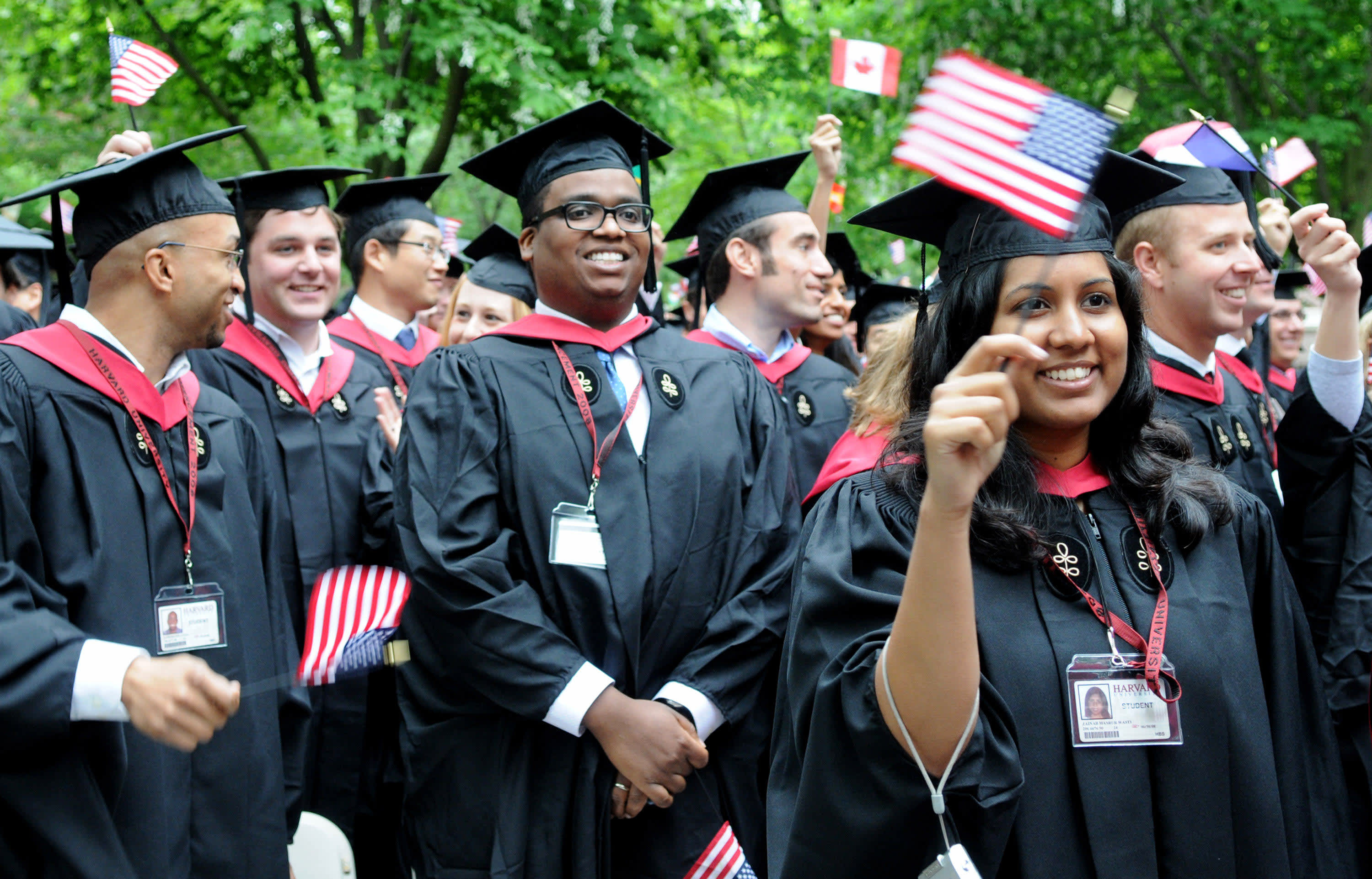
The World Needs More MBAs! Let an expert from WGU explain how partnerships can make it work.
Recently, much talk has centered on the closing of business school programs, and the extreme debt that many students take on to achieve a business degree. New data from Bloomberg Businessweek reported that nearly half of students polled from 126 universities across the world finance $100,000 or more for their MBAs. “Bloomberg Businessweek surveyed more than 10,000 2018 graduates of MBA programs from 126 schools about the amount of debt they piled on earning their degrees. The survey found that almost half of students at leading business schools around the world borrowed at least $100,000 to finance their MBA. According to the survey, at minimum 40% of MBA graduates from U.S. News & World Report’s top-ranking business programs — those at Duke, Dartmouth, University of Michigan, Cornell and University of Chicago — reported incurring at least $100,000 in debt.” July 09 – CNBC MBAs have been widely accepted by employers, and the return on investment for students has historically been high. Over the years, business programs have adapted to the needs of employers, and the basic design of the MBA, combining a broad scope of valuable business skills, has remained relevant despite massive changes in the business world. But with the rise of tuition costs, rapid changes in technology, and a higher value being placed on specialization, the long-standing value proposition of the MBA is changing. Cost, flexibility of delivery and open-loop, customized micro-learning are more likely to meet the needs of students and employers going forward. At WGU, we live and breathe the mission of supporting student academic success and expanding opportunities with affordable, valuable and relevant degree programs. Collaborations with companies which are equally committed to provide their employees the opportunity to sharpen their skills, advance in their careers, and better their lives, are one step in this evolution of business education. An evolution not in the future, it’s here. Dr. Rashmi Prasad is Dean and Academic Vice President of Western Governors University's College of Business. Dr. Prasad is available to speak with media regarding the need for higher education and how partnerships will bolster MBA programs and help graduates find success after they leave school – simply click on his icon to arrange an interview.

Are America’s teachers equipped to help kids coping with trauma – let our experts explain.
At a time when roughly half of all U.S. children experience at least one adverse experience during their schooling, only 40% of the nation’s teachers feel they possess adequate strategies to help students develop social and emotional skills to cope with trauma. A recent survey (see attached) shows that there are serious gaps when it comes to helping America’s children handle and overcome adverse childhood experiences. The survey also revealed: 78% of teachers feel that it is part of their job to help students develop strong social and emotional skills. Nearly 92% feel that the teaching of social-emotional skills will improve student safety. Only 29% had received mental health training. 43% found finding ways to help students who appear to be struggling with problems outside of school difficult. 23% said their most challenging task was finding ways to help students who appear to be experiencing emotional or psychological distress. Social and emotional learning is critical to student development and should be prioritized in teacher education. That’s where the experts from Western Governors University are approaching education differently. The school is integrating social and emotional learning into its curriculum for teachers, helping graduates and the next generation of teacher bring trauma-informed education into tomorrow’s classroom. Are you a journalist covering education and the state of America’s classrooms? That’s where our experts can help. Dr. Deborah Eldridge is an expert in program strategy, curriculum development, accreditation, and licensure for teacher education. Dr. Eldridge is available to speak with media regarding this topic – simply click on her icon to arrange an interview.

It was a train running full speed and showed no signs of stopping – but America’s economy hit a bump last week and it sent a lot of people from Wall Street and beyond into a panic. The 800-point drop in the Dow Jones seemed to be the first sign of another severe recession. But before everyone cashes out, experts from Western Governors University are hoping we take a look back through the ages before rushing to worry. “What does history teach us? Even before the Great Depression of the 1930s, Nicolai Kondratieff discovered that the capitalist economy, going back to the 18th century was characterized by waves, or business cycles,” says Dr. Rashmi Prasad, Dean and Academic Vice President of Western Governors University's College of Business. “The Federal Reserve, under leadership of Ben Bernanke, claimed that while the business cycle had not been repealed, a ‘Great Moderation’ had emerged in the world post-1982. Independent central banking and the rise of the service economy were among the reasons cited. In a great irony of history, Bernanke was front and center as Chairman of the Federal Reserve during the ‘Great Recession’ of 2008-2009. Business cycles seem to be inevitable for capitalist economies. Will we return to the Great Moderation of 1982-2007, or are we in a new period of regular Great Recessions? Central Banks stabilize and soften the down-cycles of recessions, but the price of managing the Great Recession of 2008-09 has been the dramatic expansion of central bank balance sheets–no new investment cycles–property or finance often leads to recession.” So, where do we stand and what can we expect in the short-term? Prasad adds this perspective: “Conventional economic thinking indicated inflation by now, which may have added to interest rates and constrained the amount of debt that was sustainable. Rapidly rising interest rates posed the risk of a deep and extended downturn. If interest rates can be managed and kept low, then the next down-cycle could be shallowed and prolonged as monetary policy has little scope and fiscal deficits are already very high. Risks for a major downturn exist in extremely high debt levels and central bank balance sheets, but still may be a decade or two away, awaiting triggers that we cannot yet predict.” Are you a journalist covering the economy and do you need expert perspective and opinion for your stories? That’s where Western Governor’s University can help. Dr. Rashmi Prasad is Dean and Academic Vice President of Western Governors University's College of Business. He is an expert in the fields of economic and financial data and business analytics. Dr. Prasad is available to speak with media regarding the state of America’s economy – simply click on his icon to arrange an interview.