Experts Matter. Find Yours.
Connect for media, speaking, professional opportunities & more.
The Grace to Fail: My MBA Journey (Part 3)
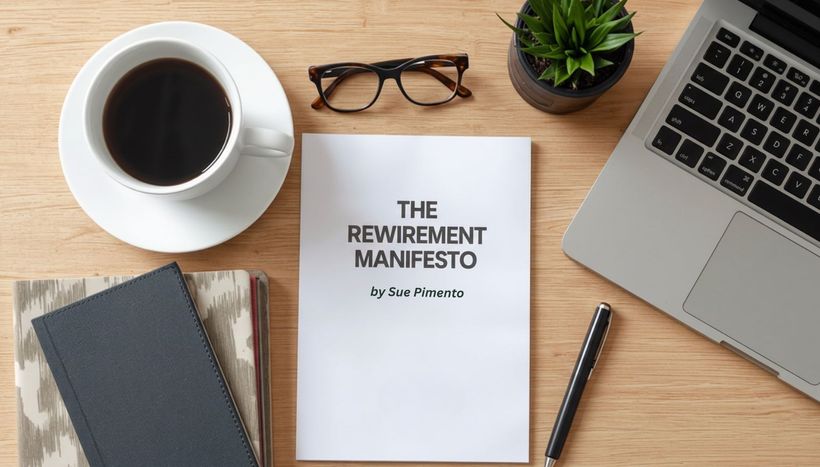
I have a confession to make. My wife Bonnie and I are addicts. Not the kind that requires an intervention, exactly, but close. We are addicted to home improvement. We are always planning the next upgrade, the next project, the next thing to tear apart and make better. It gives us genuine pleasure and a profound sense of accomplishment. Bonnie leads most of these endeavours. She is remarkably capable with power tools and can pull off a tool belt like she is strutting down a Home Depot runway (aisle). Our shared obsession has even spawned a series of Facebook posts called the 2 Capable Women, where we document everything from felling trees to the deeply humbling art of Ikea assembly. So there we were, driving in traffic, and Bonnie was telling me about her next project: removing the circa-1960 wood panelling and replacing it with modern shiplap. Mid-conversation, she went quiet for a moment and said, almost to herself, “I guess I need to allow myself the grace to fail.” I nearly drove off the road. You must understand something about Bonnie. She is a self-declared perfectionist. Not casually. She is committed to being a perfectionist at being a perfectionist. So, hearing those words come out of her mouth, unprompted, while discussing a renovation project, was like hearing your accountant quote Oprah. It stopped me completely. The truth has a certain ring to it. I heard that bell loud and clear. Because sometimes wisdom does not arrive in a lecture hall or a leadership book or a TED talk. Sometimes it arrives in a car, in traffic, from the person sitting next to you holding a coffee and thinking about shiplap. That phrase has not left me since. Many of us do this. We replay mistakes endlessly, convinced that self-criticism is somehow productive. We lie awake revisiting conversations and missteps, assuming that if we beat ourselves up long enough, we will emerge wiser. All we accomplish is a thorough self-beating followed by self-flagellation. Lots of noise. Zero progress. Zero calories burned. This is not just a problem for people climbing mountains or starting businesses. It plays out in perfectly ordinary moments. You send an email and immediately wish you had worded it differently. You make a comment at dinner that lands wrong and spend three days replaying it. You make a small error at work and carry it around like luggage for a week. The inner courtroom convenes regardless. Most of us are not failing spectacularly. We are just living, occasionally getting things slightly wrong, and treating that as evidence of something deeply and permanently wrong with us. It is not. It is just Tuesday. I have been thinking about this a lot lately because I am in the middle of my MBA at the Sprott School of Business. I wrote about My MBA at age 69 in Part I and Part II. Back in graduate school after four decades in the workforce, opportunities to feel uncomfortable, uncertain, and occasionally like you have wandered into the wrong building are plentiful. A recent assignment on crafting Team Charters and enhancing my leadership skills inspired me to write a personal manifesto for my graduate studies and to take a closer look at myself. You can read mine here. While working through it, I made a surprising discovery. Most of the commitments I was making to myself had nothing to do with school. They were about life. Read the instructions carefully. Ask for help sooner. Pay attention to what your emotions are trying to tell you. Trust your experience. Hold yourself to your own standards. And this one, which stopped me cold, and sounded very familiar: Allow yourself the grace to fail. There was that bell again. Those six words turned out to be the most important thing I wrote. Not because failure is something to celebrate, but because the willingness to risk it is the price of admission for virtually everything worth doing. Failure is not a topic most of us rush toward. It is about as pleasant as stubbing your toe in the dark. Yet every meaningful thing I have ever done required me to risk it. Starting a new career. Leading a sales team. Launching a business. Climbing a mountain. Writing a book. Going back to school at 69. None of it came with guarantees. All of it came with uncertainty, mistakes, and moments where I genuinely wondered whether I had lost my mind. The jury is still out on some of those. The irony is that failure and growth are inseparable. Dweck (2006) found that people who view setbacks as learning opportunities rather than evidence of inadequacy are more likely to persevere and ultimately succeed. Duckworth (2016) agreed, and in Grit, one of my favourite books, long-term success depends less on talent and more on the willingness to keep going after things fall apart. Neff (2023) added that people who respond to failure with self-compassion rather than harsh self-judgment show greater improvement and are more likely to try again. The friction produced by failure is often exactly what generates learning, but only if we give ourselves enough grace to stay in the game. I see this everywhere. Professionals are staying in jobs they no longer enjoy because starting over feels too risky. Retirees hesitate to try something new because they might not be good at it right away. Students who will not ask a question because they do not want to appear uninformed. And if I am being honest, I see it in myself. Every time I hesitate to contribute to class because everyone else seems younger and sharper. Every time I catch myself wondering whether I belong in the room. One exercise has helped me enormously. When I catch myself spiralling into negative self-talk, I imagine my five-year-old self standing beside me, listening. Would that little girl feel encouraged? Not a chance. So why do we think inner dialogue helps us? A recent example: I made a point in a meeting that got a polite nod and complete silence. You know the silence. The one that could mean anything from “interesting” to “what on earth did she just say?” I replayed that moment for two days. Eventually, I asked a colleague how the meeting had gone, and she said she barely remembered it. The forensic investigation was conducted entirely in my own head. I am not suggesting we lower our standards. We should hold ourselves accountable, learn from our mistakes, and strive to do better. But there is a meaningful difference between accountability and cruelty. Between reflection and rumination. Between learning from a mistake, and building a summer cottage on top of it, and checking in every long weekend. I worry about what this means for the generation behind us. Research by Professor Gabriel Rubin at Montclair State University found that despite living in one of the safest periods in history, Gen Z perceives risk virtually everywhere (Rubin, 2023). They have grown up knowing that at any moment, someone has a phone. One stumble, one terrible dance move, and the clip is posted before you catch your breath. Permanent, searchable, shareable public failure is something entirely new, and the consequences are showing up in surprising places. Monocle magazine noted young people standing completely still on nightclub dance floors, phones in hand, unable to lose themselves to the music. The club has become a stage, and the crowd has become the content. Instead of dancing, people film. Instead of connection, there is performance. This is not a small thing. Dancing is how humans have always signalled availability, built trust, and found each other. It requires a willingness to look slightly absurd. If we have raised a generation so terrified of being captured mid-stumble that they will not move to the music, we have handed surveillance culture a victory it does not deserve. Calculated risks lead to new opportunities, foster innovation, and teach lessons that comfort never could (Rubin, 2023). Risk aversion makes short-term sense. As a way of life, it quietly closes doors that were never meant to stay shut. Give yourself and the young people around you, explicit permission to be unpolished in public. To dance badly. To say the wrong thing and survive it. The phone will always be there. So, fortunately, will the music. Here is what I keep learning inside this MBA: wisdom arrives disguised as failure. The assignments that challenge me teach me more than the ones that come easily. The questions I most resist asking are usually the most important. I did not expect graduate school to teach me this. Then again, I did not expect to be here at seventy. I no longer think in terms of Wins and Losses. Those categories are too simple. I think in terms of Wisdom and Learning. Success builds confidence. Setbacks build insight. Both move us forward. Read that again. So the next time you find yourself at two in the morning replaying something you said three days ago, ask whether your five-year-old self would find your internal monologue useful. If the answer is no, offer yourself a little grace. Which brings me back to Bonnie. Last weekend, she pulled off that 1960s panelling. Every last piece. It was messy and uncertain, and at several points she was unsure what she would find underneath. There were surprises. There were moments of doubt. She kept going anyway. By the end of the weekend, the shiplap was going up, clean and bright and exactly right. She did not do it perfectly. She did it anyway. And it is beautiful. That is the whole lesson, right there, delivered by a woman with a pry bar and a tool belt, on a weekend in June. Failure is not the enemy. Most of the time it is just fear wearing a funny hat. And if you are lucky, it will teach you something genuinely worth knowing. Sometimes it comes from a research paper. Sometimes it comes from your wife, in a car thinking out loud about shiplap. Either way, listen for the bell. Writing my manifesto was one of the most clarifying things I did this year. Not because it solved anything, but because it forced me to decide, on paper, who I was going to be when things got hard. I want that for you, too. So I created the ReWirement Manifesto: a simple template for anyone navigating a new chapter, a big transition, or simply a Tuesday that did not go as planned. It is not a bucket list. It is not a vision board. It is a set of honest commitments you make to yourself, in your own words, that you can return to when your inner courtroom calls you to order. Download your free ReWirement Manifesto template here. Fill it in. Keep it somewhere you can find it. And the next time you are staring at a wall of 1960s panelling, wondering if you are in over your head, remember: the grace to fail is not a consolation prize. It is the whole point. Don’t Retire…Re-Wire! Sue My Book is Now Available for Pre-Order I hope you will consider pre-ordering a copy of Your Retirement Reset for you, a friend or loved one. It's available September 8, 2026 published by ECW Press - You can now order at Indigo or Amazon. And if you love supporting Canadian booksellers, please also check with your local independent bookstore. Most can easily order it for you.


Caught in a Rip Current? Virtual Reality May Help Save Your Life
A recent USA Today article highlighted a new rip current simulator in Florida designed to help beachgoers experience the power of these dangerous currents in a safe, controlled environment. The initiative reflects a growing focus on innovative approaches to water safety education as rip currents continue to account for the majority of surf rescues and numerous drowning deaths each year. Jase Bernhardt is an associate professor in the Department of the Geology, Environment and Sustainability at Hofstra University and also director of the department's MA Sustainability program. View his profile For years, Hofstra University researcher Dr. Jase Bernhardt has been exploring how technology can improve public understanding of coastal hazards. His work has led to the development of a virtual reality experience that places users in a simulated rip current, allowing them to experience the situation firsthand while learning the techniques needed to escape safely. The immersive training helps participants understand why fighting directly against a rip current can be dangerous and teaches the recommended strategies for reaching safety. Bernhardt's research focuses on weather hazards, risk communication, and public safety, with a particular emphasis on how emerging technologies can help people better understand and respond to real-world threats. His work offers valuable insight into the challenges of educating the public about rip currents and how innovative tools can improve preparedness and potentially save lives. As beaches across North America enter peak summer season, journalists covering beach safety, drowning prevention, coastal hazards, public education, or emerging safety technologies can connect with Dr. Jase Bernhardt for expert commentary on rip currents and the role virtual reality may play in helping people stay safe in the water.


Inside the Partnership Between Texas Christian University and Taylor Sheridan’s Four Sixes Ranch
A unique partnership between Texas Christian University and the legendary Four Sixes Ranch is giving students hands-on experience helping shape the future of one of the most recognizable brands in the American West. Recently featured at a major national rodeo event, the ranch’s newly designed retail booth, created by TCU faculty and students, blends heritage-inspired design with modern merchandising, reflecting the ranch’s growing national profile under the ownership of Taylor Sheridan and Nicole Sheridan. “We’re now written into the history of the Four Sixes Ranch.” The collaboration spans fashion merchandising, branding and business strategy, allowing students to contribute directly to product development, retail design and digital marketing initiatives. For students involved, the project offered a rare opportunity to see classroom ideas become real-world products tied to an internationally recognized Texas brand. Faculty members say the partnership reflects TCU’s focus on experiential learning while helping preserve and evolve an important piece of Texas cultural identity. Check out the video TCU and Four Sixes Ranch, and you can read more about this project in the full article below: Looking to connect with Chares Freeman, Kevin Smith, Nicole Bettinger or Rima Shrestha about this exciting project? Simply contact Holly Ellman, Associate Director of Communication, at h.ellman@tcu.edu today.


Seniors and AI (Part 2): Exercise Caution
If you haven't read Seniors and AI (Part 1) What Could Possibly Go Wrong?, catch up here. My friend Gloria told me she asked her AI assistant what to do about a “sore knee,” and it suggested she might be experiencing “symptoms consistent with early-stage gout, possible DVT, or referred pain from lumbar stenosis.” Gloria is 74, lives alone, and spent the next three hours convinced she was dying. She was not. She had slept on the couch in an awkward position. This is Part 2 of our look at Seniors and AI. If Part 1 was about the laughs, Part 2 is where we put on our reading glasses and pay attention. When technology moves from ordering groceries to offering medical advice or emotional support, the stakes get considerably higher than an accidental pineapple on your pizza. AI and Medical Advice: The Good, the Bad, and the “You Googled What?” Let’s give credit where it’s due. AI genuinely helps in healthcare in meaningful ways. It’s available at 2 AM without judgment. It translates medical jargon into plain English. It can help you walk into a doctor’s appointment with better questions instead of the usual panicked stare. But here’s what it cannot do: see you, touch you, or notice you’re limping. It can’t smell an infection, hear the wheeze in your chest, or detect the subtle signs that something is wrong. At its core, it is an elaborate and very polite Google search. Not a doctor. Takita et al. (2025), in a systematic review and meta-analysis published in Digital Medicine, found that the overall diagnostic accuracy of generative AI models is about 52 percent. Read that again. Fifty-two percent. Suitable for a second opinion, nowhere near sufficient to replace an experienced clinician. And yet, we hear a confident-sounding response and think, “Well, the computer said so.” Confidence and correctness are not the same thing, a lesson most of us learned the hard way in our thirties. When AI Is Safe (and When It Is Decidedly Not) Go ahead and ask AI about: What does that lab term on your bloodwork actually mean Common side effects of medications you’re already taking Questions to bring to your next appointment General information about a health condition Do not ask AI about: Anything you’d describe as “just making sure it’s not something bad”? Chest pain, sudden numbness, or anything that begins with “I’ve never felt this before” Whether to stop taking a medication Whether your symptoms are serious enough to go to the ER Think of AI as the helpful intern, not the chief medical officer. You’d let the intern look something up for you, but you wouldn’t let the intern prescribe your blood pressure medication. Bottom line: if you wouldn’t trust your toaster to measure your blood pressure, don’t trust a chatbot to diagnose your heart. AI Therapy: Comfort or Catastrophe? Mental health chatbots promise empathy. Let’s be precise about what that means: they simulate compassion, not feel it. There is a difference, and it matters. A Stanford University study (Moore & Haber, 2025) warns that therapy chatbots can reinforce stigma or provide genuinely unsafe responses. They can’t detect tone, see tears, read a room, or call for help when things turn dark. This is especially concerning for older adults. Loneliness and depression are common among seniors and are routinely dismissed as “just slowing down” or “getting older.” That’s not aging. Those are invisible illnesses that deserve real attention and real human connection. The Signs We Miss According to the National Institute on Ageing’s 2025 Ageing in Canada Survey, 57 percent of Canadians over 50 report feeling somewhat or very lonely, and 43 percent are at risk of social isolation. These figures haven’t changed since 2022. This is not a fringe problem. It is a quiet epidemic hiding in plain sight. Watch for these signs in yourself and in the people you love: Pulling back from activities they once loved Sleeping too much or not nearly enough Loss of appetite or unexplained weight changes Talking nonstop when the company finally arrives (that’s hunger or severe loneliness, not chattiness) Inventing reasons to call or visit Self-deprecating humour that feels a little too real. Here’s a small but important piece of advice: don’t ask, “Are you lonely?” You’ll get a cheerful “Of course not!” Pride and independence run deep, especially among a generation that survived things we can’t imagine. Instead, act as if. Drop by with coffee. Ask for help with something they are well versed in. Bring the dog. Go for a walk. Sit quietly and watch a show together. Share a meal. Loneliness doesn’t always need a conversation. Sometimes it just needs to know someone showed up. What Your Elder Is Thinking (But Will Never Tell You) Tread carefully here. These thoughts tend to live in the quiet spaces between sentences, felt but rarely spoken. How much time do I have? Have I done enough? Will my money run out before I do? Will anyone remember me? Do I still matter? Why do I feel so sad? Why are my friends getting sick and slipping away? Will I get sick? Who will look after me? Do my children know I love them? What if I start to forget? The creeping fear of losing names, faces, the stories that make life feel like mine. Am I a burden? (This one usually hides behind a joke.) What if my best days are already behind me? Some of these will surprise you. Some won’t. Some will make you want to pick up the phone right now. That’s the right instinct. You don’t need to fix these feelings. Sometimes, sitting quietly with someone in the silence between their words is the most healing thing you can offer. For the Family: What to Watch For and What to Do A quick note for the kids, grandkids, nieces, nephews, and anyone who forwards funny videos to their grandparents: your elders are going to experiment with AI. Probably the same way you experimented with your first beer or a regrettable tattoo: curious, enthusiastic, and occasionally overconfident. Watch for these warning signs: Increasing withdrawal from real-world activities and people Confusion about what is real versus AI-generated Replacing actual conversations with chatbot exchanges Acting on AI medical or financial advice without verifying it with a professional Being secretive or evasive about what they’re doing online Here is what you can do: Connect regularly. Ask what they’re learning or laughing about. Create opportunities for in-person time. FaceTime counts in a pinch, but in-person is irreplaceable. Know when to call the doctor. Know when all they need is your time. Don’t lecture. Don’t infantilize. Just stay connected. The best firewall against the risks of AI is not better technology. It’s better relationships. The Real Threat: Replacing Connection Here is the uncomfortable truth. AI is tempting. It’s always available, never interrupts, doesn’t judge, and responds instantly without getting distracted by its own problems. For someone who feels lonely, invisible, or like a burden, that can feel like a lifeline. But it’s a false one. AI cannot hold your hand or share a meal. It can’t laugh at your jokes in a way that truly counts. It cannot offer the warmth of human presence, which is what we need most, especially as we age. The danger isn’t primarily that AI will give bad medical advice, though it might. The danger is that it will replace human connection altogether. And that is a problem no algorithm can solve. CTRL ALT DEL: Now Go Call Someone AI is a tool. Part marvel, part mistake, and entirely dependent on who holds it. Use it wisely. Enjoy the entertainment. Stay curious. And remember who is actually in charge. Technology will keep getting smarter. It will not get warmer. It will not hear the sound of your laugh, remember the story you’ve told seventeen times, or show up at the door with soup when you’re not feeling well. That is still us. That will always be us. So yes, let Gloria ask her AI about her knee. But let’s also make sure someone calls Gloria on Tuesday. Key Takeaways Use AI for information, not diagnosis or treatment. Stay alert to signs of loneliness in yourself and in the people you love. Stay genuinely connected with older family members and friends. When in doubt, choose the human over the algorithm. The greatest upgrade to AI isn’t a newer version. It’s showing up. Sue Don't Retire...ReWire! My Book is Now Available for Pre-Order I hope you will consider pre-ordering a copy of Your Retirement Reset for you, a friend or loved one. It's available September 8, 2026 - You can now order on the ECW Press site here. And if you love supporting Canadian booksellers, please also check with your local independent bookstore. Most can easily order it for you.
Georgia Southern – East Georgia Campus Athletics joins NAIA
The Georgia Southern University – East Georgia Campus has been officially accepted into the National Association of Intercollegiate Athletics (NAIA), marking a significant milestone in the evolution of athletics on the Swainsboro campus. During its April 12 meeting, the NAIA Council of Presidents approved the application of Georgia Southern University – East Georgia Campus, effective July 1. The institution will begin competition in the Continental Athletic Conference during the 2026–27 academic year. The East Georgia Campus was established through the consolidation of Georgia Southern University and East Georgia State College, with the campus formerly operating as East Georgia State College and competing in the National Junior College Athletic Association (NJCAA). This transition to the NAIA signals a new era of growth and opportunity for student-athletes and the broader campus community. “Acceptance into the National Association of Intercollegiate Athletics marks an exciting new chapter and a defining moment for athletics on the Georgia Southern University – East Georgia Campus,” said Georgia Southern President Kyle Marrero. “As we proudly launch our new identity on the East Georgia Campus in Swainsboro as the Golden Eagles, this milestone reflects both where we are and where we are going. At the heart of this milestone are our student-athletes, and this opportunity expands their ability to compete, grow and represent our campus with pride. This milestone strengthens our ties to institutions committed to excellence, integrity and community, and positions the East Georgia Campus within a vibrant and competitive collegiate athletic community.” Currently, the East Georgia Campus sponsors baseball, men’s basketball, women’s basketball, and softball, with plans to add men’s and women’s cross country beginning this fall. To commemorate this new chapter, Georgia Southern University – East Georgia Campus hosted a public celebration to officially unveil its new Golden Eagles athletics brand, which symbolizes excellence, determination and a bold vision for the future of athletics on the East Georgia Campus. Attendees heard remarks from campus leadership, learned about the inspiration and process behind the Golden Eagles identity, received updates on the campus’s transition to the NAIA, and took part in recognizing the student-athletes who will represent the new identity in competition. Interested in learning more about athletics at Georgia Southern University? Simply contact Georgia Southern's Director of Communications Jennifer Wise at jwise@georgiasouthern.edu to arrange an interview today.

Beyond the Chair: How AI Is Transforming Modern Dentistry
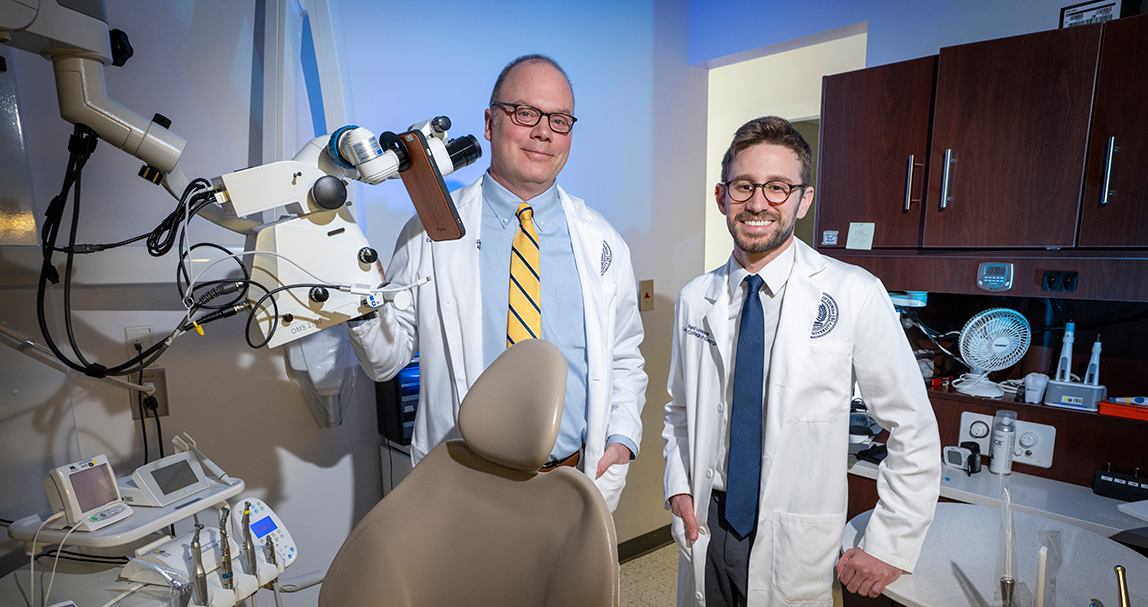
A recently published article from Augusta University’s Jagwire is highlighting how artificial intelligence is rapidly changing the future of dentistry not only in patient care, but also in education, research and clinical decision-making. The article features insights from Theodore Ravenel and third-year dental student Reid Loveless, who discuss both the opportunities and risks associated with AI integration in the profession. Ravenel explains how AI-powered tools are already assisting dentists with cavity detection, orthodontic planning, bone-loss analysis, and treatment forecasting, while also helping researchers process enormous amounts of clinical data more efficiently. He also emphasizes the importance of ethical safeguards, patient privacy and ensuring that AI tools are trained using diverse and accurate datasets. “It is really reshaping dentistry and how we practice dentistry.” Theodore Ravenel, DMD Loveless offers the perspective of a future clinician learning in an increasingly technology-driven environment. He describes how AI-supported educational tools developed by faculty such as Rafael Pacheco are helping students navigate complex patient scenarios, receive immediate feedback, and strengthen clinical reasoning skills. The article also highlights emerging technologies being used at the Dental College of Georgia, including virtual reality simulators and AI chatbots that provide students with real-time evaluations of dental procedures. Researchers such as Zoya Kurago are also leveraging AI to analyze large-scale datasets tied to cancer and oral disease research. Despite the excitement surrounding these advances, the article stresses that AI is intended to support, not replace, human clinicians. Empathy, communication and patient trust remain essential components of quality care. To learn more about how Augusta University is preparing future dental professionals for an AI-driven healthcare landscape, contact Rafael Pacheco at rapacheco@augusta.edu.


Approximately 4,400 degrees conferred during Georgia Southern’s 2026 Spring Commencement ceremonies
Last week, approximately 4,400 graduates from Georgia Southern University’s Statesboro, Armstrong, Liberty and Swainsboro campuses received associate, baccalaureate, masters, specialist and doctoral degrees in five Spring 2026 Commencement ceremonies. Georgia Southern President Kyle Marrero welcomed the graduates and their guests to the ceremonies, held at the Allen E. Paulson Stadium and Jack and Ruth Ann Hill Convocation Center in Statesboro, Enmarket Arena in Savannah and East Georgia Campus in Swainsboro on May 11, 13 and 14. “To our graduates, congratulations,” Marrero welcomed the crowds. “Today we recognize and honor your hard work, perseverance and personal growth throughout your academic journey. The road to this moment has not been without its challenges, and your presence here is a reflection of your dedication, resilience and strength. You have every reason to be proud. This commencement is a meaningful milestone not only for each of you personally, but for the entire Georgia Southern community.” The Commencement speakers included: Bob Somers (’83) Nick Westbrook (’20) Berry Aldridge (’15) Kim Hartsock (’20, ’21) Rep. Butch Parrish Somers opened the ceremonies at Paulson Stadium with words of encouragement for the new graduates. “While this day marks your formal education coming to a close, the truth is your education and life is just now beginning,” he said. “When I look out at you, I don’t look at graduates. I see future leaders. And our future is bright because of what you’re going to bring to this world. “Georgia Southern gave me structure, opportunity and people who believed in me. One of my proudest moments was graduating from this incredible institution. Find your north star. What kind of person are you? What are your values? Be genuine with yourself and others. If you’re authentic, people will trust you and they will follow you. Be comfortable being uncomfortable. Real leadership requires vulnerability.” Westbrook relayed the importance of service and character alongside leadership. “You will have the opportunity to influence people, organizations, companies and industries,” he said. “Use that influence for good. Your opportunity will not only be for a better job, more income or a higher position. The highest calling of your opportunity will be what you can do for the people who are affected by your influence. In a world that is becoming increasingly transactional, be the leader that goes the extra mile to make your world a little more relational, more kind, more human.” Aldridge enthusiastically challenged graduates to consistently recalibrate the way they think, and to consciously surround themselves with support. “Class of 2026, you’ve accomplished something incredible, but you’ve done it during a very strange and chaotic time in history,” he said. “I’m not breaking any news when I say that we are standing on the edge of a massive change to our jobs, our technology, our society. “I don’t know how AI is going to change the way we work or influence the job market. I challenge you to be skeptical even in your own most passionately held beliefs. That’s the only way to keep ourselves in check, and it’s the only way to keep ourselves growing. Nurture three types of relationships — one who lifts you up, another who tells you the truth, and one who will always show up — in order to succeed, he continued. And then be that person for others. Hartsock reflected on the generational impact of earning a degree. “For some of you, this is not just a personal achievement, it’s a historic one,” she shared. “You may be the first in your family to earn a college degree, and that accomplishment carries special significance. You are changing the trajectory of your family and setting an example for generations to come.” She asked them to be intentional about who they learn from. “Seek out people who can teach you things that books never will,” she said. “It’s important to look for leaders whose lives are marked not only by achievement, but also by joy and purpose. “Invest in this university. Join the alumni association. Help recruit future Eagles. Create a scholarship. Create opportunities for students to learn from you and work with you. Stay involved,” she said. “You never know, 25 years from now, you might be standing right here where I am. Congratulations, class of 2026 and Hail Southern!” In the closing ceremony in Swainsboro, Parrish encouraged graduates to continue learning. “Today is by no means an end,” he said. “It’s just the beginning. Your education has prepared you for what lies ahead. Your education allows you to create your own path forward. You have a unique opportunity to define your own path. You don’t have to follow anymore. Education is like insurance for whatever you’ll be facing in the future. “Education comes in many forms. There’s formal and informal, traditional, nontraditional and learned education, just to name a few. So, I encourage you to pursue a career in something that you really have a passion for and something that you really want to do. Whatever you decide to do is up to you, and your future is bright and it’s unlimited.” Video and Photo Links Spring 2026 Commencement ceremony 9 a.m. video on May 11 in Statesboro Spring 2026 Commencement ceremony 6 p.m. video on May 11 in Statesboro Spring 2026 Commencement ceremony video on May 13 in Savannah Spring 2026 Commencement ceremony video on May 14 in Statesboro Spring 2026 Commencement photos here Credit: Courtesy of Georgia Southern University Georgia Southern University, a public Carnegie Doctoral/R2 with a Carnegie Community Engagement classification, offers approximately 149 different degree programs serving nearly 31,600 students through 11 colleges on four campuses in Savannah, Hinesville, Statesboro, Swainsboro and online instruction. Founded in 1906, Georgia Southern is a leader in higher education in southeast Georgia with expert faculty and a focus on public impact research and engaging learning opportunities through knowledge and know-how that prepare our students to soar beyond and take ownership of their lives, careers and communities. Visit GeorgiaSouthern.edu.
How Worried Should We Be About Hantavirus?
An outbreak of an uncommon but not unheard-of illness is responsible for the deaths of at least three people who were on an international cruise ship. With the rest of the passengers and crew under observation in their home countries — including 18 Americans who went to a quarantine facility at the University of Nebraska — how worried do we need to be about hantavirus? Dr. David Banach, UConn Health infectious diseases physician and hospital epidemiologist, joins Dr. Anthony Alessi to explain what we’re dealing with, the public health implications, and how, unlike COVID, the medical community at least has some history with this virus. You can check out the podcast here: It doesn’t spread in the same way that COVID does, in the sense that there’s no established sort of asymptomatic or pre-symptomatic spread. — Dr. David Banach Dr. Banach explains that hantavirus is a rare but serious virus carried primarily by rodents and spread through exposure to rodent waste or contaminated environments. While most cases are isolated, clusters can occasionally occur. The discussion compares hantavirus to COVID-19, with Dr. Banach emphasizing that hantavirus spreads much less easily between humans and is therefore less likely to become a global pandemic. However, it can cause severe cardiopulmonary illness with a significantly higher mortality rate than COVID. There is currently no vaccine or specific antiviral treatment, meaning care is largely supportive for patients who become critically ill. Dr. Banach also addresses public anxiety and misinformation surrounding the outbreak, encouraging people to rely on trusted organizations such as the World Health Organization and the Centers for Disease Control and Prevention for accurate information. He notes that public health officials continue to closely monitor the situation, but at this stage the overall risk to the general public remains low. Interested in learning more? Simply click on Dr. Banach's icon to arrange a time to talk today.



Major trial shows increasing bone density fails to cut fracture risk in brittle bone disease
An international clinical trial involving Aston University researchers has challenged long held assumptions about how brittle bone disease is treated in adults, after finding that substantially increasing bone density did not reduce the risk of fractures. The study, published in the Journal of the American Medical Association (JAMA), examined whether a two stage treatment using the bone building drug teriparatide followed by the bone preserving drug zoledronic acid could reduce fractures in adults with osteogenesis imperfecta, often referred to as brittle bone disease, a rare genetic condition that causes bones to break easily throughout life. Researchers followed 349 adults treated at 27 specialist centres across the UK and Europe. While the treatment led to clear increases in bone density in the spine and hip, fracture rates were no lower than among patients receiving standard care, suggesting that bone quality may matter more than bone density alone in preventing fractures in people with the condition. The findings underline a key distinction between brittle bone disease and more common bone conditions such as osteoporosis, where increasing bone density is known to reduce fracture risk. In osteogenesis imperfecta, the study suggests that bones can become denser without becoming less likely to break, indicating that the underlying quality and structure of bone tissue may play a greater role in fracture risk than density alone. Dr Zaki Hassan Smith, an endocrinologist at Aston Medical School who contributed to the research, said: “This study shows that in osteogenesis imperfecta, simply increasing bone density doesn’t necessarily translate into fewer fractures. That’s important, because it tells us that the disease is more complex than what we see on a scan. The findings help shift the focus towards understanding bone quality and how bones behave in real life, which is essential if we are to develop more effective treatments that genuinely reduce harm for patients.” Osteogenesis imperfecta is a genetic condition that affects collagen, leaving bones fragile and prone to fracture throughout life. There is currently no licensed treatment specifically approved to prevent fractures in adults with the condition, and patients often experience repeated fractures, chronic pain and long term disability. The trial tested a sequential treatment strategy commonly used in osteoporosis, where a bone building drug is followed by a treatment designed to preserve gains in bone strength. Although this approach successfully increased bone density in people with osteogenesis imperfecta, it did not reduce fracture rates, suggesting that treatment strategies effective in osteoporosis may not directly translate to rare bone diseases. Researchers did observe improvements in some quality of life measures among participants receiving the treatment, including reduced pain interference and improved mobility. However, fracture prevention remained unchanged, reinforcing the need for new approaches that target the fundamental properties of bone in osteogenesis imperfecta rather than density alone. The study was led by the University of Edinburgh and funded by the Medical Research Council and the National Institute for Health and Care Research. Aston University contributed clinical and academic expertise through Aston Medical School as part of the large international collaboration, which involved specialist centres across the UK and Europe. The study was led by the University of Edinburgh, with Aston University contributing clinical and academic expertise as part of a wider international collaboration involving multiple specialist centres across the UK and Europe. The research was funded by the Medical Research Council and the National Institute for Health and Care Research. Researchers say the findings provide important guidance for future research, helping to steer efforts towards treatments that focus on bone quality, strength and resilience in everyday life. They also highlight the value of large scale clinical trials in rare diseases, where learning what does not reduce harm is an essential step towards better care. The paper, Teriparatide Plus Zoledronic Acid for Osteogenesis Imperfecta, is published in JAMA. https://doi.org/10.1001/jama.2026.6889

Expert Insight: The Hidden Costs of Staying Neutral
Considering the number of hot-button issues and divisiveness in American culture, choosing a middle-of-the-road attitude might be seen as the best way to navigate an often volatile environment. But what about those individuals who choose neutrality as a means of staying below the radar and, thereby, avoiding the need to take any action? This is the question that Laura Wallace, assistant professor of organization and management at Emory’s Goizueta Business School, and coauthors ask in their new paper, The Preference for Attitude Neutrality. Published in the Journal of Experimental Psychology: General, the researchers explore individuals with a preference for neutrality and how their uncompromising commitment to neutral opinions, not only discourages rigorous debate but could have a deleterious impact on society. Emory Business recently caught up with Wallace to discuss her research. Emory Business: What sparked your interest in the preference for neutrality? Wallace: When we think about the problems in the world, often people point to too many extreme opinions as the source of much social ill, and, of course, they can be. But, when I thought about a lot of the issues that I cared about, like addressing climate change or gun violence, I felt that sometimes the issue was too much neutrality in the face of issues that were themselves pretty extreme. When I talk about this work, people can often picture someone who seems like a “Pref Neutral,” as we have affectionately nick-named them, that is someone who in the face of information suggesting that there is an extreme problem is not moved to address the issue. I could think of people in my life who had these reactions, and I was interested in understanding more about them. Emory Business: How did you identify these individuals? Wallace: We developed a scale to assess the extent to which people view neutrality as truer, more socially desirable, and more moral. For example, we ask people how much they agree with items like, “If you have all the facts about a topic, your opinion will generally end up somewhere neutral” and “There is something noble about remaining in the middle about controversial topics.” The more someone agrees with these items, the more we would say they have a preference for neutrality. Emory Business: How does this study fit in with your larger body of work? Wallace: I generally think of my program of research as studying the “psychology of social change.” Within that broad category, I study 1) how to change minds and build trust and 2) how to address societal disadvantage. I view this work as fitting in the first bucket about how we change people’s minds. What interests me about people who are high in the preference for neutrality is the fact that they seem to NOT change their minds in the face of extreme information suggesting that they should. These individuals represent a significant barrier to our ability to address pressing issues, so I view this work as very much tied into the overarching goal of my research program to understand social change (or the lack thereof). Laura Wallace is an assistant professor of organization and management at Emory University’s Goizueta Business School. Wallace studies how to build trust with implications for addressing societal disadvantage, changing minds, and fostering growth. View her profile Emory Business: Would you describe a preference for neutrality to be a mindset, strategy, or attitude/value? Wallace: I think of the preference for neutrality like an ideology or value system that guides people’s reactions across many issues and situations. Emory Business: Talk about the study design. It’s quite detailed and multilayered, with eight hypotheses and six different measures to account for potential bias that were then randomized to create different questionnaires given to a large pool of individuals. How did the coauthors agree on the structure? Wallace: First, I should take the opportunity to shout out Thomas Vaughan-Johnston, who led this work. He is a faculty member at Cardiff University and is just a very thoughtful, interesting researcher, and he’s great to work with. Second, there are a number of studies in the paper. For each, our research team worked together to design and interpret the studies. The paper paints a relatively negative view of Pref Neutrals. We did take measures to resist bias in our design. For instance, we didn’t just ask people how much they dislike extremists (which would have been biased towards making those with a preference for neutrality look bad), but also asked about attitudes towards neutrals (where those with a preference for neutrality may seem like “the nice people”). We are now starting research on contexts where a preference for neutrality can offer some advantages, hopefully without artificially striking a false balance. For instance, we are considering whether they can help reduce group polarization effects, especially where groups drift towards radicalism in conversation. Also, we have some preliminary data where they seem to be a bit more accurate when detecting neutral emotions and attitudes in others, which is a remarkable plus side. Basically, we think the preference for neutrality is a social concern, but we are trying to be fair-minded when considering why they think this about neutrality and when this trait is useful for the world. Emory Business: In the study, you note that preference for neutrality can be a sign of arrogance and that Pref Neutrals are uninterested in learning more or changing their stance. How is this arrogance exhibited? Wallace: I would say that they are more close-minded than arrogant and that they don’t seem to be particularly thoughtful. One way we have assessed this is by measuring their “intellectual humility,” which essentially captures how much people recognize the limits of their own perspectives and are open to changing their minds. Pref Neutrals tend to score low on intellectual humility. They also score a little low on the “need for cognition,” which captures how much people like to think. Emory Business: In one section it reads: “preference for neutrality (preference for extremity) should relate to seeing other people as moral, competent, and likeable, when those individuals have generally neutral (extreme) opinions.” Does this mean that they align with people who have their same opinion structure? Wallace: We find that people who score high on the preference for neutrality scale tend to have more favorable impressions of others who are more neutral and tend to be more persuaded by others who are labeled as holding neutral attitude positions. Emory Business: How would one identify this trait in a person, particularly, when the research shows they tend to self-censor? Wallace: In general, they are really hesitant to take stances on issues or they tend to avoid taking sides or expressing strong positions. And yes, they tend to self-censor, meaning they often avoid sharing their opinion at all. Emory Business: How does this preference for neutrality play out in a political sense? Specifically, if they are averse to extremes would they vote based on their values? Wallace: We have a lot of evidence that Pref Neutrals tend to be political centrists. We don’t have evidence for this, but I suspect that they sit out a lot of elections, and to the extent that they do vote, they favor more moderate candidates. They probably would not vote for a position or individual with an extreme view unless it was framed as neutral. This may sound like a silly, cerebral point, but I actually think it’s critical to the point we are making, as what is viewed as “extreme” in a given time is often socially determined. For example, now it would be viewed as an extreme stance to support slavery. However, in the early 1800s in the U.S., it would have been viewed as an extreme stance to oppose slavery. I imagine at the time, many Pref Neutrals were supportive of slavery as a means of being politically moderate. Emory Business: What was the most interesting result in this study for you? Wallace: We find that if you give Pref Neutrals the exact same information but label it as extreme or neutral, they are more persuaded by the exact same information when it is labeled as neutral. This results in a kind of ironic effect where they actually end up with a more extreme opinion when information has been labeled as neutral. Emory Business: Research wise, what’s next for you? Wallace: There are a few ways that we are following up on our work that I am excited about: First, we’re trying to understand more about how Pref Neutrals maintain neutral opinions in the face of extreme information. So, we are giving Pref Neutrals true, extreme facts, and then examining their thoughts to determine how they resist taking the extreme positions information would suggest that they should. Second, we thought that Pref Neutrals would be particularly likely to trivialize social issues, to say they are unimportant. We are actually finding that they rate all social issues as extremely important, which we are trying to understand more about. We suspect they might do this as a strategy to avoid taking action on social issues. If stubbed toes and human trafficking are both “extremely” important, then there are just too many issues to take action on, and so they are able to justify a lack of action. Third, we are interested in understanding what it is like to make decisions in a group with a Pref Neutral. There is a lot of evidence that groups tend to make bad decisions because people want to agree with each other. This might actually be an area where Pref Neutrals would shine – the fact that they don’t want to take a stance may force groups they are a part of to really think things through and make better decisions. This is all super preliminary, but it reflects the exciting work ahead and that there is much more to understand about these folks!