
Experts Matter. Find Yours.
Connect for media, speaking, professional opportunities & more.

Hot Topic: Regents Not Mandatory for Graduation
Professor of Education Alan Singer spoke to WNYW-TV Fox 5 about a move to make the Regents exams optional in New York. “I agree younger students are over-tested, but I don’t think they’re being over-tested in high school,” said Dr. Singer. “The exams shouldn’t be abandoned until after assessments are developed.” Alan Singer is a Professor of Teaching, Learning and Technology. He is available to speak with media - simply click on his icon now to arrange an interview today.


Professors address students' climate anxiety
Professors at the University of Delaware preparing students for careers working on climate change are making sure to consider mental health issues as they send them out into the world. UD's Climate Change Science and Policy Hub, led by director A.R. Siders, is starting a series of initiatives – on campus and in the region – to tackle the challenge of what is known as climate anxiety. This involves traditional trainings but also innovations with creativity, art, video games and play. "Learning about and working on climate change causes climate anxiety, ecogrief, solastalgia – there’s a whole new set of terms being created just to describe the problem," said Siders, also an associate professor in UD's Disaster Research Center and Biden School of Public Policy and Administration. "This is a real mental health concern." This new way of approaching climate education has become even more critical as universities expand climate education – such as new climate schools, degrees, courses and even embedding it in general education courses, Siders said. The U.S. government is supporting a growing climate workforce, and it is expected that more people will work in climate-related careers. To reach Siders and set up an interview, visit her profile and click on the "contact" link. This will automatically send an email directly to her.


Naronda Wright elected President of NAGAP, the Association for Graduate Enrollment Management
Naronda Wright, Ed.D., associate dean of Graduate Student Services in Georgia Southern University’s Jack N. Averitt College of Graduate Studies, was recently elected president of NAGAP, the Association for Graduate Enrollment Management. She is the first African American to hold the role of president in the association. Wright, a seasoned professional in the field of graduate enrollment management, brings more than 15 years of experience to her new role. In her position at Georgia Southern, Wright has been instrumental in implementing innovative recruitment strategies and enhancing student services, contributing significantly to the growth and diversity of the graduate programs. Under her leadership for NAGAP, Wright plans to focus on expanding the association’s reach, enhancing member engagement and advancing the association’s strategic initiatives aimed at supporting its members’ professional development. “I am deeply honored to serve as the president of NAGAP and look forward to working closely with our members across the globe to foster an environment of knowledge sharing and professional growth,” said Wright. Wright’s election comes at a pivotal time as the association seeks to navigate the challenges of the ever-evolving educational landscape and harness opportunities to drive positive change in graduate enrollment practices worldwide. “We are thrilled to welcome Dr. Wright as the new president of NAGAP,” said Haley Brust, executive director of NAGAP. “Her extensive experience and dedicated leadership are vital as we continue to support our members and advocate for the importance of graduate enrollment management.” Wright holds a Doctor of Education in Higher Education Leadership from Clark Atlanta University and a Master of Education in Higher Education Administration from Georgia Southern. She has previously served NAGAP as vice president, secretary and conference committee chair. NAGAP is dedicated to the professional advancement and support of individuals in graduate enrollment management. NAGAP offers its members professional development opportunities, cutting-edge research and a community network to foster best practices in graduate education. For additional information about NAGAP and its services, please visit www.nagap.org. If you're interested in learning more or a reporter looking to speak with Naronda Wright - simply Contact Georgia Southern's Director of Communications Jennifer Wise at jwise@georgiasouthern.edu to arrange an interview today.

Experts in the Media: Not a gym rat? Here’s how to get started on an outdoor exercise routine
Summer is here and there's no better time to get out and get active. And for some, the idea of going to the gym just isn't an option or a place they want to be. So recently, the Associated Press was looking for alternatives and connected with TCU's Deborah J. Rhea, Director of the LiiNK Center for Healthy Play. Rhea is also an expert in the areas of physical activity and education and the importance of unstructured play. The health benefits of spending time in nature have long been established, and exercise in general, of course, improves physical and mental well-being. Combine the two and you double down on what adults need to stay healthy, said Debbie Rhea, professor in kinesiology at Texas Christian University. “We’ve got to get outside. We’ve got to be active,” Rhea said. “If we’re going to live long lives, this is what it’s about.” May 29 - Associated Press If you're interested in learning more about the importance of being active and the different ways to do it - then let us help. Deborah J. Rhea is available to speak with media about this topic - simply click on her icon now to arrange an interview today.


Georgia Southern University’s Business Innovation Group wins international recognition from InBIA
Business Innovation Group team members Dominique Halaby, DPA, Suzanne Hallman and D’Erica Evans accept an award at the InBIA awards ceremony. Georgia Southern University’s Business Innovation Group (BIG) returned home from San Antonio, Texas, with high honors from the International Business Innovation Association (InBIA) during its annual awards ceremony, which recognizes excellence in entrepreneur support. In an awards ceremony held during the 38th annual International Conference on Business Incubation, BIG received four awards including two of the organization’s most prestigious accolades, the Dinah Adkins Award for Non-Technology-Based Entrepreneur Support Organization of the Year, and the Randall M. Whaley Award, which is InBIA’s highest honor. The Statesboro BIG location was named the Mixed-Use Entrepreneur Support Organization of the Year, while the Metter Business Incubator location received the Rural Entrepreneurship Support Organization of the Year. “I am honored that the InBIA recognized our efforts at the Georgia Southern University Business Innovation Group with the highest accolades for the support we offer to entrepreneurs,” said Dominique Halaby, DPA, director of the BIG and associate vice president for innovation. “These awards highlight the hard work the BIG teams put into making our business incubators an incredible resource for budding businesses and furthering our mission to advance the economic growth of our region.” BIG works to build an ecosystem throughout the state of Georgia to help entrepreneurs create, incubate and accelerate their for-profit business enterprises. BIG facilitates access to University resources, creates opportunities for student experiential learning and fosters an environment that supports a growth mindset throughout the state. “Through the InBIA awards program, we celebrate exceptional organizations that catalyze entrepreneurship for their communities,” said President and CEO of InBIA Charles Ross. “Congratulations to the Georgia Southern University Business Innovation Group on their well-deserved recognition. Their commitment to high-quality programming, organizational excellence and community impact is truly inspiring.” InBIA is a global nonprofit empowering entrepreneur support organizations in every U.S. state and in over 30 countries. With over 39 years of experience, InBIA has been a guiding force in providing industry best practices, fostering collaboration, mentorship and the exchange of innovative ideas for entrepreneurs worldwide. InBIA is the go-to organization for business incubators, accelerators, coworking spaces and other entrepreneurship centers. Interested in learning more or looking to talk with Dominique Halaby? Simply click on his icon now to arrange an interview today.


Associate Professor of Voice Emily Grundstad-Hall, DMA, left, plays the piano while members of the Savannah Song Birds sing. If you asked Alyson Brinkley what her favorite day of the week was, her answer of “Monday” might surprise you. But Monday mornings are her favorite because Brinkley, a graduate student in the Communication Sciences and Disorders (CSDS) program at Georgia Southern University, teams up with fellow students and faculty to sing and harmonize while simultaneously helping Parkinson’s disease (PD) patients with therapy. Through a unique and collaborative singing group called the Savannah Songbirds, the RiteCare Center for Communications Disorders uses this group to raise awareness of PD while providing therapeutic support through the power of music. “It is the best part of my week and the best way to start my Monday morning,” Brinkley said. “It has enhanced my experience as a student by providing a unique experience I would not have received at any other school. The Savannah Songbirds is the only choir for people with Parkinson’s in the nearby area.” Founded in 2023 by Tory Candea, clinic coordinator for the RiteCare Center, the Savannah Songbirds gather weekly for rehearsals. Inspired by The Parkinson Voice Project, the group’s formation reflects Candea’s dedication to functional communication, community engagement and enriching the lives of those battling neurological diseases. The therapeutic benefits of music and vocal exercises for PD patients are profound,” Candea said. “PD often impairs communication by affecting the muscles involved in speech production. Through singing and vocal exercises, individuals engage these muscles in a demanding yet enriching manner, enhancing communication abilities and overall quality of life.” Candea partnered with Associate Professor of Voice Emily Grundstad-Hall, DMA, from the Gretsch School of Music to enhance the Savannah Songbirds choir. Grundstad-Hall directs the choir, facilitates the rehearsals, selects music and helps organize an end-of-semester concert. “This is a great collaboration between the two departments,” said Grunstad-Hall. “There has always been a positive outlook on departments and schools working together ‘across the curriculum.’ Singing is housed in the arts and speech is housed in health professions, but singing and speaking use the same instrument/anatomy to achieve a goal. It makes sense that we would work well together.” During their sessions, the Savannah Songbirds learn a repertoire of songs, including classics like “Moon River,” “Danny Boy,” “That Old Black Magic,” “Dona Nobis Pacem” and “Give Me Your Tired.” “I have enjoyed the collaboration with my colleagues and students in the CSDS department,” Grundstad-Hall said. “The singers that participate in the choir are amazing and I benefit from the community that being in a choir can bring. We are all working toward a common goal and we get to do it by singing songs. What could be better than that?!” Participants describe the experience as both enjoyable and rewarding, highlighting the therapeutic value of music in their journey with PD, Candea said. Students like Moriah Pearce, also a graduate student in the CSDS program, see the benefits of participating. “This experience working with these individuals has cemented my passion for working with individuals with Parkinson’s disease,” said Pearce, whose interest in working with PD patients developed in her undergraduate coursework at Texas Woman’s University. “It has provided me with experience outside of a therapy room in a different environment. It is rewarding to see these individuals who are motivated and happy to be part of this wonderful group.” Like Brinkely, Pearce describes the Monday meetings as her favorite way to start the week. “The most rewarding part of being in this choir is being part of a program that provides a sense of community and camaraderie for these individuals,” Pearce said. “Our weekly meetings provide these individuals an opportunity to spend time with people who may have the same or similar experiences with PD and who have a passion for music.” Seeing the motivation of participants has also been rewarding for Brinkley. “The most rewarding part of the choir is to see the members sing when they thought that their singing voices would be diminished due to Parkinson’s,” Brinkley said. “Although Parkinson’s is a progressive neurological condition, our members show up every Monday to rehearse. Some travel from South Carolina to be a part of the choir. It is so rewarding to see such strong motivation and to create a safe space for members to sing with their new voices and recognize what they are capable of.” For the clinicians and faculty involved, the collaboration represents a unique opportunity to provide evidence-based therapy creatively and engagingly. By integrating music into therapy sessions, they aim to enhance outcomes and promote community service-minded efforts. “Overall, working with the Savannah Songbirds has been immensely educational and rewarding, and one of the most enjoyable experiences of my professional career,” Candea said. “Being afforded the opportunity to provide evidence-based speech therapy services in a less traditional way has been engaging. Learning to enhance outcomes and the enjoyment of treatment through the addition of creative arts has been eye-opening. Promoting the importance of community service-minded efforts has been gratifying.” The Savannah Songbirds will host their next performance in the Fine Arts Auditorium on the Armstrong Campus on April 29 at 11 a.m. The event is free and open to the public. The partnership between the CSDS program, music department, and RiteCare Center offers a multitude of benefits for both PD patients and the broader community. Beyond therapeutic support, the collaboration fosters awareness and education about PD while showcasing the diverse programs offered by the RiteCare Center. For those seeking assistance, the RiteCare Center for Communication Disorders, located in the Armstrong Center, offers comprehensive evaluation and treatment services for individuals of all ages impacted by speech, language, cognitive, or swallowing disorders. Interested in learning more about the RiteCare Center? Contact Georgia Southern's Director of Communications Jennifer Wise at jwise@georgiasouthern.edu to arrange an interview today.
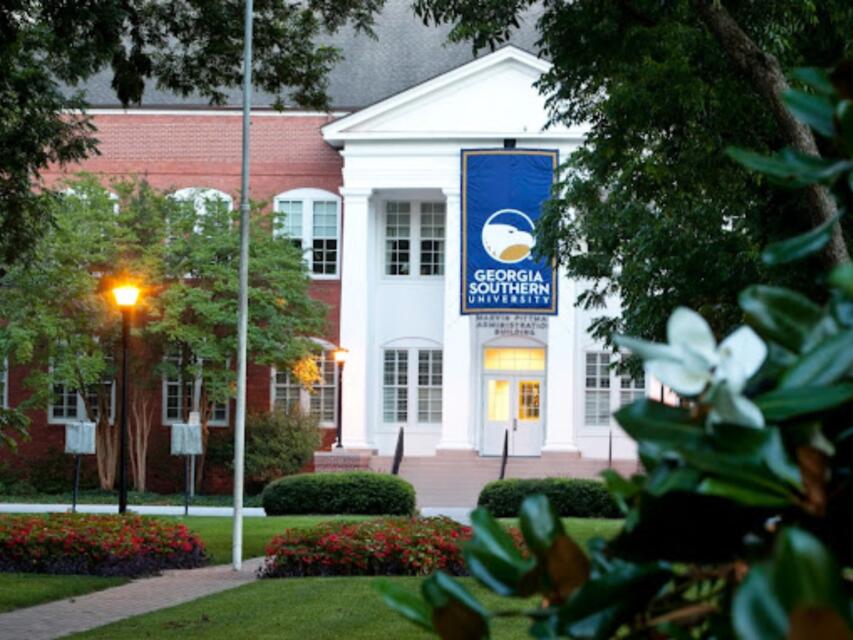
Students at Georgia Southern University now have even more opportunities to excel with the help of two new grants from the National Institute for Student Success (NISS) at Georgia State University totaling up to $600,000. The first is a $500,000 Acceleration Grant that will be distributed to Georgia Southern over the next two years to cover start-up costs for critical implementation steps of an ambitious program that further catalyzes Georgia Southern’s student success outcomes. “As Georgia Southern’s Fall 2024 enrollment continues to increase at record levels through freshman applications and admits, we are pleased to partner with the National Institute for Student Success to reinforce our commitment to providing exceptional student experiences and support that nurtures future leaders and global citizens,” stated Alejandra C. Sosa Pieroni, Ed.D., executive vice president, Division of Enrollment, Marketing and Student Success. “We are steadfast in our commitment to providing comprehensive, coordinated and differentiated student care to ensure every one of our students achieves their educational goals.” Funding through the Acceleration Grant will contribute to Georgia Southern’s existing initiatives to improve graduation rates and student success outcomes through the adoption of a suite of innovative, evidence-based programs. These programs, which deploy tools such as predictive analytics, AI technology, CRM platform, and big data to deliver personalized support to students, have been shown to help universities increase their graduation rates by 50% or more and to reduce discrepancies in graduation rates significantly. The second NISS award to Georgia Southern is the Keep HOPE Alive grant, which offers $100,000 across one year to support students who have lost the HOPE Scholarship as they work to regain eligibility. “We are enthusiastic about our partnership with Georgia Southern and working to deploy strategies that will contribute to substantive improvement in student outcomes,” said Timothy M. Renick, Ph.D., NISS executive director. Housed at Georgia State University, the NISS Acceleration Grants have been awarded to partner institutions that have completed a rigorous diagnostic analysis and have demonstrated a commitment to addressing structural and institutional barriers to the success of their students. Georgia Southern is a member of the second cohort to receive support from the NISS Accelerator Grant program, which launched in 2022. Unique to the Accelerator Grant program is up to three years of implementation coaching, webinars, meetings with expert practitioners and online resources provided by the NISS to support each awardee in implementing the new programs. The NISS coaching model is built on more than a decade of experience at Georgia State University developing and disseminating new approaches to student success that include predictive-analytics-based advising, AI-enhanced chatbots, and data-informed models for distributing financial aid. “These programs have helped Georgia State University increase its graduation rates for its bachelor’s students by 70% and its associate’s students by 300%,” according to Renick. “Black, Hispanic and low-income students now graduate from Georgia State at or above the rate of the student body overall.” The Acceleration Grant program will advance the NISS goal of producing 500,000 additional college graduates across its partner institutions over the next decade. Interested in learning more about this programming at Georgia Southern University or to arrange an interview with Alejandra Sosa Pieroni simply contact Georgia Southern's Director of Communications Jennifer Wise at jwise@georgiasouthern.edu to arrange an interview today.

Approximately 4,200 degrees conferred during Georgia Southern’s 2024 Spring Commencement ceremonies
In May, approximately 4,200 graduates from Georgia Southern University’s Statesboro, Armstrong and Liberty campuses received associate, baccalaureate, masters, specialist and doctoral degrees in five Spring 2024 Commencement ceremonies. Georgia Southern President Kyle Marrero welcomed the graduates and their guests to the ceremonies, held at the Allen E. Paulson Stadium in Statesboro on May 7, 8 and 9, and at the EnMarket Arena in Savannah on May 11. “Graduates, I don’t need to tell you about your unique college journey, which has been challenging,” said Marrero to the crowds. “I am very proud of how, together, we have persevered allowing us to have a successful semester and today, our commencement ceremony. This graduation is a momentous occasion for Georgia Southern University, as well as for all of you. Today, you are part of history at Georgia Southern.” Speakers included: Mackenzie Anderson (’07), global director of Corporate Communications at Nike Alton M. Standifer, Ph.D. (’12, ’14), vice provost for Inclusive Excellence and chief of staff to the provost at the University of Georgia (UGA) Kim Greene, chairman, president and chief executive officer of Georgia Power Chris Ahearn (’09), director of research and trade development for the World Trade Center Savannah Candicee Childs, M.D., (’19) an emerging beacon of inspiration in the fields of medicine and literature. At present, she is a resident physician at Massachusetts General Hospital, the largest teaching hospital of Harvard Medical School, with a focus on child and adolescent psychiatry Anderson opened the graduation ceremonies in Statesboro, following a warm introduction from Marrero, who described her leadership role at Nike. “I’m sure you probably expected me to get up here and say something like, ‘Class of 2024, go out into the world and ‘Just Do It,’” Anderson mused. “But here’s the deal. I don’t have to tell you to just do it because you just did it. You did the impossible by making it through the pandemic. “Today you aren’t just graduating with a degree in whatever is written on your diploma. You’re also graduating with a degree in doing hard things. And today we celebrate you.” She continued, saying that earning a degree in “doing hard things” has no doubt been a challenge, but the graduates will soon find out that this is also their superpower. They produced their own playbook, as unique and rare as they are. How they use the playbook moving forward is up to them — to wit, be curious, be wrong while giving yourself permission to make mistakes, be humble and be persistent. “Launch into the world,” Anderson concluded. “And whether you land just across the street, across the country like me or somewhere around the world, remember where you came from. Today you are etching your name alongside a proud Eagle alumni network of more than 147,000 strong. “It is my honor to be the first to say, ‘Georgia Southern University graduating Class of 2024, welcome to the alumni family.'” Standifer shared his own story as a young man, undecided about going to college while he worked as a cashier. A regular customer, Mr. Paul, continuously asked Standifer about whether he’d attend college, until one day Standifer told him he was going to attend Georgia Southern University. With a wide grin, Mr. Paul congratulated him and handed him a $100 bill. Incredulous, Standifer asked why he’d given him such a large tip. Mr. Paul told him it wasn’t a tip. It was an investment, and he’d continue to mentor Standifer in the following years, and remain a profound influence in his life. “I want to encourage you all to think of the Mr. Paul’s in your life,” Standifer said. “Think of the people who have helped you get to today. And then when you leave here, make the conscious effort that you will be Mr. Paul for someone else.” In Savannah, Ahearn shared his journey of discovery in Georgia Southern’s classrooms where he explored Irish film, an introduction to the United Nations, abnormal psychology, Celtic identity and conflict, psychology and law, and gangs, drugs and criminal justice. “There’s a whole menu of choices for you and experiences for you to choose from to really help you discover who you are, where you fit, what drives you, what gets your creative juices flowing, and what options are out there when you graduate from these key interactions,” Ahearn said. Following, he pursued a master’s in international relations in Ireland that gave him a deeper perspective on how the world operates and how interconnected we all are. Ensuing professional roles in higher education, international networking and fundraising, culminated in his current role at World Trade Center, Savannah. From the stage, Ahearn stressed his key takeaways: network, stay in touch with your classmates, be authentic and perhaps, most importantly, travel. “Go outside your comfort zone,” he encouraged. “Try things you’d never try. Expand your horizons. This is your opportunity to learn about different cultures, to embrace the differences and similarities we share with our fellow global citizens and find common ground.” In closing: “Many of you may stay in the region to leave your impact as this community continues to expand,” Ahearn said. “There are plenty of great employment opportunities at your fingertips. Many of you will leave to follow your careers wherever they take you. But please know that you’re part of this institution’s history. You’ll always be an Eagle, and Georgia Southern will always welcome you home." Interested in learning more about Georgia Southern University? Contact Georgia Southern's Director of Communications Jennifer Wise at jwise@georgiasouthern.edu to arrange an interview today.

Spotlighting Success: How ExpertFile Amplifies Organizational Expertise
Whether you are an industry leader looking to maintain your reputational advantage or smaller organization looking to enhance your reputation, a structured expertise marketing program should be a critical component of your marketing strategy. Traditional thought leadership programs that often focus on a few key executives are now being broadened by a more strategic approach that leverages the hidden expertise within your entire team. Global research conducted by Ogilvy in its recent report “The Global Rise of B2B Influencer Marketing” shows that many organizations are now setting up programs with their employees as Brand Ambassadors to demonstrate thought leadership in specific niches where they have skills and insights that appeal to their audiences. These employees have expertise that is often more relatable and authentic. Using social media platforms like LinkedIn, and networks such as ExpertFile, they can further amplify expert content to cut through the content marketing noise and drive more targeted engagement with media, sales prospects and other audiences. “Your employees are typically your most valuable resource. Identifying your employees that can be influencers themselves is a huge missed opportunity for one of the biggest ROI’s of all time.” James Baldwin Global B2B Influence Lead, Ogilvy To capitalize on this trend, many organizations are turning to more advanced solutions that deliver new digital publishing, distribution and workflow capabilities that extend the capabilities of their CMS (Content Marketing Systems). This also empowers clients and their agencies to achieve more efficiency and scale by better managing of employee content and audience interactions. The results include improved SEO PageRank and improved generative search results, increased site traffic and more qualified media inquiries and sales leads. Here are a few examples: With the ExpertFile platform, Vanderbilt University has streamlined its media interactions and presented more comprehensive information on their faculty enabling journalists to discover the depth of research and expertise that Vanderbilt has to offer for their stories. This provides a valuable boost of inbound inquires that help Vanderbilt stay top of mind, going beyond outbound media pitches. View Expert Center About Vanderbilt University is a distinguished private research institution known for academic excellence and innovation. With a rich history spanning over a century, it cultivates leaders, conducts pioneering research, and contributes significantly to society. Seeking to enhance its reputation and broaden its influence, ChristianaCare completely revamped its approach to showcasing their medical experts. Their Media Expert Center powered by ExpertFile doubled national media coverage,, earning the esteemed IABC Silver and Gold Awards for this exceptional communications strategy. ChristianaCare later established a Speakers Bureau to expand its program with ExpertFile, saving hundreds of operational hours and surpassing engagement targets by 400%. This innovative approach reinforced ChristianaCare's brand visibility, reputation while demonstrating its commitment to community service. View Experts Center View Speakers Bureau About ChristianaCare is a leading healthcare institution committed to delivering exceptional patient care and advancing medical research. With a focus on innovation and compassion, they strive to empower healthier lives and transform healthcare experiences for individuals and families across the region. With a goal of driving market visibility and increasing media coverage, University of Delaware leveraged the ExpertFile platform to regularly published research and insights related to topical news events, while also making it easy for journalists to connect with their faculty as media sources. Within the first 90 days, the university garnered 80 inquiries, capturing the interest of prestigious media outlets such as CNN, NBC, Newsweek, AP, Bloomberg, among others. This activity was made possible with ExpertFile’s automation, distribution and workflow features and seamless no-code integration with the client website. It all added up to massive results with no need to add internal resources to the University of Delaware team. View Expert Center About The University of Delaware is a renowned institution committed to academic excellence, innovation and community engagement. With a rich history and dedication to student success, it strives to advance knowledge and foster global citizenship through transformative education and research. Amidst a competitive educational market in the US Northeast, the University of Connecticut (UCONN) chose ExpertFile to help it amplify its faculty expertise and boost inbound inquiries from media, conferences, researchers and student prospects. The result is a more intuitive way to discover expertise and research across the UCONN campus that helps drive valuable connections that are vital to building institutional reputation and communicating the UCONN mission. View Expert Center About Amidst a competitive educational market in the US Northeast, the University of Connecticut (UCONN) chose ExpertFile to help it amplify its faculty expertise and boost inbound inquiries from media, conferences, researchers and student prospects. The result is a more intuitive way to discover expertise and research across the UCONN campus that helps drive valuable connections that are vital to building institutional reputation and communicating the UCONN mission. The Canadian Automobile Association (CAA) has consistently been rated as one of the most valued brands in the country. It’s focus on thought leadership by sharing its unique expertise on topics including “Canada’s Worst Roads” and “Cannabis at the Wheel” have helped them educate their membership, boost media visibility and advocate for important policy changes with government. The ExpertFile platform provides a central content platform enabling CAA to cost-effectively publish news releases and publish stories and expert profiles to multiple regional websites, all from a intuitive, centralized dashboard. View Expert Center About The Canadian Automobile Association (CAA) advocates for motorists and offers essential services to members nationwide, ensuring safer and more convenient travel. With a trusted legacy, CAA remains committed to enhancing drivers' experiences across Canada. ExpertFile has streamlined the presentation and management of faculty directories with integration into over 20 sections of the Loyola Marymount University LMU website. With a robust collection of over 1,000 faculty profiles, this integration has not only provided a better way to present faculty directories but also delivered over 1 million expert views and generated thousands of media, academic collaboration and student prospect inquiries while enhancing engagement and accessibility to expertise across the university community. Faculty Directories About Loyola Marymount University (LMU) is a private university located in Los Angeles, California. Known for its rigorous academic programs, diverse community, and commitment to social justice. With a goal to attaining R1 research institution status, Villanova University aimed to boost the visibility of its faculty experts and showcase its commitment to academic excellence and knowledge advancement. It needed a way to better manage and leverage a lot of expert faculty research and information. With ExpertFile, the Villanova communications team now has a much easier way to publish and update faculty content that seamlessly integrates with the University website and also appears on the ExpertFile network searched by thousands of journalists looking for credible media sources. It all adds up to more market visibility and brand reputation with valuable audiences connecting with Villanova experts. View Expert Center About Villanova University, founded on Catholic principles, is a renowned research institution committed to academic excellence and ethical leadership. Grounded in its rich heritage, Villanova fosters a community of learning that embraces diversity and promotes the pursuit of truth and social justice. Carnegie Mellon University needed a better way to profile their expert faculty in the best possible way to meet the highest standards and researchers by launching a new Experts Center within 30 days. Their objective was to enhance both the appearance and functionality of underperforming faculty expert content areas, thereby better aligning them with the institution's prominence. Through use of the ExpertFile platform and collaboration with ExpertFile team, profiles were developed and integrated, meeting tight deadlines and resulting in a more polished and easily discoverable experience for those seeking expertise. Expert Center About Carnegie Mellon University is a prestigious institution celebrated for its pioneering research and interdisciplinary education. With a legacy of innovation, it remains at the forefront of shaping global education and technology. As a leading public research institution, the University of Florida aimed to enhance its capacity to connect experts with media opportunities. Faced with a challenging and proprietary content platform , the institution needed to provide a more user-friendly way for journalists to engage with faculty and research experts. Aligned with its mission of fostering academic collaboration and knowledge dissemination, University of Florida communications and digital team completely transformed its online presence using the ExpertFile platform. By prioritizing discovery, accessibility and user experience, their team has elevated the visibility and impact of their faculty research and expertise. View Expert Center About The University of Florida, a Top 10 public research institution in the US, fosters excellence in research, education, and service within a diverse community of scholars. Through collaboration and interdisciplinary initiatives, UF empowers students to drive positive change. Aston University in the UK aimed to elevate its online presence and showcase its faculty expertise effectively across various communities. Seeking to enhance SEO, generate valuable inquiries, humanize research and ultimately improve reputation and ranking, they turned to ExpertFile. Aston University now has a more intuitive, efficient way to profile its faculty and research and increase the awareness of its research with a more diverse global audience through ExpertFile. View Research Experts About Aston University is a prestigious institution renowned for its dedication to innovation and academic excellence. With a rich history of shaping future leaders and conducting cutting-edge research, Aston University continues to inspire and empower students to thrive in a globalized world To build more market visibility and engagement with its target audience, Western Carolina University (WCU) needed a more intuitive way to present its expertise. ExpertFile enabled them to quickly deploy a searchable directory of faculty experts and then focus on creating shareable expert content on their website and on the broader ExpertFile network to boost visibility. To further boost engagement, WCU has published regular posts complete with faculty interviews and vertical video clips for social media. These programs have helped raise the profile of WCU. boosted internal and external engagement and has been very well received by faculty. . View Expert Center About Western Carolina University (WCU) is dedicated to delivering outstanding higher education, fostering innovation, and inspiring students to realize their full potential through academic excellence and community engagement. In California's competitive academic environment, UC Irvine needed to boost the visibility of its strong expert faculty while leverage the resources of a small communications team. ExpertFile’s user-friendly platform including customizable workflows and automated tools for adding expert content to their website made showcasing experts easy. Being able to create detailed media-rich profiles and quickly share expert insights allowed UC Irvine to stand out among larger rivals and increase their media coverage. All without straining their resources. View Expert Center About UC Irvine is a leading public research institution known for its top-ranked academic programs and cutting-edge research initiatives. With a focus on innovation and diversity, UC Irvine is committed to advancing knowledge and addressing society's most pressing challenges. Multiple integrations across research and newsroom sections have significantly streamlined the presentation and management of expert content at Goizueta Business School at Emory University. A more efficient system with delegated permissions has increased internal collaboration, and custom training resources for faculty and staff boost engagement on the platform. The ExpertFile team also provides a range of services such as content updates to save Goizueta valuable time while ensuring its website remains current and engaging, for students, faculty, and visitors alike. View Expert Center About Emory University's Goizueta Business School is a prestigious institution renowned for its innovative curriculum and exceptional faculty. With a focus on experiential learning and global perspective, Goizueta prepares students to become transformative business. Showcasing the expertise at Southern Utah University has been a key strategy for its marketing team. While not having the advantage of being in a major media market, SUU understood they needed to be more innovative in developing thought leadership and positioning their expertise to build their brand. The ExpertFile platform with its advanced content features allows the SUU team to present a more engaging view of their faculty and their research. It’s helped them boost search rank and garner national media attention, plus it has also helped them engage student prospects. View Expert Center About Southern Utah University fosters student success and personal development through diverse academic programs and resources. Emphasizing innovation, inclusivity, and community engagement, SUU creates a dynamic learning environment for student achievement and societal contributions. As a top ranked institution, The Virginia Commonwealth University (VCU) School of Engineering wanted to make its faculty research and insights stand out. Just designing a standard faculty directory didn’t meet the mark. ExpertFile enabled VCU to optimize its content resulting in a major improvement in SEO PageRank and website engagement. This improved experience has also boosted inbound inquiries for media sources, academic collaborations and student prospects looking for information on the VCU’s programs. View Expert Center About Virginia Commonwealth University (VCU) is a premier urban, public research university committed to advancing knowledge and improving the human experience. With a diverse community of students, faculty, and staff, VCU fosters innovation, creativity and collaboration. As a recognized R1 research university, the communications team at Michigan State had the goal to better convey the strength of its faculty research in an effort to boost regional and national media coverage. With the ExpertFile platform their team was able to design a custom implementation fully integrated into the MSU website and streamline the content management and updates to hundreds of faculty profiles - all managed from an intuitive centralized dashboard that saves time for the MSU team. View Expert Center About Michigan State University, a leading public research institution, top in graduate school rankings, is dedicated to advancing knowledge and transforming lives through its commitment to excellence in education, research, and outreach. As a relatively new institution, Augusta University, the fourth largest university in the state of Georgia had a goal stand out by showcasing the expertise of its faculty and the medical staff within Augusta Healthcare - one of the state’s largest integrated health systems. The communications team at Augusta leveraged the ExpertFile platform, publishing more comprehensive expert profiles. Plus they released regular expert updates that demonstrated the relevance of their experts on topical news stories. The result was a huge boost in SEO PageRank plus regional and national media coverage. All without the need to add resources to their communications team. View Expert Center About Augusta University, a leading academic institution, combines excellence in education, research, and healthcare. With an integrated health system, it fosters innovation, advances knowledge, and improves the well-being of communities locally and globally. As an R1 institution based in New Orleans, Tulane University has many specialized programs led by their world-class researchers and faculty. The Tulane marketing team wanted to better showcase this faculty expertise to drive media coverage while designing a system that worked best for their faculty. Leveraging the ExpertFile Platform, they created a searchable online hub showcasing participating faculty experts offering more engaging faculty profiles complete with multimedia features and a more intuitive way for journalists to connect to Tulane media sources. View Expert Center About Tulane University, a renowned institution in New Orleans, fosters innovative research, academic excellence, and community engagement. With a rich history of interdisciplinary collaboration, it prepares students to lead and serve in a complex global society. Are you looking to join the many organizations that are leveraging their employee subject-matter experts as part of a thought leadership and content marketing program? Then consider how you will manage and scale this effort with solutions designed specifically for expertise marketing. ExpertFile has advanced content creation and management tools, customizable workflows, powerful search capabilities, AI features, and flexible integration options, all connected to a broad network of media and speaking opportunities. By streamlining the management and promotion of online expert profiles, we ensure each organization connects with their key audiences like journalists, potential clients, event organizers and many others. Tailored for various industries, ExpertFile addresses each client's unique needs, driving meaningful engagement and visibility for the organization. The spotlights above are just a small sample of how ExpertFile works with leading organizations every day to enhance expertise and broaden their market reach. Explore industry-specific benefits to learn how ExpertFile can help your organization enhance its market presence and thought leadership. Want to learn more? Visit expertfile.com/getstarted.



Climate change research trailblazer elected to prestigious list of AAAS Fellows
University of Delaware professor Rodrigo Vargas has been elected as a fellow of the American Association for the Advancement of Science (AAAS) — one of the largest scientific societies in the world and publisher of the Science family of journals. The new class of AAAS Fellows includes 502 scientists, engineers and innovators across 24 disciplines, who are being honored for their scientifically and socially distinguished achievements. Vargas, professor of ecosystem ecology and environmental change in UD’s College of Agriculture and Natural Resources, is recognized "for distinguished contributions to carbon dynamics across the terrestrial-aquatic interface, development of environmental networks, novel data analysis tools and his leadership in creating a more diverse scientific workforce." Deborah Allen, who retired from UD in 2019 as a professor of biological sciences, was also names as a fellow. She was cited “for transformational contributions to STEM education nationally and internationally, particularly for developments in problem-based learning and faculty development.” Vargas is an ecosystem ecologist who studies how nature-based solutions can help address global environmental change in both terrestrial and coastal ecosystems, Vargas uses a variety of research methods, including data mining, machine learning, remote sensing, measurements of greenhouse gas fluxes and modeling techniques for forecasting applications.