
Experts Matter. Find Yours.
Connect for media, speaking, professional opportunities & more.

Amid "Likes" and "Shares," Facebook Jeopardizes Children's Health and Safety
On February 4, 2004, a 19-year-old Mark Zuckerberg launched “TheFacebook.” Developed in his Harvard University residence hall, it began as a networking service for his roughly 7,000 classmates. Today, it is the most popular social media platform in existence, boasting over three billion monthly active users worldwide. Through two decades of “likes” and “shares,” Facebook has transformed how people connect, interact and think. Driving everything from dinner parties and concert outings to political campaigns and protest movements, it has frequently been celebrated for its ability to convey information, mobilize groups and galvanize change. However, it has also been criticized for its questionable content management choices, its suspect data collection practices and, perhaps most notably, its role in feeding an ever-growing mental health crisis among children and adolescents—a charge Zuckerberg refutes. Elizabeth Burgess Dowdell, PhD, RN, FAAN, is a professor in Villanova University’s M. Louise Fitzpatrick College of Nursing and an expert on the health and safety risks posed by social media. From her perspective, Facebook and platforms like it have undoubtedly played a part in heightening levels of emotional distress and physical harm among youths. “Statistically, it’s well-established in the literature that mental health issues and concerning behaviors among children have escalated tremendously,” said Dr. Dowdell. “They’re becoming sadder, more depressed and lonelier, even though they’re very connected.” To Dr. Dowdell’s point, mental health disorders began rising precipitously among young people in the years following Facebook’s launch. Per the Centers for Disease Control and Prevention (CDC), the percentage of children aged 6 to 17 years “ever having been diagnosed with either anxiety or depression” increased from 5.4% in 2003 to 8% in 2007 and 8.4% in 2011-2012. And just last year, in the era of Instagram and TikTok, Mental Health America found that 11.5% of children in the United States were struggling with severe depression, with 16% of youths aged 12 to 17 years having experienced a major depressive episode in the past 12 months. A contributing factor, according to Dr. Dowdell, is the way social media construes reality. Flooded with images, posts and videos that show hyper-idealized, rose-colored representations of life, impressionable young users can be made to feel isolated, inept or dissatisfied with their appearance. “I think adults understand that a ‘perfect’ picture is often preceded by a dozen other photos,” she said. “Kids don’t always see it like that. They focus on what makes them happy and what makes them sad—and what makes them feel sad about themselves.” Tragically, throughout the social media age, this sadness has been tied to increasing rates of suicide, self-harm and risky behavior among youths. A 2023 CDC study found that the suicide rate for children aged 10 to 14 years tripled from 2007 to 2018 (from 0.9 deaths per 100,000 to 2.9), and in 2021-2022, the National Center for Missing and Exploited Children noted a 35% year-over-year increase in reports of suspected child sexual exploitation. Amid these frightening statistics, Dr. Dowdell emphasizes the importance of caring, compassionate adults’ involvement in young people’s lives. She notes these individuals’ presence can not only shield youths from potentially hazardous situations but give them the tools to cope with traumatic episodes and feelings of despair. “The critical factor that helps children become resilient is having a support system—having family members, parents or trusted adults with whom they can talk,” Dr. Dowdell shared. “They might go down the rabbit hole, but they have someone to pull them out, someone to help them.” For adults concerned about their loved ones’ social media use, Dr. Dowdell stresses that empathy and understanding are key. In turn, she advocates for an approach that reflects the supposed purpose of Facebook and platforms like it: active conversation. “It all comes back to communication,” she said. “Parents and guardians need to role-model responsible behaviors. They need to talk about these things: ‘What did you look at today?’ ‘What was good?’ ‘What was bad?’ ‘What did you think?’ ‘How did you feel about that?’ “It’s much like, when children are little, reading them books. When we read to children, we engage them… Why not read the social media feeds, look at the Facebook posts or go through Instagram? These forms of engagement, the conversations we have, let them know they can come and talk.”


Empowering Black and Latinx Boys in Their Postsecondary Journeys: The Role of School Communities
In a new study published in the American Educational Research Journal, Roderick L. Carey, assistant professor in the University of Delaware's College of Education and Human Development, offers a rich, ethnographic case study on how Black and Latinx boys imagine their postsecondary futures. With attention to the students’ first-person narratives about their school experiences and personal aspirations, Carey shows how their high school—a Mid-Atlantic college preparatory school in the United States—ultimately fails to understand and support their college, career and personal aspirations for life after graduation. “College is just one facet of a broader interconnected life that adolescents need support in imagining,” said Carey, who teaches and conducts research within CEHD’s Department of Human Development and Family Sciences. “Postsecondary future selves is a concept that folds together three pieces of that broader life—college, career and life condition, or ‘the 3Cs.’ By focusing on one, and ignoring the other two, educators miss the mark.” Carey is available to talk about this new study as well as the possible solutions to this issue. Her has been recently featured in Technical.ly and WHYY, an NPR affiliate. He can be contacted via his profile.


The U.S. House today passed a federal bill to ban TikTok and it now moves to the Senate. President Biden said he would sign a potential bill that bans the social media platform. Goizueta Business School Professor David Schweidel has done extensive research on the impact of social media. He says: The security and privacy issues around TikTok are only one part of the equation. User safety is another concern that all social media companies are now facing. He notes that the algorithms prioritize engagement, which could be showing people content that is harmful to them (mentally and/or physically). Background: TikTok is owned by ByteDance, a private Chinese company that claims all information gathered through the app is secure. Lawmakers do not agree and have plans to remove TikTok from the U.S. by September 30th unless ByteDance sells TikTok. The proposed bill would also put into place allowance for the executive branch to prohibit access to an app owned by a foreign adversary that could impact national security. Expert Source: David A. Schweidel, Professor of Marketing, Goizueta Business School at Emory University Bio - https://goizueta.emory.edu/faculty/profiles/david-schweidel To connect with David to arrange an interview - simply click his icon now.


The digits of pi are infinite. It’s an irrational number—one whose decimal never ends and never repeats. Over time, with brilliant minds and brilliant technology, humans have been able to calculate its digits further and further, now forming a 100-trillion decimal tail. In many ways, the infinitely long decimal expansion of pi is a metaphor for its limitless applicable value. With new ways of thinking, measuring and computing, the significance of pi has permeated throughout the study and use of mathematics and countless other disciplines. Pi is a mathematical constant by definition and also because of its ubiquity. “To offer an Augustinian-themed analogy, pi is to mathematics as Gregor Mendel’s peas are to biology,” said Katie Haymaker, PhD, associate professor of mathematics and statistics at Villanova University. “At first glance, Mendel’s experiments convey some basic understanding of the function of genetics. However, the way genes are expressed is incredibly complicated, and scientists continue to study genetics and gene therapies today. Similarly, mathematicians today study objects that are historically tied to the development of ideas inspired by explorations of pi. Pi is one gateway to a garden of mathematical possibilities.” Dr. Haymaker currently teaches a course called “Mathematics for Human Flourishing,” inspired by the Francis Su book of the same title. Her class discusses math in everyday life and how engaging in mathematical exploration can develop virtues like studying ethics or other humanities can and also expand quality of life. “I don’t have class this Pi Day, but usually I would share a little something about pi if I did,” she said. So, what exactly is pi? The easy answer is that it’s the ratio of the circumference (the length all the way round) to the diameter (the length across) for any circle. “If you measure across a circle with a piece of rope, how many pieces of the same rope would you need to measure around?” Dr. Haymaker explained. The never-ending answer starts with 3.14, hence the common celebration of Pi Day on March 14. This value has been studied for millennia: The ancient Egyptian Rhind Papyrus, dating to around 1650 BCE, offers a very close estimation for pi as 3.16049. Even the Bible, in 1 Kings 7:23, a circular vessel is described, and the ratio of circumference to diameter calculated to exactly three. “There are interesting explorations by biblical scholars about why this number is not exactly the value that we now know as pi, including that the brim around the vessel accounts for the discrepancy,” Dr. Haymaker said. Over time, novel methods for approximating pi were discovered, advancing humankind’s understanding of its value, and leading to various other paths of mathematical study. The famous Greek mathematician and inventor Archimedes, for instance, discovered a way to approximate pi’s value by use of a regular polygon (a closed geometric figure made of equal straight lines and angles). In those times, measuring a circle was not well defined, according to Dr. Haymaker. By placing the regular polygon inside the circle, the straight lines can be measured, those straight lines can be split to form a regular polygon with more measurable sides, and so forth. The more sides, the closer the measurement is to the true circumference of the circle. “That whole idea of approximating to the actual value is the main idea of calculus,” she said. “This notion by Archimedes predated that entire field.” Later, formulas were developed that surpassed Archimedes’ technique. A better approximation of pi was discovered around the year 450 by Chinese mathematician Tsu Ch’ung-chih, arriving at the easy-to-remember fraction 355/113. “This is one rational approximation to pi, and it’s also a fun Pi Day party trick because it’s the best approximation you can get with a fraction like this whose denominator is less than 10,000,” Dr. Haymaker said. These are just two examples of the many contributions made to advance the understanding of pi. Even the use of the Greek symbol to describe the ratio, which was popularized by 18th-century mathematician Leonhard Euler, was instrumental. Prior to that, there had been no agreed-upon symbol and the concept was often described using only words. In the thousands of years since the first recorded approximation of pi, the methods of its approximation—and pi itself—have been applied to multiple other fields of mathematical study such as trigonometry and calculus. For Dr. Haymaker, pi was important in the development of her own understanding of mathematics as well. “I have learned to expect the unexpected when it comes to pi,” she said. “It shows up in all sorts of places and it inspires us to dig deeper into why.” Today, pi can be calculated to 100-trillion decimal places (though only a dozen or so are needed for even the most accurate applications). On Pi Day 2023, 21-year-old Rajveer Meena memorized the first 70,000 digits, breaking a Guiness World Record in a mind-boggling 10-hour recitation. “I think that pi is fascinating to people because its digits behave in a random way and they go on forever,” Dr. Haymaker said. “If there is a string of numbers that is special to you—take 1842 for example—it exists somewhere in the digits of pi. In exploring pi, it feels like you are exploring the infinite, which naturally inspires mystical feelings about the number.” By the way, the string of numbers 1842 (the year Villanova was founded) appears at position 1738 counting from the first number after the decimal, according to the Pi-Search Page. So, whether it’s on March 14, July 22 (because the fraction 22/7 is a rational approximation of pi) or whenever you might celebrate, look down at that beautiful circular dessert you will cut into and think about “why pi(e)?” “Some people may scoff at Pi Day as being separate from ‘real’ mathematics,” Dr. Haymaker said. “But there is a joyfulness in celebrating this day that represents a deep connection that people have to mathematical discovery. After all, a person wrote the Rhind Papyrus, and it is people who program the computers that searched for the 100 trillionth digit of pi. This quest to understand is a deeply human endeavor. “To quote Francis Su, ‘the pursuit of math can, if grounded in human desires, build aspects of character and habits of mind that will allow you to live a more fully human life and experience the best of what life has to offer.’ So, if eating pie and other round foods on March 14 inspires someone to learn, ask questions, pursue answers and see themselves as an explorer of mathematics, then it is indeed a day to celebrate.”

What exactly is edge computing and how does it relate to self-driving cars? A University of Delaware expert has been diving deep into the subject through the university's Connected and Autonomous Research Laboratory (CAR Lab). Weisong Shi is a professor and chair of the Department of Computer and Information Sciences at UD, where he leads the CAR Lab. Edge computing is how scientists move computations closer to the user. Self-driving cars have to gather and process big batches of data to work, and in a short amount of time. The time spent sending data to a physically distant server and then back again may cause delay that could impact real-time decisions. Shi's research with edge computing is working to alleviate that issue without turning every car into a supercomputer that consumes a lot of computing power and energy. Shi and his team are building a world-class live research and education infrastructure on the STAR Campus at the University of Delaware. He can be reached by clicking his profile.


Aston University to train the UK’s next generation of decarbonisation experts
Consortium led by the University is to receive almost £11 million to open doctoral training centre Will focus on use of biomass to replace fossil fuels and removal of CO2 “…part of the UK’s biggest-ever investment in engineering and physical sciences doctoral skills”. Aston University is to train the next generation of scientists tasked to remove greenhouse gases from the environment. A consortium led by the University is to receive almost £11 million to open a doctoral training centre which will focus on leading the UK towards net zero. The centre, based at Aston University, will bring together world-leading research expertise and facilities from the University of Nottingham, Queens University Belfast and the University of Warwick and more than 25 industrial partners. The funding has been announced by the UK science, innovation and technology secretary Michelle Donelan. The centre is to receive almost £8 million of government money while the remainder will be made up through match funding and support from industry and the four universities. The government has described it as part of the UK’s biggest-ever investment in engineering and physical sciences doctoral skills, totalling more than £1 billion. The Aston University centre will focus on the use of biomass to replace fossil fuels and removal (or capture) of CO2 from the atmosphere, with the potential to create new sources of fuels and chemicals. Integration of these two areas will lead to significant cost and energy savings. Called NET2Zero, the centre will train PhD students across the full range of engineered greenhouse gas removal techniques including direct air capture, CO2 utilisation (including chemical and material synthesis), biomass to energy with carbon capture and storage, and biochar. The students will work in the centre’s laboratories exploring the conversion of feedstock into alternative energy, improving conversion processes and measuring how the new technologies will impact the economy. Supported by a range of relevant industrial, academic and policy partners the centre will equip students to develop the broad range of skills essential for future leaders in decarbonisation. NET2Zero will be led by Professor Patricia Thornley, director of Aston University’s Energy and Bioproducts Research Institute (EBRI). She said: “I am delighted that this centre for doctoral training has been funded. The climate emergency is so stark that we can no longer rely on demand reduction and renewables to meet our decarbonisation targets. “If we are to have greenhouse gas removal options ready in time to be usefully deployed, we need to start now to expand our knowledge and explore the reality of how these can be deployed. This partnership of four leading UK universities with key industrial and policy partners will significantly augment the UK’s ability to deliver on its climate ambitions.” “We are absolutely delighted to be working with our partners to deliver this unique and exciting programme to train the technology leaders of the future. Our students will deliver research outcomes that are urgently needed and only made possible by combining the expertise and resources of all the centre’s academic and industry partners.” Science and technology secretary, Michelle Donelan, said: “As innovators across the world break new ground faster than ever, it is vital that government, business and academia invests in ambitious UK talent, giving them the tools to pioneer new discoveries that benefit all our lives while creating new jobs and growing the economy. “By targeting critical technologies including artificial intelligence and future telecoms, we are supporting world class universities across the UK to build the skills base we need to unleash the potential of future tech and maintain our country’s reputation as a hub of cutting-edge research and development.” Centres for doctoral training have a significant reputation in training future UK academics, industrialists and innovators who have gone on to develop the latest technologies. The University of Nottingham’s Dr Eleanor Binner said: “We are absolutely delighted to be working with our partners to deliver this unique and exciting programme to train the technology leaders of the future. Our students will deliver research outcomes that are urgently needed and only made possible by combining the expertise and resources of all the Centre’s academic and industry partners.” Her colleague Professor Hao Liu added: “We look forward to providing our best support to the NET2Zero CDT, including using our past and existing successful experience in leading other centres, to make this an exemplar.” Overall, there will be 65 new Engineering and Physical Sciences Research Council (EPSRC) centres for doctoral training which will support leading research in areas of national importance including the critical technologies AI, quantum technologies, semiconductors, telecoms and engineering biology. The funding is from a combination of £500 million from UK Research and Innovation and the Ministry of Defence, plus a further £590 million from universities and business partners. Notes to Editors EPSRC and BBSRC Centre for Doctoral Training in Negative Emission Technologies for Net Zero (NET2ZERO) Led by: Professor Patricia Thornley, Aston University The Engineering and Physical Sciences Research Council (EPSRC) is the main funding body for engineering and physical sciences research in the UK. Our portfolio covers a vast range of fields from digital technologies to clean energy, manufacturing to mathematics, advanced materials to chemistry. EPSRC invests in world-leading research and skills, advancing knowledge and delivering a sustainable, resilient and prosperous UK. We support new ideas and transformative technologies which are the foundations of innovation, improving our economy, environment and society. Working in partnership and co-investing with industry, we deliver against national and global priorities. The Biotechnology and Biological Sciences Research Council (BBSRC) invests in world-class bioscience research and training on behalf of the UK public. Our aim is to further scientific knowledge, to promote economic growth, wealth and job creation and to improve quality of life in the UK and beyond. Funded by government, BBSRC invested £451 million in world-class bioscience in 2019-20. We support research and training in universities and strategically funded institutes. BBSRC research and the people we fund are helping society to meet major challenges, including food security, green energy and healthier, longer lives. Our investments underpin important UK economic sectors, such as farming, food, industrial biotechnology and pharmaceuticals. About Centres for Doctoral Training A CDT trains doctoral students with each centre focused on a specific theme or topic. Most CDTs will support five cohorts (a new cohort starting each academic year) with a cohort supporting an average of thirteen students. Fourteen of the centres will have four cohorts rather than five. EPSRC supports doctoral students through three training routes (Doctoral Training Partnerships, ICASE awards and CDTs), and in the last 30 years has supported over 50,000 doctoral students. About Aston University For over a century, Aston University’s enduring purpose has been to make our world a better place through education, research and innovation, by enabling our students to succeed in work and life, and by supporting our communities to thrive economically, socially and culturally. Aston University’s history has been intertwined with the history of Birmingham, a remarkable city that once was the heartland of the Industrial Revolution and the manufacturing powerhouse of the world. Born out of the First Industrial Revolution, Aston University has a proud and distinct heritage dating back to our formation as the School of Metallurgy in 1875, the first UK College of Technology in 1951, gaining university status by Royal Charter in 1966, and becoming The Guardian University of the Year in 2020. Building on our outstanding past, we are now defining our place and role in the Fourth Industrial Revolution (and beyond) within a rapidly changing world. For media inquiries in relation to this release, contact Nicola Jones, Press and Communications Manager, on (+44) 7825 342091 or email: n.jones6@aston.ac.uk

What Families Need to Know about How to Safely Store Firearms at Home
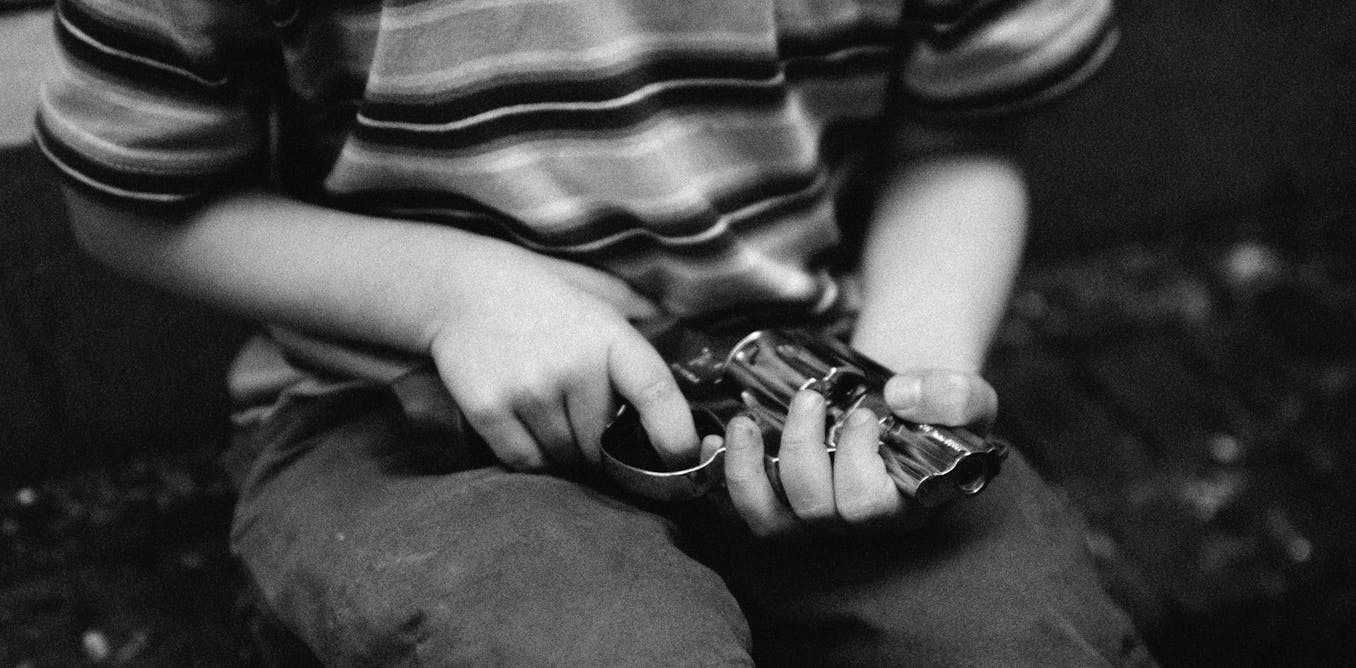
Guns have been identified as the leading cause of death for children in the United States, making ongoing discussions about firearm safety especially important. Kerri Raissian, an associate professor of public policy at the University of Connecticut, and Jennifer Necci Dineen, associate director of the ARMS Center for Gun Injury Prevention, recently co-authored an very important piece for The Conversation titled detailing what families need to know about safely storing firearms at home. There were 2,571 children age 1 to 17 who died in shootings in the U.S. in 2021, 68% more than the 1,531 that occurred in 2000. To help reduce the number of firearm-related deaths and injuries among children, Secretary of Education Miguel Cardona in January 2024 called upon school and district administrators to talk with parents and guardians about safe firearm storage practices. As experts on the safe storage of firearms – and as leaders of the University of Connecticut’s ARMS Center for Gun Injury Prevention – we often get questions about the best ways to keep guns out of the hands of children. We offer the following tips: 1: Safely store all of your firearms 2. Don’t assume you can hide your guns 3. Store ammunition separately 4. Learn to talk about firearm safety 5. Know the law 6. Invest in a quality safe and/or locking device The full piece is available here from The Conversation. Kerri Raissian is an associate professor in the School of Public Policy at the University of Connecticut, director of the University of Connecticut's UConn’s Center for Advancing Research, Methods, and Scholarship (ARMS) in Gun Violence Prevention, and co-director of the Institute for Collaboration on Health, Intervention, and Policy (InCHIP) Gun Violence Prevention Research Interest Group. Her research focuses on child and family policy, with an emphasis on understanding how policies affect fertility, family formation, and family violence. She is available to speak to media about this important topic - simply click on her icon now to arrange an interview today.

Turning the City Green! Georgia Southern celebrates Savannah's 200th St. Patrick's Day Parade
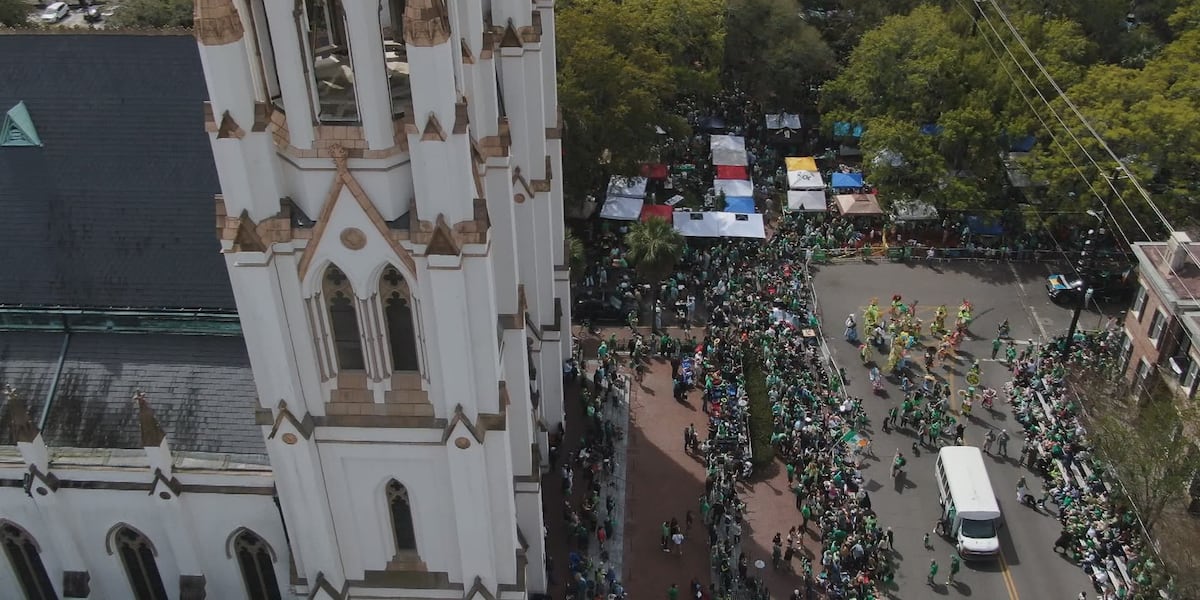
Savannah’s St. Patrick’s Day Parade is one of the largest in America, right behind New York City and Chicago. Comprised of Irish heritage, marching bands, traditional dancers and elaborate floats, people come to Savannah from all over the world to participate in the local parade. And as the city looks to commemorate the 200th St. Patrick’s Day Celebration this year, Dr. Howard Keeley, the director of Georgia Southern University's Center for Irish Research, is a crucial member of the global Irish community. Notably, he said the fact that St. Patrick’s Day celebrations are still prevalent and evolving come down to several things. Firstly- he says that people with Irish heritage in Savannah have such a hyper-local pride. There were three main neighborhoods the Irish settled in- East Savannah, Yamacraw, and Frogtown - and a lot of local Irish people now can trace their lineage back to one of those neighborhoods. He also says that Irish immigrants were received very well into the Savannah community unlike in some other places, such as the Northeast. That cultural integration has allowed Irish pride to be woven into the fabric of Savannah and he says that Irish people also love to share their heritage with others. So, it’s only natural that St. Patrick’s Day celebrations have continued on for this long. ”It’s the Irish and everybody else. There’s a phrase that has come into being, I think it was coined by the Irish government, but when you think about the phrase it makes so much sense. And that is ‘affinity diaspora’, so diaspora referring to the Irish that live abroad, but affinity meaning anyone can be Irish. That you align with certain values that Ireland wants to stand for, values of inclusion, values of cultural vibrancy, and you know, Ireland is welcoming,” said Keeley. Keeley was recently in the news for receiving the 2023 Presidential Distinguished Service Award for the Irish Abroad from the Government of Ireland. It is the highest honor the country of Ireland can give to a person who is a non-resident. This will be an exciting event, and if you're looking to speak to Howard Keeley simply click on his icon now or contact Georgia Southern's Director of Communications Jennifer Wise at jwise@georgiasouthern.edu to arrange an interview today.


Baylor Expert: Don't Lose Focus on Spiritual and Mental Well-being
Baylor Social Work professor shares tips and resources during stressful half-way mark of semester Holly Oxhandler, Ph.D., LMSW., associate dean for research and faculty development and associate professor in the Diana R. Garland School of Social Work. October marks the halfway point to the fall semester and can carry all the excitement, stress and anxiety of another academic term winding to a close. The month also typically marks one of the busiest times of the year for university counseling centers across the nation. With unique challenges in 2020 related to COVID-19, the University has acknowledged those hardships for all in the Baylor Family by taking the initiative to focus on mental health throughout October. Baylor University’s Holly Oxhandler, Ph.D., LMSW, associate dean for research and faculty development and associate professor in the Diana R. Garland School of Social Work, is an expert on mental health, primarily anxiety and depression, as well as religion and spirituality in clinical practice. In this Q&A, she shares tips and resources to students, faculty and staff who are facing all of the typical challenges of another mid-term while also navigating a global health crisis. Q: The 2020 fall semester provided challenges and obstacles never seen before in higher education. Why has COVID-19 been a uniquely stressful influence on the mental and spiritual well-being of students, faculty and staff? There are a number of reasons COVID-19 has been a uniquely stressful influence on the mental and spiritual well-being of those in higher education. First, there are the unanticipated layers and learning curves of new considerations and adjustments to course delivery, safety protocols, dining, campus activities and communication, to name a few, on top of the typical adjustments and emotions we all navigate at the beginning of each fall semester. Second, those in higher education entered fall 2020 without the “typical” summer that’s needed to reset, make adjustments and plan for the upcoming year’s activities. For example, many administrators, faculty and staff spent the summer not only planning for the usual upcoming academic year but also reconfiguring classes to be hybrid or online or simultaneously include both in-person and online students, in addition to modifying student activities and faculty research project timelines and plans. For degree programs that include internships, like social work, there have also been additional layers of consideration in order to comply with our professional accreditation standards. Third, we recognize that many students, their family members, as well as Baylor faculty and staff members’ loved ones, have been affected by the economic impact of COVID-19, adding a layer of financial stress. Fourth, many within the Baylor community – staff, faculty and students – have needed to juggle childcare and homeschooling their children as they continue to engage in their own work and/or educational expectations. Finally, the fear of contracting COVID-19, especially among the most vulnerable and high-risk populations, has been constantly present. Not only are we adjusting to this academic year with new ways of being and new protocols that keep us and one another safe, we’re also facing unexpected waves of fear and layers of grief for the missed events, opportunities and connections we had hoped to experience. As resilient as our community is, I think it’s important to remember we cannot “operate as usual” because things aren’t usual. Instead, we must allow ourselves and one another the time, margin, flexibility and grace needed to sit with and move through the rising emotions, grief, stress, loneliness, fear and uncertainty as they come. We cannot skip or bypass these emotions, but instead, must move through them, often with the support of loved ones and/or a trained mental health care provider. Q: Mental and spiritual health are challenging during even a typical semester experience. What are some of the effects and reactions you’ve witnessed to these circumstances among students, faculty and staff compared to a non-COVID-19 semester? As human beings navigating a global pandemic to the best of our ability, our mental and spiritual health have all been impacted to some degree this semester as we have individually and collectively faced a number of unexpected difficulties. I have also seen a beautiful response to the reality of this collective struggle in my interactions with Baylor faculty, staff and students that includes deep empathy for one another and an increase in valuing authenticity as we engage in the high-quality, meaningful work we each do. It has been a gift to witness Baylor community members holding space for colleagues’ and students’ vulnerability as we admit this is hard for various reasons and recognize that we cannot just push our way through this season. When we admit this isn’t easy and that we are all juggling so much to the best of our ability through thick layers of uncertainty, it gives those around us permission to admit their experiences, too. In fact, I think when we create space for that shared vulnerability and empathy in our interactions with others, we can better assess the current situation, remain present to one another and discern what steps are needed to move forward together, particularly because we’re not carrying an additional layer of effort pretending that everything is fine. That said, the Garland School of Social Work conducted a couple of well-being surveys since this summer to internally check in on how our faculty and staff are coping with this season and identify the biggest stressors they’re facing and sources of support. Our faculty and staff have also been continually checking in on our students through this season. Not only do we see many noting the same stressors that we’re all facing these days, normalizing how difficult this is for each of us, but the act of nonjudgmentally holding that space for ourselves and one another has been a tangible step of offering the care we know is uniquely woven into the Baylor experience. Q: How can individuals within the campus community tend to their spiritual health to close out the semester? I would invite readers to take a moment to pause and identify a few spiritual practices that uniquely support them well, even if that means thinking back to less stressful seasons. The key to note here is that these are practices which require regular engagement, similar to if we were to practice a new instrument or sport. Spiritual practices can vary based on our faith tradition and may include praying; meditating; centering prayer; reading our religious text; walking a labyrinth; journaling; practicing gratitude; listening to a sermon or faith-based podcast; praying over and contemplating scripture; engaging in creativity; practicing daily examen; or listening to spiritual music. Some practices may involve other individuals that can be done safely, including seeking spiritual direction, participating in a Bible or faith-based book study with others or engaging in worship (even virtually!). These practices can offer a sense of groundedness and a reminder that God is with us, including through this season. As we continue to navigate this season of uncertainty, it is critical that we intentionally weave in spiritual practices that offer rhythms, routines and a grounded faith that can support us well through the waves of difficulty. Especially on campus, I would encourage Baylor community members to follow along with Spiritual Life’s resources and events, or check out Better Together BU, a partnership supported by both Spiritual Life and Multicultural Affairs. Q: How can individuals within the campus community tend to their mental health to close out the semester? Tending to our mental health in this last stretch of the semester will be so important as we move into the stress of finals, the complex emotions tied to the holidays, grief with upcoming celebrations looking different this year (including how we celebrate holidays, who we celebrate with and the reality of many having lost loved ones to COVID-19) and the reality of seasonal affective disorder on the horizon. In fact, in a typical year, about 5% of U.S. adults have seasonal affective disorder (SAD), with another 10-20% having mild forms of it. In light of all of the added transition, uncertainty, complexity of caregiving and homeschooling while working/studying at home, layers of loneliness and grief, I do hope our Baylor students, staff and faculty will actively prioritize taking good care of their mental health and supporting others’ mental health care, too. One way I highlight this with my social work students is by recommending creating a self-care plan that pays attention to our physical health, mental health, social support and spiritual health. If we can identify some strategies to holistically care for ourselves well and be mindful of potential barriers to navigate, we may have more resilience and practices to draw from to cope with challenges and stressors that arise. Finally, although NAMI highlights that 1 in 5 of us are currently facing a mental health struggle, some studies have shown that over 80% of us will meet criteria for a mental illness by young adulthood or middle-age. Therefore, I highly recommend that anyone who is noticing any changes in their mood, diet, sleep habits, behaviors or overall well-being immediately reach out for help. Students are encouraged to reach out to Baylor’s Counseling Center, CARE team or the BARC. Faculty and staff also have resources available through Baylor’s employee assistance program. Other resources for finding a mental health provider include HelpPRO, Psychology Today, Low Cost Help or these additional resources. For those who are deeply struggling, please reach out to the Suicide Prevention Lifeline at 1-800-273-8255 or text ‘HOME’ to 741-741 for the Crisis Text Line. As part of my faith and my social work values, I believe that each of us are worth caring for ourselves, including caring for our mental health alongside our spiritual and physical health. Q: What successes or bright spots have you seen within your campus experience that offer encouragement to how the Baylor Family has handled the crisis throughout the semester? I am regularly amazed by the Baylor students, faculty and staff, the ways we have navigated the crisis together this semester, and I am especially grateful for President Livingstone’s and Provost Brickhouse’s leadership since March. This semester, some bright spots have included Dr. Deborah Birx’s reflections on Baylor’s efforts to keep everyone safe from COVID-19, the Fall Faculty meeting and Dr. Peter Hotez’s appreciation of how Baylor leaders have kept the Baylor and Waco community safe and following along when Baylor students take over Baylor’s Instagram account (like Brandon Nottingham’s takeover on World Mental Health Day!). As the Garland School of Social Work’s associate dean for research and faculty development, I have also loved learning about the ways so many Baylor faculty are offering their unique research expertise and wisdom to serve others through this difficult time, such as Dr. Emily Smith’s “Friendly Neighbor Epidemiologist” Facebook page to explain COVID-19 information. I’ve also been reminded of what a gift it is to be a part of the Garland School of Social Work (GSSW) and this community of faculty, staff and students. The resilience, creativity, love for serving others, dedication to the social work profession and care for our students is so apparent within the GSSW. I have especially seen how my faculty and staff colleagues have adapted courses and assignments, creatively considered students’ needs and juggled their research responsibilities while extending grace to themselves and one another as we navigate this season together as a school to the best of our ability. Similarly, seeing our students’ resilience, flexibility, support of one another, commitment to the profession and heart for the clients and communities they serve is truly inspiring. Finally, Dean Jon Singletary’s servant-leader heart for the GSSW and the ways he has supported our school through so much transition over the last five years has been a gift. One example of this includes the two hours of weekly well-being time he extends for all GSSW staff and faculty to use in support of our spiritual and mental health care. Q: What gives you hope for the spring semester and beyond as students continue through their academic endeavors? Truthfully, our students’ presence and their enthusiasm over the fields of study they are dedicating their lives to gives me hope. As a professor, there is nothing like watching a student become fully alive in the work they are passionate about and feel as though they were made to do. Our students’ willingness to fully participate in the transformational education that Baylor offers, especially in this difficult season of COVID-19, is an honor to witness as a professor and certainly gives me hope. Further, seeing the ways our students are empathically caring for their neighbor by following Baylor’s safety guidelines, growing in their faith, checking in on one another, understanding faculty and staff are doing their very best and continuing to demonstrate their determination to learn and grow is an inspiration. My hope and prayer for our students as well as our staff and faculty colleagues as we move through the remainder of the fall semester and into the spring is that they rest as they need to and prioritize taking good care of their mental and spiritual health. I also pray that we recognize as a community that by caring for our spiritual and mental health, by taking this season one day at a time, by trusting we are doing our best and by reaching out for help when needed, we give others permission to do the same.


Taylor Swift workshop helps fill a blank space for economics students
The University of Delaware's Kathyrn Bender developed a concept that professors could only conjure in their wildest dreams: A Taylor Swift-themed workshop that helps college students better understand data analytics through the music of the world's biggest pop star. Bender, assistant professor of economics in UD's Lerner College of Business and Economics, came up with the idea while teaching her Introduction to Microeconomics class in early October when the discussion turned to MetLife Stadium, home of the NFL’s New York Giants and Jets. “I noticed in that class there was a lot of excitement, and I had just about everybody’s attention in there, whether they were interested because of football or because of the Taylor Swift aspect. So I thought that was really cool,” Bender said. Using grant money, Bender quickly jumped on the idea and developed a Swift-themed data visualization workshop series entitled “Data Enchanted: Transforming Numbers into Knowledge.” She held three 90-minute workshops during the fall semester, which ran from late October through early December: “Ready for It,” an introduction to Stata; “You Belong with Me,” building and structuring data for analysis; and “I Knew You Were Trouble,” transforming and cleaning data for analysis. The workshops helped UD students learn to utilize Stata, a statistical software package used for data manipulation, visualization and automated reporting. They were an immediate success, as Bender received over 60 applicants, although she was limited to accepting just 32 due to space limitations. Though students don’t earn credit for completing the workshops, just a certificate, Bender said they help fill some gaps that aren’t covered in classes. “I think they’re kind of expected to learn about it, piecing it together from different classes,” Bender said. “This [workshop series] is a way for students to get introduced to thinking about data, how it’s set up, how you can create good visualizations with it … those basics before you get into the analysis.” Making the workshops Swift-themed helped students pick up concepts more easily in a fun environment. Before jumping into data sets, the students make friendship bracelets to the soundtrack of Swift's music. In one session, they pulled Spotify data and statistics to analyze the popularity of Swift’s songs. “We’ve stuck with Taylor Swift songs and albums so far,“ Bender said. “So all the data sets have been very easy for the students to understand as opposed to something that’s not as familiar for them to think about. They know what a song is, they know what the duration of a song is, those things are all very easy to understand. They’re able to practice these new data skills without having to worry about the content as much.” Due to the workshop’s immediate success, Bender is planning on expanding the program during the spring semester. She aims to hold eight workshops, the initial three and then five more, and hopes to make them available for all UD students (they were available only as an undergraduate program in the fall). Reporters who would like to write about the workshop and interview Bender can contact her directly by simply the contact button on her profile. Or, send an email to UD's media relations team.
