
Experts Matter. Find Yours.
Connect for media, speaking, professional opportunities & more.

Election 2024: Providing insight during a pivotal campaign season
Voter behavior and emotion, civil discourse, the spread of misinformation, the role of gender and race in politics and conspiracy theories are among the many topics University of Delaware experts can comment on during this final stretch of the 2024 campaign. David Redlawsk Professor of Political Science and International Relations Expertise: Political psychologist who studies voter behavior and emotion, focuses on how voters process political information to make their decisions. He has written several books on politics, worked behind the scenes on campaigns and ran for local office. Dannagal Young Professor of Communication Director of the Center for Political Communication Expertise: The spread of misinformation in politics and the intersection of entertainment and information, with an emphasis on political satire, political media effects, public opinion and the psychology of political humor. Kassra Oskooii Professor of Political Science and International Relations Expertise: Focuses on the interplay between the contextual and psychological determinants of political opinions and behaviors of high and low status group members. Erin Cassese Professor of Political Science and International Relations Expertise: Explores the behavior of women as voters and candidates for political office, and studies political psychology, gender stereotypes, public opinion, elections and the intersection of religion and politics. Yasser Payne Professor of Sociology and Africana Studies Expertise: Research program also focuses on Black racial identity; street identity; economic and educational opportunity or the impact of structural violence. Tim Shaffer SNF Ithaca Director Stavros Niarchos Foundation (SNF) Chair of Civil Discourse Expertise: Civil discourse in politics; can talk about partisanship, polarization and their impact on media outlets. advancement of democratic practices by focusing on the role of civic professionals in institutional settings. Alice Ba Professor and acting chair, Political Science and International Relations. Expertise: Her work on the international relations of East and Southeast Asia examines the structures, processes, and systemic effects of regionalism and cooperative regime building, as well as relations between smaller and major powers. Joanne Miller Professor of American Politics, Research Methods and Political Psychology Expertise: Studies political psychology, with an emphasis on political propaganda, misinformation and conspiracy theories. Muqtedar Khan Professor of Comparative Politics, International Relations and Political Theory Expertise: Issues surrounding U.S. foreign policy in the Muslim World as well as national security and counter-terrorism. To speak with any of these experts, simply visit their profle and click on the "contact" button, which will send a message directly to them (while also copying UD's media relations team).


University of Delaware experts share insights and strategies for navigating the upcoming school year
The College of Education and Human Development in the University of Delaware has a number of stories and experts for the upcoming school year. Stories Bridging the language gap: How AWE software fosters inclusivity for English Language Learners and Non-English Language Learners alike Creating a mindful classroom: Tips for teachers on how to have a peaceful transition into the 2024-2025 school year Empowering Black and Latinx Boys in Their Postsecondary Journeys: The Role of School Communities UD assistant professor Eric Layland shares new research on LGBTQ+ developmental milestones and supporting LGBTQ+ youth University of Delaware assistant professor explores the tensions between hopes and expectations in vocational planning for autistic young adults Experts Allison Karpyn – an associate professor who can speak to topics related to hunger, obesity, school food, supermarket access, and food insecurity. She has spoken extensively about food in schools and can offer context to those subjects. Roderick Carey – an assistant professor whose current interdisciplinary research serves to make sense of the school experiences of black and Latino adolescent boys and young men in urban contexts. He can also talk about teacher education as it relates to men in the field/the impact of male teachers. To contact Karpyn or Carey, click their profiles. More experts... If you would like to pursue any of these stories or speak to any of the following experts, they are all willing and excited to chat. Contact mediarelations@udel.edu to speak to them. Eric Layland – an assistant professor who can speak about LGBTQ+ student experiences from a research perspective. His work bridges LGBTQ+ developmental research to community impact through developmentally-informed, affirmative interventions. Sarah Mallory – an assistant professor who specializes in special education with a special focus on autism and other intellectual and developmental disabilities. She also works within the Center for Disabilities Studies. Sarah Curtiss – an assistant professor who specializes in special education with a special focus on autistic youth. Brittany Zakszeski – an assistant professor and nationally certified school psychologist, licensed psychologist and behavior analyst. She focuses on student and teacher mental health and can comment on what concealed weapons carried by teachers can do for the mental wellbeing of both students and teachers. Lauren Bailes – an associate professor who focuses on the ways in which organizational, social-cognitive, and leadership theory unite to promote the success of school leaders and K-12 students. Bryan VanGronigen – an assistant professor who specializes in organizational resilience and change management in K-12 schools with specific interest areas in efforts to improve schools, the preparation and professional development of educational leaders and educational policy analyses. Lynsey Gibbons – an associate professor specializing in mathematics education, in teacher professional learning and school partnerships across content areas. Contact mediarelations@udel.edu to speak to these experts or for more information on the stories above.



#Expert Insight: Political Fandom
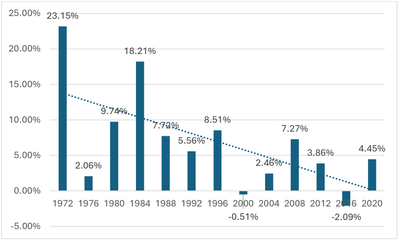
The 2024 Presidential campaign has been a roller coaster ride this summer. The upheavals are so fast and unprecedented that the reaction to each event often seems too muted. An assassination attempt and sudden pre-convention withdrawal? In a past generation, these events would be decisive, but in 2024, they seem like just the latest blip in the news cycle. The polls never seem to move more than a couple of points. In such an oddly volatile but also stable environment, our best bet to understanding what is going to transpire during the last 100 days of the election cycle is to look at data that gets to the heart of how voters view the candidates. My choice of fundamental data or essential metric is candidate fandom. Fandom is an unusual metric in politics, but it should be more common. Fandom is about passion for and loyalty to a cultural entity, be it a team, singer, university, or even politician. In fact, MAGA Trump supporters and Bernie Bros share many characteristics with Swifties and Lakers fans. Fans of all these things show up, spend, wear branded apparel, and fiercely defend the object of their fandom. The politicians who inspire fandom, such as AOC, Donald Trump, Barack Obama, and Marjorie Taylor Green, enjoy many advantages and are the celebrities of the political world. Fandom is critical in politics because fans are loyal, engaged, and resilient. Fans are not casual potential voters who may change preferences and are unlikely to make an effort to stand in line to vote. Fans are the voters who will show up rain or shine and who can’t be swayed. In 2024, a fan will interpret a conviction of their candidate as political “lawfare” rather than evidence of criminality. Also, in 2024, a fan will make excuses for signs of aging that would result in children taking a senior’s car keys. The flip side of fandom, anti-fandom, is also a powerful political force. Indeed, politics may be the cultural context in which anti-fandom has the most impact. Taylor Swift may have haters, but these anti-Swifties are not buying tickets to see Katy Perry in protest. But in politics, hatred of a candidate might be as powerful a tool for generating a vote as fandom. Joe Biden’s 2020 campaign was notoriously bad at drawing crowds, suggesting he inspired little passion. In contrast, Trump’s rallies looked like rabid sports crowds complete with matching hats. However, the hatred and fear of Donald Trump inspired sufficient anti-fandom to make Biden competitive. Of course, fandom doesn’t entirely decide elections. In most elections, there isn’t all that much fandom or passion. Beyond the presidency and senatorial contests, most candidates are barely known, and identity factors (race, gender, party affiliation) and candidate awareness are the determining factors. Even in presidential elections, get-out-the-vote efforts (ballot harvesting) and election regulations (voter suppression) combined with effective marketing to the few percent of swing (low information) voters are often the determining factors. Looking toward the future, fandom may be an increasingly salient political metric for multiple reasons. First, the last two decades have witnessed many candidates raised quickly from obscurity with somehow Hollywood-worthy origin stories (Barack Obama, AOC, JD Vance, etc.). In the modern media environment, candidates’ reputations (brands) are increasingly the product of marketing narratives rather than a lifetime of real-world accomplishments. In this new world of politics, fandom will be a critical metric. Second, with the increasing diversity of the American electorate, voting will be increasingly based on identity rather than ideology. Identity-based voting segments are likely to be driven by fandom (and anti-fandom) rather than policy. We see a form of this in 2024, as high inflation has barely made a dent in voters’ preferences for the two parties. A fragmented electorate comprised of racial and gender segments whose preferences are driven by fandom and anti-fandom will lead to increasingly negative campaigns featuring ads highlighting the threat of the non-preferred party’s candidates. When voters are focused on identity, negative advertising becomes the ideal method to use fear to create anti-fandom (hate) to motivate turnout. Kamala Harris versus Donald Trump Barring further disruptions, the matchup is set for the 2024 presidential contest (as of this writing, we do not know the Democratic VP). We do know the matchup between Donald Trump and Kamala Harris is a contest between polarizing figures. Donald Trump is a movement candidate who has redefined the Republican party. He inspires passionate fandom from his followers and amazing antipathy from major media and cultural outlets. Harris is also polarizing. In the immediate aftermath of Biden’s withdrawal, Harris received massive media and donor support. However, Harris has not demonstrated any significant national voter appeal, and her time as VP has generated ample blooper real material. My approach to assessing the race is to examine each candidate's fandom and anti-fandom. Fandom is the candidate’s core, resilient support, while anti-fandom is about antipathy. Fandom and anti-fandom are especially powerful metrics for a candidate because they are relatively fixed after a candidate gains high awareness. Once an individual identifies with the candidate (e.g., they are on the same team), an attack on the candidate is an attack on the individual. This means attack ads do not work because fans feel they are being attacked. Anti-fans are also important because they constrain a candidate’s support. A Trump anti-fan is unpersuadable by efforts from the Trump campaign because their identity is steeped in opposition to him. Fans and anti-fans are trapped in a cycle of confirmation bias where all information is processed to fit their fandom. I use data from the Next Generation Fandom Survey to assess candidate fandom and anti-fandom. The Next Generation Fandom Survey involves a nationwide sample of the U.S. population regarding fandom for sports and other cultural entities. In the 2024 edition, political figures such as Donald Trump, Joe Biden, Kamala Harris, and RFK Jr were included. The survey captured responses from 2053 subjects split evenly across the four primary generations (Gen Z, Millennials, Gen X, and Baby Boomers), and the sample is representative in terms of racial background. The survey does not focus on likely or registered voters, so the results reflect overall societal sentiments rather than the electorate's opinions. The critical survey question asks subjects to rate how much of a fan they are of a celebrity on a 1 to 7 scale. In the following discussion, individuals who rated their fandom a 6 or 7 on the 7-point scale are categorized as Fans, while those who rate their fandom a 1 or 2 are classified as Anti-Fans. Table 1 shows the Fandom and Anti-Fandom rates for the entire sample. Donald Trump has a 27% fandom rate compared to Harris's 21%. The fandom rate is crucial because it identifies the candidate's core support. It also indicates something important about the candidate’s potential likability. In terms of anti-fandom, Harris has a slightly higher Anti-Fandom rate. Anti-Fandom is also critical as it shows the percentage of people who hate a candidate. The data suggests that Americans find Harris to be more dislikable than Trump. Notably, the anti-fandom rates are significantly higher than the fandom rates. The American public has significant disdain for politicians. The high anti-fandom rates are both the product of past negative advertising and the cause of future negative campaign strategies. Table 1: Candidate Fandom and Anti-Fandom Table 2 reports fandom rates based of the two gender segments. Trump has a 7%-point advantage with men and a surprising 4% advantage with women. This is a stunning result as Trump is generally regarded as having weakness with female voters. However, this weakness shows up in the anti-fandom rates. In the male segment, Trump has a 5%-point advantage in anti-fandom (fewer anti-fans), but a 3% disadvantage in the female segment. This reveals that Trump is polarizing to women, and almost half of women find Trump to be highly dislikable. This finding is why the Harris campaign is likely to use advertising that casts Trump as misogynistic or a threat to women to motivate turnout by female voters. Table 2: Candidate Fandom by Gender Table 3 shows the fandom rates for the two younger demographic segments: Gen Z and Millennials. This Table also shows Trump’s relative performance versus Biden (in parentheses in the last column). Trump enjoys higher fandom and lower anti-fandom than Harris in both the Gen Z and Millennial segments. In terms of fandom, Trump is plus 6% in Gen Z and plus 11% with Millennials. Critically, Harris outperforms Biden. The Gen Z anti-fandom gap between Trump and Biden favored Trump by 6% points. However, this gap shrinks to just 1% point when Harris is the comparison. The data suggests that Harris is stronger with Gen Z than Biden. Table 3: Candidate Fandom in Younger Generations Table 4 reports the fandom rates based on a racial segmentation scheme. Specifically, the sample is divided into White and Non-White categories. This is a crude segmentation, but it illustrates some essential points. Trump enjoys a significant 14% positive fandom advantage in the White demographic. He also enjoys a 10-point edge in (lower) anti-fandom. The pattern essentially reverses in the Non-White segment, as Harris has a 10-point advantage in fandom and a 17-point edge in anti-fandom. Trump’s anti-fandom in the Non-White segment is critical to the campaign. Nearly half of this segment has antipathy or hate for Trump. This high anti-fandom suggests an opportunity for the Harris campaign to emphasize racial angles in their attacks on Trump. Table 4: Candidate Fandom by Race In addition to fandom and anti-fandom rates across demographic categories, insights can be gleaned by looking at segmentation variables that reflect cultural values or personality. Table 5 shows fandom and anti-fandom rates for Trump and Harris for segments defined by fandom for Taylor Swift (Swifties) and Baseball. The Swifties skew towards Harris. The implication is that young women engaged in popular culture have more positive fandom for Harris and more negativity toward Trump. This is unsurprising given the content of the popular culture and Swift’s personal liberalism. The Swiftie segment shows a much stronger skew for Harris than all but the Non-White segment. Examining the data at a cultural level is vital as it indicates that it isn’t necessarily youth or gender where Harris has an advantage but a combination of youth, gender, and a specific type of cultural engagement. The table also includes fandom rates for baseball fans. In the Baseball Fan segment, Trump enjoys an 8% point fandom advantage and a 7% anti-fandom advantage (lower anti-fandom). Like the case of the Swifties, the fandom rates of Baseball Fans reveal something about Trump’s core support. Baseball is a very traditional game with an older fan base, and traditionalism is probably the core value of Trump fans. Trump’s negative advertising is likely to focus on the threats to traditional values (i.e., Harris is a San Francisco liberal). Table 5: Candidate Fandom and Cultural Segments Commentary and Prediction Fandom is a powerful metric for predicting political success, but like most data points, it doesn’t tell the whole story. Fandom is a measure of unwavering core support while anti-fandom measures the group that will never support and is likely to show up to vote against a candidate. Examining fandom rates across multiple segments reveals that Harris’ core support is concentrated in specific cultural and racial segments. The analysis also suggests that Trump's core support is broader than is usually acknowledged and that his main problem is significant anti-fandom with women and minorities. Harris’ problem is a lack of love, while Trump’s is too much hate. Notably, I am not paying too much attention to the current wave of excitement and enthusiasm surrounding Harris. The recent enthusiasm is likely more a manifestation of the Democratic base’s hopes and a relentless media onslaught than an actual increase in passion for Harris. Maybe there will be a permanent shift upward in Harris’s fandom, but I don’t see any logic for why this would occur. Harris isn’t suddenly more likable or aspirational than she was last month. The argument that the American people are becoming more acquainted with her is dubious, given that she has been the Vice President or a major presidential candidate for almost five years. What are the implications for the upcoming election? Voting is not only about fandom or hate, so we must consider some additional factors. For instance, many potential voters lack passion and knowledge and are more prone to vote based on identity rather than ideology. If a region or demographic segment consistently votes for a party 75% of the time, that’s voting more based on fixed identities than current societal conditions. The American electorate has many of these types of fixed-preference voter segments. Furthermore, as the American electorate becomes more diverse, identity-based voting seems to be making presidential contests more predictable. The baseline seems to be that the Democratic candidate will win the popular vote by a few percentage points, and the Electoral College will come down to a few states, such as Michigan, Pennsylvania, and Wisconsin. Examining past electoral maps shows far more shifting of states across elections. Now, all but a handful of states are regarded as non-competitive. The Figure below shows the presidential popular vote margins for the last 50 years. It shows a trend towards smaller margins for the winning candidate, which is at least partly due to growing ethnic diversity and more fixed (at least in the near and medium terms) identity-based voting. Over the last 13 cycles, the margin of victory has dropped by about 1% every four years. Demographic change has also locked in a high baseline level of support for Democratic candidates. The last time a Republican won the popular vote was in 2004, with George Bush as the incumbent. Figure 1: Presidential Vote Margin 1972 to 2020 In addition to shrinking election margins, demographic change promises to change future campaign tones. The increasing relevance of fandom and anti-fandom, combined with the growing diversity of the electorate, will make 2024 an extremely negative campaign. The 2024 election will be determined by identity-based demographic trends and negative (anti-fandom) marketing campaigns. Demographics are destiny, and America is changing rapidly in ways that make it increasingly difficult for the Republicans to win the popular vote. It doesn’t matter if the Democrat is Harris, Newsom, Clinton, or Whitmer while the Republican is Rubio, Haley, Cruz, or Burgum. The baseline is probably 52% to 48%, D to R. Candidate fandom and anti-fandom probably shift the vote 2 or 3 percent in either direction. The correlation of demographic traits with voting behaviors creates incentives for campaign strategies that focus on identity. Republicans are eager to shift some percentage of Black or Hispanic voters to their cause because it simultaneously reduces the Democrats' base and grows Republican totals. In contrast, Democrats need to motivate marginal voters in the female, Black, and Hispanic segments to turn out. Fear-based appeals are the most effective tool for both parties' goals. Negative messaging is also prevalent because of the general view of politicians. Politicians tend to inspire more antipathy (anti-fandom) than admiration (fandom). The fandom data shows this, as both candidates have far more anti-fans than fans (this holds with other politicians) . The modern election calculus is, therefore, focused on aggressive negative ads that inspire marginal voters to take the initiative to vote against a hated candidate. Passion drives behavior, and it's far easier to drive fear and hatred of a candidate than to inspire passion and admiration. Considering the fandom data and the current electorate, I have two predictions. First, we will witness an incredibly nasty race. Harris’s best bet is to demonize Trump to motivate the anti-Trump voters to turn out. The American culture of 2024 includes constant repetition that many Democratic voting constituencies are marginalized and threatened. These segments are best motivated by using messages that cast the Republicans as the danger or oppressor. Women will fear losing reproductive rights, and African Americans will be primed with threats to voting rights. Trump will also employ negative messaging, but Trump’s adoption of a negative campaign comes from a slightly different motivation. Trump’s core support consists of conservatives who are frustrated by a lack of cultural power and representation. This group is looking for someone who will fight for their values. This desire for a “fighting advocate” explains much of Trump’s appeal, as his supporters are enthusiastic about his “mean tweets and nicknames.” There will also be fear-based advertising as Harris will be positioned as wanting to defund police and open the border. Second, Trump wins in a close contest. Comparing Trump’s and Harris’ fandom and anti-fandom suggests the Harris campaign faces an uphill challenge. Despite the current blitz of enthusiasm for Harris as a replacement for a failing Joe Biden, her “brand” has not shown an ability to stimulate passion, and her dislike levels exceed Trump's. It seems unlikely that she will be able to inspire fans. While Trump has a significant fanbase and weaknesses in terms of strong anti-fandom levels in minority and cultural segments, he probably beat Clinton in 2016 because her anti-fandom was equivalent to his. In contrast, he lost to Biden because Biden had less anti-fandom (in 2020). Kamala Harris seems more like Clinton than Biden, so look for a similar outcome as in 2016. The bottom-line prediction: An exceptionally negative campaign, with Trump’s greater baseline fandom and Harris’s charisma deficit leading to a narrow Trump victory. As in 2016,Trump wins the Electoral College while losing the popular vote. Addendum: Future Fandom Lesson The structure of the American electorate and the propensity of people to vote based on identity rather than ideology mean that negative campaigns are the standard in the near future. The essential observation is that demographic trends create an electorate that is more a collection of identity segments than a homogeneous population that varies in ideology. An increasingly diverse electorate likely means increasingly negative presidential campaigns as negative or fear-based appeals are especially effective when elections focus on threats to identity groups. The tragedy of this situation is that the negative messages of campaigns amplify racial division and acrimony. When the next election occurs, the electorate is even more polarized, and negative or fear-based appeals are again the most effective. Mike Lewis is an expert in the areas of analytics and marketing. This approach makes Professor Lewis a unique expert on fandom as his work addresses the complete process from success on the field to success at the box office and the campaign trail. Michael is available to speak with media - simply click on his icon now to arrange an interview today. Interested in following Future Fandom! Subscribe for free to receive new posts.



Gold medal-worthy experts for Olympic Summer Games coverage
The University of Delaware boasts several experts who can comment on health-related topics such as injuries and training and business-focused areas like marketing and team behavior as they relate to the 2024 Olympic Games in Paris. Matt Robinson Professor, sport management Relevant expertise: Will be in Paris and can discuss the Olympics from an onsite perspective; can give the backstory on The International Coaching Enrichment Certificate Program (ICECP) and what’s new in the Paris Olympics. Link to profile and contact Tom Kaminski Professor, kinesiology and applied physiology Relevant expertise: Can comment on the impact of heading in Olympic soccer and has studied the risks of concussions in sports for nearly three decades. Link to profile and contact Karin Silbernagel Professor, physical therapy Relevant expertise: Research aims to advance the understanding of tendon and ligament injuries and repair. Can also discuss sailing. Link to profile and contact Tim DeSchriver Associate professor, sport management Relevant expertise: Sport finance, economics and marketing Link to profile and contact Other experts: INJURIES: Tom Buckley Associate professor, kinesiology and applied physiology Relevant expertise: Head impacts from boxing. Stephanie Cone Assistant professor, biomedical engineering Relevant expertise: Studies the structure-function relationship that exists in tendons and ligaments with a special interest in changes in this relationship during growth and following injury. Mike Eckrich Clinical instructor, physical therapy Relevant expertise: Weightlifting; can talk about the difference between men’s and women’s injuries and form in the sport. Donald Ford Physical therapy Relevant expertise: Shoulder injuries/rehab expert Jeffrey Schneider Senior instructor, kinesiology and applied physiology Relevant expertise: Athletic training and injury prevention, with a particular interest in ice skating injuries. Worked with athletes competing in Winter Olympics (2002, 2006) as a strength and conditioning coach and athletic trainer. EVENTS: Jocelyn Hafer Assistant professor, kinesiology and applied physiology Relevant expertise: Race Walk events and how biomarkers are used in walking studies. Airelle Giordano Associate professor, physical therapy Relevant expertise: Gymnastics; she was a collegiate gymnast Kiersten McCartney Doctoral student Relevant expertise: Can chat about Paralympic Triathlon (running, hand cycling, swimming). Steve Goodwin Associate professor, health behavior and nutrition sciences Relevant expertise: He is also in Paris leading a study abroad cohort. He has been to multiple Olympics, and can also speak to on-site experience, differences in games, etc. George Edelman Adjunct professor, physical therapy Relevant expertise: How the "underwaters” technique gives Olympians an edge. BUSINESS: John Allgood II Instructor, sport management Relevant expertise: Sport business management, event management SCIENCE: Joshua Cashaback Assistant professor, biomedical engineering Relevant expertise: Specializes in neuromechanics and control of human movement. His research falls under two major themes: The neuroplasticity and adaptation research line tests how reinforcement feedback can subserve our ability to acquire new motor skills.


How Do Political Conventions Work?
Political conventions in America are a fundamental aspect of the democratic process, serving as pivotal events where major political parties select their presidential candidates, solidify party platforms, and galvanize their bases ahead of the general election. These conventions are not only newsworthy because of their immediate political significance but also due to their historical, cultural, and strategic importance. They provide a stage for showcasing party unity, leadership vision, and policy priorities, making them crucial for understanding the direction of American politics. Key story angles for journalists could include: Convention History and Evolution: Exploring the origins and historical changes in political conventions, including how their roles and significance have evolved over time. Nomination Process: Examining the mechanics of how delegates are selected, how they vote, and the strategies candidates use to secure their party's nomination. Party Platforms: Analyzing the process of developing and ratifying party platforms, highlighting key policy positions and their implications for voters. Role of Delegates and Superdelegates: Investigating the influence of delegates and superdelegates in the nomination process and their impact on the democratic process within parties. Media and Public Perception: Assessing how conventions are covered by the media, the role of speeches and presentations, and their effect on public opinion and voter behavior. Security and Logistics: Providing insights into the extensive planning and security measures required to host these large-scale events, especially in light of recent public health and safety concerns. By focusing on how political conventions work in America, journalists can provide the public with a comprehensive understanding of these complex and significant events, shedding light on their impact on the democratic process and the broader political landscape. Connect with an expert about the role, purpose and history of political conventions in America: To search our full list of experts visit www.expertfile.com Photo credit: Isai Ramos


Expert Q&A: Should We Permit AI to Determine Gender and Race from Resumes?
The banner ads on your browser, the route Google maps suggests for you, the song Spotify plays next: algorithms are inescapable in our daily lives. Some of us are already aware of the mechanisms behind a targeted ad or a dating profile that lights up our phone screen. However, few of us may actually stop to consider how this technology plays out in the hiring sector. As with any major technological advancement, it usually takes society (and legislation) a while to catch up and adjust for unintended consequences. Ultimately, algorithms are powerful tools. Like any tool, they have the potential for societal benefit or harm, depending on how they’re wielded. Here to weigh in on the matter is Assistant Professor of Information Systems & Operations Management Prasanna Parasurama, who recently joined Emory Goizueta Business School’s faculty in fall of 2023. This interview has been edited for clarity. Describe your research interests in six words. Six words…that’s difficult to do on the spot. How about “the impact of AI and other digital technologies on hiring.” Is that condensed enough? That works! What first interested you in the intersection of AI and hiring practices? Before I did my PhD, I was working as a data scientist in the HR analytics space at a start-up company. That is where my interest in the topic began. But this was a long time ago. People hadn’t started talking much about AI, or algorithmic hiring. The conversation around algorithmic bias and algorithmic fairness picked up steam in the second or third year of my PhD. That had a strong influence on my dissertation focus. And naturally, one of the contexts in which both these matters have large repercussions is in the hiring space. What demographics does your research focus on (gender identity, race/ethnicity, socioeconomic status, all of the above)? Do you focus on a particular job sector? My research mostly looks at gender and race for two main reasons. First, prior research has typically looked at race and gender, which gives us a better foundation to build on. Second, it’s much easier to measure gender and race based on the data that we have available—from resumes, from hiring data, like what we collect from the Equal Employment Opportunity Commission. They typically collect data on gender and race, and our research requires those really large data sets to draw patterns. They don’t ask for socioeconomic status or have an easy way to quantify that information. That’s not to say those are less important factors, or that no one is looking at them. One of the papers you’re working on examines resumes written by self-identified men and women. It looks at how their resumes differ, and how that influenced their likelihood of being contacted for an interview. So in this paper, we’re essentially looking at how men and women write their resumes differently and if that impacts hiring outcomes. Take resume screening algorithms, for example. One proposed way to reduce bias in these screening algorithms is to remove names from resumes to blind the applicant’s gender to the algorithm. But just removing names does very little, because there are so many other things that serve as proxies to someone’s gender. While our research is focused on people applying to jobs in the tech sector, this is true across occupations. "We find it’s easy to train an algorithm to accurately predict gender, even with names redacted." Prasanna Parasurama What are some of those gendered “tells” on a resume? People write down hobbies and extracurricular activities, and some of those are very gendered. Dancing and ballet tend to denote female applicants; you’re more likely to see something like wrestling for male applicants. Beyond hobbies, which is sort of obvious, is just how people write things, or the language they use. Female applicants tend to use a lot more affective words. Men, on the other hand, use more of what we call agentic words. Can you explain that a little more? In social psychology, social role theory argues that men are stereotyped to be more agentic, whereas women are stereotyped to be more communal, and that their communication styles reflect this. There’s essentially a list of agentic words that researchers have come up with that men use a lot more than women. And women are more likely to use affective words, like “warmly” or “closely,” which have to do with emotions or attitudes. These communication differences between men and women have been demonstrated in social sciences before, which has helped inform our work. But we’re not just relying on social science tools—our conclusions are driven by our own data. If a word is able to predict that an applicant’s resume belongs to a female versus male applicant, then we assign different weights, depending on how accurately it can predict that. So we’re not just operating on theories. Were there any gendered patterns that surprised you? If you were to assign masculinity and femininity to particular words, an algorithm would likely assign “married” to be a feminine term in most contexts. But in this particular case, it’s actually more associated with men. Men are much more likely to use it in resumes, because it signals something different to society than when women use it. "One of the most predictive terms for men was references to parenthood. It’s much easier for men to reference kids than for women to reveal information about their household status. Women face a penalty where men receive a boost." Prasanna Parasurama Studies show that people perceive fathers as being more responsible employees, whereas mothers are regarded as less reliable in the workplace. We haven’t studied this, but I would speculate that if you go on a platform like LinkedIn, men are more likely to disclose details about fatherhood, marriage, and kids than women are. There were some other tidbits that I didn’t see coming, like the fact that women are much less likely to put their addresses on their resume. Can AI predict race from a resume as easily as it can predict gender? There’s surprisingly very little we know on that front. From existing literature outside of algorithmic literature, we know differences exist in terms of race, not just on the employer side, where there might be bias, but we also on the worker side. People of different races search for jobs differently. The question is, how do we take this into account in the algorithm? From a technical standpoint, it should be feasible to do the same thing we do with gender, but it just becomes a little bit harder to predict race in practice. The cues are so variable. Gender is also more universal – no matter where you live, there are probably men and women and people who identify as in between or other. Whereas the concept of race can be very specific in different geographic regions. Racial identities in America are very different from racial identities in India, for instance. And in a place like India, religion matters a lot more than it does in the United States. So this conversation around algorithms and bias will look different across the globe. Beyond screening resumes, how does AI impact people’s access to job opportunities? A lot of hiring platforms and labor market intermediaries such as LinkedIn use AI. Their task is to match workers to these different jobs. There’s so many jobs and so many workers. No one can manually go through each one. So they have to train algorithms based on existing behavior and existing design decisions on the platform to recommend applicants to particular jobs and vice versa. When we talk about algorithmic hiring, it’s not just hiring per se, but spaces like these which dictate what opportunities you’re exposed to. It has a huge impact on who ends up with what job. What impact do you want your research to have in the real world? Do you think that we actually should use algorithms to figure out gender or race? Is it even possible to blind AI to gender or race? Algorithms are here to stay, for better or worse. We need them. When we think about algorithmic hiring, I think people picture an actual robot deciding who to hire. That’s not the case. Algorithms are typically only taking the space of the initial part of hiring. "I think overall, algorithms make our lives better. They can recommend a job to you based on more sophisticated factors than when the job was chronologically posted. There’s also no reason to believe that a human will be less biased than an algorithm." Prasanna Parasurama I think the consensus is that we can’t blind the algorithm to gender or other factors. Instead, we do have to take people’s demographics into account and monitor outcomes to correct for any sort of demonstrable bias. LinkedIn, for example, does a fairly good job publishing research on how they train their algorithms. It’s better to address the problem head on, to take demographic factors into account upfront and make sure that there aren’t drastic differences in outcomes between different demographics. What advice would you give to hopeful job candidates navigating these systems? Years of research have shown that going through a connection or a referral is by far the best way to increase your odds of getting an interview—by a factor of literally 200 to 300 percent. Hiring is still a very personal thing. People typically trust people they know. Prasanna Parasurama is an Assistant Professor of Information Systems & Operations Management at Emory University’s Goizueta Business School. Prasanna’s research areas include algorithmic hiring, algorithmic bias and fairness, and human-AI interaction. His research leverages a wide array of quantitative methods including econometrics, machine learning, and natural language processing. Prasanna is available to talk about this important and developing topic - simply click on his icon now to arrange an interview today.


It's National Play Outside Day tomorrow - How Important is this for kids? Our experts can help
In an era where technology and screen time increasingly dominate children's daily lives, the importance of physical activity for kids stands out as a critical issue. Physical activity is not only vital for the overall health and well-being of children, but it also plays a significant role in their physical, emotional, and social development. This topic is newsworthy due to rising concerns about childhood obesity, mental health issues, and the long-term health impacts of sedentary lifestyles. Moreover, promoting physical activity in children addresses broader societal issues such as healthcare costs, educational outcomes, and community well-being. Key story angles for journalists could include: Health Benefits: Exploring how regular physical activity helps prevent childhood obesity, strengthens the immune system, and reduces the risk of chronic diseases such as diabetes and heart conditions. Mental Health and Well-being: Highlighting the positive effects of exercise on children's mental health, including reducing anxiety and depression, improving mood, and enhancing cognitive function. Educational Impact: Investigating the correlation between physical activity and academic performance, including improved concentration, better behavior in school, and enhanced learning outcomes. Community Programs: Covering local and national initiatives aimed at increasing physical activity among children, such as after-school sports programs, community fitness events, and partnerships with schools. Parental and Educator Roles: Discussing the importance of parents and educators in encouraging and facilitating physical activity, including tips for integrating exercise into daily routines and creating supportive environments. Overcoming Barriers: Addressing challenges that prevent children from being active, such as lack of safe play spaces, financial constraints, and limited access to recreational facilities, and highlighting solutions and success stories. By focusing on the importance of physical activity for kids, journalists can shed light on an issue that affects the future health and happiness of the next generation, while providing valuable information and inspiration to parents, educators, and policymakers. Connect with an expert about the Importance Physical Activity : To search our full list of experts visit www.expertfile.com Photo credit: Annie Spratt

The Fast Food Wars are on! Let our experts explain the history behind the industry
In the contemporary culinary landscape, fast food stands as a pervasive and influential force, shaping not only our eating habits but also broader societal trends. This topic is newsworthy due to its significant impact on public health, economic structures, and cultural dynamics. The history of fast food offers a rich narrative that intersects with various pressing issues such as nutrition, labor practices, and globalization. Furthermore, the evolution of fast food reflects changes in consumer behavior, technological advancements in food production, and shifts in marketing strategies. Key areas for exploration include: The Rise of Fast Food Chains: Examining the origins and growth of iconic fast food brands and their role in transforming the food industry. Health Implications and Nutritional Debates: Analyzing the impact of fast food on public health, including discussions around obesity, dietary choices, and nutritional content. Economic Influence and Labor Practices: Investigating the economic contributions of the fast food industry, its employment practices, and the ongoing debates around wages and working conditions. Cultural Impact and Globalization: Exploring how fast food has influenced cultural identities, consumer behaviors, and the spread of Western food culture globally. Technological Innovations in Food Production: Looking at advancements in food technology that have enabled the mass production and distribution of fast food, from kitchen automation to supply chain logistics. Marketing and Consumer Psychology: Assessing the strategies used by fast food companies to attract and retain customers, including advertising techniques and menu innovations. The history of fast food offers journalists a multifaceted topic with numerous angles to explore, each revealing important insights into how this ubiquitous industry has shaped—and continues to shape—various aspects of modern life. Connect with an Expert about the history of Fast Food: Aidin Namin, Ph.D. Associate Professor of Marketing Analytics, College of Business Administration · Loyola Marymount University Melissa Melough Assistant Professor, Department of Health Behavior and Nutrition Sciences · University of Delaware Matthew McGranaghan Assistant Professor, Marketing · University of Delaware Anna McAlister Assistant Professor of Advertising and Public Relations · Michigan State University David Julian McClements Distinguished Professor of Food Science · University of Massachusetts Amherst To search our full list of experts visit www.expertfile.com Photo credit: Jonathan Borba

Expert Research: Hurricanes and Natural Disasters Linked to “Grocery Tax” for Lower-Income Americans
Research from Goizueta’s William Schmidt uncovers the disproportionate impact of natural disasters on low-income families’ access to essentials. Global warming is accelerating severe weather with cataclysmic outcomes for communities all over the world. In 2023, the hottest year on record, no fewer than 23 weather-related disasters struck the United States. These natural disasters claimed hundreds of lives and caused $57 billion in damage. Recently, the federal government has come under scrutiny for uneven aid response to communities affected by hurricanes, fires, and flooding in America. William Schmidt But might there be other factors at play that see disadvantaged groups more vulnerable to the impact of severe weather events? Weighing into this is award-winning research by Goizueta Business School’s William Schmidt, associate professor of Information Systems and Operations Management. He and Xabier Barriola from INSEAD Business School look at the effect of three major hurricanes in the U.S. in the last 20 years. They find evidence of higher paid prices for basic groceries in the aftermath of each storm that disproportionately impact lower-income communities in affected states. In fact, says Schmidt, when severe weather hits communities, these families end up paying anywhere between one and five percent more relative to high income households for essential food and goods. This puts a major strain on already-strained resources in times of massive disruption. "We see a spike in the prices paid for household groceries of up to five percent hitting low-income groups immediately after a major storm hits." William Schmidt “Then you have to factor in the reality that poorer households spend around eight times more of their disposable income on basic groceries than high-income households,” says Schmidt. “It becomes clear that the aftermath of severe weather is harder for them to bear. And in our research, this is an effect that lasts for months, not weeks or days.” Exposing Hidden Costs on Those Hit Hardest To get to these findings, Schmidt and Barriola worked from a hunch. They figured that in low-income areas, a lack of infrastructure, lower-quality construction, and fewer grocery store outlets could translate into supply shortages in emergencies. Ensuing stockouts might then lead to knock-on price inflation for customers. These are low-income families for whom inflation has serious and significant consequences, Schmidt says. "We know that inflation hurts poorer communities. High-income families have the option of switching between high and low-priced goods according to needs or preference. But families with lower incomes are already purchasing low-priced groceries." William Schmidt “When there are disaster-induced stockouts to their preferred products, those families are forced to substitute to higher priced groceries,” Schmidt continues. Then there’s retailer behavior. Following large environmental disasters, store managers may be unable to keep necessities in stock. Under those circumstances, it is difficult to justify running promotions or implementing planned price decreases. To test these ideas, Schmidt and his colleagues looked at data from the weeks and months following Hurricanes Katarina (2005), Ike (2008), and Sandy (2012). They decided to pinpoint those locations immediately impacted at the county level. To do so, they used major disaster declarations issued by the federal government at the time. Then they integrated this with detailed grocery store sales data provided by Information Resources Inc (IRI) with zip code-level household income and demographic data from the U.S. Census Bureau. With each hurricane, the researchers looked at IRI data covering 30 different product categories and around 200 million transactions over a 12-week period. Schmidt and his colleagues then ran a set of analyses comparing prices paid by communities before and after each hurricane. They also contrasted price increases paid by low-income and high-income households as well as communities outside of the areas affected by the storms. Crunching the Numbers “Doing this triple-difference regression analysis, we find that lower-income communities pay an average 2.9 percent more for their groceries. That’s in the eight weeks following each of these disasters,” says Schmidt. "The effect varies. But it is roughly commensurate with the overall economic damage wrought by each hurricane, with Katrina being the worst. Here low-income families were seeing a 5.1 percent increase in the cost of food and basic goods, relative to richer households." William Schmidt The study points to a variety of mechanisms driving these effects. As Schmidt and his co-authors hypothesize, there is evidence that the same disruptions lead to fewer price promotions. They also see more frequent stockouts of low-priced goods. At the same time, there’s a shift in household purchasing from low to higher-priced products. These effects are long-lasting, says Schmidt. According to the study, post-hurricane inflation in the prices paid by consumers continues to affect poorer families for eight or more weeks. This amounts to months of economic hardship for those least resilient to its effects. Schmidt calls this “permanent inflation.” Pursuing Equity in Crisis Operations managers and policymakers should factor these findings into emergency relief efforts, say Schmidt and his colleague. The goal should be to service communities more equitably. So, there should be more thought to the provision of essential food and household goods. Also, there should be a particular focus on those most vulnerable to natural disasters and their effects. Current disaster nutrition relief programs are typically short. Authorities might do better by vulnerable communities by also extending things like cash and voucher programs, says Schmidt. And they should prioritize the ordering, shipment, and warehousing of essential goods. “Our research shows that hurricanes cost certain groups of Americans more than others in the longer run. The permanent inflation on food stuff and household necessities that we find constitutes an additional burden on part of our national fabric. These are people who are least positioned to afford it.” Hurricanes and the economy are both sought-after topics - and if you're covering, we can help. William Schmidt is an associate professor of Information Systems & Operations Management at Emory University’s Goizueta Business School. His research focuses on understanding and mitigating operational disruptions, and applications of machine learning in operational decision making. To connect with William to arrange an interview - simply click his icon now.


One week to go - Let's look at the role debates play in US Elections
US Presidential debates are a cornerstone of American democratic tradition, playing a critical role in shaping public perception and voter decision-making during election cycles. This topic is not only newsworthy because of its historical significance but also due to its influence on political discourse, media coverage, and the democratic process. The evolution of these debates reflects broader societal changes, technological advancements, and shifts in political strategy. Furthermore, presidential debates provide a platform for candidates to present their policies and personalities, thereby directly impacting election outcomes. Key story angles include: Historical Evolution of Presidential Debates: Exploring the origins, key moments, and changes in format and style of presidential debates from the Kennedy-Nixon debate in 1960 to the present day. Impact on Voter Perception and Behavior: Analyzing how debates influence public opinion, voter turnout, and the overall electoral process. Media's Role in Shaping Debates: Investigating the role of media in organizing, broadcasting, and moderating debates, including the influence of television, social media, and real-time fact-checking. Debate Strategies and Candidate Performance: Examining how candidates prepare for debates, notable performances, gaffes, and their impact on campaign momentum. Civic Engagement and Public Discourse: Discussing the role of debates in promoting civic engagement, political education, and public discourse on key issues facing the nation. Technological Advancements and Future Trends: Exploring how technology has transformed debates, from live streaming and interactive features to virtual debates and the use of AI in analysis. These angles offer journalists a comprehensive framework to explore the historical significance and ongoing impact of US Presidential debates on American politics and society. Connect with an Expert about the history of Presidential Debates: Jingsi Christina Wu Associate Professor of Journalism, Media Studies, and Public Relations · Hofstra University John Koch Senior Lecturer and Director of Debate · Vanderbilt University Kevin Wagner, Ph.D. Professor and Department Chair · Florida Atlantic University Juliana Fernandes Assistant Professor · University of Florida Sandra Pavelka, Ph.D. Expert in political science and justice · Florida Gulf Coast University To search our full list of experts visit www.expertfile.com Photo credit: Library of Congress