
Experts Matter. Find Yours.
Connect for media, speaking, professional opportunities & more.

The election is on. In fact, it’s as if the campaign of the 2016 election has never come to a finish. U.S. President Donald Trump’s strategy of constant rallies, speeches and campaign stops has essentially meant the Republican incumbent has been on the stump for the better part of almost five years now. On the other side, at one time last year, there were more than two dozen contenders vying for the right to represent the Democrats. That field has been whittled down to about half of that, and it is expected to continue shrinking now that primaries are in play and the financial costs of keeping up will become a reality. So, if there were to be an actual starting point for the November election – this week could be it. On Monday, the Iowa Caucus kicks off what could be months of rigorous and aggressive campaigning for Democrats. The winner Monday will have a huge boost, but after that it’ll be all eyes on New Hampshire, Nevada, South Carolina and then Super Tuesday. Also, this week, the President will deliver the State of the Union. The timing of this speech could be the change of channel the President needs as the clouds of impeachment linger. As well, the speech and the huge audience it gathers could set the tone of what's to come on the campaign trail. For political junkies and journalists – it is going to be a busy nine months. And if you are a reporter covering the primaries, politics and the presidential election – then let our experts help. The team from FAU can help with a variety of topics that will inevitably be part of or influence the policies and platforms of each party and candidate. Kevin Wagner's research and teaching interests include presidential and judicial politics, political behavior and legislative behavior. He is also a research fellow of the FAU Business and Economics Polling Initiative (BEPI). Robert Rabil is an expert in political Islam, terrorism, U.S. foreign policy, and U.S.-Arab relations. Kelly Shannon specializes in the history of U.S. foreign relations, with particular attention to the Middle East and the 20th century. Colin Polsky is trained as a geographer, specializing in the human dimensions of global environmental change. He also oversees FAU's quarterly environmental poll. All of these experts from Florida Atlantic University are available to help with any of your questions or coverage – simply click on an expert’s icon to arrange an interview today.


With Brexit looming, more is unknown than known with British economy, trade agreements
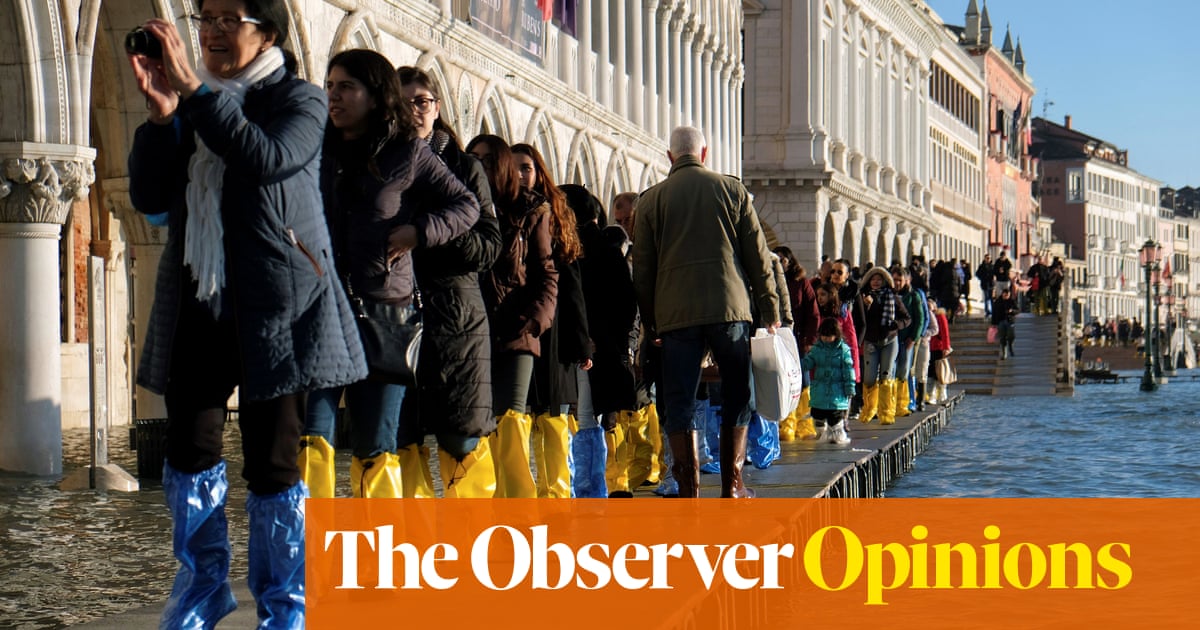
Although it has been in the works since June 2016, the transition phase of Great Britain’s decision to leave the European Union (EU) — more commonly known as “Brexit” — is set to take place on Jan. 31. It is a date that will most likely leave a ripple of economic uncertainty in the United Kingdom in its wake as the British prepare for total independence at the end of the year. “Brexit has created so many new unknown variables. It can be profoundly disruptive to England as we know it today,” says Ralf “Don” Keysser, D.B.A., an associate professor in the MBA program at Saint Mary’s University of Minnesota. Keysser predicts a negative short-term impact to the British economy, whereas the long-term perspective is still hard to predict until new free trade agreements with Europe and the rest of the world are established. Keysser does not see a clear-cut benefit to the U.S. establishing a free trade agreement with the U.K., simply based on the lack of British imports in the American market, other than maintaining political closeness. “It’s going to be a shock to the system. England will not be the England that it has been. There’s a lot of speculation, because we’ve never had a country pull out of the EU before, so it’s kind of an unknown. And it’s so highly politicized that it’s hard to get an objective analysis of what it’s going to look like.” Keysser points to a Toyota plant in South Derbyshire that supplies most of its output to countries in the EU through a tariff-free treatment. With Brexit going into effect, the factory may have to vastly reduce its output. Still, the workers in that community overwhelmingly voted to leave the EU. “This is a good example of how people will vote against their economic self-interests for ideological reasons,” Keysser says. “There’s a lot of ideology behind the Brexit vote: anti-immigrant, anti-Europe, pro-nationalist views that very much echoed President Trump’s appeal.” There are a few reasonably good projections, Keysser says, to make about the impact on inflation, unemployment, and economic trends — and none of them look good for Britain. One just has to look at the British pound, which has steadily been losing value to the dollar and euro over the years. In addition, several banks decided to either move from London or expand into other markets within the EU as soon as the Brexit results were announced, which could cost the British capital its status as of the world’s premier financial centers. “I see a gradual diminution of the financial business that’s been a mainstay of London,” Dr. Keysser says. On top of that, there is a real fear of Scotland and Northern Ireland wanting to leave the U.K. in favor of establishing their own independence and returning to the EU. The last time Scotland voted to leave the U.K. in 2004 it only passed 55% to 45%. “That could be the beginning of the end of the United Kingdom as we have known it,” Keysser says. The news might not be entirely bad out of Brexit. For international tourists, especially those from the U.S may be able to take advantage of the dollar’s exchange rate with the declining pound. Do you want to know more about the possible economic ramifications of Brexit? Are you a journalist covering this topic and interested in an interview? That's where we can help. Ralf Keysser, D.B.A., has been an active investment banker and business finance consultant for 35 years. He also serves an associate professor for the MBA program at Saint Mary’s University of Minnesota. To book an interview with him, simply click on his icon above to access his contact information.


Curious about who’s cashing in on Superbowl Sunday? Let our experts help!
The big day is almost here! Fans around the world are getting squares ready, chili cooked, and prop-bets placed. Superbowl Sunday is America’s biggest day for television and sports. This year, it will be all eyes on the Kansas City Chiefs and San Francisco 49ers as they land in Miami to prep and promote for Sunday’s kickoff. There’s big money to be made this week, and a lot of it is going around, according to CNBC – last year was a windfall and most expect this year to be even bigger. Super Bowl ad spots are the most expensive on commercial TV in the U.S. by far, with a 30-second slot costing $5.25 million. That works out at roughly $175,000 per second. Last year, the winners of the Super Bowl made an estimated $112,000 each, while their opponents made $56,000 each. Referees, meanwhile, make between $4,000 and $10,000 a game, according to an estimate by CBS, and their annual salary is about $201,000. Stores are set to make $14.8 billion in sales around the game, with most of that money spent on food and drink to consume while watching, according to a survey carried out by Prosper Insights & Analytics for the National Retail Federation last week. That equates to $81.30 per person, up from last year’s $81.17. Are you a journalist covering this Sunday’s big game? If you have questions about the marketing or economics of the Superbowl, the let our experts help with your stories and coverage. Professor Andrew Wonders joined the faculty of the School of Business Administration at Cedarville University in 2013 following a 13-year career in the sport industry. He is an expert in the areas of major sporting events and the business of sports. If you are looking to arrange an interview with Professor Wonders – simply click on his icon to arrange a time.


Winning a Grammy Can "Catapult" Your Career
At the 62nd Annual Grammy Awards, Billie Eilish became the first woman to take home the big four awards: Album of the Year, Record of the Year, Song of the Year and Best New Artist. Villanova's David Fiorenza, an assistant professor of economics, says that winning a high-profile award, like a Grammy, has the potential to catapult your career for decades, particularly for a lesser-known artist like Eilish. However, he notes that it's important to be wary of changes to the music industry. "Musical trends change. Creative destruction of the music industry has occurred for decades. Radio station mergers and business cycles have all contributed to dozens of artists careers fizzling a year or so after the Grammys," Fiorenza says. "One way to keep your career going economically: touring the U.S. and looking for markets in Europe, Japan and South America."

The three-way tug-of war between China, Canada and the United States
It’s a court trial in coastal Vancouver Canada that has gathered the attention of international media and plunged trade talks and international relations between America, China and America into tension, tariffs and a tug-of-war over one Chinese executive accused of fraud in in the United States. Here’s brief background courtesy of BBC: The Story in 100 Words Why is the US targeting Huawei, one of the world's largest smartphone makers, and executive Meng Wanzhou? Authorities claim they misled the US government about the company's business in Iran, which is under US economic sanctions. The US is also pursuing Huawei and Ms Meng in criminal charges including bank fraud and theft of technology. Both reject the claims. US officials want Ms Meng extradited from Canada to face the charges. Her arrest caused a diplomatic dispute between China and the US and Canada. The case against Huawei also comes as Western nations grow increasingly concerned about a possible spying risk related to the widespread adoption of the company's technology. So, is there any diplomatic resolution? What will happen if Meng Wanzhou is extradited to the United States? What will happen if she can return to China? Is Canada in a no - win situation? There are a lot of questions – and that’s where our experts can help. Dr. Glen Duerr's research interests include comparative politics, and international relations theory. Glen is available to speak to media regarding this topic– simply click on his icon to arrange an interview.


Voters Split on Whether Trump Should be Removed from Office Former U.S. Vice President Joe Biden has widened his lead to 26 points among Florida voters in the race for the Democratic party’s nomination for president in 2020, according to a statewide survey by the Florida Atlantic University Business and Economics Polling Initiative (FAU BEPI). Among the Democratic candidates, Biden has increased his support to 42 percent, up from 34 percent in BEPI’s September 2019 poll. U.S. Sen. Bernie Sanders jumped into second place at 14 percent, while U.S. Sen. Elizabeth Warren fell to third at 10 percent, down significantly from 24 percent support in September. Former New York City Mayor Michael Bloomberg came in fourth at 7 percent, followed by U.S. Sen. Amy Klobuchar at 6 percent, entrepreneur Andrew Yang at 5 percent and South Bend, Indiana Mayor Pete Buttigieg at 3 percent. A majority of Democratic primary voters (54 percent) said they will definitely vote for their top choice, with 46 percent saying there is a chance they could change their minds and vote for someone else. The Florida Democratic primary is March 17. “Joe Biden continues to be in a very strong position in Florida,” said Monica Escaleras, Ph.D., director of the FAU BEPI. “However, it will be interesting to see what impact the early contests in New Hampshire and Iowa will have on voters in Florida regarding their support for Biden.” Sanders fared best among Florida voters in head-to-head matchups against U.S President Donald Trump, with a 53-to-47 percent advantage on the president. Biden and Warren have narrow two-point leads on Trump, 51 to 49 percent, while Buttigieg finished in a 50-50 dead heat with the president. In September, Trump held small leads in each of these head-to-head matchups. With an impeachment trial in the U.S. Senate looming, Florida voters are split on whether Trump should be removed from office, with 51 percent saying he should be removed while 49 percent are against removal. Voters are also split about how their Congress person’s decision whether or not to impeach Trump will affect their support for them as a candidate, with 40 percent saying it will make them less likely to support the candidate, 38 percent saying they would be more likely to support them and 21 percent saying it would have no effect. Florida Gov. Ron DeSantis, who has just completed his first year in office, is popular among voters with 48 percent approval and 28 percent disapproval, while 25 percent of voters were neutral or had no opinion. With tensions rising with Iran, 61 percent of voters do not think the U.S. is going to get into a war with Iran, while 39 percent think recent military action will lead to war. Trump’s approval rating is slightly above water among Florida voters, with 45 percent approval and 43 disapproval. He continues to be hugely popular among GOP voters, with a 66-point lead on his Republican rivals, former U.S. Rep. Joe Walsh and former Massachusetts Gov. Bill Weld. “Floridians are deeply divided on the president and on impeachment,” said Kevin Wagner, Ph.D., professor of political science at FAU and a research fellow of the Initiative. “Nonetheless, Mr. Trump continues to perform better in Florida than in national polls.” The survey was conducted Jan. 9-12 and polled 1,285 Florida registered voters. The survey has a margin of error of +/- 2.6 percentage points. The margin of error for both the Republican primary and the Democratic primary is +/- 4.4 percentage points. The data was weighted by ethnicity, age, education, party affiliation, region and gender based on a 2016 voter model. It is important to remember that subsets carry with them higher margins of error, as the sample size is reduced. Data was collected using both an Interactive Voice Response (IVR) system of landlines and an online panel provided by Dynata. Are you a journalist covering the role Florida will play in the upcoming election? If so, let our experts help with your coverage. Kevin Wagner's research and teaching interests include presidential and judicial politics, political behavior and legislative behavior. Monica Escaleras is the Director of the Business and Economics Polling Initiative at Florida Atlantic University. Both experts are available to speak with reporters - simply click on either icon to arrange an interview.


In the latest round of legal decisions on the enforcement of international privacy laws between the EU and the U.S., Peter Swire, professor of Law and Ethics at the Georgia Tech Scheller College of Business, and associate director for Policy of the Georgia Tech Institute for Information Security and Privacy looks at how the EU may examine foreign intelligence surveillance in his article “Foreign Intelligence and Other Issues in the Initial Opinion in Schrems II” in Lawfare. The Schrems II case is the subject of the recent opinion from Advocate General (AG) Henrik Saugmandsgaard Øe before the Court of Justice of the European Union (CJEU). In the case, Austrian lawyer Max Schrems challenged Facebook’s ability to transfer personal data from the EU to the United States using the standard contractual clauses, which exist where a company such as Facebook follows EU-level privacy standards when private data is transferred outside of Europe. Schrems’s specific claim is that he cannot access any files that the National Security Agency (NSA) may have collected about him and lacks legal redress for any violation of his rights under EU law. Swire writes that the case examines the transfer of an individual’s personal data from the European Union to the United States using the standard contractual clauses and the Privacy Shield, which was negotiated in 2016 by the U.S. and the EU for privacy data transfers to the United States specifically. Facebook’s headquarters are in Ireland, and the Irish High Court ruled in favor of Schrems and certified 11 broad questions to the CJEU. The AG opinion published this week concerns this appeal in Schrems II from the Irish High Court. If Schrems wins this appeal, then many flows of personal data from the EU to the U.S. may become illegal. Swire’s expertise in U.S. privacy laws is extensive. He is a sought after privacy expert and he has been highlighted in Bloomberg Law, Le Monde, LawFare and numerous scholarly publications. He has appointments by courtesy with the College of Computing and School of Public Policy and is Senior Counsel with Alston & Bird, LLP. If you are a reporter covering this topic and would like to speak with Professor Swire – simply click on his icon to arrange an interview or email media@scheller.gatech.edu.


Generalists and Specialists – Key Ingredients for an Innovation Ecosystem
David Epstein describes in his book Range: Why Generalists Triumph in a Specialized World, the relationship between specialists and generalists. Specialists being the masters of depth while generalists integrate across a range of options and diverse applications. The combination of the two leads to powerful potential for innovation. InventionShare seeks to create a similar relationship between inventors and corporations. Leveraging inventions that have very broad applicability, InventionShare systematically researches across many industries searching for businesses that are poised to leap forward with a strategic technology injection. One such technology is called Circuit Seed which redefines analog electronic design with a new paradigm that enables configurable analog in a scalable digital format. This technology dramatically lowers the cost, power, noise and temperature thresholds enabling breakthrough advances in a diversity of applications such as: automotive radar, Lab-on-a-chip and many more. By applying Epstein’s principles, InventionShare through its unique business model, is creating an innovation ecosystem spanning many industries through partnership and collaboration. For more information, please contact: Lesley Gent Director Client Relations, InventionShare™ lgent@InventionShare.com (613) 225-7236, Ext 131 Or visit our website at InventionShare.com


Social Media Spaces Can Be Instruments of God’s Unconditional Love, Theologian Says
Being 'always on' can be a source of anxiety or sorrow, but it also can be a way to strengthen faith, Baylor author says Many of us are “always on” — scrolling through social media, checking email or searching the web, says author Angela Gorrell, Ph.D., assistant professor of practical theology at Baylor University’s George W. Truett Theological Seminary. In her book “Always On,” she writes about how social media spaces can be instruments of God’s unconditional love — but also sources of anxiety, jealousy and depression. With the arrival of 2020 — and its potential for change for the better — she discusses in this Q&A some tools for understanding social media and enabling Christian communities to address its use in constructive ways. Q: From your perspective as a practical theologian, are the social media strategies you recommend aimed solely at people of faith? Dr. Gorrell: Practical theology takes different forms. Ultimately, I aim to write about issues — like social media — that matter to people and shine the light of the Gospel on them. I also research and write about theology and faith in practice, how people express and perform their values, hopes and beliefs through practices, rituals, disciplines, activities, relationships, work—through their way of life. While I write about social media from a Christian perspective, much of what I have written about using social media mindfully and having “interested conversation” about media is applicable to people from a variety of religious and philosophical perspectives. Q: There is much talk about how people spend too much time on social media, to the point of ignoring family and friends when in their presence. How much is too much? And what problems can this create for people? Dr. Gorrell: The most important thing for people to realize is that how you spend time online is more important than how much time you spend online. There are a variety of issues that “passive,” unintentional, unregulated, time online can extend and nurture. I say extend because all of these issues can also be in-person issues. For example, empathy burnout, depression, anxiety and jealousy. We often encounter an enormous amount of suffering online. The amount of suffering and the velocity of these encounters — and rapidly seeing multiple examples back to back in articles or our newsfeeds — can nurture empathy burnout. We can become numb to the suffering we see online and take in but do nothing about it or think very little of it. Likewise, being on social media and passively scrolling through people’s status updates, tweets and stories for unbounded sets of time and looking at copious amounts of content but never replying, messaging, posting or sharing has been linked to depression and anxiety. Similarly, passive following, which is following people closely that we do not know (e.g., celebrities) or people we do not see regularly in person (e.g., high school friends) has been linked to jealousy, which can negatively impact how we perceive ourselves and our lives . . . When we see someone a lot in person or talk to them regularly by phone, we know that their lives have a lot more going on than what they are sharing online. Q: What strategies do you suggest help people use social media wisely? Dr. Gorrell: The goal is meaningful participation. I encourage people to limit passive scrolling and following as much as possible. Create something and share it online. Join conversations. Reply to people’s statuses rather than just clicking emojis. When you see that someone is celebrating, share their joy in a significant way. Share it as your status with a note of congratulations or text them or call them. When you notice someone is mourning, message them. When you encounter suffering online, stop scrolling and do something in response. Get offline, take a walk and pray about this suffering. Give money to an organization that is relieving this suffering. Find other articles and educate yourself on the issue. Learn more about how to help or how to invite other people to care. Q: Any suggestions as to how and where people might create a space to ask and answer questions about social media use? Dr. Gorrell: Asking powerful questions about people’s online experiences that encourage storytelling and helping each other think about new media can happen around the dinner table, in a church small group or on a road trip in the car. When family and friends ask each other about one another’s lives, we can include asking questions about and discussing social media experiences. We can ask curious, open-ended questions without simple yes or no answers like: 1. How do you make decisions about what to respond to online? 2. Have you ever been frustrated or sad about new forms of technology? What causes frustration or sadness for you? 3. When have you had a joyful experience online? Could you describe a time when you felt heard, affirmed or understood online? 4. How does social media help you love God and others and/or prevent you from loving God and others? 5. When have you had a painful experience online? Could you describe a time when you felt unheard, bullied, left out or misunderstood online? 6. What are the top two feelings you experience when using social media, and why do you think this is so? Q: How can we do a better job of using social media? Dr. Gorrell: Develop a rhythm for life with your friends or family that specifically addresses technology — when you will use it and for what purposes, when you will not use it, what boundaries you will have. Using social media constructively requires intentionality. I encourage people to find times in their week or month or year to not use devices and social media and to write down their plan on a calendar. A college student told me that he and his friends put all their phones in the center of the table at restaurants and say that the first person to pick up their phone during dinner pays the entire bill. Since they started this ritual, no one has picked up a phone during dinner. Practices like these help people to be present to people they are with in person. It is a great idea to put all devices away at night one to two hours before bed so minds and bodies can get prepared for sleep. I know families that have a basket for this purpose in their homes. I especially encourage parents to make sure children under 18 do not have a device in their room during sleeping hours so they can get adequate rest. I invite people to consider turning off notifications from all social media platforms and email and only check apps and email at a certain time each day. It is also important to have a plan for difficult moments and conversations online. What will you do when you get angry, disagree with someone else or feel depressed about your life or feel left out? What will you do next? It is equally important to think about what you will use social media for. How can you use social media to love people well, truly stay connected to people, expand your thinking on certain subjects, remain humble and open to being corrected, and nurture your creativity and increase your compassion? How might meaningful participation online support goals like these? ABOUT ANGELA GORRELL Angela Gorrell, Ph.D., assistant professor of practical theology at Baylor’s Truett Seminary, is the author of “Always On: Practicing Faith in a New Media Landscape,” which addresses the perils and possibilities of Christian faith in an era of massive technological change. She also is writing a book that addresses America’s crisis of despair, illuminated by its suicide rates and opioid addiction, and describes joy as the counteragent to despair. Gorrell earned a bachelor’s degree in youth ministry from Azusa Pacific University and an M.Div. and Ph.D. from Fuller Theological Seminary. She came to Baylor from the Yale Center for Faith and Culture at Yale Divinity School, where she developed relationships with more than 250 scholars from roughly 150 institutions on four continents while managing metrics and evaluation for the project. She has more than 14 years of experience in congregational and parachurch ministry, including serving as a chaplain at a women’s maximum-security prison. ABOUT BAYLOR UNIVERSITY Baylor University is a private Christian University and a nationally ranked research institution. The University provides a vibrant campus community for more than 17,000 students by blending interdisciplinary research with an international reputation for educational excellence and a faculty commitment to teaching and scholarship. Chartered in 1845 by the Republic of Texas through the efforts of Baptist pioneers, Baylor is the oldest continually operating University in Texas. Located in Waco, Baylor welcomes students from all 50 states and more than 90 countries to study a broad range of degrees among its 12 nationally recognized academic divisions. ABOUT GEORGE W. TRUETT THEOLOGICAL SEMINARY AT BAYLOR UNIVERSITY Baylor University’s George W. Truett Theological Seminary is an orthodox, evangelical school in the historic Baptist tradition that equips God-called people for gospel ministry in and alongside Christ’s Church by the power of the Holy Spirit. Accredited by the Association of Theological Schools, Truett Seminary provides theological education leading to the Master of Divinity, Master of Arts in Christian Ministry, Master of Theological Studies, Doctor of Ministry and Ph.D. in Preaching. The MACM and MTS degrees also can be completed at the seminary’s Houston campus. In addition, Truett Seminary offers joint degrees: M.Div./M.S.W. and M.T.S./M.S.W. with the Diana R. Garland School of Social Work, M.Div./M.B.A. with the Hankamer School of Business, M.Div./J.D. with Baylor Law School, M.Div./M.M. with the School of Music and M.Div./M.S.Ed. or M.Div./M.A. with the School of Education. Visit www.baylor.edu/truett to learn more.


It may be the most wonderful time of the year, but for those delivering packages to houses and homes across America this holiday season it’s also the busiest one. In fact, it’s expected that Amazon alone will ship close to 300 million packages for Christmas. Customers want their purchases quicker and cheaper and it’s changing how the landscape works. It's estimated that free shipping will cost Amazon more than a billion dollars this quarter alone. This explains why shippers are looking at some radical new technologies to cut the cost of the last mile – and this is not just limited to the retail shopping industry. “Technology-driven innovations such as delivery drones or driverless vehicles not only facilitate last-mile delivery, they help with the inclusion of new sets of “customers, especially those in remote locations or rural areas with poor infrastructure, says Morvarid Rahmani, assistant professor of Operations Management at Scheller College of Business at Georgia Institute of Technology. For instance, companies like UPS, CVS, and WakeMed are exploring the idea of drugs and other health-related items being delivered by drones. In a first, collaboration between the FAA and UPS partner Matternet made deliveries from a CVS pharmacy in Cary, North Carolina as well a customer’s retirement community in November. Rahmani thinks this type of delivery shows promise. “Using drones to deliver medical packages can give rural communities access to products and medical supplies, which they would not be able to access otherwise. This delivery model is a way of incorporating social concerns and conditions of underserved populations into business practices. Using drones to deliver medial packages is a great example of collaboration between a governmental agency and for-profit companies, which is toward the dual goals of promoting efficiency and inclusion,” she notes. So, while most consumers are coming to terms with drone technology as a means for the Amazons of the world to replace it’s fleet of trucks, many customers are seeing the future of receiving essential, potentially life-saving drugs to their doorstep. “These technologies enable inclusive retailing and distribution for large (excluded) communities all over the world, says Rahmani. “Successful implementation of inclusive business practices requires collaboration of for-profit firms with the public sector, civil society organizations, and communities”.CBS News - December 15, 2019 Morvarid Rahmani is an Assistant Professor of Operations Management at Scheller College of Business at Georgia Tech. She is an expert in the areas of research is on collaboration in work processes such as new product development, management/IT consulting, and education. Dr. Rahmani is available to speak with media regarding this topic – simple click on her icon to arrange an interview. About Scheller College of Business The Georgia Tech Scheller College of Business is located in a state-of-the-art building in Georgia Tech’s vibrant Technology Square, the core of the Atlanta’s high-tech business community. The College offers an internationally recognized business education, including full-time, evening, and executive MBA options as well as undergraduate and Ph.D. degrees, to approximately 2,000 degree-seeking students each year. Scheller College collaborates across Georgia Tech to offer joint MS degrees in quantitative and computational finance and business analytics. Custom and open enrollment programs for executives and professionals are offered through the Huang Executive Education Center, located within the College. Interdisciplinary centers for teaching and research within the College enrich the educational experience, the campus and the community by providing a direct connection with the real world. They fuel collaborative teaching and research in some of the most relevant areas in business today: leadership, innovation, sustainability, the global enterprise, and business ethics. For more information, contact media@scheller.gatech.edu