
Experts Matter. Find Yours.
Connect for media, speaking, professional opportunities & more.

It Works on TV - Do Property Rehabs Drive Up Prices in Surrounding Neighborhoods?
When a house is distressed, the negative impact tends to ricochet around its surrounding neighborhood. Distressed homes (e.g. foreclosures) can significantly bring down the value of other homes in the area, as these properties are often poorly maintained and then typically sold at discounted prices In the past, and particularly in the wake of the 2008 subprime crisis, federal and local governments sought to mitigate this negative effect by incentivizing the rehabilitation of distressed properties through programs like the Neighborhood Stabilization Program (NSP). Until now, there has been some skepticism as to whether or not these kinds of initiatives actually work. New research by Goizueta Foundation Term Associate Professor of Finance Gonzalo Maturana and Goizueta’s Assistant Professor of Finance Rohan Ganduri might change the narrative definitively. They have analyzed new data that shows that rehabilitation projects not only help to stabilize housing prices in affected neighborhoods but can also actually increase the value of neighboring properties by as much as four percentage points. Using highly robust, non-parametric statistical analysis methods, Maturana and Ganduri parsed more than 10 years of information on rehabilitated property transactions and real estate prices across the United States. The effect of renovating dilapidated or derelict houses in these areas pushes prices up between 2.3 and four percentage points in their surrounding blocks, they find. And that’s not all. While the average amount spent by authorities on these renovations comes in at roughly $36,000, their study estimates a societal welfare gain of $134,000 per rehabilitated property—almost four times the cost of the rehabilitation. These insights should provide interesting food for thought for the U.S. Congress and local governments, Maturana notes. After the housing crash in 2008, Congress allocated $6.9 billion in funding to the NSP to help stabilize communities affected by high vacancy and foreclosure rates, but the Department of Housing and Urban Development didn’t find any positive impact on local housing markets at the time. “Our findings suggest that rehabilitation projects do drive a positive uptick in prices that can help revitalize distressed neighborhoods,” says Maturana. “And they provide very timely support for policy interventions, such as President Biden’s infrastructure spending program which proposes an allocation of $20 billion to rehabilitate 500,000 single-family homes in low-income neighborhoods in the United States.” With the current economy facing some uncertain times - this is a topic that is important for everyone. And if you're a reporter looking to know more then let us help. Gonzalo Maturana is an associate professor of finance at the Goizueta Business School. He is an expert in the areas of corporate, household and real estate finance. Rohan Ganduri's research interests include banking, credit risk, real estate, household finance, and corporate finance. Both Gonzalo and Rohan are available to speak to media regarding this topic – simply click on either icon now to arrange an interview today.


Lecturer Carol Jordan, left, and student Anna Bryan assist with a vitamin D assay as part of a study on racial disparities and cardiovascular health. Researchers in the Waters College of Health Professions (WCHP) at Georgia Southern University are studying why Black adults in America are 30% more likely to die from cardiovascular disease (CVD) than white adults through a study on racial disparities and cardiovascular health. Faculty and graduate students in the University’s Biodynamics and Human Performance Center and Medical Laboratory Sciences program have teamed up to examine the biological basis for these racial differences to aid in the development of effective prevention and treatment strategies. “More than half of this racial disparity may be attributed to substantially greater rates of high blood pressure and vascular dysfunction in Black adults,” said Greg Grosicki, Ph.D., principal investigator on the study and assistant professor in WCHP). The team is examining the difference in skin pigmentation, which can influence cardio preventive vitamin D levels. Through the use of an enzyme-linked immunosorbent assay (ELISA), a biochemical test to measure antibodies, antigens, proteins and glycoproteins in biological samples, the team is able to measure vitamin D levels in plasma samples. By pairing vitamin D values with measures of skin pigmentation and the team’s comprehensive assessments of cardiovascular health, they are able to determine whether low vitamin D levels may be contributing to higher blood pressure and vascular dysfunction in Black adults, which will help inform future interventions and therapeutic strategies seeking to alleviate racial disparities in CVD. The ELISAs were purchased using a Graduate Student Organization grant awarded to Josiah Frederic, a graduate student studying sports medicine. The research team consists of both faculty and students from the Department of Health Sciences and Kinesiology as well as the Department of Diagnostic and Therapeutic Sciences. Team members include the following: Brett Cross, graduate sports medicine student Joe Vondrasek, graduate sports medicine student Josiah Frederic, graduate sports medicine student Zoe Lincoln, undergraduate health science student Peter Gaither, graduate sports medicine student Wesley Blumenburg, graduate sports medicine student Andrew Flatt, Ph.D., assistant professor Greg Grosicki, Ph.D., principal investigator and assistant professor Amy Frazier, lecturer Carol Jordan, clinical coordinator and senior lecturer Anna Bryan, undergraduate medical laboratory sciences student If you're a reporter looking to know more about this important research - then let us help. Greg Grosicki, Ph.D., is available to speak with media - simply reach out to Georgia Southern Director of Communications Jennifer Wise at jwise@georgiasouthern.edu to arrange an interview today.


For two years during the COVID-19 pandemic, U.S. public schools have been able to provide free meals for all students, including to-go meals in the summer. But on June 30, 2022, the federal waivers that expanded the school lunch program will expire. In a recent Q&A published by The Conversation, Marlene Schwartz, a professor of Human Development and Family Sciences at the University of Connecticut and the director of the Rudd Center for Food Policy & Health, discusses how these changes will affect children and families and how food pantries can help: What are the effects of making school meals free for all students? The findings are pretty clear that when students have universal free meals, participation in school meals programs goes up, so more children eat them. And research shows that the meals that are provided through the school meal program are of higher nutritional quality than the meals that children bring from home or get from other places. Some studies have found that when you provide universal free meals, you have improvements in academic performance, particularly for students who are at higher risk. There is also evidence in some studies that universal free school meals help improve family food insecurity rates. When a family knows that their child can get breakfast and lunch every day at school, it really allows them to save their food budget to purchase other foods for the house. And that helps them be more food-secure. What is the role of food banks and pantries in shaping the diet and health of vulnerable children and families? Within the charitable food system, there’s been a real shift in thinking that has been a change from giving away as many pounds of food as possible to really looking at the nutritional quality of those pounds. That’s thanks in part to Feeding America, which is a national network of food banks, and Partnership for a Healthier America, which is part of Michelle Obama’s Let’s Move initiative. Both of them are working with food banks around the country to really help them track the nutritional quality of their food and set goals for themselves in terms of maximizing the most nutritious foods they are able to distribute. Dr. Schwartz is an expert on school wellness and nutrition programs and food insecurity. She's available to speak with media - simply click on her icon now to arrange a time today.


Using biosensors to detect disease, pain, pollution and weapons
Air pollution, chemical weapons, diseases, drugs and signs of life on other planets — all can be detected with biosensors. The development of high tech to do this job — when canines or conventional tests aren’t practical — is a field that spurred NJIT’s Omowunmi Sadik into action. Case in point: Sadik created a sensor that detects the novel coronavirus using the power of a smartphone — "So simple it can be 3D-printed by undergraduates," she explained — and there are even biosensors that can measure pain. The latter are especially useful for those who can't accurately communicate due to age or health. Sadik, a distinguished professor of chemistry and environmental science, leads NJIT's BioSMART Center and is a fellow of the American Institute of Medical and Biological Engineering, Royal Society of Chemistry and African Academy of Sciences. To interview her, simply click on the button below.


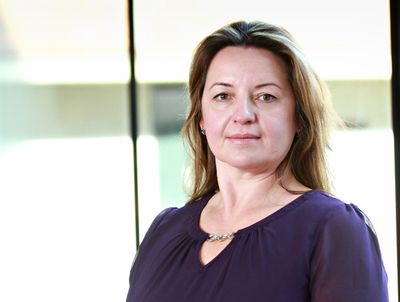
Aston University cyber expert to appear at FinTech event in Birmingham
'FinTech Secured – Next Generation' will showcase the work of leading stakeholders in the research and development of financial technology (FinTech) and security Professor Vladlena Benson will offer insight on illicit money flows and trends in Financial Security Registrations are now open for the event on 7 June 2022 at The Compound, Birmingham. The director of the Cyber Security Innovation (CSI) Centre at Aston University is set to appear at a networking event around financial technology (FinTech). Following the success of their first flagship event of 2022 ‘Secure by Design, Advanced Manufacturing’, Midlands Cyber will launch 'FinTech Secured – Next Generation' on the 7 June 2022. The event will be the first face to face event after the pandemic in Birmingham, bringing together thought leaders and service applications specialists for an evening of industry networking. Professor Vladlena Benson, who also serves on the EU’s Agency for Cybersecurity (ENISA) task force defining the Cybersecurity Skills Framework at the European level, will be joined by contacts from within the cryptocurrency sector and offer insight on illicit money flows and trends in financial security. The event will also showcase the work of leading stakeholders in the research and development of FinTech and financial security. FinTech’s academic innovators, CEOs and company founders, entrepreneurs, contractors, investors and policymakers are encouraged to register now to discuss, participate, network and put their questions to our panel of industry experts. Professor Vladlena Benson, an industry-recognised expert in cybersecurity risk management and director of CSI Centre at Aston Business School, said: “Financial services are core to the UK economy and continue to be a common target for cyber criminals. Challenges to the insurance sector and cyber crime prosecution when crypto assets are involved are emerging and at the CSI we are working to provide forensic and data integrity solutions which help secure the FinTech sector.” User of contactless Europay, Mastercard, and Visa (EMV) may be interested in the insights of Tom Chothia, reader in cyber security at the University of Birmingham, on how the vulnerabilities of Apple Pay and Visa could enable hackers to ’Take £1000 from a locked iPhone’. Registrations are now open to join the cluster at 18:00 hrs on the 7 June 2022 at The Compound, Birmingham.


Aston University helps celebrate Apprenticeship Levy Transfer scheme success
• Celebration to recognise 2,500 apprentices who started work across the region • Aston University worked with the WMCA to increase the number of apprenticeships that SMEs can offer by using levy transfer to help fund apprentices • Levy scheme benefitted nearly 800 local SMEs who have been able to take on apprentices thanks to the funding. Staff from the Aston University degree apprenticeship team attended a celebratory event hosted by West Midlands Combined Authority on 11 May to recognise how a pioneering funding scheme has helped nearly 2,500 apprentices start work within businesses across the region. The Apprenticeship Levy Transfer Scheme, which was set up by the WMCA three years ago, covers small and medium-sized enterprises’ (SMEs) training and assessment costs of taking on an apprentice. It uses money pledged by big business from their own unspent Apprenticeship Levy – a Government charge on all employers with a payroll of over £3 million to pay for apprenticeship training. This unspent money would normally go back to Government but under the initiative it is transferred via partnership with the WMCA to fund apprenticeships at smaller local firms. At the event, which was hosted at The Eastside Rooms in Birmingham and attended by levy transfer employer partners, apprentices and businesses from across the West Midlands, attendees had the chance to hear from SME employers and apprentices about how they have benefited from levy transfer. Over the past three years, the levy scheme has funded apprenticeship training for close to 800 local SMEs and nearly 2500 learners, keeping levy money within the region to help local businesses grow and upskill their staff. Degree apprenticeship development manager, Sheila Rattu, from Aston University, said: “Aston University has always supported its SME community and this has been another great way for us to celebrate our non-levy employers and champion a more diverse set of learners whether through Aston University pledging its own surplus funds or utilising the scheme for our own apprentices.” Aston University has worked with the WMCA to increase the number of apprenticeships that SMEs can offer by using levy transfer to help fund apprentices. This has resulted in securing £381,355 for local businesses. The impact from Aston University’s £200,000 levy pledge has also led to: • 23 apprentices having their training and assessments costs covered • 11 local businesses benefitting from our apprenticeship levy donation • increased job opportunities and a boost in skills and productivity across the region. The WMCA set up the Apprenticeship Levy Transfer Scheme to cover 100% of the training and assessment costs of apprentices at SMEs in the West Midlands, using the unspent levy pledged by big employers. During the celebration event David Gaughan, head of employer services at WMCA, shared the current economic situation in the West Midlands highlighting that employment rates are up to a record high, and unemployment rates have returned to pre-pandemic levels. Mayor of West Midlands, Andy Street, also attended the event to celebrate and highlight the commitment for Levy Transfer investment within the West Midlands. Qualification level in West Midlands remains below national average, however apprenticeships actively act as a bridge to support residents with skills and generate a skilled workforce ready for growth. Andy Street, Mayor of the West Midlands and chair of the WMCA, said: “The Apprenticeship Levy Transfer Scheme has been a resounding success for our region – improving skills, providing jobs, and changing lives. I’m pleased therefore we have been able to take a moment to celebrate what we have achieved around apprenticeships in the West Midlands. “Linking up our local talent with the plentiful opportunities on offer in industry is central to my 100k jobs plan as we bounce back from Covid. We must provide routes into high-quality well-paid employment so that the young people in our region have prospects ahead to excite them and keep them and their families here in the years ahead.” The transfer deal agreed with the Government in 2018 was the first of its kind in the country helping to boost skills, job opportunities and productivity by supporting more young people and adults of all ages into work. For more information about degree apprenticeships at Aston University please visit our webpages. For media inquiries, contact Rebecca Hume, Press and Communications Manager: r.hume@aston.ac.uk

How should we measure faculty expertise? This week the UK provides its answer to this question via its highly significant and formal (government-directed) assessment of academic research - which grades academic teams on a scale of 1* to 4* for their ability to deliver, share and create impact globally outstanding research. This process is known as the REF (the Research Excellence Framework) - and the results will be publicly released this Thursday (12th May) with universities themselves finding out how they’ve performed in advance today (Monday 9th May). The process was last carried out 8 years ago and has been delayed by a year due to the pandemic. Why is the Research Excellence Framework (REF) Significant? The Research Excellence Framework steers the level of UK public funds - allocated via research councils - that will be invested in research for each academic department (or so-called “Unit of Assessment”) for the next few years. It is also a way of comparing performance against other universities that are offering similar research expertise, and of strengthening (or weakening) global research reputations. During the next three days, UK universities will be digging into the detail of their REF gradings and the accompanying feedback. There will be some very nervous university leaders and research heads delving into why this peer-assessed review of their research has not gone as well as they expected and why their percentages in each of the four grade areas have dropped - or even been given the “unclassified” career-damaging stamp. How are the REF Scores for Universities Determined? The measurement process is based on three aspects: Quality of outputs (such as: publications, performances, and exhibitions), Impact beyond academia The environment that supports research The preparation, participation, and assessment process takes a massive amount of time, attention and energy. Last time (2014) there were 1,911 submissions to review. Research teams, designated REF leaders and senior staff will have spent long hours across many months preparing their submissions and making sure they are presenting hard evidence and the best case possible to meet the above criteria at the highest possible level. There are 34 subject areas that are covered in the latest REF - and three tiers of expert panels (some with about 20 or more senior academics, international subject leaders, and research users) will have reviewed each submission and compared notes to come to decisions. How do these Key Categories within the REF Contribute to the Rating for a University? The Research Excellence Framework is actually an intensive and highly important approach to expert assessment. These are the key factors and their definitions (with the assigned weighting of each of the criteria in steering final grades): Outputs (60%): the quality of submitted research outputs in terms of their ‘originality, significance and rigour’, with reference to international research quality standards. This element will carry a weighting of 60 per cent in the overall outcome awarded to each submission. Impact (25%): the ‘reach and significance’ of impacts on the economy, society, culture, public policy or services, health, the environment or quality of life that were underpinned by excellent research conducted in the submitted unit. This element carries a weighting of 25 per cent. Environment (15%): the research environment in terms of its ‘vitality and sustainability’, including the approach to enabling impact from its research, and its contribution to the vitality and sustainability of the wider discipline or research base. This element accounts for 15 per cent. Taking a Closer Look at the Categories - Are We Focusing Enough on Research Impact? In 2014 a formal review was carried out in order to improve and evolve the REF process which made a number of recommendations. Most notably the weighting for “impact” was increased by five percent, with “outputs” being reduced by the same percentage. This is certainly a recognition that the external contribution difference that research makes is more important - but is it enough? Should there be greater emphasis on the return on investment from a beneficiaries and user experience perspective? Many argue that academic research should retain a strong element of ‘”blue sky” experimentation - where outright evidence of impact may take several years (even decades) and so can’t demonstrate such immediate value. A particularly notable benefit of the timing of the COVID-19 pandemic and the effect of this in REF deadlines has allowed the extended assessment period for ‘proof of impact’ from 1 August 2013 to 31 December 2020. This is an extension from the previous end date of 31 July 2020. The extension has been put in place to enable case studies affected by, or focusing on the response to, COVID-19 to be assessed in REF 2021. Going back to the original question: how should we measure faculty expertise? It will be interesting to monitor the views and responses of university leaders and faculty members at the end of this week as to whether they feel that - standing back from it all - this UK-centric method of measurement is the best that can be done, a neat compromise or isn’t really what we really need. For more information on the Research Excellence Framework visit www.ref.ac.uk/ Justin Shaw Justin is UK and Ireland Development Director for ExpertFile and Chief Higher Education Consultant at Communications Management. An authority on University strategy and communications, he has worked in and with leadership teams at UK universities for over 30 years. In his role he has advised universities on how to promote their expertise and on communications strategies related to the REF.



School to provide increased access to preventative health services for young students so they can learn, grow and thrive To address health issues at the earliest and most preventable stages, provide whole child health, and advance health equity in the community, ChristianaCare opened a new school-based health center at Kuumba Academy Charter School in Wilmington on Friday, May 6th. The creation of the center, made possible through ChristianaCare’s partnership with the Community Education Building (CEB), which houses Kuumba Academy, means that students at the kindergarten-through-8th grade school will have increased access to an array of health services. “At ChristianaCare, we recognize the comprehensive health needs of adolescents in our community and are committed to partnering and using our resources wisely and effectively to expand our school-based health centers,” said Bettina Tweardy Riveros, J.D., chief health equity officer and senior vice president of Government Affairs and Community Engagement at ChristianaCare. “We know that childhood trauma adversely affects the ability of children to learn and build healthy relationships and it increases their risk of mental health issues and lifelong chronic disease. The opening of our school-based health center at Kuumba Academy means that ChristianaCare can support medical and behavioral health services and wraparound social care our children need, so we can positively influence their health, their education and their futures.” With the latest opening, ChristianaCare now operates 21 school-based health centers throughout the First State, in partnership with the Delaware Department of Health & Social Services, the Delaware Division of Public Health and several school districts. Kuumba Academy students, who spoke at an event Friday to celebrate the grand opening, will have access through its school-based health center to the following: Comprehensive behavioral health services. Crisis intervention and suicide prevention. Substance use disorder treatment. Tobacco cessation. Nutrition and weight management. Physical examinations. Health screenings. Treatment for minor illnesses and injuries. Reproductive health. In addition, Kuumba Academy students also will have access to resources that help their families surmount obstacles such as transportation, challenging appointment times, and worries about cost and confidentiality. “Kuumba Academy remains committed to meeting the needs of the whole child and family,” said Sally Maldonado, head of school at Kuumba Academy, the mission of which is to provide an innovative learning environment for the whole child from kindergarten through eighth grade. “The opening of this school-based health center means that our students and families will have daily access to the high-quality behavior and health services that they deserve, and we are grateful to ChristianaCare and CEB for their partnership. We are beginning to see ourselves on the other side of this pandemic and we are energized to emerge with these newfound partnerships focused on health and wellness for our village.” ChristianaCare has partnered with CEB and Kuumba Academy on community-focused health initiatives in the past. In February 2021, ChristianaCare provided more than 800 vaccinations to community members and staff at CEB. On February 7th of this year, ChristianaCare vaccinated 38 people, including 19 children, against COVID-19. This added to the more than 6,000 vaccinations that ChristianaCare Community Health has administered since 2021. “At CEB, we understand the importance that health plays on a child’s ability to learn and succeed,” said Linda Jennings, CEO at CEB. “We are beyond excited to partner with Kuumba and ChristianaCare to launch the Kuumba Academy School-Based Health Center at CEB and add to the list of holistic and integrated support we provide to students and their families.” Today’s event coincides with Better World Day, an annual, national event on the first Friday in May. During Better World Day, students showcase their learning about initiatives that they believe will have a positive impact on their community and the world. Through collaboration and acts of service, students learn the power of their voice to make change. About ChristianaCare Headquartered in Wilmington, Delaware, ChristianaCare is one of the country’s most dynamic health care organizations, centered on improving health outcomes, making high-quality care more accessible and lowering health care costs. ChristianaCare includes an extensive network of primary care and outpatient services, home health care, urgent care centers, three hospitals (1,299 beds), a freestanding emergency department, a Level I trauma center and a Level III neonatal intensive care unit, a comprehensive stroke center and regional centers of excellence in heart and vascular care, cancer care and women’s health. It also includes the pioneering Gene Editing Institute. ChristianaCare is nationally recognized as a great place to work, rated by Forbes as the 2nd best health system for diversity and inclusion, and the 29th best health system to work for in the United States, and by IDG Computerworld as one of the nation’s Best Places to Work in IT. ChristianaCare is rated by Healthgrades as one of America’s 50 Best Hospitals and continually ranked among the nation’s best by U.S. News & World Report, Newsweek and other national quality ratings. ChristianaCare is a nonprofit teaching health system with more than 260 residents and fellows. With its groundbreaking Center for Virtual Health and a focus on population health and value-based care, ChristianaCare is shaping the future of health care. About Kuumba Academy Charter School Kuumba Academy Charter School’s mission is to provide an innovative learning environment for the whole child from kindergarten through eighth grade. Our directors, staff, and families share the core belief that parents are children’s primary educators. KACS parents, in partnership with teachers and administrators, believe that every child can maximize his or her learning potential given the opportunity to do so. In response to the outcry from Wilmington parents looking for a high-quality public education and increased access to arts education for their children, Christina Cultural Arts Center leaders, parents, and community supporters took action and were granted a Department of Education charter to create Kuumba Academy Charter School (KACS) in 2001. KACS was the first school model in the state that partnered a public charter school with a nonprofit community organization. Christina Cultural Arts Center (CCAC) and KACS form a unique nonprofit/public school partnership committed to educational excellence. Through the innovative union of academics, arts, technology, and family engagement, each KACS student’s individual learning style is nurtured—resulting in creative learners who are agents of positive change in the community. The CCAC/KACS model is regarded by many as the single most significant achievement in Wilmington’s post public school desegregation history. About the Community Education Building (CEB) CEB was established in 2012 after Bank of America donated the former MBNA Bracebridge IV building to The Longwood Foundation. Living up to its commitment of increasing access to education, the Longwood Foundation created CEB as an independent entity, and transformed the space into an ecosystem to support the social, emotional, physical, and academic development of Wilmington’s youth. CEB is an innovative co-location and shared services model. Focused on supporting the entire family, CEB offers vibrant programs and support systems that provide a sound foundation for each student. It serves as a hub for families by offering services such as healthy meals, life coaches, and mental health services. This model leads to deeper family engagement in their child’s learning and allows schools to focus on teaching and learning, not operations and overhead. CEB is an educational ecosystem that holistically integrates programs and resources for students and their families, ensuring that every student has an equitable opportunity to succeed.



INNOVATORS BRING AI INTO IMAGING SKILLS DEVELOPMENT
Originally from CHT Magazine By Jerry Zeidenberg October 30, 2019 Two Ontario hospital organizations – encompassing six sites – will soon deploy artificial intelligence to help with continuous learning and peer review in their imaging departments. By automatically detecting the types of cases being read by radiologists at St. Joseph’s Healthcare Hamilton and Hamilton Health Sciences, the system will deliver the latest journal findings, as well as personal pattern recognition and error avoidance, direct to their desktops. While radiologists at all Canadian hospitals are experts in their field, with years of education and experience, our understanding of diseases and illnesses is rapidly expanding and new insights are constantly appearing. To ensure that they’re aware of the latest research and best practices, many radiologists conduct journal and web searches while they’re reading cases at the hospital, or at night, from home. “Our radiologists and physicians spend a lot of time reading and searching for literature,” said Shairoz Kherani, who until recently was Director of Diagnostic Services at HHS. (She has since moved to Halton Health Care, in nearby Oakville, Ont., where she is Director of Diagnostic Services and Laboratory.) “Finding the right information can be a daunting process. Now it will be readily available.” “There are hundreds of new findings every day,” said Ian Maynard, CEO of RealTime Medical, of Mississauga, Ont., the company that’s providing the AI-powered solution, called AICloudQA™. “Radiologists can spend two or more hours a day searching independent medical data sources,” said Maynard. “Our solution saves radiologists a significant amount of time and effort by searching multiple data sources simultaneously, relative to the case at hand. We’re like a Google search on steroids for relevant medical data, helping radiologists apply the latest findings to their patient care”. Indeed, RealTime Medical is collaborating with Google Cloud and Sightline Innovation to deliver its AI-fueled solutions. The project is also supported by the National Research Council of Canada’s Industrial Research Assistance Program (NRC IRAP), resulting in a collaboration between these organizations and the hospitals using the solution. Not only does the automated searching save time and contribute to better medical outcomes for patients, but it helps reduce radiologist “burnout”, a serious issue today as radiologists feel overloaded by the demands placed on them, Maynard said. St. Joseph’s Healthcare Hamilton and Hamilton Health Sciences will introduce AICloudQA for peer learning and skills development across their sites by the end of this year. The hospitals will probably start with one site, or one physician group across all sites, and then steadily roll out the solution. The context-sensitive provision of journal articles and other sources of medical information is expected to be of great help to the radiologists, nuclear medicine physicians, cardiologists and other clinicians who use the system. There are 70 to 80 radiologists and medical imaging experts at Hamilton Health Sciences and St. Joseph’s Healthcare Hamilton who will be the prime users of AICloudQA. RealTime Medical’s Ian Maynard said the importance of timely and accurate information cannot be underestimated. As they’re reading cases, radiologists want the latest literature and personal pattern recognition notifications of what to be on the lookout for. “What they don’t want our patients and their families coming back to them later, asking why they didn’t know about the latest finding from Cleveland Clinic for example,” said Maynard. Dr. Karen Finlay, radiologist and Interim Chief of Radiology at Hamilton Health Sciences, agreed that radiologists are currently taking “a lot of time for research”. “If a radiologist steps off a case for five to 10 minutes to go to Google Scholar, that can really add up over the course of a day,” she said. Additionally, for those familiar with the impact of interruptions on the efficiency of the diagnostic process, that time impact can be significantly magnified to the detriment of diagnostic efficiency, which collectively impacts system-wide efficiency. The feed from AICloudQA, by contrast, is instantaneous, meaning the radiologist doesn’t have to stop what they are doing. Notably, the RealTime Medical system also uses AI to scan the readings done by radiologists, and to provide feedback on areas where they might want to focus on or look more closely in future. “It’s like the blind-spot warning system in your car, only it’s anonymously helping you avoid possible gaps in your own reading patterns,” said Maynard. “This is very valuable,” said Kherani. “The system can do intelligent sampling and note where a radiologist may want to improve. It can even spot patterns, time of day and other conditions when they may be more vulnerable.” Dr. Finlay observed that AICloudQA will also transform the process of peer learning at Hamilton Health Sciences and St. Joseph’s Healthcare Hamilton. It will do this, in one way, by increasing the pool of radiologists participating. One of the limitations of current peer review methods is that there’s often a limited number of potential reviewers, especially when a sub-specialty is involved – such as breast or neuro-imaging. RealTime Medical’s cloud-based solution offers the potential to connect with other hospitals across the province and the country, creating a critical mass of peers with a cross-section of experiences in each sub-speciality. This will enable a level of peer learning and best practice sharing that’s simply not possible with site-based systems. Increasing the number of radiologists in the peer learning pool also helps with the issue of anonymity. With site-based solutions, it’s sometimes possible to guess the identity of the radiologist or clinician being assisted, as physicians are often familiar with the reporting styles of their peers. Like all physicians – and people in general – radiologists don’t like to be judged. By making the system more anonymous, the Real Time Medical system makes peer learning more objective, valid and hence palatable for participants. This part of what is being called a “just culture” approach, that physicians are calling for in such solutions. AICloudQA embraces the “just culture” principles that physicians want and deserve. It is not punitive, and the information is not shared. Instead, it’s sent privately to the participating radiologist or clinicians, who can use it for self-improvement. At Hamilton Health Sciences and St. Joseph’s Healthcare Hamilton, the peer-reviewing will be prospective – that is, it’s done before the results are reported to the referring physician. Of course, there are only so many cases that can be reviewed before the process becomes counter-productive. The need for continuous learning must be balanced with the extra burden that’s placed on reviewers. “The trick is to make it a rich and rewarding learning experience, but not burdensome,” said Dr. Finlay. Hamilton Health Sciences and St. Joseph’s Healthcare Hamilton currently aim to review 2 percent of the cases, which is in keeping with other Canadian programs. Kherani noted there are other potential benefits to the AICloudQA platform. It has a workload balancing function, where it uses its intelligence to feed cases to the appropriate radiologist – based on availability and expertise. That not only offers the organization advantages with workflow and wait times, but it also benefits patients, as they obtain the most expert radiologist available. She said the system can eventually support different types of physicians involved in imaging, such as cardiologists, and not only radiologists. “It’s a multi-ology solution.” Dr. Finlay noted the system also supports critical results reporting – so that urgent findings are quickly sent to referring doctors. It can also be tweaked to include notification of unexpected findings – flagging colleagues about problems that were unanticipated, but should be addressed.


VANCOUVER IMAGING TO IMPLEMENT REALTIME MEDICAL AI
ORIGINALLY PUBLISHED IN CHT MAGAZINE VANCOUVER – Vancouver Imaging, a group of over 70 radiologists, has signed on to use RealTime Medical’s smart workload-balancing, physician skills development and error-avoidance platform. Vancouver Imaging, which provides reading services for hospital and out-of-hospital imaging centres, will implement the system in the first half of 2020 at its non-hospital clinics. Vancouver Imaging offers a wide variety of sub-specialty readings across all disciplines, including specialized expertise in emergency trauma radiology. The organization is the only group of radiologists in Canada offering around-the-clock, on-site, sub-specialty emergency reading services. “Emergency radiology is itself a sub-specialty and requires a unique set of skills,” said Dr. Savvas Nicolaou (pictured), the CEO of Vancouver Imaging and director of Emergency & Trauma Imaging at Vancouver General Hospital. “It’s unpredictable, with frequent interruptions. You often have to work with a limited amount of information from clinicians, and it can include everything from head-to-toe, including mass casualty situations that require proactive decision-making.” He added, “You’re always on, and never off.” The Emergency & Trauma sub-specialty requires “appropriate, patient-centered judgement in a matter of seconds.” Vancouver Imaging will deploy RealTime Medical’s AICloudWorks and AICloudQA platforms within their clinics. Collectively, the offerings encompass several AI applications, including high throughput workload balancing. RealTime Medical holds the U.S. and Canadian patents for its workload balancing algorithms and is one of only two patent holders for diagnostic workload balancing, along with the U.S. company, Virtual Radiologic. The cases are assigned to the appropriate radiologists based on sub-specialty, current workload and other parameters, creating an intelligent, diagnostic operations platform that is “context-aware,” a term originally coined by RealTime Medical to describe the capabilities of the platform. For example, radiologists with expertise in neurology will be the first to receive neuro cases, while thoracic or pediatric experts will be the first to receive cases of that type. The system also “balances” the work, to ensure that radiologists are receiving equal caseloads, subject to the case-specific service levels and business parameters established by the group. “The AI additions to this proven platform make it even more advantageous for us as a group as we pursue the delivery of Emergency Radiology services globally,” said Dr. Nicolaou, a world-renowned expert in Emergency & Trauma radiology, often referred to as the Founder and Pioneer of Emergency/Trauma Radiology in Canada. Dr. Nicolaou noted that AICloudWorks is vendor-neutral and can work with any HL7 and DICOM-based HIS, RIS and PACS solutions. “PACS integration can be very problematic,” said Dr. Nicolaou. “Being vendor-neutral is important to our flexibility as a group.” Vendor neutrality is important to Vancouver Imaging as their current environment includes workflows across multiple PACS solutions. Download CHT Reprint of Full Article