
Experts Matter. Find Yours.
Connect for media, speaking, professional opportunities & more.

The Centre for Research in Ethnic Minority Entrepreneurship (CREME) has partnered with NatWest for the Time to Change report It sets out ten evidence-based recommendations for advancing the growth potential of ethnic minority businesses (EMBs) including increasing their GVA contribution from the current £25 billion a year to £100 billion The report is being launched at a special event on 10 May at NatWest Conference Centre in London with keynote speaker Sir Trevor Philips OBE. A new report from Aston University has set out a plan for advancing the growth potential of ethnic minority businesses (EMBs) in the UK. The Centre for Research in Ethnic Minority Entrepreneurship (CREME) has partnered with NatWest for the Time to Change report which sets out ten evidence-based recommendations to promote greater success and inclusion of ethnic minority businesses (EMBs) in finance and business support in the UK. Experts say the implementation of the recommendations could help tackle the multiple barriers faced by EMBs, particularly in accessing finance, markets and quality business support, and could increase their GVA contribution from the current £25 billion a year to £100 billion, highlighting the significant potential of EMBs to the UK economy. The report says that to combat racial inequality, there should be a UK-wide support for ethnic led businesses should be a standard feature of all future plans. This includes integrating them into broader policy agendas of inclusive growth, productivity and innovation. A more inclusive approach to enterprise is key to tackling wider social structural barriers such as unequal access to employment opportunities and product markets, and gender and ethnicity pay gaps. Concerted action is needed to support the growth ambitions of EMBs, particularly in light of damaging consequences of the pandemic for ethnic minority communities. The report calls for a strong action to eliminate the longstanding challenge of discouragement of ethnic minority entrepreneurs from seeking finance and business support. It found EMBs have been particularly hit hard by the Covid-19 pandemic due to the sectors in which they tend to operate and recommends recovery support is focussed on the businesses that need it most. The report also highlights the need for greater accountability of organisations across public, private and third sectors, including business support agencies, finance providers and large purchasing organisations, for their business engagement with EMBs. Professor Monder Ram, director of the Centre for Research in Ethnic Minority Entrepreneurship at Aston Business School, said: “This major report sets out an ambitious yet practical agenda to realise the potential of UK’s ethnic minority businesses. “The entrepreneurial ambition of ethnic minorities can play a crucial role in the UK Government’s vision of ‘Levelling Up’ prosperity across regions, promoting trade opportunities of ‘Global Britain’ and creating a more cohesive society. “Drawing on the latest research and examples of international best practice, the report presents a comprehensive approach to tackling the barriers faced by firms owned by ethnic minority communities. “We pinpoint key challenges and present recommendations – informed by extensive consultation with business support practitioners and entrepreneurs – that invite policy-makers, corporations and entrepreneurs to collaborate in a new partnership to advance entrepreneurial activities and the UK’s diverse communities.” The report calls for central government and local decision makers to develop clear objectives for inclusive entrepreneurship, informed by evidence, and ensure that EMBs can access quality business support that helps them grow. Dr Eva Kašperová, a research fellow at CREME, said: “To address the barriers faced by EMBs and help them realise their entrepreneurial potential will require commitment and leadership from the government as well as local business support ecosystem actors. “The current lack of an explicit UK-wide policy on inclusive entrepreneurship could mean that some parts of the country are left behind in terms of tackling structural inequalities and enabling entrepreneurs from ethnic minority communities and other under-represented or disadvantaged groups to access finance, wider markets and quality business support. “If past experience is a guide, ensuring commitment from key stakeholders may be the biggest challenge.” Andrew Harrison, head of Business Banking at NatWest Group, said: “As the UK’s biggest bank for business, we’re committed to championing small businesses and supporting growth, but we know that there are barriers which disproportionately affect Ethnic Minority Businesses (EMBs). “This is why we aim for at least 20% of the places on our 13 nationwide accelerator hubs to be for ethnic minority entrepreneurs. In 2021, 26% of businesses in our hubs were EMBs. “Only close collaboration can deliver meaningful change to ensure EMBs get the support they need to reach their full potential. Now is the time to accelerate action, and at NatWest we commit to playing an integral role in the change that is required.” The Centre for Research in Ethnic Minority Entrepreneurship (CREME) will share this report, inviting policy-makers, corporations and entrepreneurs to come together in a collaborative and strategic partnership to champion enterprise and advance entrepreneurial activities and the UKs diverse communities, further building an inclusive entrepreneurial eco-system supporting businesses to thrive at a launch event at NatWest Conference Centre in London on 10 May.


ChristianaCare also ranks as No. 2 overall health care employer nationwide for diversity and inclusion, No. 40 overall For the second consecutive year, Forbes magazine has ranked ChristianaCare as one of the best employers for diversity and inclusion in the United States in its list of Best Employers for Diversity 2022. ChristianaCare ranked as the No. 2 employer for diversity and inclusion in the health care industry and the No. 40 employer in the nation overall. “Through purposeful actions, we commit to valuing diversity and fostering an environment for inclusion as we support all caregivers and serve all our neighbors with love and excellence, in our actions and in our words,” said Neil Jasani, M.D., MBA, FACEP, chief people officer at ChristianaCare. “We know when we support our caregivers and they can be their authentic selves, they will be exceptional today and even better tomorrow.” ChristianaCare, Delaware’s largest private employer, has committed to being an anti-racism organization and works to ensure that commitment is reflected through the organization’s policies, programs, and practices. (Read more about ChristianaCare’s anti-racism commitment here.) All employees of ChristianaCare are referred to as caregivers, whether they provide direct patient care or support that care indirectly. ChristianaCare’s inclusion efforts include 10 employee resource groups, which connect caregivers who have a common interest or bond with one another. Formed by employees across all demographics – such as disability, gender, race, military status, national origin, sexual orientation, etc. – these voluntary grassroots groups work to improve inclusion and diversity at ChristianaCare. More than 1,100 caregivers at ChristianaCare participate in employee resource groups. ChristianaCare also has developed LeadershipDNA, a leadership development program that is specifically targeted to underrepresented, diverse populations early in their leadership journey within the organization and is designed to foster professional and career development. ChristianaCare President and CEO Janice E. Nevin, M.D., MPH, has signed the CEO Act!on for Diversity & Inclusion Pledge, which outlines a specific set of actions the signatory CEOs will take to cultivate a trusting environment where all ideas are welcomed, and employees feel comfortable and empowered to have discussions about diversity and inclusion. More than 1,600 of ChristianaCare’s caregivers have also signed the pledge. “This recognition shows that we are making progress in our commitment to invest in our caregivers and to make all who join us feel included,” said Pamela Ridgeway, chief diversity officer and vice president of talent at ChristianaCare. “Taking care of people is what we do, and our ability to help people achieve optimal health is tied directly to how successful we are at embracing diversity and creating an inclusive environment for our caregivers.” Forbes’ Best Employers for Diversity were identified from an independent survey of more than 60,000 U.S. employees working for companies employing at least 1,000 people in their U.S. operations. Respondents were asked to rate their organizations on criteria such as age, disability, ethnicity, gender and sexual orientation equality, as well as general diversity. More than 10,000 companies were reviewed and approximately 2,000 were given a diversity score that is derived from employee surveys and publicly available information. The final list ranks the 500 employers that not only received the most recommendations, but also have the most diverse boards and executive leadership, and the most proactive diversity and inclusion initiatives.


Aston University expert to talk on gender diversity and inclusion at major cyber security event
The Ethnic Minority in Cyber (EMiC) network's flagship event is supported by the Department for Digital, Culture, Media and Sport Attendees will hear from inspirational speakers looking at current and future initiatives to increase diversity in the cyber sector Dr Anitha Chinnaswamy from Aston University will be presenting a talk on gender diversity and inclusion in cyber. An Aston University expert and founding group member of Ethnic Minority in Cyber (EMiC) is set to present a talk at a major cybersecurity event on 28 April 2022. The EMiC network's flagship symposium is supported by the Department for Digital, Culture, Media and Sport and will take place at Edgbaston Park Hotel in Birmingham. Attendees will hear from inspirational speakers looking at current and future initiatives aimed around increasing diversity in the cyber sector and will also be able to provide feedback into the initiative and policies going forward. The symposium will consist of a keynote speech, invited talks, panel sessions and round table workshops. Dr Anitha Chinnaswamy from the Cyber Security Innovation (CSI) Centre at Aston Business School will present a talk on gender diversity and inclusion in cyber and the outreach work of the Centre with schools to increase representation. Simon Hepburn, CEO UK, Cyber Security Council is the keynote speaker. The EMiC network, of which Aston University is a founding member, is a pilot network for Black, Asian and Ethnic Minority cyber academia, professionals and businesses, with the long-term aim of significantly improving representation across the cyber sector. Dr Anitha Chinnaswamy, lecturer in cyber security management at the CSI Centre at Aston Business School, says: “I am looking forward to speaking at such an important event about an ever-important topic in cyber. “While there is a growing cyber security skills gap and high shortage in the UK cyber sector, a recent survey found that only 17 per cent of cyber professionals are from ethnic minority backgrounds across all cyber roles. “The cyber sector remains relatively nondiverse in terms of gender. Just 16 per cent of the workforce across these firms is female, compared to 28 per cent in other UK digital sectors. “Those filling senior roles, typically with six or more years of experience, are particularly nondiverse across a range of characteristics including gender, ethnicity, disability and neurodiversity. “For example, just three per cent of senior roles are filled by women.” Aston University’s CSI centre, led by Professor Vladlena Benson, is the only female-led cyber security centre in the Midlands region and serves on the UK Cyber Security Council (UKCSC), alongside Simon Hepburn its CEO, to promote professionalism standards in cybersecurity. Professor Benson, director of the CSI Centre at Aston Business School, said: “Aston University CSI is actively involved in shaping diversity policy, such as with the launch of the NCS22 strategy in Birmingham and enabling the Cyber Explorer programme as a first schools’ engagement for girls from diverse backgrounds. “As ambassadors we are passionate about working towards closing the gender gap. This will help pave the way for a future of gender diversity, and hopefully other types of diversity, in the cyber security field. “Our work with female students in a highly diverse Midlands’ landscape highlights the challenges that are yet to overcome with the levelling up agenda.” To find out more about the event please visit the site here.


10 resume mistakes to avoid when applying for jobs in Canada
As a newcomer to Canada, applying for your first job can be stressful. The recruitment process may be different from what you’ve experienced back home and it can take some time to understand what will make your application stand out in Canada’s competitive job market. As you look for your first job in Canada, your resume will likely be key in determining whether or not you get the role. In Canada, most companies run the resumes they receive through a resume-scanning software to filter ones that best match the requirements laid out in the job description. If you’re shortlisted, your resume and cover letter will be sent to a recruiter or hiring manager, and they’ll decide whether you’re an ideal candidate for the position. Since your resume will determine the first impression you make on the hiring manager, there’s a lot riding on what you include––or not. Should you really submit that extra page? (Maybe.) Is it okay to exaggerate your credentials? (No!) What about using a fun font? (Better not to.) Here are 10 common resume mistakes newcomers tend to make and guidance on how to avoid them. 1. Using the same resume for different job applications Landing your first job in Canada can take a few months and it’s easy to get overwhelmed and exhausted by the process. When you’re applying to hundreds of job positions, the idea of using the same generic resume for multiple positions can be tempting. However, customizing your resume significantly improves your chances of being selected. Every job is unique––and your application should be too. While your applicant profile won’t vary significantly from one application to the next, the way in which you present it should be customized for each company and job opening. A good way to do this is to look for keywords in each job posting and sprinkle them throughout your resume where they make sense. This will help your resume get past both the resume-scanning software and human recruiters tasked with reading dozens, if not hundreds of applications. Be sure to include experience and behavioural traits mentioned in the job posting. (For example, if the ideal candidate is proficient with a certain type of software, you should definitely mention any experience you have with it.) At the same time, remove experiences and skills that aren’t a match, so whoever reads your resume isn’t distracted by non-essential items. 2. Not reading the job description before creating your resume Reading the job description will give you vital information about the role and the potential candidate an organization is looking for, including key skills and experiences. Not only will this information help you determine if you’re a good candidate, it’ll also help you craft the perfect resume. Many Canadian employers use applicant tracking systems (ATS) to screen resumes and shortlist ones that match the job description. This means it’s essential your application takes the job ad into consideration. As mentioned above, you’ll want to look for keywords and descriptions you can include in your cover letter and resume. It’s also a good idea to include some synonyms and similar words to these keywords. The idea is to include just enough keywords for your resume to pass the ATS, while ensuring that it reads well for a human recruiter. Only include keywords where it makes sense to do so and don’t include too many in a row. Your cover letter and resume should always be grammatically correct, easy to read, and flow naturally. 3. Listing job responsibilities instead of achievements Unlike some countries where resumes are supposed to outline your past roles and responsibilities, in Canada resumes focus on achievements. Listing past job responsibilities doesn’t tell future employers how you performed in a role. The goal is to make you stand out from every other applicant with similar job experience, so make sure you emphasize what you brought to a company or team as an individual. The best way to do this is by listing achievements, citing numbers or data that may grab an employer’s attention, or describing challenges you overcame. This isn’t the time to be modest! You want to share what makes you special. 4. Grammatical errors and typos in your resume Proofread, proofread, and proofread again before hitting “send.” Missing grammatical errors and typos is the worst resume mistake you can make and can cost you a job, even if you’re a good candidate for the role. Grammatical errors will make your resume stand out in all the wrong ways, undermining your credibility and bringing into question your attention to detail. If possible, have a friend, family member, or mentor proofread your cover letter and resume as well. This is even more important if English isn’t your first language. You can use spell check as a guide, but don’t rely on it to catch all your errors. 5. Creating a resume that’s too long or too short One of the biggest questions Canadian job seekers have is how long their resume should be. The exact answer depends on the specific job at hand and an applicant’s work experience, but generally resumes should be one to two pages long. A cover letter should be no longer than one page, but not shorter than three to four paragraphs. The more years of work experience you have under your belt, the closer to two pages your resume can be. If you’re fresh out of school or less than a decade into your career, it’s better to stick to one page. As you progress in your career, it’s also normal to cut out early-career work experience and keep educational experience to a single line. A recruiter for a senior-level position doesn’t need to read about your early-20’s internships or time spent in debate club. 6. Not using action verbs You want to use powerful and impactful language in your resume, which means using action verbs. Action verbs are verbs that imply that the subject (you) is doing something. These are a great way to showcase your initiative, rather than passively saying you were “responsible for” something. Good examples of action words to use in a cover letter or resume include “led,” “managed,” “succeeded,” “surpassed,” “created,” and “delivered.” Try to use a mix of action words and avoid repeating the same ones in consecutive points. 7. Including information not typically included in Canadian resumes In Canada, you’re not supposed to include information like your marital status, religion, gender, age, or sexual orientiation in your cover letter or resume. Unless you’re applying for a modelling or acting job, you’re also not supposed to include a photo or headshot. Not only will this extra information take up valuable page space, it could cause a potential employer to avoid your resume for fear of accusations of unintentional or intentional discrimination. It’s actually illegal in Canada for an employer to ask for information like your sexual orientation, age, or ethnicity in a job application process or interview. To avoid putting a recruiter or employer in an awkward situation, it’s best to stay away from these topics. It’s also considered improper to include salary expectations or irrelevant personal hobbies in your application. In Canada, you can skip writing “references available upon request,” as that’s understood and doesn’t need to be stated. 8. Submitting a cluttered or improperly-formatted resume First and foremost, a resume should always be organized and easy to read. An employer should be able to easily pick out your work experience, any volunteer experience, and educational background. Be sure to leave enough white space around text. This typically means 1 or 1.5 line spacing and wider margins. Job applications also aren’t the time to get creative with fonts. Stick to classics like Times New Roman, Arial, or Calibri with a size of at least 10, but not larger than 14. Avoid mixing fonts or using too many different font sizes. Also avoid going overboard with bolding, underlining, or italicizing. If you need more guidance on formatting your resume in the Canadian style, you’ll find the tips and templates you need in our article on Canadian resumes and cover letters. 9. Listing inaccurate contact information It doesn’t matter how great your resume is if a potential employer can’t contact you. If you’ve recently moved or changed your phone number or e-mail address, make sure the information included in your cover letter and resume is up to date. Either way, proofread this information multiple times to avoid typos. It’s also important to make sure your email address is professional (avoid using contact email addresses like cutiepie468@hotmail.com or rockstar732@yahoo.com). Ideally, it should be formatted firstname.lastname or using your initials and not include any nicknames or slang language. 10. Lying on your resume You may be tempted to exaggerate your experience or accomplishments, but this is a big ethical no-no and a dealbreaker for any potential employer. Many Canadian recruiters and employers will verify your credentials and background through other sources, whether that’s by calling references, conducting background checks, or looking you up on LinkedIn or other social media platforms. If you lie, you’re very likely to get caught. If you’re worried about an employment gap, it’s better to plan to explain it than cover it up with a lie. As a newcomer, landing a first job can be challenging. However, it’s important to avoid the urge to embellish or lie to make your resume more impressive. Remember, most employment contracts include a clause that allows an employer to terminate your position if they find you lied on your job application. That’s not the type of stress you need hanging over your head! Having a good resume is crucial for your job search. Your resume is essentially your first interaction with a prospective employer and it should convey why you’re an ideal candidate for the job. By avoiding these common mistakes, you can make a positive impression and stand out among a pool of candidates to land a job in Canada. Original article located here, published by Arrive. About Arrive Arrive is powered by RBC Ventures Inc, a subsidiary of Royal Bank of Canada. In collaboration with RBC, Arrive is dedicated to helping newcomers achieve their life, career, and financial goals in Canada. An important part of establishing your financial life in Canada is finding the right partner to invest in your financial success. RBC is the largest bank in Canada* and here to be your partner in all of your financial needs. RBC supports Arrive, and with a 150-year commitment to newcomer success in Canada, RBC goes the extra mile in support and funding to ensure that the Arrive newcomer platform is FREE to all.


ChristianaCare also ranks as No. 1 overall employer for diversity and inclusion in Delaware, No. 14 among U.S. health systems (WILMINGTON, Del. – April 23) magazine ranked ChristianaCare as one of the best employers for diversity and inclusion in the United States in its list of Best Employers for Diversity 2021. ChristianaCare also ranked as the No. 1 employer for diversity in Delaware and the No. 14 health system for diversity in the nation. ChristianaCare ranked 121st out of the 500 employers that were recognized. “At ChristianaCare, our mission is simple, but profound – we take care of people,” said Janice Nevin, M.D., MPH, president and CEO of ChristianaCare, which is Delaware’s largest private employer. “And caring for people means that we work together, guided by our values of love and excellence, to bring equity and inclusion to everyone we serve, including our own caregivers. We are committed to building a workforce that reflects the diverse communities we serve, as we aspire to deliver high-quality, accessible care and achieve health equity.” ChristianaCare has committed to being an anti-racism organization and works to ensure that commitment is reflected through the organization’s policies, programs, and practices. (Read more about ChristianaCare’s anti-racism commitment here.) ChristianaCare’s inclusion efforts also include the launch of 10 employee resource groups, which connect caregivers who have a common interest or bond with one another. Formed by employees across all demographics – such as disability, gender, race, military status, national origin, sexual orientation, etc. – these voluntary grassroots groups work to improve inclusion and diversity at ChristianaCare. More than 750 caregivers at ChristianaCare participate in employee resource groups. ChristianaCare also recently launched LeadershipDNA, a new leadership development program that is specifically targeted to underrepresented, diverse populations and is designed to foster professional and career development. “We are grateful for this recognition, which affirms that our organization is committed to taking on the meaningful work to help our caregivers be exceptional today and even better tomorrow,” said Pamela Ridgeway, chief diversity officer and vice president of Inclusion and Diversity at ChristianaCare. “The fact that our caregivers can see the value and feel the impact of our inclusion and diversity efforts illustrates the importance for us to continue to push onward.” Forbes’ Best Employers for Diversity were identified from an independent survey of more than 50,000 U.S. employees working for companies employing at least 1,000 people in their U.S. operations. The employees were asked to give their opinion on a series of statements surrounding the topic of age, gender equality, ethnicity, disability, LGBTQ+, and general diversity concerning their own employer. The survey also gave survey participants the chance to evaluate other employers in their respective industries that stand out with regard to diversity. Only the recommendations of minority groups were considered. Also factored in was diversity engagement amongst managers and diversity among leadership. About ChristianaCare Headquartered in Wilmington, Delaware, ChristianaCare is one of the country’s most dynamic health care organizations, centered on improving health outcomes, making high-quality care more accessible and lowering health care costs. ChristianaCare includes an extensive network of primary care and outpatient services, home health care, urgent care centers, three hospitals (1,299 beds), a freestanding emergency department, a Level I trauma center and a Level III neonatal intensive care unit, a comprehensive stroke center and regional centers of excellence in heart and vascular care, cancer care and women’s health. It also includes the pioneering Gene Editing Institute. ChristianaCare is nationally recognized as a great place to work, rated by Forbes as the 5th best health system to work for in the United States and by IDG Computerworld as one of the nation’s Best Places to Work in IT. ChristianaCare is rated by HealthGrades as one of America’s 50 Best Hospitals and continually ranked among the nation’s best by U.S. News & World Report, Newsweek and other national quality ratings. ChristianaCare is a nonprofit teaching health system with more than 260 residents and fellows. With the unique CareVio™ data-powered care coordination service and a focus on population health and value-based care, ChristianaCare is shaping the future of health care. ####

What We Can Learn From Celebrating Irish-American Heritage Month
About two weeks ago, President Joseph Biden declared March 2021 Irish-American Heritage Month. In an official statement, the president said, "We owe a debt of gratitude to the Irish-American inventors and entrepreneurs who helped define America as the land of opportunity... The fabric of modern America is woven through with the green of the Emerald Isle." As the director of the Center for Irish Studies at Villanova University, an institution founded by Irish Augustinians to educate the children of Irish immigrants, Joseph Lennon, PhD, agrees. He hopes to use this presidential declaration as an opportunity to expand the conversation around what it means to be of Irish descent beyond wearing green and watching the annual St. Patrick's Day parade. The way Dr. Lennon sees it, "there is much more to Irish America than a parade and parties." With such a rich history of Irish immigrants and their descendants living in and contributing to the development of the United States, Dr. Lennon sees March 2021 as an important time to reflect on the "contributions and travails of this ethnicity" in a way that reaches beyond "silly slogans and marketing schemes." He reminds us, "there are over 30 million Irish Americans. The Irish contributed massively to the infrastructure of industrial America and later to the civil, education and business worlds—not to mention the Catholic Church." Dr. Lennon also hopes this month will help redefine the larger notion of what it looks like to be Irish and American. He notes that "38% of African Americans have Irish ancestry," but acknowledges that "this is a complicated issue," since in some cases this may stem from abuses suffered during the American practice of slavery. It is important conversations like these that Dr. Lennon wants to bring to light during Irish-American Heritage Month, and he stresses that "more research is needed into understanding this history—as well as the unions between Irish immigrants and northern-bound African Americans during the late nineteenth century." Per Dr. Lennon, these historical events are tied to our present day. He sees a need for "the level of recent racist attachments to Irishness... to be confronted with historical knowledge and anti-racist understandings." With such important issues in mind, Dr. Lennon wants to impart that "the Irish diaspora is global and diverse and Irish culture runs much more deeply and broadly in America than we might guess by just attending the St. Patrick's Day celebrations." He adds, "I'm curious to see if the conversation continues past St. Patrick's Day this year." Despite most St. Patrick’s Day events and programs being virtual in 2021, there are many opportunities to celebrate Irish-American heritage this year. At Villanova, the Center for Irish Studies is hosting a virtual St. Patrick's Day Celebration called "Links Across the Atlantic" on Wednesday, March 17, from 10:00 a.m. to 9:00 p.m. This free celebration will include live entertainment segments, from an Irish breakfast tutorial with study abroad director Mary Madec to lunchtime laughs with actor Johnny Murphy, and will culminate with a streamed Irish music fèis (or festival) in partnership with Tune Supply, featuring We Banjo 3, the Friel Sisters and One for the Foxes! For more information or to register for this event, please click here.



Why are U.S. corporate boards under-diversified?
Research tells us that firms with diverse workforces generally outperform those that do not. And in recent years, corporate America has taken significant strides towards greater heterogeneity in the employee base. But a problem remains at the top. U.S. boardrooms remain overwhelmingly Anglo Saxon and male. No less than 81 percent of the Standard & Poor (S&P) 1500 Index directors in America today are white men. White women account for 11 percent, while ethnic minority men make up 6 percent. Meanwhile, female minority board members account for just 2 percent of the total. For businesses, this is becoming problematic, not least because institutional investors and regulators like the Securities and Exchange Commission have started asking firms to open up about their processes in selecting board members. Where diversity is a criterion, firms are required to be transparent about specifications and frameworks. Shedding light on this issue is new research from Grace Pownall, professor of accounting, and Justin Short, assistant professor of accounting, at Emory University’s Goizueta Business School. Together with Zawadi Lemayian of Washington University, they parsed 12 years of data on gender, ethnicity, and salaries from the S&P 1500 to build a composite picture of who’s who and who’s paid what in U.S. boardrooms. What they found points to a systemic shortage of female and minority executives making it onto shortlists for board appointments. But that’s not all. Once women and minority men do make it onto the board, there’s another roadblock waiting for them: they are not getting promoted at the same rate as their white, male counterparts. There seem to be two complex dynamics at play, said Short: a glass ceiling effect hampering the upward trajectory of Black, female, and other minority executives, and what he and his co-authors call “myopic” bias on the part of corporate America. “We developed two hypotheses that might explain what’s behind the lack of diversity on boards,” explained Short. “The glass ceiling hypothesis comes from what we see as a shortfall of women and ethnic minorities in the workforce relative to white men—so the theory here is that these groups just aren’t getting promoted to the point where they would be considered for board positions.” “The alternative hypothesis we worked on was that there might actually be a plentiful supply, but that companies just don’t see directors from different backgrounds as being as valuable in the same way,” he said. “And we would put this down to some kind of institutional myopia or bias at the very highest echelons of business.” To put these hypotheses to the test, Short and his colleagues first collected demographical data on American board members from a database compiled by Institutional Shareholders Services. Here they were able to determine the gender and ethnicity of individuals. They also ran a simple statistical regression on salaries using data from S&P. Then they compared the two. “Economic theory tells us that if there’s a high demand for diverse directors—women and ethnic minorities—and there’s a low supply of them, then these directors will be able to command higher salaries than others,” said Short. “It’s a simple case of supply and demand, and minorities will come at a greater premium.” Looking at the S&P 1500 data, they found that female and minority directors were indeed getting paid more on average than white male counterparts in other companies. And when they analyzed this more closely, Short and his co-authors found that these salaries were in general being paid by larger, more successful firms. “We can see that women and minorities are commanding higher compensation than the average white male director across the S&P universe of 1500 companies, and it’s the bigger, better paying firms that are hiring them,” Short said. “So that tells us that the top companies are proactively trying to build diversity in their boardrooms. At the same time, it shows there is a deficit of supply in this talent pool—the so-called glass ceiling dynamic.” To understand whether bias or institutional myopia might also be limiting the prospects of Black, female, and ethnic directors, Short et al. also looked at differences in compensation within the same company, and here they found something striking. While they made more on average than the typical white male director in U.S. firms, minority directors were being paid around 3 percent less than their direct counterparts – the white male directors on the same board. All this scrutiny begs the questions: What is going on in the American boardroom? And why is there still such a stark lack of diversity in the upper echelons of business in the U.S. today? “This tells us something important,” said Short. “Once these directors make it to the board, for most of them that’s it. They don’t advance or achieve promotion at the same rate.” This could be due to bias or what Short calls a Rolodex effect: “Maybe it’s because they didn’t go to the same school as the chairman of the board, or weren’t connected socially in the same way, so they don’t appear in the Rolodex of candidates with right or familiar credentials to get promoted within the board,” he said. “We know it’s not about hard skills or aptitudes because the data shows us that women and minority directors typically hold more qualifications than their counterparts. But for whatever reason, once they are on the board, they fail to advance in the same way as white men.” Interestingly, Short and his colleagues found that there was a very small number of women and minority directors sitting on the boards of multiple companies in the U.S. “Pulling it all together, we see that there’s a generalized shortage of women and ethnic group candidates in the U.S.,” Short said. “Successful companies are proactively on the lookout for them and offer higher compensation to attract them. “But there seems to be a glass ceiling effect acting as a bottle neck for talent. We also see that minority directors become a bit stuck once they’re on a board. The upward momentum tails off relative to their white, male colleagues. This could be due to bias or myopic thinking.” All of this should provide rich food for thought for the most senior decision-makers in U.S. enterprises, according to Short and his co-authors. With the pressure on to drive board-level diversity in corporate American, leaders need to be cognizant of the roadblocks or cut-off points to tie to ethnicity and gender. “Diversity is something we urgently need to enable and nurture in the United States. Without diversity, creativity and innovation can stall, and in business you run the risk of deferring to group think—sourcing ideas and perspectives from the same small pool of shared experience or expertise,” said Short. “It’s encouraging to see that diversity has increased over time and the largest companies are proactive. But there are still vast gaps of representation on the board compared to the workforce. There’s still work to be done because diversity in American business should be commonplace.” If you are a journalist looking to cover this research or to learn more about the diversification of corporate boards in America, then let our experts help. Grace Pownall, professor of accounting, and Justin Short, assistant professor of accounting, at Emory University’s Goizueta Business School are both available for interviews; simply click on either expert's icon to arrange a time today.


The 'XX' factor: Women voters and what candidates need to know for future elections
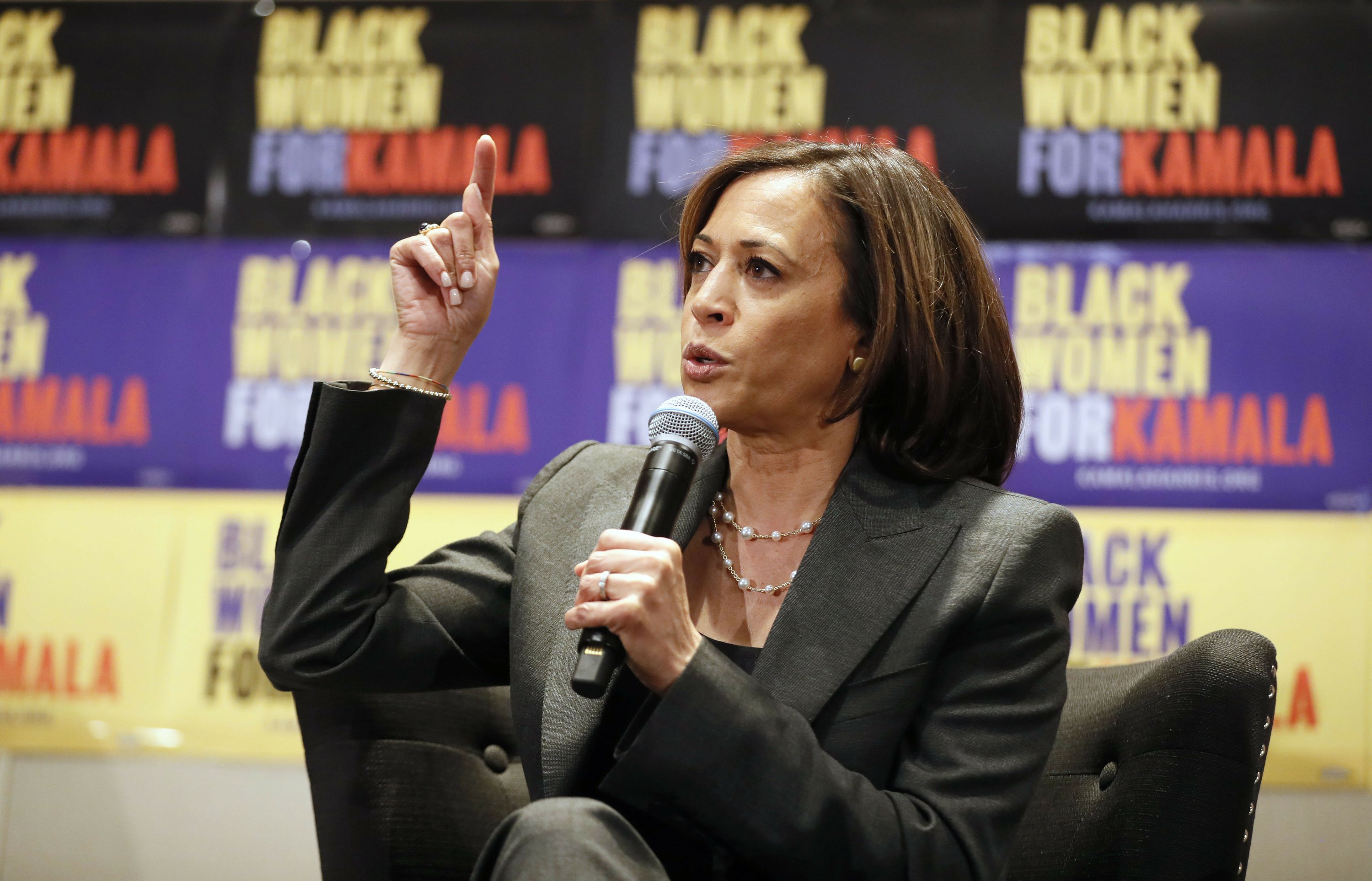
As unique as the 2020 election was, it was still similar to every other election, where winning comes down to isolating key demographics, swaying them to lend support and getting those voters out to the ballot box. There are many different blocks of voters in America based on income, education, race, geography and gender. Gender among them is key, and on Nov. 3, women ensured their votes were counted. Ask Virginia voter Mary Hayes why Joe Biden defeated Donald Trump, and she does not hesitate. “Women won this election!” says Hayes, 56, a mother of three and Biden supporter from Leesburg, Virginia. In particular, she credits two categories of voters that she herself is part of: Black women and suburban women. Trump had begged the latter group — some of whom he’d alienated by referring to them as “housewives” — to “please, please” like him. But that plea rang hollow, she says. “We showed America that suburban women are diverse, and are a beautiful collection of ethnicity, race, marital status, occupations and many other categories,” Hayes says. “Suburban women mobilized, determined to remove Trump from office.” And, she says, they succeeded. Nov. 16, Associated Press Women did play a key role in the vote as it rolled across the country. But now, the balance of power in Washington will rely on two key Senate races in Georgia. And no doubt, both sides are strongly courting female voters. If you are a journalist looking to know how important a role gender will play in the January runoffs and what all four of the candidates need to do to secure those votes, then let an expert from Augusta University help with your story. Dr. Mary-Kate Lizotte is an expert in political behavior and the implications of gender differences in public opinion. She is available to talk about the 2020 election and the upcoming Senate runoffs in Georgia. Click on her name to schedule an interview.



Exploring the direct link between drug abuse and the internet
Drug overdoses account for a staggering number of deaths in the United States. In 2017 alone, more than 70,000 U.S. citizens died from opioid overdoses, a number that eclipses the death toll due to traffic accidents, gun violence, or HIV in the same year. Among the academic community, media and national organizations such as the Drug Enforcement Agency (DEA) and the Food and Drug Administration (FDA), there is a growing consensus that the internet plays a key role in enabling access to illicit drugs in America. As far back as 2005, the DEA referred to the internet as an “open medicine cabinet; a help-yourself pill bazaar to help you feel good.” But until now, the jury has been out about whether online platforms actually drive substance abuse among internet users. Research by Anandhi Bharadwaj, vice dean for faculty and research and Roberto C. Goizueta Endowed Chair in Electronic Commerce, along with doctoral candidate Jiayi Liu 22PhD, casts compelling new light on this issue. Their paper, Drug Abuse and the Internet: Evidence from Craigslist, was published in March 2020. By using data from Craigslist, one of the largest online platforms for classified advertisements, the researchers found a significant uptick in drug abuse in areas where Craigslist had become active in the last decade or so. Launched in San Francisco in 1995, Craigslist is a location-specific site that has been spreading to different U.S. cities in a staggered fashion since 2000. As the site has grown, so too have the number of illicit, user behaviors that exist in tandem with the many positive services it offers. Among these are prostitution and the sale of controlled or illicit drugs. The internet: a pipeline for narcotics Historically the sale and purchase of illegal drugs has happened in physical spaces—streets and urban areas prone to certain boundaries and limitations, not to mention the risk of arrest or potential violence. The internet has changed the game in two key ways. First, there is the simple mechanism of buyer-seller matching. Dealers and buyers transact online, which is more straightforward, faster and cuts through many of the risks associated with physical interaction. Simply put, it’s easy to buy drugs online. Second, there is the issue of anonymity. Research has documented how human beings behave differently when we believe our identity is shielded from others. We are prone to take more risks under the cloak of anonymity. Working off these two premises, Bharadwaj and Liu hypothesized that the internet not only facilitates the sale and purchase of drugs—it must also proactively spur supply and demand. To put this to the test, they documented the U.S. cities and counties where Craigslist has become operational since 2000 and then analyzed three other key variables: total number of people admitted into drug treatment facilities in different counties between 1997 and 2008, county-level drug abuse violations, and number of deaths caused by overdose per county. Eager to understand how this new access to drugs online might also be impacting people at a demographic and socioeconomic level, the researchers merged this data with statistics on age, ethnicity and poverty from the U.S. Census Bureau. Additionally, the authors compiled information about income and unemployment, crime and arrests from the Bureau of Labor Statistics and the FBI respectively. What they found was stunning. Not only is there a marked increase in drug-related treatments (14.9 percent), violations (5.7 percent) and deaths (6.0 percent) wherever Craigslist becomes operational in a city or county; the momentum of increasing drug abuse also continues to grow over time in that area. And that’s not all. Economic disadvantages—poverty, unemployment and lower standards of education—are typically associated with a higher risk of substance abuse. But the findings suggest that in fact it’s the wealthier, higher-educated groups—especially among whites, Asians, and women—that are more likely than others to engage in drug abuse once Craigslist starts operating in an area. In fact, they conclusively found an uptick in this kind of behavior where crime and drug abuse had been less prevalent previously. In other words, where drugs are becoming readily available online, there is a dramatic increase in new and first-time users. If you are interested in learning more or if you are a journalist looking to cover this research – then let our experts help. Professor Anandhi Bharadwaj is the Vice Dean for Faculty and Research and the Goizueta Endowed Chair in Electronic Commerce and Professor of Information Systems, Operations Management. To arrange an interview with – simply click on her icon today.


Continuing to Learn and Explore American History
In the United States, students take several American history courses throughout their K-12 experience. So, why should students bother to continue taking American history courses in college? For Southern Utah University's Dr. Mark Miller, the answer is simple. “When I teach a history course, I am always looking for ways to point out how an issue or event in the past is relevant to something going on in today's world,” said Dr. Miller. “With this year's presidential election going on there have been plenty of examples to tie into regarding past politics and past political crises we have lived through as Americans.” Dr. Miller has conducted some exciting research that will be published in 2021. His upcoming articles includes: “Polygamy under the Red Cliffs: Women’s Voices and Historical Memory at Centennial Park” in Utah Historical Quarterly, “A River Again: Fossil Creek, Desert Fishes, and Dam Removal in the American Southwest” in Pacific Historical Review, and “‘One Territory, Many Peoples:” Racial and Ethnic Groups and the Development of Arizona Territory” in The Smoke Signal. “I think my work on plural marriage and environmental history shows that history is never dead,” said Dr. Miller. “It reveals that in current debates history is quite important. What happened in the past still informs the present. Since both of these topics are quite controversial today, I think historians provide a valuable service by exposing the history behind debates over allowing polygamy in modern America or whether we should make trade offs in development and water use to preserve unique species. Knowledge of people who practice plural marriage and their religious history as well as the history of preservation efforts toward endangered species is vital to all participants in the debates.” Dr. Mark Miller is a professor of history and the department chair of History, Sociology, & Anthropology at Southern Utah University. His research and teaching specialties include United States History, American West, Borderlands, Indigenous Culture and History, World Civilization, and Latin America. He has published articles and books on modern American Indian History, most recently Forgotten Tribes (2006) and Claiming Tribal Identity (2013). He has published articles on race and ethnicity, on indigenous identity and politics in several journals. Dr. Miller is familiar with the media and available for an interview. Simply visit his profile.

