Experts Matter. Find Yours.
Connect for media, speaking, professional opportunities & more.

Finding Truth among the Tweets. Our expert weighs in on the role social media has during war.
With the Israel-Hamas war raging on, social media provides a source of information for many individuals to stay up to date. Across platforms there are reliable sources but there are also those with an agenda to spread false truth, blatant lies and sew doubt with doses of 'mis' and disinformation. It's a topic Goizueta Business School professor David Schweidel is watching closely. "We are seeing once again the need for the regulation of social media platforms," says Schweidel. " Platforms have a financial incentive to serve up the most provocative and arousing content and content moderation is often at odds with financial goals." Social media is being flooded with content, much of it misinformation, and social platforms are unwilling or unable to effectively moderate what’s being posted. "Beyond the likely reduction in revenue, implementing content moderation at scale is expensive and difficult. If viewed from a short-term financial perspective, allowing for a free for all is less costly and will result in more user engagement, which drives revenue," Schweidel adds. And it is not as if legislators and lawmakers are not aware. As of today, social media platforms aren’t liable for the content posted on them (under the FCC’s Section 230). Two recent lawsuits sought to challenge section 230, but the Supreme Court declined to take such action. These challenges were based on platforms actively promoting content through their algorithms, thereby going beyond simply being intermediaries providing access to content posted online by others. Some, such as the ACLU, view this as allowing for free speech online. There's a lot more to know, such as: The challenges in identifying real vs. fake content Which platforms are being effective in moderating content How US and EU laws vary in terms of regulating misinformation on social media platforms And that's where we can help. David A. Schweidel is Professor of Marketing at Emory University’s Goizueta Business School. He's a renowned marketing analytics expert focused on the opportunities at the intersection of marketing and technology. David is available to speak with media regarding this important topic, simply click on his icon now to arrange an interview today.



UC Irvine NATO expert available to discuss Finland membership
Heidi Hardt, associate professor of political science at UC Irvine, is a scholar whose expertise is in transatlantic security, US foreign policy, national security and European security and defense, including NATO, the EU and OSCE. She is the author of the book, NATO's Lessons in Crisis: Institutional Memory in International Organizations (Oxford UP, 2018). She recently completed a 2021-2022 Council on Foreign Relations International Affairs Fellowship for Tenured International Relations Scholars (IAF-TIRS). During the year, she worked for the US State Department (NATO Desk). Professor Hardt can be reached via email at hhardt@uci.edu.

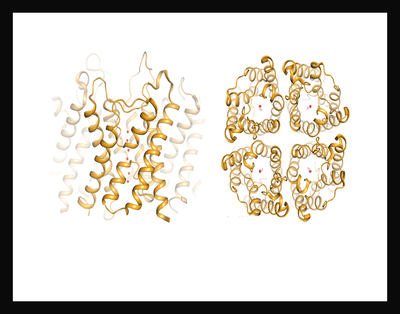
• Leading scientist wins €2.2 million ERC Advanced Grant • The five-year project will explore early dementia interventions through understanding how an aquaporin water channel regulates glymphatic clearance • ERC Advanced Grant funding is amongst the most prestigious and competitive of the EU funding schemes. A world leading scientist in the College of Health and Life Sciences at Aston University has been awarded a €2.2 million ERC Advanced Grant to understand how the movement of a protein known as aquaporin-4 in the brain can help slow cognitive decline. The FORTIFY project, which will run for five years, is led by Professor Roslyn Bill in the School of Biosciences. She will apply her discovery of the movement of aquaporin-4 to understand how the cleaning mechanism in the brain works during sleep. The research will focus on how aquaporin-4 controls the glymphatic system, which is the mechanism that allows us to clear waste products from our brains while we sleep. Her hypothesis is that the movement of aquaporin-4 in the brain changes the effectiveness of this cleansing mechanism - which lessens as people age. A greater understanding of this process could lead to an early intervention treatment that could slow the onset of dementia, such as Alzheimer’s and Parkinson’s Diseases. ERC Advanced Grant funding is amongst the most prestigious and competitive of the EU funding schemes, providing researchers with the opportunity to pursue ambitious, curiosity-driven projects that could lead to major scientific breakthroughs. Professor Bill said: “Every three seconds someone in the world develops dementia and there is no cure. I want to stop that from happening. By understanding the molecular mechanisms of brain waste clearance, we have an opportunity to develop medicines that can slow the onset of dementia, very much in the same way that statins are prescribed to control heart disease”. Roslyn Bill discovered that the water channel protein aquaporin-4 increases the permeability of brain cells to water after a brain or spinal cord injury. Around 60 million people a year suffer such injuries following falls or accidents. For example, after a skiing accident in the French Alps in 2013, Michael Schumacher suffered a severe head injury. He was placed in a medically induced coma and underwent several surgeries to treat his injuries. Until now doctors have only been able to manage the symptoms of brain injury (swelling on the brain) through interventions that may require surgery. Professor Bill and her team are due to start clinical trials in summer 2023, to test a method to stop the swelling from happening in its tracks, building on her discoveries. Roslyn’s new ERC-funded project, FORTIFY, will focus on how aquaporin-4 controls fluid flow in the healthy, uninjured brain. In this round of Advanced Grants, the European Research Council (ERC) is awarding €544 million to 218 outstanding research leaders across Europe, as part of the Horizon Europe programme. The grants will support cutting edge research in a wide range of fields, from medicine and physics to social sciences and humanities. The grant is awarded to established, leading researchers with a proven track-record of significant research achievements over the past decade. The funding will enable the researchers to explore their most innovative and ambitious ideas. Mariya Gabriel, European Commissioner for Innovation, Research, Culture, Education and Youth, said: “ERC grants are a top recognition and a significant commitment from our best researchers. The €544 million funding puts our 218 research leaders, together with their teams of postdoctoral fellows, PhD students and research staff, in pole position to push back the boundaries of our knowledge, break new ground and build foundations for future growth and prosperity in Europe” Maria Leptin, ERC President, added: "These new ERC Advanced Grantees are a testament to the outstanding quality of research carried out across Europe. I am especially pleased to see such a high number of female researchers in this competition and that they are increasingly successful in securing funding. “We look forward to seeing the results of the new projects in the years to come, with many likely to lead to breakthroughs and new advances.”



Aston University students take home two prizes from annual European Union simulation event
EuroSim is an annual international intercollegiate simulation of the European Union More than 150 students, from universities in North America and Europe, participate every year The Aston EuroSim Team was awarded best debater in two categories. Aston University’s EuroSim team has returned from this year’s event with two awards. The Aston EuroSim Team was awarded best debater in the European Parliament Committee on Employment and Social Affairs (EMPL) and best in special roles (media/journalist). EuroSim is an annual international intercollegiate simulation of the European Union (EU). The purpose of it is to provide a framework for a simulation of the EU decision-making on major current issues. More than 150 students, from 16 universities in North America and Europe, participate in the simulation. All students are assigned roles, including members of the European Parliament (MEPs), members of the European Commission, heads of government and national ministers. The purpose of this module is to educate students about the inner workings of the European Union in order to enhance the learning experience for students. This year it was hosted by the University of South Wales in Newport, the first time the event has been held in the UK. Dr Patrycja Rozbicka, a senior lecturer in politics and international relations who is the lead for Aston EuroSim and was European associate director for EuroSim experience (2019-2023), said: “Here at Aston University, the EuroSim module is one of the most innovative modules of the Aston Politics and International Relations Department’s undergraduate and MA programmes. Amin Hassan, a final year international relations and English language student at Aston University, who took part in EuroSim, said: “I would like to extend my gratitude to my team from Aston University, and special mentions to my lecturer Dr Patrycja Rozbicka and student director Chris Burden for organising and inviting us to this memorable trip. “Representing Max Orville (my alter ego), MEP and Renew Europe Group, I worked together with my party and committee members with shared interests and values to ensure that no one is left behind by the proposed Social Climate Fund, which has recently been approved in real life. “After three days packed with negotiations and meetings, we are pleased that the Social Climate Fund has been approved and we strongly believe that it will support vulnerable people, households, micro-enterprises and transport users at risk of facing higher costs as the bloc introduces new climate measures.” Chris Burden, European students director at EuroSim and PhD researcher at Aston University, said: “I had the greatest honour attending the EuroSim2023 meeting at the ICC Wales as the European student director and part of Team Aston. “The work that goes into this conference is unbelievable, and the students had a fantastic time debating and simulating questions surrounding social and climate action within Europe. “This Transatlantic conference is the highlight of any year. “Thank you to our fantastic team from Aston University who brought home the two awards for their efforts.” The next EuroSim will be held next year in Brockport, northern New York State, USA. If you want to read more about the Aston EuroSim, click here.

‘Shining a light on Colour Blindness’ competition winner unveils light sculpture at Aston University Winner 10-year-old Leo Evans helped unveil the feature of footballer Tyrone Mings The competition helped highlight the challenges of colour blindness - particularly in sport. A light sculpture named after the Aston Villa footballer Tyrone Mings has been unveiled at Aston University as part of a campaign to help raise awareness of colour blindness. In the UK there are approximately 3 million colour blind people (about 4.5% of the entire population), most of whom are male. Worldwide, there are estimated to be about 300 million people with colour blindness. The competition, ‘Shining a Light on Colour Blindness’, was launched by non-profit organisation Colour Blind Awareness and supported by various football club charities - including the Aston Villa Foundation. Young supporters were asked to take part by drawing a colourful picture of their favourite footballer. The winning entry was then made into a light feature. The winning artwork, which came from the Aston Villa Foundation, was transformed into a light feature and was selected to go on display inside the Aston University Vision Sciences building in the paediatrics bay, as part of the ongoing partnership between the Aston Villa Foundation and Aston University. Colour Blind Awareness is a non-profit organisation designed to highlight the relevance and impact of colour vision deficiency amongst those that live with it - including the challenges in sport. The organisation is part of an EU-funded project, Tackling Colour Blindness in Sport. Competition winner, 10-year-old Leo Evans from Erdington, helped unveil the light sculpture alongside Professor Anthony Hilton, pro-vice-chancellor & executive dean of the College of Health and Life Sciences. Professor Hilton said: “We are delighted for Leo, his winning drawing of Tyrone Mings looks fantastic as a light sculpture and we are proud to host it in our Vision Sciences building for our students, staff and visitors to enjoy, whilst raising awareness about colour blindness.” Commenting on his winning drawing, Leo said: “I am very proud that my picture won the competition and that Tyrone Mings liked it. I now better understand what being colour blind means and I hope my picture has helped someone else.” Cheryl Evans, Leo's Mum, said: “I couldn't be prouder of Leo and the fact that his drawing is of his favourite player Tyrone Mings makes it even more special. This competition has meant that as a family we have had many conversations about colour blindness and it has educated us all more on this topic. Well done Leo!” Kathryn Albany-Ward, CEO at Colour Blind Awareness CIC, said: “Aston Villa Foundation’s entry from Leo charmed the judges and who were delighted to award it first prize. We’re very grateful to Aston University for hosting the light feature and can’t wait to see it displayed. We hope its location in the Vision Sciences Department will help raise more awareness of a condition which affects 8% of boys and 0.5% of girls worldwide, impacting on their education and ability to perform to their best in sport if left unsupported.” Leo was met and congratulated by the head of the Aston Villa Foundation, Guy Rippon, and foundation manager, Ross Alexander. Ross said: “The Aston Villa Foundation would like to say a big congratulations to Leo for his amazing achievement! This is a really proud moment for Leo and we are thrilled that he was inspired by his favourite Aston Villa player. “It has also been a pleasure to have supported Colour Blind Awareness, who have done some great work in highlighting such an important and relevant topic during our coaching team’s workforce development. The support has culminated in a competition that was won by Leo, a participant in one of our Football in the Community holiday sessions. “The stunning light feature of Tyrone Mings will now be housed at Aston University for all to see and we are grateful for the University’s ongoing support with the Club.”


Brexit changes caused 22.9% slump in UK-EU exports into Q1 2022 - research
Researchers at Aston assessed the impact of the Trade and Cooperation Agreement between the EU and the UK UK exports fell by an average of 22.9% in the first 15 months following the deal Variety of UK products exported to EU down by 42% Research by the Centre for Business Prosperity at Aston University has shown that UK exports to the EU fell by an average of 22.9% in the first 15 months after the introduction of the EU-UK Trade and Cooperation Agreement, highlighting the continuing challenges that UK firms are facing. Building on earlier work funded through Aston University’s Enterprise Research Centre, the researchers found that a negative effect on UK exports persisted and deepened from January 2021-March 2022. According to the research, the UK has also experienced a significant contraction in the variety of goods being exported to the EU, with an estimated loss of 42% of product varieties. The researchers say this, combined with an increased concentration of export values to fewer products, has serious implications for the UK’s future exporting and productivity. The authors are calling for an urgent national debate from politicians about the UK’s post-Brexit trade arrangements. The researchers assessed the impact of the TCA, which allows goods to continue to be bought and sold between the UK and EU without tariffs in the wake of Brexit, by creating an ‘alternative UK economy’ model, based on the case that the UK had remained within the European Union. By comparing the model UK’s exports and imports with actual figures for the UK, they could accurately isolate the impact which the new trade rules were having. “What we are seeing is the effect of Brexit on exports; and that is persisting. It’s not diminishing, and exports have yet to show signs of recovering,” says Professor Jun Du of Aston University. “Until this serious problem with exports is openly acknowledged and discussed, we won’t see any necessary actions being taken.” Unlike exports, an initially significant drop on EU imports to Britain has recovered during the same period, suggesting that UK businesses and consumers have quickly adjusted to new rules. This stands in contrast to the persistent decline in UK exports, which the researchers believe is caused by more fundamental factors. Professor Du said: “It seems that the UK can buy, but it can’t sell – and that’s reinforcing the problem of Brexit. A reduction in import bottlenecks might help exports to rebound, but this recovery is likely to be offset by the rising costs of imports.” Researchers found that as many as 42% of the product varieties previously exported to the EU have disappeared during the 15 months after January 2021. This, they say, is principally caused by a large number of exporters simply ceasing to export to the EU, while the remaining exporters are streamlining their product ranges. Co-author, Dr Oleksandr Shepotylo, says: “The product varieties that have disappeared are mostly those with low export value – we know this because the average export value increased as the number of varieties declined. These products are the ones typically exported by small firms or new exporters, or are exported to new markets. And It’s those smaller businesses that would normally export much more in future, as they grow their volumes and products – so that’s the UK’s future export pipeline being affected, which has bleak implications.” Professor Du says: “The evidence we present here shows the real loss of Brexit, the overall competitiveness of the UK as a global trader. The considerable contraction of the UK trade capacity, combined with an increased concentration of export values to fewer products, signify some serious long-term concerns about the UK’s future exporting and productivity. Debate is essential so that the UK can start to address its current challenges. Of course, no one is suggesting going back into the EU, but there are collaborations, conversations and discussions that must be had. If the UK’s political leaders don’t acknowledge the facts, they are setting the course towards even longer-term problems.”


New research highlights the economic importance of live music to Birmingham and the West Midlands
It found local authorities need to more explicitly recognise the economic, social and cultural value of live music and live music venues The report calls for dialogue between music stakeholders and government The research is published by Aston University and supported by the AHRC-funded Creative Industries Policy and Evidence Centre. New research by the Birmingham Live Music Project (BLMP) highlights the huge economic value of Birmingham’s live music scene, the vital contribution small independent venues make, the ongoing impact of the pandemic and what is needed to support the recovery of the sector in the city. The research is published by Aston University, with colleagues from Newcastle University and Birmingham City University, and supported by the Arts and Humanities Research Council (AHRC)-funded Creative Industries Policy and Evidence Centre. In 2019, the UK’s live music sector was valued at over £1.3 billion. After almost a decade of strong growth the sector helped push the UK music’s overall GVA from £3.5 billion in 2012 to £5.8 billion in 2019, the outbreak of the global pandemic brought it to a near standstill. This paper explores, through a local lens and a focus on Birmingham, the challenges stakeholders across the live music sector have faced in recent years. The research finds that small live music venues are the lifeblood of this financial, cultural and community asset for the city. In 2019 Birmingham helped bring 877,000 music tourists to the West Midlands, with a total cultural spend in the region of £252,000,000 (UK Music). But during summer 2020, the research published today found, Birmingham’s live music capacity of approx. 98,000 dropped by around 75%. This impacted ticket prices, the availability of events across the city, and the economic viability of shows – while some venues could stay open, they couldn’t make a profit. The report makes clear independent venues need protection and support particularly in the wake of the pandemic. It calls for dialogue between music stakeholders and government in advance of the 2025 review of the EU-UK Trade and Co-Operation Agreement to identify the best means of reducing friction and support for the efforts to improve the Agreement, for example work on border force training, expanding the number of checkpoints where carnets and Music Instrument Certificates can be checked, reducing bureaucracy for live event transport and haulage, examination of further measures to develop the ’dual registration’ system for specialist hauliers to ease pressure on touring. Dr Patrycja Rozbicka, a senior lecturer in politics and international relations at Aston University and one of the report authors, said: “Local authorities need to more explicitly recognise the economic, social and cultural value of live music and live music venues, including grassroots venues, to their region(s). “Environmental, health, culture and city regeneration strategies have to take account of the existing and huge potential contribution of live music to the city and region. “What is needed is a cross-policy approach, implementation of a Night-time Industry Impact Assessment and dialogue between local authorities and the music sector, where the recently launched West Midlands Music Board could play a role. “We would like to see the creation of information hubs to support local venues and audiences with initiatives such those undertaken by the Liverpool City Region including a Music Fund which supports activities of the Liverpool City Region Music Board as well as helping with funding applications and advice. You can read the full report here.


Inflation: Simple Causes But a Complicated Cure JULY 2022 We face a wave of strikes, intended to restore the purchasing power of wages in face of inflation. But strikes cannot succeed in restoring everyone’s purchasing power. In the near term, inflation’s impact on living standards can be significantly mitigated only by importing more and so increasing our trade deficit, financed by foreign borrowing. Unwillingness to do that means we are likely to prolong the wave of strikes and so suffer a bruising recession created by restrictive monetary policy. This will cause yet more damage to living standards. However, debt-funded importing of consumption items in order to maintain living standards is poor policy longer-term. It can’t stop the harmful redistribution effects of inflation that are already emerging. Most important, it doesn’t address the longstanding source of our lagging living standards – too little economic growth and economic resilience due to our failure to grow productivity. Without increased productivity, debt-funded consumption repair will cumulate to tomorrow’s fiscal crisis. Therefore, we face a very difficult policy challenge. We must act to support living standards over the next year or two, mitigate the social problems that inflation is already causing and, simultaneously, divert our priorities (and our continuing borrowing) to foster much improved productivity growth. Causes This is a simple story. Today’s inflation demonstrates that we are poorer than we were three years ago. The value of what we, collectively, produce and earn, has shrunk, relative to the cost of the things that we seek to consume. Inflation constricts our consumption options to what we can now afford. We are poorer for two reasons. First, because we produce and earn less domestically, and second, because the things that we don’t produce but import have become scarcer, forcing us to pay more to get them. • Brexit caused an immediate and seemingly permanent devaluation of Sterling, raising the costs of everything that we import. It also seemingly permanently reduced our exports to the EU, our largest trading partner. No new trade possibilities are similar in scale, so there is a long-term loss of income. Moreover, increased non-tariff barriers have raised the cost of imports from the EU beyond the exchange rate effect. • The pandemic has reduced the worldwide supply of all sorts of goods, therefore raising their prices. This is due to supply chain problems, the zero-Covid China lockdown, the reduction in UK output because a significant portion of the population is out with Covid at any time. Crops are left rotting in the fields because there aren’t enough domestic agricultural workers and, of course, no more EU farm workers. • The war in Ukraine has escalated the costs of energy and food grains. In the future it will propel redirection of domestic resources to the production of war material, which is not edible. Consequences Inflation not only makes us, collectively, poorer, it differentially distributes the pain. • Everyone in the UK could go on strike to try to raise their wages enough to maintain their real consumption. But as the pie has shrunk, that is impossible. The extra money people get will simply chase the same, smaller amount available and the prices of goods and services will rise further. If the ensuing price rises provoke further wage increases, we chase our tails. This is the wage/price spiral that the Bank of England fears. • Some groups have more wage bargaining power than others. Perhaps the railway unions can indeed hold the country to ransom and regain their purchasing power. But then others, less empowered than railway workers, will become greater losers. • Inflation causes a flight to real assets – houses, commodities – whose values float up with the price level. Because ownership of real assets is very unequally distributed, the asset-rich minority is likely to come out better than before while the asset-poor majority lose even more. The purchasing power of people living on fixed-return assets such as retirement annuities would be devastated by a wage/price spiral. Similarly, as interest rates rise with the price level (or even faster if the Bank of England has its way), debtors on floating rate loans will be hit hard. • Different geographic areas have different mixes of people who would be gainers and losers from a wage/price spiral, exacerbating our substantial regional inequalities. Cure Part 1: Near-Term Mitigation How is it possible to offset the fall in current consumption which is provoking the wage/price spiral? People can consume more than they earn only by borrowing. The key is how that borrowing is undertaken. Households could borrow from private UK lenders, or the state could sell bonds to UK citizens and give the proceeds to other UK citizens to spend. But if all they can spend it on is the total value of UK output, that pie is shrinking. More money from borrowing would only raise prices, that is, add to inflation. Total UK consumption can exceed the value of UK output only if the extra is imported. Because the imports are paid for in another currency, borrowing to pay for those imports must be borrowing from foreign sources. The debt (public and private) that the UK owes others must rise by the value of the excess consumption. However, consuming more today by adding to our overseas debt isn’t a miracle cure. • Not everything can be imported. Domestic services of all types are provided, well, domestically. GP visits and houses and hotel rooms and haircuts will cost more as a result of wage inflation, no matter the amount of net foreign borrowing. These price increases will continue to provide some impetus to a wage/price spiral and make it more likely that the Bank of England will end up pushing the economy into recession to stop it. • The problem with debt is that you have to pay it back, and in the meantime, you pay interest on it. More consumption today means surrendering a greater amount of potential consumption in the future. Only if there is strong UK productivity growth will this foreign debt repayment not cause significant future trouble. Sadly, the UK has lagged in productivity growth among advanced economies for many years. Cure Part 2: A More Productive Economy The policy most likely to maintain social cohesion in the near term, and greater prosperity in the longer term, is a tricky two-step. We need to borrow to defend most people’s consumption in the next year or two, but then switch the budget to support growth and productivity-enhancing investment. Unless we do this, our debt repayment obligations will grow to unmanageable levels and meanwhile our level of consumption will continue to shrink relative to that of our peers. Our political system has not been good at tricky two-steps. It can manage short-term stimulus, funded by debt. But for decades the UK has failed to invest sufficiently in physical, technological and human capital to create productivity comparable to our peers. The inflation crisis is a call to action. Not only to mitigate current deterioration in living standards but to build a modern economy that sustains rising living standards into the future.

The EU-UK Trade and Cooperation Agreement is costly, what does the UK need to do? | Aston Angle
As far as trade is concerned, the EU exit has been rather costly to the UK. At the Centre for Business Prosperity, we have been tracking the performance of UK trade in recent years. The UK’s trade dropped sharply during COVID. Like other nations, this was due to the global recession and supply chain disruptions. However, the UK failed to recover and enjoy the boom, despite the tariff-free terms of trade in goods set out in the EU-UK Trade and Cooperation Agreement (TCA). The UK now trades less with the EU, its largest trading partner, than in 2019. During the same period, Germany and the Netherlands grew trade with the EU by nearly a quarter, and US trade with the EU has also grown considerably. Reports suggest, including those from the British Chambers of Commerce, that exporting to the EU has become much more costly and in some cases, unviable. It appears that the “certainty” provided by the TCA has not reversed the declining trend of the UK-EU trade so far. Our new paper for the Enterprise Research Centre (ERC) has found that UK exports experienced a large, negative, statistically significant decline in 2021 at the end of the transition after the EU-UK Trade and Cooperation Agreement (TCA) was put into force. We estimate that this amounts to a 22% reduction in exports to the EU and a 26% reduction in imports from the EU over the first half of 2021, relative to the counterfactual scenario of the UK remaining in the EU. How did this happen? After all, the TCA ensures that goods moving between the UK and the EU have no tariffs or quotas, so long as the rules of origin are complied with. Rules of origin help you work out where your goods originate from and which goods are covered in trade agreements. Our research found that non-tariff measures (NTMs) were responsible for the adverse TCA effect on UK trade with the EU and that the magnitude of loss was significant. It was equivalent to a reduction of £12.4 billion in UK exports over the first six months period of 2021. This equals 16% of UK total exports in the first half of 2019 and 70% of the documented total reduction in the EU exports in the same period. A number of factors can be attributed to the decline of UK exports to the EU. In particular, the increased trade frictions that occurred mainly due to sanitary and phytosanitary (SPS) and technical barriers to trade (TBT) as a result of entering the TCA. Sanitary and Phytosanitary (SPS) measures refer to the EU controls to protect animal, plant or public health. And technical barriers to trade (TBT) refers to mandatory technical regulations and voluntary standards that define specific characteristics that a product should have, such as its size, shape, design, labelling/marking/packaging, functionality or performance. On average, for the first six months of 2021, a 1% increase in SPS resulted in a 13–15% reduction in exports to the EU, most notably in the food and drink, wood and chemicals sectors. Furthermore, a 1% increase in TBT led to a 2–3% reduction in exports, especially in metals, equipment, machines and miscellaneous industrial products. What next? Since the post-Brexit dysfunctions are now diagnosed, in theory we could move on. The UK can directly tackle the trade challenges, so long as other things, such as politics, do not stand in the way. Fundamentally, what needs to happen is the removal or relief of the root causes coded by the TCA – the trade barriers newly erected. This is a key task; it is challenging but not impossible. Trade frictions due to the SPS measures are an acute problem of Brexit. Reducing some of the non-tariff measures between the EU-UK would help by exploring other mechanisms such as equivalent SPS measures or other ways to reduce businesses burden to a minimum. The technical barriers to trade are more complicated and challenging and they could potentially cause significant damage to the UK economy. Despite its limitation, maintaining and broadening the established arrangements of the current TCA provision, through some form of mutual recognition of specific practices or international regulations for selected sectors, should be the ambition of UK government to help ease the TBT trade barriers. Future EU-UK co-operation is critical and mutually beneficial but requires political will and strong leadership. In the short and medium term, supporting firms should be the priority, especially small- and medium-sized firms that are productive enough to have exported to the EU in the past, but now face hurdles to continue exporting. These firms tend to be limited on resource but have the infrastructure and ambition to internationalise. Targeted support for specific challenges could be also fruitful. The UK Department for International Trade Export Support Service, the British Chambers of Commerce and local growth hubs have the expertise and experience to help firms export. Therefore, resources should be made available to allow for customised and responsive support with exports, as well as taking advantage of technologies that can identify and reach businesses who require support. Provision should also be made to collect feedback on the quality of the support provided, to enable further improvement. Helping businesses continue to access EU markets, while enabling the economy to take advantage of welfare-enhancing benefits from trade, remains imperative. Given the economic benefits of the roll-out, the new free trade agreements are expected to be limited and effective only in the long term. UK domestic policies should be the focus to improve the competitiveness of exporters and their ecosystem. By Professor Jun Du Director of the Centre for Business Prosperity Professor of Economics, Finance and Entrepreneurship, Aston Business School Lecturer in Politics and International Relations School of Social Science and Humanities Dr Oleksandr Shepotylo Senior Lecturer, Economics, Finance and Entrepreneurship, Aston Business School

Aston University academic named President of the College of Optometrists
Professor Leon Davies named incoming President of the College of Optometrists Professor Davies will serve a two-year term as President Seven new Council members have also been elected onto the board Professor Leon Davies of the School of Optometry at Aston University has been named as the College of Optometrist’s incoming President. The College of Optometrists also welcomed seven new Council members at its AGM, held during its clinical conference, Optometry Tomorrow 2022, on 20 June. Incoming President, Professor Leon Davies FCOptom, is currently a board member and previous Vice President. Leon is professor of optometry and physiological optics at Aston University and former editor-in-chief of the College’s peer reviewed CPD journal, Optometry in Practice. Academically, Leon has over 60 publications and has been awarded over £2.5m of funding for his research from UKRI, the EU, charities and a number of multinational organisations. His research is focused on presbyopia and the restoration of ocular accommodation to the ageing eye. He is also a recipient of the College of Optometrists Research Fellowship Award, and was awarded the inaugural Neil Charman Medal for research excellence in optometry, optics and vision science. Professor Leon Davies said: “I am extremely proud to be elected President of the College and honoured to represent the profession at such a crucial time, with transformational changes underway including the General Optical Council (GOC) Opticians Act review and the College’s newly published Workforce vision. “I am determined to continue the profession’s advances to ensure optometrists across the UK are at the centre of new models of eye care, and that their competences and skills are recognised and used to their full potential. “I would like to pay tribute to our outgoing President, Colin Davidson FCOptom, for his unstinting work and dedication over the last two years and offer thanks to all our departing Board and Council members for their dedicated service." The School of Optometry’s portfolio of courses range from undergraduate, to masters taught and doctoral level research, as well as a wide range of optometry continuing professional development options. All programmes are informed by professional practice and are led by an inter-disciplinary teaching team of optometrists, dispensing opticians, ophthalmologists, and vision scientists. Reflecting this highly practical ethos, students on the School’s undergraduate programmes benefit from substantial hands-on experience in the onsite Aston Eye Clinic, one of the largest at any UK university, with over 6,000 patient episodes completed every year. For more information about the School of Optometry at Aston University please visit our webpages.