
Experts Matter. Find Yours.
Connect for media, speaking, professional opportunities & more.

Understanding Ukraine and Russia's long history - let UMW's expert help
As the war in Ukraine now extends past a week, many people are trying to understand the reasoning behind Russia’s invasion of its neighbor. Like most of Eastern Europe, the ink that draws the modern borders we see now on maps is still not dry. If you are a journalist looking to know more about this topic and how the past is now affecting the future of Russia, Ukraine and likely Europe – then let our experts help with your stories. Steven Harris is a professor in the University of Mary Washington's Department of History and American Studies. He is a sought-after expert on modern Russian and European history. Dr. Harris is available to speak with media about this important aspect of the crisis in Ukraine – simply click on his icon now to arrange an interview today.


As the world watches Russia invade Ukraine – what’s next?
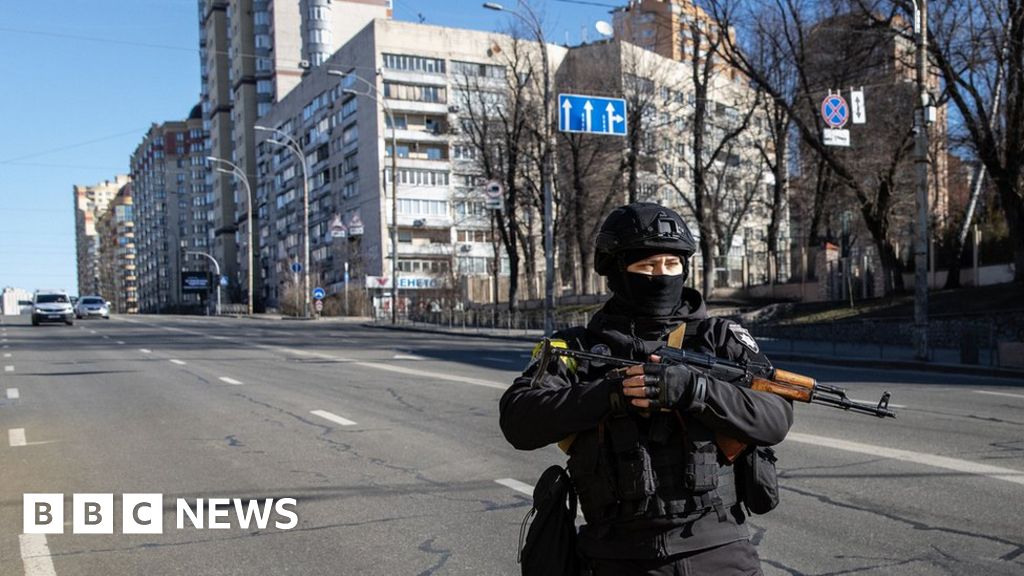
For a week the world has watched as Russian forces have pounded Ukraine from the sky and a full-on ground invasion is now underway. Support in the form of sanctions, speeches and supplies has poured in from NATO and non-NATO allies from across the globe. Ukraine’s army is out-manned and out-gunned, but their resistance has so far defied expectations. But how will this outright show of unprovoked forces that has shocked the world impact global relations moving forward? If you are covering the ongoing invasion of Ukraine by Russia, then let our experts help with your questions and coverage. University of Mary Washington Political Science and International Affairs Professor Jason Davidson is an expert in American foreign and security policy, and international security. To arrange an interview with Dr. Davidson, simply click on his icon.

UCI expert sources for the Russia/Ukraine Conflict
On Friday, Feb. 25, 2022, UCI’s School of Social Sciences hosted a webinar titled, “Understanding the Russia-Ukraine Crisis.” Several of the experts below offered perspective on key issues surrounding the escalating conflict between Russia and Ukraine. You can watch or listen to the webinar here: https://www.socsci.uci.edu/newsevents/news/2022/2022-02-25-understanding-the-russia-ukraine-crisis.php UCI faculty members available to comment, and their areas of expertise, are found below. Matthew Beckmann, Associate Professor, Political Science. Professor Beckman studies the organizational structures and operational strategies presidents can use to pick their team, invest their time, focus their attention, channel their effort, discipline their thinking, coordinate their subordinates, and, most importantly, make decisions. Contact: beckmann@uci.edu Jeffrey Kopstein, Professor, Political Science. In his research, Professor Kopstein focuses on interethnic violence, voting patterns of minority groups, and anti-liberal tendencies in civil society, paying special attention to cases within European and Russian Jewish history. As pertains to the Russia/Ukraine conflict, he can speak to politics in Russia and Ukraine, Authoritarianism, NATO and the transatlantic alliance, and European Union policy. Contact: kopstein@uci.edu Erin Lockwood, Assistant Professor, Political Science. Professor Lockwood’s research areas include international political economy and global financial politics. She can speak to questions related to economic sanctions, financial sanctions/financial infrastructure and payments systems more generally (for example, the prospect of cutting off Russian access to the SWIFT financial communications system.) Contact: eklockwo@uci.edu David Meyer, Professor, Sociology, Political Science and Planning, Policy & Design. Professor Meyer’s research examines the relationships between social movements and the political contexts in which they emerge. Topics surrounding the Russia/Ukraine conflict that align with his expertise include sanction strategy; the resistance strategy that might emerge in Ukraine in the face of occupation; the history of the Cold War and its influence today; and the possibility of a powerful peace/isolationist movement emerging in the U.S. Contact: dmeyer@uci.edu Gustavo Oliveira, Assistant Professor, Global & International Studies. Professor Oliveira is a specialist in global political economy and critical geopolitics, focusing on the BRICS countries (Brazil, Russia, India, China, and South Africa) and international commodity markets, especially agricultural trade and natural resource governance. He can speak to the basis of the Russia/Ukraine conflict on natural resources, and the repercussions of the conflict for international commodity markets, inflation, and disruptions to global food supply chains. He can also speak about the anti-war movements in Russia, Europe, the United States, and broader political repercussions of the conflict in Brazil, Latin America, and the U.S. Contact: gustavo.oliveira@uci.edu Stergios Skaperdas, Professor, Economics and Director of the Center for Global Peace and Conflict Studies. His general area of research is political economy, the interaction of economics and politics. Among other issues, he has studied conflict and wars, the role of the modern state in economic development, and the interaction of globalization and geopolitics. Contact: sskaperd@uci.edu Etel Solingen, Distinguished Professor, Political Science and Thomas T. and Elizabeth C. Tierney Chair in Peace and Conflict Studies. Solingen studies the reciprocal influence between international political economy and international security, globalization and its discontents. She can discuss the crisis in terms of historical precedents (of international crises), the utility of sanctions, bargaining in crisis, Russia’s economic decline and how it bears on the current crisis. Contact: etel.solingen@uci.edu Media Contacts: • Tom Vasich, Communications Officer, UCI | 949-285-6455 | tmvasich@uci.edu • Heather Ashbach, Executive Director of Marketing and Communications, School of Social Sciences | 719-651-3224 | hashbach@uci.edu


Despite months of tension, weeks of pleas and diplomatic efforts – a full scale invasion of Ukraine by Russian forces has occurred. The situation is developing by the minute and media are scrambling to explain what has happened, why it happened, and tell stories of how this invasion is impacting people not just in Ukraine, but in America too. It’s why experts like Florida Atlantic University’s Robert Rabil is front and center to explain what’s going on to reporters. According to Robert Rabil, a political science professor at Florida Atlantic University, the crisis between Russia and Ukraine has been building since the 1990s. "This is on the account of two factors. The first factor is the expansion of NATO to the border of Russia, merely, especially to the Baltic states of Latvia, Lithuania and Estonia," Rabil said. "The second factor is from a Russian perspective they believe that they treated Russia like a bygone power." Rabil said with increased sanctions underway and formal diplomatic channels not working, the west could be pushing Russia to deepen its ties to other regimes globally. "It might go to Iran and it will support Iran in acquiring or hastening the acquisition of nuclear weapons," he added. "It will deepen its embrace with China." February 23 – WPTV NewsChannel 5 The invasion of Ukraine is historic and could lead to escalations of violence in other parts of Europe and further. And, if you are a reporter looking to cover this ongoing story – then let our experts help. Robert Rabil, Ph.D., is an expert in political Islam, terrorism, U.S. foreign policy, and U.S.-Arab relations. He is available to speak with media about the current situation in Ukraine, simply click on his icon now to arrange an interview today.


Podcast: Germany’s caution over Russian aggression ‘disappointing’ NATO
Russia’s threat to Ukraine has highlighted differences between east and west Germans over handling of Russia, and the country’s cautious foreign policy Aston University academic explains why German soldiers shooting at Russian counterparts would be seen as a “tremendous failure” New Chancellor Olaf Scholz faces massive challenges including how to handle Covid-19, “crumbling” infrastructure, and climate change targets. Germany without its stalwart former leader Angela Merkel faces a number of huge challenges – not least the threat of Russia invading Ukraine. While Germany wants to provide leadership within the European Union, its diplomatic stance over Russia is at odds with many other countries within NATO. Those are the views of Dr Ed Turner, a reader in politics at Aston University, who was interviewed in the latest episode of the 'Society matters' podcast series, presented by journalist Steve Dyson. The episode, subtitled 'What Germany's new government means for the UK, Europe and Russia', follows a political shift following the departure of Chancellor Angela Merkel last year after 16 years in charge, after the defeat of her Christian Democratic Party. Dr Turner said the immediate priority for new Social Democrat Chancellor Olaf Scholz was “undoubtedly the crisis in Ukraine and the positioning of large numbers of Russian troops on Ukraine’s border, and the real worry that Russia will invade”. He said Germany wants the issue addressed, “but is doing so in a way that is really very cautious and is disappointing to many of Germany’s allies”. Dr Turner, who is also co-director of the Aston Centre for Europe, said Germany’s “very different approach” was reflective of its history with Russia. He explained: “There is a strong sense that Germany owes a significant debt, has a particular responsibility towards Russia for the losses incurred in World War One and, particularly, in World War Two. “The perception is that German troops once again firing at Russian soldiers would be a tremendous failure. Germany also places a strong emphasis on diplomacy as a way of engaging in foreign relations rather than hard military interventions.” There were also “economic angles”, he added, with Germany needing Russian energy at a time when it was committed to phasing out coal and nuclear power. Dr Turner, whose fascination with Germany began when he cycled through the country as a teenager, said a “carrot and stick” balance was dividing the country, with 68 per cent of west Germans but only 34 per cent of east Germans last year supporting EU sanctions against Russia. This reflected “really big disparities” more than 30 years after German reunification, with 60 per cent of east Germans feeling they are treated as second class citizens. Dr Turner said post-Merkel Germany faced big challenges including handling Covid-19, large parts of German infrastructure “really crumbling” with a big backlog of investment needed, and a pledge to move faster towards net zero emissions. But he added that UK-German relations in the wake of Brexit were not on the list of big things. “Good relations between the UK and Germany will depend on the nature of the UK’s relations with the European Union,” he said. “If the UK is at loggerheads with the European Union, in particular if there was a worsening of the situation in relation to the Northern Ireland protocol, then relations with Germany would get worse.” But Dr Turner said there was “huge affection” for the UK in Germany. “Germans are willing to disentangle the UK from Brexit and to say ‘we want to move on and don’t think badly of you’. I really want to see bridge-building between the two countries over the coming years.” Dr Turner said Germany remained “nervous” of the advance of the far right, especially if numbers of refugees coming to Germany were to grow. He said Angela Merkel would be remembered for Germany’s “humane response” to the 2015 refugee crisis, but others were “much more critical” over her policy. This, he added, led to German society becoming divided and the far right gaining ground. But Dr Turner acknowledged Mrs Merkel as a “remarkable leader who really broke the mould” as the first woman Chancellor and first from the east. In contrast, her successor is seen as a “steady hand on the tiller” as he heads a “traffic light coalition” of Social Democrats, Greens and Liberals. Episode 6 in series 2 of the ‘Society matters’ podcast and all previous episodes can be found HERE.


What the Basque Country tells us about 'levelling up' | Aston Angle
What the Basque Country tells us about using local governance to level up By Dr Caroline Gray Lecturer in Politics and International Relations School of Social Science and Humanities January 2022 In a recent interview on his vision of ‘levelling up’, Michael Gove, Secretary of State for Levelling Up, Housing and Communities, cited the Basque Country as one example of where ‘things have been done well’. The Basque Country, an industrial region of northern Spain with a population of just over two million, is widely admired for having undergone a remarkable, industry-focused economic transformation since it was hit by the decline of heavy industry in the 1980s. It is now one of the leading regions in Europe not only in terms of GDP per capita, but also in having a low percentage of population at risk of poverty or social exclusion. Within Spain itself, critics usually attribute this to the way the Basque fiscal autonomy model works, enabling the region to keep more of its own wealth to itself than other similarly prosperous regions in Spain – a form of internal ‘levelling up’ at the expense of other regions. This, however, is not the only contributing factor to the Basque Country’s economic transformation. Effective governance has also played a key role. What takeaways from the Basque experience might be relevant to levelling up in the UK and the devolution framework needed to facilitate it? Through my research on the Basque governance systems, I’ve discovered that some of the most valuable lessons relate to how multi-level governance works within the Basque region itself and how that contributes to economic and social transformation. Devolution does not stop with the powers devolved to regional governments or authorities; the relationship between different stakeholders and layers of governance within a region or locality is equally important. If the UK government wants to learn from what the Basque Country has done well, it should consider the following: 1. Devolution beyond metropolitan areas needs to be flexible and adaptable to place-based specifics In his July 2021 Levelling Up speech, Boris Johnson announced that levelling up would involve extending devolution beyond cities with new deals for the counties. The government must stick to the commitment it made then to shape new devolution deals with local input, avoiding one-size-fits-all approaches. The Basque Country provides valuable evidence for why it’s beneficial to shape governance approaches to the economic geography of an area. As one of Spain’s 17 regions called ‘autonomous communities’, the Basque Country is, in turn, divided into provinces (Araba-Álava, Bizkaia and Gipuzkoa) and municipalities. Counties, which don’t have an administrative body, but which do house county development agencies, make up an additional level between the provinces and municipalities. The economic activity of two of the provinces (Araba-Álava and Bizkaia) is typical of metropolitan areas in that it is centred heavily on their capital cities (Vitoria and Bilbao, respectively), where the provincial councils are based. However, in the third, Gipuzkoa, economic activity is more distributed across different hubs in the province. As a result, in Gipuzkoa, the county development agencies, created in the late 1980s, have acquired a particularly important role, as interviewees from the Basque Institute of Competitiveness explained to me. The counties map particularly well onto the different industrial areas in the province, thanks to the fact that they were designed with the bottom-up input of municipal leaders working together with the provincial council. The county development agencies have, in turn, become a key channel via which the provincial council in Gipuzkoa can reach SMEs more easily, as they are closer to the firms. Such local networks are particularly important in non-metropolitan areas where economic activity can be more dispersed. This is why the UK government must make sure any new devolution framework it designs is flexible enough to allow for local input and adaptations to place-based considerations. 2. Bottom-up, collaborative dynamics are essential to the design and implementation of placed-based strategies Basque economic development has undoubtedly benefitted from the fact that the regional government draws upon input from different levels of administration and a range of other public and private stakeholders in the region when designing its industrial policies. Experiments in collaborative governance have become increasingly innovative over the years, not only at regional but also provincial and local level, designed to reach beyond the largest firms and to engage wider society. The county development agencies in Gipuzkoa, for example, used to provide services to SMEs in an essentially one-way direction – for example, advising them on how to apply policy – but have since evolved more into facilitators of networks for cooperation and mutual learning among public and private actors at county level. This not only facilitates more efficient implementation of regional policies, but also channels local feedback upwards into the policy-making process, adding value. Collaboration among different tiers of governance and different areas, rather than competition, has been the goal of such approaches. Therefore, the UK government needs to reconsider the increasingly competitive dimension of current devolution arrangements. Having areas compete against one another for centrally controlled, often short-term pots of money doesn’t facilitate the formation of robust, collaborative partnerships that could ultimately add value and increase efficiency. Finally, institutional stability is important. From the Regional Development Agencies (RDAs) to the Local Enterprise Partnerships (LEPs), which are now under review, there has been frequent chopping and changing in the institutions and policies meant to tackle the UK’s place-based inequalities in recent decades. The Basque Country shows what can be achieved with a more stable, longer-term institutional and policy framework and vision. If it is to have a meaningful impact in tackling inequalities, the Levelling Up White Paper must provide the basis for a longer-term devolution framework that goes well beyond the current government term, with a clear allocation of resources and responsibility.


Troops are amassing along both sides of the border separating Russia and Ukraine. Diplomatic efforts from leaders from across Europe are in high gear as the concerns of an invasion and potentially all-out war between Russia and Ukraine could send the region into chaos. As the world watches and both sides gather allies for support, there are a lot of questions to ask, history to explore and explanations needed about what’s going on now and why. Dr. Craig Albert, associate professor of political science and director of the Master of Arts in Intelligence and Security Studies at program at Augusta University, sat down with ABC News to answer some of those lingering questions. Q: What is the reason for Russia’s interest in Ukraine? "If NATO allows Ukraine to become a member of NATO, which is what Putin is fearing here, he might think that they might want to go to Belarus next. Where else are they going to go? Georgia, the Republic of Georgia? Putin does not want NATO literally bordering the Russian federation. He thinks that’s a threat and would allow NATO to put missiles and missile defense in those countries, which as you know, is much more of a direct threat to Russia." Q: Maybe it comes down to the possibility of military threats. Why does the US care what’s happening way over there? "So, when you have any type of European possible land mass war, conventional war, that’s going to be a cataclysmic problem for the world. I think of the untold numbers of dead that would happen in some type of land conventional war, kinetic operations on Europe. The last time we had something like that was the wars in the former Republic of Yugoslavia in the early ’90s. That resulted in up to 300,000 to 400,000 dead in two or three years. So, we live in a globalized world, so if you have Eastern or Central Europe that gets confronted with a massive conventional war, that’s going to effect the security and the economy of the entire world including us." Q: So, is it just the US being world police again? "Each side is viewing the other as acting aggressively and I think both sides are just trying to sure up their defenses, just trying to make sure that they can handle the current situation. The United States is entering in what’s called a status quo power cycle, where the United States just wants the power of the international arena to stay where it is.” With news reports of an invasion potentially happening soon, there will be an enormous amount of coverage on this topic – and that’s where the experts from Augusta can help with your stories. Dr. Craig Albert is director of the Master of Arts in Intelligence and Security Studies at Augusta University. He is a leading expert on war, terrorism, and American politics. This is an important national and international issue. Albert is available to speak with media – simply click on his name to arrange an interview today.


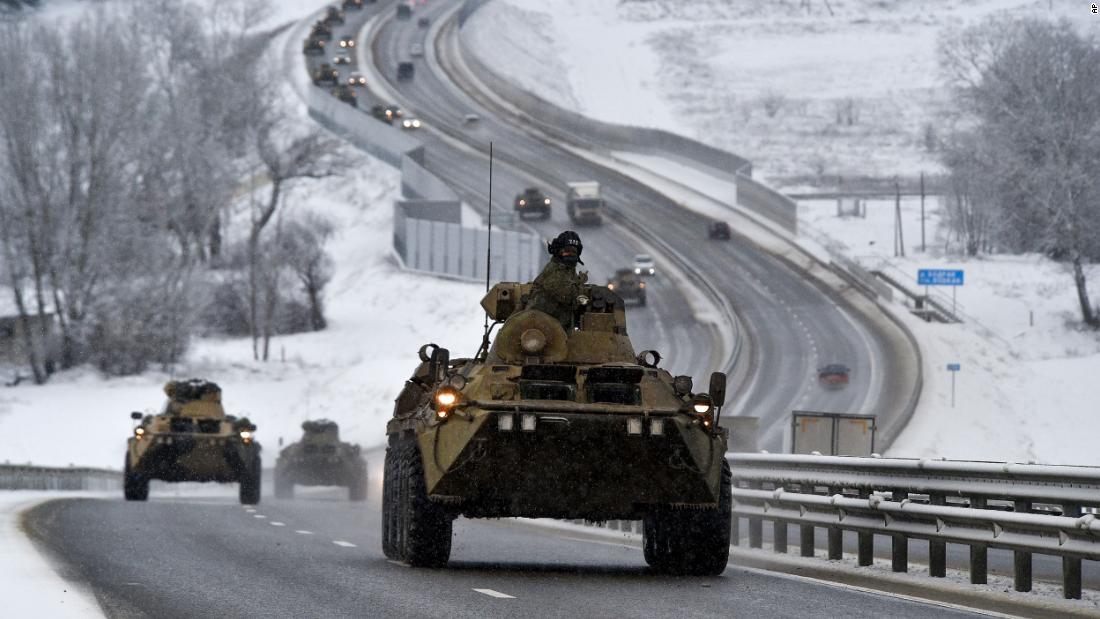
Tension are rising in Eastern Europe as troops, tanks and weapons are piling up on both sides of the border separating Russia and Ukraine. And with each passing day, the invasion of Ukraine and the possibility of outright war seems to be increasing. Is war inevitable? How did this situation escalate so quickly? Is this a power-play but Vladimir Putin? Should other neighboring countries be worried? And what is the strategic and historical significance of Ukraine when it comes to Russia wanting to invade? How could this affect the U.S.? There's a lot of questions to be answered - and if you are a reporter covering this escalating news story, then let our experts help. Jacek Lubecki, Ph.D., is an associate professor of political science and international studies at Georgia Southern University. He is also expert in Polish and European military history. Lubecki is available to speak with media regarding this topic - simply click on his icon now to arrange an interview today.


Aston University to host livestream event with Holocaust survivor ahead of Holocaust Memorial Day
Aston University’s Department of Politics, History and International Relations will host the livestream on 20 January It is a collaboration with the Holocaust Educational Trust Holocaust survivor, Dorit Oliver-Wolff, will share her experiences as part of the panel discussion. Aston University will host a livestreamed event with a holocaust survivor ahead of Holocaust Memorial Day. The event will see 86 year old holocaust survivor Dorit Oliver-Wolff talk about her traumatic experiences as a child under the Nazi regime. The University’s history experts and students have organised the panel discussion which will take place on 20 January, one week before Holocaust Memorial Day (27 January). Holocaust Memorial Day is an annual reminder of one of the biggest crimes against humanity in the twentieth century. Between 1941 and 1945, Nazi Germany and its collaborators systematically murdered some six million Jews across German-occupied Europe, around two-thirds of Europe's Jewish population. Dorit Oliver-Wolff was given a British Empire Medal for services to Holocaust education and awareness in 2020. She has been giving talks to schools, community groups and businesses about her experiences for more than a decade. Ms Oliver-Wolff was born in Novi Sad in Serbia - formerly Yugoslavia. In 1941, she and her mother fled and travelled from place to place within Hungary, creating new identities before hiding in a cellar, from where her mother would sneak out at night to look for food in bombed-out shops. Her talk will be followed by questions from British and German students, as well as the general public, who can submit questions by 17 January. Dr Brian Sudlow, lecturer in history at Aston University, said: “We like to think of the perpetrators of the Holocaust as completely different from ourselves. Yet this is not true. “Today, in commemorating these events, we are not only listening to history. We are trying to ensure humanity never sinks so low again.” You can sign up to the free event and submit a question for consideration HERE. Subscribe to the Aston Originals YouTube Channel and follow on Twitter.

Can oily fish, cherries or milk help you sleep? Here’s what the evidence shows
Almost one in five British people report they don’t get enough sleep each night. The problem is so bad that in total the UK public are losing around a night’s worth of shut-eye each week. There are a lot of popular beliefs about foods and drinks helping people get a good night’s rest, but many of them are not based on scientific evidence. Here’s what we know. Chemistry of food and sleep Our diet has an influence upon sleep patterns by affecting the sleep hormone melatonin. For example, foods rich in the essential amino acid tryptophan are commonly cited as helping sleep, as tryptophan helps produce melatonin. Additionally, some vitamins and minerals may help sleep, such as vitamin D, magnesium and zinc. Oily fish: Evidence suggests the more oily fish, such as salmon or herring, you eat the better you sleep. Oily fish contain healthy fats such as omega-3 oils which have been shown to improve sleep in children and are involved in serotonin release. Serotonin, a brain chemical linked to mood, also regulates the sleep-wake cycle which may also explain how eating oily fish can help. Tart cherries: A number of studies have looked at consumption of tart cherries, usually in the form of a drink, and sleep. Evidence suggests that tart cherries improves sleep in older adults, probably due to their ability to increase melatonin levels. And tart cherries are also rich in nutrients, including magnesium, which also may improve your sleep. Kiwi fruit: The evidence for kiwi fruit helping you sleep is mixed. One study suggested four weeks of kiwi fruit consumption improved multiple sleep measures, while another, admittedly in sufferers of insomnia, found no effect. Based on these findings it is not clear yet that eating kiwi fruit will benefit sleep for most people. Oysters: In 1888 W F Nelsom wrote “He who sups on oysters is wont on that night to sleep placidly…”. There is some evidence to back up this statement, with zinc-rich foods, including oysters, being reported to benefit sleep. However, on balance eating oysters before bedtime is unlikely to be beneficial to your night’s sleep. Alcohol and other drinks Alcohol causes brain activity to slow down and has sedative effects that can induce feelings of relaxation and sleepiness> But consuming alcohol is actually linked to poor sleep quality and duration. Although drinking alcohol may cause more rapid sleep onset, this can affect the different stages of sleep, decreasing overall sleep quality. If you want a good night’s sleep, avoiding alcohol is sound advice. But are there any non-alcoholic drinks that might help? Warm milk: Research conducted in the 1970s suggested that a glass of warm milk before bed could improve sleep quality. This research was performed in a very small group however, and little research has been done since. Drinking milk does increase melatonin levels which could help. But there isn’t enough evidence to support the claim that a glass of warm milk definitely makes you nod off. Bone broth: Bone broth commonly crops up in online articles as a food that can aid sleep. This may be due its high content of the amino acid glycine. Glycine has been shown to improve sleep in rodents and humans, possibly by lowering body temperature. There are however no studies specifically looking at bone broth consumption and sleep. Herbal teas: The range of herbal teas aimed at the sleep market has grown and grown. Evidence for valerian, a common ingredient, to aid sleep is inconclusive. Decaffeinated green tea has been reported to improve sleep quality, which might be linked to the relaxing qualities of L-theanine, an amino acid it contains, but in general, avoiding caffeinated teas is a wise choice. If you like herbal teas, then they can be part of a relaxing pre-bedtime routine – but they are unlikely to improve your sleep quality. A bedtime routine Having a bedroom environment and daily routines that promote consistent, uninterrupted sleep are important. These include keeping to the same time to head off to bed, making your bedroom free of disruptions and having a relaxing pre-sleep routine. But many of the foods that have claimed benefits for sleep have little or no evidence behind them, to the point there are no legally recognised health claims for food assisting sleep approved in the UK or Europe. If any one of these things helps you to sleep well, there’s no reason to stop. But just remember the other basics of a good nights sleep too, including relaxing before bed and avoiding too much blue light from electronic devices.
