
Experts Matter. Find Yours.
Connect for media, speaking, professional opportunities & more.

Aston University establishes Design Factory Birmingham as a global innovation hub for Midlands
• Birmingham becomes the latest city to join a global network of design and digital consultancies • Based at Aston University, expertise in areas such as 3D printing will be shared to boost the local economy • It will include a space named after the late Dame Margaret Weston, former director of the Science Museum. Birmingham has become the latest city to join a global network of design and digital consultancies set up to solve real world challenges through effective problem-solving. Design Factory Birmingham will be based at Aston University, one of just two hubs in the UK outside of London. The city officially joined the Design Factory Global Network on Wednesday 14 February and as a result Aston University will open the doors to its state-of-the-art facilities to other organisations. Shared understanding and common ways of working enable Design Factories in the network to collaborate efficiently across cultures, time zones and organisational boundaries fostering radical innovations. Businesses, industry partners, entrepreneurs, staff and students will be able to collaborate on projects that will involve technologies such as 3D printers and design software. The University will be sharing its expertise in artificial intelligence, additive manufacturing, data science and web, app and graphic design to boost the local economy. Currently there are 39 innovation hubs in 25 countries across five continents based in universities and research organisations. The Design Factory will include a space named after the late Dame Margaret Weston, former director of the Science Museum. Dame Margaret had studied electrical engineering at one of Aston University’s predecessor institutions and went on to be the first woman appointed to lead a national museum. She left a generous gift to Aston University in her will, which will be commemorated in the Birmingham Design Factory in honour of her engineering background. (l-r) Felipe Gárate, Professor Aleks Subic, Professor Stephen Garrett The Vice-Chancellor and Chief Executive of Aston University, Professor Aleks Subic said: “The Design Factory Birmingham is another key milestone in our ambition to be a leader in science, technology, and innovation, driving socio-economic transformation in our city and region. It is important to the Midlands because it will make a direct contribution to innovation led growth in partnership with industry and businesses. However, this is not only a local launch but also a global launch as Design Factory Birmingham is a global innovation hub, and an integral part of the Design Factory Global Network involving 39 innovation hubs around the world.” The head of the Design Factory Global Network Felipe Gárate from Aalto University in Helsinki, Finland attended the official launch in Birmingham. He said: “I am delighted to welcome Aston University as our latest member. “We are on a mission to create change in the world of learning and research through passion-based culture and effective problem-solving. “Shared understanding and common ways of working enable Design Factories in the network to collaborate efficiently across cultures, time zones and organisational boundaries fostering radical innovations.” The launch event was used to showcase design projects that are already running and companies attending were given the chance to meet placement students who could boost their existing expertise. Associate Pro-Vice-Chancellor and Deputy Head of the College of Engineering and Physical Sciences, Professor Tony Clarke said “This unique space on campus will bring together multi-disciplinary teams of hands-on innovators, collaborative thinkers and creators. “We will be delivering a wide range of services including software application development, product design, creating protypes using a variety of technologies including laser and water cutting, digital and design training courses, and helping companies obtain innovation grants for projects.” As a member of the global network the Birmingham Design Factory at Aston University will participate in two global design challenges - one run by McDonalds and the other run by the Ford Motor Company. ENDS Notes to Editors There are 39 Design Factory hubs around the world https://dfgn.org/ In the UK there are three; London, Birmingham and Manchester. About Aston University For over a century, Aston University’s enduring purpose has been to make our world a better place through education, research and innovation, by enabling our students to succeed in work and life, and by supporting our communities to thrive economically, socially and culturally. Aston University’s history has been intertwined with the history of Birmingham, a remarkable city that once was the heartland of the Industrial Revolution and the manufacturing powerhouse of the world. Born out of the First Industrial Revolution, Aston University has a proud and distinct heritage dating back to our formation as the School of Metallurgy in 1875, the first UK College of Technology in 1951, gaining university status by Royal Charter in 1966, and becoming The Guardian University of the Year in 2020. Building on our outstanding past, we are now defining our place and role in the Fourth Industrial Revolution (and beyond) within a rapidly changing world. For media inquiries in relation to this release, contact Nicola Jones, Press and Communications Manager, on (+44) 7825 342091 or email: n.jones6@aston.ac.uk


Research: Add space salad to the risks astronauts face
University of Delaware researchers grew lettuce under conditions that imitated the weightless environment aboard the International Space Station and found those plants were actually more prone to infections from Salmonella. It’s been more than three years since the National Aeronautics and Space Administration made space-grown lettuce an item on the menu for astronauts aboard the International Space Station. Alongside their space diet staples of flour tortillas and powdered coffee, astronauts can munch on a salad, grown from control chambers aboard the ISS that account for the ideal temperature, amount of water and light that plants need to mature. But as the UD researchers discovered, there is a problem. The International Space Station has a lot of pathogenic bacteria and fungi. Many of these disease-causing microbes at the ISS are very aggressive and can easily colonize the tissue of lettuce and other plants. Once people eat lettuce that’s been overrun by E. coli or Salmonella, they can get sick. With billions of dollars poured into space exploration each year by NASA and private companies like SpaceX, some researchers are concerned that a foodborne illness outbreak aboard the International Space Station could derail a mission. In the new study by UD's team, published in Scientific Reports and in npj Microgravity, researchers grew lettuce in a weightless environment similar to that found at the International Space Station. Plants are masters of sensing gravity, and they use roots to find it. The plants grown at UD were exposed to simulated microgravity by rotation. The researchers found those plants under the manufactured microgravity were actually more prone to infections from Salmonella, a human pathogen. Stomata, the tiny pores in leaves and stems that plants use to breathe, normally close to defend a plant when it senses a stressor, like bacteria, nearby, said Noah Totsline, an alumnus of UD’s Department of Plant and Soil Sciences who finished his graduate program in December. When the researchers added bacteria to lettuce under their microgravity simulation, they found the leafy greens opened their stomata wide instead of closing them. “The fact that they were remaining open when we were presenting them with what would appear to be a stress was really unexpected,” Totsline said. Totsline, the lead author of both papers, worked with plant biology professor Harsh Bais as well as microbial food safety professor Kali Kniel and Chandran Sabanayagam of the Delaware Biotechnology Institute. The research team used a device called a clinostat to rotate plants at the speed of a rotisserie chicken on a spinner. “In effect, the plant would not know which way was up or down,” Totsline said. “We were kind of confusing their response to gravity.” Additionally, Bais and other UD researchers have shown the usage of a helper bacteria called B. subtilis UD1022 in promoting plant growth and fitness against pathogens or other stressors such as drought. They added the UD1022 to the microgravity simulation that on Earth can protect plants against Salmonella, thinking it might help the plants fend off Salmonella in microgravity. Instead, they found the bacterium actually failed to protect plants in space-like conditions, which could stem from the bacteria’s inability to trigger a biochemical response that would force a plant to close its stomata. “The failure of UD1022 to close stomata under simulated microgravity is both surprising and interesting and opens another can of worms,” Bais said. “I suspect the ability of UD1022 to negate the stomata closure under microgravity simulation may overwhelm the plant and make the plant and UD1022 unable to communicate with each other, helping Salmonella invade a plant.” To contact researchers from the team, visit the profiles for Bais or Kniel and click on the contact button.


Image shows how tiny water channels control how water enters and exits cells through their membranes The Aston Institute for Membrane Excellence (AIME) will be set up with a £10m grant from Research England AIME will be led by Professor Roslyn Bill from Biosciences and Professor Paul Topham from Chemical Engineering and Applied Chemistry The globally unique institute will use biomimetic polymer membranes for applications such as water purification and drug development Aston University will establish the Aston Institute for Membrane Excellence (AIME), a globally unique, cross-disciplinary institute to develop novel biomimetic membranes, after receiving a major grant of £10m from Research England. AIME will be led by Professor Roslyn Bill, from the School of Biosciences, with co-lead Professor Paul Topham from the department of Chemical Engineering and Applied Chemistry (CEAC). Membranes, both biological and synthetic, are hugely important in many sectors. For example, the world’s top ten selling human medicines all target proteins in biological membranes, while synthetic polymer membranes are used in the US$100bn/year water purification industry. The team behind AIME believes that the full potential of membranes will only be realised by an interdisciplinary group spanning biology, physics and chemistry that can investigate membranes holistically. Professor Bill, a European Research Council (ERC) Advanced grantee leads Aston Membrane Proteins and Lipids (AMPL) research centre of excellence that studies the structure and function of membrane proteins and associated lipids. Professor Topham leads Aston Polymer Research Group (APRG), which investigates the nanoscale behaviour of block copolymers (a type of polymer with a structure made of more than one type of polymer molecule) and polymer technologies for membranes. AMPL and APRG have already begun collaborative research and AIME will bring together the complementary expertise of both research clusters into one institute. AIME will initially comprise the eight researchers from AMPL and APRG. Alongside the co-leads Professor Bill and Professor Topham, will be Dr Alan Goddard, Professor Andrew Devitt, Professor Corinne Spickett, Dr Alice Rothnie, Dr Matt Derry and Dr Alfred Fernandez. It plans to recruit three further academics, six tenure-track research fellows, three postdoctoral research assistants (PDRAs), six PhD students, a research technician and a business development manager. Importantly, AIME will work with many existing Aston University colleagues to build a comprehensive research community focused on all aspects of membrane science. The new AIME team will focus on the development of bioinspired, highly selective polymer structures for applications in water purification and waste remediation, nanoparticles loaded with therapeutic molecules to treat disorders ranging from chronic wounds to neurological injuries, and the purification of individual membrane proteins with polymers to study them as drug targets. The vision is for AIME to become a ‘one-stop shop’ for interdisciplinary, translational membrane research through its facilities access and expertise, ideally located in the heart of the country. Professor Bill said: “The creation of AIME is ground-breaking. Together with Aston’s investment, E3 funding will deliver a step-change in scale and the rate at which we can grow capacity. We will address intractable scientific challenges in health, disease, and biotechnology, combining our world-class expertise in polymer chemistry and membrane biology to study membranes holistically. The excellence of our science, alongside recent growth in collaborative successes means we have a unique opportunity to deliver AIME’s ambitious and inclusive vision.” Professor Topham said: “We are really excited by this fantastic opportunity to work more closely with our expert colleagues in Biosciences to create advanced technology to address real world problems. From our side, we are interested in molecular engineering, where we control the molecular structure of new materials to manipulate their properties to do the things that we want! Moreover, we are passionate about a fully sustainable future for our planet, and this investment will enable us to develop technological solutions in a sustainable or ‘green’ way.” Professor Aleks Subic, Vice-Chancellor and Chief Executive of Aston University, says: “Our new Aston Institute for Membrane Excellence (AIME) will be a regional, national, and international research leader in membrane science, driving game-changing research and innovation that will produce a pipeline of high-quality research outcomes leading to socioeconomic impact, develop future global research leaders, create advanced tech spinout companies and high value-added jobs for Birmingham and the West Midlands region. Its establishment aligns perfectly with our 2030 strategy that positions Aston University as a leading university of science, technology and enterprise.” Steven Heales, Policy Manager (Innovation) at the West Midlands Combined Authority, said: “WMCA is delighted to see Research England back the Aston Institute for Membrane Excellence. This will enable Aston University’s excellent academics and research community to work closely with businesses to make advances in membrane technology and applications. “In 2023 the West Midlands Combined Authority agreed a Deeper Devolution Trailblazer Deal with Government, which included a new strategic innovation partnership with Government. Projects like AIME are exactly the kind of impact we expect this new partnership to generate, so watch this space.” Lisa Smith, chief executive of Midlands Mindforge, the patient capital investment company formed by eight Midlands research-intensive universities including Aston University, said: “This grant is an important vote of confidence in the Midlands scientific R&D ecosystem. AIME will play an important role in the future research of pioneering breakthroughs in membrane science and enable the world-leading research team at Aston University to develop solutions to real world problems. We look forward to closely working with the Institute and nurturing best-in-field research being undertaken at Aston out of the lab and into the wider society so it can make a positive impact”. Rob Valentine, regional director of Bruntwood SciTech, the UK’s leading developer of city-wide innovation ecosystems and specialist environments and a strategic partner in Birmingham Innovation Quarter, said: "As a proud supporter of the Aston Institute for Membrane Excellence (AIME), I am thrilled at the launch of this groundbreaking initiative. AIME exemplifies Aston University's commitment to advancing cutting-edge interdisciplinary research and further raises the profile of the region’s exemplary research capabilities and sector specialisms. AIME's vision of becoming a 'one-stop shop' for translational membrane research, strategically located at the heart of the country, aligns perfectly with our strategy at Bruntwood SciTech. We are committed to working with partners, including Aston University, to develop a globally significant innovation district at the heart of the UK where the brightest minds and most inspiring spaces will foster tomorrow’s innovation.” Membrane research at Aston University has also recently received two other grants. In November 2023, Professor Bill received £196,648 from the Biotechnology and Biological Sciences Research Council’s Pioneer Awards Scheme to understand how tiny membrane water channels in brain cells keep brains healthy. In December 2023, a team led by AIME team-member Dr Derry received £165,999 from the Engineering and Physical Sciences Research Council to develop biomimetic membranes for water purification. For more information about AIME, visit the webpage.



CorpusCast with Dr Robbie Love: Professor Laurence Anthony on AntConc
CorpusCast is the podcast about corpus linguistics and what it can do for society. Join Dr Robbie Love as he speaks with top researchers in the field to find out more about how corpus linguistics – the study of linguistic patterns in large samples of language – is applied to a diverse range of areas including health, social justice and education. To mark the 25th episode and second anniversary in 2024, this episode reflects on the incredible two-year journey, expressing gratitude to exceptional guests and listeners spanning over 30 countries. In this milestone episode, the spotlight is on Professor Lawrence Anthony, the brilliant mind behind AntConc, a widely used and freely available corpus tool. Listeners are invited to join a profound exploration into AntConc's story, development, and its impact on corpus linguistics. Professor Lawrence Anthony, based at Waseda University in Japan, directs the Center for English Language Education in Science and Engineering. With over two decades of expertise in educational technology, natural language processing, and genre analysis, he has been a pioneer in developing educational software for corpus linguistics enthusiasts. Listeners can anticipate a captivating conversation as CorpusCast delves into the world of AntConc, gaining insights into its significance in the field. The third season kicks off with Professor Lawrence Anthony, promising a knowledge-packed episode. A heartfelt thank you goes out to all CorpusCast listeners for their continuous support. Here's to more discoveries, learning, and growth in 2024! Happy New Year, and welcome to another exciting episode of CorpusCast! Dr Robbie Love ? https://bit.ly/3Zcgo36 Professor Laurence Anthony ? https://www.laurenceanthony.net/ Aston Centre for Applied Linguistics ? https://bit.ly/3QKHcSF School of Social Sciences and Humanities ? https://bit.ly/3JCRAd1 Find out more about courses related to this show ? https://bit.ly/3pR705k #corpuslinguistics #BusinessCommunication #AstonUniversity #RobbieLove #MatteoFuoli #SocietalImpact #corpuslinguistics #AntConc #PodcastAnniversary #EducationTechnology


Casting Light on the Dark Universe, Euclid's Mission Shows Promise
On December 7, 1968, the National Aeronautics and Space Administration (NASA) successfully launched the first functional space telescope into orbit. In the 55 years since, dozens of these crafts have embarked on missions of discovery, advancing and transforming our understanding of the cosmos. Among the latest is Euclid, a wide-angle space telescope developed by the European Space Agency (ESA). Equipped to chart portions of the universe that are not directly observable and currently shrouded in mystery, Euclid is working to generate a three-dimensional map unlike any other, surveying billions of galaxies out to 10 billion light-years. This past month, the first images from its journey were released. Joey Neilsen, PhD, is a world-renowned astrophysicist, a frequent collaborator with NASA and an assistant professor in Villanova University’s College of Liberal Arts and Sciences. From his perspective, Euclid’s early returns evidence its voyage’s incredible potential. “In Euclid’s first image of the Perseus cluster, the sheer number of galaxies is really astonishing,” said Dr. Neilsen. “We talk a lot about how the universe is mostly empty space—and it is!—but it’s also enormous, and it’s really stunning that there’s room for so many galaxies in just a small patch of sky. There are 1,000 galaxies here huddled together in this cluster and over 100,000 in the background. “I also note some pale purple patches in the image of NGC 6822. These are planetary nebulae, the layers of gas and dust blasted off by stars at the ends of their lives. It’s amazing to be able to see these so clearly in images that show the entire galaxy and its environment at the same time.” According to Dr. Neilsen, Euclid’s remarkable visuals are the product of a calculated tradeoff. The ESA craft sacrifices the fine resolution of images taken by other observatories, like NASA’s James Webb Space Telescope, to capture cosmic phenomena in greater breadth. By collecting these visuals, Euclid aims to spark breakthroughs on subjects as of yet understudied—breakthroughs that could benefit Dr. Neilsen’s field of research. “Euclid’s mission is to understand the evolution of the dark components of the universe: the invisible dark matter whose gravity holds large structures like galaxies and galaxy clusters together and the dark energy responsible for the accelerating expansion of the universe,” he explained. “Much of my research focuses on a different aspect of the dark universe (black holes), but there is a puzzle that might connect: observations of very distant galaxies show there were very massive black holes very early on. How did these behemoths grow so big so fast? If would be neat if Euclid helped us to better understand the early universe in a way that informed our understanding of the growth of black holes.” In tracking and investigating the dark entities that compose and mold the cosmos, Euclid could very well offer insights into the history and development of over 95% of all energy and matter—and perhaps into the very fabric of existence itself. It is reasonable to wonder whether, when its mission is complete in six years’ time, the telescope could provide us with answers to questions that have gone unaddressed for six billion years. “For me, the best-case scenario would be that Euclid would show clear evidence of something that’s hard to explain with our current models,” said Dr. Neilsen. “For example, right now, we have ‘Hubble tension,’ a discrepancy between measurements of the expansion of the universe from when it was young and from the current era… The moments when things don’t add up are the ones where we learn the most about how the universe works. So, I’ll keep my fingers crossed for a surprise and for more to learn over the next six billion years.”


Georgia Southern University launches ‘Together We Soar’ Campaign
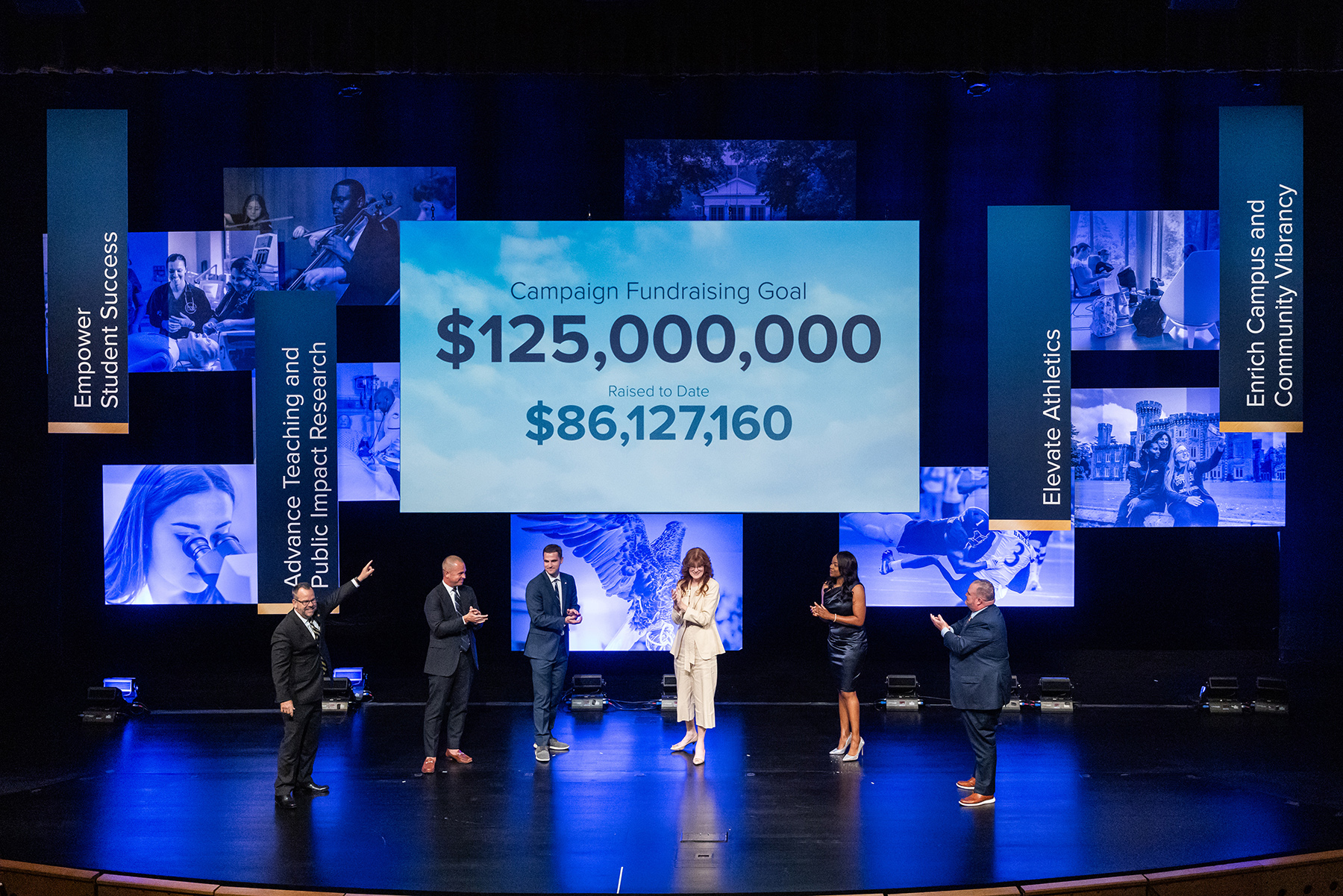
Georgia Southern University proudly announces the launch of its comprehensive campaign, “Together We Soar: The Campaign for Georgia Southern University.” This transformative initiative aims to elevate the University’s impact on students, faculty, research, athletics, and the communities it serves. Georgia Southern, renowned for its majestic campuses adorned with southern live oaks and towering pines, symbolizes not just American freedom but also the promise, achievement and boundless potential of its students. The University’s trajectory is on the rise, reaching for greater heights in education and community impact. Central to this momentum is the unwavering support from alumni, friends and the community. Publicly launched last Friday evening, Together We Soar: The Campaign for Georgia Southern University aims to raise $125 million by 2026. More than $86 million has already been secured. Dr. Kyle Marrero, President of Georgia Southern, expressed his gratitude and vision for the University. “Georgia Southern is on the move, in motion, and soaring to new heights. The ‘Together We Soar’ campaign—fueled by the generous support of our alumni, friends, and partners—will ensure our ability to drive innovation, develop talent, transform lives, and propel the economic development of a growing region.” (L-R) Georgia Southern President Kyle Marrero, Vice President for University Advancement Trip Addison, Deputy Athletics Director of Development Davis Hendrickson, Executive Director of Development Julie Gerbsch, Director of Alumni Relations Ava Edwards, and University Campaign Co-chair Leonard Bevill on stage at the Oct. 20 launch event for Together We Soar: The Campaign for Georgia Southern University. The campaign has identified four primary objectives: Empower Student Success: The campaign aims to stimulate learning by recruiting high-achieving students, increasing student access, and promoting inclusive excellence and career readiness. Advance Teaching and Public Impact Research: The focus is on meeting regional economic needs, increasing faculty expertise, and enhancing research capacity. Elevate Athletics: The campaign seeks to attract and retain elite student-athletes, provide top-notch facilities, and boost the Competitive Excellence Fund. Enrich Campuses and Community Vibrancy: The goal is to improve the communities surrounding the campuses and teach about local wildlife, among other initiatives. Campaign co-chairs Mike Sanders and Leonard Bevill shared their excitement for the campaign and what it will mean for Georgia Southern. “I could not be more excited about Georgia Southern and its possibilities. Opportunities abound for our University and the Together We Soar Campaign is the catalyst. It is time to do ‘more with more.’” - Mike Sanders “‘Together We Soar’ is spot on. From across campus to athletics and throughout our community, we’re perfectly aligned and equipped to launch to historic heights. I’m very blessed and excited to be involved.” Leonard Bevill The campaign also highlights the significant economic impact of Georgia Southern, with a regional economic contribution of $1.1 billion in fiscal year 2022. The University plays a critical role in the economic growth and transformation of Southeast Georgia. Marrero said Georgia Southern invites all its supporters, alumni and the community to join this transformative journey. With collective support, there’s no limit to how high Georgia Southern can soar. For more information or to contribute to the “Together We Soar” campaign, visit GeorgiaSouthern.edu/TogetherWeSoar.


Expert Insight: Fake News, Fake Reviews: Building Trust with Online Shoppers
Online customer reviews have become a critically important cog in the sales conversion process in recent years. Studies show that 97 percent of consumers read product reviews and ratings, and that positive reviews can almost triple the likelihood of making a purchase. As customers do more and more of their shopping online, they are turning in droves to the likes of Yelp, TripAdvisor, and Google Reviews to seek out opinions, recommendations, and feedback from other users before pushing through the final part of the sales funnel. As a result, these third-party review sites have experienced exponential growth. But there’s a caveat: and it’s trust. The success of Yelp and its competitors is wholly contingent on how trustworthy their users perceive them to be; on the transparency and authenticity of the content published and the sources of that content. In an era of disinformation with fake reviews and AI mass-generated content precipitously on the rise, securing—and keeping—user trust is paramount. The Five Keys to Fighting Fakery Goizueta Business School’s Sandy Jap has some suggestions. Together with colleagues Ben Beck of Brigham Young University’s Marriott School of Business and Stefan Wuyts of Penn State’s Smeal College of Business, Jap, who is the Sarah Beth Brown Professor of Marketing, put together a series of studies to test the kinds of measures and mechanisms that platforms can deploy to win user confidence. And it turns out there’s one tactic that works more effectively than any other: actively monitoring the authenticity of user reviews. That and being open and transparent about doing so. Jap and her colleagues scoured the latest research and data on marketing, governance, and identity disclosure to pinpoint the mechanisms that best mitigate online fakery, while simultaneously building trust among platform users. They identified five. “We worked through the literature and were able to whittle these down to five core practices that are robustly effective at building trust,” says Jap. “They are monitoring, exposure, community building, status endowment and identity disclosure. Doing these five things can signal to your users that you are committed to being a guardian of their trust, so to speak.” Monitoring or evaluating reviews for their authenticity and exposing firms that pay for and propagate fake content are mechanisms directed at the rogue firms that spread fakery and misinformation, explains Jap. Meanwhile community building and status endowment focus on reviewers. Community building is about enabling authentic, transparent interactions between consumers and reviewers. An example of this might be allowing consumers to ask questions and reviewers to respond directly. “Status endowment is where a platform verifies and acknowledges the credibility or helpfulness of a reviewer in some way. Yelp and others use things like badges or reviewer ratings which are earned over time and which make it hard for fake reviewers to game their systems,” says Jap. Identity disclosure is the practice of having reviewers provide personal information—their name, picture, or location, for instance—before they can post content. And while this approach can keep fabrication and false profiles in check, it also raises certain tradeoffs, says Jap. “Anonymity online has long been understood as something of an un-inhibitor—a factor that enables users to speak more freely and openly. It can be democratizing in the sense that it removes or lessens prejudice and bias around things like race, social class, or physical appearance,” she says. “Of course, having people share personal data on your platform can also open up a can of worms around privacy and identity theft which are major considerations; so there’s a balancing act needed with this.” To test the efficacy of all five trust building policies, including identity disclosure, Jap and her colleagues ran a series of experiments and studies. They invited volunteers to rate how the presence or absence of these mechanisms impacted the trustworthiness of a platform. One study saw them parse things like domain authority and traffic across 25 online review sites against how many (or few) of the five mechanisms each deployed. Elsewhere, the team used surveys to assess how users ranked the different mechanisms in terms of platform trust, above and beyond other factors such as the quantity of reviews published say, or the expertise of different reviewers. The Bottom Line: Bust Bogus Reviews After crunching the data, Jap and her co-authors found that while all five trust-building mechanisms were valued and important to platform users, the practice of monitoring for fake reviews and reviewers—and broadcasting the fact clearly—was by far the most effective. “Doing all of these five things—monitoring, exposing, community building, status endowment and ID disclosure—are important if you want to earn and keep the trust of your users,” says Jap. “We found that the more of these mechanisms that platforms incorporate, the better their domain authority, Alexa site ranking, backlinks, and organic site traffic.” Based on our findings, monitoring your content and communicating that you’re doing this is by far the most powerful cue that you are trustworthy. So that’s where we’d say platforms might want to focus their spend. Many of the biggest review platforms have already taken note of these insights. Yelp recently shared a post to its official blog welcoming the finding that of the 25 sites analyzed in Jap’s study, theirs is one of two platforms that actively implement all five mechanisms. “After examining 25 review platforms, the study found that Yelp is one of two platforms that applies all five mechanisms and as the research states, has become a guardian of trust for review information.” Meanwhile, Jap stresses that these findings should be relevant to any business that is focused on “combating online review fakery.” “All businesses today face the challenge of managing their word-of-mouth reputation. Any firm interested in sharing and leveraging points of view around its products or services, be it a small online retail store or an Amazon, is going to want to go the distance—and be seen to do so—in going to war on fakery and disinformation.” Are you a journalist interested in learning more about the importance and trustworthiness of online reviews? Sandy Jap is available to speak with media - simply click on her icon now to arrange an interview today.


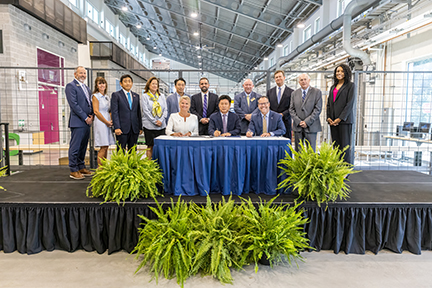
In a milestone collaboration aimed at fostering workforce development, innovation, and community enrichment, Hyundai Motor Group Metaplant America (HMGMA), Georgia Southern University and Ogeechee Technical College are signing a formal agreement to work together in addressing regional workforce needs while advancing academic excellence and technological innovation. Ogeechee Technical College President Lori Durden, HMGMA CEO and President Oscar Kwon, and Georgia Southern University President Kyle Marrero sign transformative agreement surrounded by officials from both institutions and HMGMA. The partnership will encompass a diverse range of initiatives that reflect the shared commitment HMGMA and its local education partners have to catalyze positive change for both the academic community and the broader society. Leveraging their respective strengths, this collaboration aims to address workforce demands, create transformative educational pathways, and drive impactful research endeavors. “Together, we are not just building cars; we are building futures, strengthening the community and driving progress,” said HMGMA CEO Oscar Kwon. “That is part of Hyundai’s mission: progress for humanity. Our partnership with these institutions reflects our shared vision for a brighter, more innovative future.” As part of this partnership, Georgia Southern University has committed to build on the success it has already seen in recruitment services for HMGMA. These services will include on-campus information sessions, dedicated company recruiting events, and on-campus interview days for graduating seniors. By bridging the gap between academia and industry, the University is ensuring that its students are well-prepared for the demands of the professional world. The university also will offer professional development certifications and courses for the company’s employees through its Continuing and Professional Education programs. “This partnership stands as a testament to the value of collaboration between academia and industry in driving holistic growth,” said Georgia Southern President Kyle Marrero. “By uniting forces, HMGMA and Georgia Southern University are forging a path that not only elevates educational opportunities but also cultivates a thriving community equipped to meet the challenges and opportunities of the future.” Georgia Southern also will strengthen its alliance with Ogeechee Technical College to create revised and expanded articulation agreements, pathway programs, and credit transfers. These initiatives will pave the way for the development of collaborative academic programs tailored to meet the specific workforce needs of the region. This includes exploring innovative degree pathways such as Advanced Manufacturing Engineering, as well as fostering additional academic collaborations that align with workforce-driven educational programs. Ogeechee Tech’s commitment includes continuing its record of providing training to local companies to include implementing the Electric Vehicle Professional Technical Certificate of Credit and Hybrid/Electric Vehicle Repair Technician Technical Certificate of Credit programs, and developing Industrial Maintenance Noncredit Training for HMGMA Employees. Additionally, Ogeechee Tech agrees to provide on-campus recruitment events and career fairs to current and past graduates. “Ogeechee Technical College is very excited about entering into this MOU with HMGMA,” said Lori Durden, president of Ogeechee Tech. “This has been several months in the making, and like other institutions and technical colleges in our region, we are going to do all that we can to support the efforts of our Governor to make Georgia the electric mobility capital of America. This is an exciting day for Ogeechee Technical College, and we look forward to supporting the evolving workforce development needs of this region.” With the Memorandum of Understanding, HMGMA will help promote educational opportunities in the region; develop internship, career pathway programs, and other appropriate work-based learning opportunities; and commit to exploring potential research, innovation, and commercialization projects. Interested in learning more or looking to talk with Georgia Southern President Kyle Marrero about this exciting new partnership ? Contact Georgia Southern's Director of Communications Jennifer Wise at jwise@georgiasouthern.edu to arrange an interview today.

ChristianaCare Launches a New Speakers Bureau: Is This the Future of Healthcare Communications?
Only just a few months after their win of an IABC Gold Quill Award (shared with ExpertFile), the ChristianaCare healthcare communications and digital team has once again made major moves to make their organization even more accessible to the community with the launch of their new ChristianaCare Speakers Bureau. As one of the leading healthcare systems in the United States, Delaware based ChristianaCare is home to a wide variety of medical experts. Now live, the ChristianaCare Speakers Bureau features 80 experts who are currently available for speaking engagements on a wide variety of health topics including: Aging and Senior Health, Cancer, Children’s Health, COVID-19, Diabetes, Pregnancy and Childbirth. Sports Medicine, Stroke, Weight Management and Women’s Health. Designed with the ExpertFile platform, the ChristianaCare Speakers Bureau provides easy discovery and access to experts, including their biographies, downloadable photographs, samples of past presentations, languages spoken and more. The site can be viewed here. Screenshot from the new ChristianaCare Speakers Bureau launched Aug. 2023. The site provides easy discovery and access to experts, with the ability to search by topics and keywords. Detailed profiles for experts include biographies, downloadable photographs, samples of past presentations, languages spoken and more. How a Speakers Bureau boosts thought leadership A Speaker's Bureau is an initiative within an organization that assembles a team of expert speakers who can represent the organization and speak authoritatively on its behalf. While media appearances are often the core focus for experts in organizations, a Speakers Bureau opens up additional opportunities to speak at events such as in-person conferences, webinars, podcasts. Speakers ideally represent a diverse group of professionals from within the organization, and can share their knowledge, insights, and experiences on a range of topics relevant to the organization's mission, values, and field of work. Through event appearances, these experts help to enhance the organization's visibility, foster community engagement, and solidify the organization's reputation as a thought leader in its field. Speakers Bureaus provide effective and efficient way to promote the organization's initiatives, achievements, and viewpoints to the wider public. Creating New Connections Between Experts and the Community Following a string of successes that followed the launch of their ChristianaCare Experts site that resulted in major increases in national media coverage and SEO performance, the formation of a Speakers Bureau was a smart move that will further extend the reach of the ChristianaCare brand. Events provide an excellent way to connect meaningfully with a wider audience to help ChristianaCare make progress on key goals such as delivering effective community health education and improving healthcare equity. “At ChristianaCare, our mission of service to the community includes a commitment to provide timely, accurate health information so that people can make informed decisions about their health,” said Karen Browne, vice president of marketing and communications. “Through our new speakers bureau, we’ve expanded our capacity to meet these needs in the community.” The Benefits of a Speakers Bureau Given the fragmentation of traditional media channels and the massive growth in events such as webinars and podcasts, Speakers Bureaus are fast gaining popularity as a proven way to personify your organization and build a stronger connection to your brand. So far the ChristianaCare Speakers Bureau appears to be off to a solid start. "We had a huge response to our media release when we launched earlier this week and in the first day alone we had multiple organizations sending speaking opportunities for our medical experts. We're also seeing a great response internally as more of our experts requested to join the Speakers Bureau once it went live," said Hiran Ratnayake, Senior Manager of Media Relations at ChristianaCare who played a key role in developing the Speakers Bureau with his colleagues Shane Hoffman, Communications Director and Tom Hendrich - Senior Digital Content Editor at ChristianaCare. Is a Speakers Bureau Right For Your Organization? Here are some key benefits to consider in determining if a speakers bureau makes sense for your organization: Bolsters Community Engagement: An active Speaker's Bureau helps create a bridge between your organization and the community you serve. Promotes Diversity and Inclusion: A Speaker's Bureau offers an exciting opportunity to showcase the diverse voices and unique experiences within your organization. Enhances Organizational Visibility: The increased exposure at events can lead to greater recognition in the industry, more opportunities for collaborations, and ultimately, a wider reach for your healthcare services. It also is a proven way to boost SEO pagerank and domain authority in search engines and also provides a lot of additional content for your social channels. Develops Professional Skills: For healthcare professionals who participate, a Speakers Bureau offers an excellent opportunity to develop public speaking skills, foster leadership abilities, and establish themselves as thought leaders in their respective fields. Facilitates Knowledge Sharing: A Speaker's Bureau cultivates a more dynamic learning environment, which can lead to new ideas, innovations, and improved patient care within your organization. Strengthens Crisis Management Readiness: Having a pool of trained speakers ready to contribute can be incredibly beneficial in times of crisis. These professionals can help your communications team more effectively communicate critical information to the public, media, and other stakeholders. Enhances Employee Engagement: Employees who are given the opportunity to share their knowledge and represent their organization publicly, often feel more valued and invested in their work. Going Beyond the Walls of Your Medical Facility In the constantly evolving world of healthcare, accurate and timely information is critical to informed patient decisions and effective treatments. Organizations such as ChristianaCare understand that their role as a prominent healthcare system is to deliver information that extends beyond their immediate medical responsibilities. It’s simply no longer adequate to provide care within the walls of a medical facility. Today there is a critical demand for a more engaged approach, requiring hospitals and healthcare systems to leverage their in-house expertise for community education. A more informed community, armed with knowledge, which can make empowered decisions about their healthcare. While the public has an abundance of medical information at their fingertips, to help them participate more actively in their healthcare, much of the information found on social media today often lacks clarity, context, and credibility, leading to confusion and misinterpretations. Healthcare experts, leaders, and executives can play a pivotal role in dispelling myths and offering credible, evidence-based insights. An engaged, approachable healthcare professional is a reassuring sight, reinforcing the community’s faith in the system. It’s a win-win for these experts and the healthcare institution they represent. And most importantly it's a win for the communities they serve, as people identify potential health issues earlier, adopt healthier lifestyles, and reduce emergency hospital visits. This puts less burden on the region’s healthcare system, and better utilizes resources to reach a broader audience. After all, healthcare is not just about curing the sick; it’s about educating, engaging, and empowering the community for a healthier future. Congratulations to the entire team at ChristianaCare for creating such a valuable resource for your community. And thank you for letting us be a part of this exciting journey.


Aston University fraud specialist continues ongoing engagement with UK Government
Dr Rasha Kassem advises UK government on countering fraud through the Government Counter Fraud Profession (GCFP) advisory group She shapes policies to combat £33 billion annual losses Dr Kassem influences fraud standards and shares vital research. Dr Rasha Kassem, a fraud specialist based at Aston Business School, remains actively engaged with the UK government through her advisory role in the Government Counter Fraud Profession (GCFP) advisory group. This advisory group, a vital component of the Government Counter Fraud Function, collaborates with cross-sector experts to shape policies and strategies aimed at countering fraud and other financial crimes. The Government Counter Fraud Profession Strategy 2023-25 underscores the severity of fraud within the public sector, estimating losses at a minimum of £33 billion annually due to fraud and error. As a dedicated member of the GCFP Cross Sector Advisory Group, Dr Kassem plays a pivotal role in advising and supporting the development of policies to combat these financial crimes. The GCFP serves as a professional body for counter-fraud experts within central government and beyond. Its mission is to unite the counter-fraud community under a common framework of standards, fostering growth and development to safeguard public services and combat economic crime. Dr Kassem's involvement in the advisory group holds significant impact, influencing the establishment of knowledge, skills and experience requirements for fraud professionals across various disciplines and levels. Additionally, she contributes to the publication of influential fraud research in the Public Sector Counter Fraud Journal and addresses UK government fraud conferences on recent research findings. Dr Kassem also collaborates with experts from diverse sectors to bridge training gaps, all while engaging in discussions through regular group meetings. The Government Counter Fraud Profession operates under the umbrella of the Public Sector Fraud Authority (PSFA), established in August 2022. The GCFP is positioned within the Practice, Standards, and Capability Function of the Authority. The PSFA, a collective effort by 17 public sector organisations, adheres to core principles of building capability, with the GCFP taking a lead role in advancing structures and services. Dr Kassem emphasises the critical nature of engaging with policymakers through knowledge exchange activities to amplify research impact. Her active participation in UK Government fraud conferences and contributions to the Public Sector Counter Fraud Journal serve to raise awareness on prevailing fraud issues. Furthermore, her feedback on existing and new fraud guidance aids the GCFP in crafting professional standards and guidance for countering fraud. Dr Kassem has been a valued member of the Cross-Sector Advisory Group of the UK Government Counter Fraud Profession since 2019. Dr Kassem said: “Collaborating with the UK government through the Government Counter Fraud Profession has been a rewarding journey. “It's through these engagements that we're shaping policies and standards to counter fraud and protect public resources. “The recent Annual GCFP conference was well attended by fraud investigators, law enforcement, and regulators from the public sector. My presentation was well received and some participants said it was wildly fascinating to hear the striking reality that insider fraud can be, especially in UK policing, given its impact on policing integrity and legitimacy. The presentation opened their eyes to the risk of insider fraud and its impact. “Together, we're making a significant impact on the battle against financial crime.” For further information and to explore Dr Kassem's recent research, click here.